



Cities are usually built with a clear plan for who will live there and why. But some large developments fail after they are built, not before. A resort is finished and never opens. A city built for hundreds of thousands ends up with almost no residents. A district is evacuated overnight and left untouched for decades.
These places are not old ruins. They are recent, fully built environments that failed for specific reasons: a loan default, a market that never arrived, a war, a disaster. That makes them useful case studies for architects and planners, because they show that good design, infrastructure, and capital are not enough on their own to make a place work.
Here are ten such abandoned towns and developments that reveal the limits of large-scale urban planning.
Burj Al Babas, Turkey
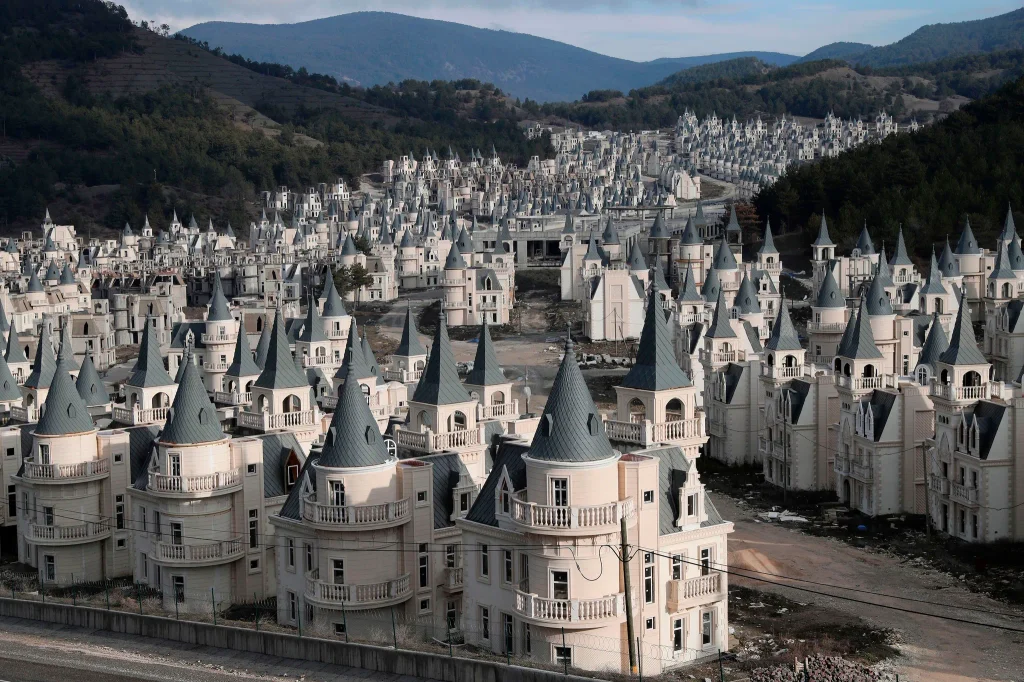
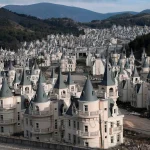
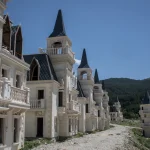
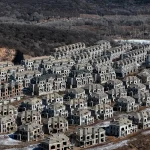
Near Mudurnu, the Sarot Group set out to build over 700 nearly identical Disney-style châteaux, each with turrets, mansard roofs, and Gothic detailing drawn from Istanbul landmarks like the Galata Tower. Construction began in 2014, targeting wealthy Gulf buyers who wanted a European aesthetic in a Mediterranean climate. By 2018, sales had stalled amid a slump in oil prices and a deepening Turkish currency crisis. The Sarot Group filed for bankruptcy in 2019 with roughly $5 million in debt, leaving hundreds of the villas structurally complete but unfinished inside.
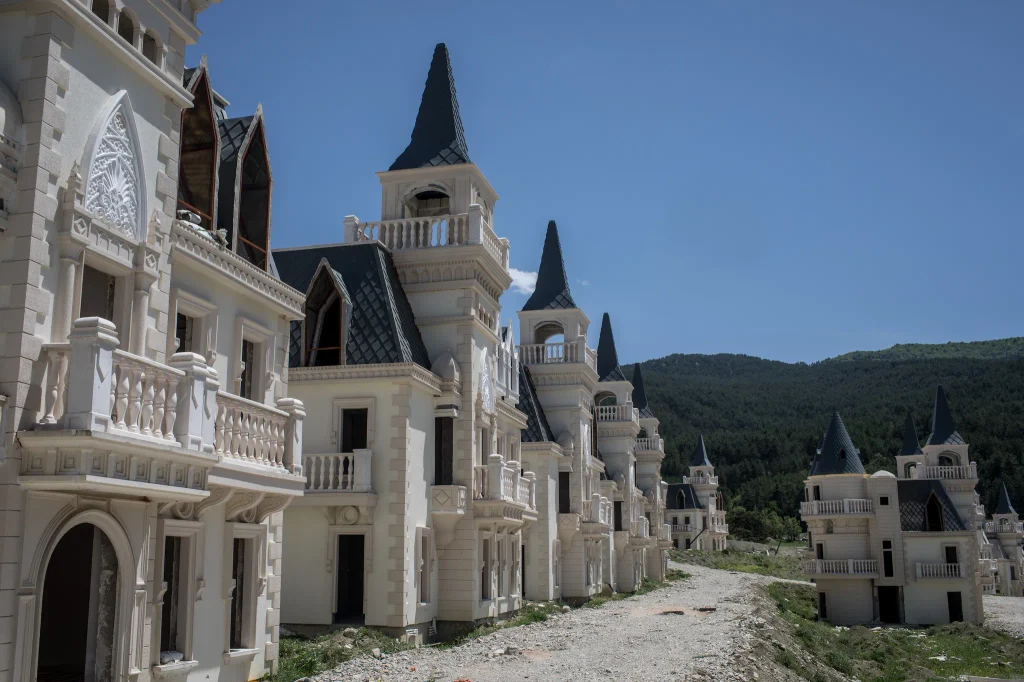
As an urban planning case, Burj Al Babas shows what happens when a development is designed purely around an export market. The repetition of a single ornamental typology across hundreds of units, with no variation in scale, program, or public space, also meant the site had no internal logic once the external demand disappeared. It remains one of the most visually striking ghost developments in the world.
Lavasa, India
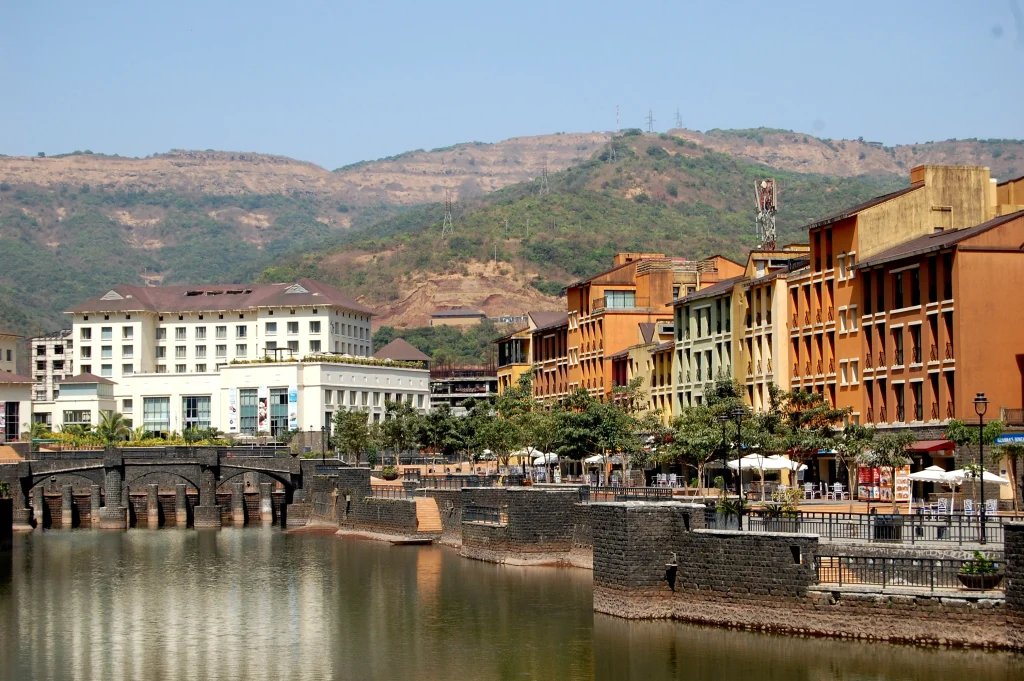
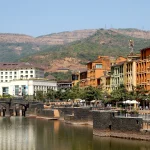
Planned as India’s first privately built hill city, Lavasa was designed across 25,000 acres in the Western Ghats near Pune, modeled loosely on the Italian seaside town of Portofino, with pastel facades, waterfront promenades, and terraced zoning meant to house up to 250,000 people. Development by Hindustan Construction Company began in the early 2000s.
The project stalled repeatedly over land acquisition disputes with local villagers and a lack of environmental clearances, since the site sat on ecologically sensitive hill terrain. A prolonged construction freeze and mounting debt followed, and Lavasa entered insolvency proceedings.
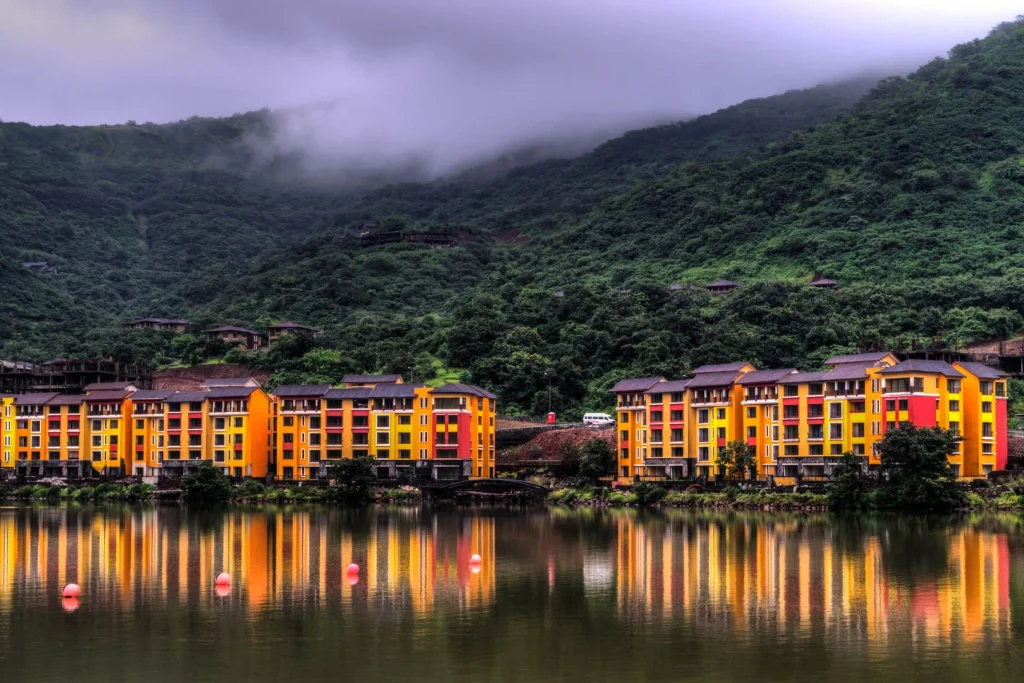
What was built now sits largely unoccupied, with crumbling roads and an empty convention center. Lavasa is frequently cited as a cautionary case for India’s larger Smart Cities push, since its failure stemmed less from design than from weak regulatory groundwork and a disregard for the communities the project displaced. A well-rendered masterplan could not substitute for legal and environmental due diligence.
Forest City, Malaysia
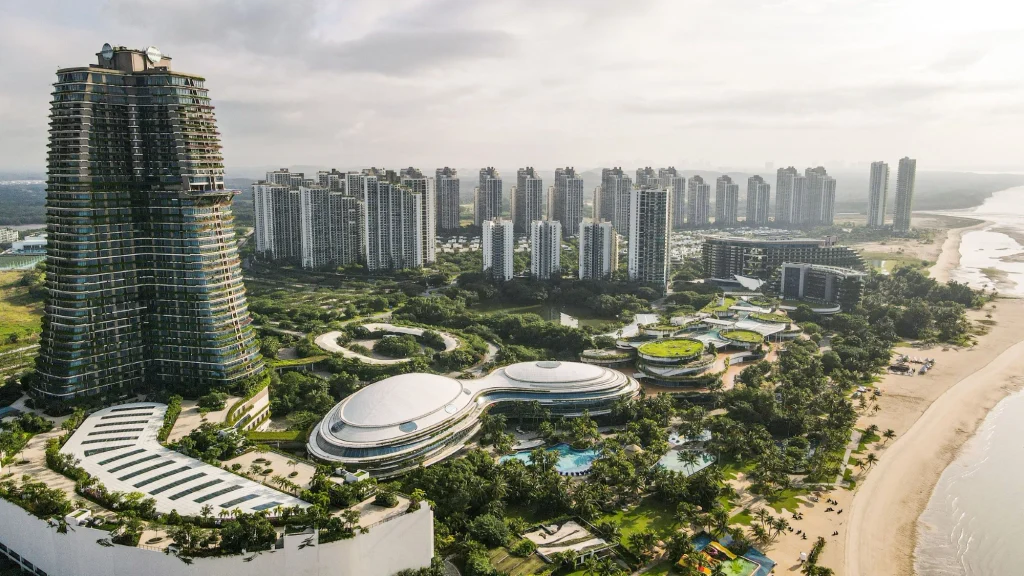
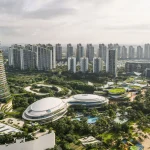
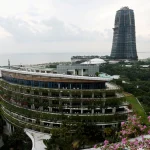
Built on four reclaimed islands off Johor Bahru by China’s Country Garden, Forest City was conceived as a $100 billion vertical garden city for 700,000 residents, with green rooftops, car-free podium levels, and a skyline of towers linked by elevated walkways. Construction began in 2015 under the Belt and Road Initiative.
The project targeted mainland Chinese investors, but capital controls restricted outbound purchases, and Malaysia’s own cooling measures on foreign property ownership further narrowed the buyer pool. Country Garden’s financial collapse in China compounded the problem. By 2024, occupancy across the 1,740-hectare site remained under 5 percent, with towers standing largely empty.
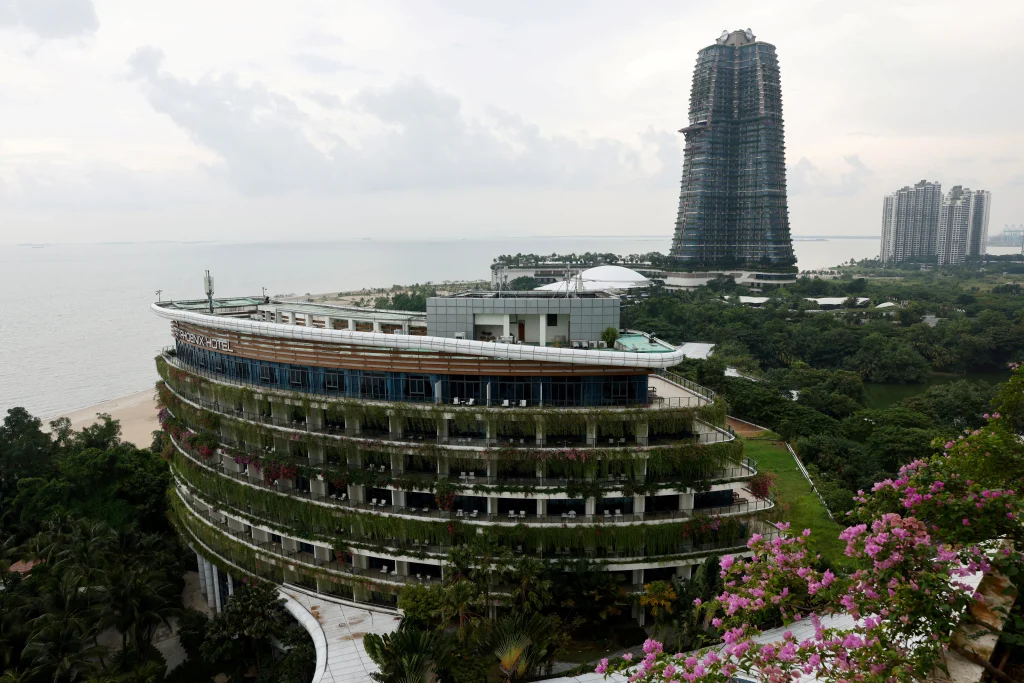
The Malaysian government has since designated the area as part of a special economic zone tied to the Johor-Singapore corridor, an attempt to repurpose the infrastructure for finance and logistics. Forest City illustrates the risk of designing a city around a single external buyer base and a design language- dense high-rise towers with minimal ground-level program- that offers little for a local market to actually use.
San Zhi UFO City, Taiwan
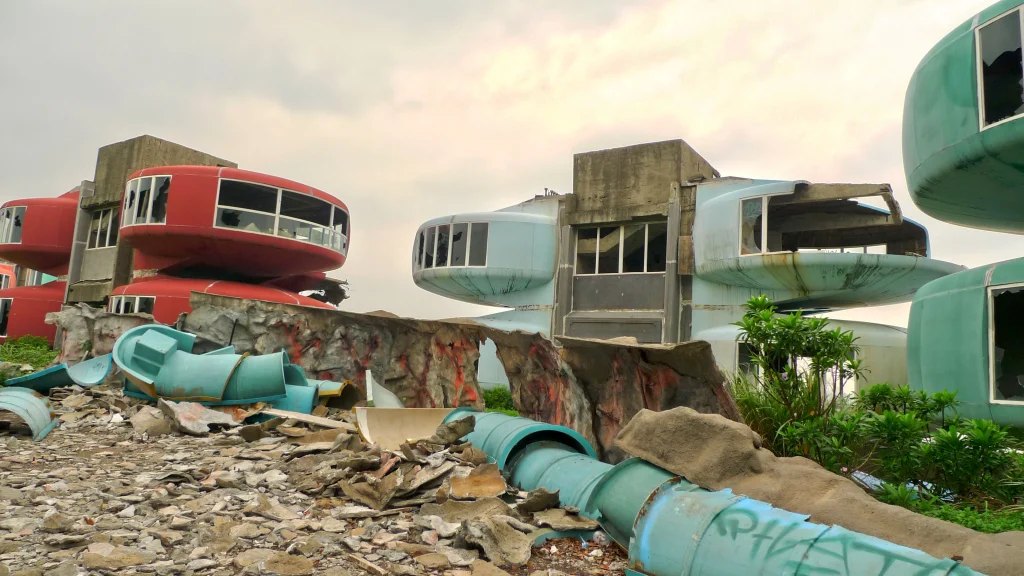
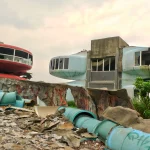
Built in the late 1970s along the coast near Tamsui, San Zhi consisted of pod-shaped vacation villas raised on stilts, each unit a flying-saucer form connected by elevated walkways designed for a futuristic resort community. The developer intended the site as a retreat for U.S. military personnel and wealthy tourists. Construction ran into funding shortfalls, and a string of fatal accidents during the building process, reportedly tied to a disturbed local burial ground, according to local lore, further stalled the project and discouraged investment.
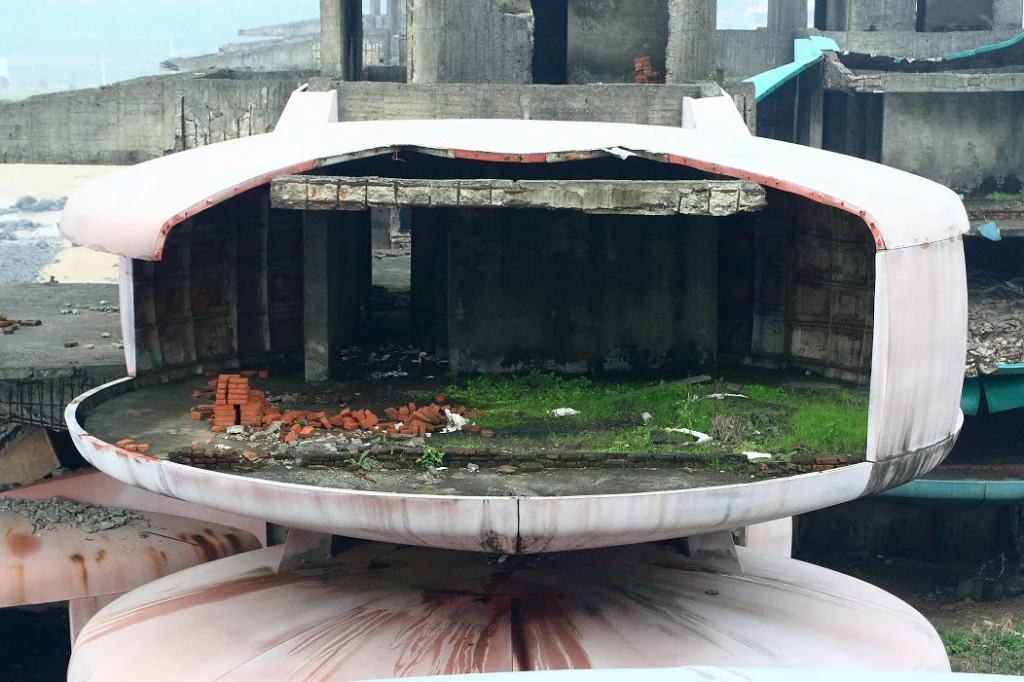
The site was abandoned before completion in the early 1980s and left standing for over two decades, its curved fiberglass and concrete pods deteriorating into a widely photographed ruin. Local authorities demolished most of the structures in 2008 to redevelop the land. San Zhi is a reminder that experimental architectural form, however striking, cannot compensate for an unstable financing structure, and that abandoned buildings left standing for decades become de facto landmarks whether or not that was ever intended.
Seseña, Spain
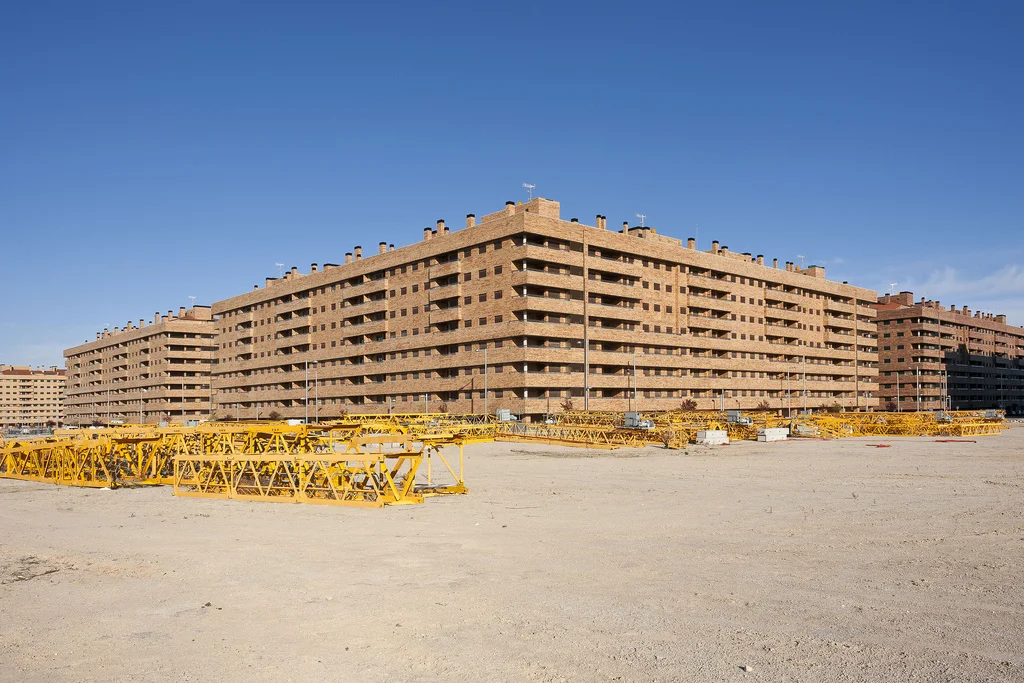
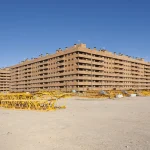
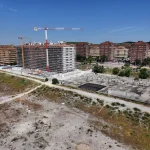
Known locally as “Manhattan on the Steppe,” this development outside Madrid was designed by architect Francisco Hijosa as a dense cluster of 13,500 apartments in towers up to 20 stories, an unusually urban typology for a site surrounded by open Castilian plains with no existing town infrastructure. Construction began in the early 2000s during Spain’s real estate boom. When the 2008 global financial crisis hit, the Spanish property market collapsed, credit dried up, and fewer than half the planned units were ever built or sold.
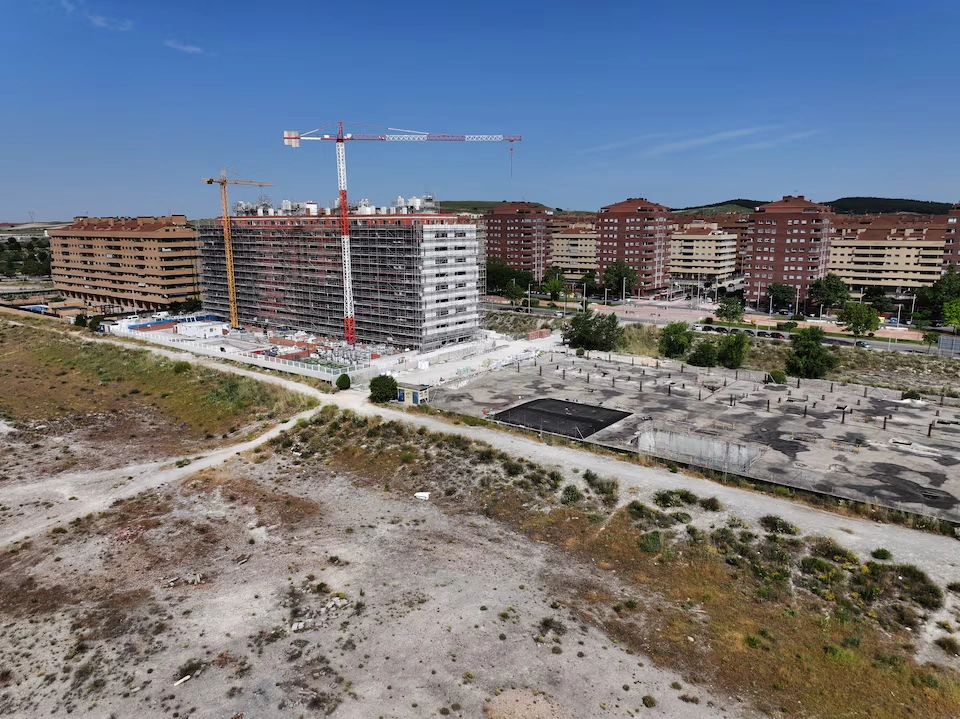
What exists today is a partially occupied, partially derelict complex, disconnected from transit, schools, and commercial services that never materialized. Seseña is frequently used in planning literature as a textbook example of speculative overbuilding, a project scaled to a financing model rather than to any documented demand, dropped onto a site with no supporting urban fabric. Its half-finished towers now stand as a monument to pre-crisis lending practices as much as to architecture.
State Guest Mansions, China
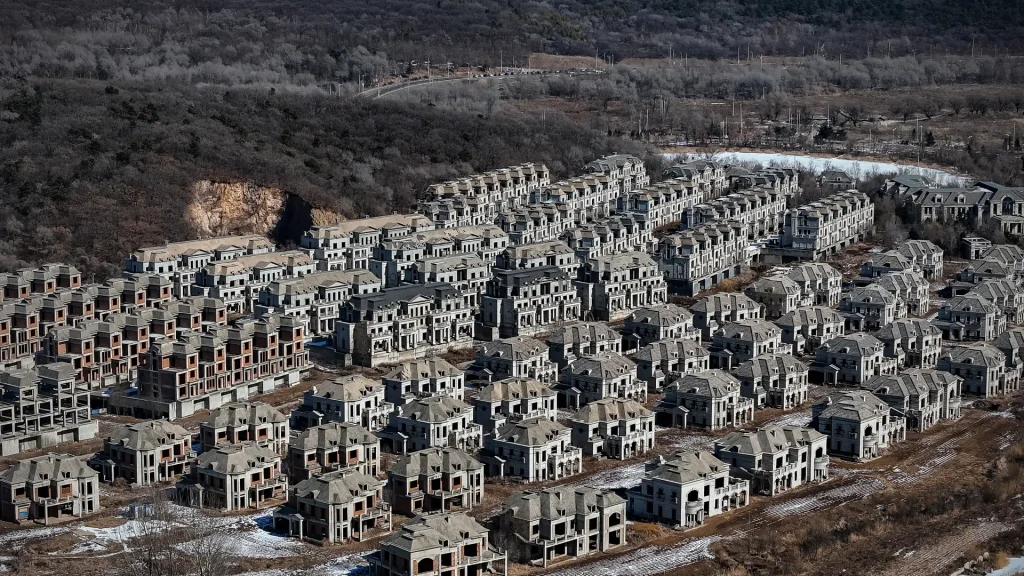
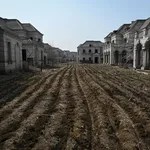
In the hills outside Shenyang, the Greenland Group broke ground in 2010 on 260 European-style villas, complete with marble interiors, chandeliers, and coffered ceilings, intended as guest accommodations tied to the provincial government and as luxury homes for wealthy buyers. Construction halted after about two years.
The reasons remain officially unconfirmed, though local accounts point to corruption investigations and funding that was abruptly cut off following a national crackdown on extravagant, government-linked spending. The site was never completed to habitable standards, and today its shells are used by local farmers for crops and livestock.
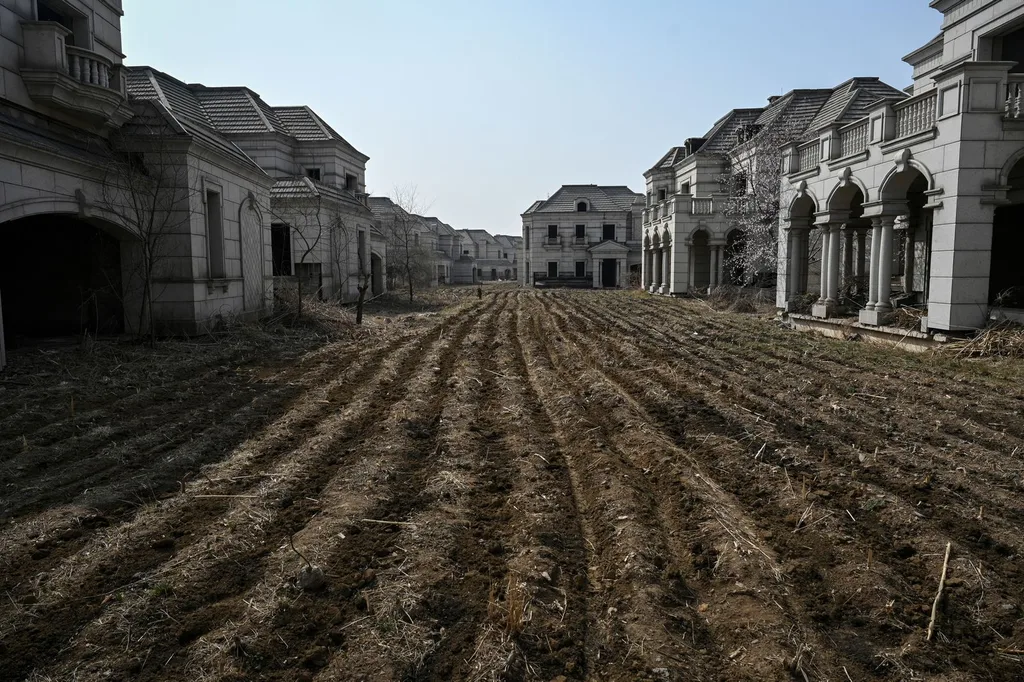
State Guest Mansions is one of many entries in China’s broader inventory of stalled or unsold housing, often called “rotten-tail” projects, and it illustrates how developments tied closely to political patronage and speculative capital rather than genuine housing demand can be abandoned wholesale once that political or financial support disappears, regardless of how far construction has progressed.
Chagan, Kazakhstan
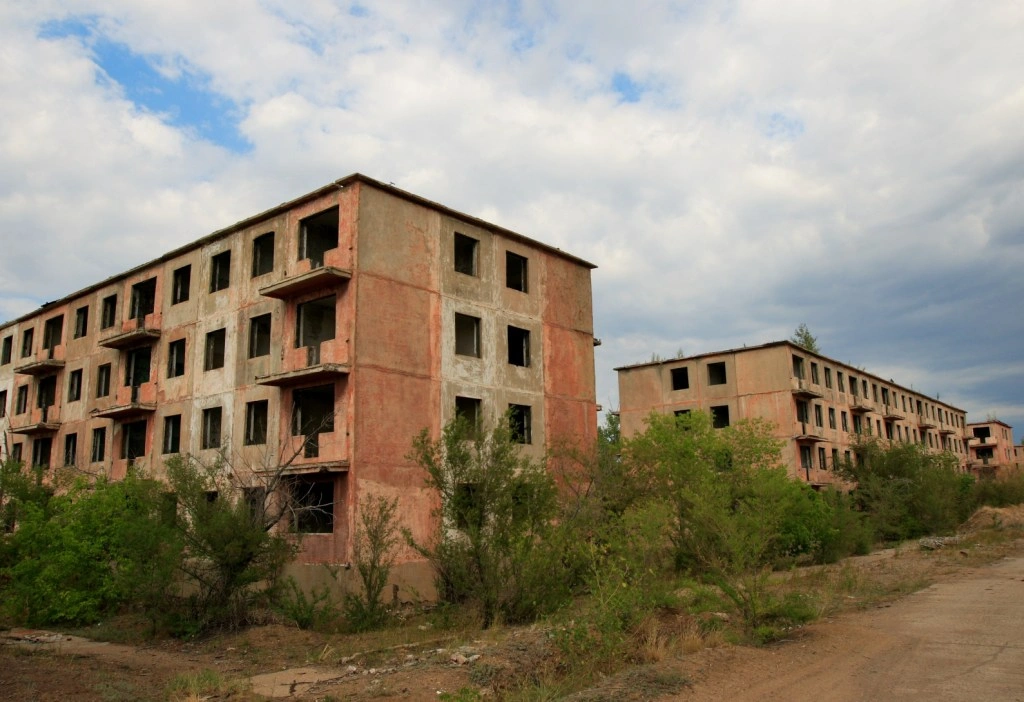
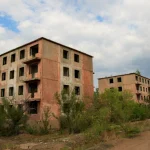
Chagan was a Soviet military airbase town built to house pilots, scientists, and their families supporting operations at the nearby Semipalatinsk Nuclear Test Site, where more than 450 nuclear detonations took place between 1949 and 1989. The settlement included barracks, family housing blocks, schools, and a large runway built to standard Soviet military planning templates. It was evacuated after the test site closed with the dissolution of the Soviet Union in 1991, as its entire economic and military rationale disappeared overnight.
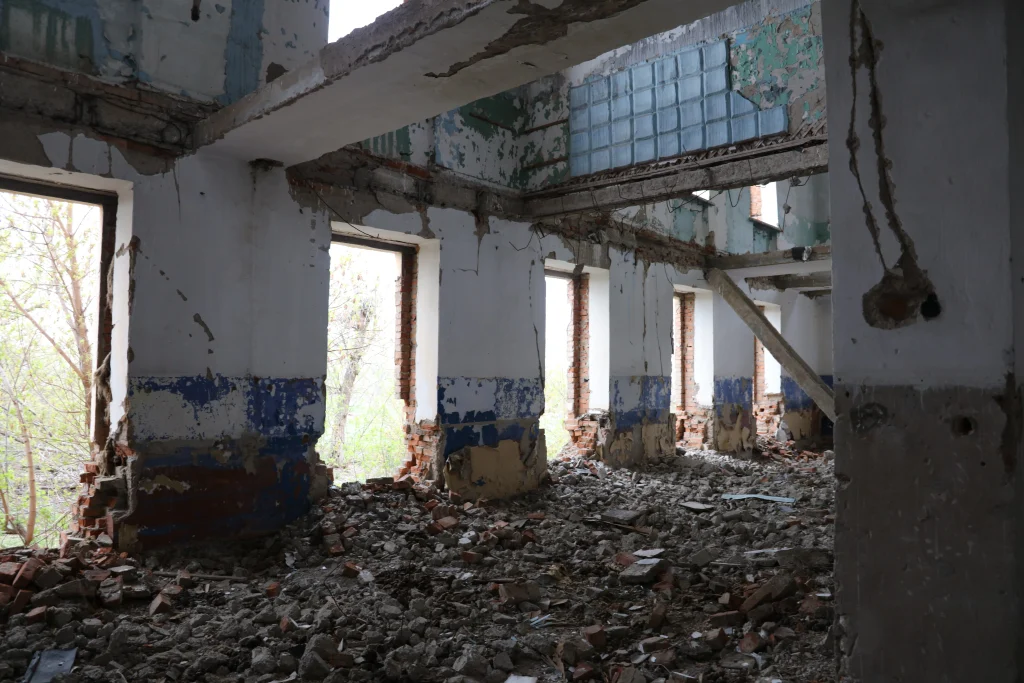
What remains is a fully intact grid of concrete apartment blocks and hangars, now empty, alongside Lake Chagan, an artificial reservoir created by a 1965 nuclear test and still radioactive today. Chagan is an extreme case of a single-industry settlement with no diversified urban base. When the state function that justified its existence ended, there was no secondary economy, population, or infrastructure demand to sustain it, and the town was left standing exactly as it was on the day it emptied.
Kolmanskop, Namibia
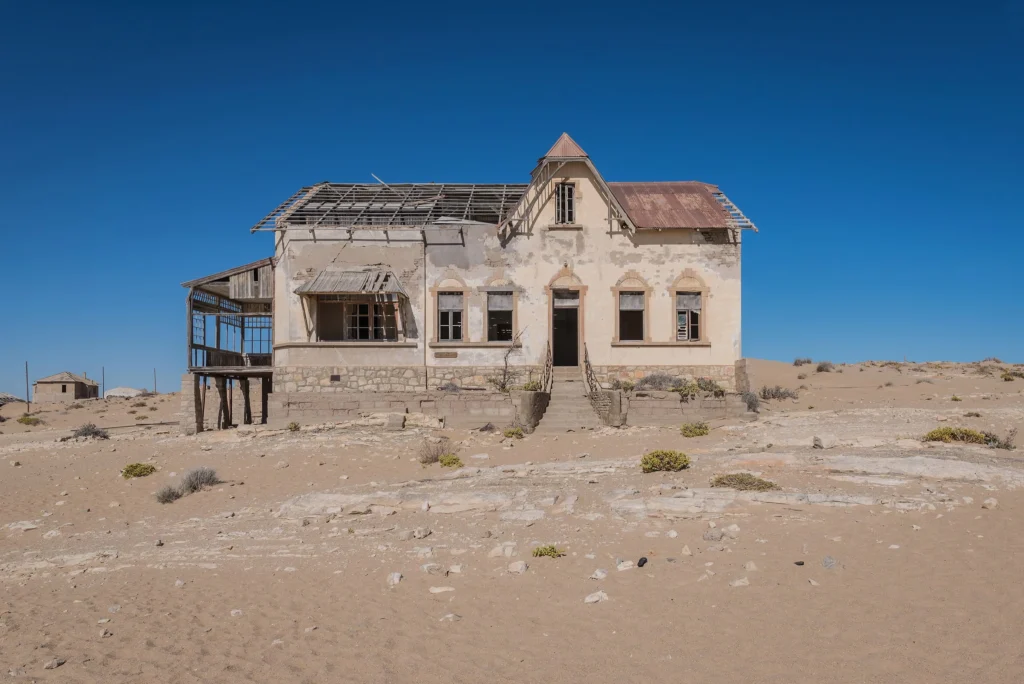
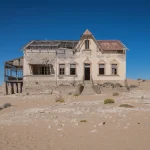
Founded in 1908 after a railway worker found a diamond in the sand near Lüderitz, Kolmanskop grew rapidly into a fully equipped German colonial town, with a hospital, ballroom, school, bowling alley, and the first X-ray station in the Southern Hemisphere, all built to European architectural standards in the middle of the Namib Desert. The town thrived through the 1920s on diamond mining revenue. Richer diamond deposits were discovered further south near the Orange River in the 1920s, and mining operations gradually relocated there, taking Kolmanskop’s economic base with them. The town was fully abandoned by 1954.
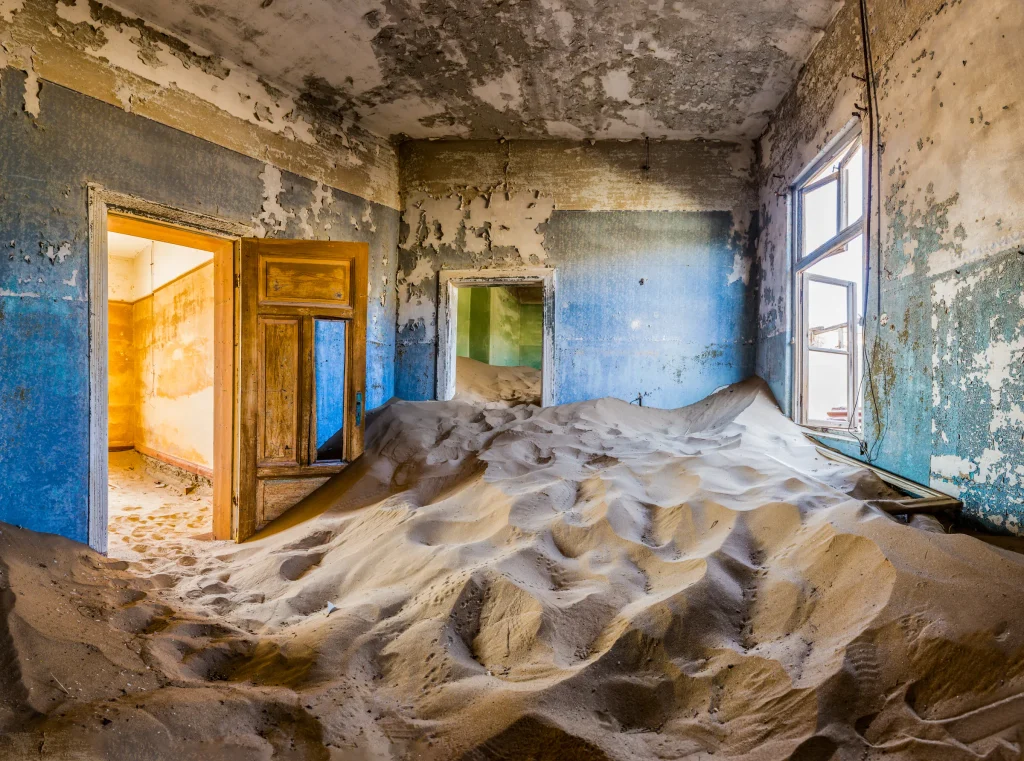
Decades of desert wind have since filled its ornate rooms with drifts of sand, a condition now preserved, since the site operates as a heritage tourist destination. Kolmanskop stands as one of the clearest examples of a resource-extraction town with no built-in transition plan, a settlement whose entire urban justification vanished the moment the resource it depended on ran out.
Varosha, Cyprus
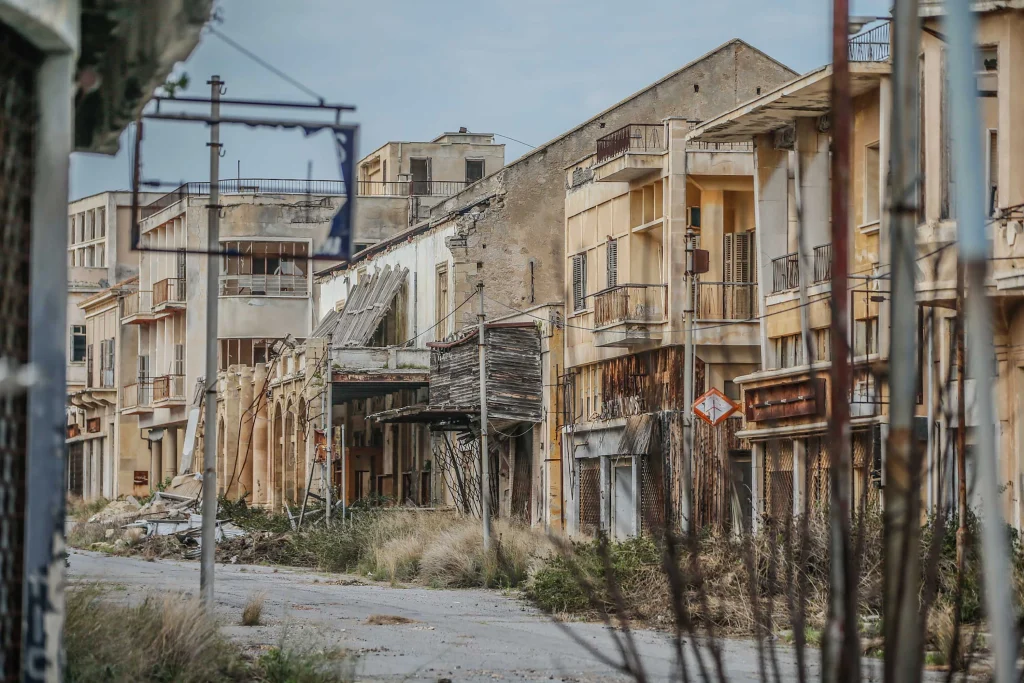
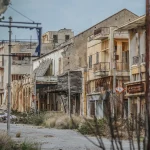
Before 1974, Varosha, a district of Famagusta, was the Mediterranean’s premier resort strip, lined with modernist high-rise hotels, some over a dozen stories, that hosted international celebrities and represented some of the most advanced beachfront resort architecture in the region at the time.
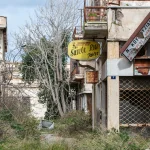
The Turkish invasion of Cyprus that year led to the district’s complete evacuation within days, and it was subsequently fenced off by the Turkish military, sealed from public access for nearly five decades. Inside the fence, hotel lobbies, shop displays, and furnished rooms have sat essentially frozen since 1974, now overtaken by decades of unchecked vegetation growth and structural decay from salt air.
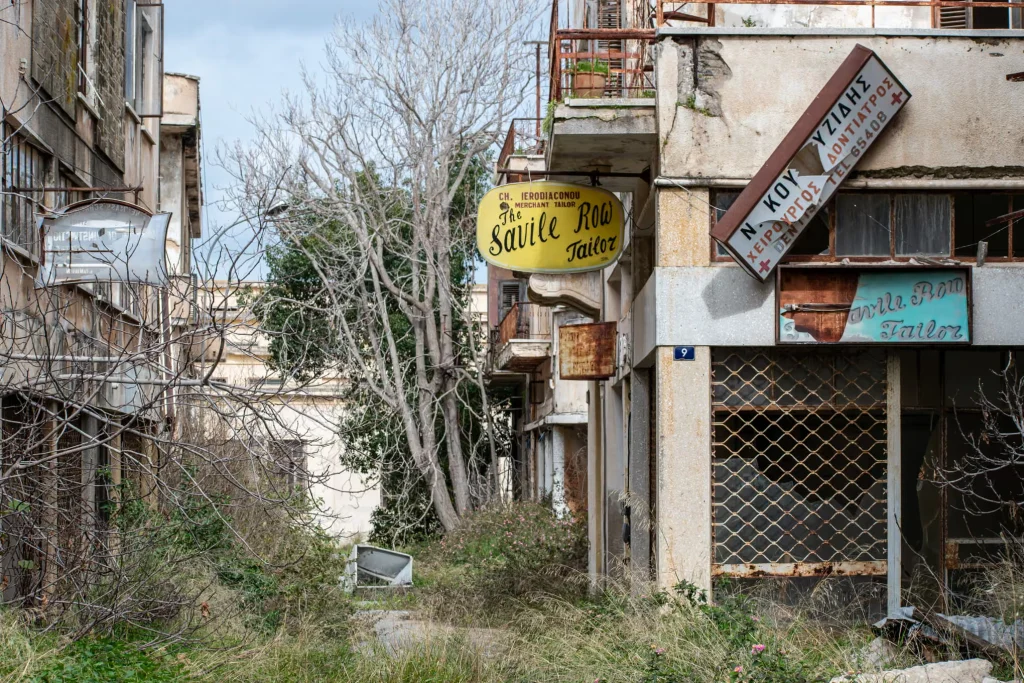
Partial reopening of some streets began in 2020, though the area remains largely restricted and its long-term status politically unresolved. Varosha is a rare case where the built environment itself was not the point of failure. A thriving, well-designed resort district was rendered instantly obsolete by geopolitics, an example of how urban fate can be decided entirely outside the field of planning or design.
Pripyat, Ukraine
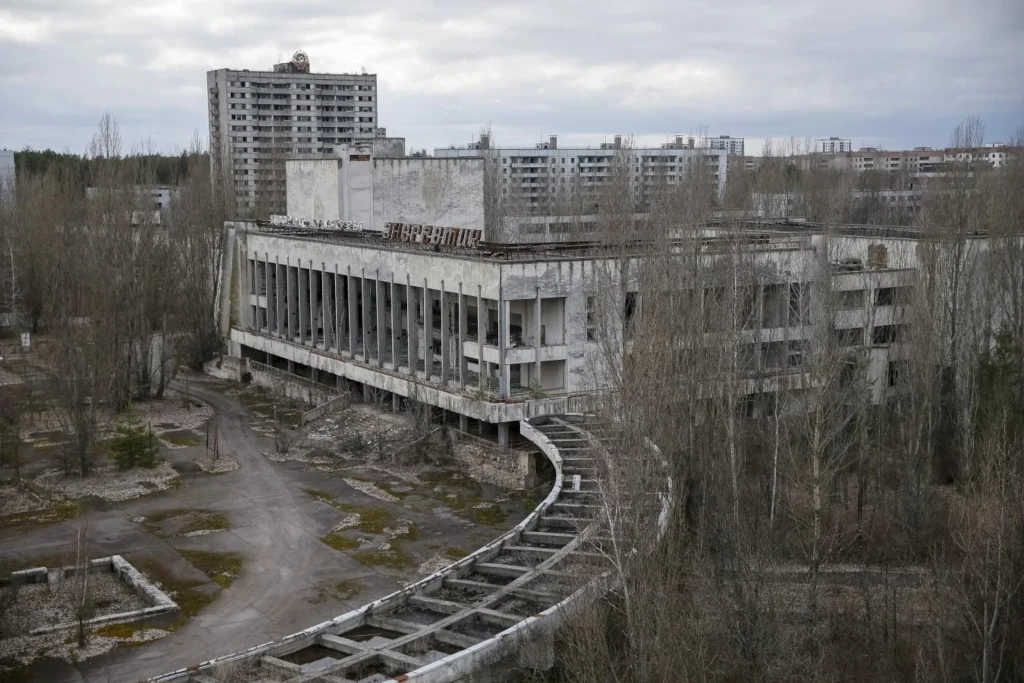
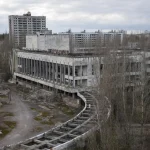
Built in 1970 to house workers at the Chornobyl Nuclear Power Plant, Pripyat was a model Soviet city, designed with wide boulevards, generous green space, a cultural palace, an amusement park scheduled to open days after the disaster, and modern apartment blocks for a population that reached nearly 50,000. It represented Soviet planning at its most idealized, orderly, well-resourced, and centrally provided. Following the reactor explosion on April 26, 1986, the entire city was evacuated within 36 hours, with residents told the absence would be temporary. It became permanent.
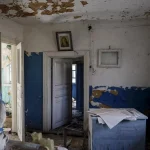
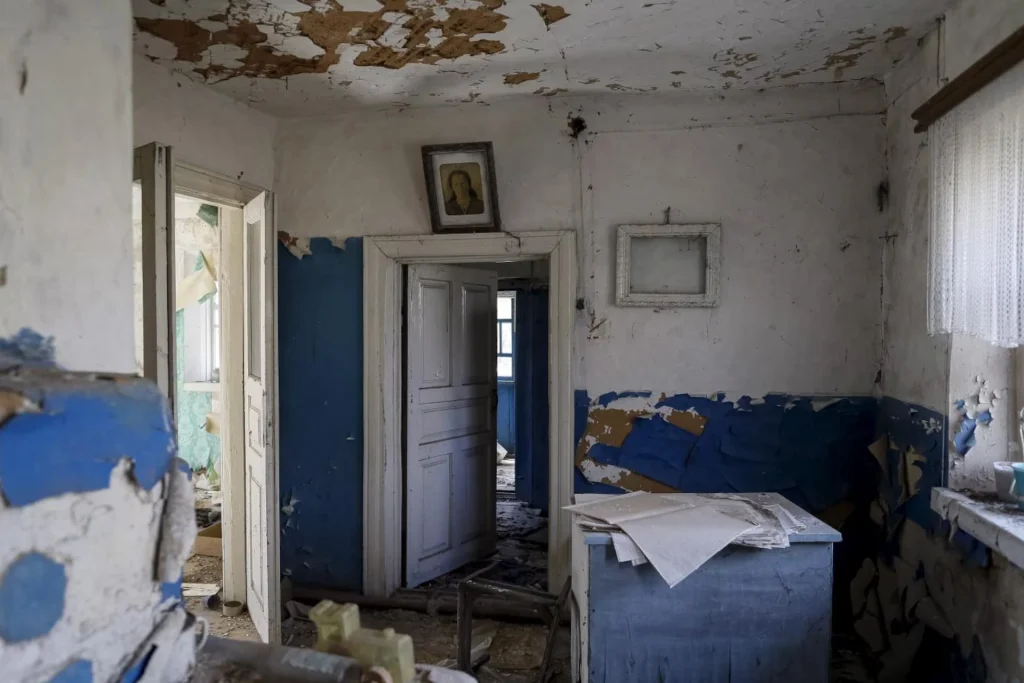
Pripyat remains within the Chornobyl Exclusion Zone, its buildings intact but stripped by decay, looting, and nature reclaiming its streets and interiors. As an urban planning case, Pripyat is unmatched in showing how completely a well-functioning city can be erased not by design failure but by a single external catastrophe, leaving behind an entire settlement as a fixed record of a single, interrupted day.
None of these places failed because nobody could draw a coherent plan. Renderings, infrastructure, and even full construction were often already in place. What was missing was the underlying structure that makes a city work over time: diversified demand, legal security, institutional stability, or simply a population with a reason to stay. For architects and planners, that is the real lesson embedded in these ruins: a city is not finished when the last building is topped out. It is only tested once people are expected to live in it for decades, through market cycles, politics, and everything a masterplan cannot draw in advance.