


Virginia holds more data centers than any other place on earth. The cluster around Loudoun County and neighboring jurisdictions has grown so dense that it shapes electricity demand, water use, land prices and local politics across a wide region. On September 18, 2026, Governor Abigail Spanberger responded with a package she called the nation’s most comprehensive data center accountability effort.
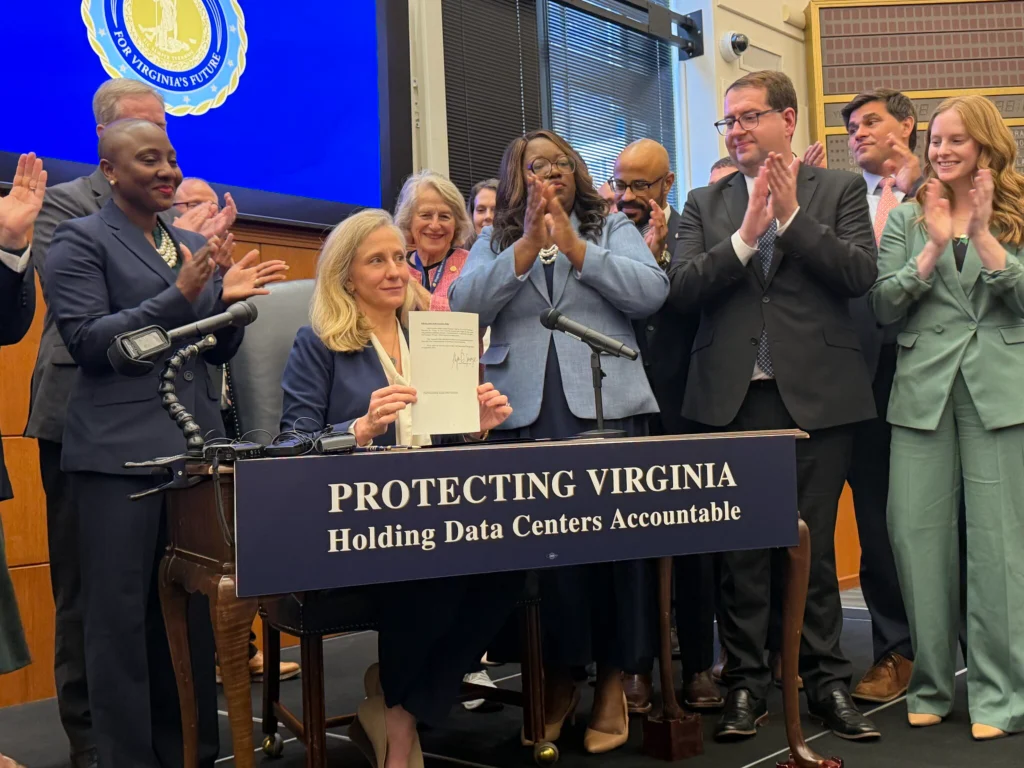
The centerpiece is a new Data Center Accountability Framework built around five requirements: greater transparency, stronger environmental protections, lower energy costs for ordinary customers, accelerated clean energy, and a better deal for workers. The same day she signed Executive Order 22, which puts several of those measures into force at once and creates a new AI Task Force to examine related risks.
Ending secrecy and restoring local say
One of the clearest changes is the ban on nondisclosure agreements for commercial data center projects. State agencies and employees under the governor’s authority can no longer sign or require NDAs that keep material information about proposed facilities out of public view. Communities have long complained that deals were negotiated in private and announced only after key decisions had been made. The new rule aims to open that process.
The framework also targets by-right approval. Any data center expected to draw more than 25 megawatts must now obtain local permit approval, regardless of earlier zoning. This removes the automatic path that existed in some counties and forces public hearings and formal votes. Local governments gain a stronger formal role in deciding whether and where large facilities can locate.
Community benefits agreements are another requirement. Developers are expected to deliver concrete, listed benefits to nearby residents rather than general promises. The state intends to provide guidance and resources so that localities can negotiate effectively.
Energy costs and grid pressure

Data centers are among the largest electricity consumers in Virginia. Their rapid growth has driven new transmission projects and raised questions about who pays. The framework directs that large-load users should carry a more equitable share of generation and transmission costs. Residential customers should not absorb the bulk of infrastructure built primarily to serve data centers.
The order also limits the ability of new large facilities to receive certain state site-development assistance and removes them from some fast-track permitting programs. Operators that receive priority grid access based on clean-energy commitments face potential penalties if they later fail to meet those commitments.
These measures respond to a practical problem. When one sector’s demand rises sharply, the costs of meeting that demand can spill onto everyone else unless rules allocate them more carefully.
Environmental and operational guardrails
The framework calls for stronger standards on water use, noise and emissions from backup generators. Expedited work on statewide noise regulations is already under way. Backup generation, often diesel or gas, is to be reviewed with the goal of reducing emissions. Clean energy procurement is to be accelerated so that data center growth does not push the state off its broader climate trajectory.
A proposed VA-LEAD designation would create a voluntary scoring system, similar in spirit to LEED, covering energy, water, noise, workforce, clean power and community benefits. The idea is to make performance visible and to reward operators that go beyond minimum requirements.
Workforce and AI concerns

The fifth pillar focuses on local jobs and training. The order encourages local hiring and, where possible, labor agreements. It also prioritizes Virginia businesses in the supply chain. At the same time, Executive Order 22 creates an AI Task Force led by senior administration officials. The group is charged with examining workforce displacement, data privacy and cybersecurity risks linked to the rapid expansion of artificial intelligence, much of which runs inside the same data centers.
The combination is deliberate. Data centers are the physical infrastructure of the AI economy. The framework tries to manage the physical impacts while a parallel effort studies the broader social and economic effects of the technologies those buildings enable.
What happens next
Many elements of the framework require legislation. Governor Spanberger has signaled that she will work with the General Assembly in the 2027 session to write key standards into statute. Executive Order 22 handles the pieces that can be advanced immediately through agency directives and the governor’s authority over state programs.
The policy does not impose a blanket moratorium. New projects can still move forward, but under tighter rules on disclosure, local approval, cost allocation and environmental performance.
Supporters see this as a necessary rebalancing after years of rapid, lightly constrained growth. Critics on one side argue it still allows too much development; on the other, that it risks slowing investment in a sector that has brought tax revenue and construction jobs.
Architecture, infrastructure and public trust
Data centers are often treated as purely technical objects. In reality they are large pieces of architecture and infrastructure that occupy land, draw power and water, generate noise and reshape local economies. Virginia’s new framework treats them as such. It insists that the public has a right to know what is proposed, that localities retain meaningful authority, and that the costs of growth should not fall disproportionately on households that never asked for the servers in the first place.
Whether the detailed regulations of Virginia data center accountability framework, that follow will match the ambition of the September 18 announcement remains to be tested in practice. What is already clear is that the state with the densest concentration of data centers has decided the previous model of limited oversight is no longer sufficient. The new rules attempt to put transparency, cost fairness and local voice at the center of future development. How well they succeed will shape both the physical landscape of Northern Virginia and the broader national conversation about the infrastructure of the digital age.