

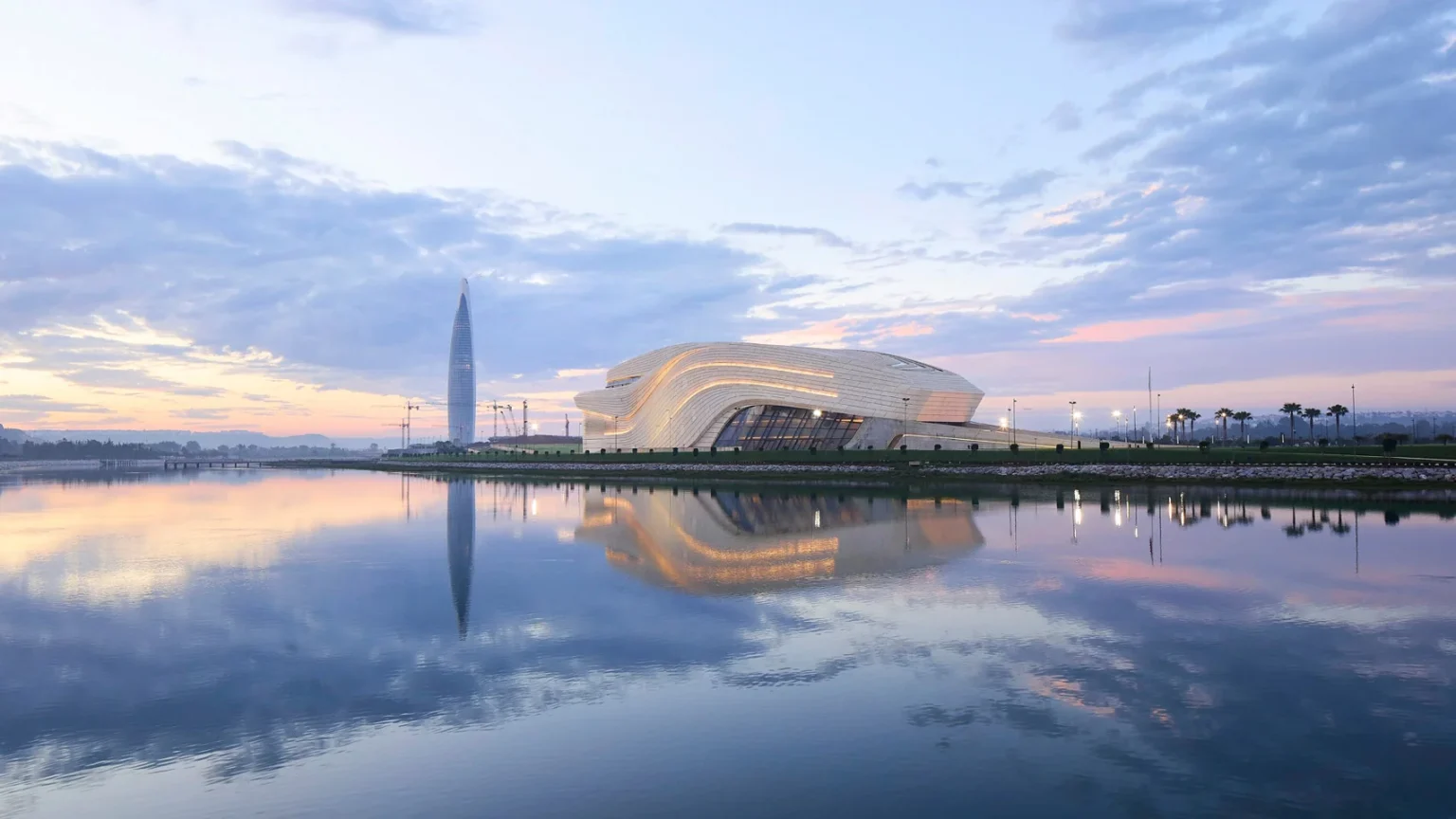


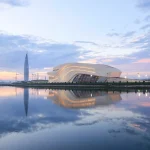
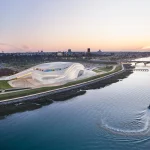
Sixteen years after ZHA first presented the design, the Théâtre Royal de Rabat has finally opened on the banks of the Bouregreg River. The building stands between the historic cities of Rabat and Salé, near the Mohammed VI Tower, and marks ZHA’s first completed project on the African continent.
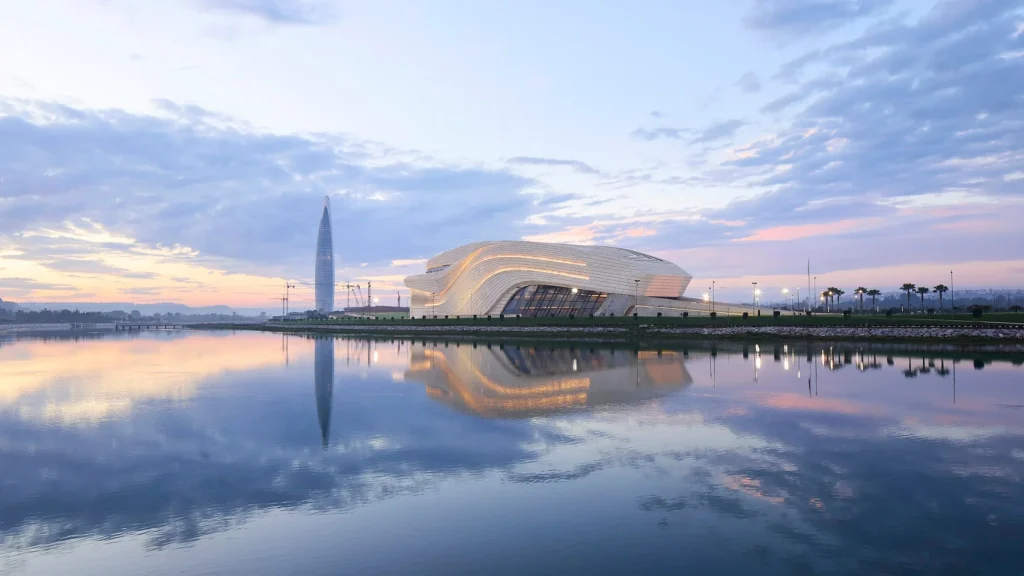
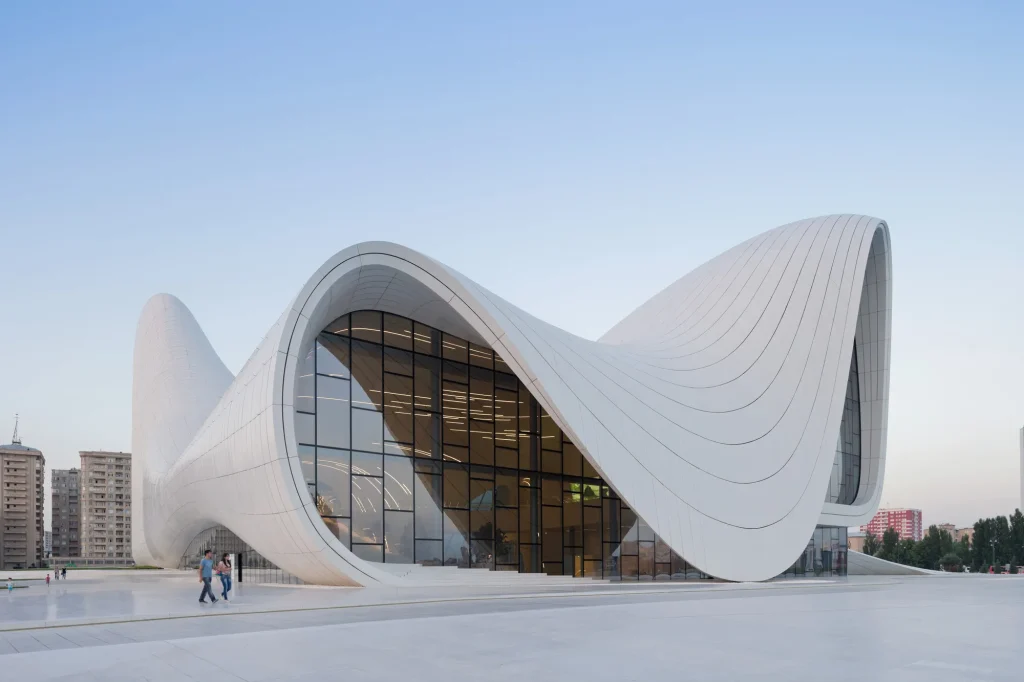
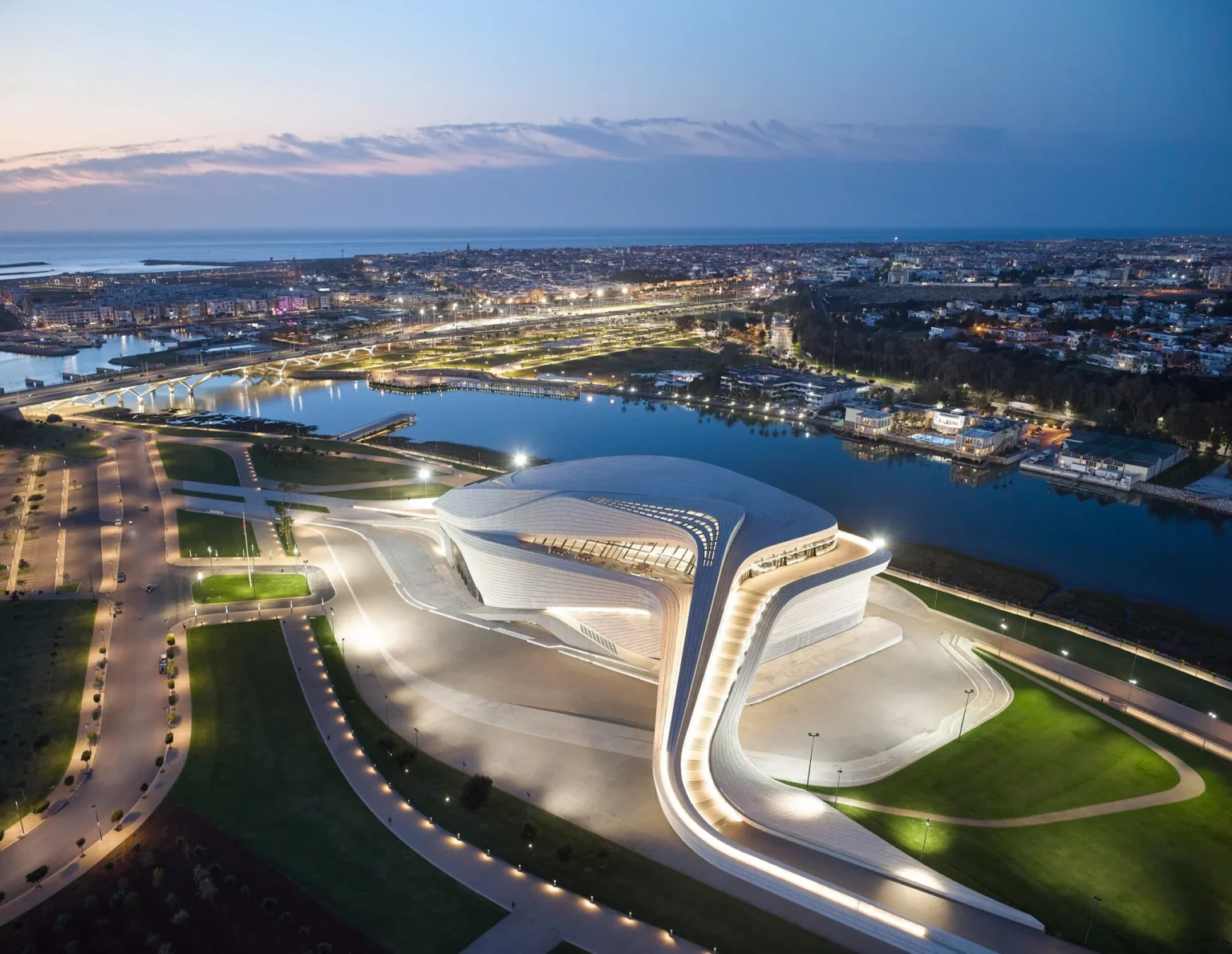
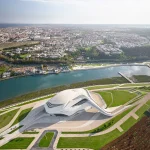
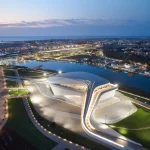
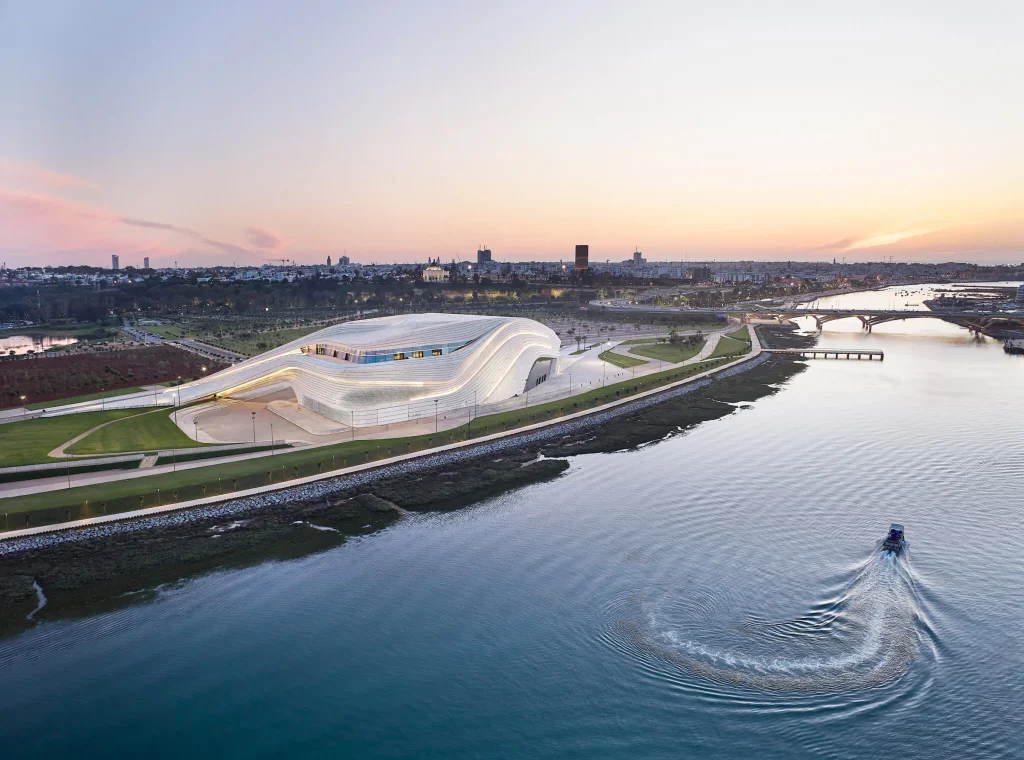
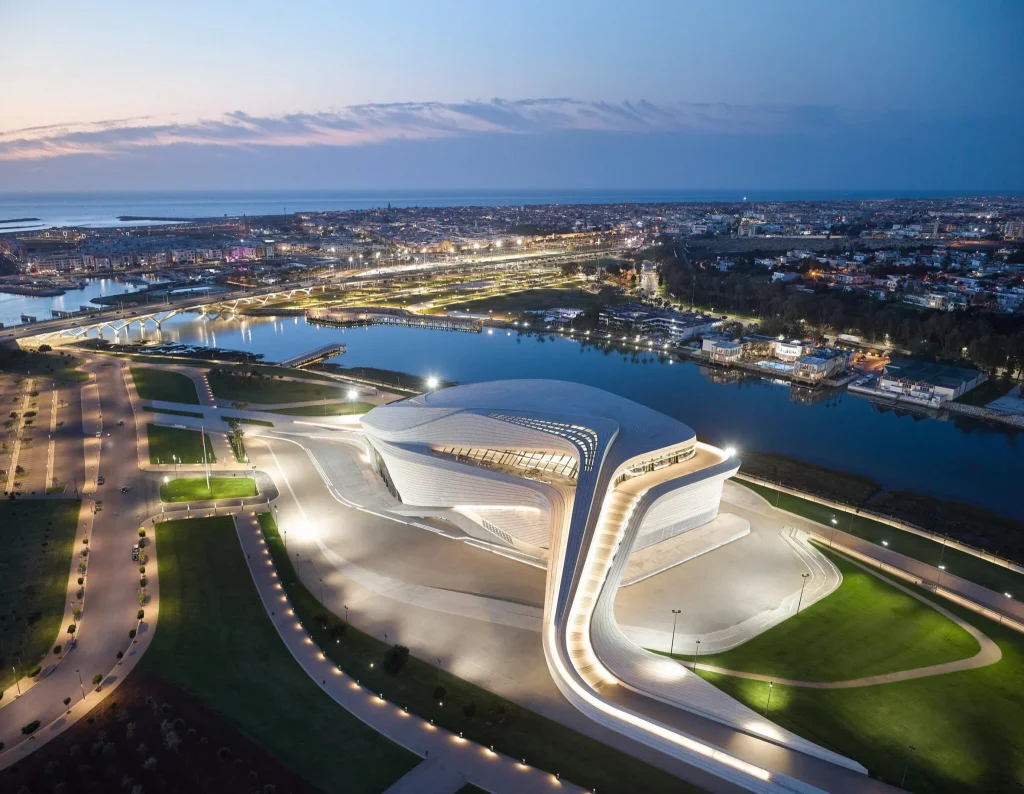
The form is unmistakable. A continuous, sweeping white volume rises from the riverbank landscape, its curves following the topography and the flow of water that separates the two cities. From a distance, what appears as a single sculptural mass contains three distinct performance venues, a canyon-like foyer, and a restaurant overlooking the river. The project was conceived as a secular performance space capable of transporting audiences into an imaginary realm, a description Hadid herself offered when the design was first revealed in 2010.
A River-Born Form
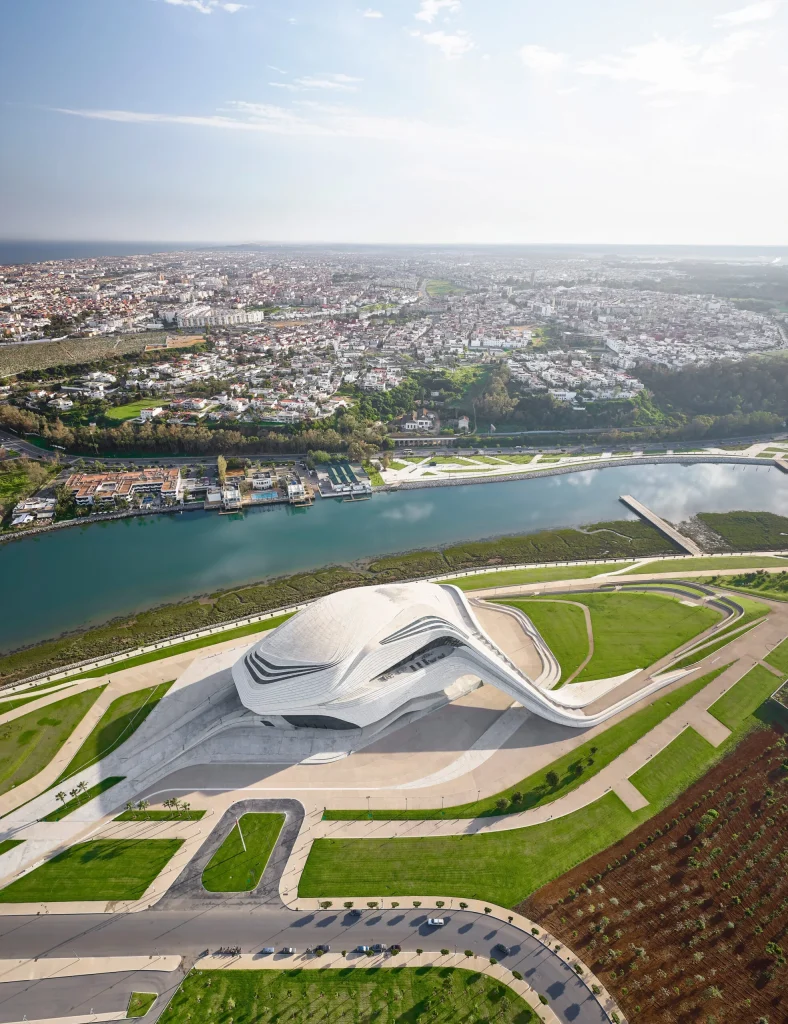
The design takes its primary cue from the Bouregreg itself. Rather than imposing a foreign geometry on the site, ZHA allowed the river’s course and the surrounding terrain to generate the building’s exterior. The resulting envelope is fluid and continuous, wrapping the performance spaces in a single gesture that seems to emerge from the ground and dissolve back into the landscape.
This approach is characteristic of Hadid’s later work, in which landscape and architecture are treated as continuous fields rather than separate domains. At Rabat, the strategy produces both a strong civic presence and a surprisingly soft relationship to the river edge. The building does not dominate the waterfront; it participates in it.
Three Performance Spaces
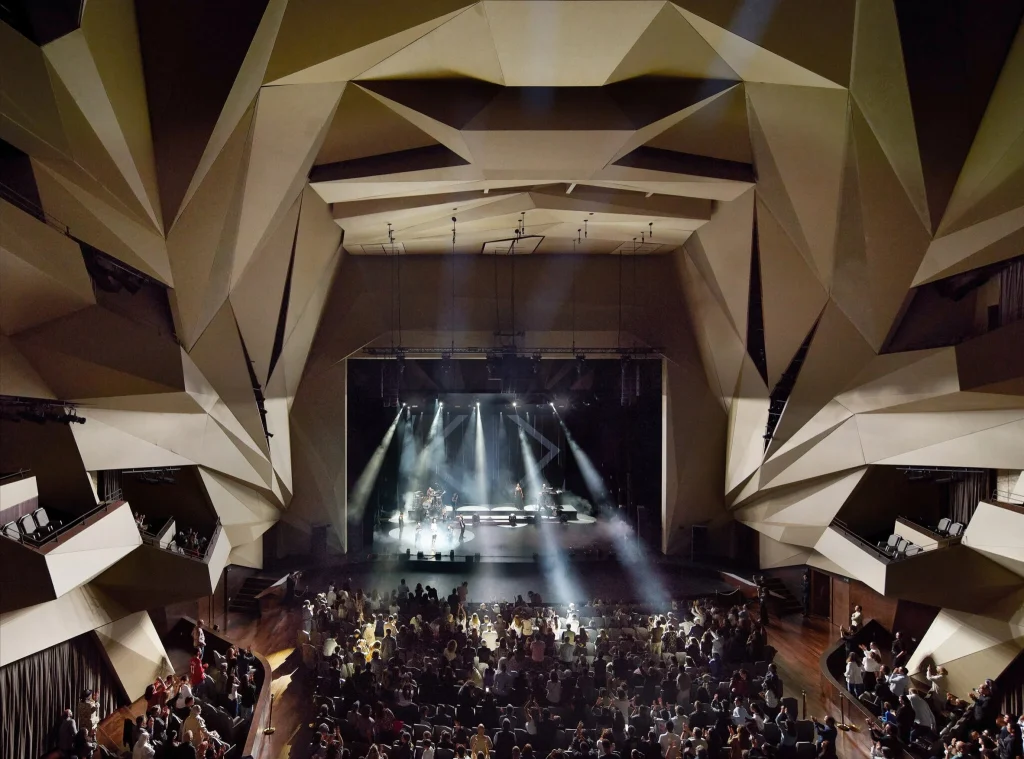
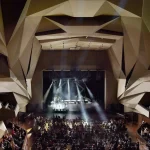
The largest venue is the Auditorium, seating 1,821 people. Its interior is defined by crystal-like, faceted surfaces that draw directly from the tradition of muqarnas, the three-dimensional honeycomb ornament found throughout Islamic architecture. These facets are not merely decorative. Developed in collaboration with Arup, they function as acoustic treatment, distributing sound evenly across the hall. The result is a space that feels both culturally rooted and technically precise.
Adjacent to the main hall is the Studio Theatre, a more intimate 250-seat room. Its seating can be reconfigured, allowing the space to shift from a flat-floor configuration to a more conventional proscenium arrangement. This flexibility supports experimental work, rehearsals, and smaller-scale performances that would be lost in the larger auditorium.
Outside, an open-air amphitheater accommodates approximately 7,000 spectators. Oriented toward the river, it extends the cultural program beyond the enclosed building and into the public landscape. On warm evenings, the amphitheater becomes the most visible expression of the theatre’s civic role.
The Canyon Foyer
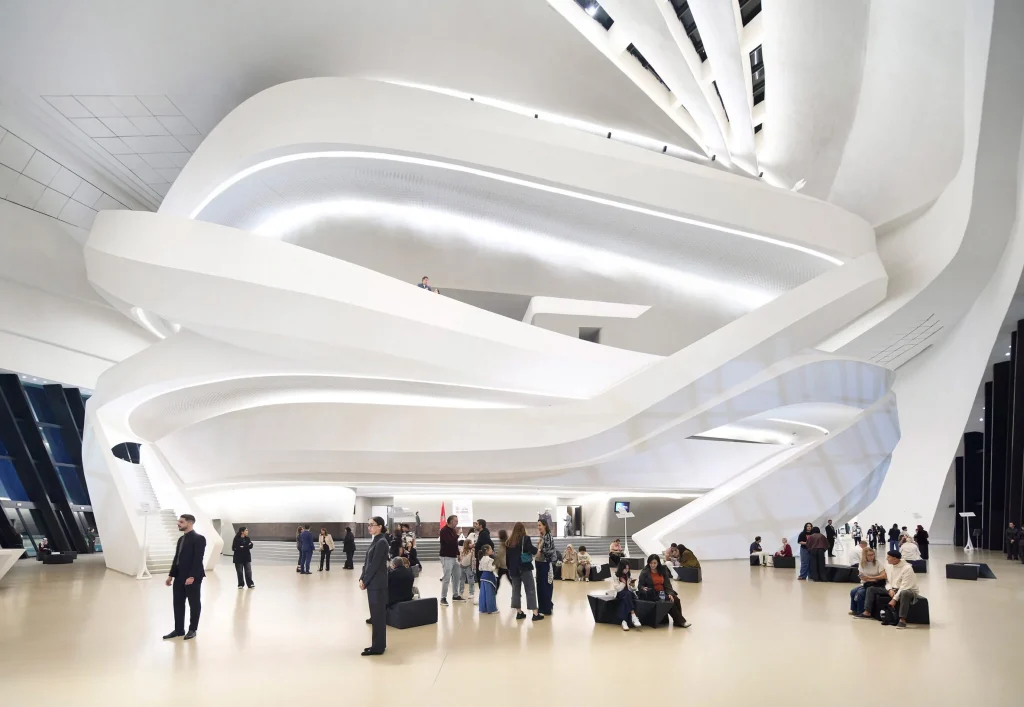
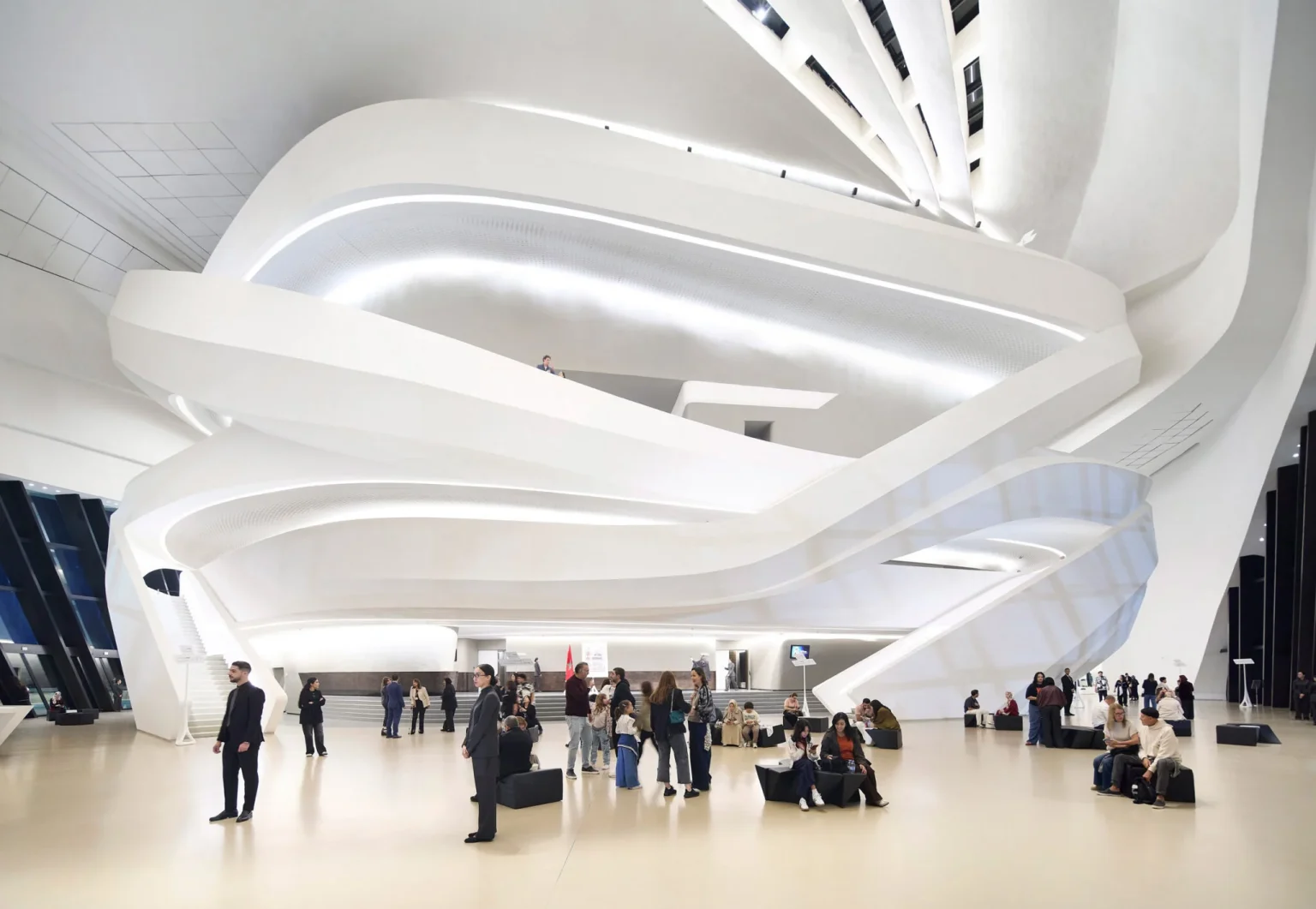
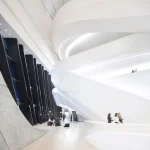
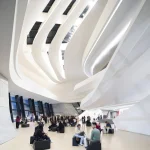
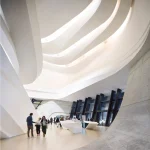
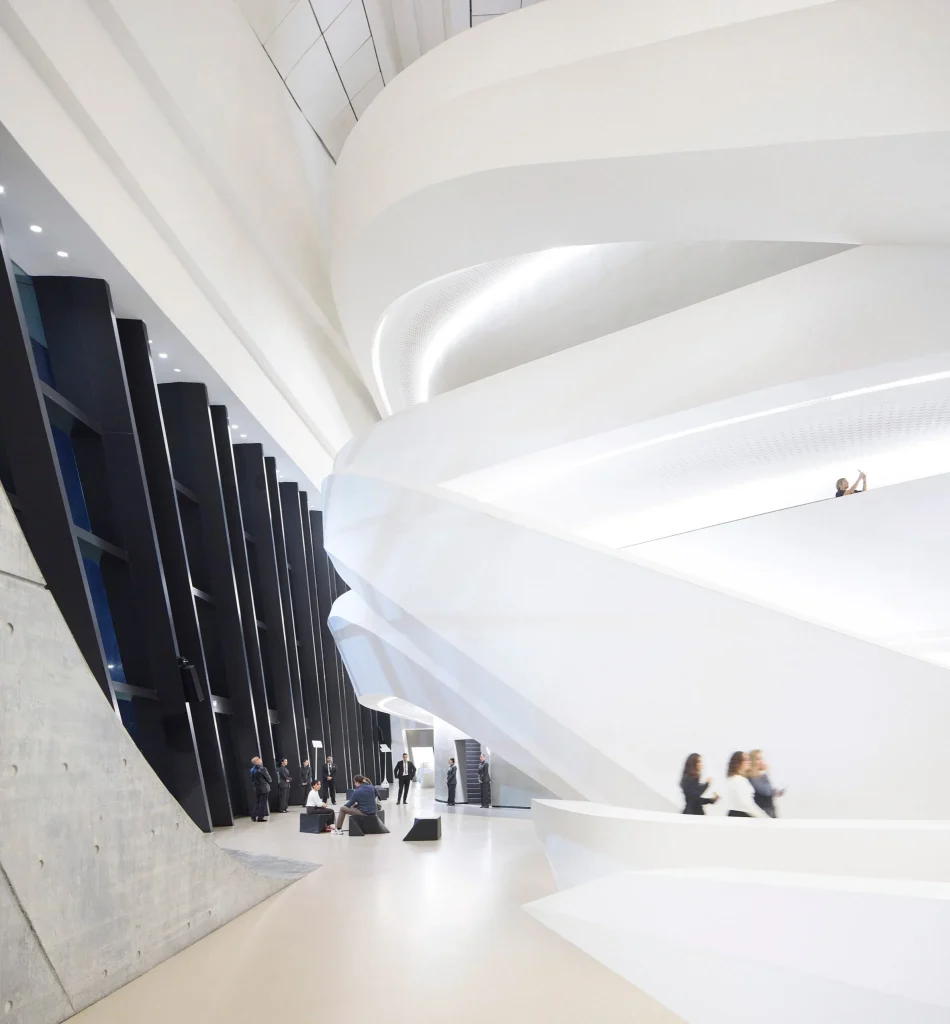
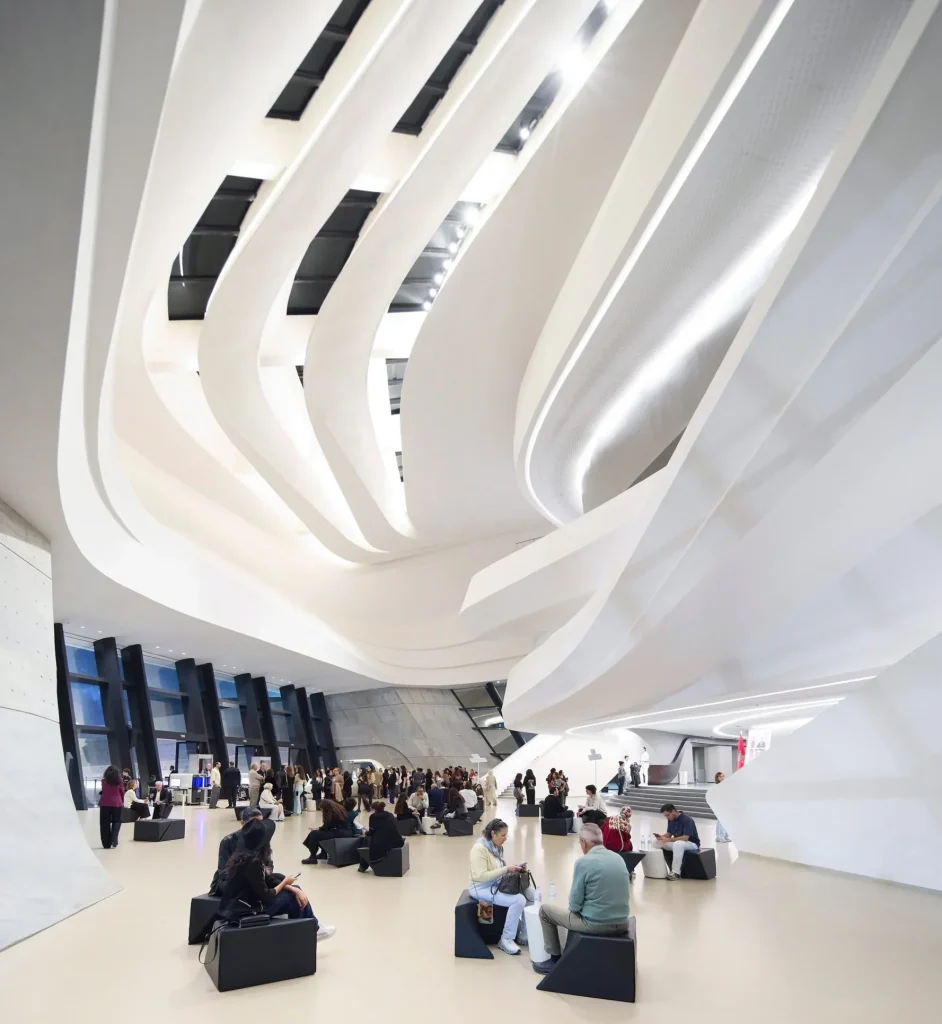
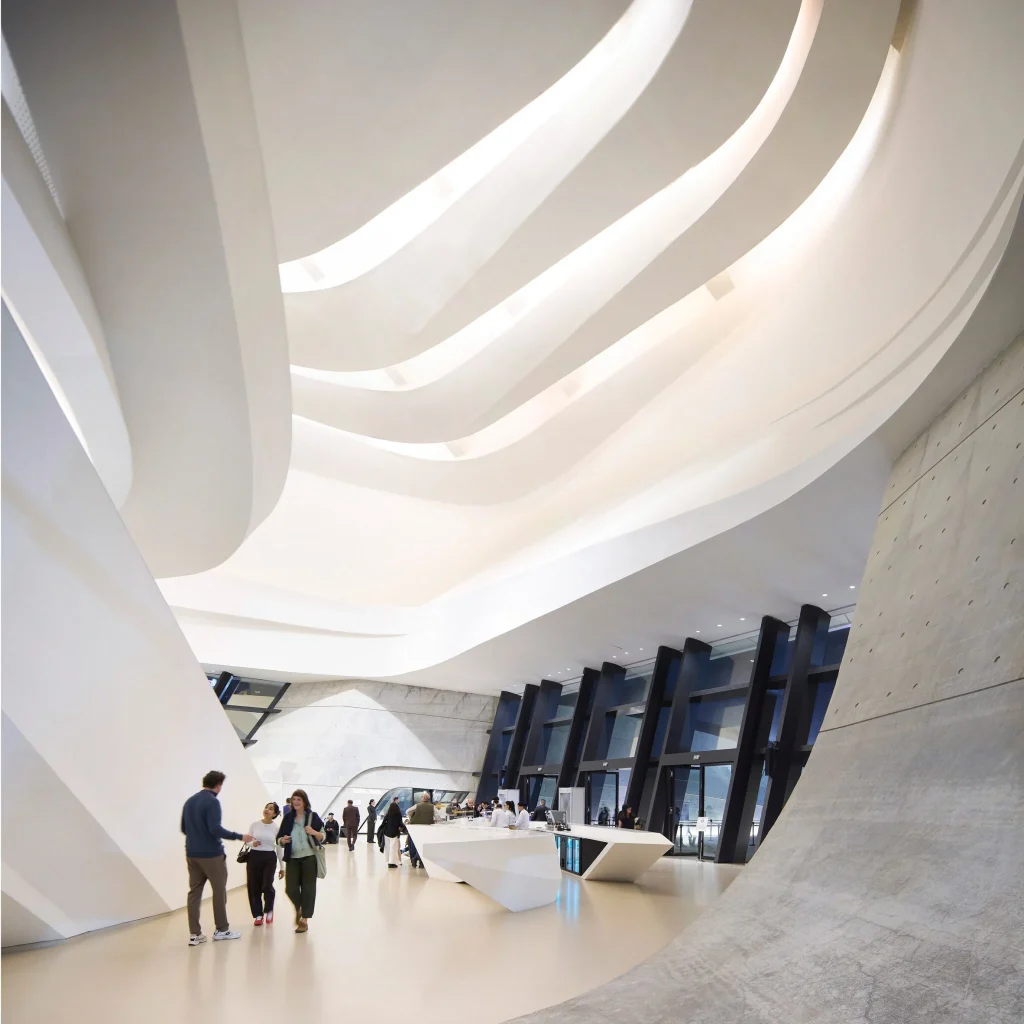
Connecting these spaces is a triple-height foyer that ZHA describes as canyon-like. Interlocking staircases fold through the volume like draped fabric, guiding visitors upward toward a restaurant with views across the Bouregreg. The foyer is conceived as more than circulation. It is a place of gathering before and after performances, a social threshold between the city and the stage.
The continuous surfaces and flowing geometry create an intuitive path through the building. Visitors are led rather than directed, an experience that echoes Hadid’s long-standing interest in architecture as movement.
Context and Ambition
The Théâtre Royal forms part of a broader cultural program initiated under King Mohammed VI, aimed at positioning Rabat as a city of light and cultural capital. The project sits within the larger Bouregreg Valley development, which has transformed the river corridor between Rabat and Salé into a new urban landscape of parks, cultural institutions, and mixed-use districts.
That the building took more than a decade and a half to reach completion reflects both the ambition of the design and the complexities of delivering large cultural projects. Construction began in 2014. Hadid died in 2016, leaving the studio to complete the project under the continued direction of Patrik Schumacher and the project team. The official opening in April 2026 finally brought the long-awaited venue into public use.
Secular Yet Transcendent
Hadid’s description of the theatre as “secular” remains one of the most revealing comments about the project. She distinguished the building from religious architecture while insisting on its capacity to elevate. The muqarnas-inspired surfaces, the soaring foyer, and the riverine form all contribute to an atmosphere that is neither neutral nor purely functional. The architecture aims to move its occupants, even as it remains firmly within the realm of cultural rather than sacred space.
This balance between formal inventiveness and cultural reference is one of the project’s strengths. The building does not paste traditional motifs onto a contemporary shell. It absorbs the geometric intelligence of muqarnas into a modern acoustic and spatial system, producing something that feels both new and familiar.
Théâtre Royal de Rabat: A Landmark of Continuity
For ZHA, completing the Théâtre Royal de Rabat carries particular significance. It is the studio’s first finished work on the African continent and one of the last major projects initiated during Hadid’s lifetime. The building demonstrates the persistence of her formal language while also showing how that language can adapt to a specific cultural and geographic context.
Standing on the riverbank at dusk, with light catching the white curves and the water reflecting the form, the theatre appears less like an object placed on the site and more like a natural extension of it. That quality of belonging, achieved through more than fifteen years of design and construction, may be the project’s most lasting achievement.
The Théâtre Royal de Rabat does not simply add another performance venue to Morocco’s cultural map. It offers a model of how contemporary architecture can engage local tradition, landscape, and civic ambition without reducing any of them to ornament. In doing so, it fulfills the promise Hadid articulated at the outset: a space that is secular in purpose yet capable of transporting those who enter it.