

Cities have always been difficult to understand. They grow through decisions made by different generations, absorb the consequences of political and economic changes, and evolve through millions of individual actions that rarely follow a predictable pattern. Architecture has traditionally attempted to make sense of this complexity through drawings, physical models, maps, surveys, and, more recently, digital simulations. Today, however, a new technology promises something considerably more ambitious: the ability to create a living digital representation of the city itself.
Urban digital twins are transforming how architects, planners, engineers, and public authorities examine the built environment. By combining architectural models, geographic information systems, sensor networks, environmental data, and artificial intelligence, they offer an opportunity to observe buildings and urban systems as interconnected entities rather than isolated objects. Yet the growing enthusiasm surrounding this technology raises an important question: can a digital model genuinely understand a city, or can it only reproduce the aspects of urban life that are possible to measure?
The distinction matters. A city is not simply a collection of buildings, roads, infrastructure, and measurable environmental conditions. It is also a cultural landscape, a social agreement, a contested territory, and a place shaped by memories and experiences. Digital twins may become powerful instruments for architectural decision-making, but their limitations reveal something fundamental about the nature of cities themselves.
Beyond the Digital Model: What Makes a City Twin Different?
Digital representations of buildings are not new. Building Information Modeling (BIM) has already transformed architectural practice by allowing designers to coordinate structural, mechanical, electrical, and spatial information within a shared digital environment. Geographic Information Systems (GIS), meanwhile, have provided planners with increasingly sophisticated ways to examine urban territories.
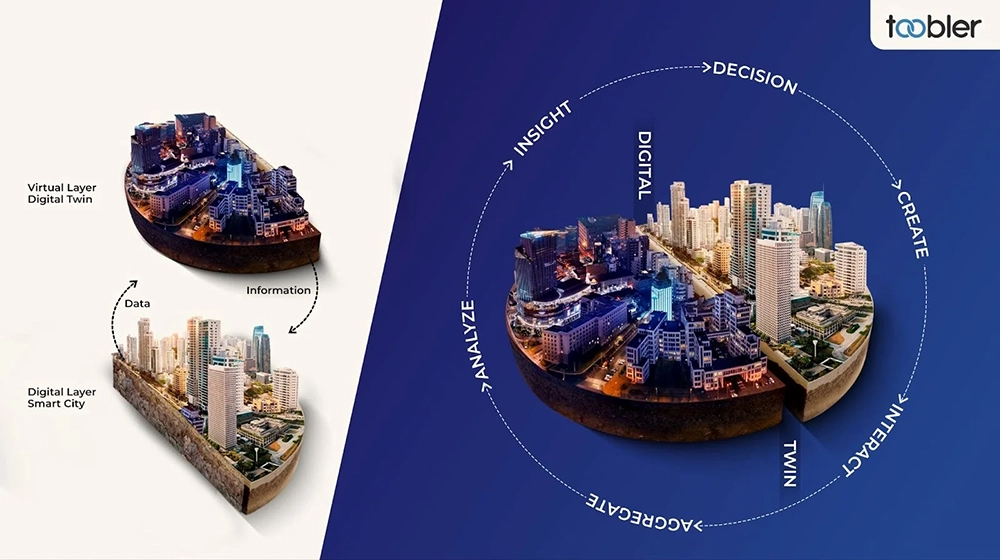
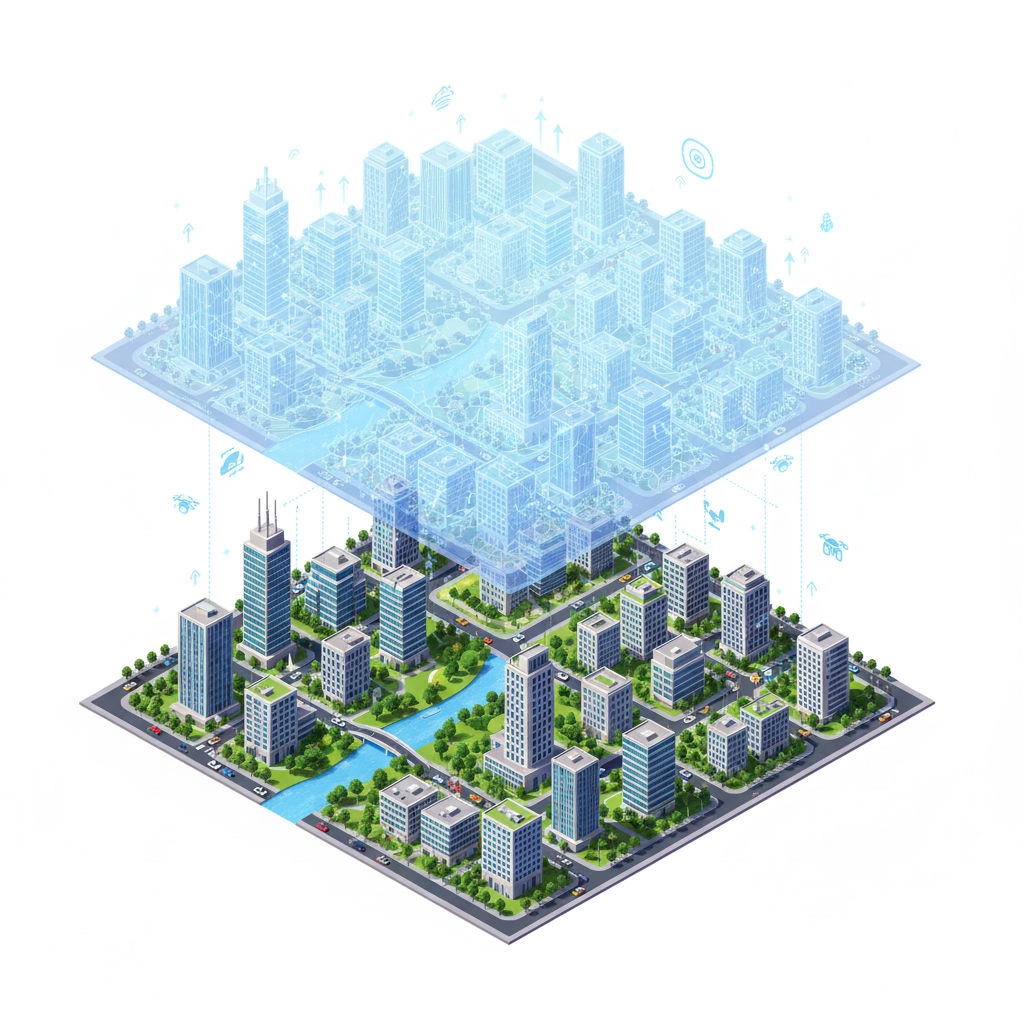
A digital twin extends these capabilities by introducing an ongoing relationship between the physical environment and its digital counterpart. Rather than representing a building or urban district at a particular moment, it can receive continuously updated information from sensors, infrastructure systems, environmental monitoring devices, and other data sources.
This distinction transforms the model from a relatively static design instrument into a dynamic system. A digital twin of a residential district, for example, might incorporate information about building energy consumption, pedestrian movement, traffic conditions, air quality, solar exposure, and infrastructure performance. Changes in the physical environment can then be reflected in the digital representation, allowing architects and planners to examine how different conditions influence one another.
The architectural significance is considerable. Buildings no longer need to be evaluated exclusively according to their individual performance. Their relationship with surrounding structures, public spaces, transportation networks, and environmental systems can become part of the design process.
However, a digital twin is only as reliable as the information and assumptions that sustain it. A sophisticated visualization does not automatically represent an accurate understanding of reality.
Architecture in Motion: Understanding Buildings as Dynamic Systems
Traditional architectural design often treats buildings as completed objects. Drawings describe their intended form, construction documents establish technical requirements, and performance simulations predict how they might function after occupation. Yet buildings rarely behave exactly as their designers anticipate.
Occupants modify spaces, mechanical systems deteriorate, materials age, and patterns of use change over time. A digital twin introduces the possibility of studying architecture beyond the moment of completion.
Consider a large public building. Its digital counterpart could collect information about indoor temperatures, daylight distribution, energy consumption, occupancy levels, and ventilation performance. Architects and facility managers could identify spaces that consistently overheat, areas that receive insufficient natural light, or systems that consume more energy than expected.
This information could also influence future renovation strategies. Instead of replacing entire building systems according to predetermined maintenance schedules, decisions could be based on actual performance and observed deterioration.
For architectural practice, this represents a shift from designing finished objects toward understanding buildings as evolving environments. The architect’s responsibility may increasingly extend into the operational life of a project, creating a closer relationship between design intentions and long-term building performance.
Nevertheless, measurable efficiency should not become the only criterion for architectural quality. A building that performs exceptionally well according to environmental indicators may still feel uncomfortable, institutional, or disconnected from its users. Architecture cannot be reduced to the successful management of technical systems.
The Predictive City: Simulating Urban Futures Before Construction
One of the most promising applications of urban digital twins is their ability to test possible futures before physical interventions take place.
Urban development involves decisions with consequences that extend far beyond individual construction sites. A new residential complex may affect traffic patterns, sunlight access, public infrastructure, neighborhood density, and the availability of open space. These relationships are difficult to understand through conventional architectural drawings alone.
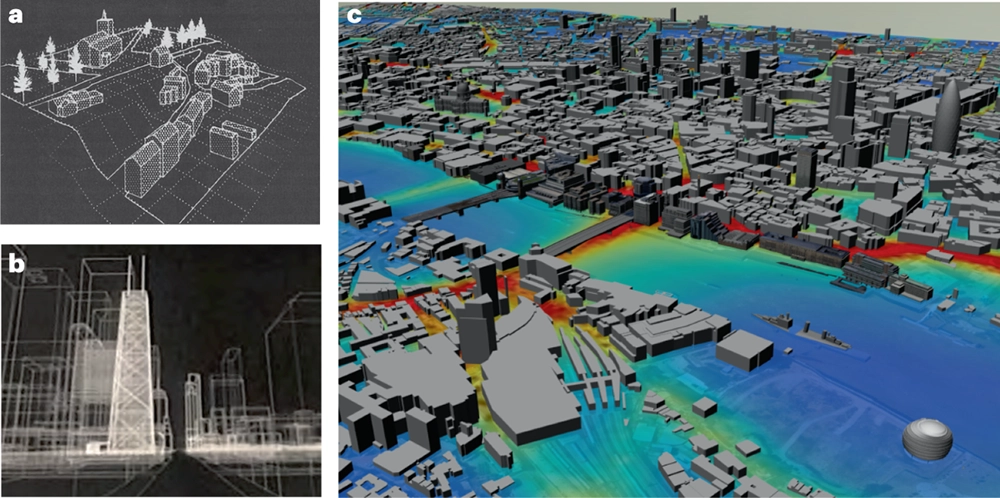
Digital twins allow planners to simulate alternative development scenarios and examine their potential consequences. A proposed building height can be tested against existing daylight conditions. Different street configurations can be evaluated according to pedestrian movement and environmental performance. New green spaces can be assessed for their potential influence on urban temperatures.
For architects, this creates an opportunity to evaluate design decisions within a larger spatial framework. Instead of asking whether a building works as an isolated composition, designers can investigate how it changes the conditions of its surroundings.
This capability is particularly relevant in cities experiencing rapid development and increasing environmental pressure. Predictive modeling can help identify vulnerable areas, anticipate infrastructure demands, and evaluate the long-term consequences of construction decisions.
But prediction is not the same as certainty. Every simulation depends on assumptions about future population growth, economic conditions, climate patterns, and human behavior. A digital model can compare possible outcomes, but it cannot guarantee which future will actually emerge.
The danger appears when simulated scenarios are presented as objective forecasts rather than conditional interpretations. Urban futures should remain open to debate, especially when architectural decisions affect the lives of thousands of people.
Environmental Intelligence: Designing for Climate Adaptation
Climate change has made the environmental performance of urban architecture an urgent concern. Heatwaves, flooding, water shortages, and deteriorating air quality are no longer distant possibilities. They are increasingly influential conditions shaping how cities must be designed and managed.
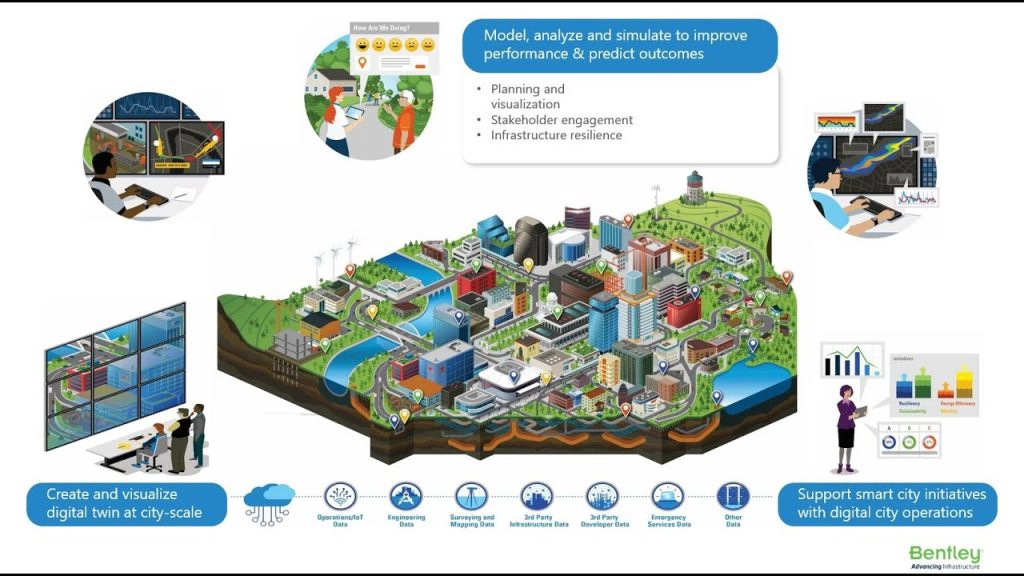
Digital twins can support climate-responsive architecture by integrating environmental information with building and urban models. Temperature variations, wind patterns, solar radiation, surface materials, vegetation, and drainage systems can be examined together.
For example, a digital twin could help identify urban areas where building density, limited vegetation, and extensive paved surfaces contribute to elevated temperatures. Architects and planners could then test different interventions, including tree planting, reflective materials, shaded pedestrian routes, green roofs, and changes to building orientation.
At the building scale, digital models can also help evaluate passive cooling strategies, natural ventilation, and the relationship between façade design and solar exposure.
The value of these applications lies not simply in producing more detailed environmental simulations, but in connecting architectural decisions with broader ecological processes. A façade is no longer just an aesthetic or structural element. It becomes part of a larger environmental relationship involving energy, heat, air, and human comfort.
Still, environmental performance cannot be judged exclusively through numerical indicators. The presence of vegetation, for instance, does not automatically create an accessible or ecologically valuable public space. The quality of urban shade, the seasonal character of planting, and the relationship between green infrastructure and everyday life require architectural and landscape interpretation.
Technology can reveal environmental problems, but meaningful responses still depend on design intelligence.
The Invisible Architecture of Data: Who Controls the Urban Model?
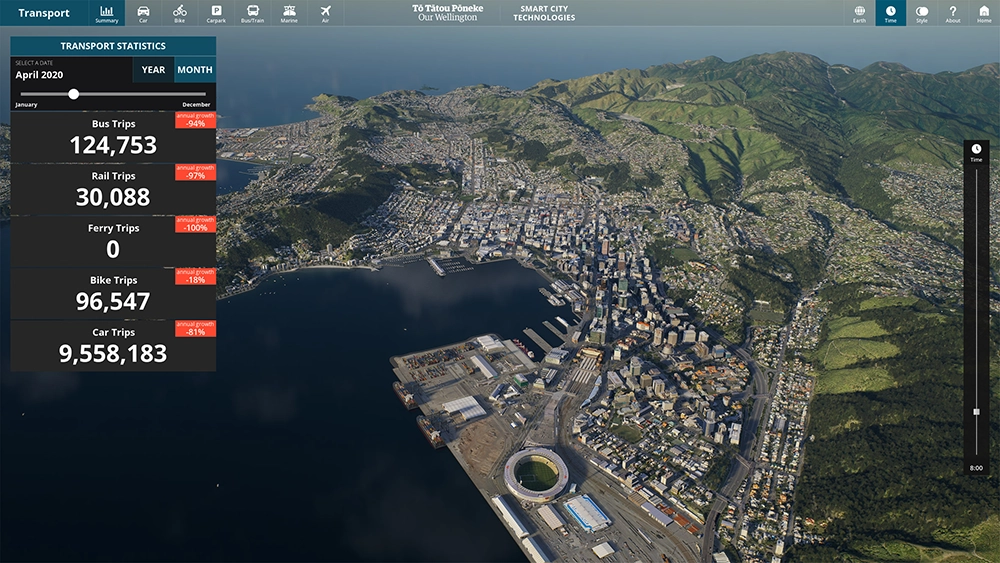
Every digital twin depends on collecting, organizing, and interpreting information. This raises questions that are not merely technical but also architectural and political.
Who owns the information generated by buildings and public infrastructure? Who decides which urban activities should be monitored? Who has permission to access the model, and whose interests determine how it is used?
These questions become especially important when digital twins incorporate information about pedestrian movement, residential occupancy, transportation habits, or energy consumption. Although such information can improve urban management, it may also create new forms of surveillance.
A residential building equipped with extensive monitoring systems, for example, could become more energy-efficient while simultaneously producing detailed records of how its occupants use their homes. The distinction between understanding building performance and observing private behavior can become increasingly difficult to maintain.
There is also the question of representation. Not every urban activity generates reliable digital information. Informal economies, temporary occupations, undocumented housing arrangements, and spontaneous social interactions may remain poorly represented in official datasets.
Consequently, the digital city can become a selective version of the physical one, emphasizing what institutions can measure while overlooking what residents actually experience.
For architects, this creates a responsibility to consider data governance as part of the design process. Digital infrastructure should be evaluated according to its effects on privacy, accessibility, public accountability, and the distribution of urban power.
A city cannot be considered intelligent if its inhabitants lose control over the information generated by their everyday lives.
What Digital Twins Cannot Understand: Memory, Identity, and Human Experience
Perhaps the most important limitation of digital twins is not their technical capacity but the nature of the information they can meaningfully represent.
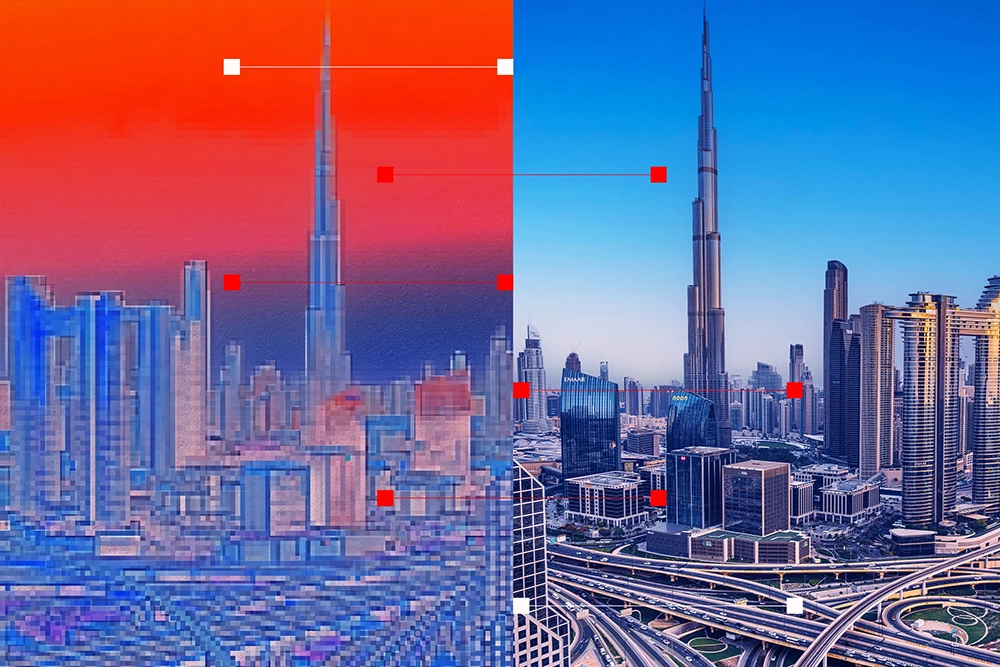
A city contains dimensions that resist numerical description. The emotional significance of a familiar street, the cultural meaning of a neighborhood square, or the collective memory associated with an old building cannot be fully translated into datasets.
Consider a historic neighborhood undergoing redevelopment. A digital twin might accurately document its building dimensions, structural conditions, land values, circulation patterns, and environmental performance. It could even simulate the consequences of different restoration or redevelopment proposals.
Yet it may struggle to represent why residents consider a particular courtyard important, why a modest local building carries cultural significance, or why the loss of a seemingly insignificant public space could disrupt established patterns of community life.
These qualities are not secondary details. They are central to the meaning of architecture.
Architectural value often emerges through relationships that develop over time. A staircase becomes a place for informal conversation. A shaded entrance becomes a meeting point. An ordinary street acquires significance through repeated experiences and collective memories.
Such relationships cannot be understood simply by measuring spatial dimensions or tracking movement. They require observation, participation, historical interpretation, and conversations with the people who inhabit those environments.
Digital twins may eventually incorporate qualitative information, including community feedback, historical narratives, and participatory mapping. However, collecting personal experiences does not automatically mean understanding them.
The city remains more complex than its digital representation because human experience is not a technical variable waiting to be calculated.
The Risk of Algorithmic Urbanism: When Efficiency Replaces Design Judgment
The increasing integration of artificial intelligence into urban digital twins introduces another architectural concern: the possibility that optimization becomes a substitute for design judgment.
Algorithms can identify patterns, compare alternatives, and recommend interventions according to predefined objectives. They may suggest building configurations that maximize daylight, minimize energy consumption, reduce traffic congestion, or increase land-use efficiency.
These capabilities are useful, but they also depend on the priorities established by their designers.
If a model is programmed to maximize development density, it may recommend solutions that leave insufficient room for public space. If its primary objective is to reduce transportation time, it may prioritize traffic efficiency over pedestrian comfort. If energy performance dominates its calculations, architectural diversity and spatial experience may become secondary considerations.
The problem is not that algorithms make recommendations. It is that their recommendations can appear neutral, even when they reflect particular economic, political, or institutional priorities.
Architecture has never been an entirely neutral activity. Decisions about height, density, materials, circulation, visibility, and access always involve choices about how space should be shared.
Digital twins should therefore support architectural judgment rather than replace it. The architect’s role is not simply to select the most efficient scenario but to question the criteria by which efficiency is defined.
Sometimes the best urban decision is not the one that produces the highest numerical score. It may be the one that protects an existing community, preserves an imperfect but meaningful public space, or allows a neighborhood to develop without losing its identity.
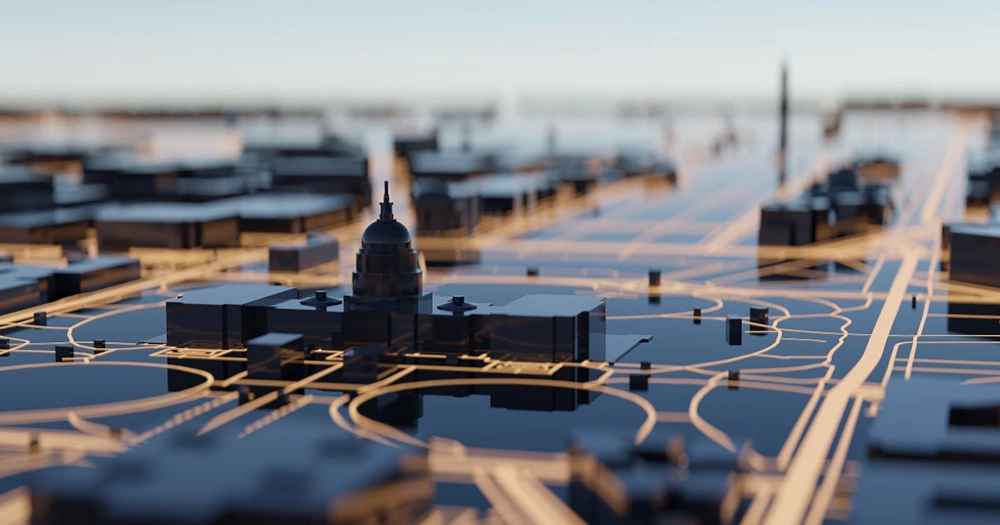
From Smart Cities to Participatory Cities
The idea of the smart city has often been associated with technological sophistication: interconnected infrastructure, automated management, predictive analytics, and centralized information systems. Digital twins can strengthen this model, but they also offer an opportunity to reconsider who participates in urban decision-making.
A digital twin should not exist exclusively as a professional instrument used by municipal authorities, developers, and engineering consultants. Its information could also become accessible to residents, community organizations, and local designers.
Imagine a neighborhood development proposal presented through an interactive digital model. Residents could examine the proposed buildings, understand their potential effects on sunlight and public space, and compare alternative designs. Community feedback could become part of the planning process rather than an administrative formality occurring after major decisions have already been made.
This approach could change the relationship between architectural expertise and public participation. Technical information would become easier to understand, while residents would gain opportunities to question assumptions and contribute knowledge about their surroundings.
However, accessibility requires more than providing an interactive interface. Digital literacy, language barriers, disability access, and unequal access to technology must also be addressed. Otherwise, participatory digital platforms may reproduce the same inequalities they claim to overcome.
The most valuable urban digital twin may therefore be one that makes architectural decisions more transparent, not simply one that makes urban systems more automated.
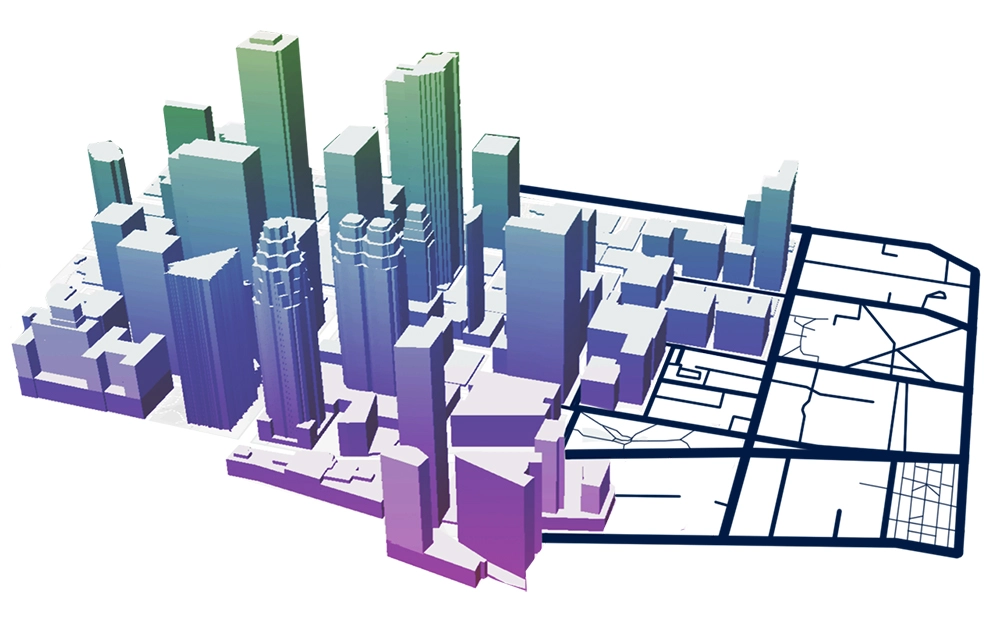
The Architect’s Changing Role: Between Data Scientist and Humanist
As digital twins become more integrated into architectural practice, the architect’s professional responsibilities are likely to expand.
Understanding building geometry and construction systems will remain essential, but designers may increasingly need to interpret environmental datasets, evaluate computational simulations, collaborate with software engineers, and understand the ethical implications of urban information systems.
This does not mean that architects must become data scientists. Their more important responsibility may be learning how to translate technical information into meaningful spatial decisions.
The architect operates between different forms of knowledge. Engineering provides information about structural and mechanical performance. Environmental science explains ecological conditions. Sociology examines patterns of human behavior. History reveals the cultural significance of places. Digital twins can bring some of these perspectives into a shared environment, but they cannot independently determine how competing values should be reconciled.
This makes architectural judgment more important, not less.
The future architect may spend less time treating buildings as isolated design objects and more time understanding their relationships with complex urban systems. Yet the discipline must resist becoming entirely dependent on computational performance indicators.
Architecture still requires imagination, interpretation, cultural awareness, and the ability to recognize qualities that cannot be measured.
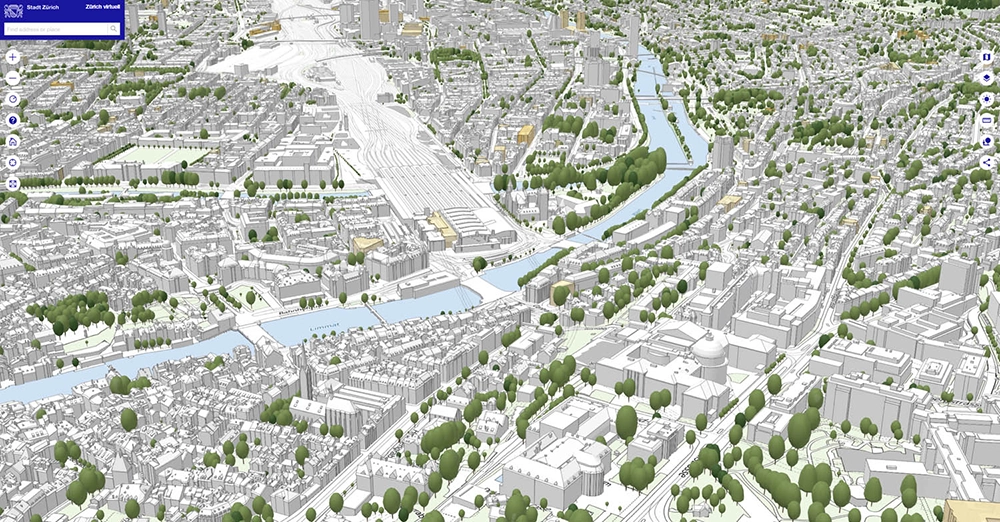
A Living City Cannot Be Fully Captured
Digital twins represent an important development in the relationship between architecture, technology, and urban planning. They offer new ways to understand buildings, simulate environmental conditions, evaluate development scenarios, and manage increasingly complex urban systems.
Their greatest contribution may be the ability to reveal relationships that traditional architectural methods often overlook. A building can be examined as part of an environmental network, a neighborhood as an interconnected spatial system, and an urban intervention as a decision with consequences extending across time and territory.
But the promise of a living digital city should not be confused with the possibility of creating a complete digital understanding of urban life.
Cities are shaped by measurable systems, but they are also sustained by contradictions, memories, informal practices, cultural differences, and unexpected human encounters. Their identities emerge through processes that cannot always be predicted or optimized.
The challenge for architecture is therefore not to create digital twins that claim to know everything about cities. It is to develop models that acknowledge what they cannot know, make their assumptions visible, and remain open to human interpretation.
A digital twin may help architects understand how a city performs. It may even help anticipate how it could change. But understanding what a city means to the people who inhabit it remains a fundamentally human responsibility.
Perhaps the most intelligent city is not the one with the most sophisticated digital model, but the one that knows when not to let the model make the final decision.