

Gocha Kalandadze, an experienced construction leader, shares how integrated models can make housing more accessible without compromising quality.
Accessibility increasingly defines the global housing crisis. In the United States alone, the shortage of affordable housing has reached 7.2 million units, with only 35 homes available for every 100 low-income households, according to the National Low Income Housing Coalition. Despite ongoing construction, housing remains out of reach for a large share of the population, pointing to a deeper imbalance in how the industry approaches cost, design, and urban growth.
Addressing the problem requires development models that treat affordability as a starting point. Gocha Kalandadze, CEO of Dream House LLC, applies this approach in practice. Over two decades, he has delivered around 900 affordable apartments, developed recreational parks and kindergartens, completed an 80-unit residential building, built churches, and implemented infrastructure projects, including a bridge in Georgia. He also designed a system that reduces housing costs without compromising construction quality.
The urgency for new approaches is becoming increasingly clear worldwide. As cities expand, housing supply still fails to keep pace with demand, especially for middle- and lower-income groups. Rising costs and complex regulations only make the problem harder to solve, turning affordability into a structural challenge for developers.

Kalandadze, however, encountered this imbalance early in his career. When he began running his own company in 2014, the residential market in Georgia was largely oriented toward higher-priced developments, with limited options for middle-income buyers. This forced him to rethink the underlying development logic itself – questioning which parameters truly define a viable housing model.
As Gocha explains, “Companies too often treat affordability as something to deal with later. They focus on high-end projects, complex designs, and fragmented supply chains, which push up costs from the start. When they finally try to lower prices, they usually cut quality or scale instead of fixing the cost structure. For me, the key is to think about affordability from the very beginning.”
Faced with these constraints, Kalandadze shifted his focus toward a fully integrated development model centered on cost control across every stage of the construction cycle. Instead of relying on isolated cost-cutting measures, his approach restructures the relationship between materials, labor, timelines, and project management.
Gocha built the model based on several interdependent principles:
- material efficiency, reducing waste, and lowering construction costs without compromising quality;
- procurement optimization, reducing unnecessary intermediaries and cost fluctuations;
- tight project coordination, minimizing delays and resource waste;
- scalable design decisions, allowing projects to be replicated across different locations.
Each principle works as part of a connected system, where every decision directly affects the overall affordability of the final product. By embedding affordability into the process itself, Kalandadze’s method moves beyond temporary solutions and establishes a more stable model for accessible housing.
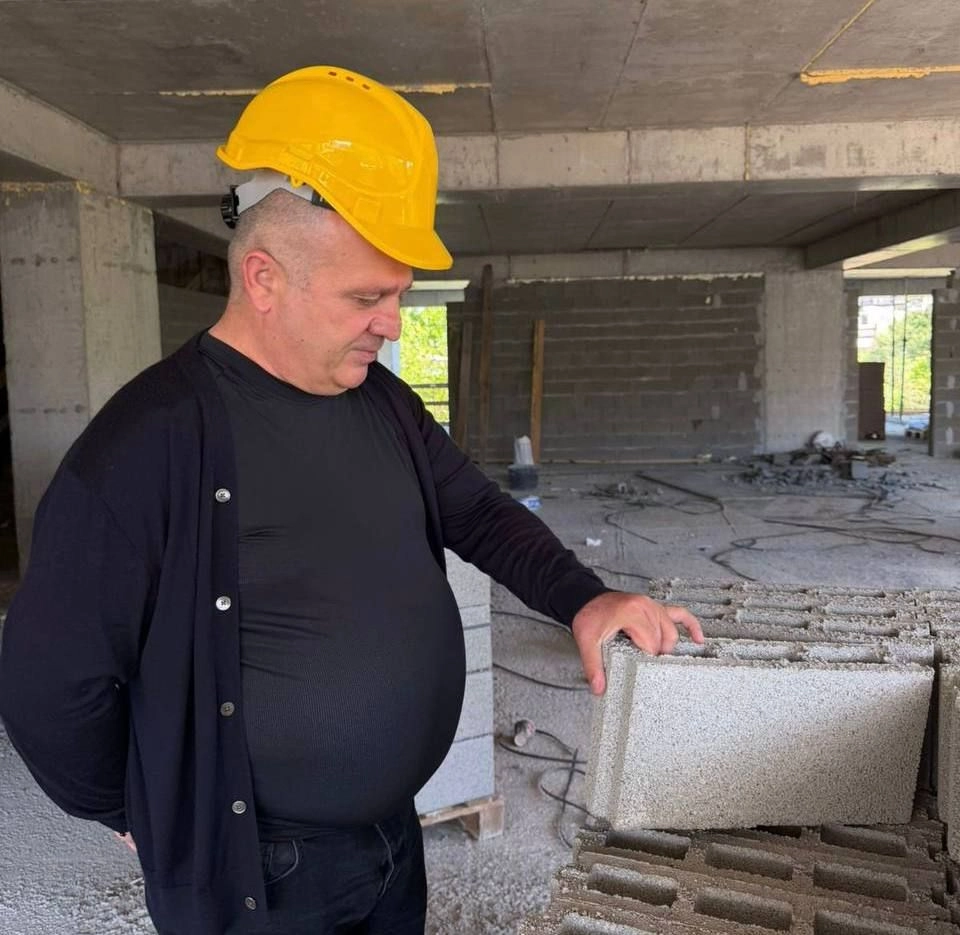
“In our case, the goal was never just to reduce costs,” he adds. “It was to control the entire system in a way that makes affordable housing sustainable as a standard.”
At the industry level, approaches like this point to a broader shift in how companies can address affordability. Instead of relying on subsidies or post-construction price adjustments, system-based models allow costs to be managed from the outset, making projects more resilient to market fluctuations. They also reduce dependence on high-margin segments by enabling viable projects at lower price points.
Kalandadze applied his original framework across construction projects in Georgia. As a result, around 1,000 families gained access to quality, affordable housing, while kindergartens, public parks, and churches improved living conditions for children and local communities. This practical impact helped establish a new standard for affordable housing in the country, demonstrating that cost-efficiency and quality can coexist.
Under Gocha’s guidance, his company became one of the leading developers in construction, shaping how the market approaches accessibility. As his approach continues to spread across the industry, other firms invite Gocha to evaluate their projects and apply similar principles. These collaborations continue to expand access to housing and infrastructure in underserved communities across Georgia.
As Kalandadze explains, “Sustainable affordability depends on consistency. When projects follow a clear structure, results become predictable across different locations and market conditions. That stability allows developers to plan long-term and expand access to housing without losing control over cost or quality.”
Gocha’s case proves that affordable housing can move beyond isolated projects and become a repeatable standard, with economic feasibility, construction quality, and social impact reinforcing one another. When these elements align, development supports not only buyers but also children, families, and communities that rely on stable housing infrastructure. At the same time, the industry cannot solve the housing crisis by increasing construction volume alone, as new supply remains disconnected from purchasing power.
The construction sector needs models that build accessibility into the system from the start. Gocha Kalandadze’s approach offers a clear, project-based example that shows the future of housing depends on building in ways that consistently deliver affordability.