




The architecture of the AI data centre is undergoing a fundamental transformation. What was once largely conceived as a highly controlled warehouse for servers is becoming a complex industrial ecosystem in which computing power, energy infrastructure, cooling, modular construction and digital systems must operate as one. The latest move by SLB, formerly Schlumberger, illustrates just how dramatically this shift is changing the priorities of data-centre design.
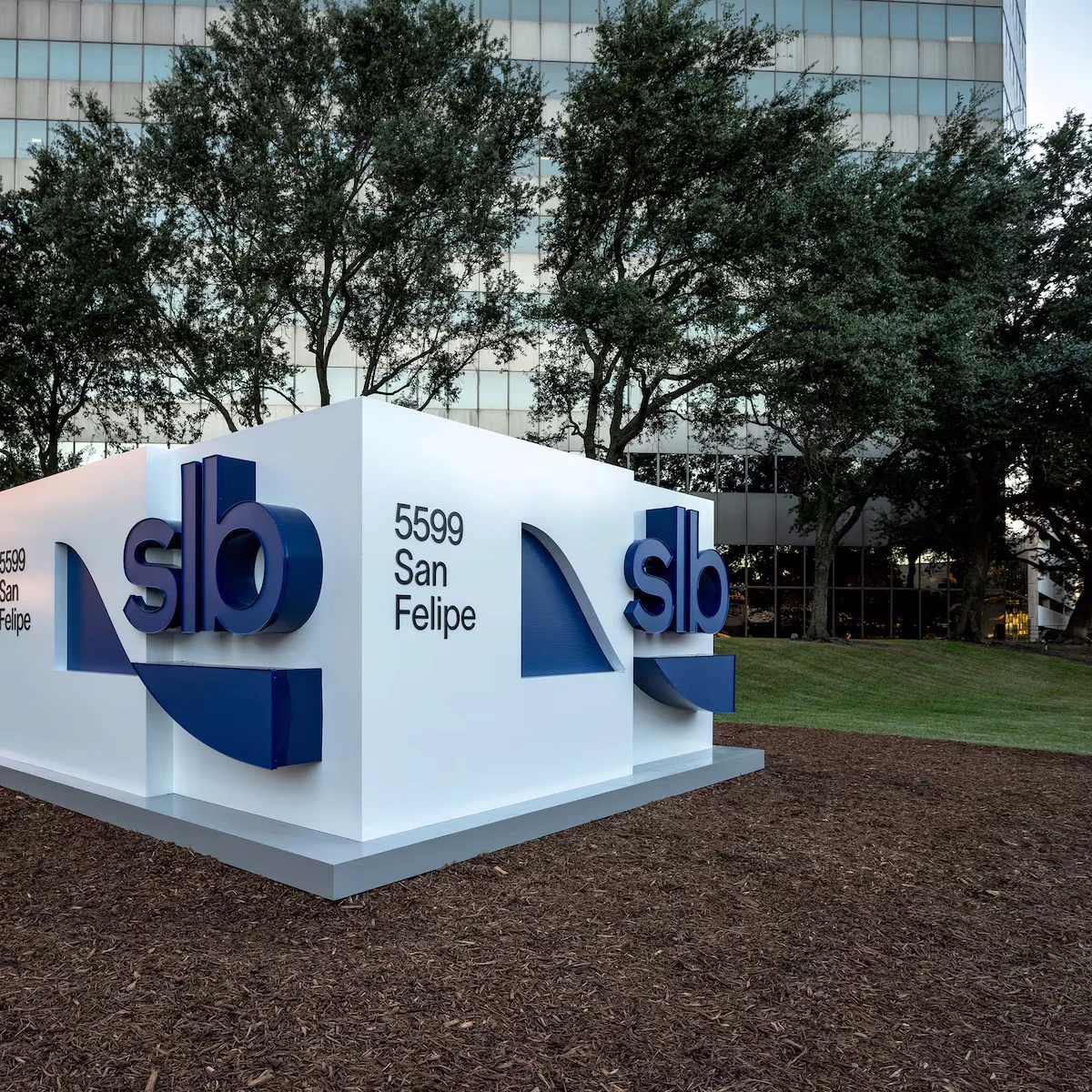
On August 31, 2026, SLB announced an agreement to acquire Kelvion, a global provider of thermal management and heat-exchange technologies, for approximately $4.1 billion. The transaction comprises $3.4 billion in cash and the assumption of roughly $700 million in debt. Subject to regulatory approvals and other closing conditions, the acquisition is expected to be completed in the first half of 2027.
The deal is more than a conventional corporate acquisition. It signals the growing importance of thermal management in the physical architecture of artificial intelligence infrastructure. As AI processors become increasingly powerful and energy-intensive, keeping them within operational temperatures is no longer a secondary engineering concern. Cooling is becoming one of the primary determinants of how data centres are planned, constructed and expanded.
AI Is Changing the Building Before It Changes the Building’s Appearance
For decades, the architectural image of a data centre was relatively straightforward: a large, secure and often windowless building containing rows of computing equipment, supported by mechanical, electrical and cooling systems. The building envelope largely concealed an enormous technical machine. AI is disrupting this model.
High-performance AI computing requires substantially greater power density than many conventional workloads. More electricity entering a facility inevitably means more heat that must be removed. Consequently, mechanical infrastructure is moving closer to the centre of architectural decision-making.
SLB’s acquisition of Kelvion reflects this change. Kelvion’s portfolio includes thermal management and heat-transfer technologies, while SLB already operates a Data Center Solutions business focused on engineering, modular manufacturing, off-site construction and digital capabilities. Combining these capabilities could allow cooling systems to become more deeply integrated into the design and delivery of data-centre infrastructure.
This is significant architecturally because it challenges the traditional separation between “building” and “building services”. In the AI data centre, the mechanical system increasingly *is* the architecture.
Cooling Becomes a Design Generator
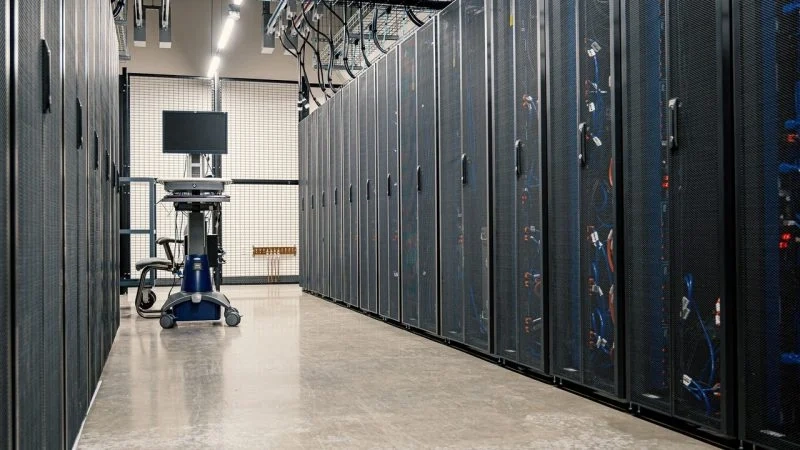
The most important consequence of the SLB-Kelvion deal may be the elevation of cooling from a technical subsystem to a design generator.
Traditional data-centre planning often began with questions such as site availability, floor area, structural capacity and electrical supply. AI infrastructure introduces another question at the very beginning: how will heat move through the facility?
This affects floor layouts, rack configurations, structural systems, plant-room locations, pipe networks, equipment yards and even the relationship between buildings and their surrounding infrastructure.
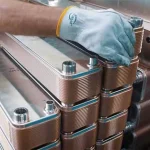
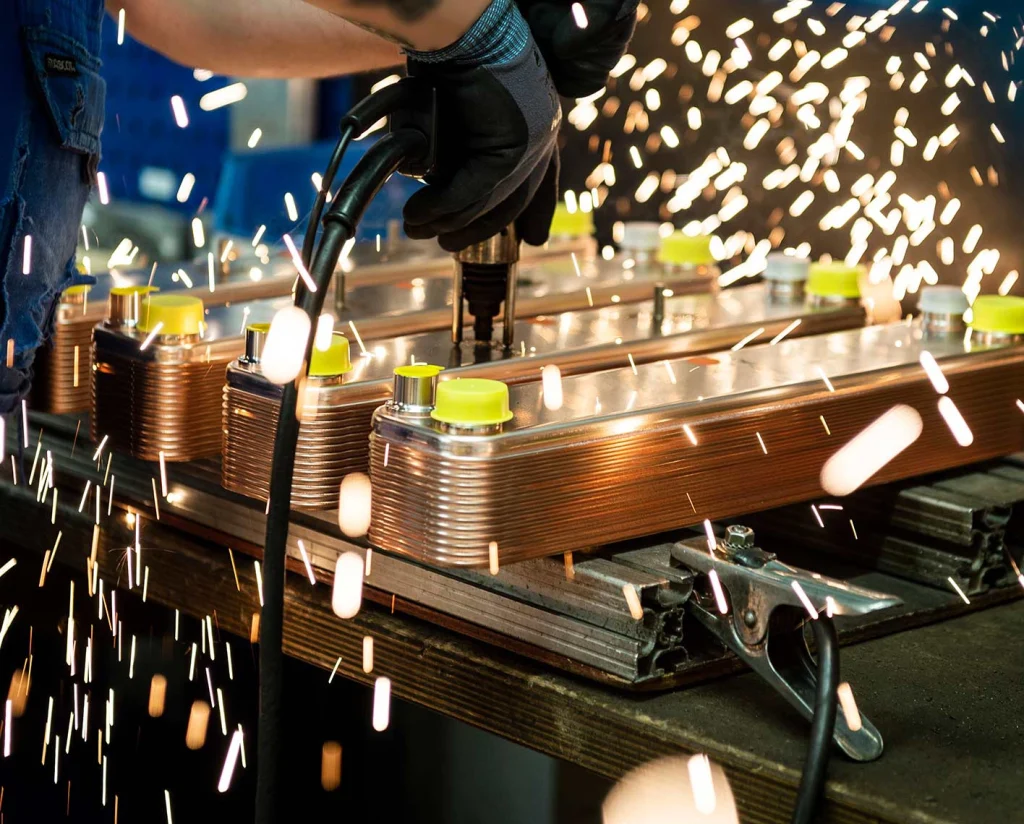
Kelvion’s thermal technologies could give SLB greater control over this critical part of the system. According to SLB, the acquisition will more than double its addressable revenue opportunity per gigawatt of delivered data-centre capacity. The company specifically identifies technologies such as free-flow corrugation designs and modular K°Flex systems as part of Kelvion’s contribution.
For architects, the implication is clear: future data centres may need to be conceived less like static buildings and more like integrated thermal machines.
The Rise of the Modular AI Data Centre
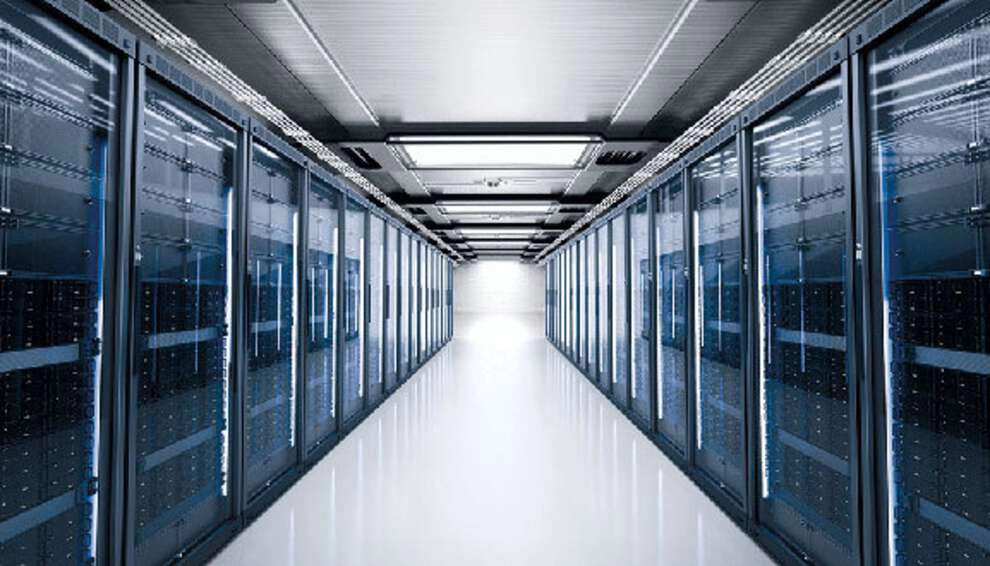
Another important architectural consequence is modularity. SLB has already positioned modular construction as a central component of its data-centre strategy. In March 2026, the company expanded its collaboration with NVIDIA to work on modular data-centre infrastructure associated with NVIDIA’s DSX AI factory concept. SLB described off-site manufacturing as a way to improve quality and reliability while reducing construction costs, labour requirements and lead times.
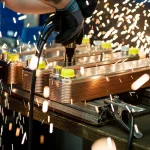
The Kelvion acquisition strengthens this approach. Rather than constructing every component of a data centre sequentially on site, more of the facility can potentially be manufactured, assembled and tested elsewhere before being transported to the site.
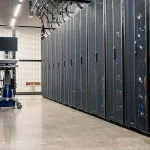
This has major implications for architectural practice. The data centre could increasingly resemble a kit of industrialised components. Cooling modules, electrical systems, structural assemblies and equipment could be designed as repeatable units and combined according to the requirements of a particular site.
Such an approach also responds to one of AI infrastructure‘s defining characteristics: uncertainty. Demand for computing capacity is expanding so rapidly that owners do not necessarily want to construct an enormous facility all at once. Modular systems allow capacity to be added incrementally.
In other words, the future data centre may not be a completed building. It may be an expandable infrastructure platform.
From Mechanical Rooms to Thermal Networks
Architecture has traditionally treated mechanical systems as something to be accommodated. The AI data centre reverses that relationship.
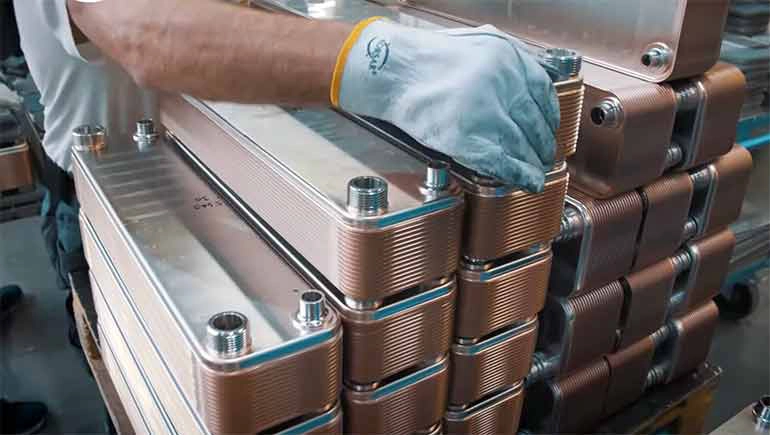
Cooling infrastructure can determine the organisation of the entire facility. The location and scale of heat exchangers, cooling distribution systems, pumps, pipes and associated equipment can influence structural grids, floor-to-floor heights and equipment arrangements. This creates an architectural condition closer to industrial infrastructure than conventional commercial architecture.
The distinction is important because AI facilities operate at extraordinary levels of infrastructure intensity. Their architecture cannot simply hide the mechanical systems behind walls and ceilings. Every square metre has an operational purpose, and every additional component has consequences for energy consumption, maintenance and scalability.
SLB’s strategy is therefore aimed at integrating thermal management with its existing engineering, manufacturing and system-integration capabilities rather than treating cooling as an isolated product category.
The Data Centre as an Energy Architecture
The SLB-Kelvion transaction also reflects another major transformation: the convergence of digital infrastructure and energy infrastructure. SLB comes from an industry whose expertise is deeply connected to energy systems, industrial engineering and complex physical infrastructure. Kelvion, meanwhile, operates across thermal management, energy and industrial markets, including heat pumps, renewables and carbon-capture applications.
That combination suggests a broader architectural direction. The future AI data centre will not be an isolated computing facility. It will increasingly function as part of a wider energy ecosystem.
Its design may need to account for electricity generation, thermal storage, waste-heat recovery, cooling-water availability, grid constraints and potentially connections to district energy systems.
This could eventually change the relationship between data centres and cities. Instead of treating these facilities simply as enormous consumers of energy and land, planners could begin considering them as components within larger energy networks. The enormous quantities of heat generated by AI computing could, in some contexts, become a resource rather than simply waste.
Efficiency Becomes an Architectural Criterion
The environmental discussion around data centres has traditionally focused heavily on electricity consumption and carbon emissions. Cooling introduces another layer of complexity. A cooling system that removes heat effectively but requires excessive energy or water may solve one problem while creating another.
This is why thermal efficiency is increasingly becoming an architectural issue. The physical configuration of the building, the density of computing equipment, the mechanical systems and the surrounding climate all interact.
SLB says the combined business is expected to generate more than $2 billion in data-centre revenue and approximately $300 million in adjusted EBITDA in 2026 on a pro-forma basis. It is targeting $4.5 billion to $5 billion in revenue and $700 million to $800 million in adjusted EBITDA from its combined data-centre solutions business by 2028. Those numbers reveal how quickly thermal management is moving from a supporting industry into a major part of the AI infrastructure economy.
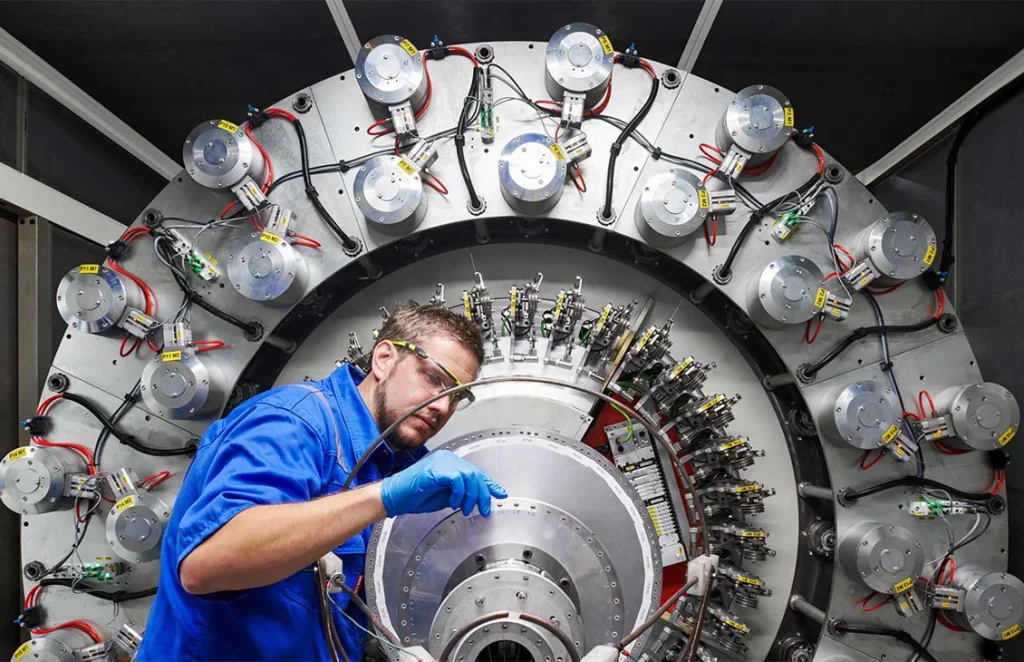
A New Architectural Language for AI Infrastructure
There is also a cultural consequence. The conventional data centre is architecturally anonymous. Security, efficiency and reliability tend to take priority over public expression. But as AI infrastructure expands, these facilities are becoming larger, more energy-intensive and more closely connected to communities.
The architectural challenge will therefore not only be technical. Designers will need to reconcile massive infrastructure with questions of landscape, water, energy, noise, visual impact and public acceptance. The machine cannot simply be placed behind a fence and forgotten.
At the same time, modular construction and integrated thermal systems could offer opportunities for more adaptable architectural models. Facilities may be designed to grow, change and be reconfigured rather than becoming obsolete after a single generation of computing hardware.
This could represent one of the most important shifts in contemporary infrastructure architecture: from permanence toward adaptability.
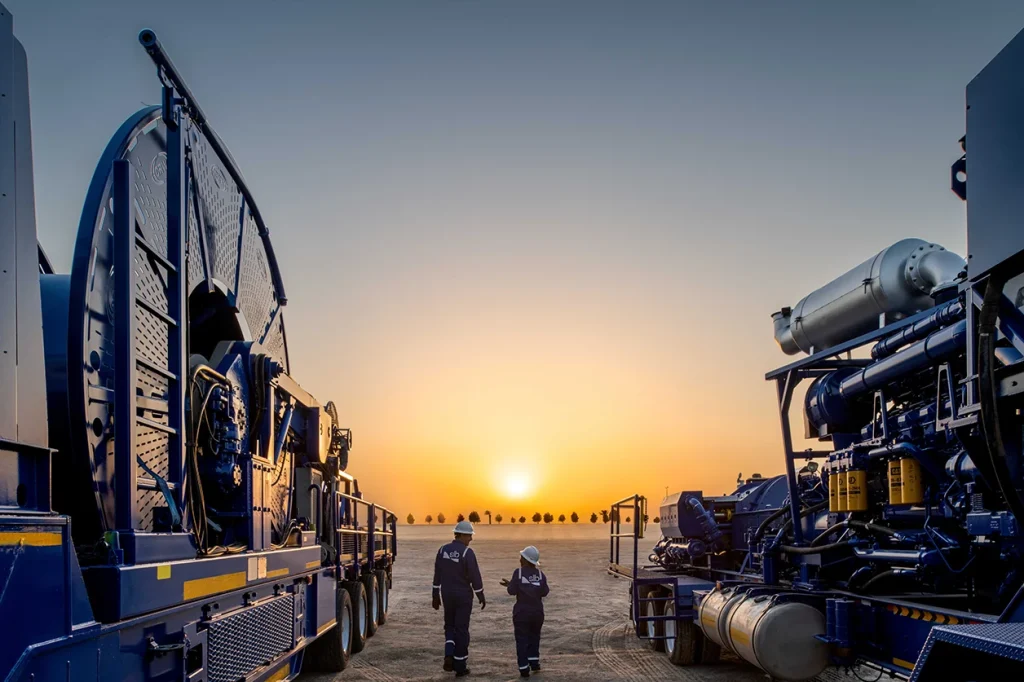
Beyond the SLB-Kelvion Deal
The acquisition should therefore be understood as part of a much larger transformation rather than simply a strategic expansion by an energy-services company.
AI is forcing data-centre architecture to reconsider its priorities. Computing density is driving thermal intensity; thermal intensity is reshaping mechanical systems; mechanical systems are influencing spatial organisation; and spatial organisation is encouraging modular construction.
The result is an emerging building type in which architecture, engineering and industrial technology are becoming increasingly inseparable. SLB itself describes AI as driving an exceptionally significant infrastructure investment cycle and positions the Kelvion acquisition as a step toward becoming an industrial technology partner to the data-centre sector.
The deeper architectural story is that cooling is no longer simply something that happens inside the data centre. It is becoming one of the forces that determines what the data centre is. As AI facilities become more powerful, their architecture may consequently become less about façades and more about flows: flows of electricity, information, air, liquid, heat, equipment and people.
That may sound less glamorous than the shiny futuristic buildings often used to represent artificial intelligence. But, inconveniently for architects, the future of AI architecture may be decided not by the façade at all, but by what happens behind it.