Reframe Systems has closed an additional $40 million in venture equity to scale its network of robotic microfactories across North America, marking one of the most grounded moves in construction technology this year. The round, led by Energy Impact Partners with participation from Counterpart Ventures, E12 Ventures, Global Brain, Thin Line Capital, Up Partners and the LACI Impact Fund, builds on existing backing from Eclipse, VoLo Earth, Cubit Capital, RA Capital Management’s Planetary Health fund, MassMutual Catalyst and Nor’easter.
The microfactory thesis: small, local, automated
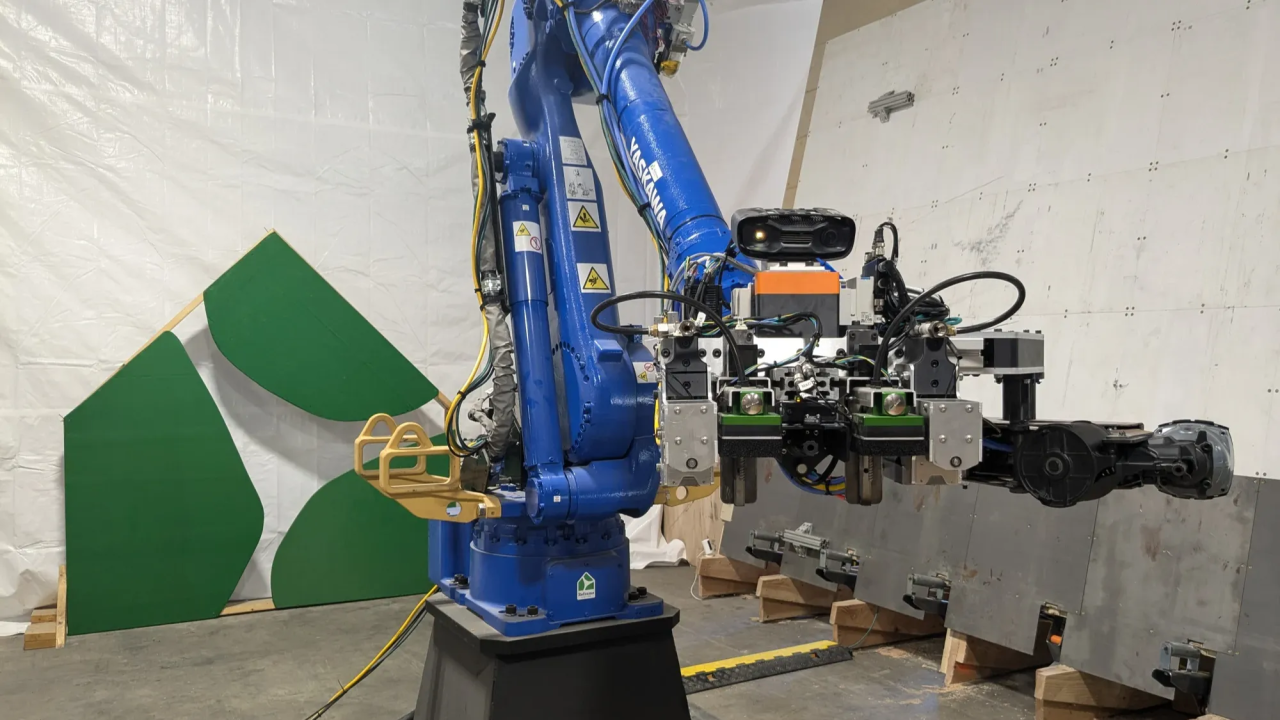
Reframe’s model inverts the classic modular playbook. Instead of a single, capital-heavy plant shipping modules across states, it deploys compact, highly automated microfactories close to the communities they serve. This distributed approach lets production adapt to local zoning rules, climate demands, and architectural languages without the logistical drag of cross-country trucking.
Reframe Systems frames this as “physical AI” applied to housing: software coordinates design to fabrication, robotic cells handle repetitive framing and panel assembly, and digital work instructions guide on-site teams through assembly. Reframe reports homes delivered up to three times faster than conventional site-built construction and targeted cost reductions around 35 percent.
FAB1: a $5M factory that stands up in 70 days
The new capital accelerates rollout of FAB1, a microfactory in Billerica, Massachusetts, slated to begin operations on October 5. Reframe says it will reach full readiness in under 70 days from receiving the keys, a cadence that would be unthinkable for traditional modular plants.
FAB1 is designed to produce up to 500 multifamily units per year, or 250 single-family homes, with less than $5 million in equipment. That capital efficiency matters: it lowers the barrier to replicate the model in other regions and keeps fixed costs aligned with local demand rather than speculative overcapacity.
From 10 homes to 114 more: early traction with occupied units
Reframe Systems has completed 10 homes to date, ranging from accessory dwelling units to triple-decker apartments, with eight already occupied. The pipeline includes 114 additional units expected over the next year across New England and California. That mix—ADUs, duplexes, townhomes, triple-deckers—signals a focus on infill and missing-middle housing types that cities actually need, not just showcase prototypes.
The company’s “Pixels to Parts” pipeline turns floor plans into detailed 3D models and generates work instructions for both robots and people. Robotic work cells frame and assemble structural wall and ceiling panels, while digital instructions standardize quality across crews with varying skill levels.
Why distributed robotics matters for architecture and design
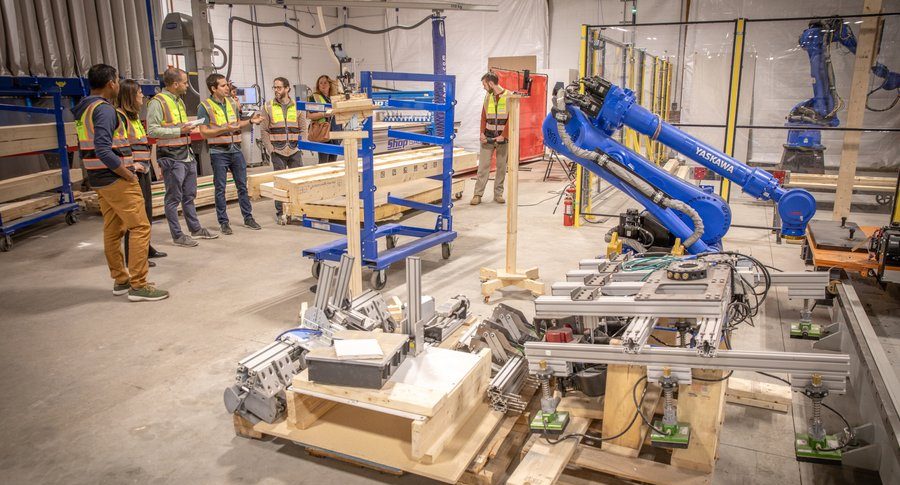
For architects and designers, Reframe Systems’s approach shifts the constraint set. Local microfactories can tailor production to regional codes and climates without forcing a one-size-fits-all module. That flexibility opens space for site-customized homes that still benefit from industrialized precision.
The model also changes the labor equation. Robotics absorb repetitive fabrication, while on-site assembly relies on clear, software-driven instructions. In a sector facing a shrinking trades pool and chronic schedule slippage, that division of labor can stabilize timelines and reduce rework.
The bigger picture: manufacturing our way out of the housing shortage
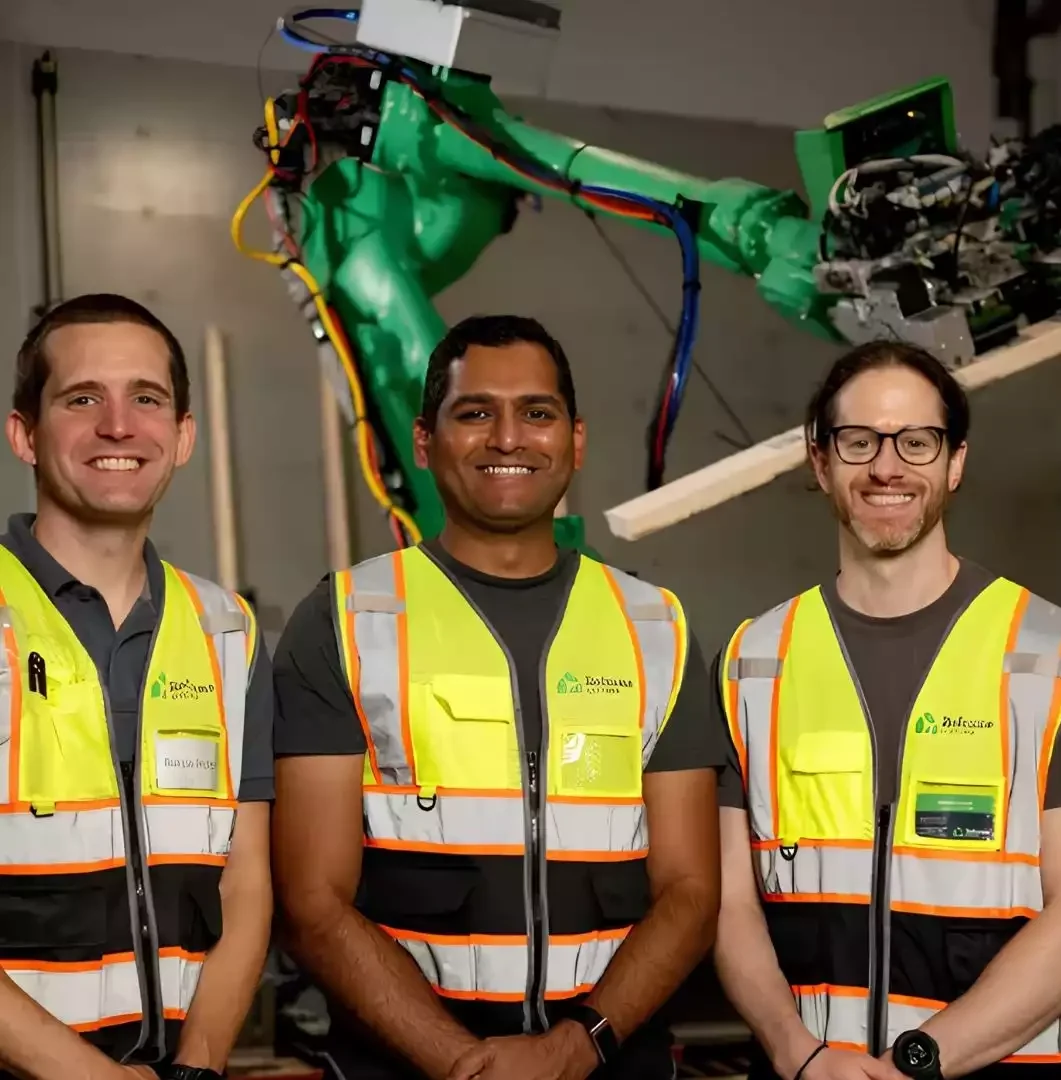
America’s housing gap is measured in millions of units. Reframe’s founders—former Amazon Robotics leaders—bring deployment discipline from a world where half a million robots moved through fulfillment networks. Their argument is simple: you don’t subsidize or legislate your way out of a 4.5 million-home shortfall; you manufacture your way out with better, faster, lower-cost production.
The company targets 1 million homes worldwide by 2040, five years ahead of its original schedule. Every unit is all-electric and low-carbon by design, aligning housing scale with climate goals without relying on policy tailwinds alone.
What to watch next
Replication speed: how quickly Reframe stands up additional microfactories beyond FAB1.
Unit economics at scale: whether the 35 percent cost reduction holds as volume grows and product types diversify.
Design latitude: how much architectural variation the system can absorb without losing throughput.
Regional fit: expansion into markets with different zoning, labor and supply-chain conditions.
If Reframe keeps execution tight, the story here isn’t just another construction-tech raise. It’s a blueprint for a distributed, robotic, locally attuned housing industry that can actually ship.
From pilot to platform
Reframe Systems’s $40M raise lands at a pivot point for construction technology: the moment when “pilot” has to become “platform.” The company now has capital, a working factory design and occupied units to prove the model. What comes next is execution at a pace that matches the scale of the housing problem.
If FAB1 hits its 70‑day ramp and the 114‑unit pipeline delivers on time and budget, Reframe moves from a promising case study to a replicable template for other regions. That would shift the conversation from “can robots build homes?” to “how fast can we stand up the next microfactory?”
For architects, developers and city planners, the signal is clear: distributed, software‑driven manufacturing can coexist with local design and climate needs. The constraint is no longer imagination; it’s deployment discipline. Reframe’s next 12 to 24 months will show whether this model can scale without losing the very advantages that make it compelling.