

The Pangolin Shield by Studio Saar & Atelier One
A pavilion can be many things. It can be a temporary landmark, a technical experiment, a place to rest, or a quiet argument about history and materials. The Pangolin Shield, the landmark project of London Design Festival 2026, tries to be all of these at once.
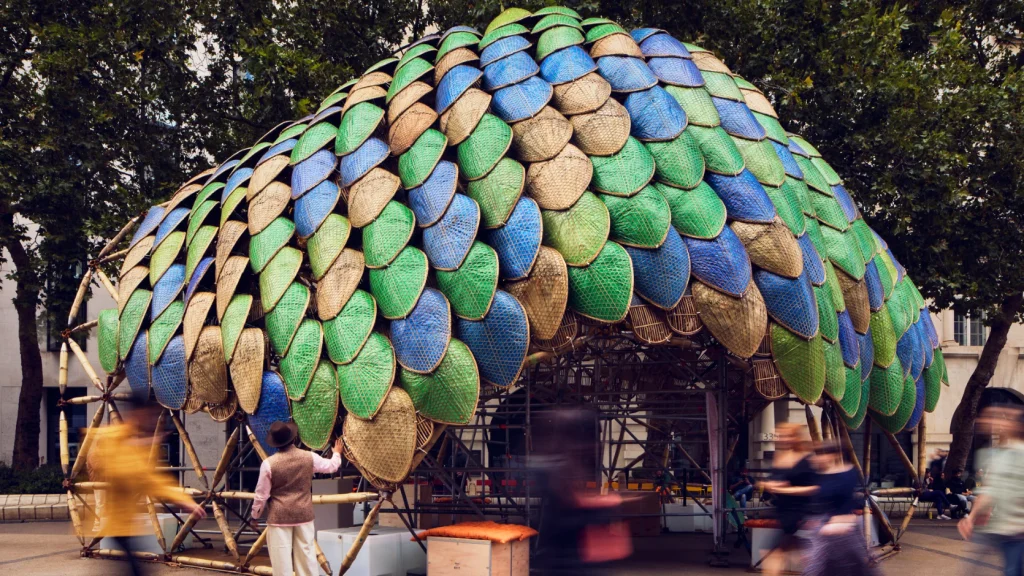
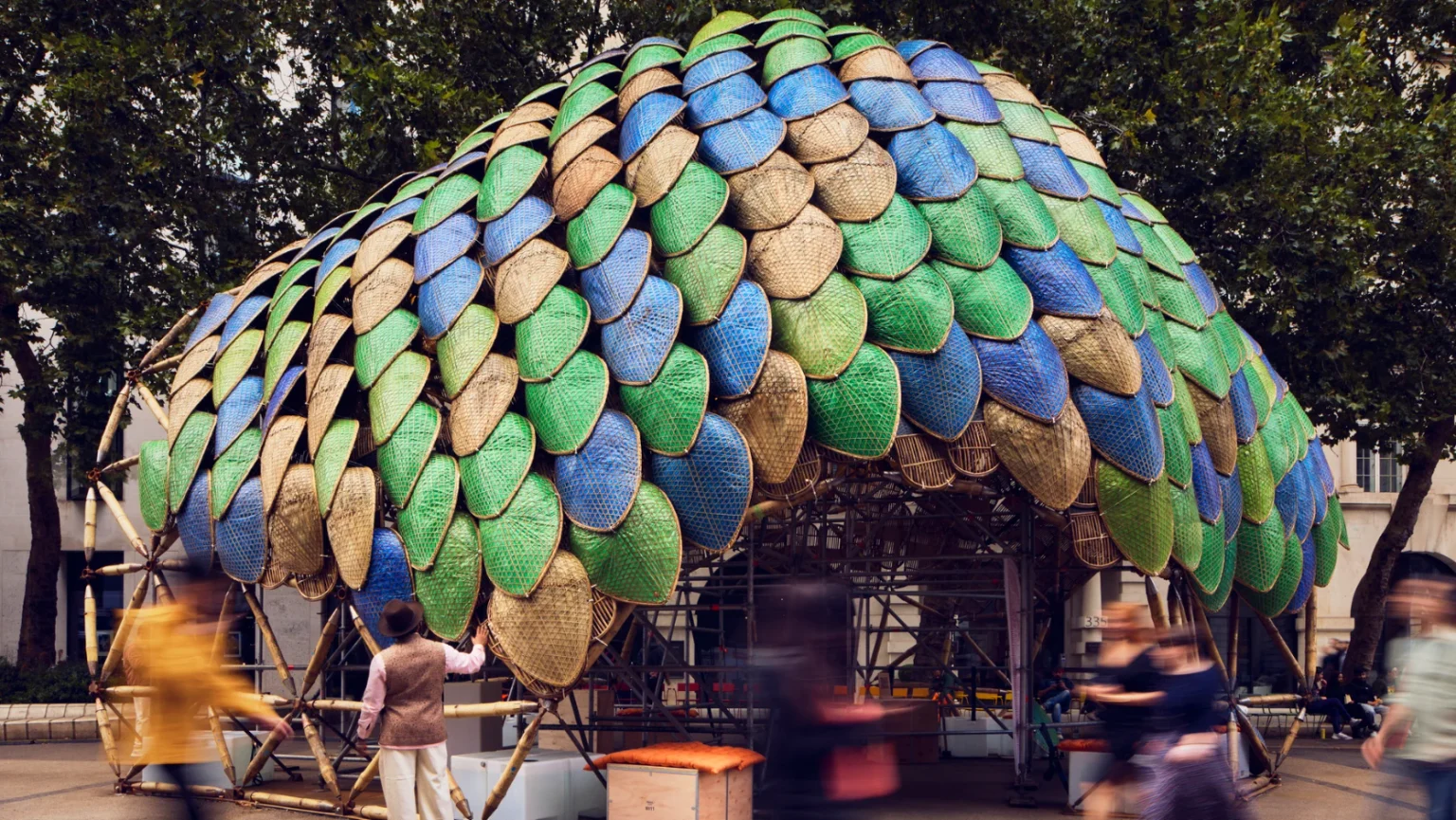
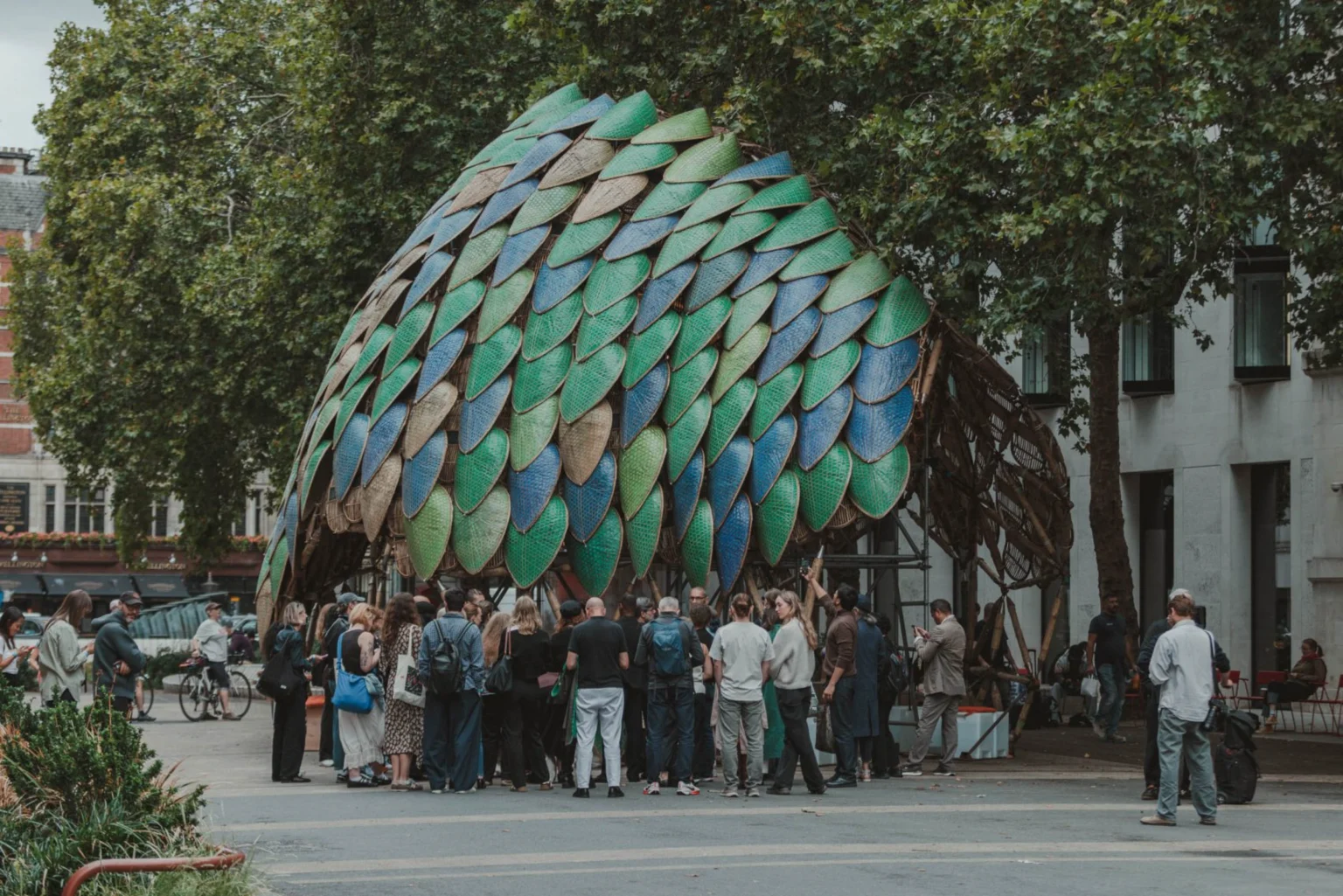
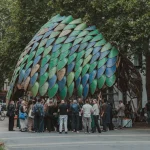
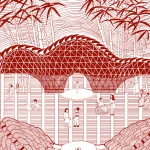
Designed by Studio Saar with structural engineers Atelier One, the structure stands on the newly pedestrianised stretch of the Strand, close to Somerset House and opposite India House. Its form is inspired by the pangolin, the most trafficked mammal on earth, an animal that curls into a protective ball of overlapping scales when threatened. The pavilion takes that instinct and turns it into architecture.
A structure made of many small parts
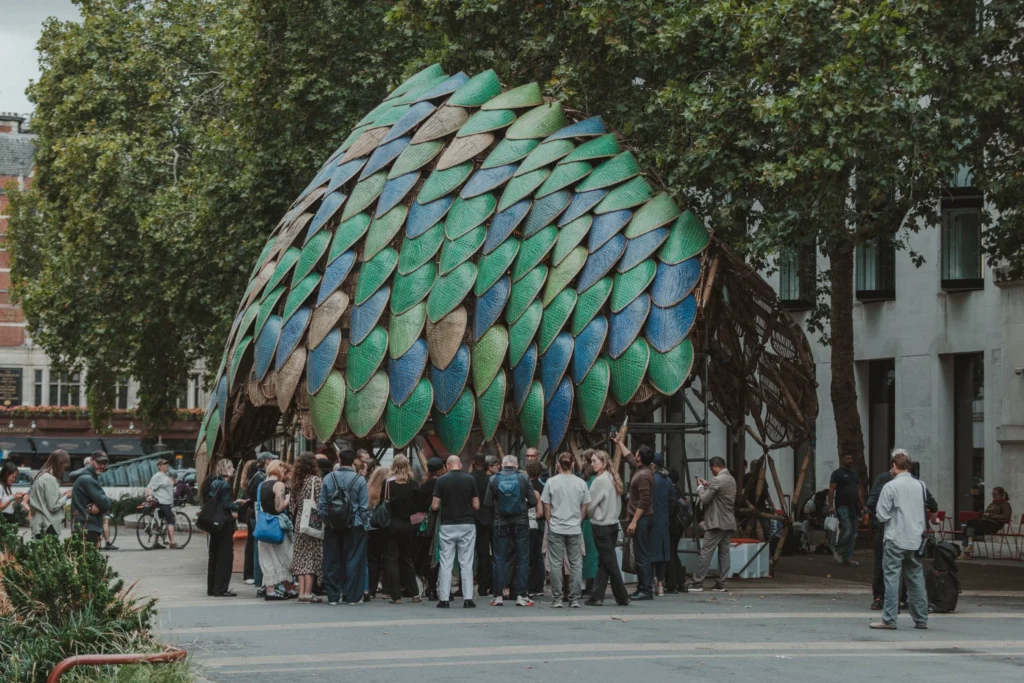
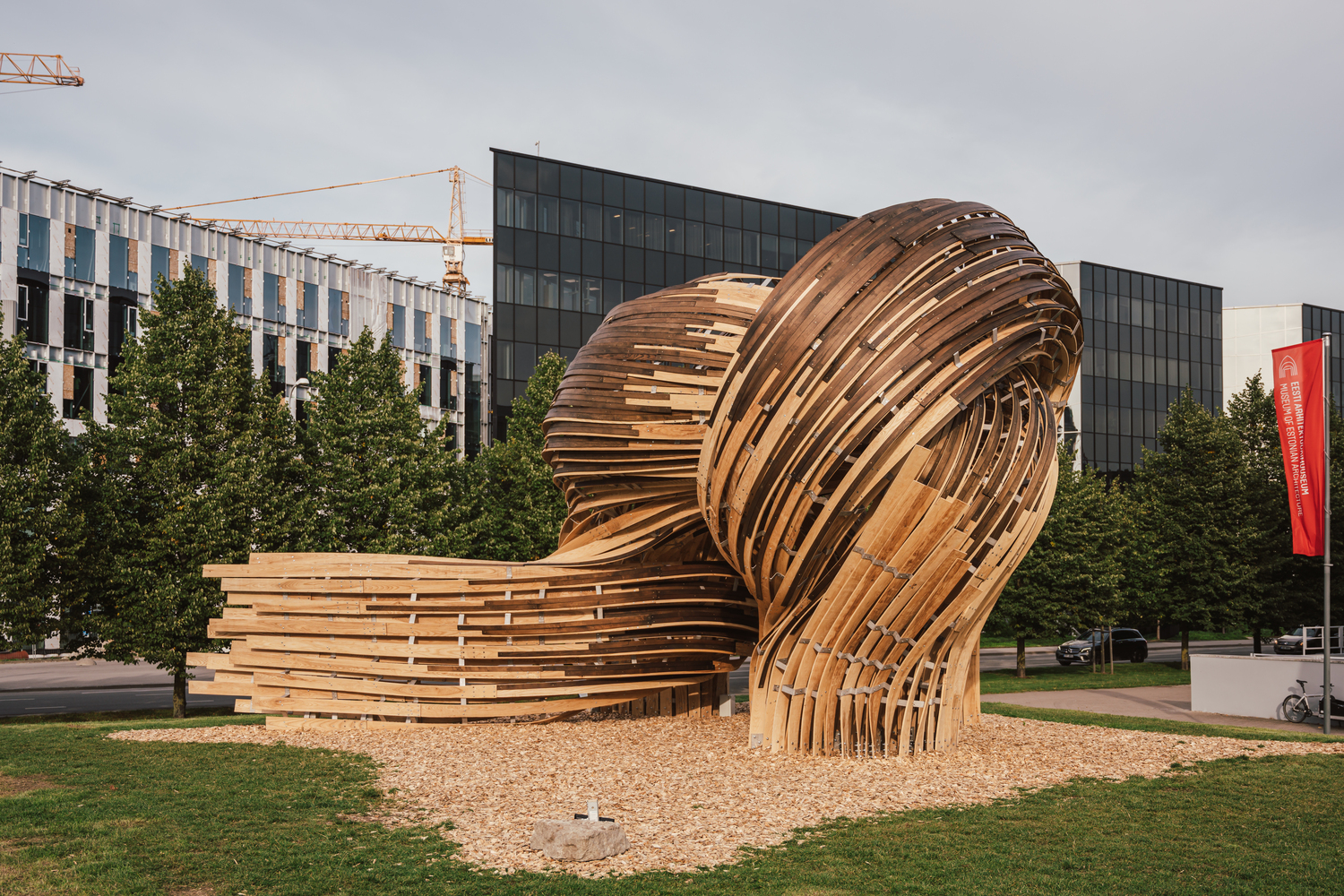
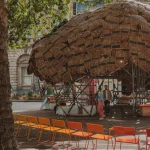
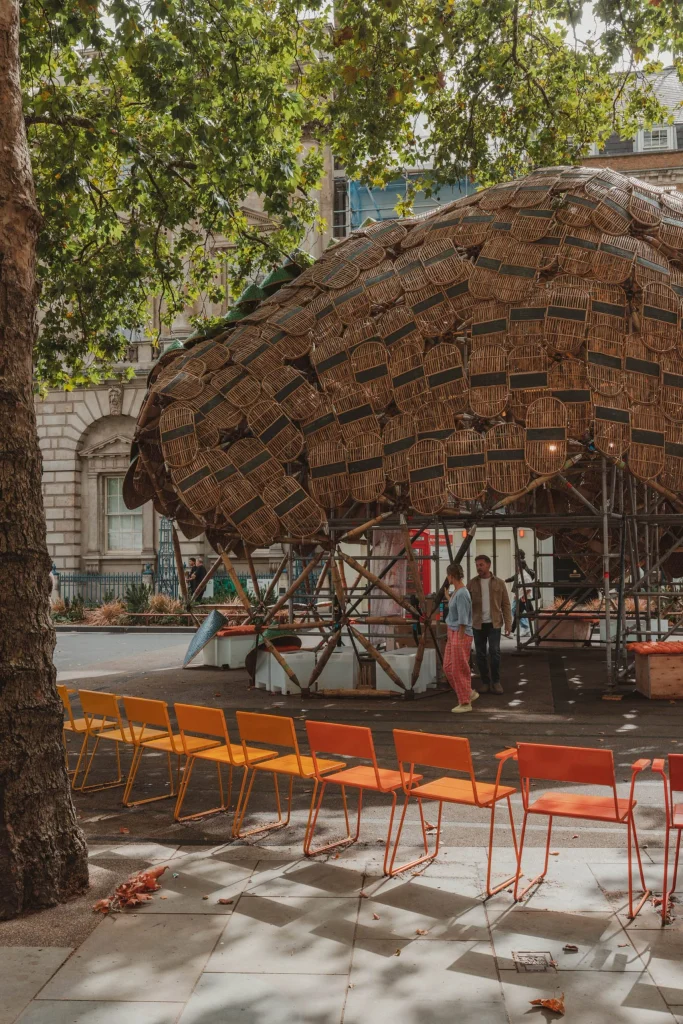
The primary frame is a bamboo grid shell. Studio Saar chose bamboo for its speed of growth, strength, light weight and eventual biodegradability. “It’s lightweight, it’s durable, it grows very quickly; once you finish with it, it’s biodegradable, and you can make super interesting shapes from it,” said Ananya Singhal, managing partner at Studio Saar.
Bamboo is rarely uniform. Lengths, diameters and natural curves vary. Atelier One, led by Neil Thomas, treated this irregularity as a design opportunity rather than a problem. Precision-engineered connectors, developed with Node Company, allow the natural variation of each bamboo member to be absorbed into the structure. The result is a grid that feels ordered yet alive, strengthened by steel fastenings where needed.
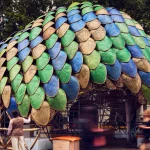
On top of this frame sit two layers of traditional Indian shields. The first is made from police shields constructed from lathis, bamboo sticks historically used by colonial authorities to control crowds. Above them are knups, woven rain shields traditionally used by farmers in Meghalaya, one of the wettest places on earth. Layered like scales, the shields create a continuous protective surface that filters light and provides shade.
Location as meaning
The choice of site is deliberate. The Pangolin Shield faces the bust of Jawaharlal Nehru and stands near the Indian High Commission. Singhal has spoken of the power of small things coming together. Here, objects associated with control and with rural survival are brought into the same structure and asked to perform a different role: shelter rather than confrontation.
The police shields, once tools of authority, now form part of a canopy that protects visitors and passers-by. The knups, designed for monsoon weather, add a second skin of craft and weather resistance. The combination is both practical and symbolic. Protection is redefined as something shared rather than imposed.
Computation meeting craft
The Pangolin Shield is a clear example of how computational design and traditional craft can work together without one dominating the other. The overall geometry of the grid shell was developed through digital modeling that tested structural behavior, joint angles, and fabrication constraints. Thousands of variations could be assessed before physical construction began.
Yet the material itself remains stubbornly natural. Bamboo does not arrive in perfect sections. The connectors had to accommodate real variation while maintaining structural integrity. This is where computation becomes most useful: not in generating pure form for its own sake, but in making an irregular, living material buildable at this scale.
The same logic appears in the layering of the shields. Their placement creates patterns of light and shadow that change throughout the day. The effect is environmental as well as visual. The pavilion becomes a place of varying intensity rather than a uniform enclosure.
Professor Neil Thomas of Atelier One has noted that nature does not follow rules of uniformity. Working with bamboo meant accepting that fact and finding new technical responses. The connectors and digital models are the contemporary tools that allow an ancient material to perform in a temporary public structure in central London.
The Pangolin Shield: A pavilion that asks questions
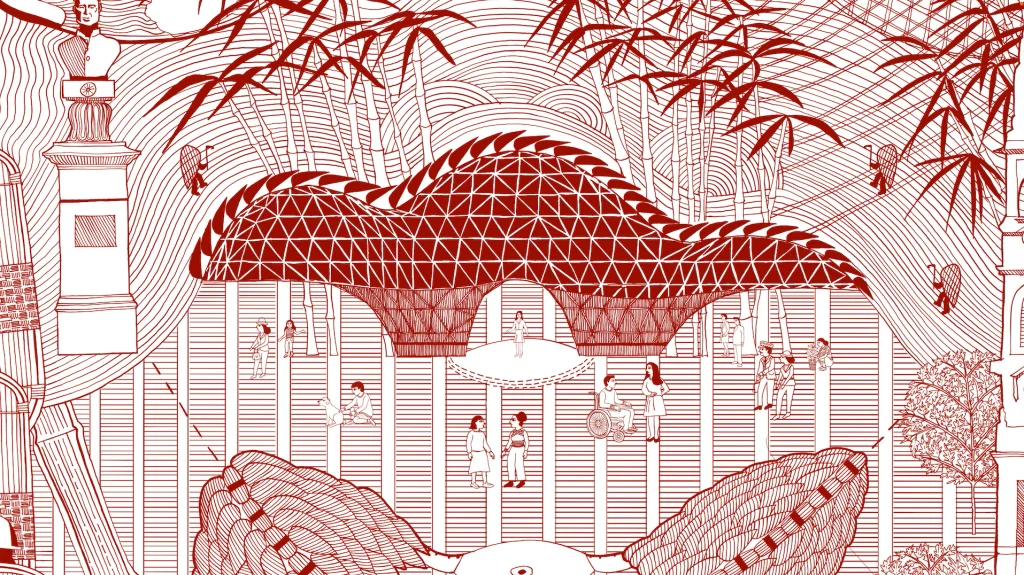
Temporary architecture often risks becoming pure image. The Pangolin Shield tries to avoid that. It offers a place to sit and talk. It filters the weather. It carries a clear material story. And it places that story in a charged urban location where questions of colonial history, ecological pressure and movement across borders already exist.
The pangolin itself is critically endangered, hunted for its scales and meat. By taking the animal’s defensive form as a starting point, the project links human architecture to a wider pattern of exploitation and survival. The shields on the surface carry their own histories of power and resistance. Together they form a structure that is protective without being defensive in the aggressive sense.
Visitors move through a space that is both shelter and statement. The bamboo grid is visible from inside. The layered shields create a textured exterior that changes with light and weather. The whole assembly can be read as a single protective skin made from many small, historically loaded parts.
What the pavilion offers the festival
London Design Festival has long used temporary structures to test ideas in public. The Pangolin Shield continues that tradition while pushing it toward material intelligence and cultural complexity. It shows that a pavilion can be light in construction yet heavy in meaning. It demonstrates that computational tools can serve irregular natural materials rather than replace them. And it places craft, history and structural experiment in the middle of a busy city street for nine days.
When the festival ends, the structure will be dismantled. Bamboo can return to the earth. The shields can be reused or archived. What remains is the memory of a form that asked visitors to consider protection in more than one sense: the protection of a building, the protection of a threatened species, and the possibility of turning symbols of control into places of shared shelter.
In that sense, the Pangolin Shield does what good temporary architecture should do. It occupies a piece of the city for a short time, changes the way people move and pause, and leaves behind questions that outlast the structure itself.