


• Submit Project
  • Advertise
  • Newsletter
PA | Architecture and Technology
Courses
  • Articles
    • Archipreneurs
    • Technology
    • Bim / Aec
    • 3D Printing
    • Architects
    • Artificial Intelligence
    • Robotics
    • Sustainability
    • Tools
    • Case Study
    • City Guide
    • Opinions
    • Interviews
    • Architecture & Design
      • Urbanism
      • Metaverse
      • Space Architecture
      • Geography
  • Projects
    • Architecture
    • Interior
    • Design
      • Fashion
      • Pavilion
      • Installation
      • Digital Art
      • Landscape Design
    • Products
  • News
  • Workshops
  • PA Talks
  • Videos
  • Books
  • More
    • PA+ Membership
    • Competitions
    • Courses
    • Events
    • Jobs
    • Newsletter
    • Advertise
    • Submit Project
    • Contact Us
    • About Us
Font ResizerAa
PA | Architecture and TechnologyPA | Architecture and Technology
Search
  • Articles
  • Projects
  • News
  • Workshops
  • PA Talks
  • Videos
  • Books
  • Advertise
  • Submit Project
  • Newsletter
  • Contact Us
Have an existing account? Sign In
Follow US

Home - Articles - What Is an Omega Block? Decoding the Weather Phenomenon Driving Europe’s Record-Breaking Heatwave

Articles

What Is an Omega Block? Decoding the Weather Phenomenon Driving Europe’s Record-Breaking Heatwave

Last updated: July 4, 2026 8:29 am
Pooja Khanna Tyagi
Pooja Khanna Tyagi
ByPooja Khanna Tyagi
Pooja Khanna Tyagi is an architect and design writer at Parametric Architecture, where she covers daily news, projects, and articles across architecture, interiors, materials, and evolving...
Share
What Is an Omega Block? The Weather Phenomenon Driving Europe's Record-Breaking Heatwave
A tourist uses an umbrella to shield from intense sun near the Eiffel Tower in Paris © Ludovic Marin/AFP/Getty Images.
What Is an Omega Block? The Weather Phenomenon Driving Europe's Record-Breaking Heatwave
List of Images 1/6
What Is an Omega Block? The Weather Phenomenon Driving Europe's Record-Breaking Heatwave
SHARE

Europe is reeling under an intense heatwave, driven by an omega block weather pattern, with temperatures crossing 40°C in several countries and health alerts issued across western and central Europe. The continent, which is warming at more than twice the global average, is experiencing one of its most persistent spells of extreme heat in recent years.
Contents
  • What is an Omega Block?
  • Why Does an Omega Block Cause a Heatwave?
  • Which Parts of Europe Are Affected?
  • Is Climate Change Responsible?
- Advertisement -
Omega Block
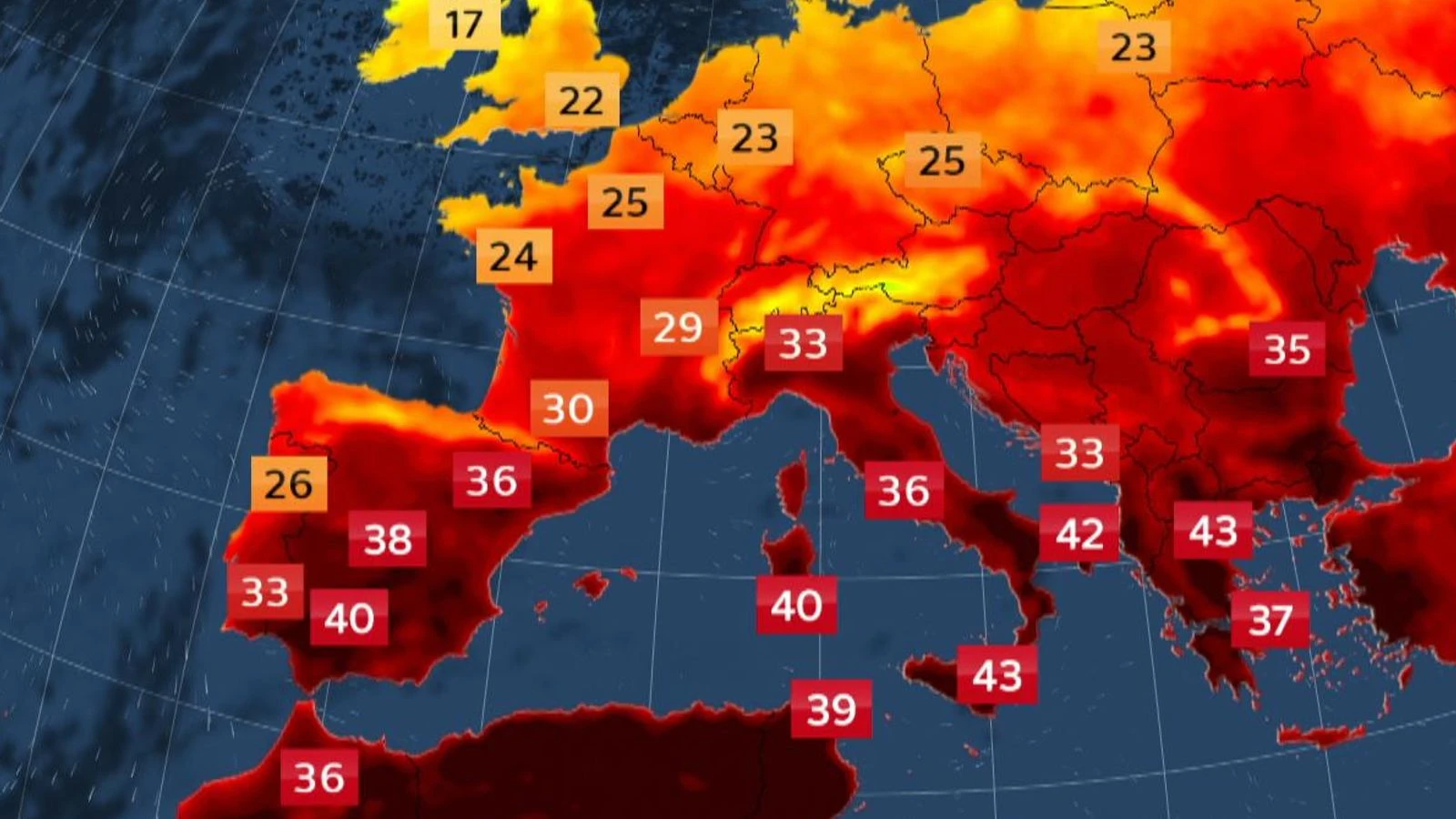
Europe’s heatwave is impacting Spain, Italy, and other popular holiday destinations © Sky News

While climate change is making these events more severe, meteorologists say the immediate driver behind the current heatwave is an atmospheric phenomenon known as the Omega Block.

What is an Omega Block?

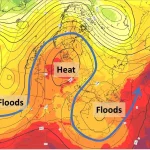
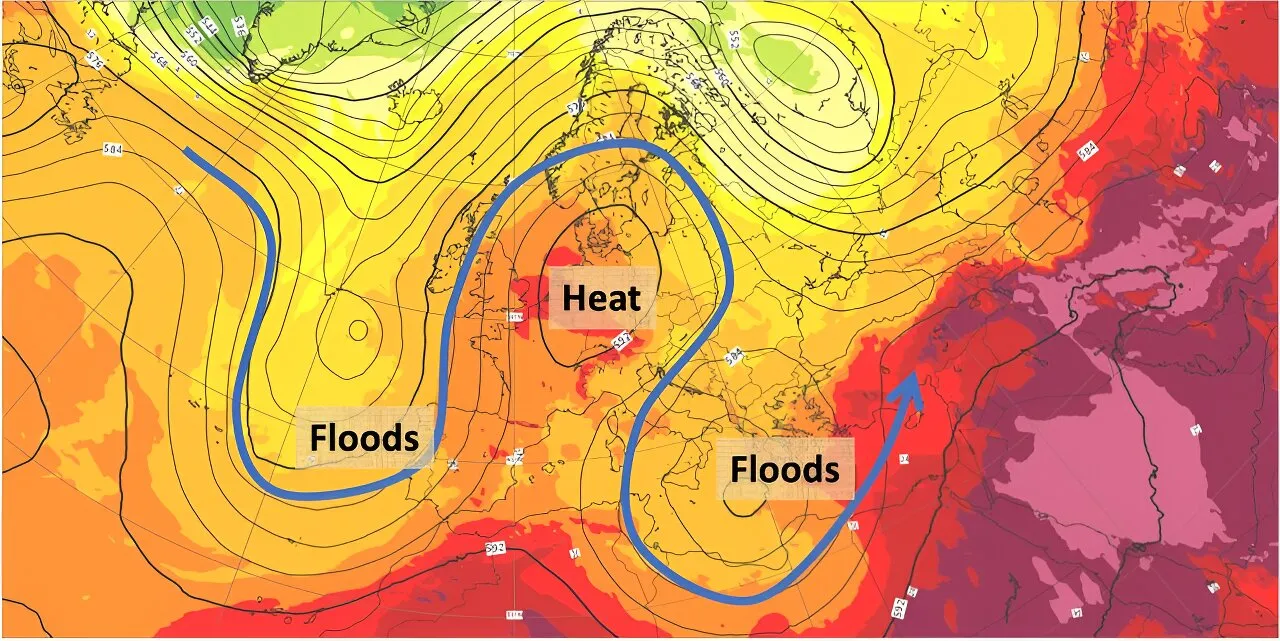
An Omega Block is a stalled weather pattern in the upper atmosphere that takes the shape of the Greek letter Ω (Omega). It forms when a strong high-pressure system becomes trapped between two low-pressure systems, causing the jet stream to bend sharply around it. Under normal conditions, the jet stream carries weather systems from west to east, bringing regular changes in temperature and rainfall. During an Omega Block, however, this flow is disrupted, causing the high-pressure system to become almost stationary.
Omega Block
© European Centre for Medium-Range Weather Forecasts (ECMWF), CC BY-SA

The term “blocking” refers to the way this high-pressure system blocks the normal movement of weather systems. As a result, the same weather conditions remain over a region for several days or even weeks. Omega Blocks typically last three to ten days, but under favourable atmospheric conditions, they can persist much longer.

- Advertisement -

Why Does an Omega Block Cause a Heatwave?

The stalled high-pressure system acts like a lid over the atmosphere. Air slowly sinks toward the ground and warms as it compresses, suppressing cloud formation and allowing uninterrupted sunshine. With no clouds to reflect sunlight, the land absorbs more heat each day, causing temperatures to climb steadily.
Omega Block
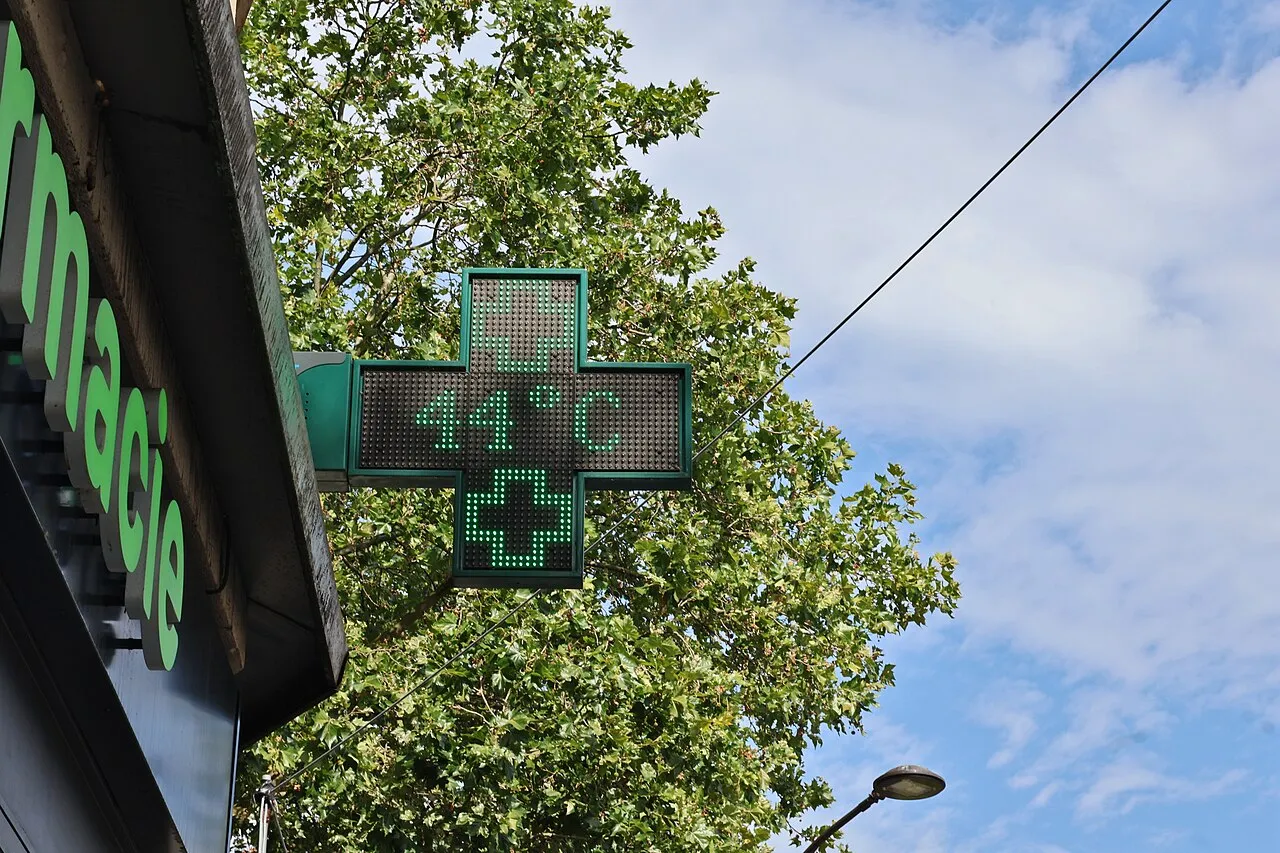
Paris, 26 June at 17:28. A pharmacy’s thermometer sign shows 44 °C (111 °F) © FreCha via Wikipedia Commons

Additionally, the Omega Block prevents cooler Atlantic air from reaching Europe. Instead, hot air from North Africa continues to move northward and becomes trapped beneath the high-pressure dome. Since there is very little air movement or ventilation, the heat accumulates over successive days rather than dispersing.

Omega Block
Canal Saint-Martin in Paris attracted large crowds as extreme heat gripped the city © Adnan Farzat/NurPhoto/Shutterstock via The Guardian

Unlike a typical heatwave pattern that moves from one region to another, an Omega Block creates stagnant air. This not only prolongs the heat but also prevents temperatures from falling significantly at night, increasing health risks. The stagnant conditions can also trap pollutants close to the surface, leading to deteriorating air quality in many urban areas.

- Advertisement -

Meteorologists note that weaker steering winds and reduced temperature contrasts in the atmosphere help create these slow-moving blocking patterns. Large-scale climate variations such as El Niño and La Niña may also influence atmospheric circulation, potentially strengthening or prolonging such events under certain conditions.

Which Parts of Europe Are Affected?

The current Omega Block has spread extreme heat across much of the continent, with the most severe conditions concentrated in southern and western Europe before gradually expanding eastward.

Southern and Western Europe: Spain, Portugal, Italy, Greece, France, Belgium, the Netherlands, Luxembourg, and the United Kingdom have experienced the most intense heat, with temperatures exceeding 40°C in several regions, alongside drought, wildfire risk, and widespread heat alerts.

- Advertisement -

Central, Eastern, and Northern Europe: Germany, Switzerland, Austria, Poland, the Czech Republic, Slovakia, Hungary, Romania, Bulgaria, Moldova, and parts of Ukraine, as well as Denmark, southern Sweden, and Norway, have also recorded unusually high temperatures as the heatwave continues to spread across the continent.
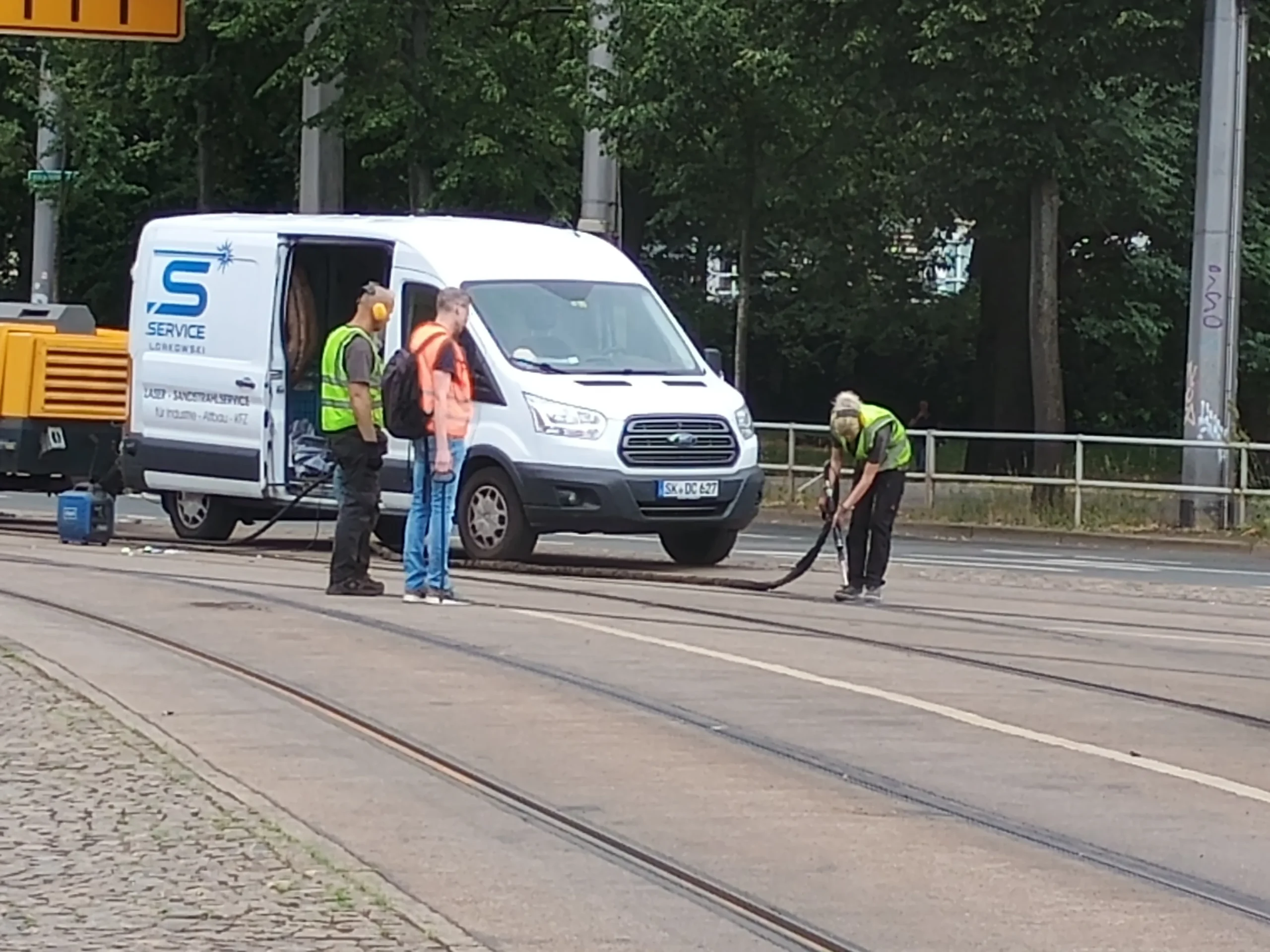
Omega Block
A worker in high-visibility gear uses a blowtorch to repair heat-damaged bitumen along tram tracks in Leipzig, Germany, during a June 2026 heatwave © Roy Zuo via Wikipedia

Meteorologists expect the hot conditions to extend further into eastern Europe over the coming days, although it remains uncertain how long the Omega Block will persist.

Is Climate Change Responsible?

The Omega Block itself is not caused by climate change, as it is a naturally occurring atmospheric circulation pattern that has existed for centuries. However, climate change is making its impacts significantly more severe. As global temperatures continue to rise, the air trapped beneath these blocking patterns starts from a much warmer baseline, resulting in hotter, longer-lasting, and more dangerous heatwaves than those experienced in the past.

- Advertisement -
Omega Block
People cool off beneath a mist fountain at Place du Trocadéro in Paris © Dimitar Dilkoff/AFP/Getty Images via The Guardian

Scientists often explain the relationship with a simple analogy: the Omega Block acts like a lid that traps heat, while climate change turns up the temperature beneath that lid. Together, they create the ideal conditions for prolonged periods of extreme heat.

As the continent continues to warm faster than the global average, such prolonged extreme heatwaves are expected to become more frequent and more intense, highlighting the growing need for better heat preparedness and climate resilience.

- Advertisement -
TAGGED:Europeextreme heatheatwaveomega block
Share This Article
Facebook LinkedIn Email Copy Link Print
ByPooja Khanna Tyagi
Pooja Khanna Tyagi is an architect and design writer at Parametric Architecture, where she covers daily news, projects, and articles across architecture, interiors, materials, and evolving lifestyle narratives, translating complex design ideas into clear and accessible stories.
Previous Article Sharjah Architecture Triennial Sharjah Architecture Triennial Announces 2026 Participants
Next Article BIM Masterclass: Data Automation in Revit & Claude
Leave a Comment Leave a Comment

Leave a Reply Cancel reply

You must be logged in to post a comment.

How AI Tools Redefine the Architect's Creative Perspective
How AI Tools Redefine the Architect’s Creative Perspective
September 26, 2024
Riken Yamamoto
10 Impressive Projects Designed by Riken Yamamoto with the Motto “Community within a Community”
July 28, 2026
Female Architects
Where Did the Women Go? The Hidden Disappearance of Female Architects After Graduation
July 19, 2026
Diébédo Francis Kéré, Kéré Architecture
10 Context-Responsive Projects by Diébédo Francis Kéré
May 20, 2026
Quebec City Guide
Quebec City Guide: Fortifications and Iconic Landmarks
July 6, 2026
L’île Folie Pavilion by Marc Fornes/THEVERYMANY

Subscribe to our newsletter

You Might Also Like

Experimental Living at Venice Architecture Biennale 2025
ArticlesSustainability

5 Lessons Learned from Climate-Responsive Architecture

March 30, 2026
Case Study

Lusail City: Qatar’s Mega Urban Project Built for the FIFA World Cup 2022

October 20, 2025
ArticlesInterviews

Interview with curators of the French Pavilion on exploring identities through “Ball Theater” at the Venice Architecture Biennale 2023

July 1, 2024
Architecture & Design

The Two-Act Workflow: A Guide to Bridging ML-Generated Maps and Rule-Based 3D Assembly

November 7, 2025
PA | Architecture and Technology

© All rights reserved. Parametric Architecture (2018-2026) – ISSN 3023-7564

Parametric Architecture (PA) is a leading global architecture and design platform connecting millions of architects, designers, and students through innovative projects, industry insights, and educational initiatives.

Instagram Facebook X-twitter Youtube Linkedin Pinterest Tiktok

Get in touch​

  • About Us
  • PA+ Membership
  • Contact Us
  • Submit Project
  • Newsletter
  • Advertise
  • Cookie Policy
  • Distant Sales Agreement
  • PA+ Membership Agreement
  • Privacy Policy

Explore More

  • Articles
  • Projects
  • Videos
  • Books
  • PA Talks
  • Jobs
  • Subscribe

Subscribe to our newsletter

Subscribe to our newsletter to get our newest articles instantly!

© 2026 ParametricArchitecture. All Rights Reserved. By utilizing this website, you are consenting to our User Agreement, Privacy Policy, and Cookie Statement. In compliance with the privacy laws of Turkey and the United States, we recognize and respect your rights. Please be aware that we may receive commissions for products bought through our affiliate links. Unauthorized reproduction, distribution, or transmission of any material from this site is strictly forbidden without prior written permission from ParametricArchitecture.

Welcome Back!

Sign in to your account

Username or Email Address
Password

Lost your password?

Not a member? Sign Up