
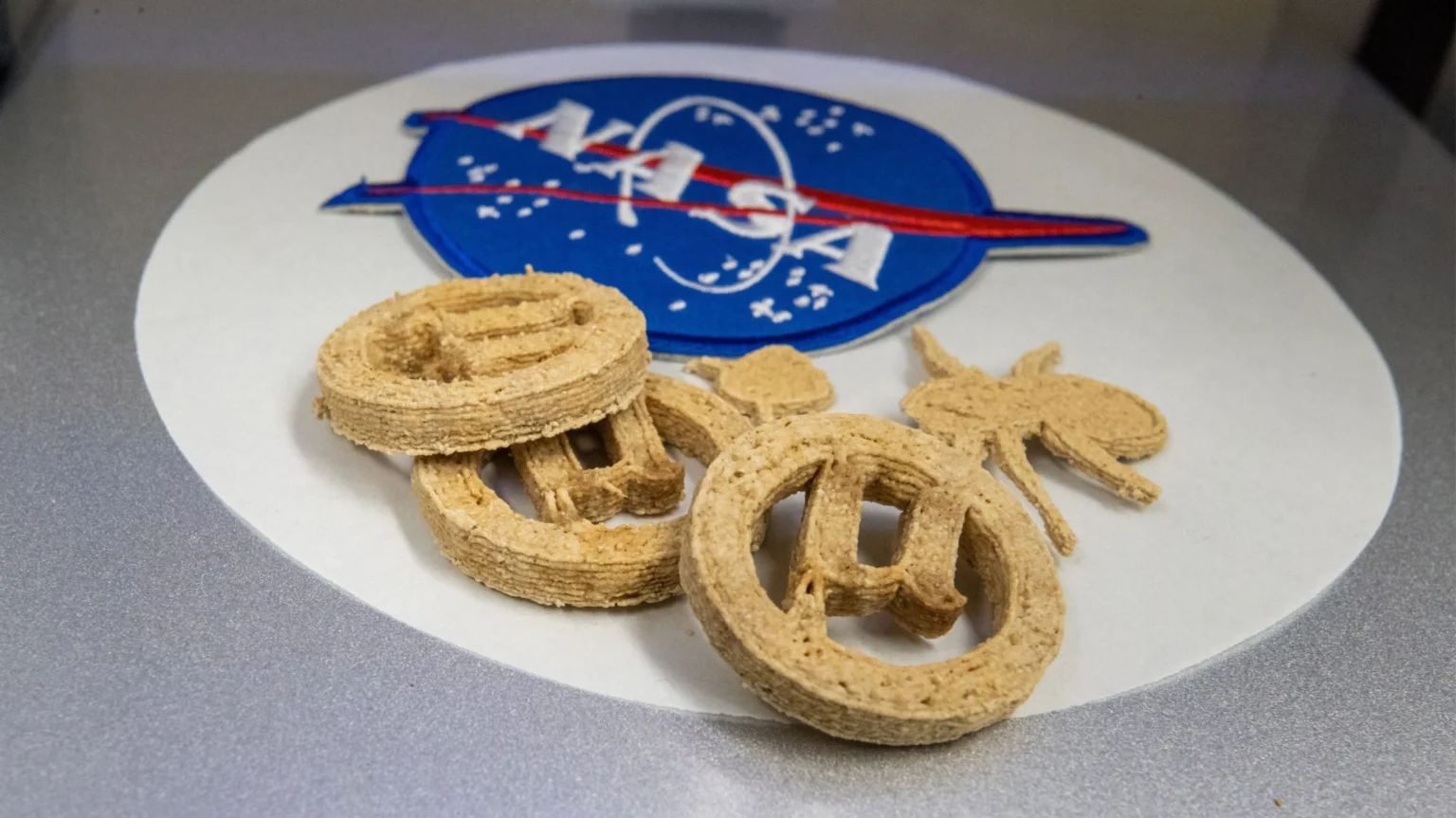

Plastic bottles rarely inspire hunger. Most of us see them as litter or recycling bins. Yet in a laboratory at Southern Illinois University Carbondale, those same bottles have become the starting point for a small, protein-rich cookie. The project, supported by NASA’s Deep Space Food Challenge, asks a simple but unsettling question: what if the carbon locked inside discarded plastic could be rebuilt into something we can safely eat? The cookies are called µBites, pronounced “microbites.”
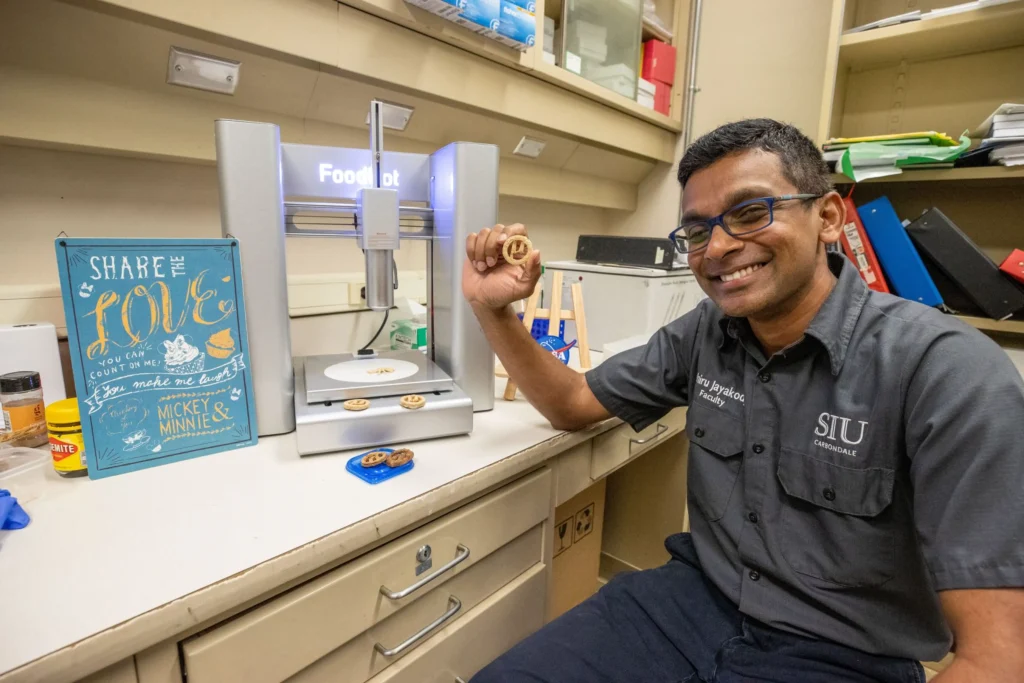
They look ordinary enough once printed, but their ingredients begin as PET plastic and agricultural leftovers such as corn stalks and leaves. The process does not grind plastic into the final product. Instead, it dismantles the material at a molecular level and then uses living cells to reassemble the carbon into food.
Breaking the Bottle Down
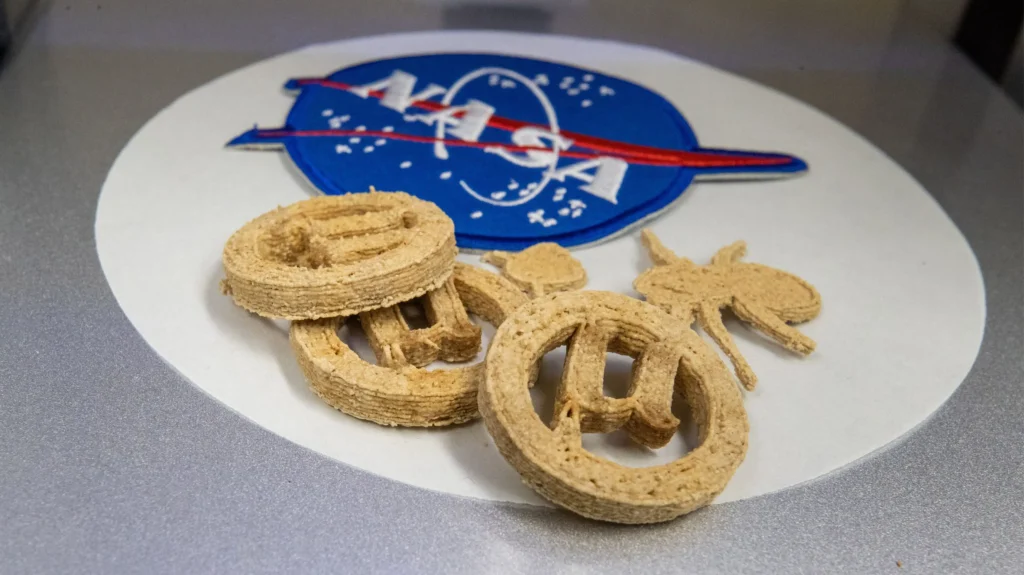
The first step is oxidative hydrothermal dissolution. Plastic and plant waste are subjected to water, oxygen, high temperature, and pressure. The harsh conditions crack the long polymer chains into smaller fragments that microbes can handle. What remains is a liquid feedstock rich in carbon-based molecules.
Engineered yeast strains then take over. Different yeasts have been programmed for different jobs. One variety converts the broken-down material into proteins and fats. Another, based on baker’s yeast, produces vanillin, the compound that gives vanilla its familiar aroma and taste. A third strain turns ethylene glycol, a component of PET, into beta-carotene, the orange pigment the human body can convert into vitamin A. The result is a nutritious slurry that no longer contains plastic polymers.
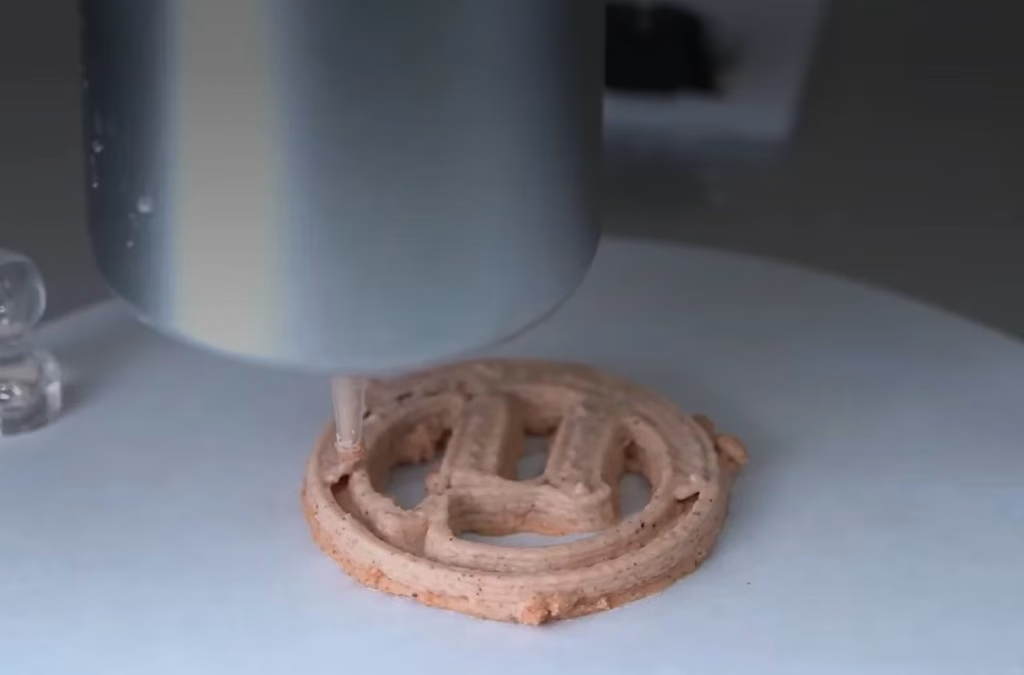
Fiber, starch and a measured amount of sweetener are added to the slurry. The mixture is loaded into a 3D food printer and extruded layer by layer into the familiar disk shape of a cookie. Laboratory data indicate the finished µBites are safe to eat, though formal human taste tests still await institutional approval.
Why NASA Cares
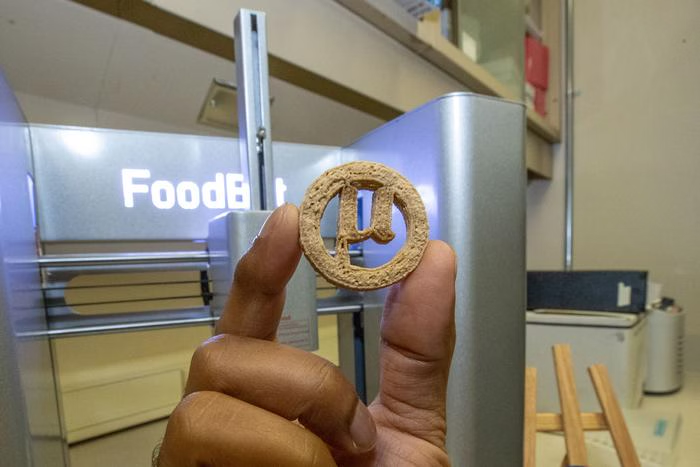
Long-duration spaceflight presents a stubborn problem. A round trip to Mars could last three years. Resupply from Earth is impractical, and every kilogram of food carried from the launch pad adds cost and complexity. NASA’s Deep Space Food Challenge invited teams to invent systems that produce nutritious food with minimal resources and waste. The SIU team, led by microbiologist Lahiru Jayakody, answered by treating plastic packaging and crop residues as potential feedstock rather than refuse.
In space, the same logic applies. Packaging that once protected food could later become the carbon source for new nutrients. On Earth, the same system could serve disaster zones, remote research stations, or regions where conventional agriculture is difficult. The researchers describe the µBites unit as portable and tunable, capable of operating in environments as varied as submarines, deserts, or Arctic outposts.
The Larger Picture
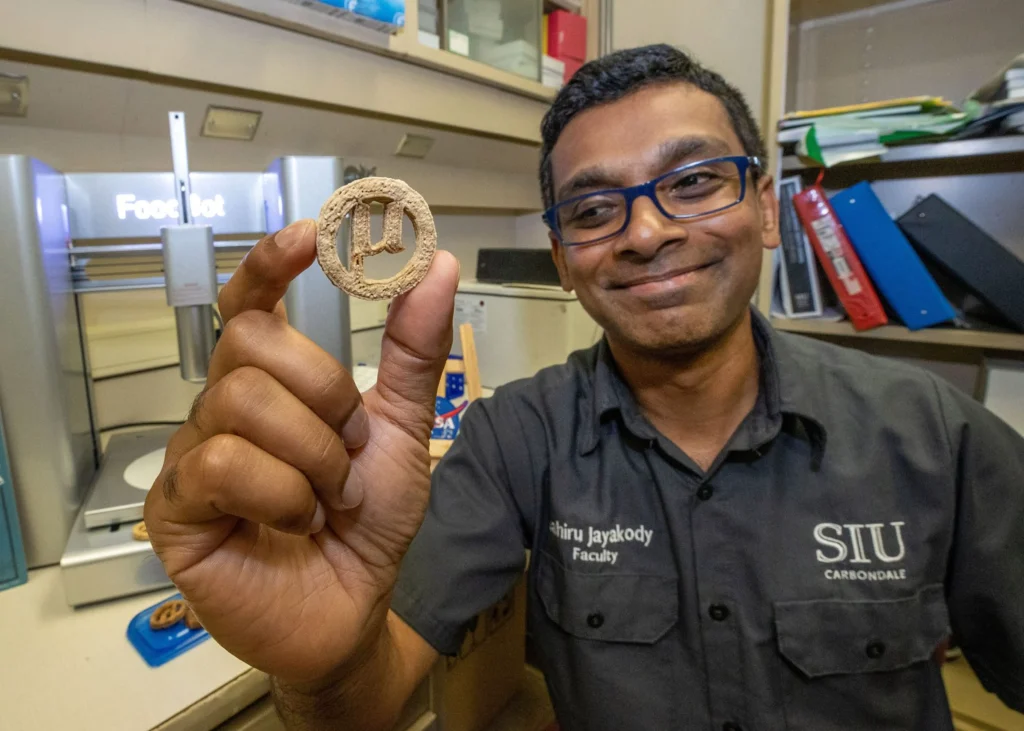
Plastic pollution and food insecurity are usually discussed as separate crises. One fills oceans and landfills; the other leaves hundreds of millions without reliable nutrition. By linking the two, the project forces a shift in perspective. Carbon is carbon, whether it sits in a soda bottle or a corn stalk. If microbes can be taught to rearrange that carbon into proteins, fats and vitamins, waste streams become raw materials.
The technology remains early. Scale, energy cost, regulatory approval, and public acceptance all stand between laboratory prototypes and everyday use. Taste and texture will matter as much as nutrition. Yet the core idea is already clear: the material we discard may one day help feed us when conventional supply chains fail.
The cookies themselves are still waiting for their first official tasting panel. Until then, they sit as quiet proof that the boundary between trash and food is thinner than we once assumed. In a laboratory in Illinois, plastic bottles have already begun their second life as something closer to sustenance than refuse.