


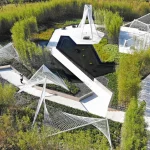
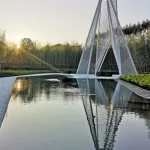
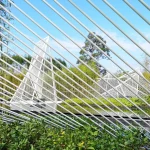
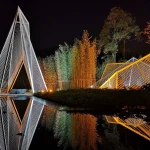
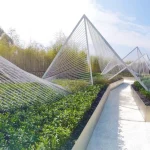
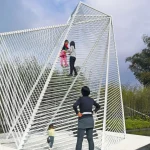
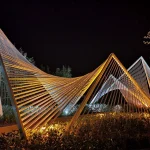
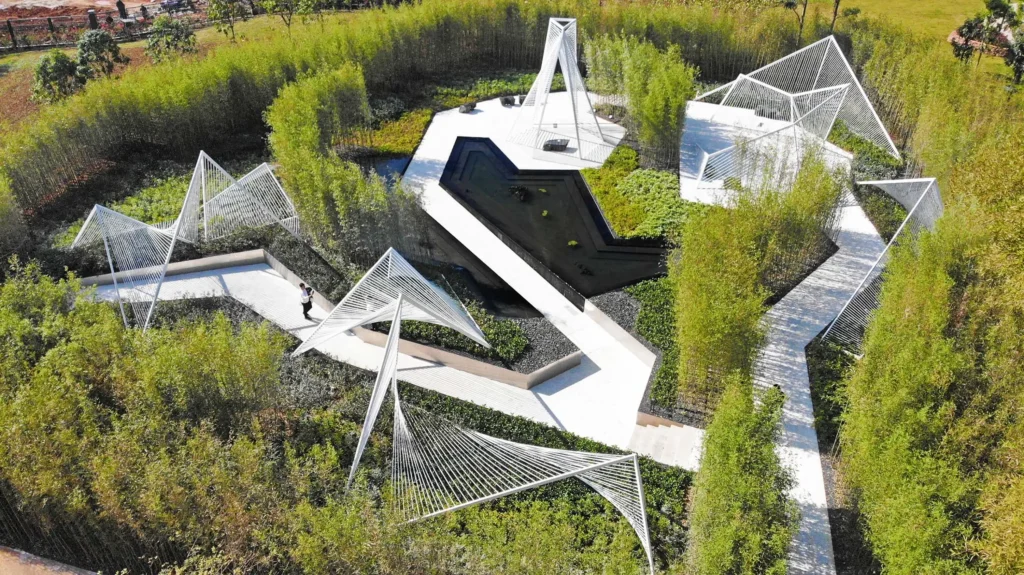
In the southwest corner of Nanning Garden Expo Park, SSJ Studio completed a 2,000-square-meter garden in 2018 titled In the Mountains. The project draws directly from the spatial conventions of classical Chinese landscape painting, particularly the traditional system of multiple perspectives known as the six distances. Rather than presenting a single viewpoint, the garden constructs a sequence of experiences that shift as a visitor moves.
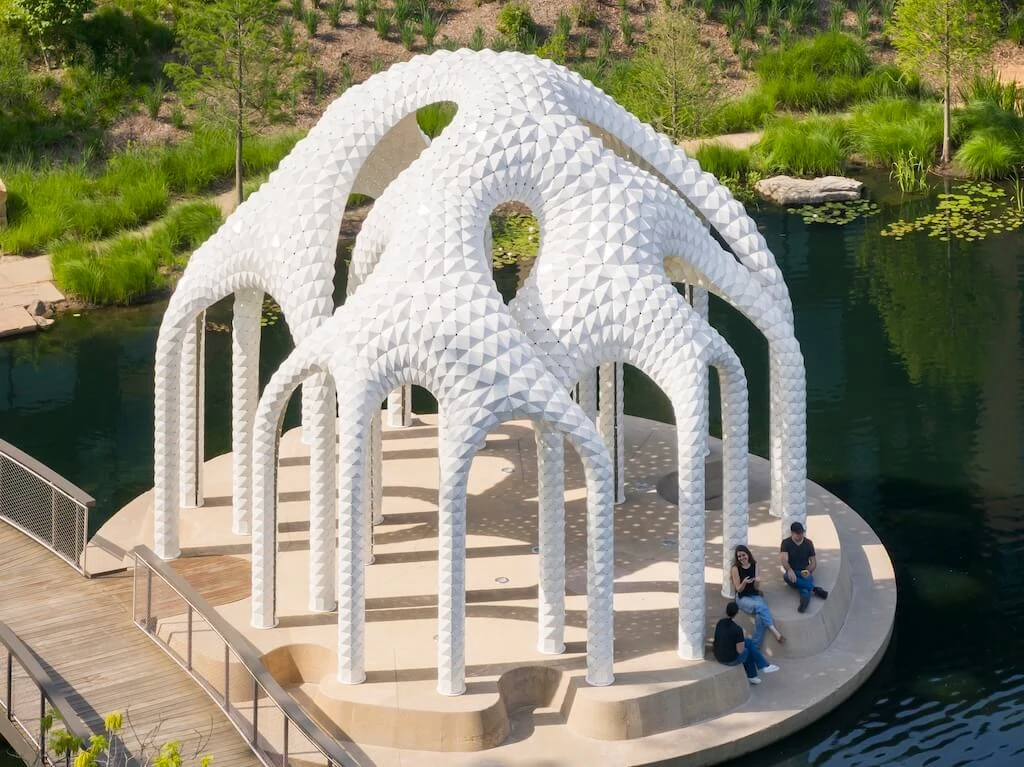
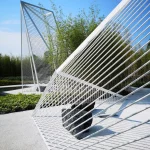
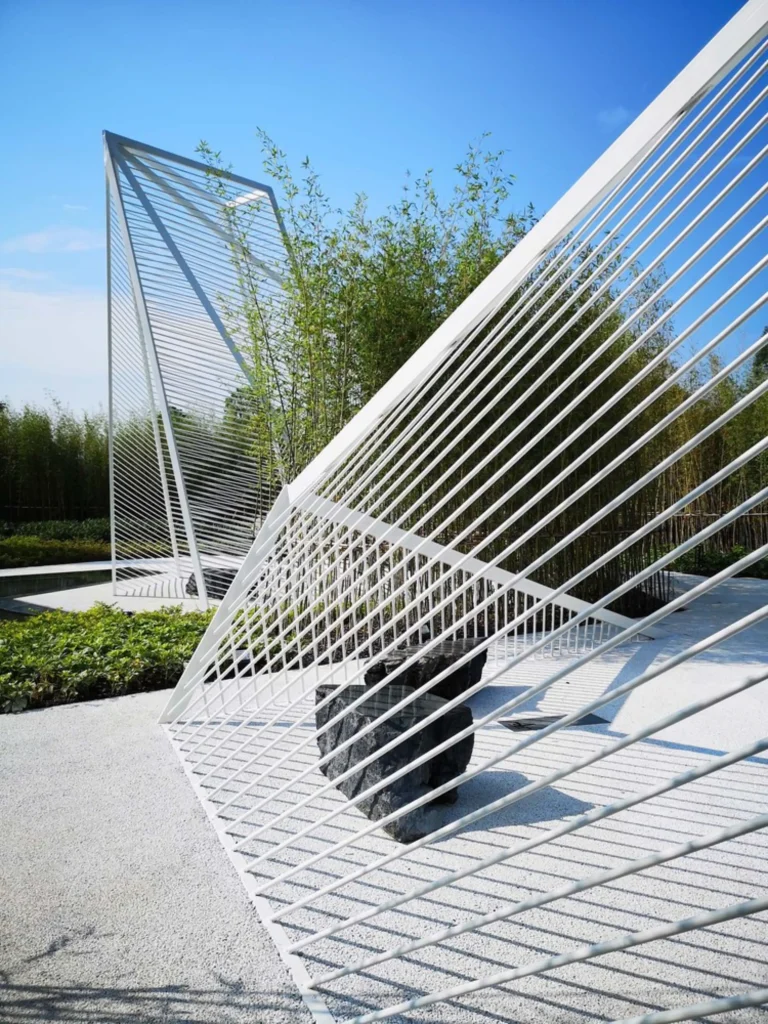
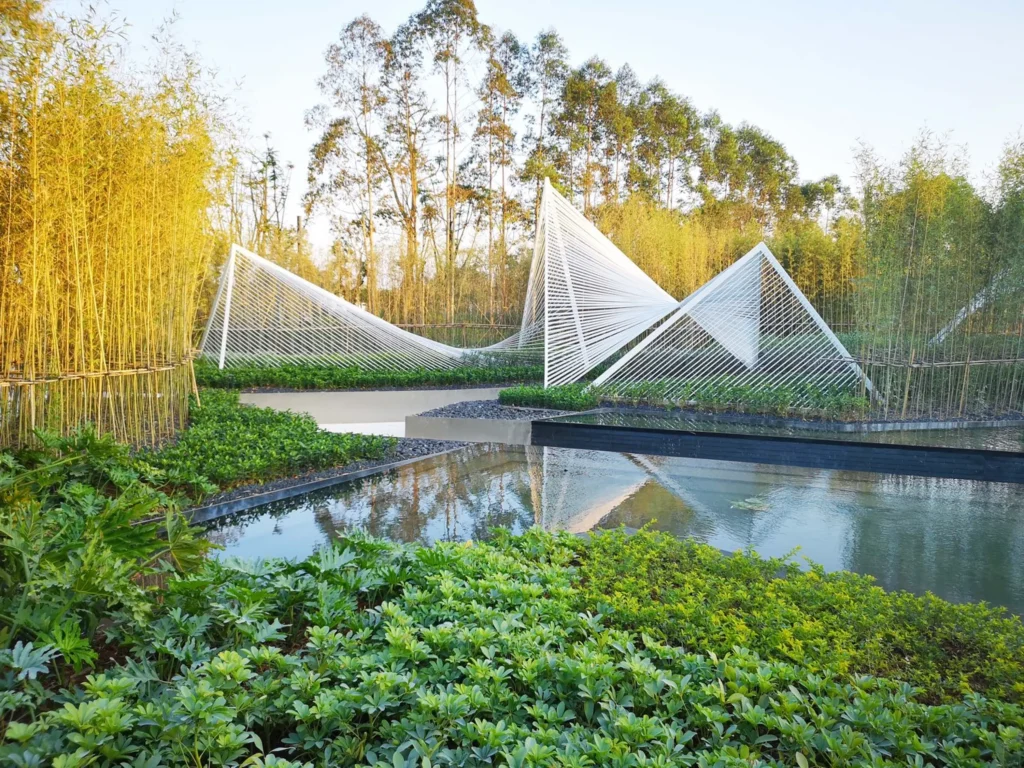
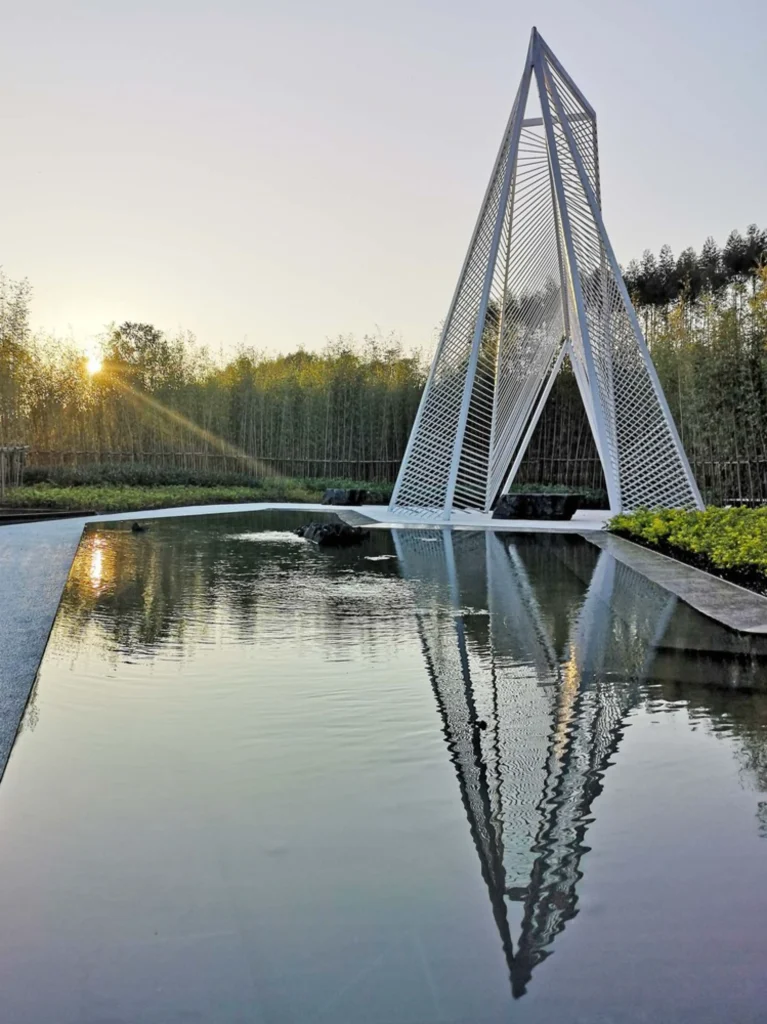
White steel structures form nonlinear surfaces that rise and fold like abstracted mountain ranges. These surfaces are made from welded steel columns arranged to create continuous curves. As a person walks the paths, the overlapping planes change relationship, producing the sensation of depth and recession familiar from scroll paintings.
Six Perspectives Made Spatial by SSJ Studio
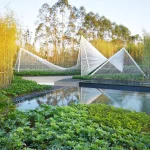
The design organizes the garden according to six classical perspectives. The first is range: a sunken path leads through successive layers of white forms so that earlier and later planes remain visible at once, creating the feeling of layered peaks. Other perspectives address height, distance, and the shifting relationship between solid and void. Paths rise and fall. Openings frame views that open and close. A dark reflecting pool sits at the centre, anchoring the composition and providing a still surface against the active white structures.
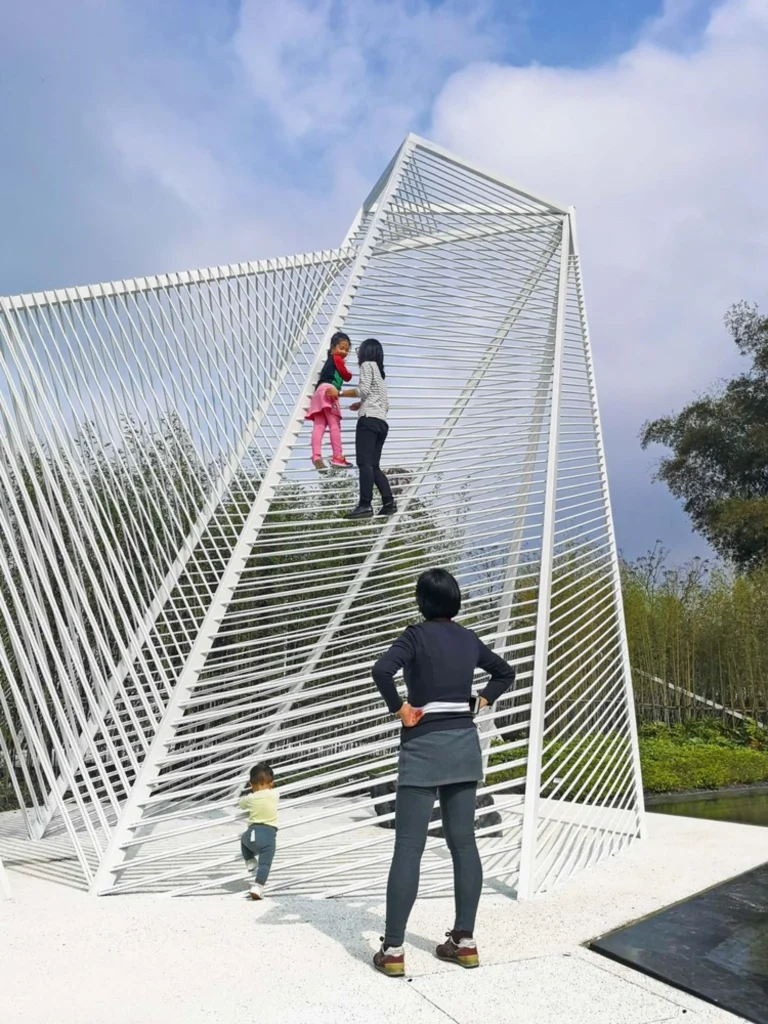
The materials remain deliberately limited. White-painted steel, concrete paths, gravel, planting and water form the palette. Bamboo and low vegetation soften the edges and reinforce the sense of an inhabited landscape rather than a pure sculpture. The structures themselves are open frameworks rather than solid volumes, allowing light and air to pass through and keeping the garden from feeling heavy.
Computational Craft in Landscape Form
Although the project predates the current wave of high-profile parametric landscapes, its geometry depends on digital modeling and precise fabrication. The nonlinear surfaces required careful control of curvature and jointing so that the welded steel elements could be produced and assembled with consistency. The result sits between craft and computation: a form that looks freehand yet depends on measured digital coordination to achieve structural stability and visual continuity.
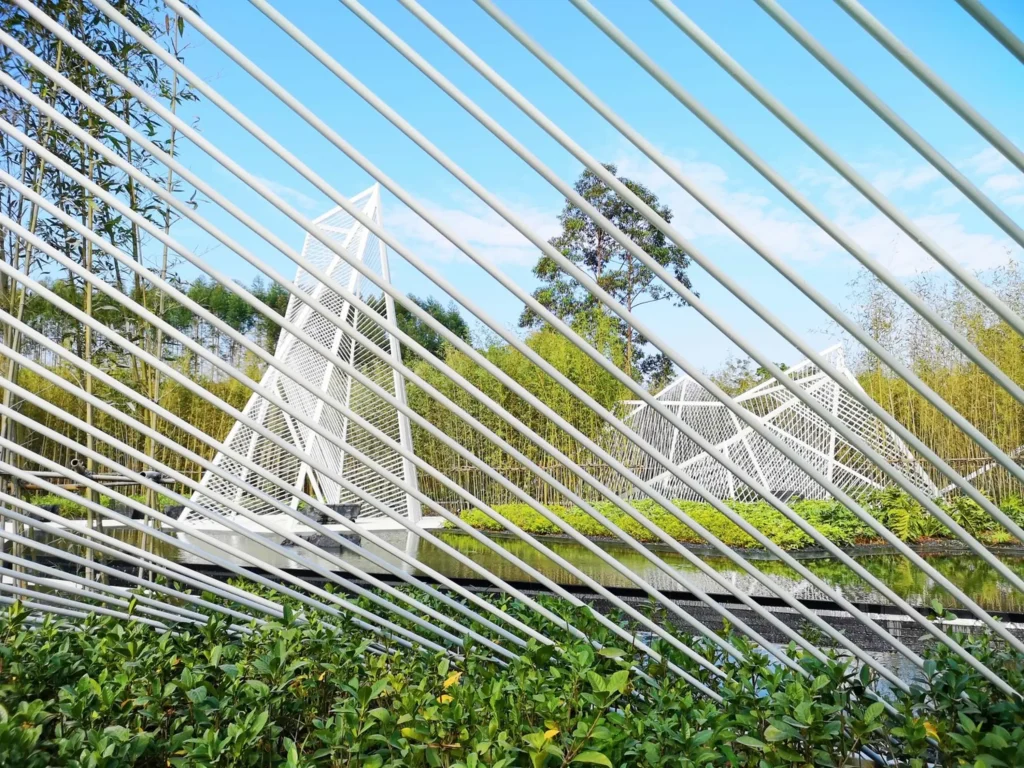
In this sense the garden offers an early example of how computational thinking can serve traditional spatial ideas. The six perspectives are not generated by algorithm; they are interpretive. Digital tools simply made it possible to realize those interpretations at the scale of a walkable landscape with consistent formal language.
A Temporary Yet Lasting Gesture
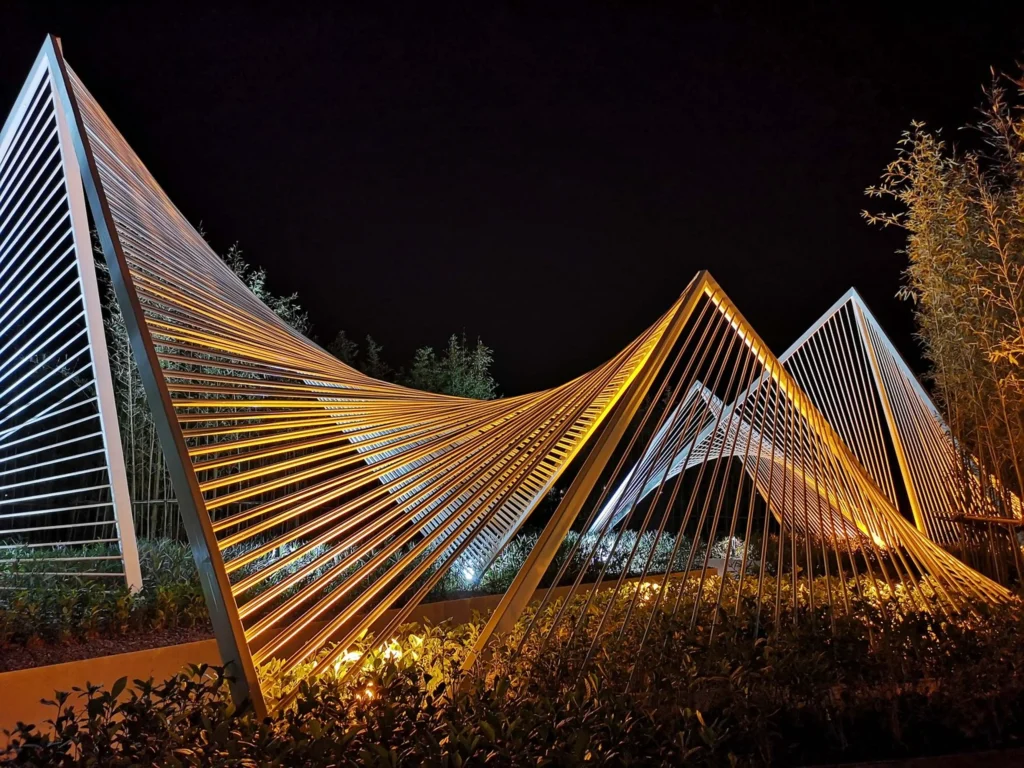
Built as part of the Nanning Garden Expo, the project was conceived as a temporary installation within a larger exhibition landscape. Yet its clarity of concept and restraint of means give it a presence that outlasts the event. Visitors move through a three-dimensional painting rather than looking at one. The body becomes the viewing instrument.
What the PathHolds
In the Mountains does not attempt to recreate historical gardens. It translates a way of seeing into a way of walking. By treating white steel as both structure and brushstroke, SSJ Studio produced a landscape that is simultaneously modern and deeply rooted in Chinese pictorial tradition. The garden remains a quiet demonstration that computational precision and cultural continuity can share the same ground.