
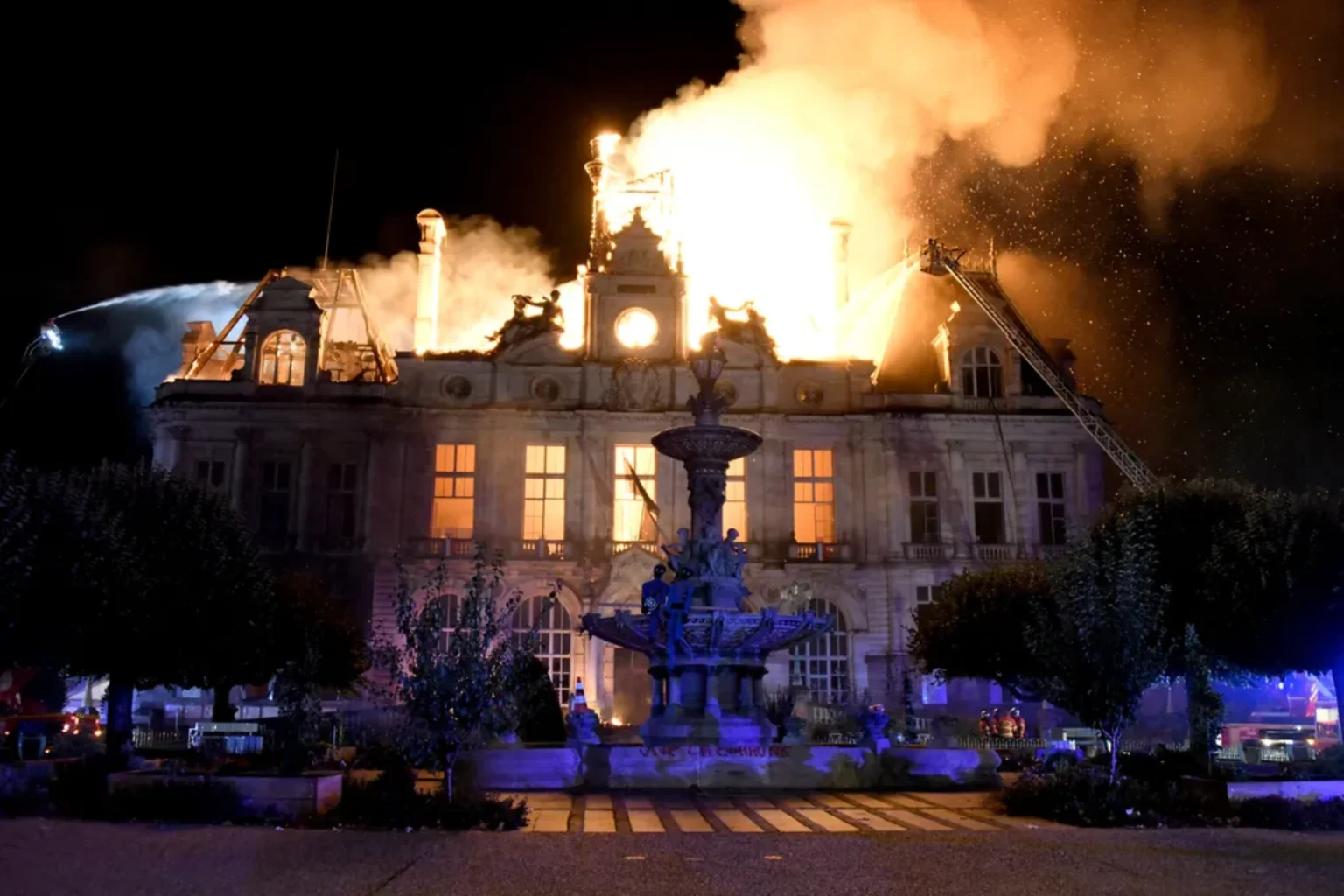

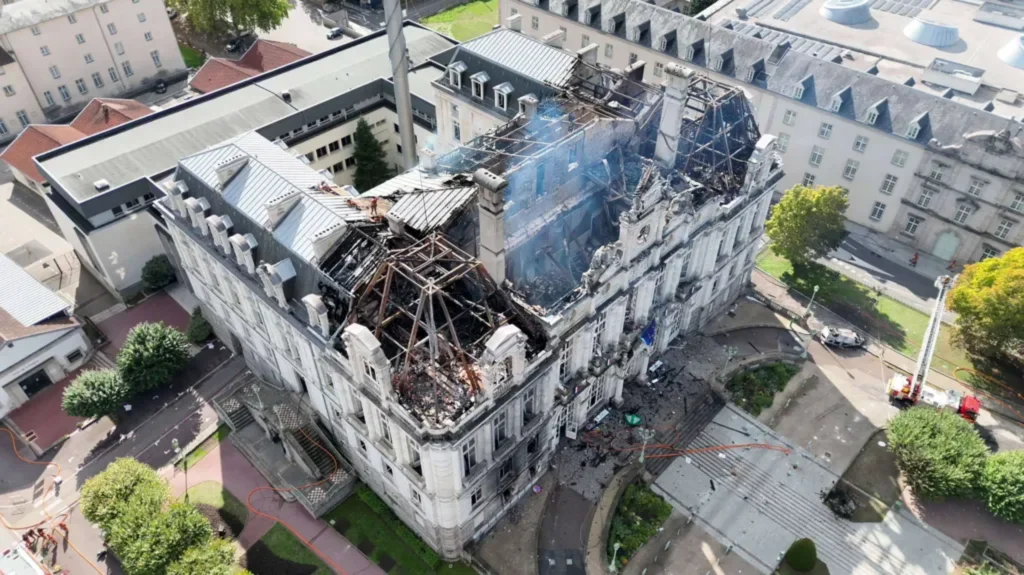
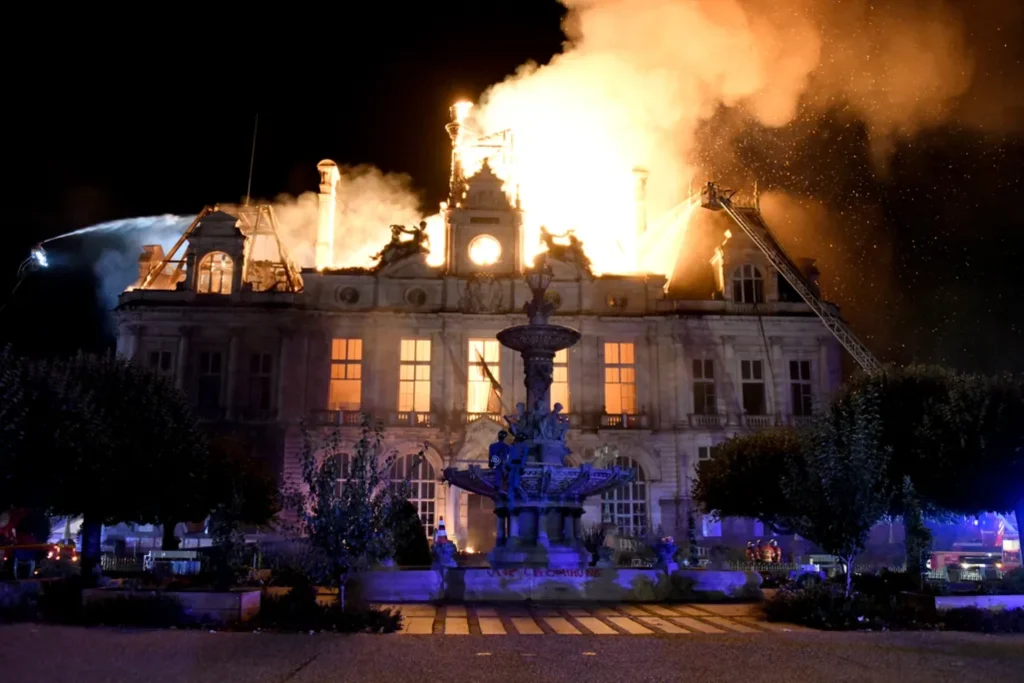
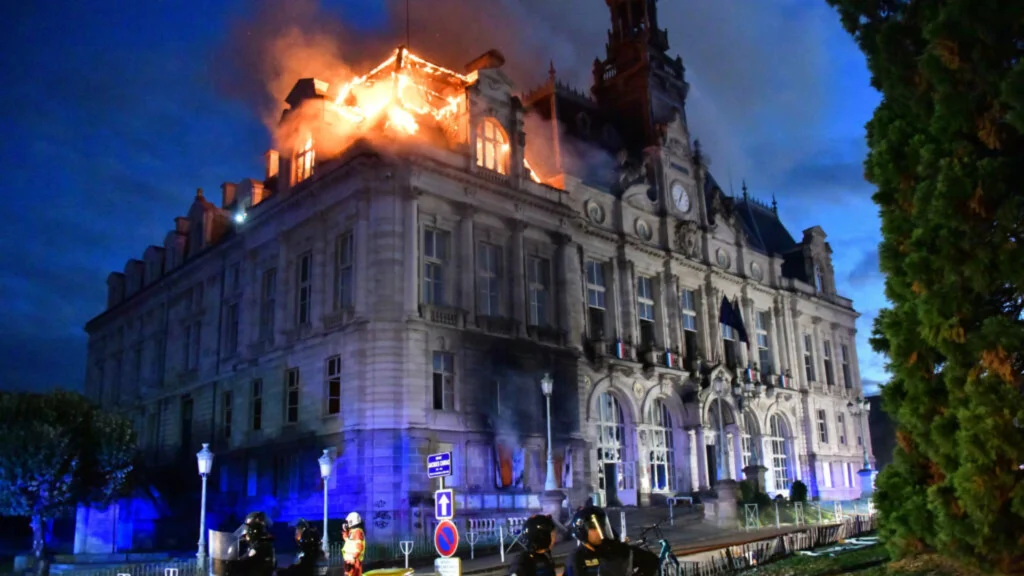
France’s nationwide protests took a devastating turn in Limoges on the evening of 17 October 2026, when fire engulfed the city’s historic Hôtel de Ville. The blaze tore through the 143-year-old civic landmark, collapsing its roof and 43-meter clock tower and leaving much of the neo-Renaissance building a blackened shell.
Designed by Charles-Alfred Leclerc and completed in 1883, the town hall had stood as one of the clearest civic landmarks in central France. Its loss during a weekend of widespread protest and disorder has drawn attention both to the vulnerability of historic public buildings and to the depth of the social pressures that fueled the demonstrations.
A Civic Landmark of the Third Republic
Leclerc modeled the building on the Hôtel de Ville in Paris, working in a neo-Renaissance vocabulary mixed with Louis XIII references. The symmetrical main façade of eleven bays faced the square now known as Place Jacques Chirac. Granite formed the base; limestone defined the upper levels. Tall carriage arches at the ground floor gave way to balustraded windows above. Four mosaic medallions celebrated figures connected to Limoges and national history, while sculptures of goldsmithing and enameling acknowledged the city’s craft traditions.
A 43-meter clock tower and belfry rose at the center, dominating the skyline. Inside, a pink-marble reception hall and grand staircase provided the setting for civic ceremony. Murals and decorative schemes reinforced the building’s role as both administrative headquarters and local monument. For more than a century, it served as the visible face of municipal authority in a city better known for porcelain than for political confrontation.
The Fire and Its Immediate Context
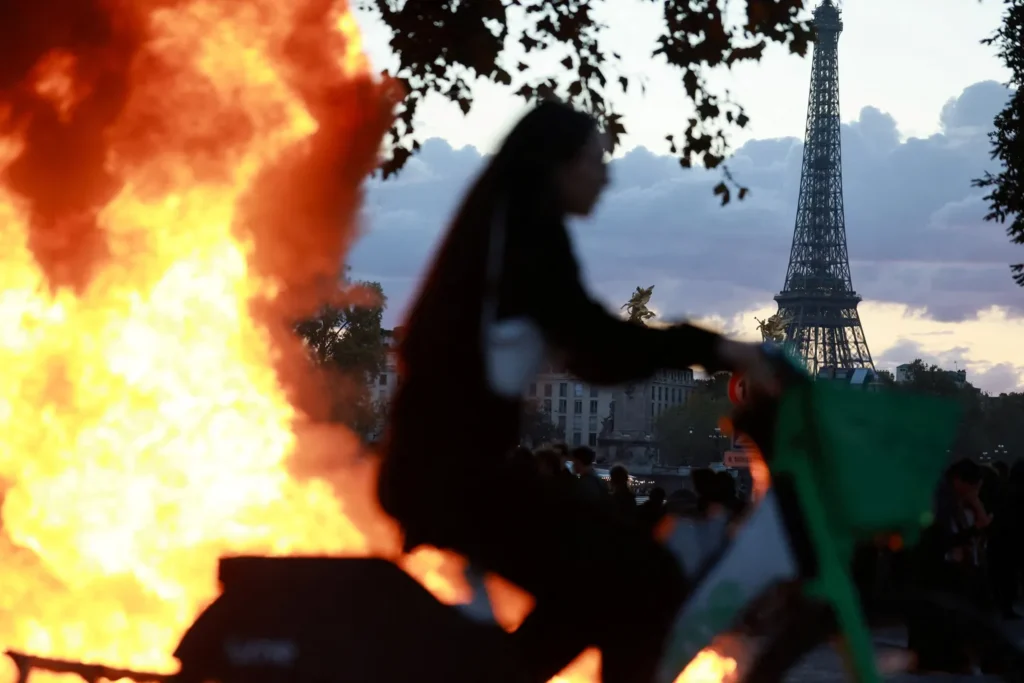
On 17 October, large numbers of people took part in demonstrations across France. Organizers and authorities offered differing estimates, but official figures placed participation at around 550,000. The protests focused on the rising cost of living and conditions in schools. In many places, the marches remained peaceful. In others, they gave way to disorder, looting, and attacks on public buildings.
In Limoges, according to the Haute-Vienne prefecture, individuals entered the town hall in the early evening and set fires. The timber roof structure burned rapidly. The clock tower fell. Prefect Maurice Barate described the outcome as a heritage catastrophe. Mayor Guillaume Guérin has called for a state-supported reconstruction comparable in ambition to the restoration of Notre-Dame de Paris after its 2019 fire. A suspect has been arrested in connection with the arson.
Other buildings were also damaged that weekend, including a tourist office in Lyon. Nationwide, roughly 2,400 people were arrested. The government has imposed targeted night curfews in parts of several cities while assessing how to protect public property and respond to the underlying grievances.
Architecture Under Pressure
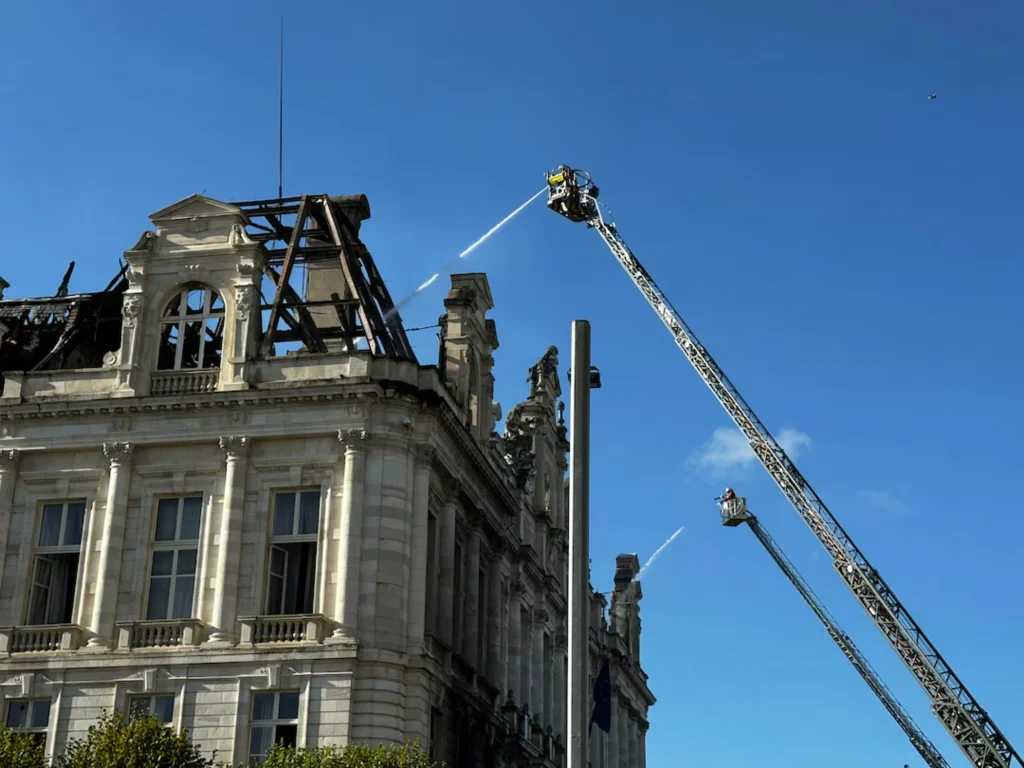
The Limoges fire is notable because the building was not a secondary structure. It was the principal civic landmark of a regional capital, carefully designed to embody continuity and local identity. Its destruction in a single night illustrates how quickly a historic public building can be lost when order breaks down, even in a city with little recent history of large-scale unrest.
At the same time, the episode cannot be separated from the wider conditions that brought hundreds of thousands of people onto the streets. Demonstrators cited pressure on household budgets and dissatisfaction with public services, particularly education. Those concerns exist alongside the immediate need to secure damaged sites, investigate the attacks, and plan for reconstruction.
What Reconstruction Will Require
The façade remains in places, though blackened and compromised. The rear sections of the building were better protected. Decisions about stabilization, salvage of remaining fabric, and the form of any rebuild will now shape the next chapter of the site. A full restoration would demand significant technical skill and public funding. A more contemporary intervention would raise different questions about how a city represents itself after such a loss.
Whatever path is chosen, the process will test the capacity of local and national institutions to treat the building as both a practical workplace and a shared piece of cultural memory. The mayor’s appeal for a “Notre-Dame plan” frames the task as one of national significance. The coming months will show whether that framing produces concrete support.
In Conclusion
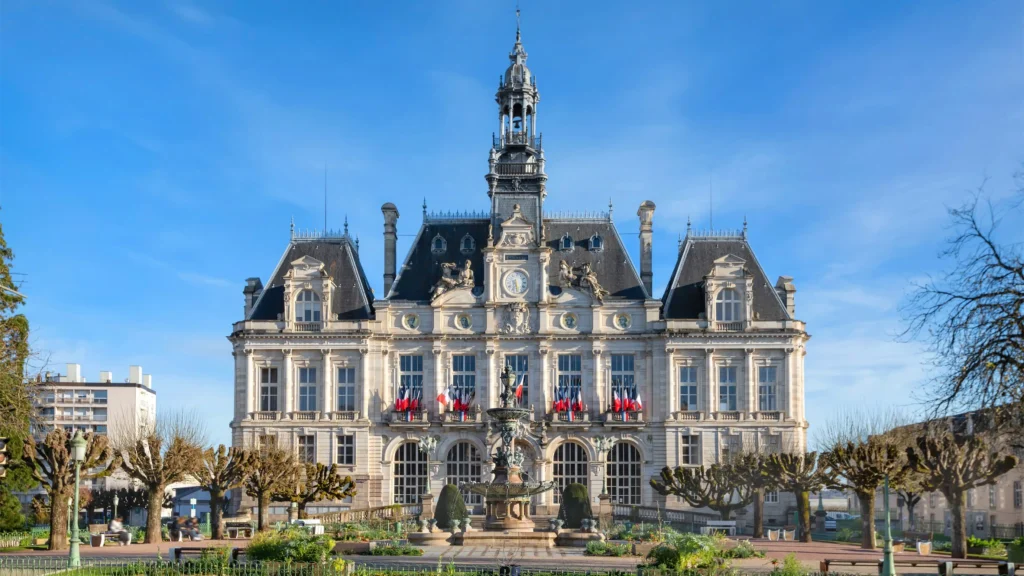
The Hôtel de Ville in Limoges was conceived as a durable expression of civic life. Its neo-Renaissance forms, local materials and carefully composed silhouette were meant to outlast political cycles. The fire that gutted large parts of it has left a visible gap at the centre of the city and a wider reminder that historic public architecture remains vulnerable when social tensions escalate. How France chooses to rebuild the structure, and how it addresses the pressures that contributed to the weekend’s disorder, will shape both the physical fabric of Limoges and the public conversation that follows.