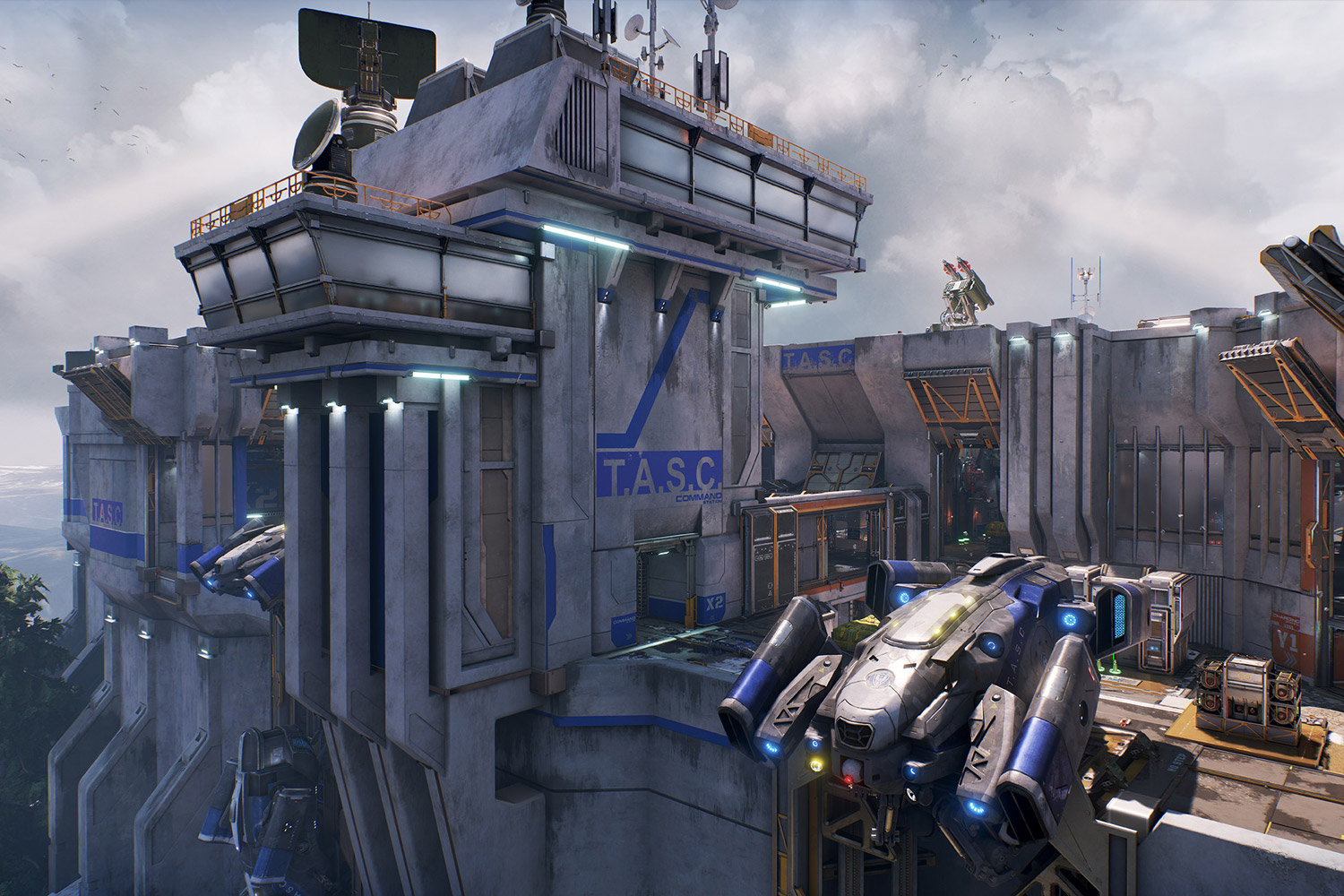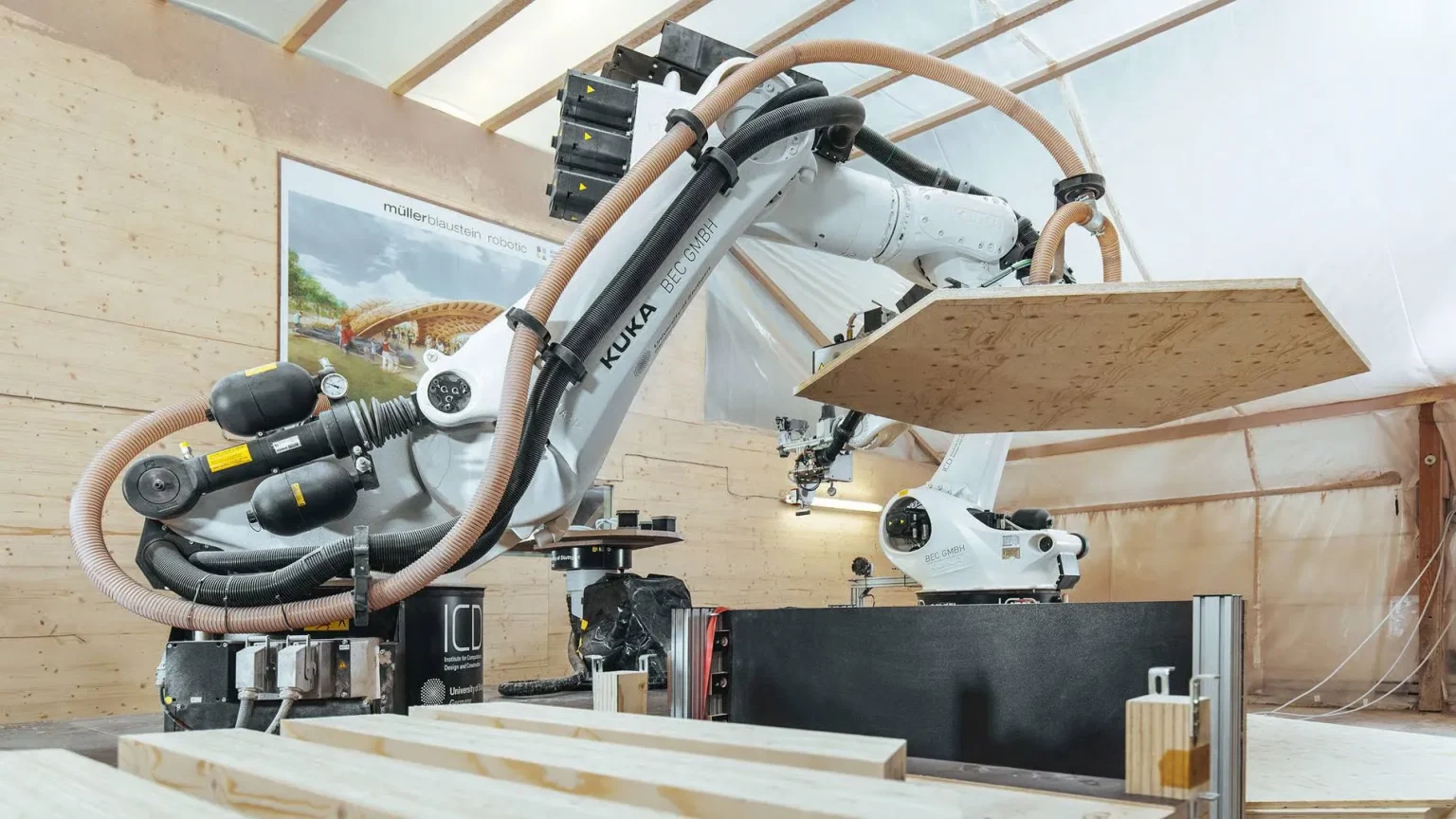

British architecture practice Foster + Partners, working alongside a consortium of leading European universities, has announced a research project focused on transforming the way timber buildings are assembled. The initiative will investigate the use of autonomous robots and drones capable of working together on construction sites, with the aim of creating a faster, more adaptable, and more sustainable approach to building.
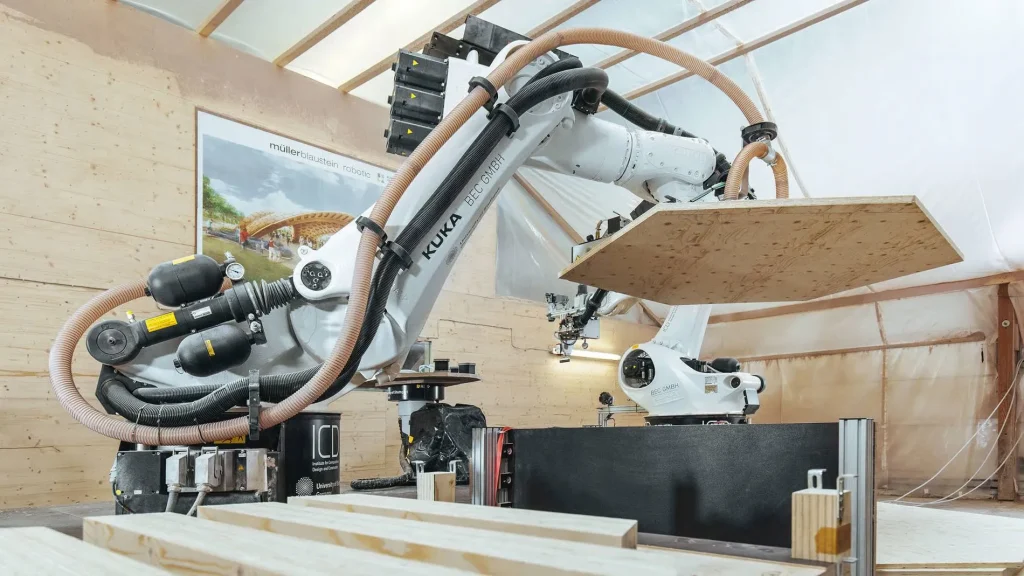
Called SWIFT-Build, short for Swarm-based Inverted Fabrication for Timber Buildings, the project has received €4 million in funding through the European Innovation Council’s Pathfinder programme. The three-year research initiative brings together architectural, engineering, robotics, and academic expertise to explore how automated systems could be integrated directly into the construction process.
At the centre of SWIFT-Build is an unconventional idea: rather than constructing a building from the ground upwards, robotic systems will assemble it from the top down. The approach is intended to demonstrate how swarm robotics, artificial intelligence, and modular timber construction can work together to create a more efficient construction methodology.
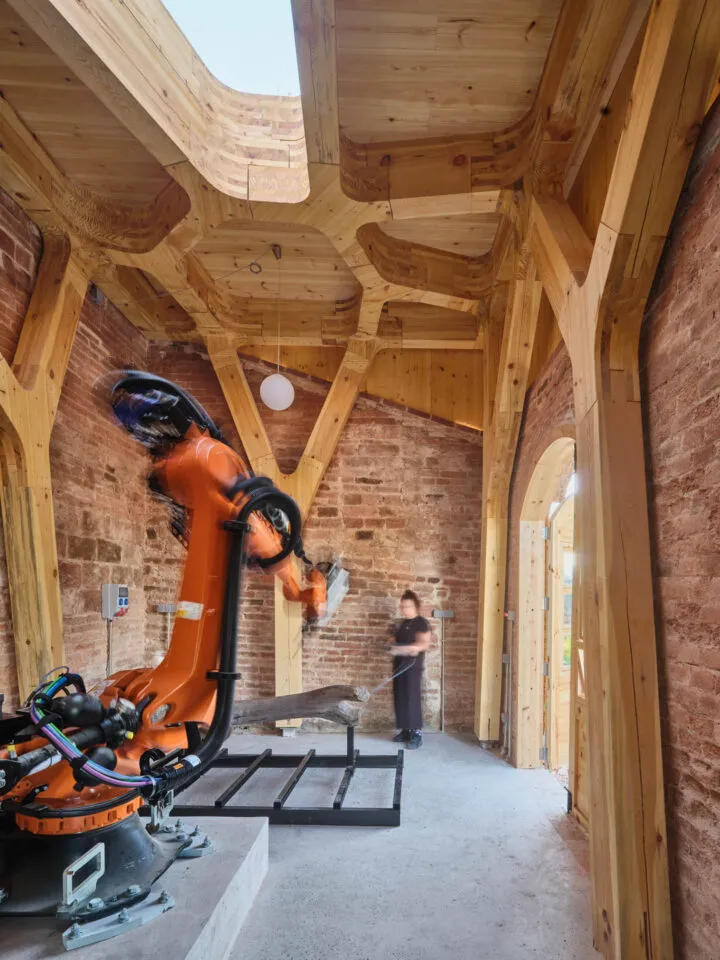
A top-down approach to robotic construction
Foster + Partners is serving as the industry partner within the consortium, which includes the University of Bristol, the University of Southern Denmark, the Technical University of Munich, the University of Pisa, Delft University of Technology, the University of Birmingham, and Ludwig Maximilian University of Munich.
The team describes SWIFT-Build as an inverted robotic construction system designed to assemble timber structures progressively from above. The process begins at ground level, where robotic machines construct the highest section of a modular building. Once this portion is complete, lifting mechanisms raise it, creating room for robots to assemble the next level underneath.
This sequence is then repeated, allowing the structure to grow vertically while much of the assembly takes place at ground level. Such a strategy could reduce the need for conventional scaffolding and provide robots with easier access to construction components.
According to Foster + Partners senior partner Irene Gallou, the combination of advanced robotics and integrated artificial intelligence could allow the system to respond to different building scales and functions. The emphasis on modular timber construction also reflects the project’s environmental ambitions, particularly its focus on flexibility, circularity, and the potential for components to be reused.
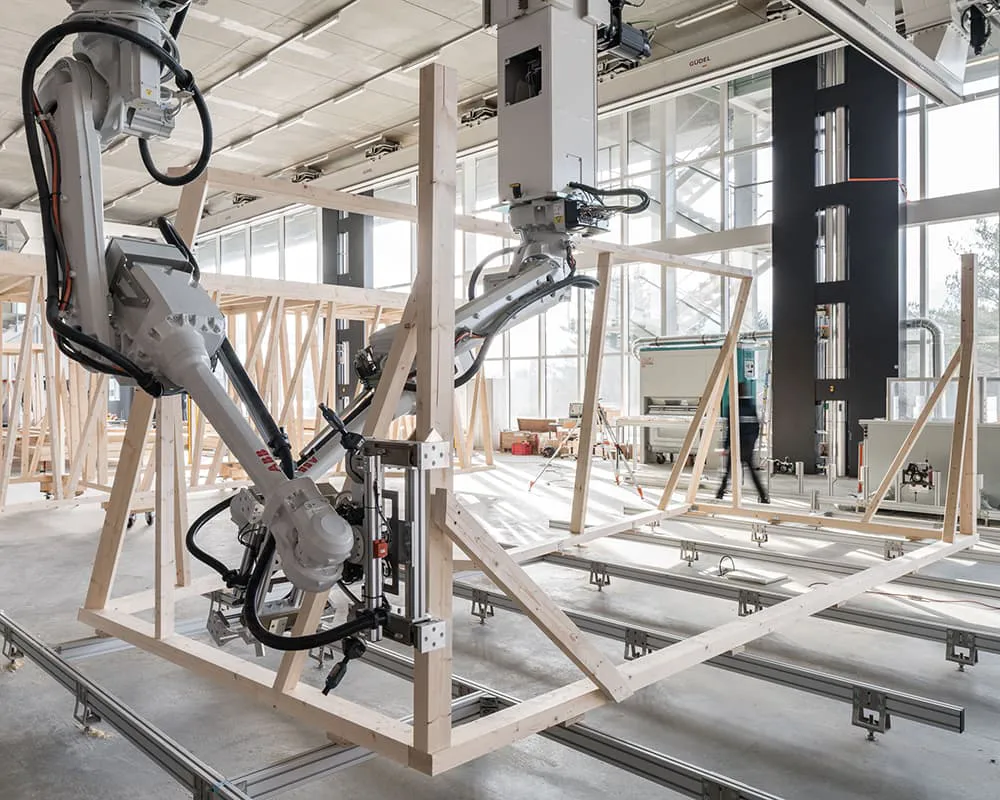
Robots and drones working as a construction swarm
The system will not depend on a single autonomous machine. Instead, SWIFT-Build will investigate coordinated groups, or swarms, of robotic assemblers and lifting units. These machines will communicate with one another, exchange information, and adjust their activities according to changing conditions on the construction site.
Drones will provide an additional layer of monitoring. Flying above the structure, they will track construction progress, gather information about the developing building, and identify potential problems. This combination of ground-based robots, lifting systems, aerial drones, and AI could create a construction environment in which machines continuously coordinate their activities.
The researchers envision a system capable of operating with limited direct human intervention while maintaining safety and precision. Rather than eliminating people entirely from construction, the technology could shift human involvement toward supervision, design, programming, maintenance, and decision-making.
A full-scale timber pavilion as the test case
The research programme will ultimately culminate in a full-scale demonstration of autonomous robotic construction. The prototype will take the form of a timber pavilion designed specifically for disassembly.
This emphasis on dismantling is particularly significant because it positions construction robotics within a broader circular-economy strategy. Instead of treating buildings as permanent assemblies of materials that eventually become demolition waste, the project explores structures that can potentially be taken apart and their components reused.
SWIFT-Build therefore represents more than an experiment in automation. It brings together robotic fabrication, artificial intelligence, modular construction, timber engineering, and circular design in an attempt to rethink the conventional construction site. If successful, the project could provide a model for future buildings in which intelligent machines assemble adaptable structures with greater efficiency, reduced material waste, and less dependence on traditional construction methods.