
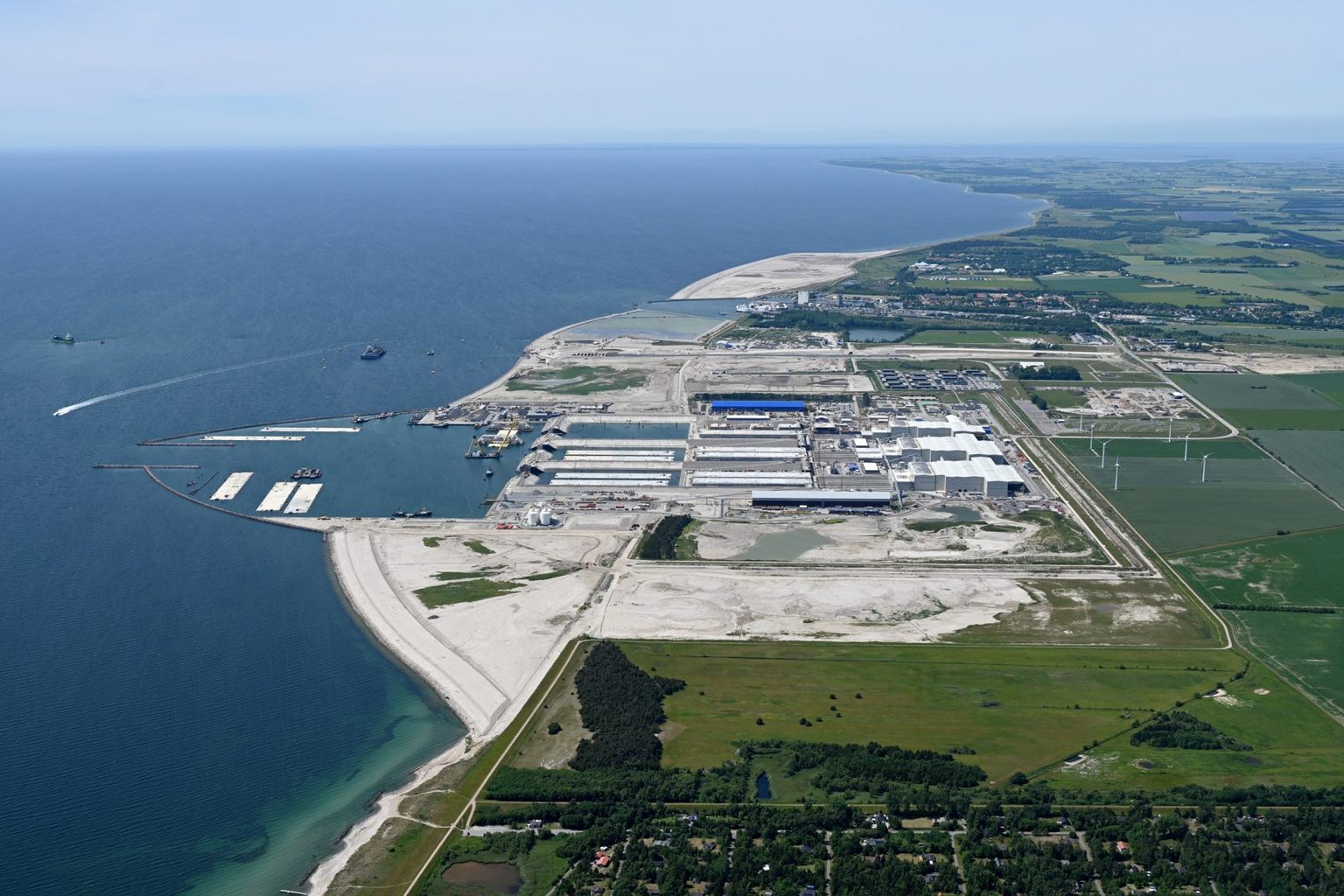

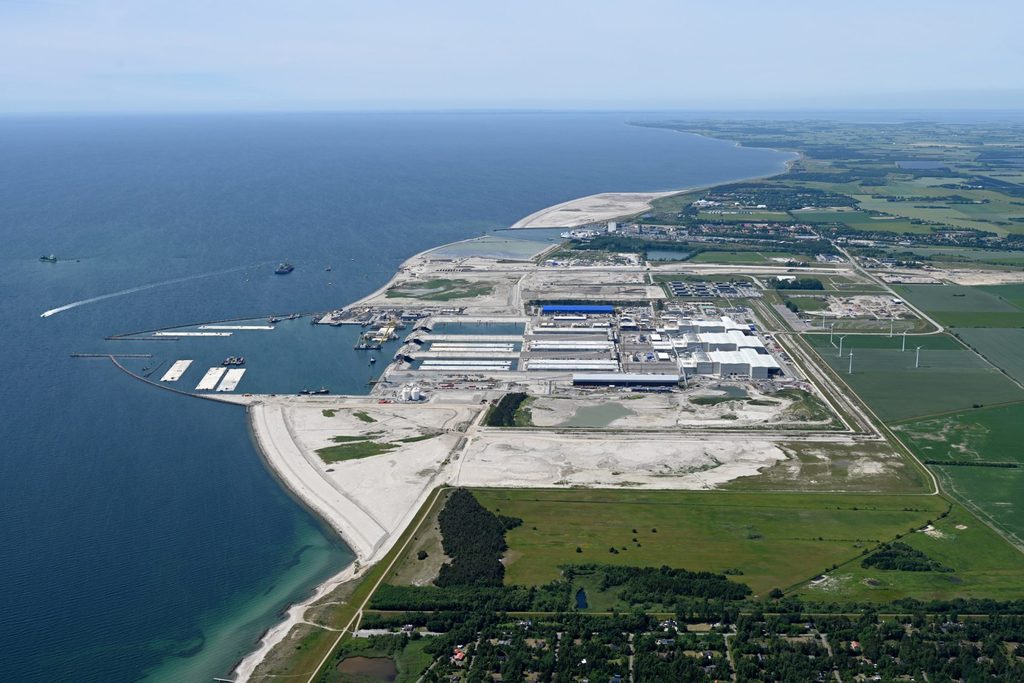
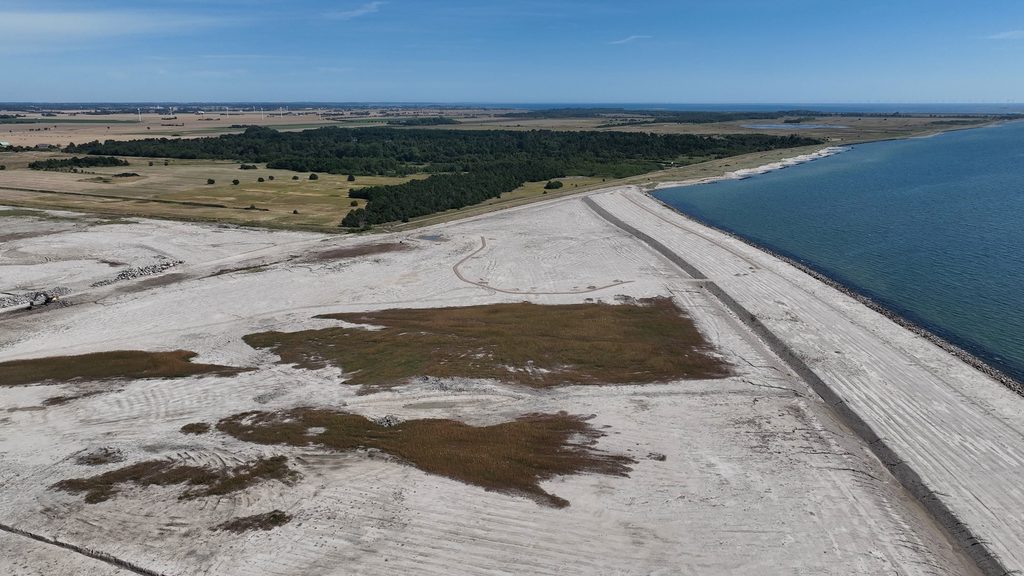
Denmark has grown. Not through politics or borders, but through the careful reuse of seabed material. As part of the massive Fehmarnbelt Tunnel project, approximately 300,000 square meters of new land have been added to the country’s southern coast near Rødbyhavn. The area is roughly the size of 42 football pitches. What began as excavation for the world’s longest immersed road-and-rail tunnel has become a permanent extension of Danish territory, now being shaped into a coastal nature landscape.
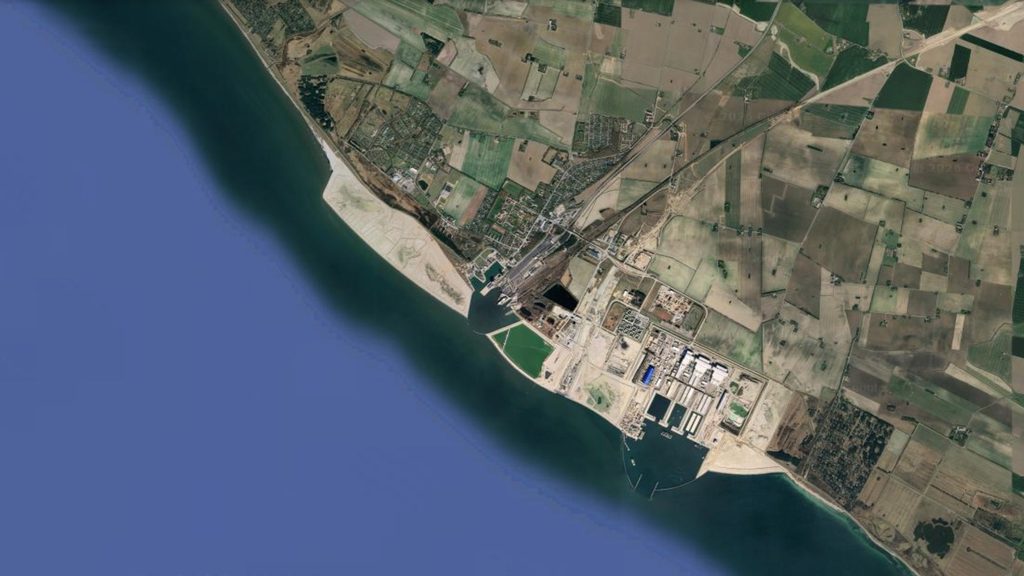
The Fehmarnbelt Tunnel will stretch 18 kilometers under the Baltic Sea, connecting Rødbyhavn in Denmark with Puttgarden in Germany. Scheduled for completion in 2029, it is designed to cut journey times between Hamburg and Copenhagen to around two and a half hours by train. The tunnel itself will be assembled from 89 enormous concrete elements, each 217 meters long and weighing 73,000 tonnes, lowered into a prepared trench on the seabed.
From the beginning, the project treated the huge volume of dredged material as a resource rather than waste. State-owned transport company Sund & Bælt has used that material to form a new stretch of land along the Danish coast. The result is a deliberate act of beneficial reuse: the same earth that made way for the tunnel now forms the ground for a public landscape.
A nature area rather than a development zone
Project manager Ditte Hjort has described the ambition clearly. The new land is intended to become a place where people can experience distinctive coastal nature. Walking trails, ponds and habitats for birds, amphibians and insects are planned. Three ponds will form part of the landscape, and planting will be chosen to withstand the harsh coastal climate of the southern Baltic.
This is not a conventional land reclamation for housing or industry. The emphasis is on ecology and public access. In a country already dense with productive and protected landscapes, the decision to turn surplus construction material into a nature spot carries weight. It suggests that large infrastructure projects can leave more than concrete and asphalt behind.
The scale is modest by global standards of coastal reclamation, yet meaningful in a Danish context. Adding 300,000 square meters of permanent land changes the local coastline and creates a new edge where none existed before. How that edge is treated will determine whether the reclamation feels like a technical by-product or a genuine contribution to the public realm.
Infrastructure that gives something back
The Fehmarnbelt Tunnel is one of Europe’s largest current infrastructure works. Its primary purpose is connectivity: stronger links between Scandinavia and continental Europe, faster freight and passenger movement, and a more resilient transport corridor across the Baltic. The land reclamation demonstrates a secondary but important principle: that the physical by-products of such projects can be designed rather than simply disposed of.
By planning the beneficial use of dredged material from the outset, the project avoided the usual pattern of long-distance disposal or temporary stockpiling. The seabed material stays close to its origin and is reshaped into a landscape that can support both wildlife and human visitors. In an era of rising concern about material flows and embodied impact, this approach is practical as well as symbolic.
The new land also sits within a longer Danish tradition of working with the coast. From historic reclamations to contemporary projects such as Lynetteholm in Copenhagen, the country has repeatedly extended or reshaped its shoreline. What distinguishes the Rødbyhavn addition is its explicit focus on nature and experience rather than urban development. The land is not being prepared for buildings. It is being prepared for trails, water and habitat.
Design and computational considerations
Creating stable new land from dredged seabed material requires careful engineering. Settlement, drainage, erosion control and the establishment of vegetation all depend on precise modeling of the material’s behavior over time. Computational tools help predict how the new ground will respond to tides, storms and seasonal change. The placement of ponds, the alignment of trails and the selection of plant species can be tested against wind, salt exposure and soil conditions before full-scale implementation.
The wider tunnel project itself is a major exercise in computational design and construction management. The geometry of the immersed elements, the trench alignment, the coordination of marine operations and the long-term monitoring of the structure all rely on digital models that integrate engineering, environmental and logistical data. The land reclamation is a quieter but related outcome of the same mindset: treat the entire material stream as part of the design problem rather than an afterthought.
Denmark: A small expansion with larger implications
Three hundred thousand square meters will not transform Denmark’s geography. Yet the project illustrates a useful principle. Large infrastructure inevitably moves enormous quantities of material. When that movement is planned with an end use in mind, the result can be more than a tunnel or a road. It can be a new piece of coastline that people can walk, that wildlife can inhabit, and that future generations will treat as ordinary landscape.
Sund & Bælt’s work at Rødbyhavn turns a technical necessity into a public asset. The Fehmarnbelt Tunnel will eventually carry trains and vehicles beneath the Baltic. Above the water, on the Danish side, a strip of new land will carry footpaths, support ponds and host the slow processes of coastal ecology. Denmark has grown by 300,000 square meters. The more interesting question is what kind of place that growth will become.