




The UK’s design sector has reached a remarkable economic milestone, with new figures showing that design now contributes more to the national economy than the country’s retail industry. Yet behind this impressive growth lies a troubling contradiction: while businesses increasingly depend on design expertise, the pipeline of future designers and design-trained professionals is shrinking.
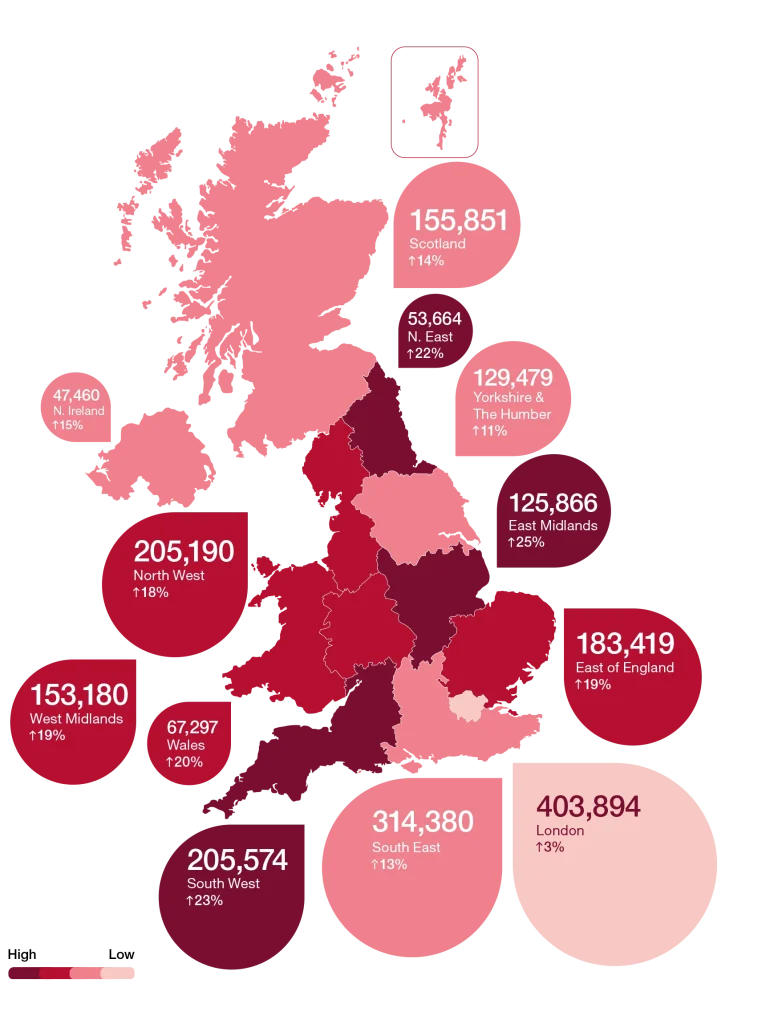
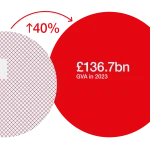
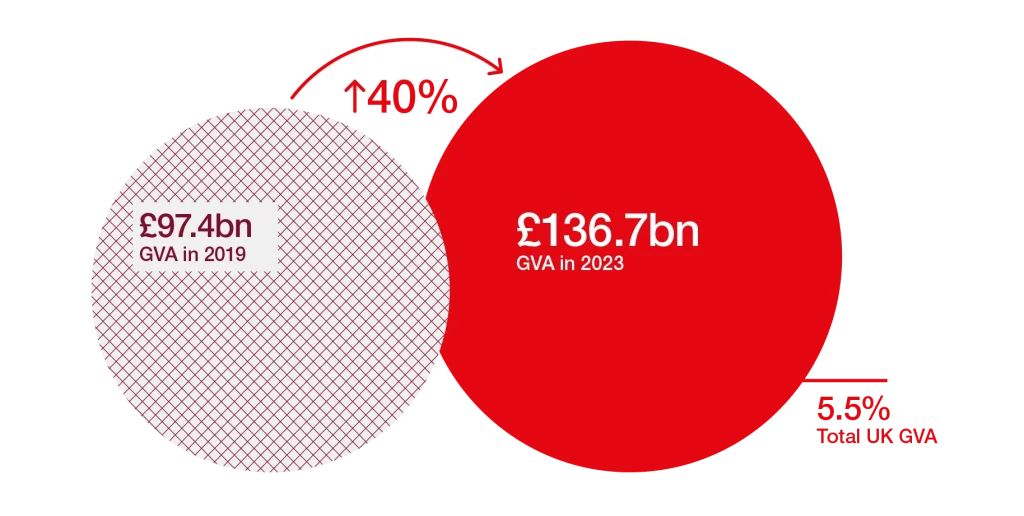
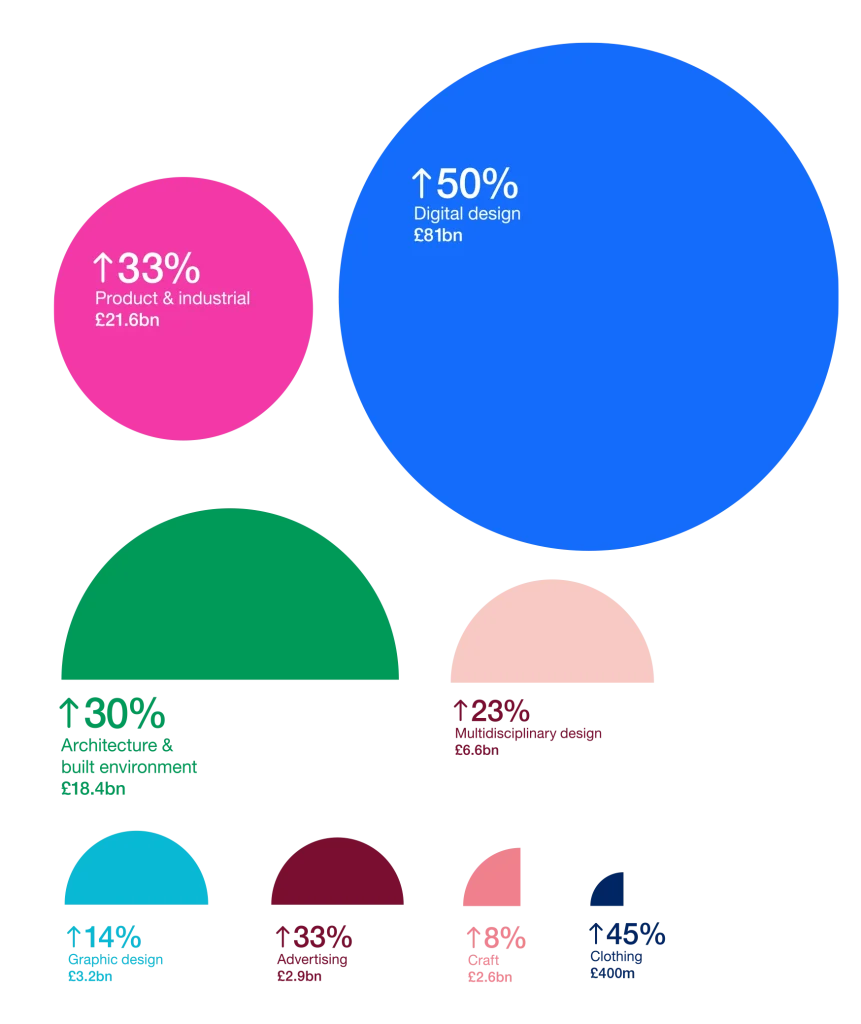
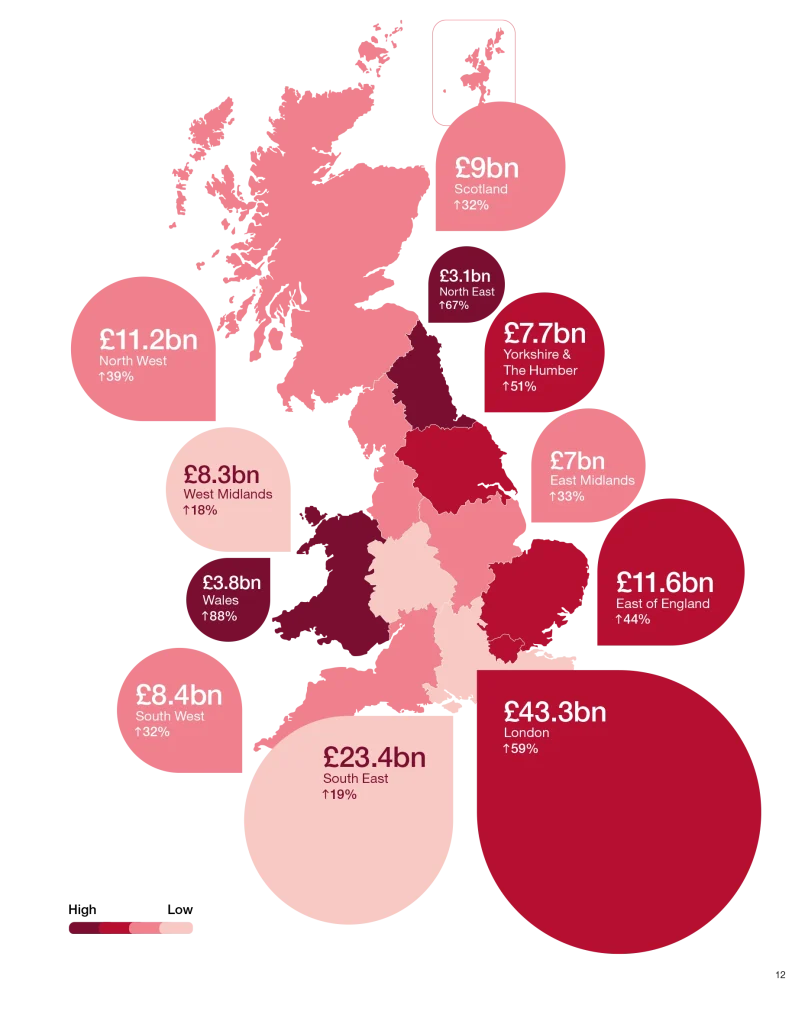
According to the Design Council’s Design Economy 2026 report, released on September 7, design generated an estimated £136.7 billion in gross value added (GVA) in the UK. This represents approximately 5.5% of the country’s total economic output, placing design ahead of the retail sector, which generated around £114 billion.
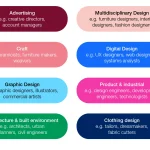
The findings suggest that design is no longer a narrowly defined creative profession. Instead, it has become an increasingly important component of the wider UK economy, influencing industries ranging from technology and engineering to healthcare, manufacturing, finance, and public services.
Design Employment Continues to Expand
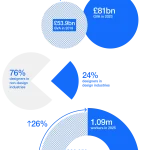
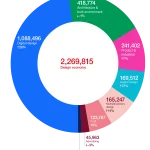
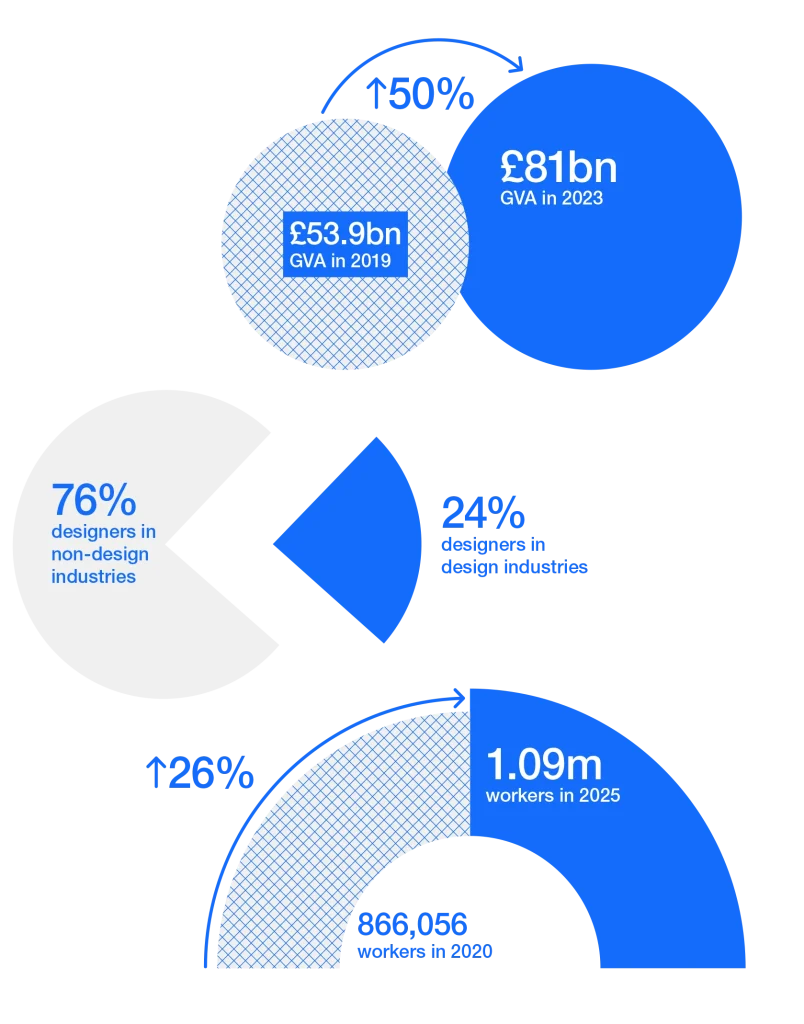
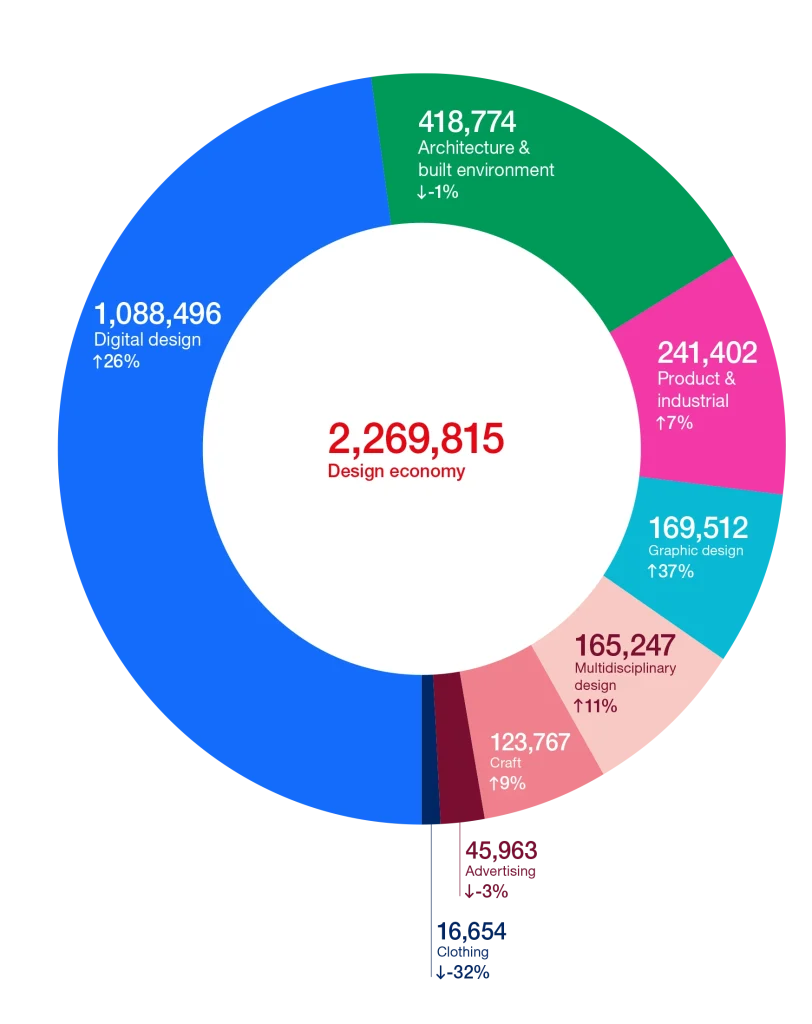
The economic contribution of design is reflected in employment figures as well. The report estimates that approximately 2.27 million people were employed in design-related roles in 2025, representing a 15% increase compared with 2020.
This growth translates to roughly 297,000 additional jobs over the five-year period. More importantly, the majority of these professionals are no longer working exclusively within traditional design companies.
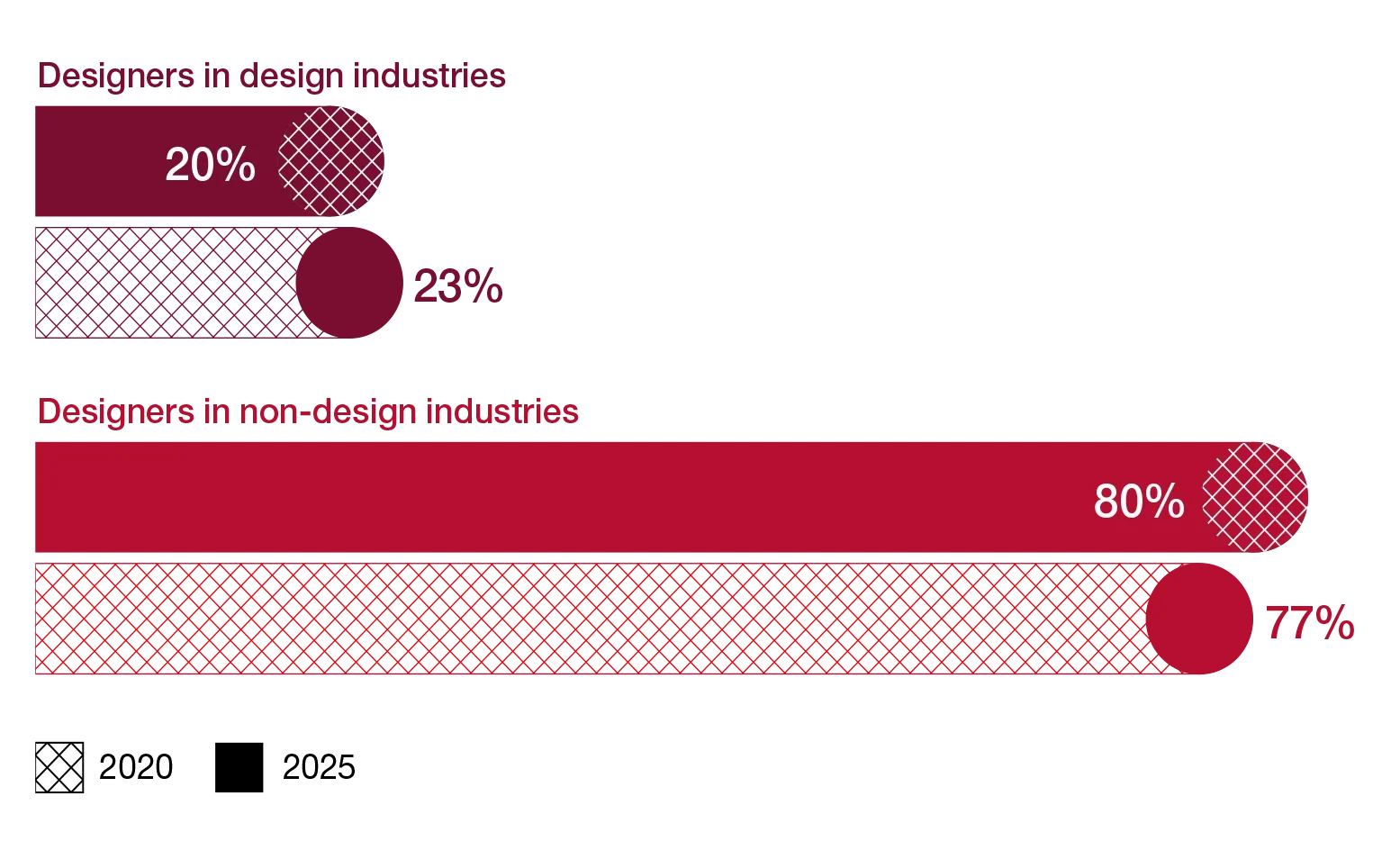
Around 80% of designers now work outside conventional design industries, demonstrating how deeply design skills have become integrated into other sectors. Designers increasingly operate alongside engineers, programmers, data specialists, business strategists, scientists, healthcare professionals, and policymakers.
This shift changes the definition of what it means to be a designer. Design expertise is increasingly valued not simply for producing visual or physical outcomes, but for solving complex problems, developing new systems, improving user experiences, and responding to environmental and technological challenges.

A Stronger Economy, but a More Complicated Picture
The headline numbers should nevertheless be interpreted carefully. The Design Council reports a 40% increase in design-related GVA since 2019, but this is a nominal figure rather than a measure adjusted for inflation. With inflation over the same period estimated at approximately 22%, the real increase is considerably smaller.
Even after accounting for this qualification, however, the broader trend remains significant. Design appears to have grown faster than the wider UK economy, while employment has expanded substantially.
The numbers therefore point toward an important structural change rather than simply a temporary increase in the value of creative industries. Design capabilities are becoming embedded within the operational and strategic structures of organizations that historically would not have considered themselves part of the design economy.
The Real Growth Is Happening Outside Traditional Design
Perhaps the most important finding for professional education is the location of this growth.
If four out of five designers work outside conventional design industries, then the future of design education cannot be limited to preparing people for traditional architectural, graphic, industrial, or interior design studios.
Design skills are increasingly required in engineering, technology, manufacturing, financial services, healthcare, government, and other large organizations. These environments demand professionals who can combine creative thinking with technical knowledge, data analysis, digital tools, sustainability strategies, and interdisciplinary collaboration.
The emerging professional is expected to understand more than design software. They need to navigate computational workflows, artificial intelligence, digital fabrication, environmental performance, data-driven decision-making, and increasingly complex project-management systems.
The Education Pipeline Is Sending a Warning
At the same time that the economic importance of design is increasing, participation in design-related education at school level is declining.
One of the most concerning statistics highlighted alongside the new findings is the reported 68% decline in UK Design and Technology GCSE entries over the past decade.
This creates a striking contradiction. The economy is demanding more sophisticated design capabilities, but fewer young people are entering formal design and technology education.
The consequences may not be immediate, but the long-term implications are serious. As artificial intelligence, sustainability requirements, automation, computational design, and digital production transform professional practice, companies will require workers with increasingly advanced design capabilities.
A shrinking educational pipeline could therefore create a shortage of appropriately trained talent just as demand for these skills accelerates.
AI Is Changing the Meaning of Design Skills
Artificial intelligence adds another layer to this transformation.
AI is already changing how professionals generate concepts, analyze information, produce visualizations, automate repetitive processes, and explore design alternatives. But rather than eliminating the need for designers entirely, these developments are likely to shift the skills that organizations value.
The ability to operate a particular piece of software may become less important than the ability to formulate problems, evaluate alternatives, manage AI-assisted workflows, interpret data, and make informed design decisions.
This makes continuing professional education increasingly important. Designers and other professionals cannot rely solely on skills acquired during university or early career training. Lifelong learning is becoming part of the profession itself.
Potential Industry Partnerships
The report could also provide a foundation for conversations with organizations such as the Design Council or Arup around emerging workforce needs.
Potential partnership programs could focus on computational design, AI-assisted practice, climate-responsive design, digital fabrication, and green-design strategies. Rather than treating these subjects as isolated technical courses, they could be presented as components of a broader professional transformation.
Such programs would address both sides of the current challenge: organizations need advanced design capabilities, while professionals need accessible ways to continually update their skills.
Design Is Bigger Than Retail, but Its Future Depends on Education
The UK design economy is demonstrating its growing importance through both economic output and employment. With £136.7 billion in GVA and 2.27 million design-related workers, design has become a substantial force within the national economy.
Yet the decline in school-level participation presents a serious warning. The UK’s future design capacity cannot be guaranteed simply because today’s design economy is performing strongly.
The central question is therefore increasingly difficult to ignore: if design has become economically more important than retail, why is the educational pipeline producing fewer future designers?
The answer will require more than encouraging young people to study traditional design subjects. It will require rethinking design education around AI, sustainability, technology, interdisciplinary collaboration, and lifelong professional development.