

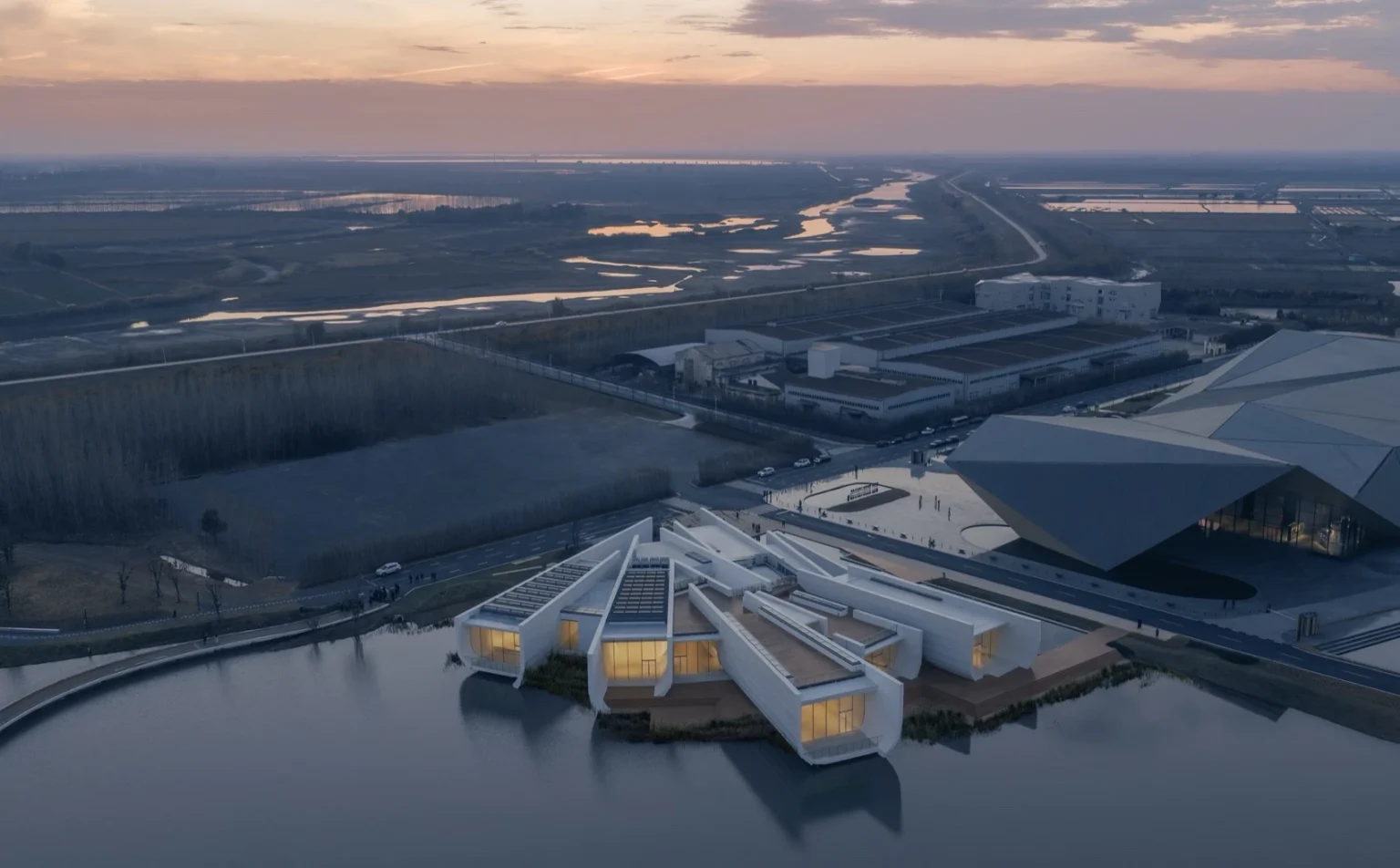




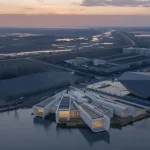
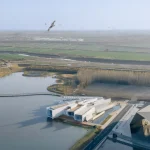
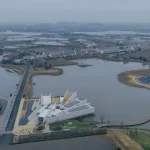
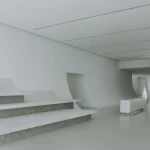
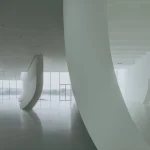
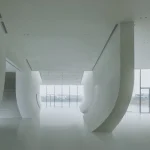
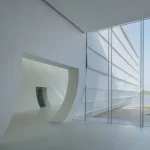
The Chenhu Wetland Art Center opens in Wuhan, a city shaped by the aquatic significance of the Yangtze River and the Han River. It was designed by Trace Architecture Office (TAO) under the leadership of architect Hua Li. It serves as a junction for ecological governance, international design exchange, and regional economic revitalization.
Evolution of Wuhan as an International Wetland City
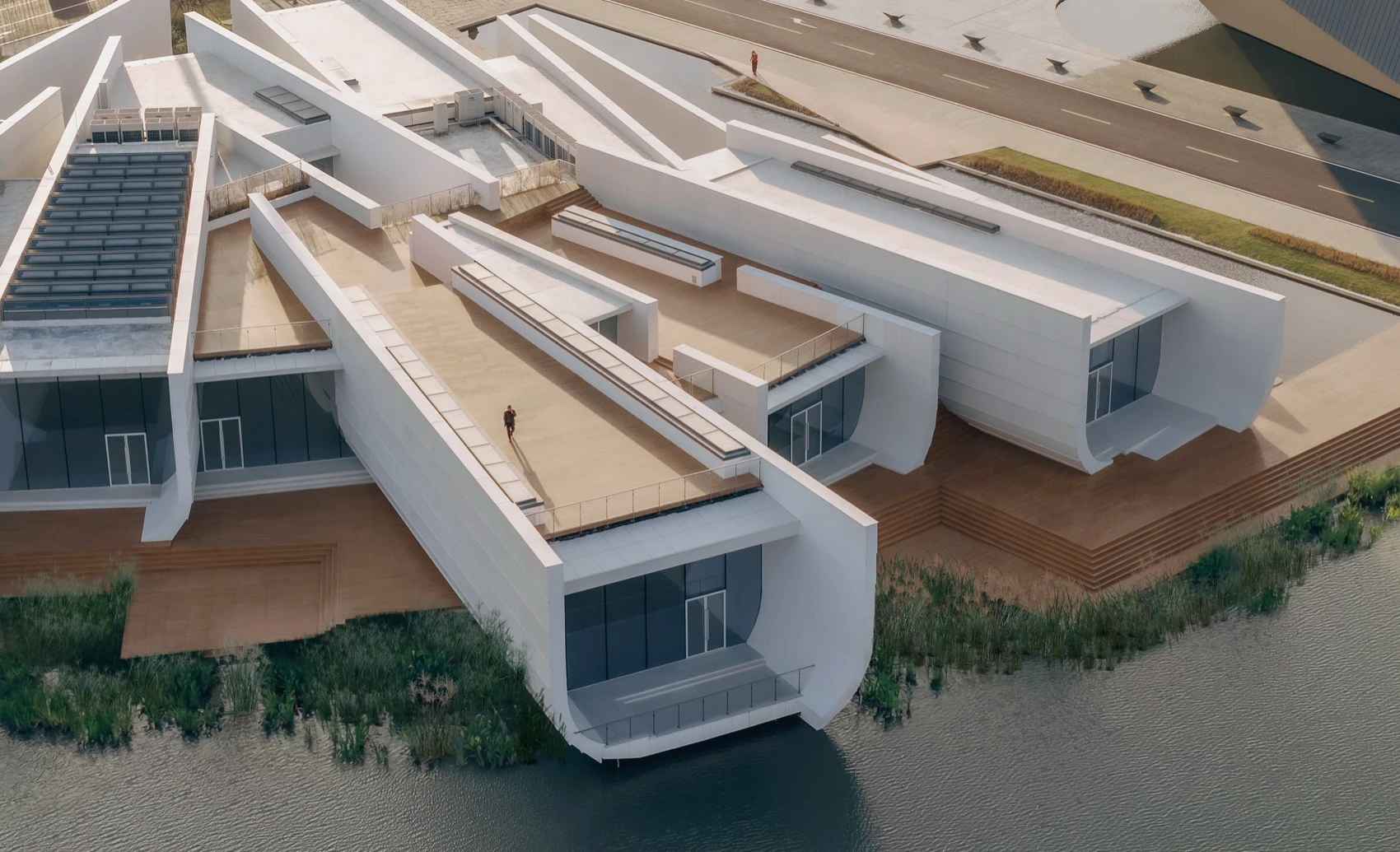
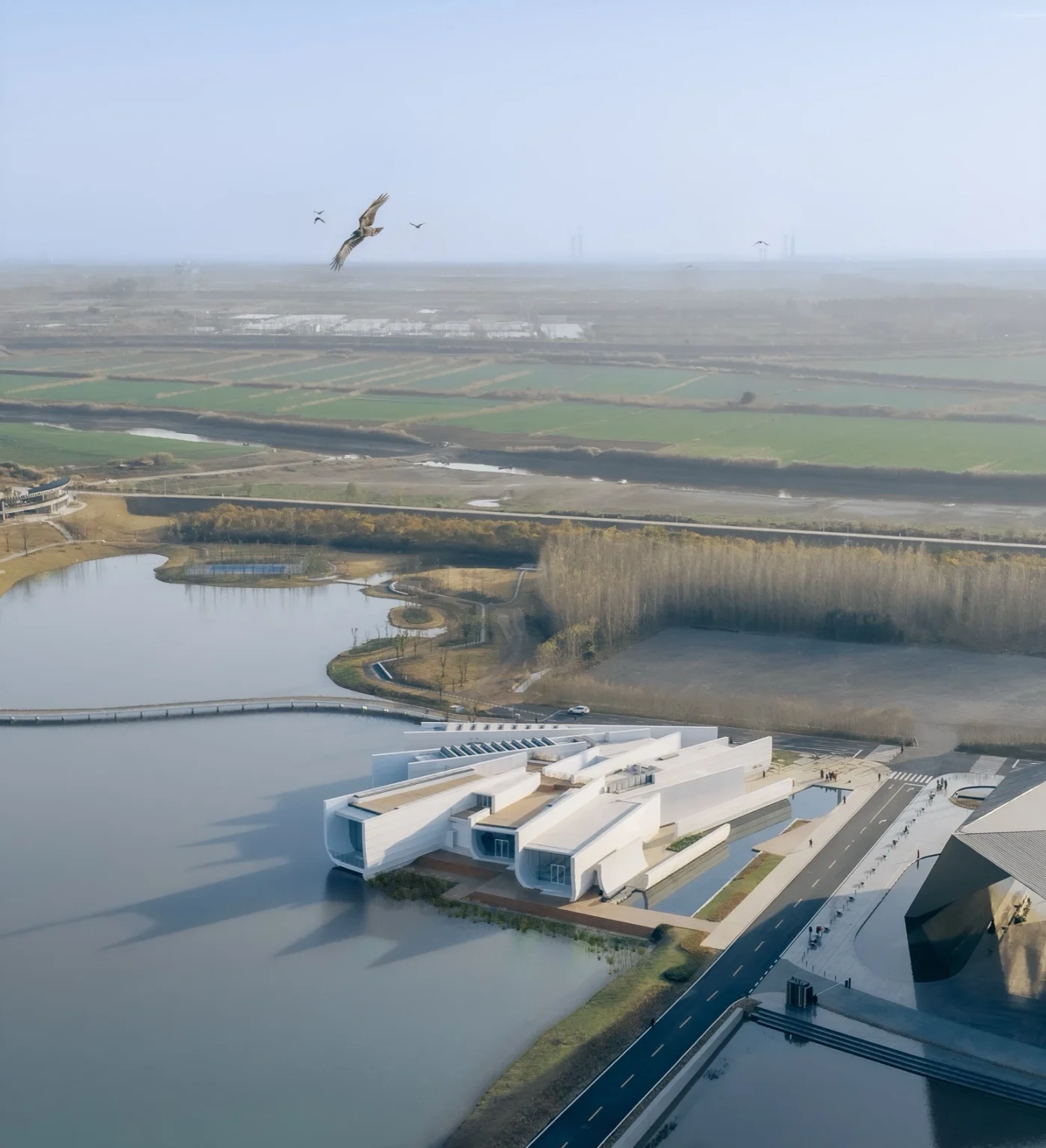
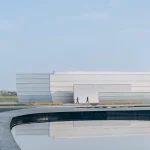
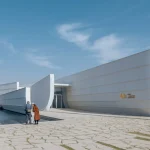
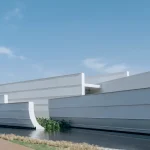
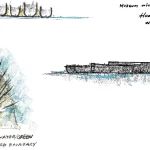
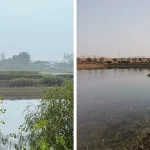
Located on a triangular slip of land at the intersection of a natural shoreline and an artificial road fork, the built form is positioned to blend with its surrounding marshes. The site, in the Tonghu region, is just one hour’s drive from Wuhan’s urban core, defined by a landscape of farmlands, woodlands, and water bodies that form a self-contained, sparsely populated environment.
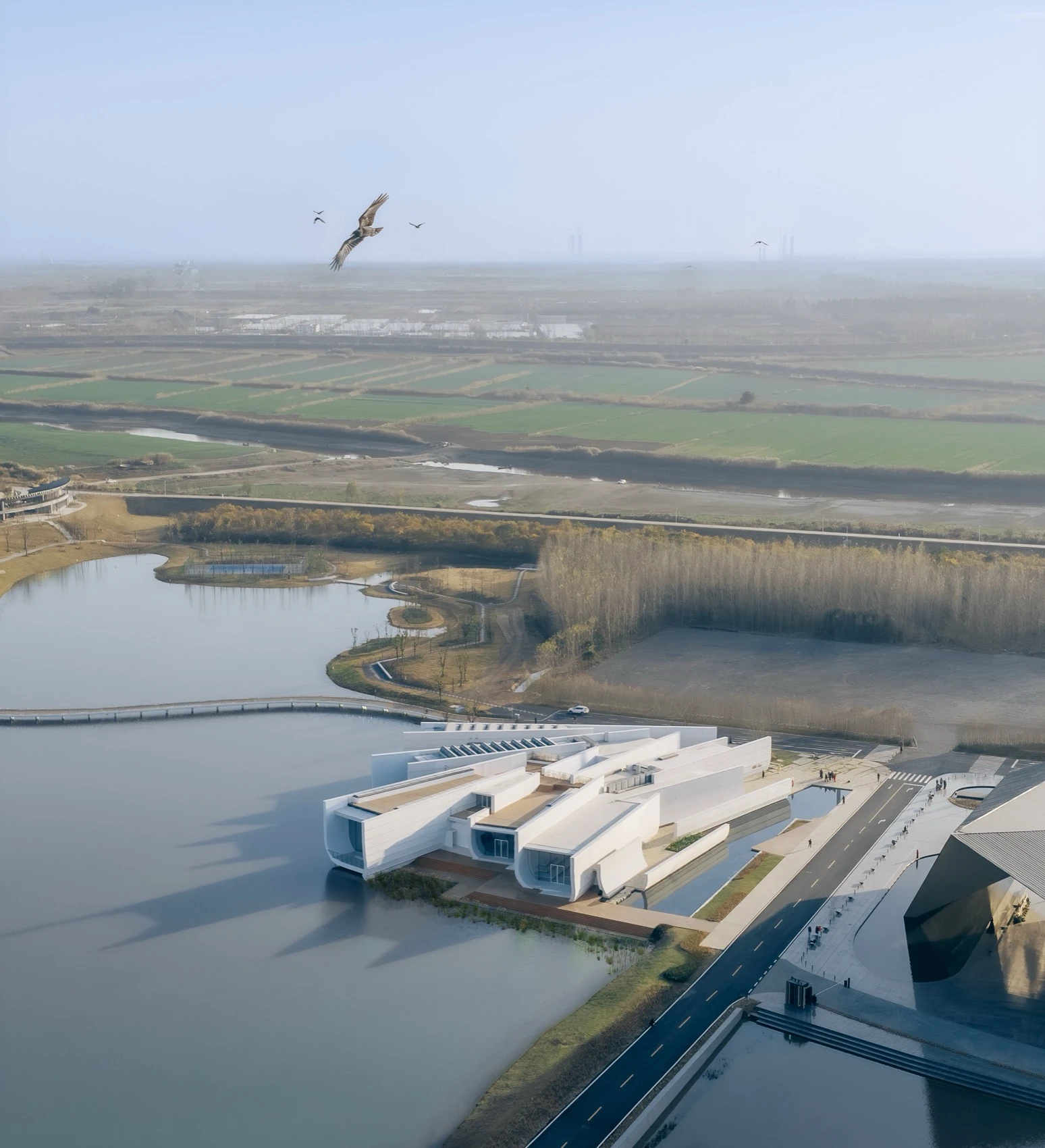
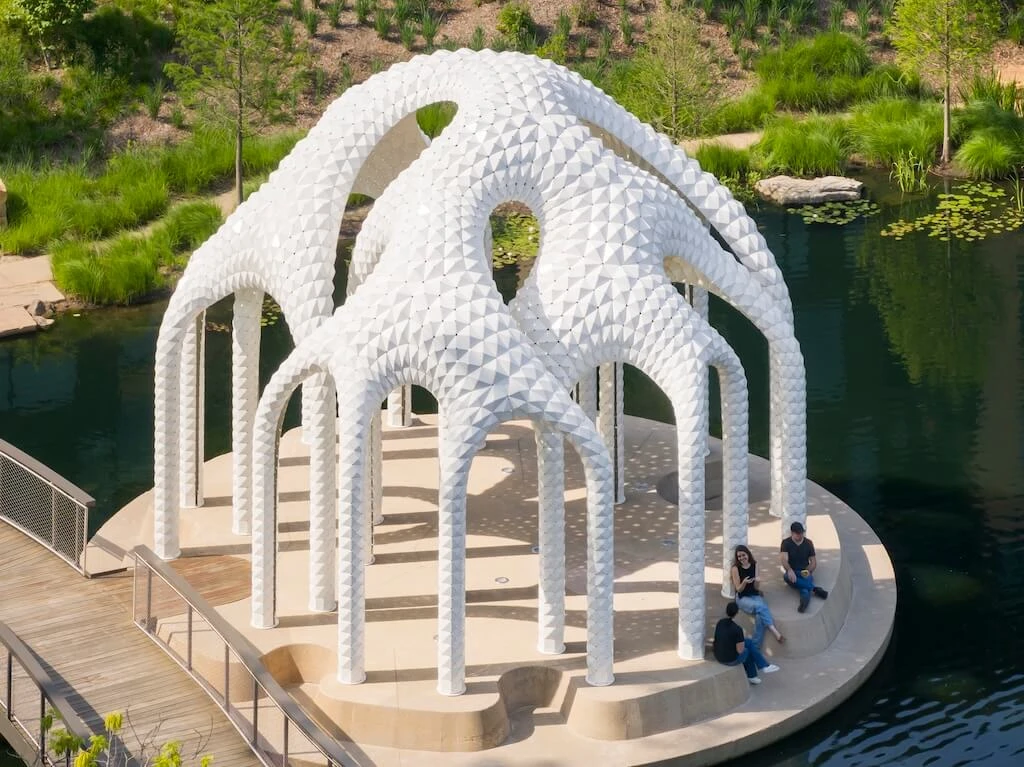
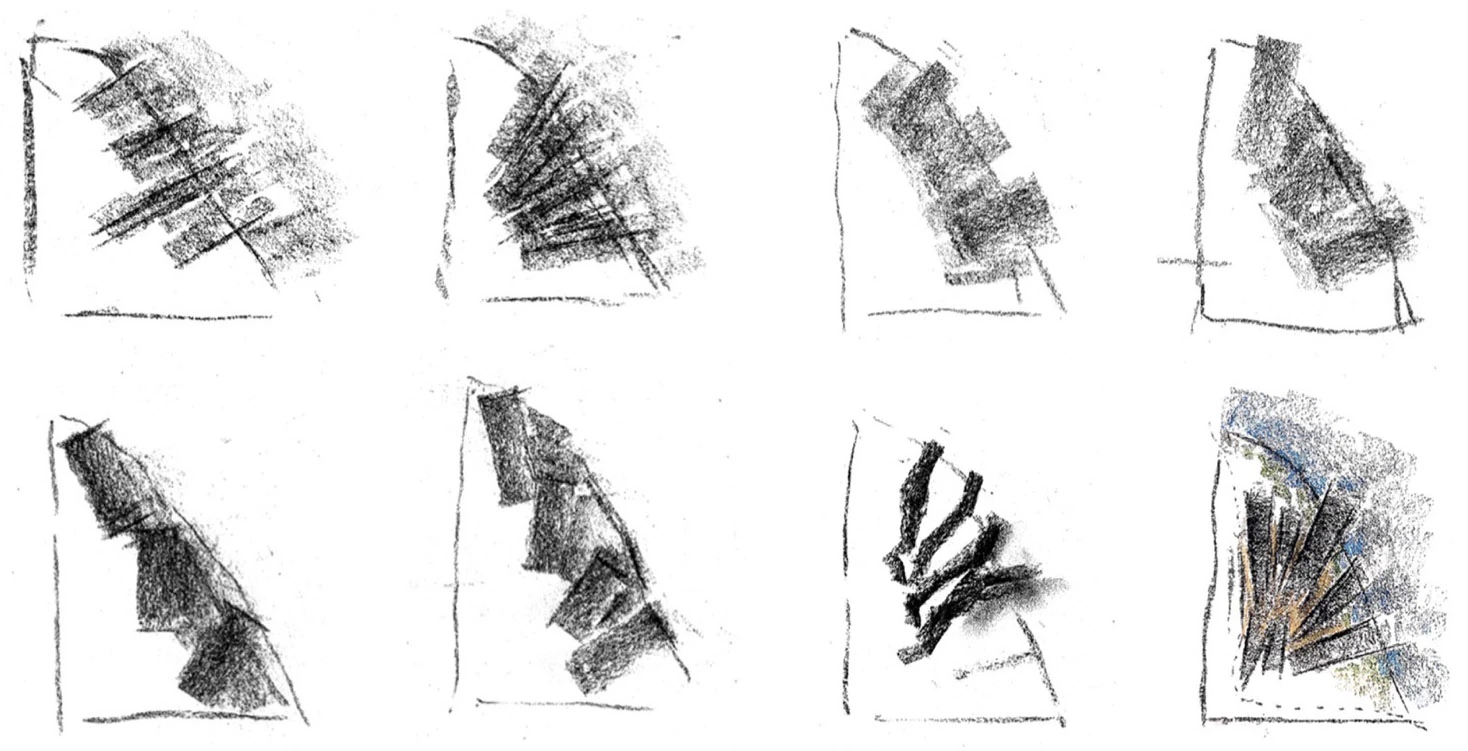
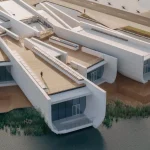
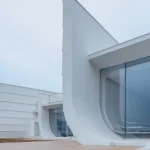
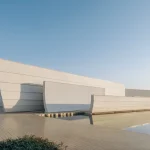
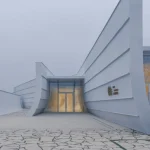
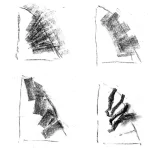
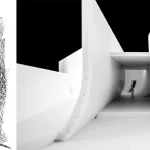
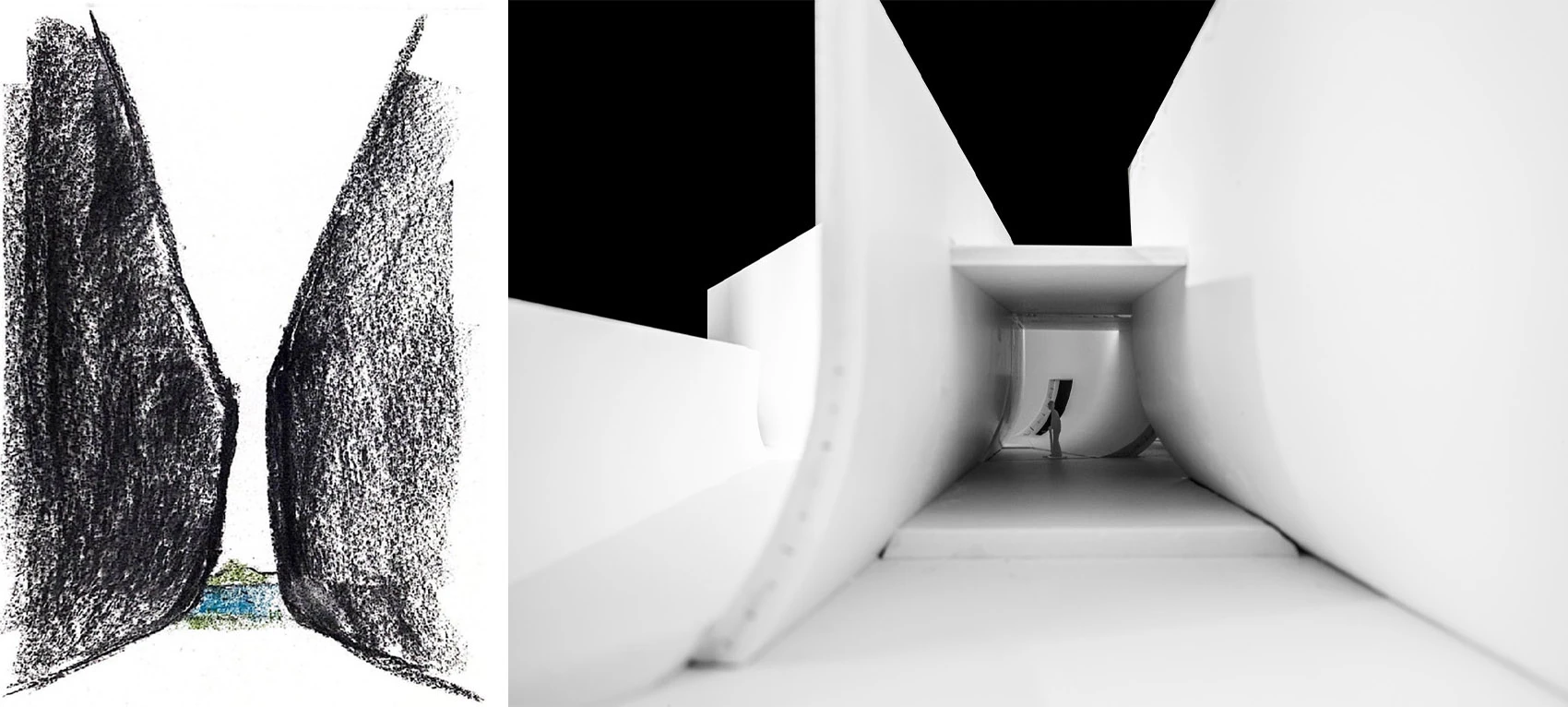
Designed on the concept of architecture that grows from natural forms, the TAO design team’s primary design driver for the project is the wall. They created a monolithic closure that separates the interior from the exterior. From an aerial perspective, these structures resemble organic bodies floating along the shore that mirror the ecological logic of the wetland.
The Generative Power of the Wall
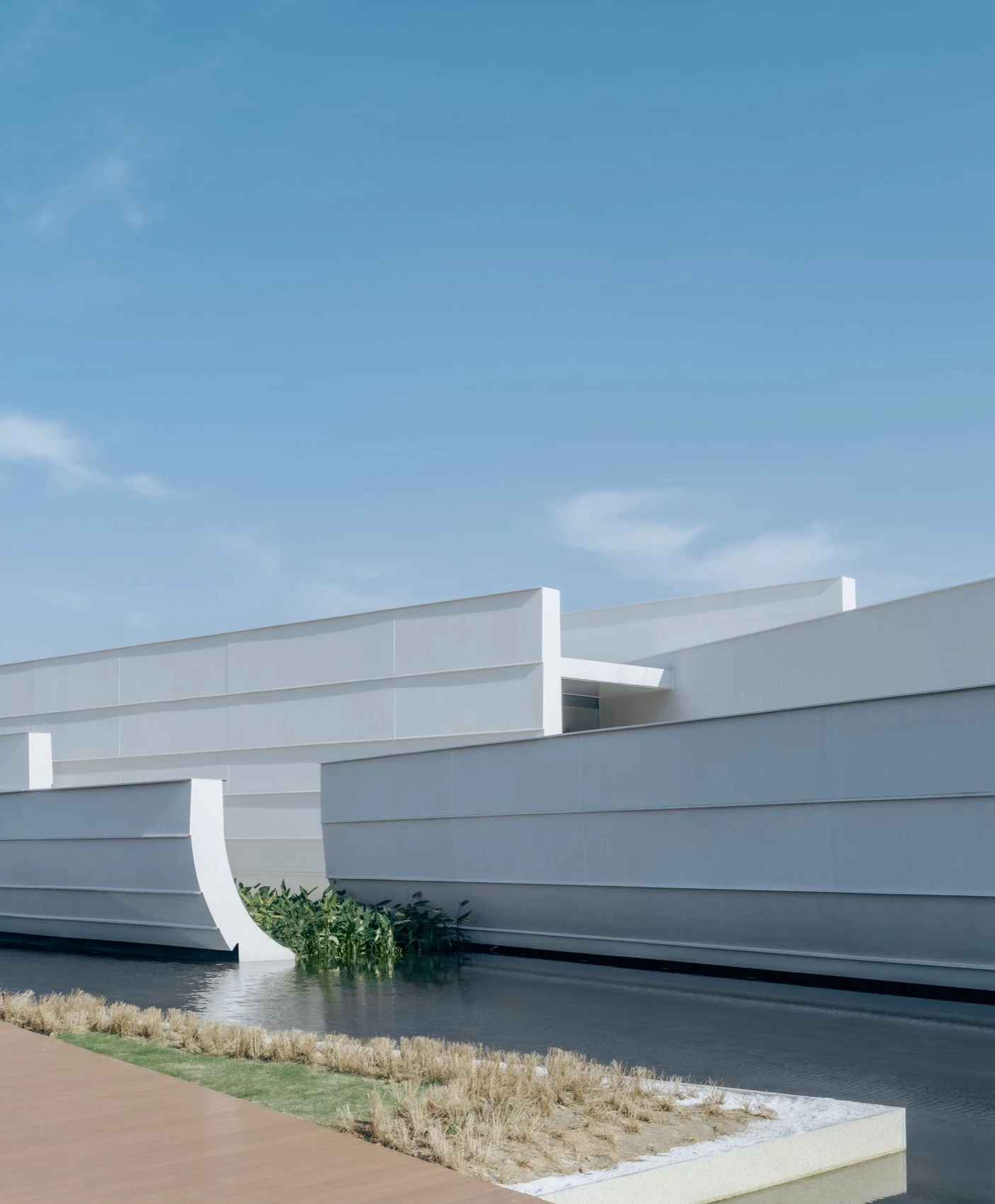
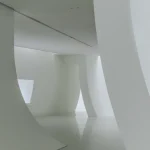
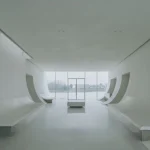
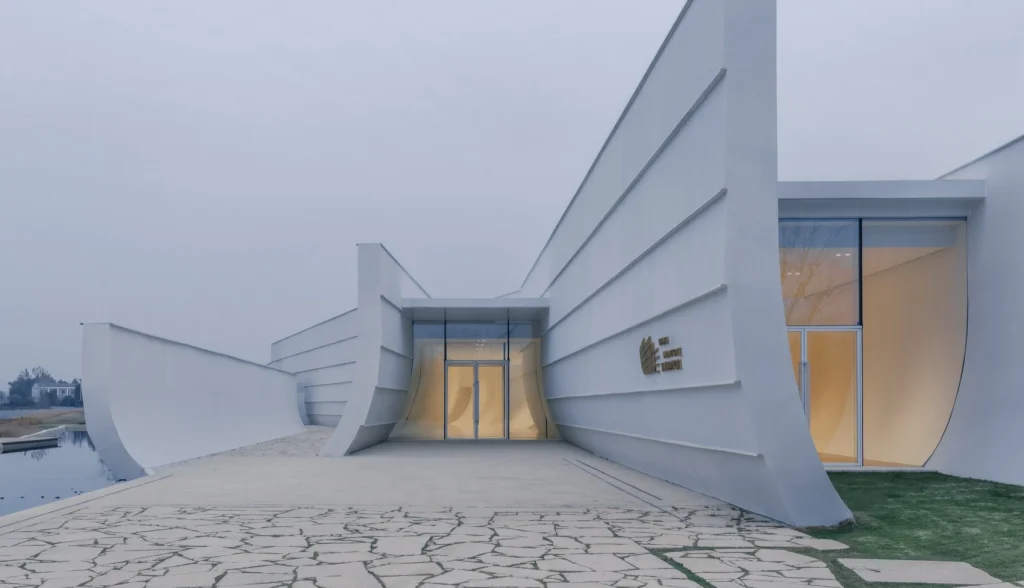
The walls are not merely static partitions but active elements that bend and fold in direct response to the movement of the lake. These curved bases touch the water’s surface, creating soft reflections that blur the boundary between the artificial and the natural. As the vertical plane rises, they thicken and shift, creating narrow fissures that allow sunlight to penetrate the interior in a cinematic way.
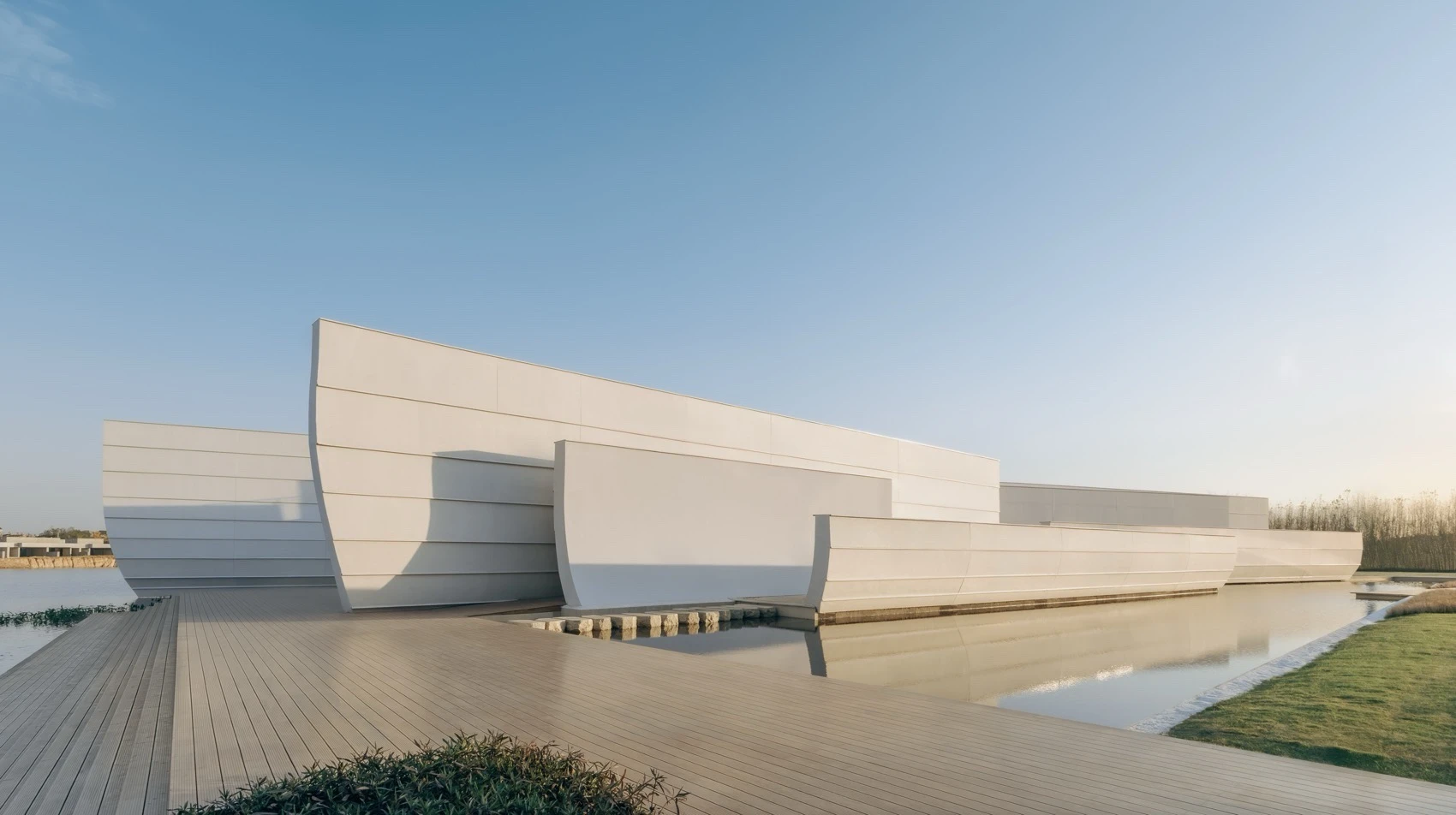
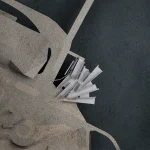
The sustainable choice of material integrates the building into its climatic context. The exterior skin consists of white Glass Fiber Reinforced Concrete (GRC) panels embedded with shell and conch aggregates. The play of light and shadow on the curved surface changes throughout the day, reflecting the shifting states of the wetland itself.
Spatial Logic
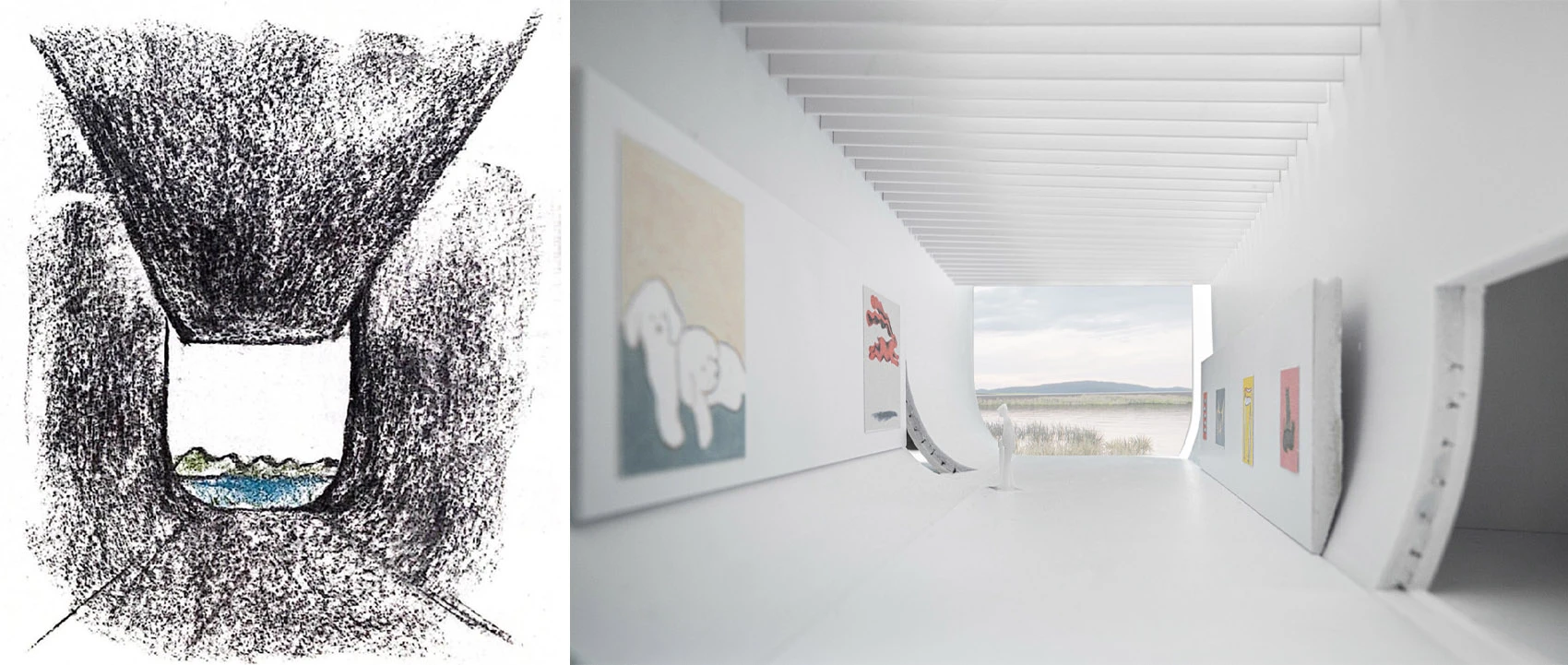
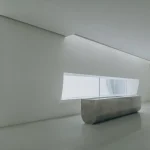
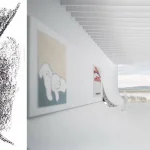
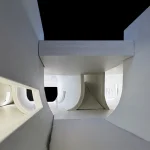
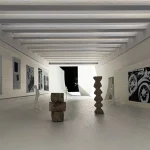
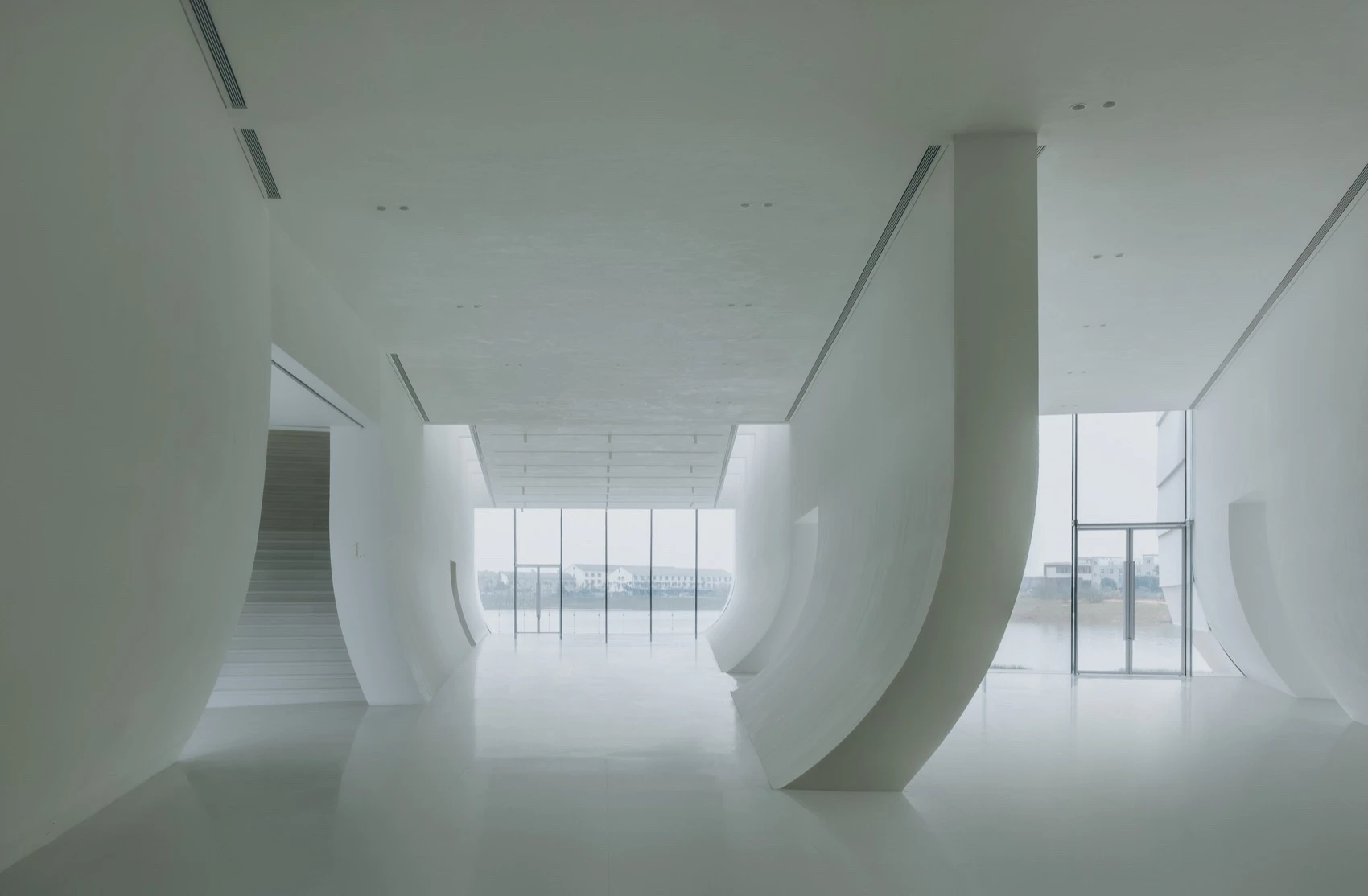
The spatial layout invites visitors to discover and explore the fluid environment where the exhibition and the natural world are constantly juxtaposed. The boundaries between the floor, wall, and roof often dissolve in certain areas, and the roof is pierced by the walls, while skylights are positioned at elusive heights. It creates a sense of being suspended between the terrestrial and the atmospheric.
The Chenhu Wetland Art Center defines Wuhan’s identity as a global city of design with strategic planning and a commitment to sustainability. Wuhan, the river city, is redefined by the thoughtful, artistic, and resilient expansion of its aquatic heritage.
The Chenhu International Town Masterplan
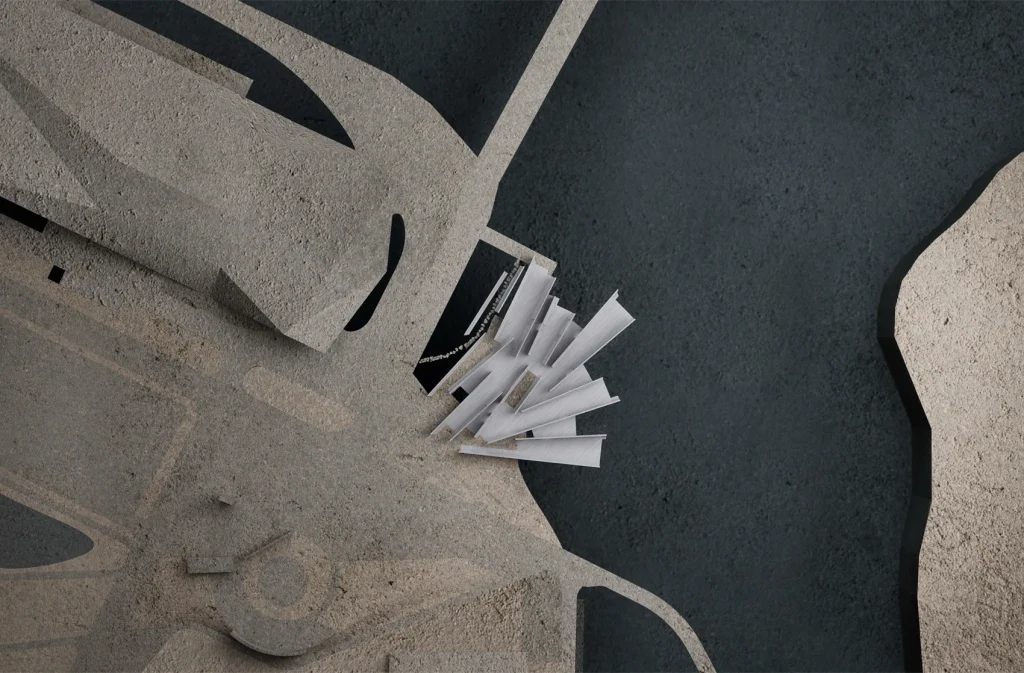
The Art Center, part of the broader Chenhu International Town project, serves as the focal point for community engagement within this green development initiative covering approximately 198 acres. One of the project’s most innovative features is the repurposing of industrial heritage. A former processing plant for lotus roots is being transformed into the Chenhu Brand Operations Center, linking the region’s agricultural roots to modern branding and commerce.
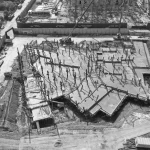
To facilitate birdwatching without disturbing sensitive species, the town utilizes a smart monitoring system. The site is equipped with elevated bird-watching platforms and ecological boardwalks. The use of BIM (Building Information Modeling) and digital twin technology in the construction of the Chenhu project allows for deep optimization of positioning and design.
Chenhu Wetland Art Center
Client: Wuhan Urban Construction Investment and Development Group Co., Ltd.
Project Location: Caidian District, Wuhan City, Hubei Province, China
Floor area: 2,774 sq. m
Principal Architect: HUA Li / TAO (Trace Architecture Office)
Design team: HUA Li, NA Xinyi, ZHOU Chang, ZHONG Sheng, Jonatan García-Cervantes, LU Guoxi, YAO Tian, QIAN Jin, ZHANG Peng
Structural engineers: ZHU Yu, LI Zhong
MEP engineer: ZENG Cuilin
Photo Credits: © Yumeng Zhu/Zhu Yumeng