


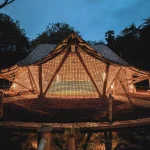
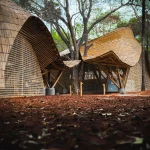
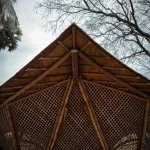
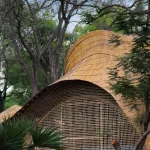
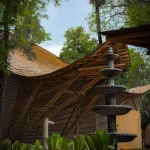
Bamboo vaults rise across the IIT Madras campus in Chennai, forming the new Maestro Ilaiyaraaja Center for Music Learning and Research. Designed by Ekarth Studio, the 10,000-square-foot complex uses the material as its primary structure and was completed in just 11 months.
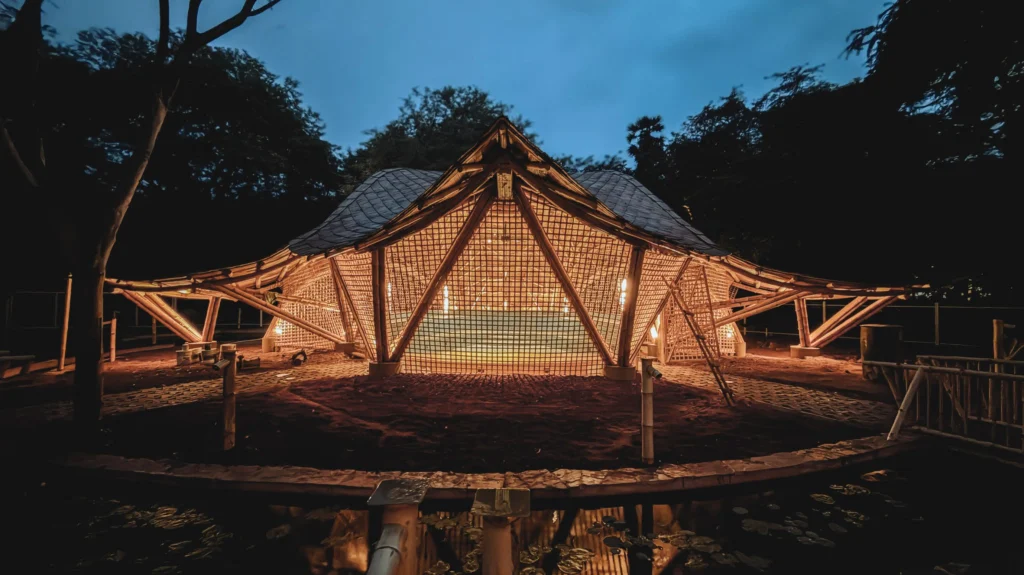
Bamboo has long been called the poor man’s timber. At the Maestro Ilaiyaraaja Center for Music Learning and Research on the IIT Madras campus in Chennai, Ekarth Studio treats it as something closer to a structural language capable of large spans, complex curves and institutional presence.
Dedicated to the celebrated composer Shri Ilaiyaraaja, the 10,000-square-foot center forms part of the university’s “Music for All” initiative. It brings together student musicians, engineers and mathematicians for research into acoustics, sound synthesis, artificial intelligence, instrument design and the science of Indian music. The architecture had to support focused work, rehearsal, recording and informal exchange without feeling like a conventional academic building.
Geometry Drawn from a Sacred Leaf
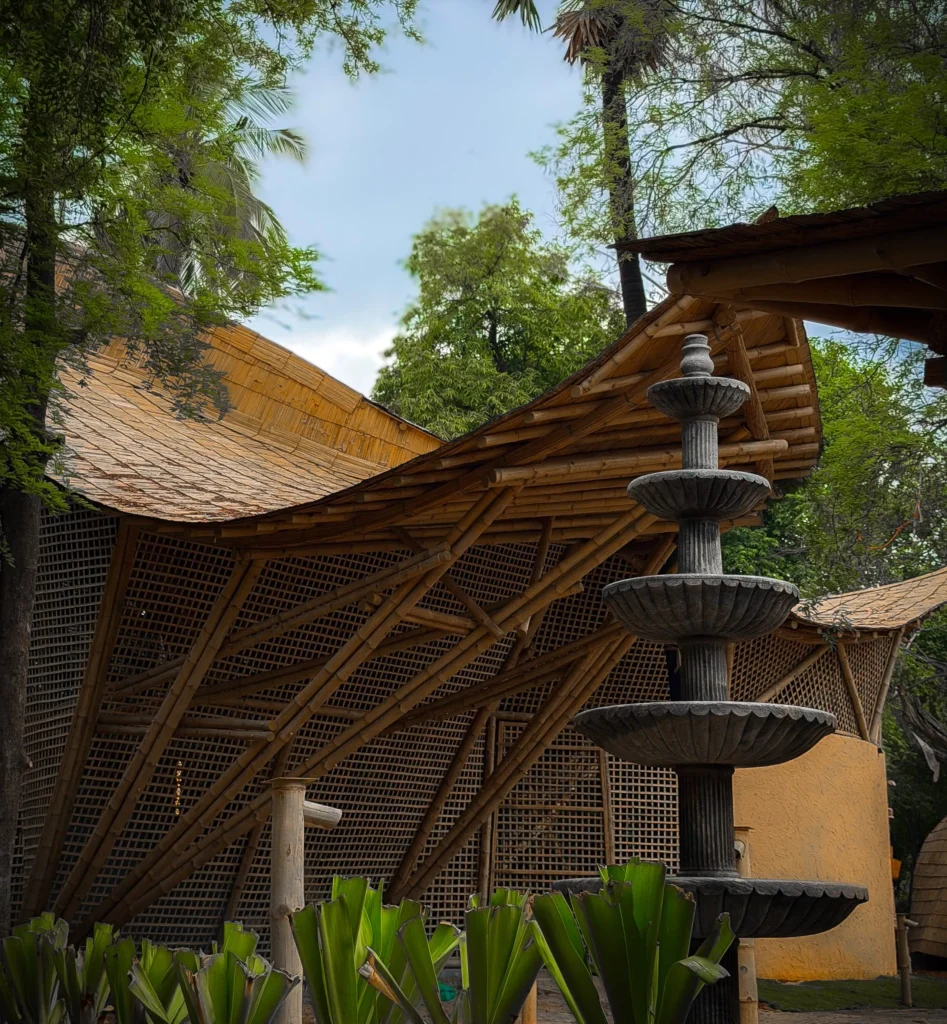
Ekarth Studio modeled the pavilions on the Bel Patra, the three-lobed leaf of the bael tree, which carries cultural associations with sound and movement in Hindu tradition. The reference is not applied as surface ornament. It generates a series of interconnected vaults that rise, dip, and extend to create a mix of open and sheltered spaces.
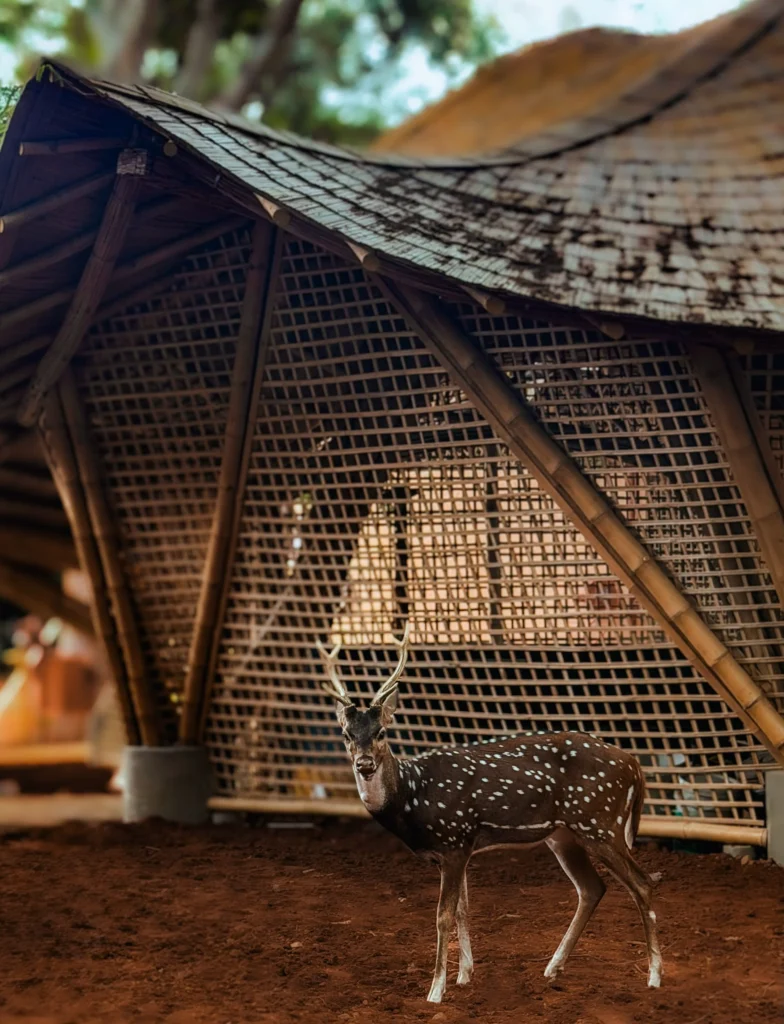
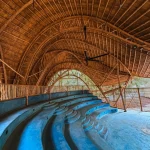
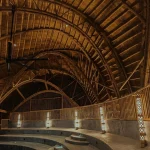
The heart of the complex is an 80-seat auditorium with nine-meter-high arches and a column-free span of 15 meters. Alongside it sit classrooms of varying sizes, a recording studio, offices and support spaces. Throughout, the bamboo remains exposed. Lime-based finishes, earthen surfaces and natural-fiber roof tiles complete a material palette that feels continuous rather than layered.
Bamboo Vaults: Craft, Engineering and Speed
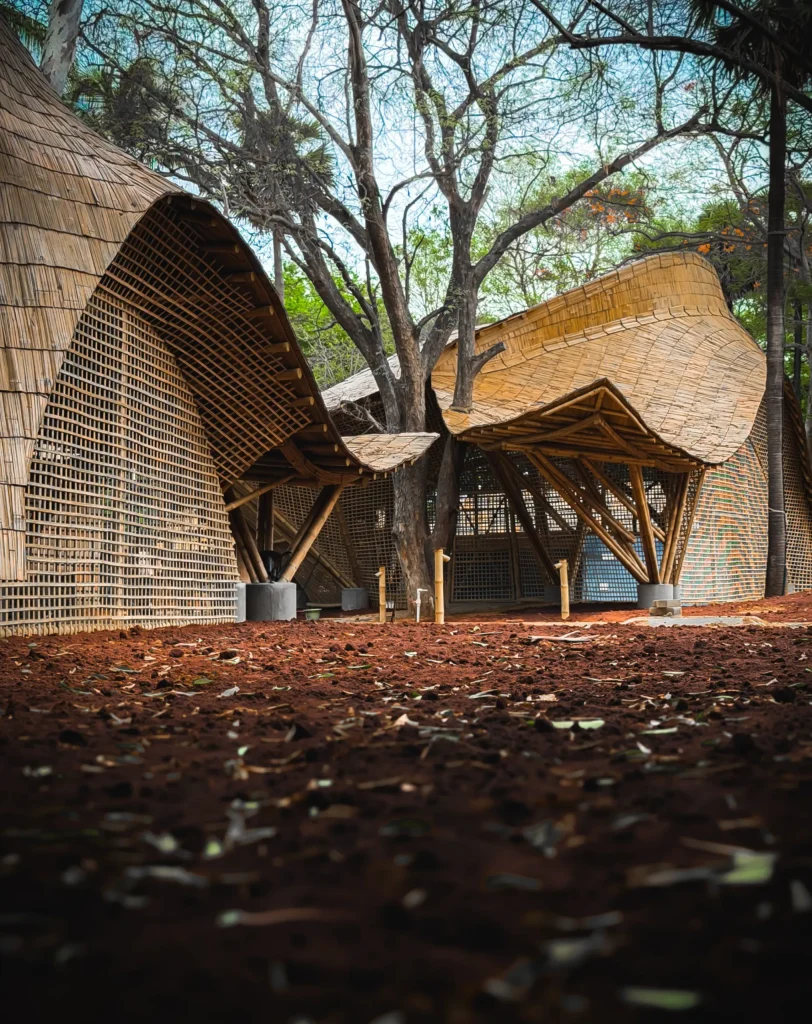
Nearly 4,000 bamboo poles were used. The structural system combines round culms, bundled bamboo splits and bundled sticks. Bundled flat splits form primary spine beams capable of carrying substantial roof loads. Layered curvature and handcrafted joinery, refined through structural engineering, allow the system to achieve doubly-curved geometries while responding to Chennai’s humidity and cyclonic forces.
Local artisans carried out the splitting, bending, bundling and joining with basic carpentry tools. The entire project was completed in 11 months. Bamboo’s workability made the ambitious geometry feasible within that compressed timeline. The building becomes both a place of research and a demonstration that the material can deliver strength, span and contemporary expression at institutional scale.
Parametric Thinking in Natural Systems
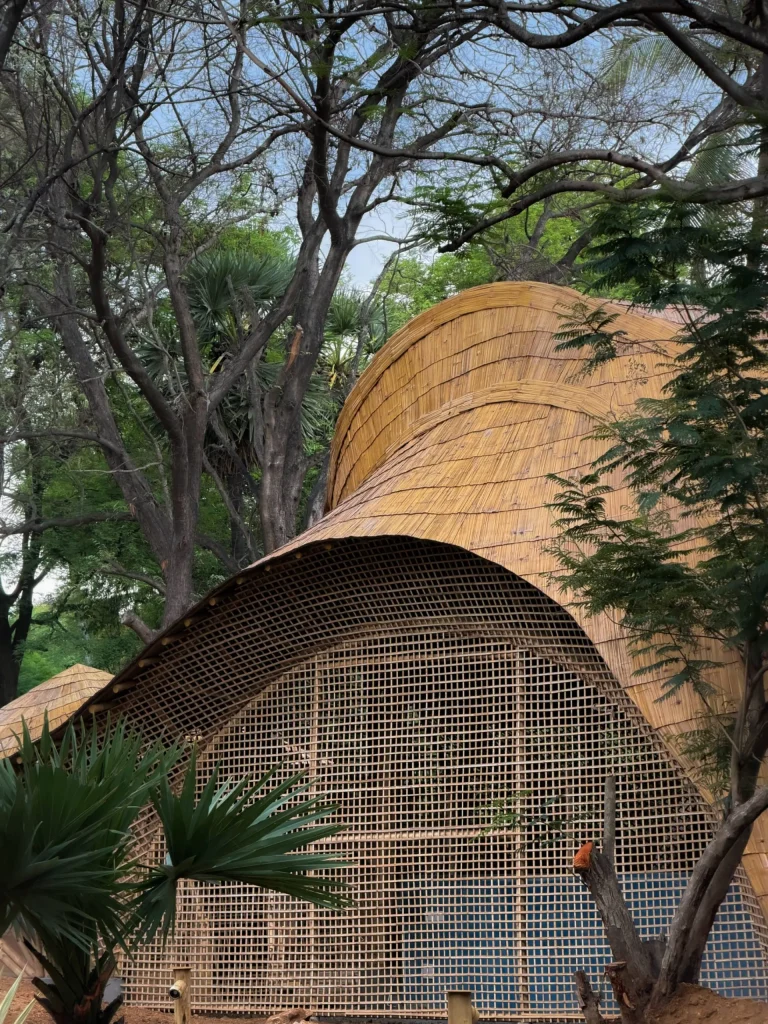
Although the construction relies on handcraft, the underlying logic is parametric. A consistent set of geometric rules derived from the Bel Patra leaf generates variation across the pavilions. Curvature, height, and enclosure adjust according to program and orientation. The result is a family of related forms rather than a collection of identical units. Computational tools would have been essential for coordinating the structural behavior of the bundled systems and for predicting performance under wind and humidity loads.
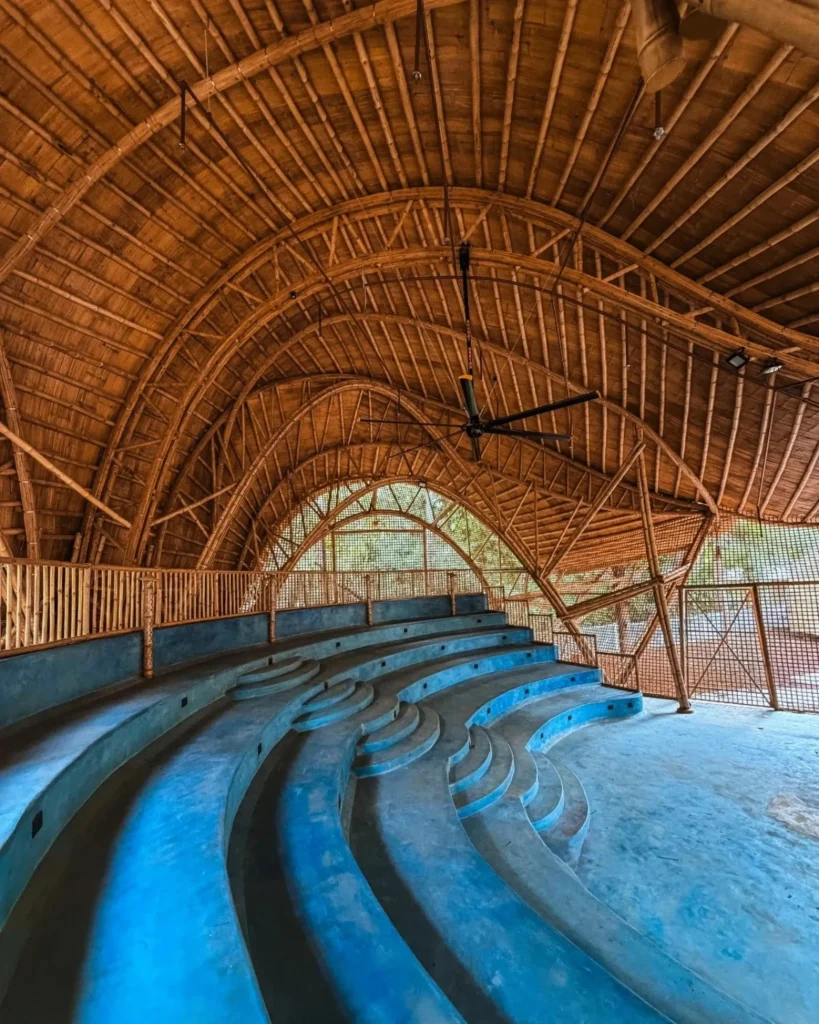
The project also reframes the relationship between digital design and material intelligence. Bamboo’s natural variability requires the designer to work with, rather than against, the properties of the material. Engineering refines craft processes instead of replacing them. The finished building carries the evidence of both.
A Living Argument for Bamboo
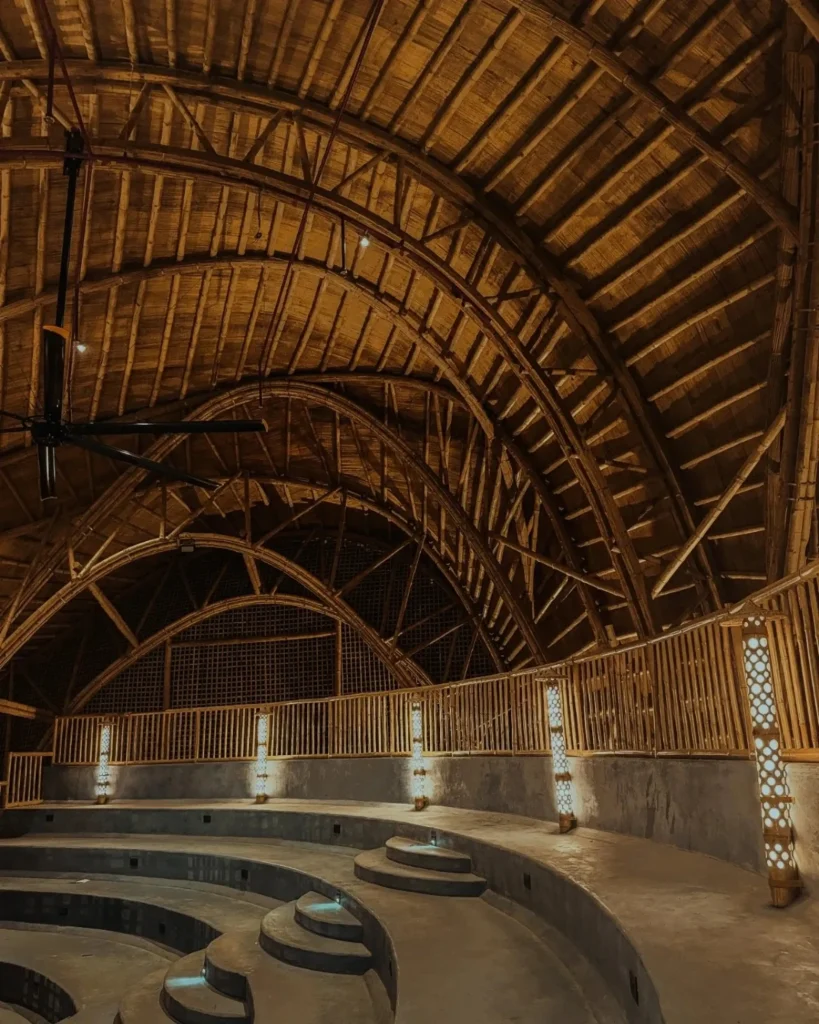
Ekarth Studio has been clear about its ambition. For decades, bamboo has been perceived as secondary. By showing that it can support large spans, complex geometry, and institutional use, the center aims to move the material from the margins into mainstream construction thinking. The exposed structure makes that argument visible to every student and visitor who enters.
In a climate where high-performance buildings often rely on energy-intensive materials, the Maestro Ilaiyaraaja Center offers a different model. It is lightweight, rapidly constructed, culturally grounded, and spatially generous. Its success will be measured not only by the research conducted inside it, but by whether other institutions begin to treat bamboo with the same seriousness.
All in All
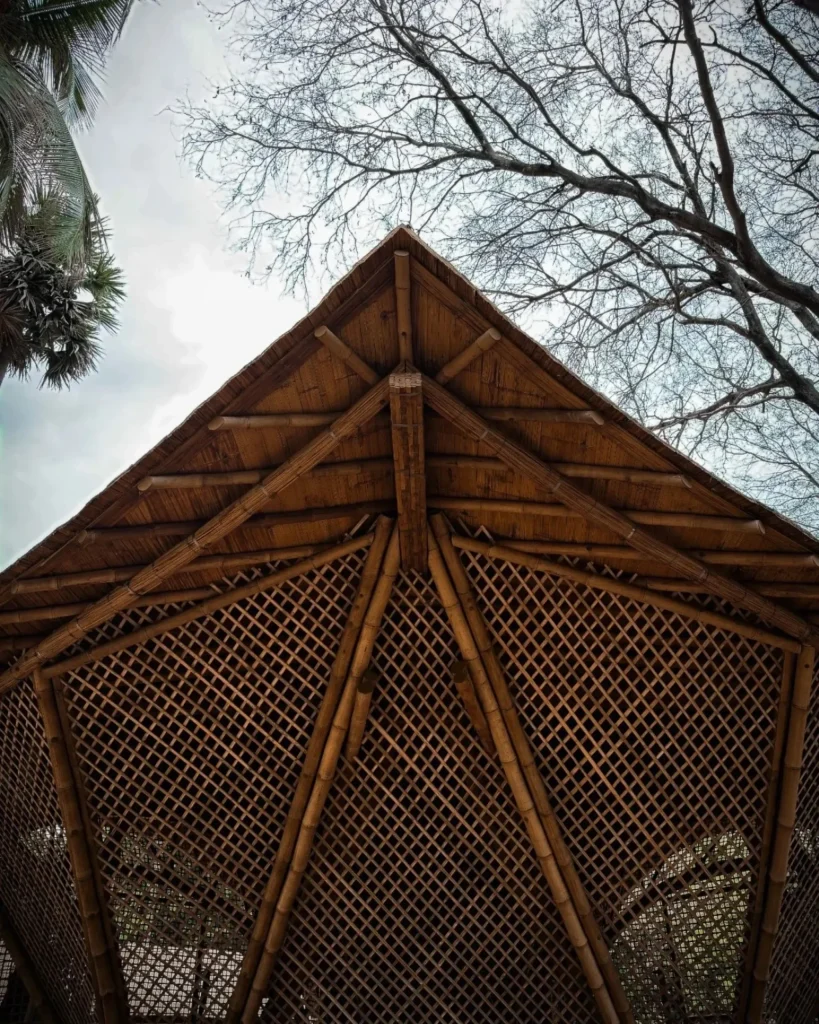
The vaults rise like a series of musical phrases across the campus. They shelter classrooms and an auditorium, yet they also make a broader claim: that a material long underestimated can carry both structural load and cultural meaning when design, craft and engineering work together. In Chennai, that claim now has a permanent address.