


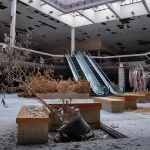
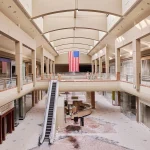
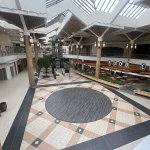
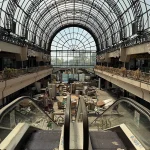
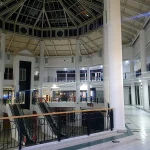
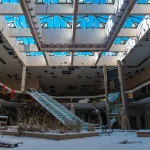
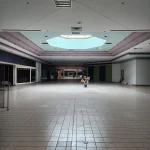
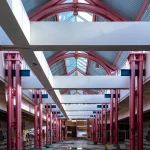
For decades, the shopping mall represented one of architecture’s most confident promises: that the organization of space could organize desire. Through carefully controlled circulation, artificial climates, illuminated storefronts, food courts, escalators, and carefully staged public interiors, the mall transformed shopping into an architectural experience. It was more than a commercial building. It was a privately managed version of the city, offering entertainment, social encounters, leisure, and consumption under one roof. Its success depended on a simple assumption: people would continue to come, and the building would remain relevant as long as they did.
That assumption is becoming increasingly difficult to defend.
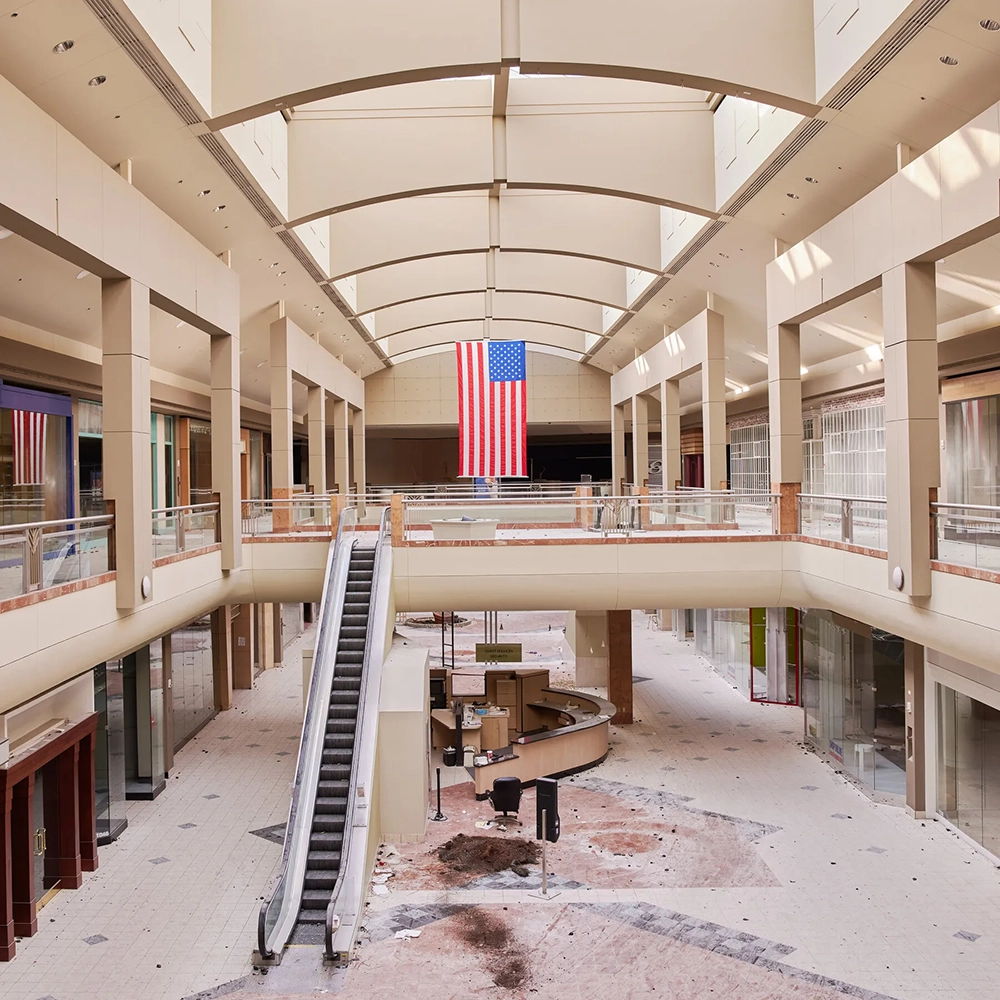
Across many cities, declining foot traffic, changing retail practices, online shopping, and the closure of department stores have left shopping centers struggling to justify their enormous physical presence. Some are partially occupied; others have become architectural remnants of a different economic moment. Yet the question is no longer simply what happens to retail when customers disappear. A more important architectural question emerges: what happens to buildings whose entire spatial logic was designed around a single form of human behavior?
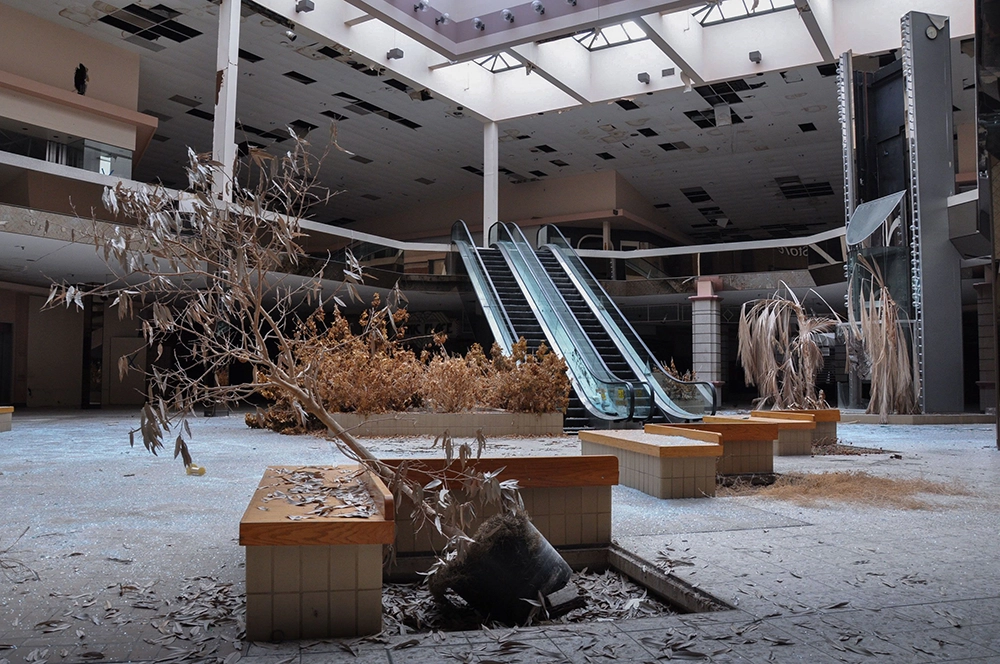
The Architecture of Consumption
The shopping mall was never a neutral container for commercial activities. Its architecture was carefully designed to influence movement, attention, and duration. Unlike the traditional street, where movement is shaped by multiple destinations and unpredictable encounters, the mall offers a controlled sequence of experiences. Entrances, corridors, atriums, escalators, and storefronts work together to produce a particular rhythm of movement.
The absence of conventional windows, the regulation of daylight, and the artificial control of temperature create an environment separated from the surrounding city. Time becomes less visible, while the distinction between public and private space becomes increasingly ambiguous. Visitors are encouraged to remain inside, move between commercial destinations, and experience consumption as an almost continuous activity.
This spatial model reveals an important contradiction. Although malls often present themselves as public gathering places, their architecture is fundamentally organized around commercial exchange. Social life is welcomed, but primarily when it supports the economic purpose of the building. Sitting without purchasing, gathering without consuming, or simply occupying space without participating in its commercial program can become uncomfortable or even restricted.
When the commercial activity disappears, the contradiction becomes visible. The building has been designed to accommodate customers, not necessarily citizens.
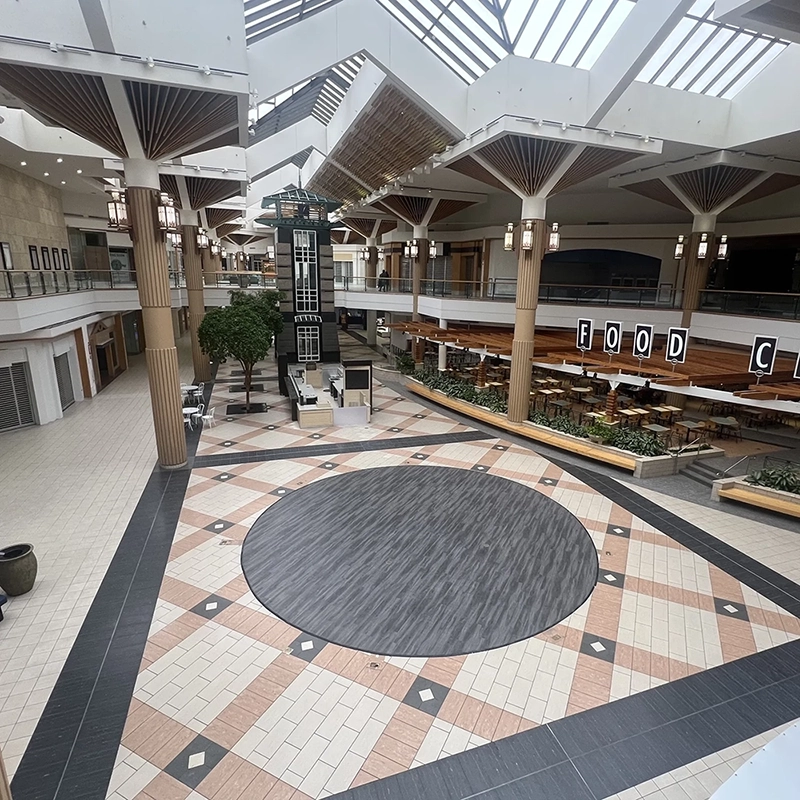
When Architectural Program Becomes a Liability
One of the most persistent challenges in contemporary architecture is the relationship between a building’s original program and its capacity to accommodate change. Shopping malls make this problem particularly evident.
Their large structural spans, deep floor plates, limited access to natural light, extensive service infrastructure, and inward-facing organization were developed to support retail operations. These characteristics made commercial activity efficient, but they also created considerable difficulties when alternative uses became necessary.
A former department store, for example, cannot automatically become a school, a library, or a residential building. Its structural system might support different activities, but its spatial proportions, vertical circulation, fire safety arrangements, and relationship with daylight may require substantial intervention. Similarly, an enclosed shopping corridor may be physically generous but functionally unsuitable for everyday civic activities.
This is where architectural adaptability becomes more than a fashionable sustainability concept. It becomes a question of economic, environmental, and cultural responsibility.
Buildings are material investments that outlast the business models responsible for their construction. When architects design exclusively for immediate commercial requirements, they risk producing structures that become difficult to reuse once those requirements change. The problem is not that architecture cannot anticipate every future transformation. It is that many commercial buildings were never designed to accommodate one.
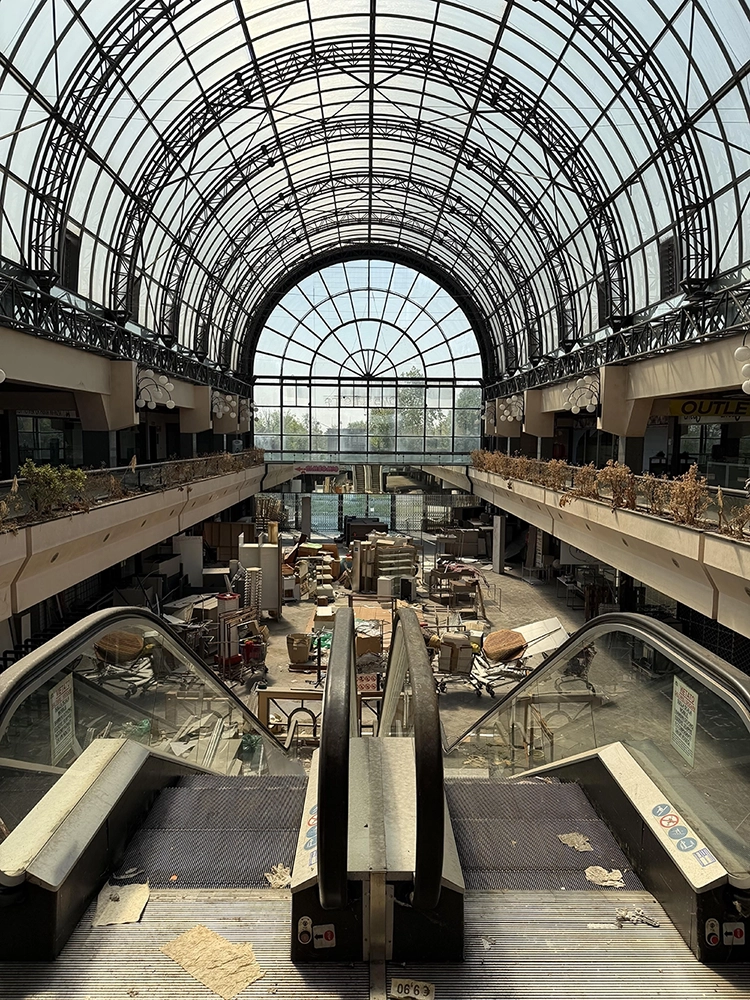
The Empty Mall as an Urban Problem
An abandoned shopping center does not exist independently of its surroundings. Its physical and economic decline can affect entire urban districts, particularly when it occupies a large site with extensive parking areas and limited connections to the surrounding street network.
Many suburban malls were developed as isolated destinations, accessible primarily by private vehicles. Their relationship with the city was based on accessibility rather than integration. Large parking lots, inward-facing entrances, and fragmented pedestrian connections reinforced this condition.
When commercial activity declines, these sites can become significant urban voids. Their enormous footprints interrupt the continuity of neighborhoods, while their surrounding infrastructure continues to consume land and resources. The question of reuse therefore extends beyond the building envelope. It concerns the reconstruction of relationships between the site, its streets, public transportation, neighboring communities, and the wider urban landscape.
A successful transformation may require removing parts of the original structure, opening previously enclosed spaces, introducing new pedestrian routes, or reconnecting the site to surrounding urban networks. In some cases, preserving every square meter of the existing building may be less sustainable than selective demolition combined with the reuse of valuable structural components.
Architectural preservation should not become an automatic obligation to retain everything. The more meaningful task is to determine what deserves to survive, what can be transformed, and what has become an obstacle to a more productive urban future.
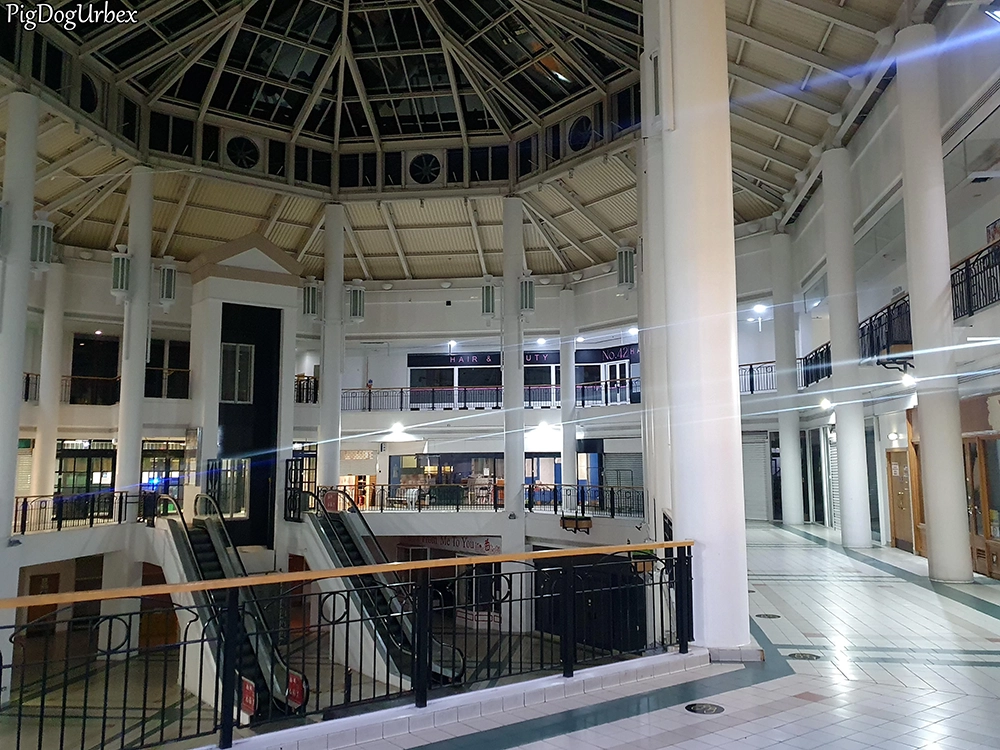
From Retail Space to Civic Infrastructure
The decline of consumer-oriented architecture creates an opportunity to reconsider what large commercial buildings could contribute to contemporary urban life.
Some former shopping centers have already been transformed into educational facilities, healthcare centers, offices, public libraries, community spaces, and mixed-use developments. These projects demonstrate that the physical resources of retail architecture can support activities beyond consumption, although the success of such transformations depends on more than assigning new functions to existing spaces.
A civic building requires a different relationship with its users. Instead of directing visitors through a carefully controlled commercial sequence, it should accommodate different forms of occupation, participation, and encounter. It needs spaces that can be used without an obligation to spend money, areas that support informal gathering, and environments that respond to different age groups and social needs.
This shift also raises questions about architectural thresholds. A mall typically establishes a clear boundary between its controlled interior and the surrounding city. A transformed civic environment might benefit from more permeable edges, multiple entrances, outdoor public spaces, and direct connections to pedestrian networks.
The central architectural challenge is not simply to replace shops with other functions. It is to reconsider the principles through which space is organized. A building designed around commercial circulation must learn to accommodate civic life, which is often less predictable, less controlled, and more socially complex.
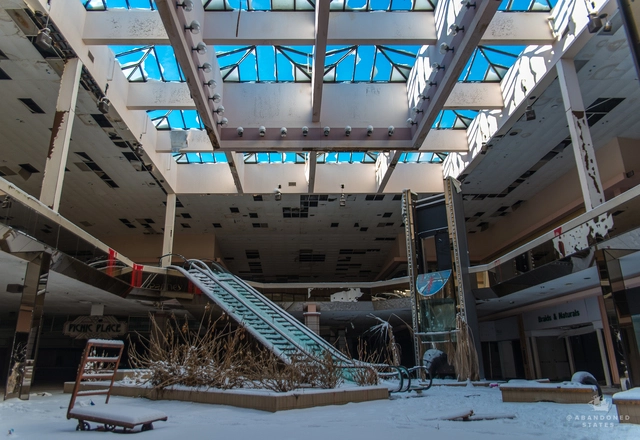
The Environmental Cost of Architectural Obsolescence
There is another dimension to the decline of shopping malls that deserves serious attention: the environmental consequences of constructing and abandoning buildings of such enormous scale.
The demolition of a large commercial complex can generate substantial construction waste and release the embodied carbon associated with its original materials and construction processes. Replacing it with an entirely new development may create additional environmental burdens, even when the replacement claims to follow contemporary sustainability standards.
Adaptive reuse offers an alternative, but it should not be treated as an automatic environmental solution. A building with inefficient mechanical systems, poor daylight conditions, and an oversized envelope may require extensive renovation to perform adequately under a new program.
Architects must therefore evaluate the environmental value of retention through careful assessment of structural capacity, material conditions, energy performance, and the demands of proposed uses. Reusing a building is meaningful when it extends the useful life of its material resources and produces a better long-term environmental outcome.
The more fundamental lesson is that architectural sustainability begins before construction. Designing buildings with flexible structural grids, accessible service systems, adaptable floor plates, and the potential for future subdivision can reduce the likelihood that a change in economic conditions will turn an entire development into an obsolete structure.
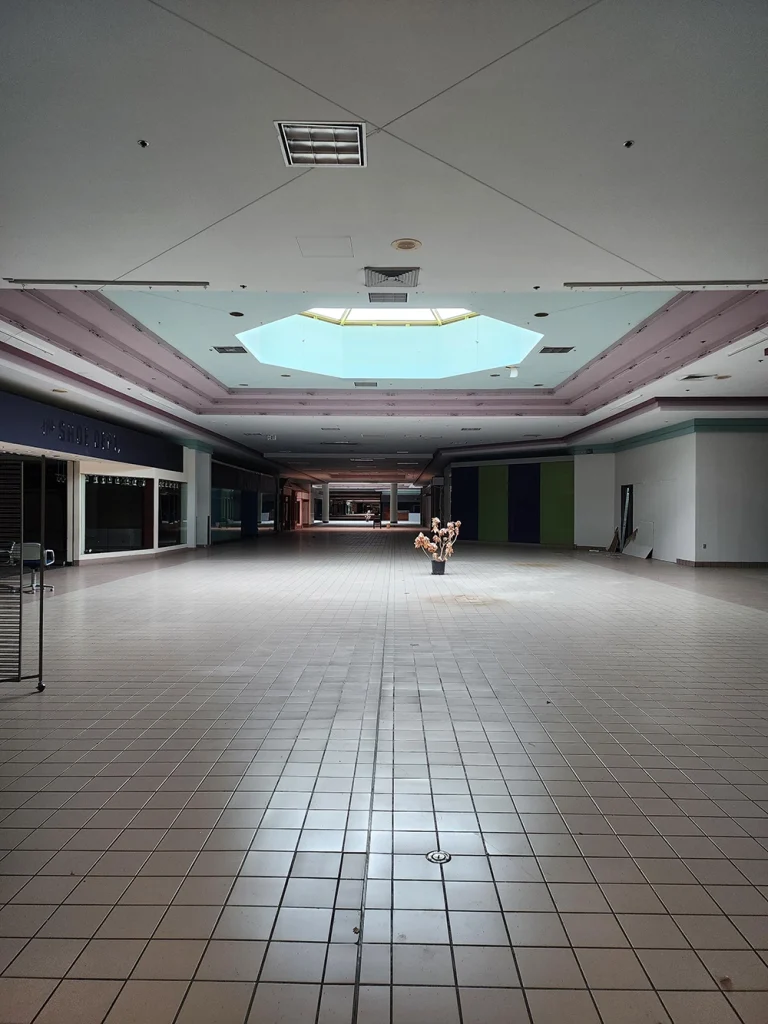
The Question of Architectural Identity
There is also a cultural dimension to the disappearance of the mall. These buildings were often designed to create recognizable commercial environments, using monumental atriums, artificial landscapes, decorative façades, and themed interiors. Although frequently criticized for their repetitive character, they became familiar settings for everyday experiences.
For many people, shopping centers were places associated with adolescence, family outings, informal meetings, and the gradual development of social identities. Their architectural significance cannot be measured exclusively through their commercial performance.
However, preserving their identity does not necessarily mean maintaining their original appearance. An empty atrium is not automatically a meaningful heritage space, and a nostalgic reconstruction of a former shopping environment may do little to address contemporary urban needs.
Architectural transformation should recognize the cultural memories embedded in these buildings without becoming trapped by them. Sometimes a recognizable fragment, an entrance sequence, a structural element, or a public interior can retain the memory of the original place while supporting an entirely different architectural experience.
The challenge is to distinguish between preserving a building’s cultural significance and preserving the commercial ideology that produced it.
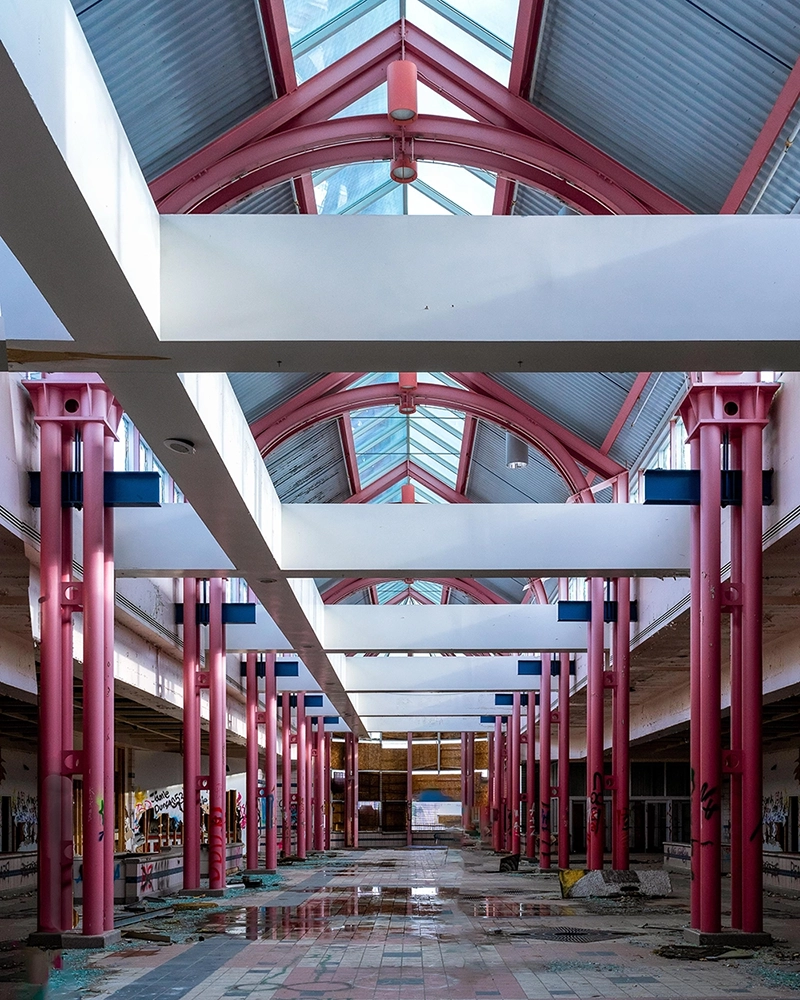
Designing Beyond the Customer
The decline of the shopping mall offers a broader lesson for contemporary architecture. Buildings designed around a narrow definition of their users are vulnerable when the economic or social conditions supporting that definition change.
The customer was central to the mall’s architectural identity. Almost every spatial decision, from the location of entrances to the placement of escalators, was connected to the movement and behavior of consumers. Yet cities are inhabited by people whose needs extend far beyond shopping. They need places to learn, work, meet, rest, receive care, participate in cultural activities, and simply spend time without having to purchase something.
This does not mean that commercial architecture should disappear. Retail will continue to occupy an important position in urban life. But its architectural presence should be reconsidered as one component of a broader social and spatial system rather than the organizing principle of an entire development.
Perhaps the most important question after the mall is not how to bring customers back. It is whether architecture can imagine a more generous form of collective life, one that does not depend on continuous consumption to justify the existence of a building.
The shopping mall was built around the promise that commercial activity could create a complete environment for everyday life. Its decline exposes the limitations of that promise. What comes next should not simply be another commercial model disguised as an architectural innovation. It should be an opportunity to rethink the relationship between buildings and the people who inhabit them.
A building should be capable of surviving the business that commissioned it. More importantly, it should remain useful when the original reasons for its existence have disappeared.