

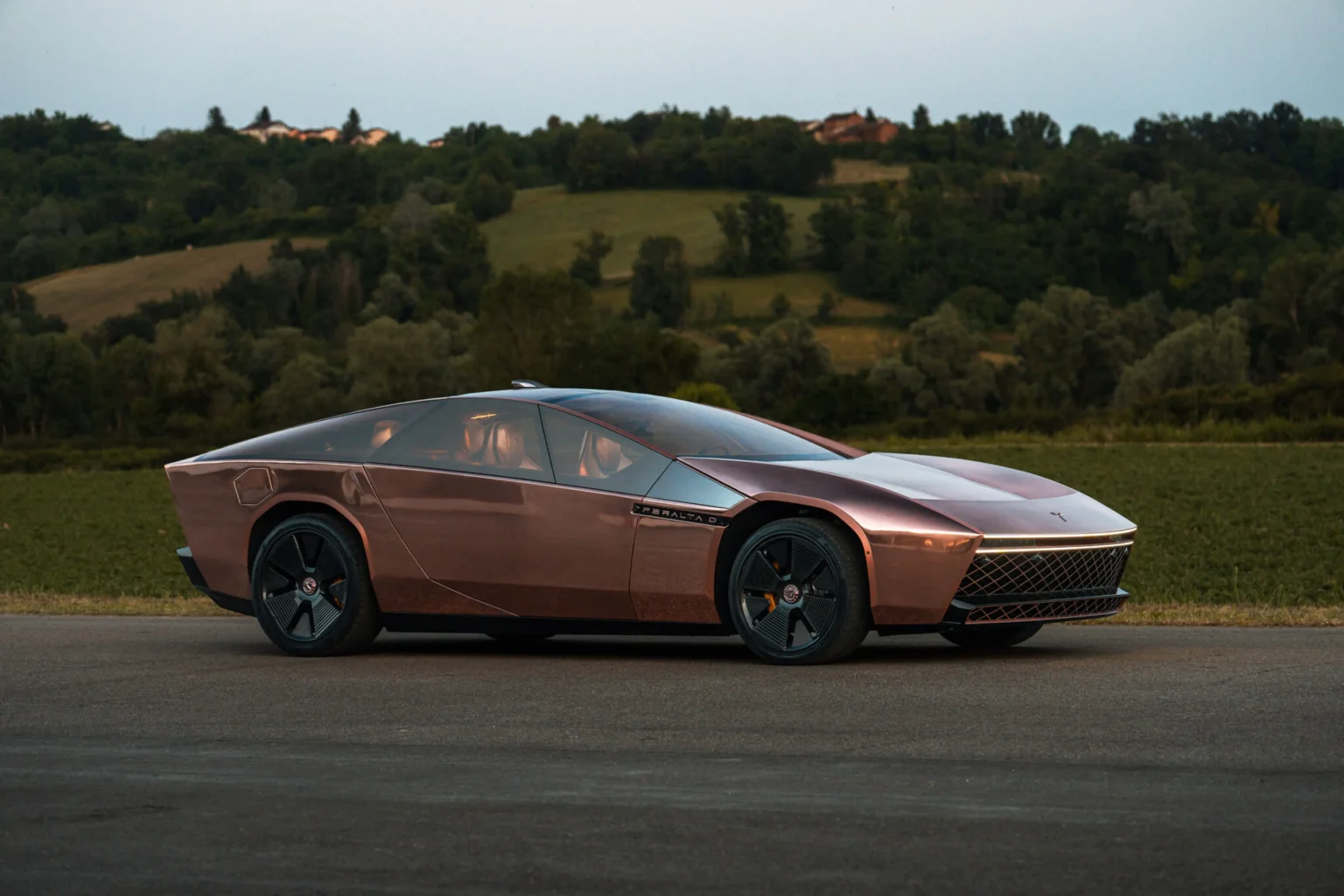






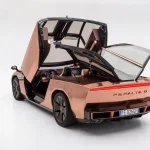


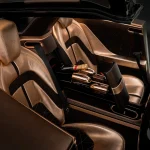
Material is never neutral. It carries memory, resistance, and possibility. When Fabrizio Giugiaro proposed copper for the body of the Peralta D, the decision was both personal and formal. The Mexican collector Carlos Peralta has industrial ties to the metal. Giugiaro, working through GFG Style, saw an opportunity to treat copper not as surface decoration but as a primary design parameter. The result, unveiled in late 2026, is a one-off 2+2 gran turismo whose entire lower body is hand-hammered copper, supported by a carbon-fiber structure over a Maserati GranTurismo chassis. From a parametric, architectural, and design perspective, the car is less a vehicle than a controlled experiment in how material behavior, geometric constraint, and craft can generate form.
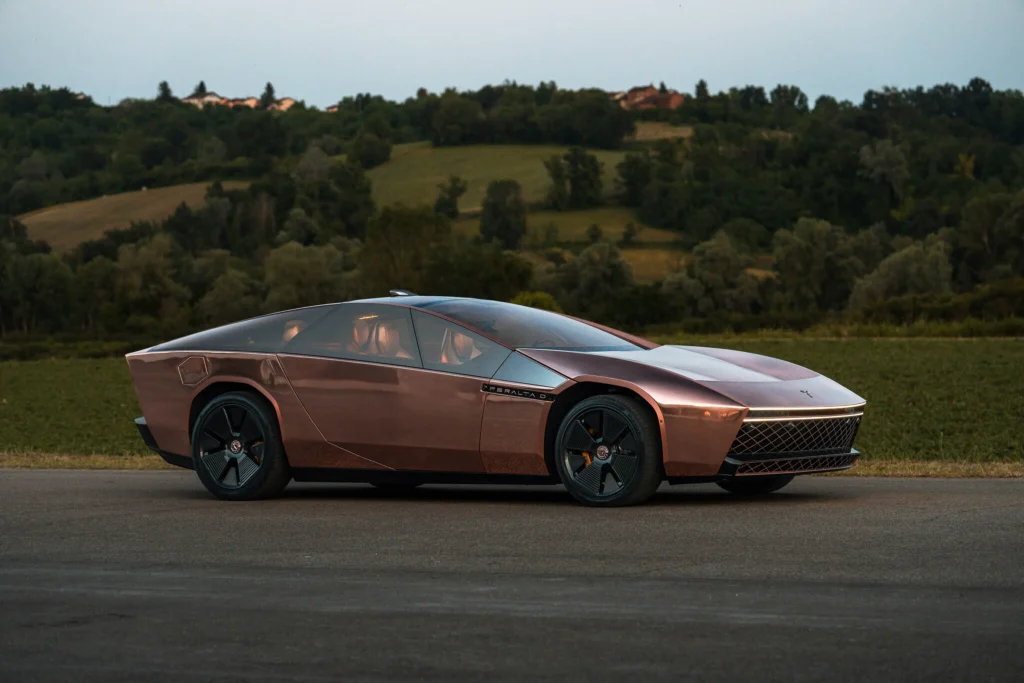
Material as Parameter
In digital parametric design, designers define relationships between variables so that changing one value automatically adjusts others. The Peralta D performs a similar operation in the physical world. Copper’s malleability, weldability, and polishability became active parameters. Giugiaro noted that the metal proved more cooperative than aluminum in previous projects: easier to shape by hand, easier to join, easier to finish. Weight was the acknowledged trade-off, offset by the carbon-fiber supporting structure.
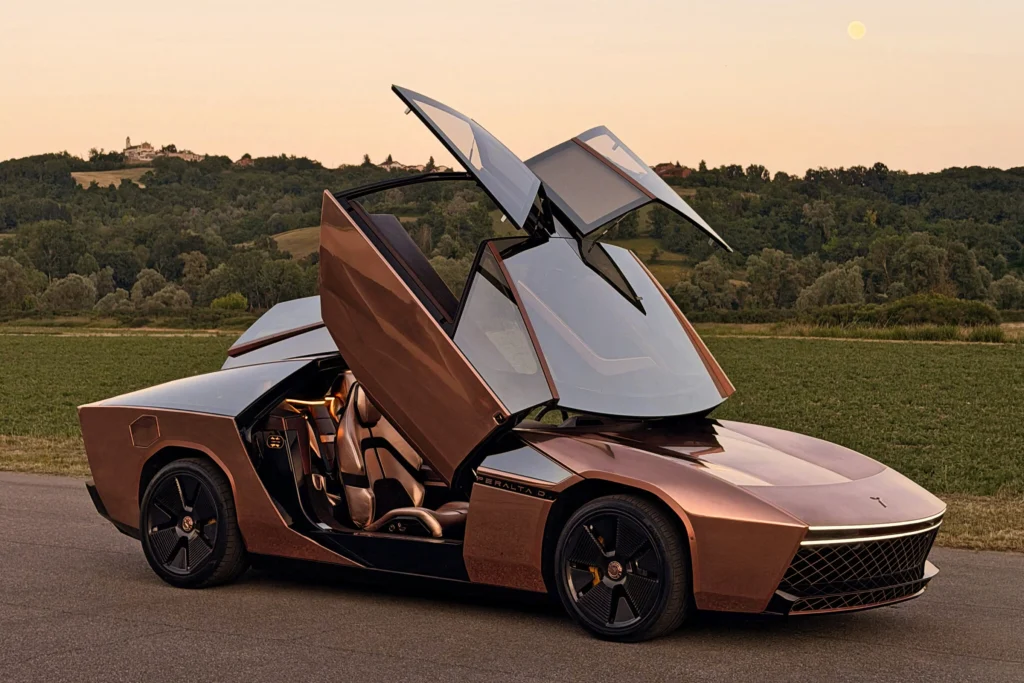
This is parametric thinking expressed through craft. The hammer marks are not residual noise. They are the visible record of a process in which force, tool, and metal negotiate surface curvature. Each panel is unique yet constrained by the overall geometric system: sharp edges, continuous surfaces, and a waistline that cleanly separates the copper body from the mirrored-glass upper canopy. The glass itself is treated to echo the copper’s warm tone, so that metal and transparency read as a single monolithic volume. Material choice and surface treatment are linked variables that produce a unified visual outcome.
Geometry as Inheritance and Constraint
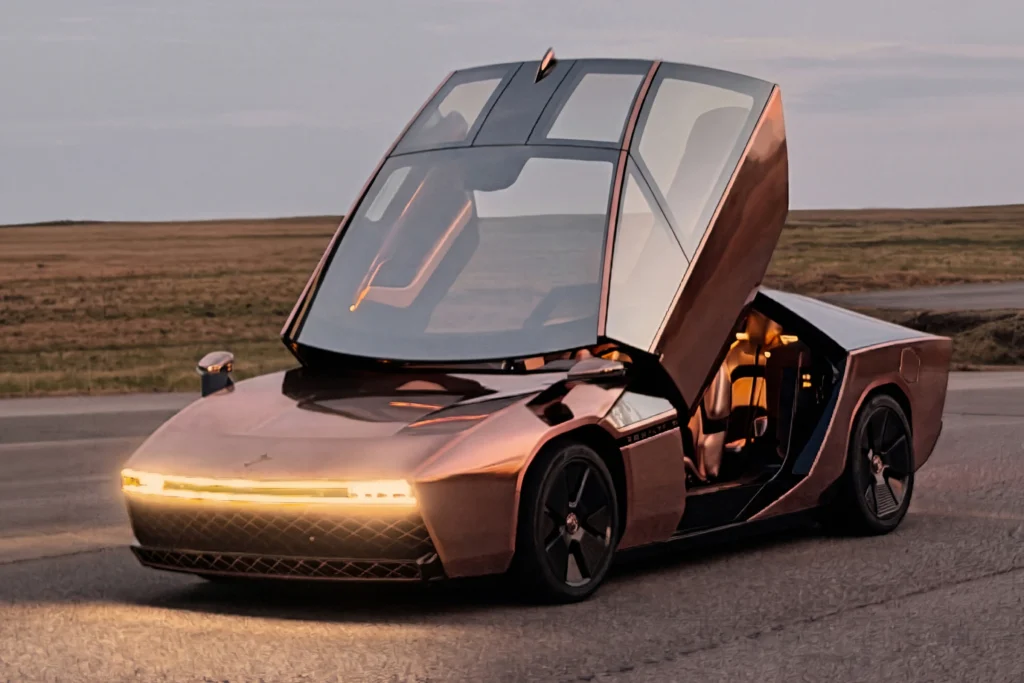
The silhouette deliberately recalls the wedge-shaped experiments of the 1970s, a language Giugiaro’s father Giorgetto helped define. Low nose, sharp transitions, minimal interruption. Yet the Peralta D is not a revival. It is a contemporary re-parameterization of that geometry. The continuous upper surface, the precise beltline, and the almost unbroken copper planes create a form that appears drawn in a single stroke when viewed from above. In architectural terms, the car behaves like a pavilion: a discrete object whose exterior expression is driven by a few strong formal rules rather than by additive detailing.
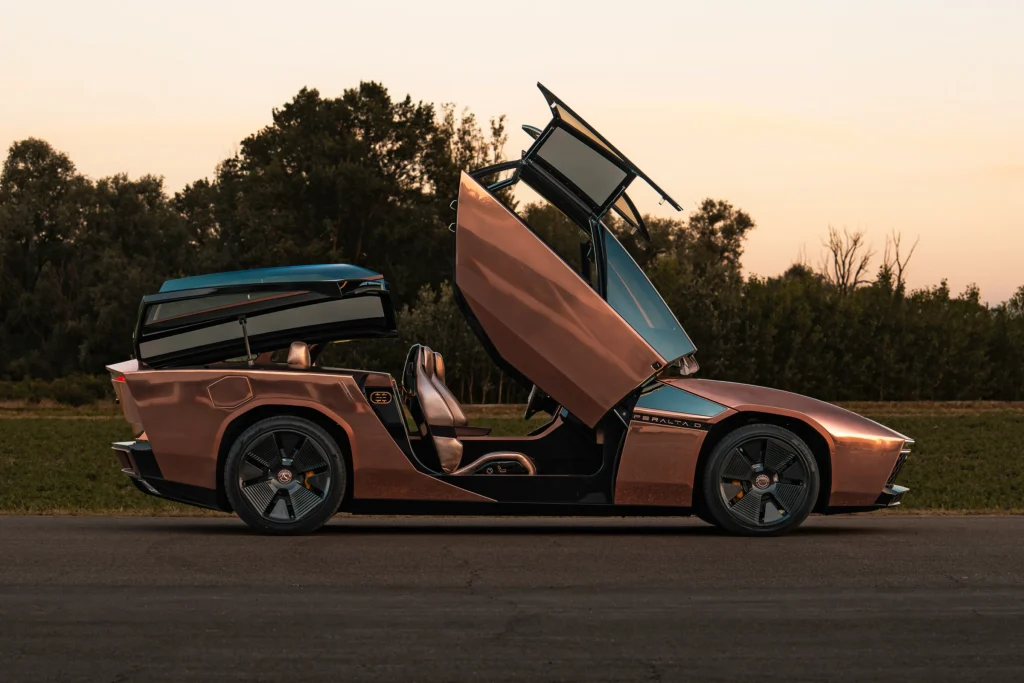
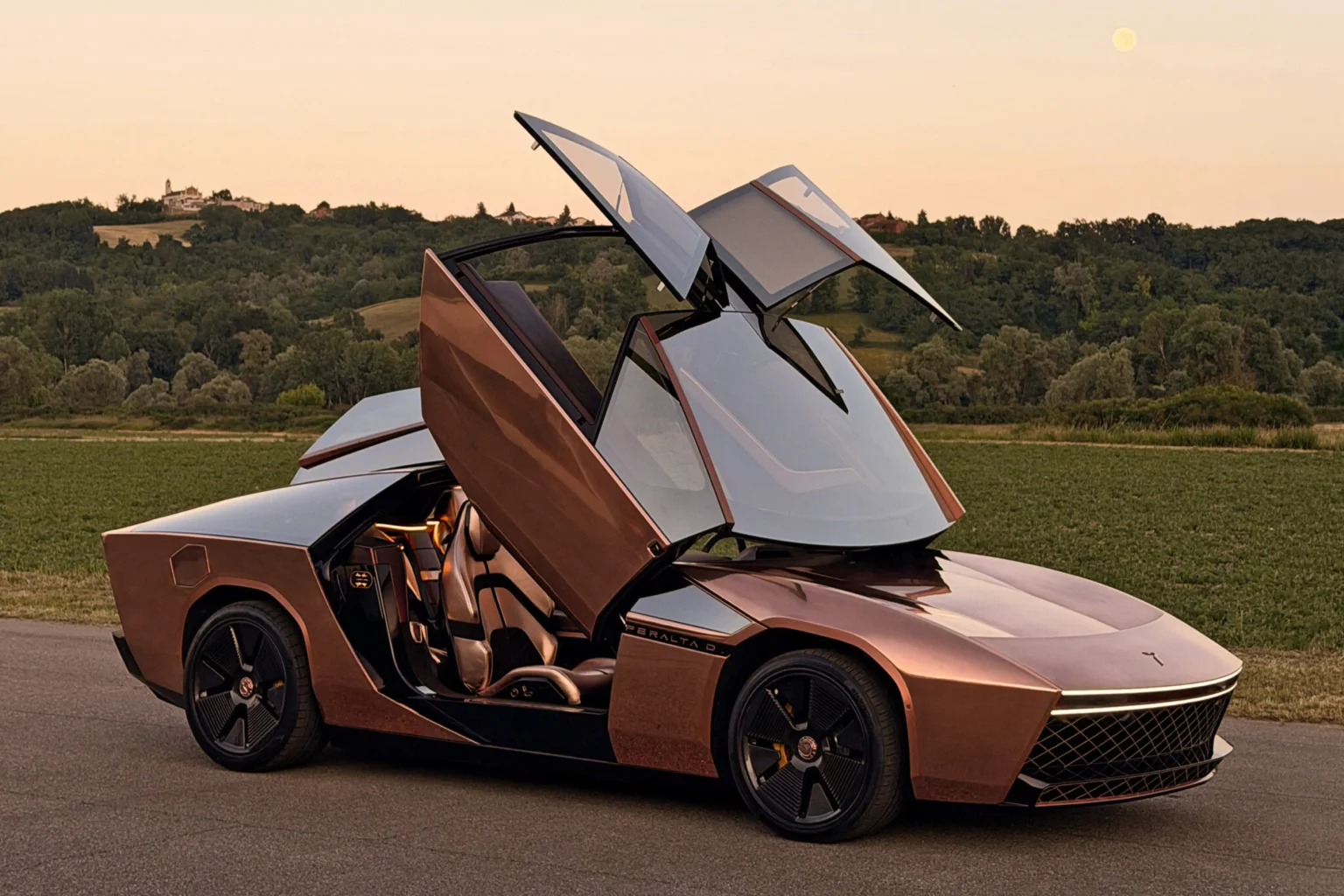
The absence of conventional doors reinforces this logic. Access is handled by a canopy system that lifts upward and forward, with independent side windows and rear gullwing panels that allow entry to the back seats. The opening mechanism is itself a parametric subsystem. It must satisfy structural clearance, sealing, and visual continuity when closed, while delivering dramatic spatial release when open. The solution inherits ideas from the earlier Peralta S while adapting them to a 2+2 layout. Form, function, and kinetic behavior are tightly coupled.
Architecture at the Scale of the Body
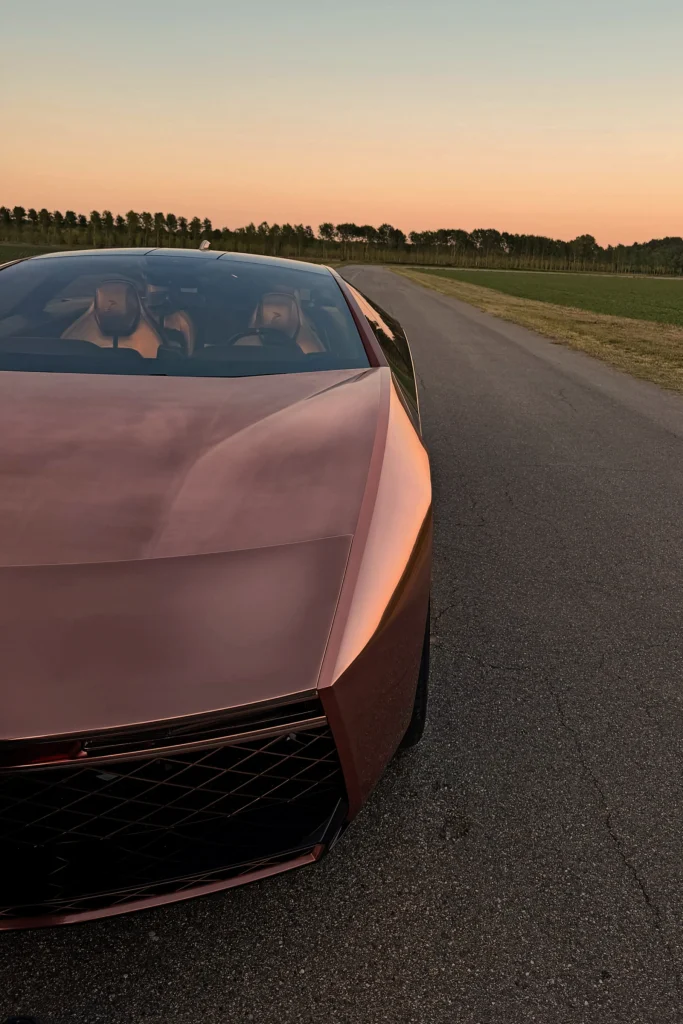
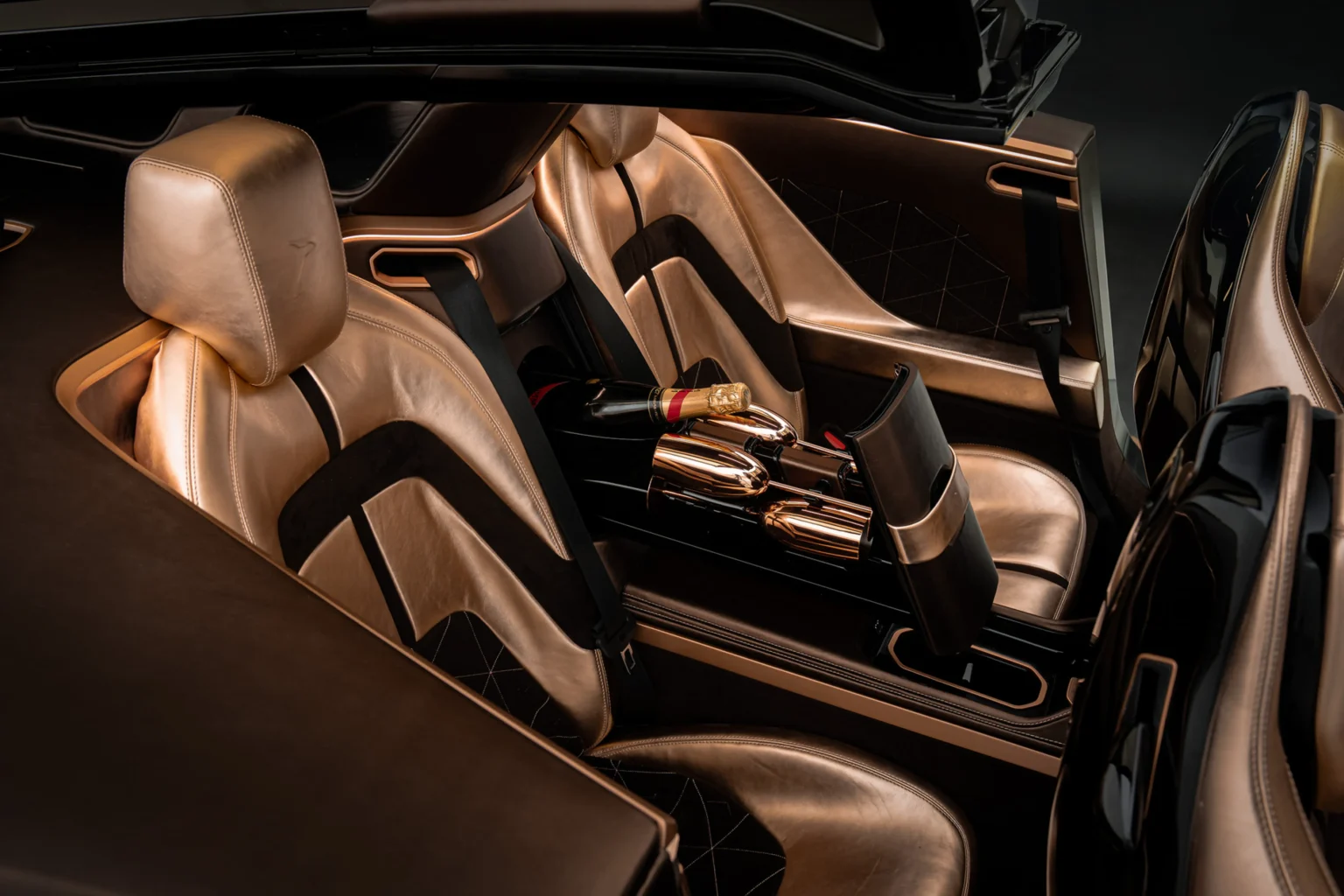
Viewed through an architectural lens, the Peralta D operates as a small-scale building. The copper skin is cladding. The carbon-fiber structure is the frame. The mirrored canopy is both enclosure and optical device. Interior surfaces continue the material conversation: copper-toned leather, stitching in actual copper thread, geometric patterning that echoes the exterior. Even the passenger-side makeup station with illuminated mirror and the retractable champagne refrigerator can be read as site-specific fittings within a highly personalized spatial envelope.
What distinguishes the project from ordinary automotive customization is the degree to which every decision is subordinated to a coherent formal system. Hardware is minimized or hidden. Lighting is reduced to thin continuous signatures. Grilles are precision-machined diamond patterns in aluminum. Wheels adopt a geometric 1970s motif finished in anthracite so that they recede and allow the copper body to dominate. These are not stylistic flourishes. They are secondary parameters adjusted to support the primary ones: material presence and geometric clarity.
Design Thinking Beyond the Digital
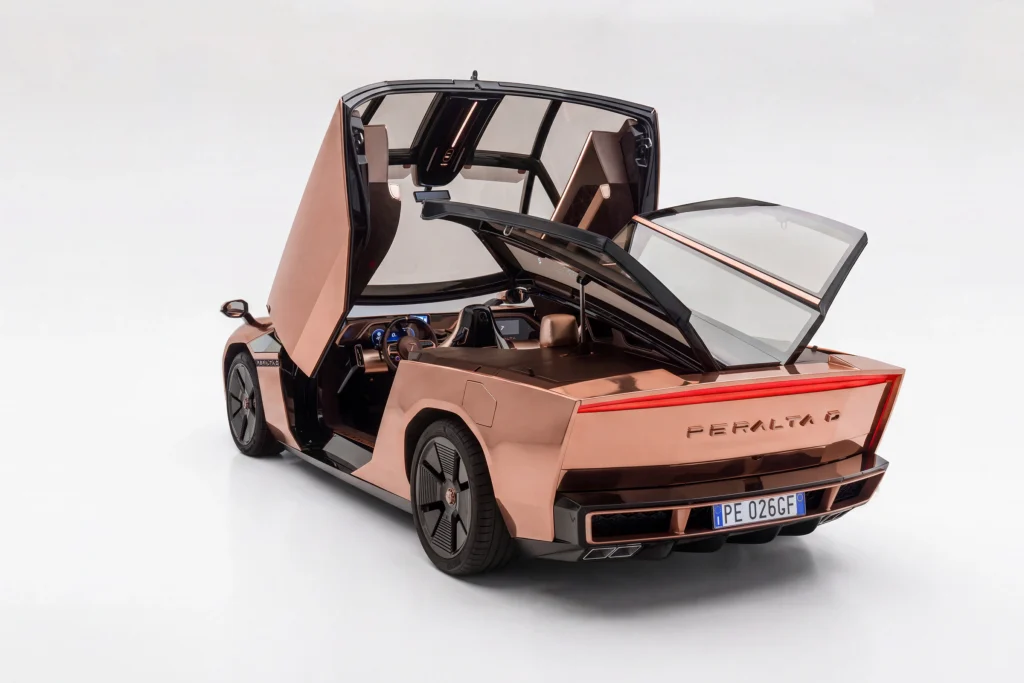
Contemporary parametric practice often lives inside software environments where surfaces are generated by algorithms and then translated into fabrication files. The Peralta D reverses the usual sequence. The controlling intelligence is human and material. Hand-hammering introduces micro-variations that no digital model would prescribe, yet those variations remain within the larger formal rules established by the designer. The process sits somewhere between traditional coachbuilding and contemporary computational design: a hybrid in which craft becomes the solver and the material supplies the constraints.
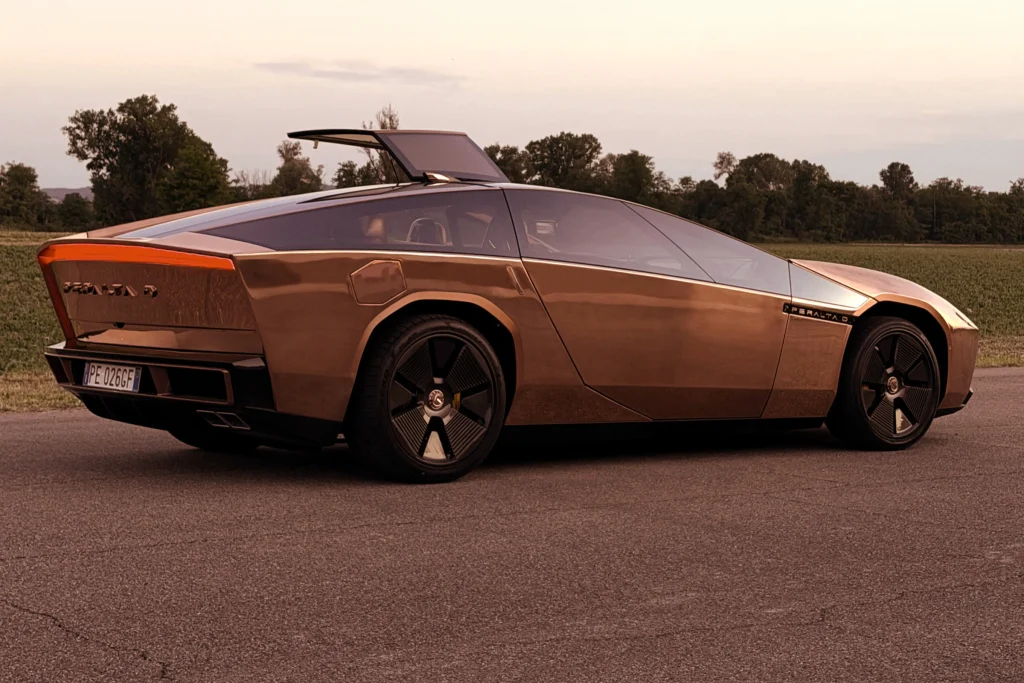
This hybrid approach has architectural parallels. Architects working with complex geometries frequently combine digital form-finding with manual or robotic fabrication that allows material properties to influence the final outcome. The Peralta D demonstrates the same principle at the scale of a personal object. Copper’s response to the hammer is allowed to remain visible. The surface is not forced into perfect digital smoothness. Instead, the process leaves a trace that becomes part of the aesthetic and tactile experience.
A Singular Outcome
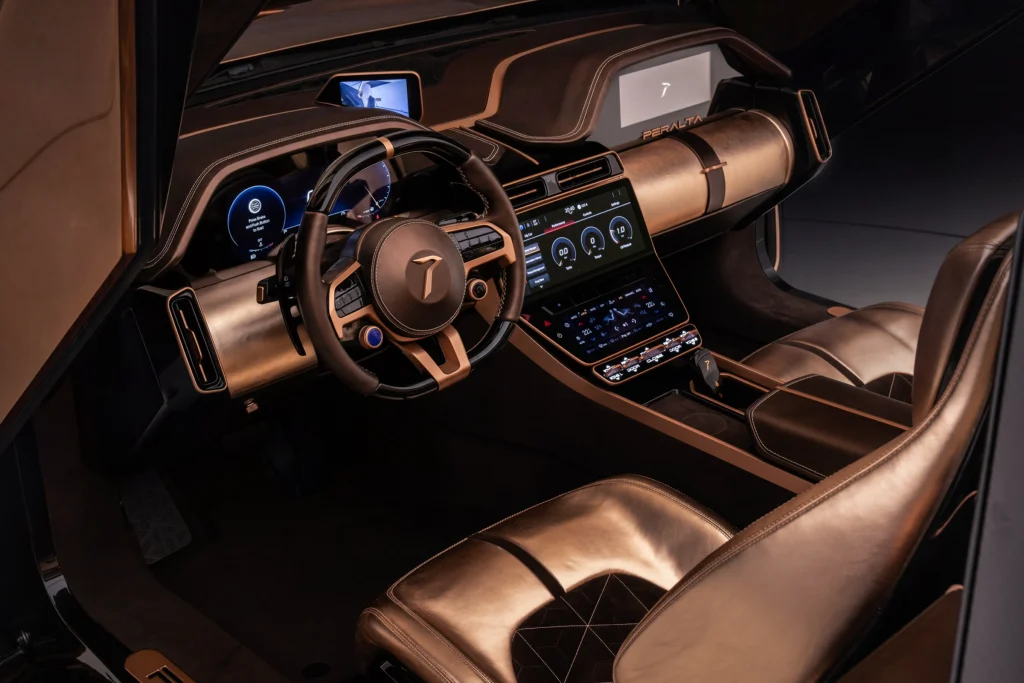
Because the car is a unique commission, it is free from the usual production parameters of cost, volume, and regulatory standardization that shape mass-market vehicles. That freedom allows the design system to be unusually pure. Height, proportion, surface continuity, opening kinematics, and material behavior are all tuned toward a single expressive goal: a copper monolith that moves.
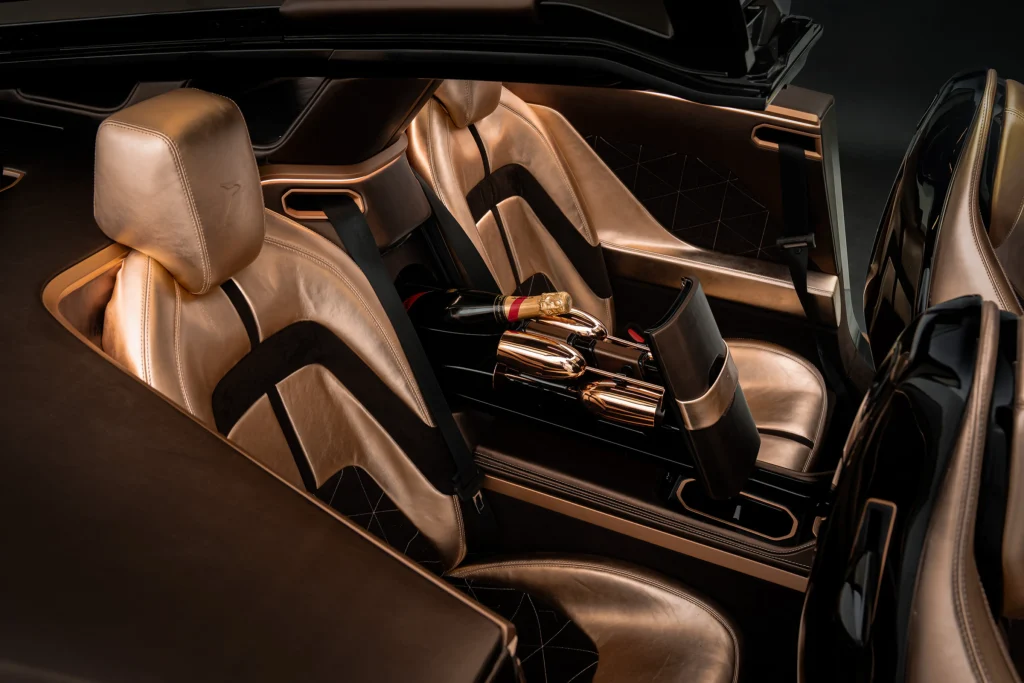
The Peralta D does not claim to invent a new typology. It reasserts an older one, the coachbuilt one-off, through a contemporary lens that treats material and geometry as interlinked variables. In doing so, it offers designers across disciplines a clear demonstration. When the right parameters are chosen and held consistently, even an unorthodox material like copper can generate forms of striking clarity and presence. The car stands as both object and argument: that the most compelling geometries often emerge when material resistance is not eliminated but actively designed with.