

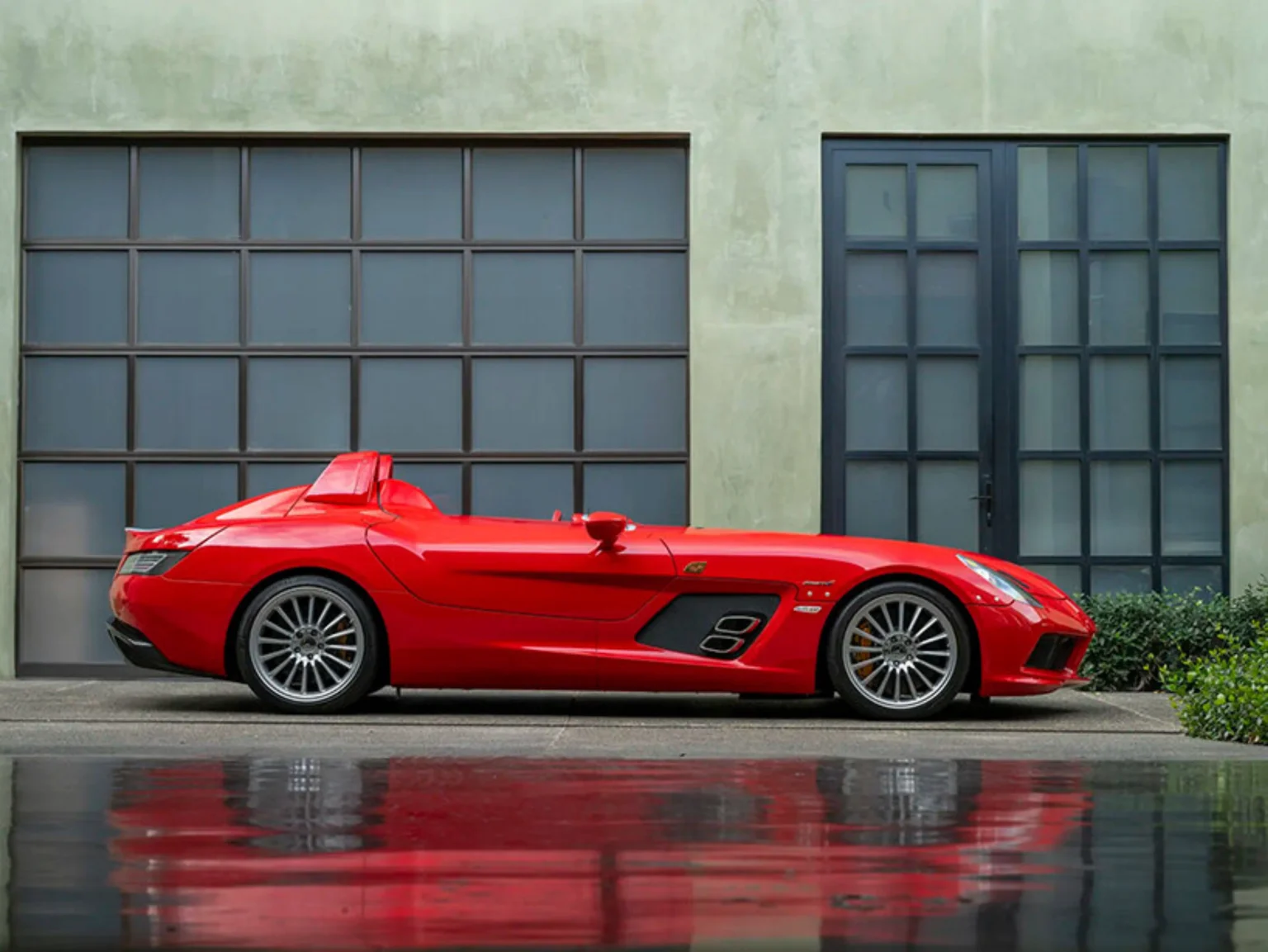


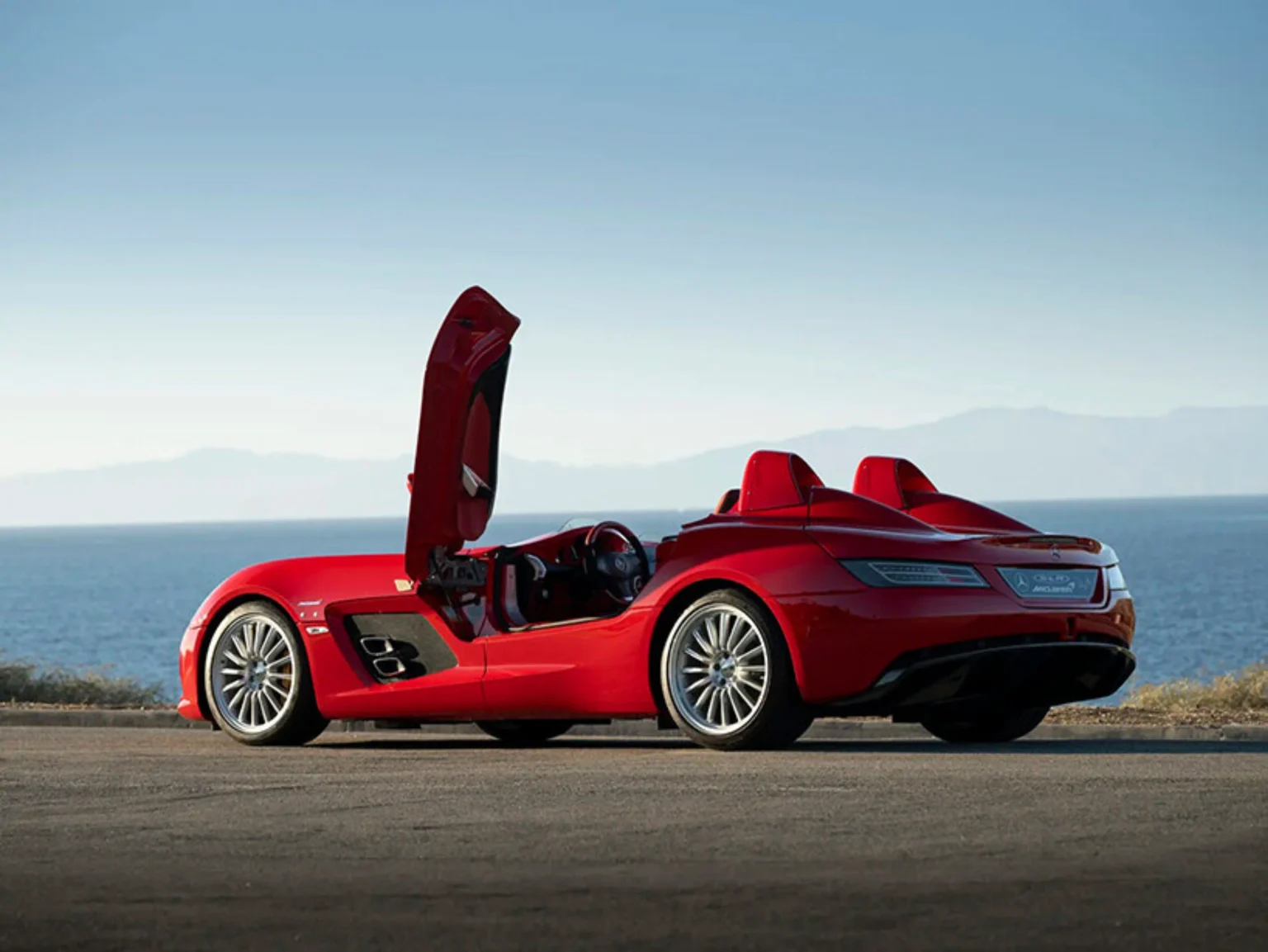
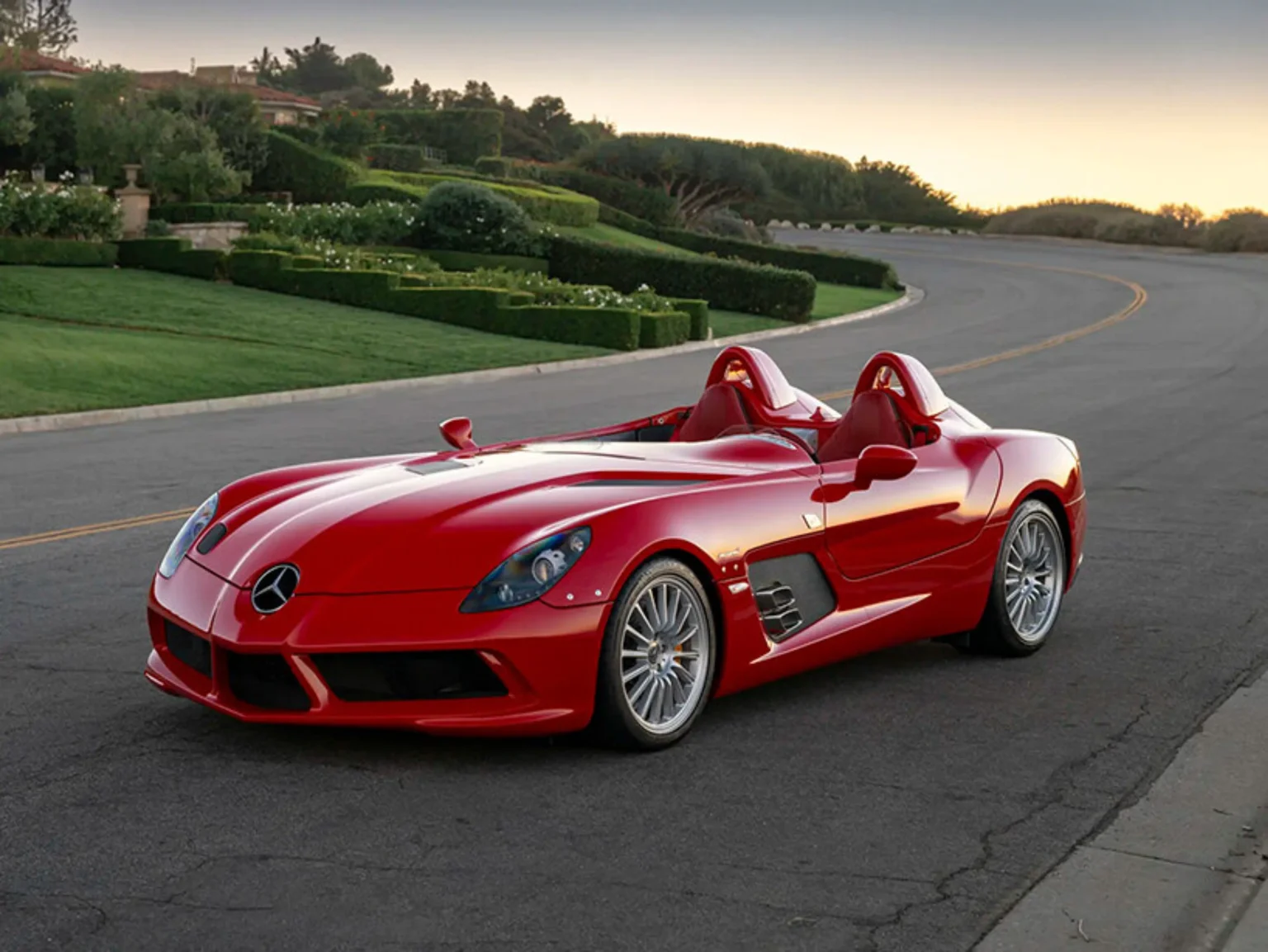






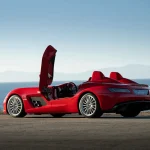
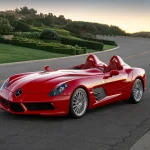

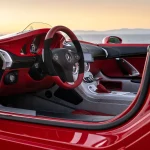
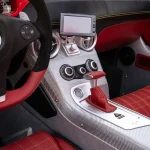
Some cars protect the driver from the world. Others invite the world in. The Mercedes-Benz SLR McLaren Stirling Moss does the latter with radical clarity. Built in a limited run of just 75 examples between June and December 2009, this open speedster has no roof, no side windows, and no conventional windshield. Only two small wind deflectors stand between the occupants and the air rushing past at more than 200 miles per hour. Now the final car produced, finished in unique Fire Opal Red and showing just 32.9 miles, is heading to RM Sotheby’s with an estimate exceeding $6 million.
It is less a conventional supercar than a deliberate act of reduction, a modern homage to the raw racing machines of the 1950s.
Homage to a Racing Legend
The car takes its name and spirit from Sir Stirling Moss’s legendary victory in the 1955 Mille Miglia. Driving a Mercedes-Benz 300 SLR with navigator Denis Jenkinson, Moss completed the thousand-mile Italian road race at an average speed that still seems improbable. The original 300 SLR was an open, purposeful machine, its long hood and exposed cockpit expressing pure function.
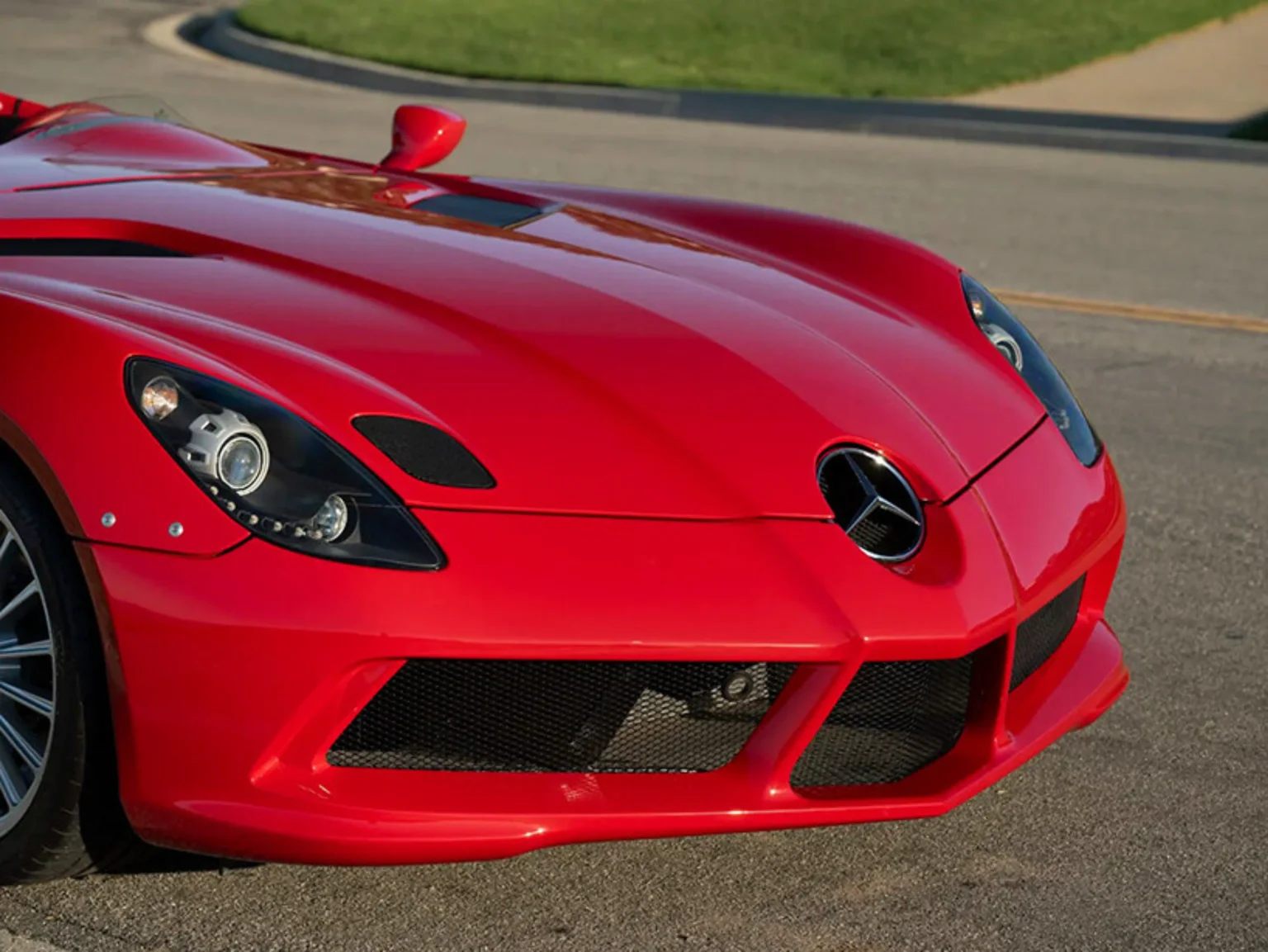
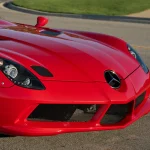
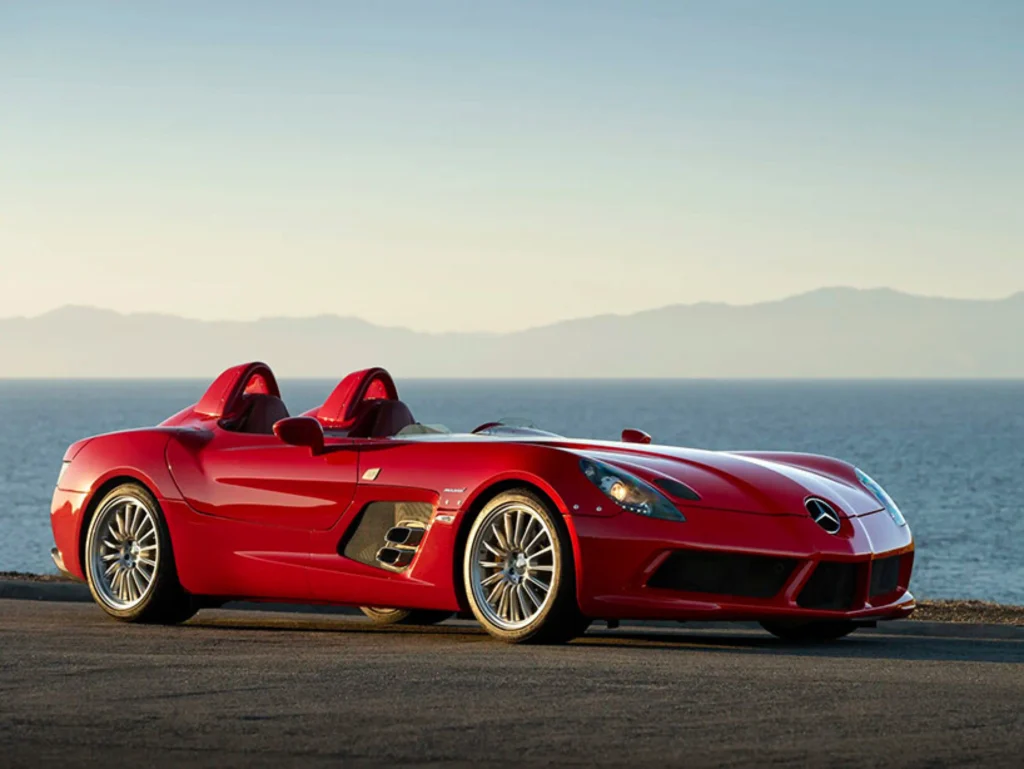
When Mercedes-Benz and McLaren decided to close the SLR chapter, they chose not to build another polished grand tourer. Instead, they created a contemporary interpretation of that 1950s ideal. Designer Yoon Il-hun shaped a body with an exceptionally long hood, low silhouette, and twin aerodynamic humps rising behind the seats. The result is a car that looks both futuristic and historically grounded.
Architecture of Absence
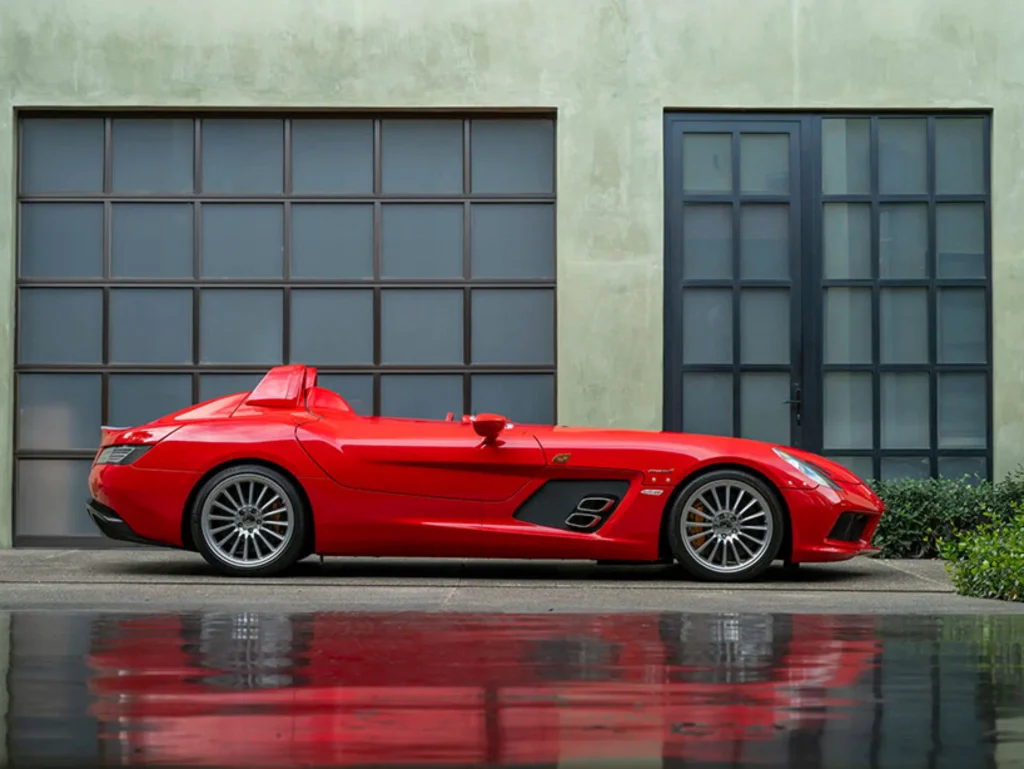
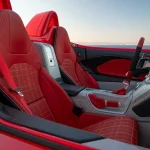
Removing the windshield and roof was not a styling flourish. It was a design decision that reshaped every choice that followed. Without a windscreen, the proportions shift dramatically. The hood appears even longer. The cockpit becomes a pure volume defined by the twin headrest fairings and the low body sides. Airflow is managed by carefully sculpted deflectors and the overall form rather than by glass and seals.
The experience of driving such a car is correspondingly intense. At speed, the wind becomes a physical presence. Visibility is unobstructed. The sense of velocity is heightened because nothing filters the environment. This is not comfort-oriented open-top motoring. It is closer to the sensation of early racing, translated into a carbon-fiber chassis with modern power and brakes.
Performance Without Compromise
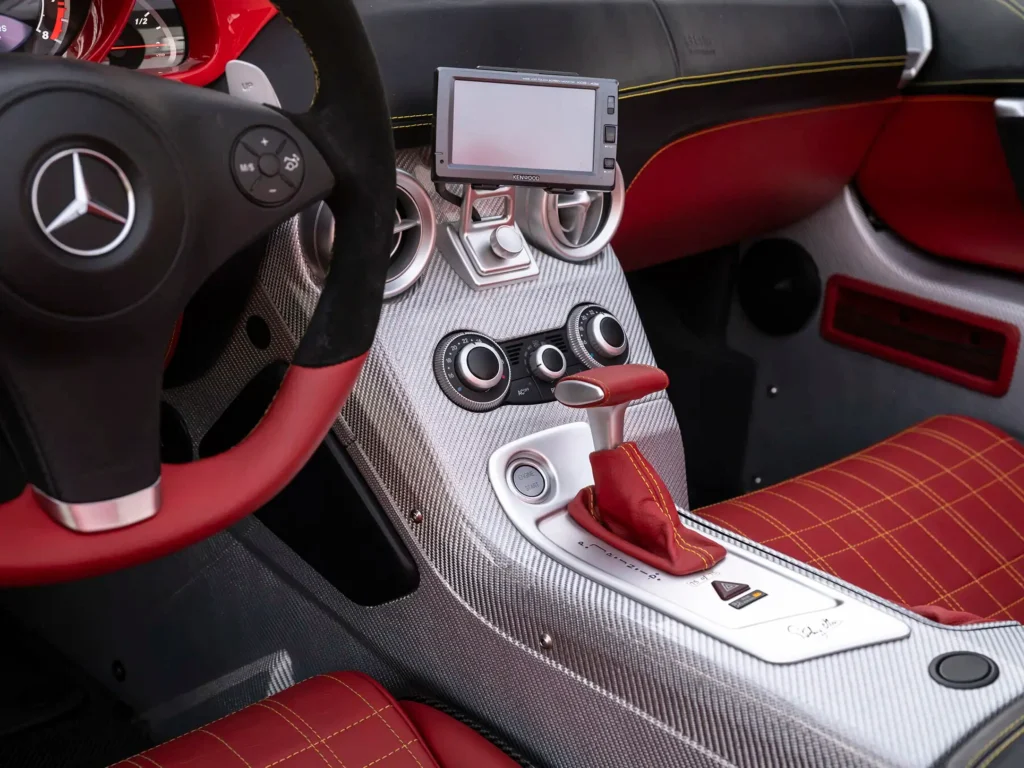
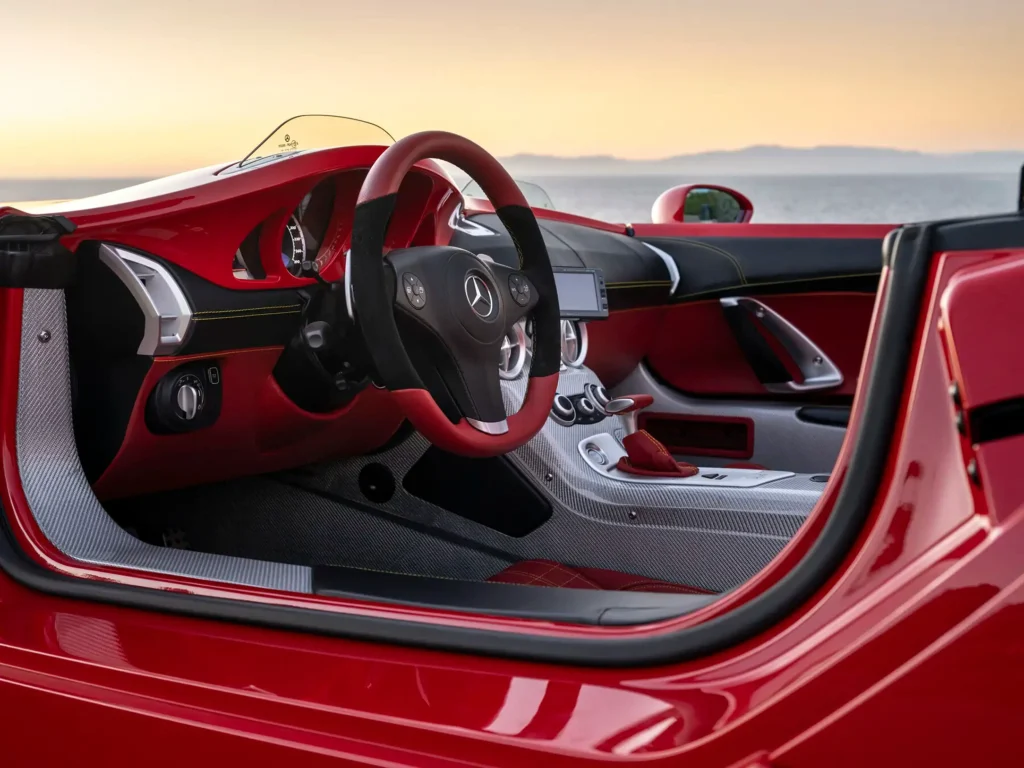
Under the long hood sits a supercharged 5.4-liter V8 producing 650 horsepower. The car accelerates from standstill to 62 mph in under 3.5 seconds and is claimed to reach 217 mph. These figures are impressive in any context. In a vehicle with almost no weather protection, they take on a different character. The engineering prioritizes structural rigidity, aerodynamic stability, and the ability to manage enormous forces without the usual cabin enclosure.
The Stirling Moss was offered exclusively to existing SLR owners, a decision that recognized both the car’s extreme nature and the commitment required to live with it. Production ended in December 2009, making the series one of the most exclusive chapters in the Mercedes-McLaren partnership.
The Final Example
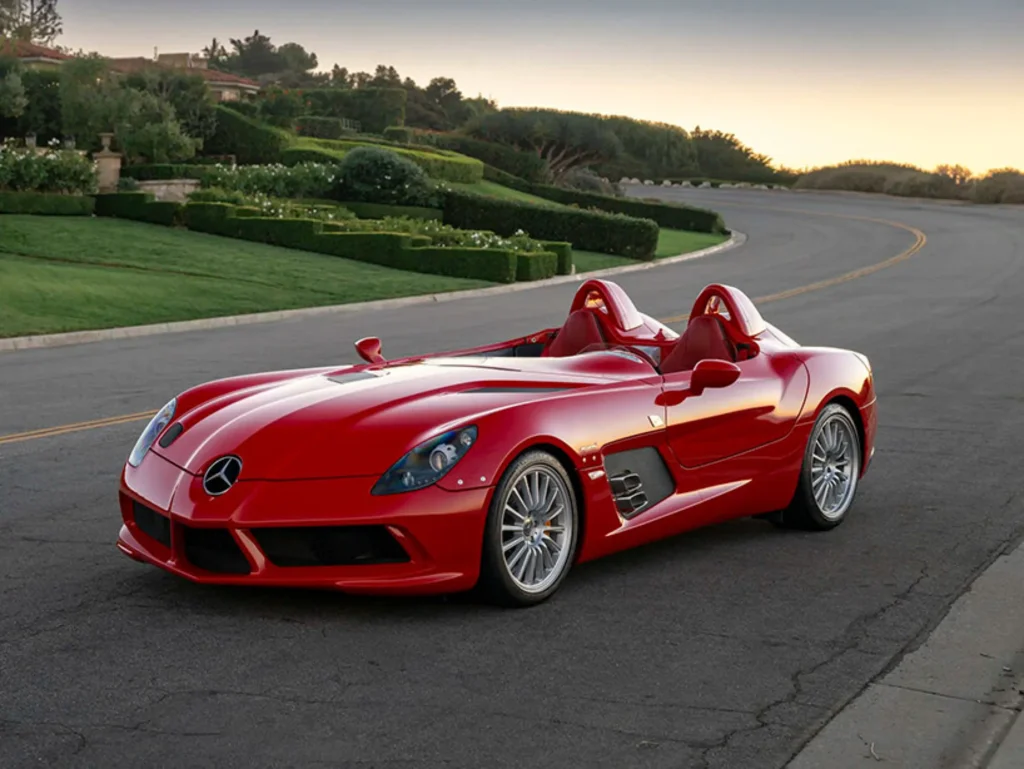
The car now offered by RM Sotheby’s is the last of the 75. Commissioned by the Royal Family of Kuwait and delivered new to Switzerland, it spent most of its life in careful storage. It has covered only 32.9 miles. Finished in a one-off Fire Opal Red, it stands apart from the more common silver and darker examples. After recent service work and federalization for U.S. road use under the Show or Display exemption, it remains in essentially new condition.
Its appearance at auction underscores the lasting appeal of radical design decisions. In an era of increasingly complex, electronically mediated performance cars, the Stirling Moss remains a statement of pure intent: remove everything that isn’t essential to the sensation of speed.
Design as Statement
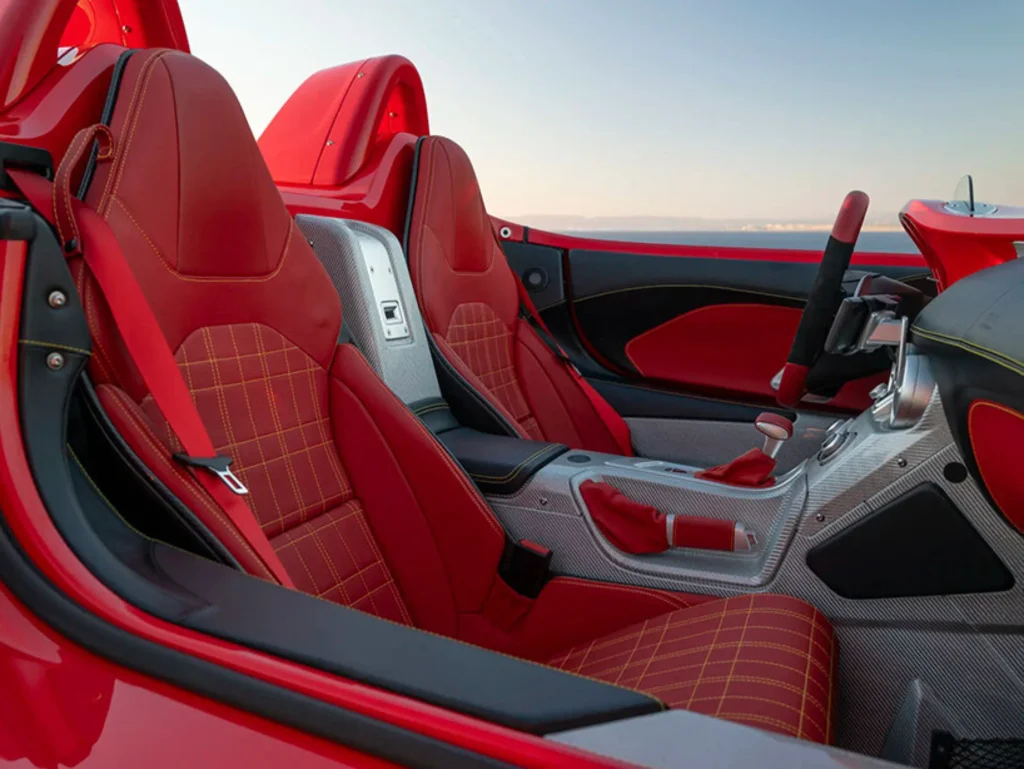
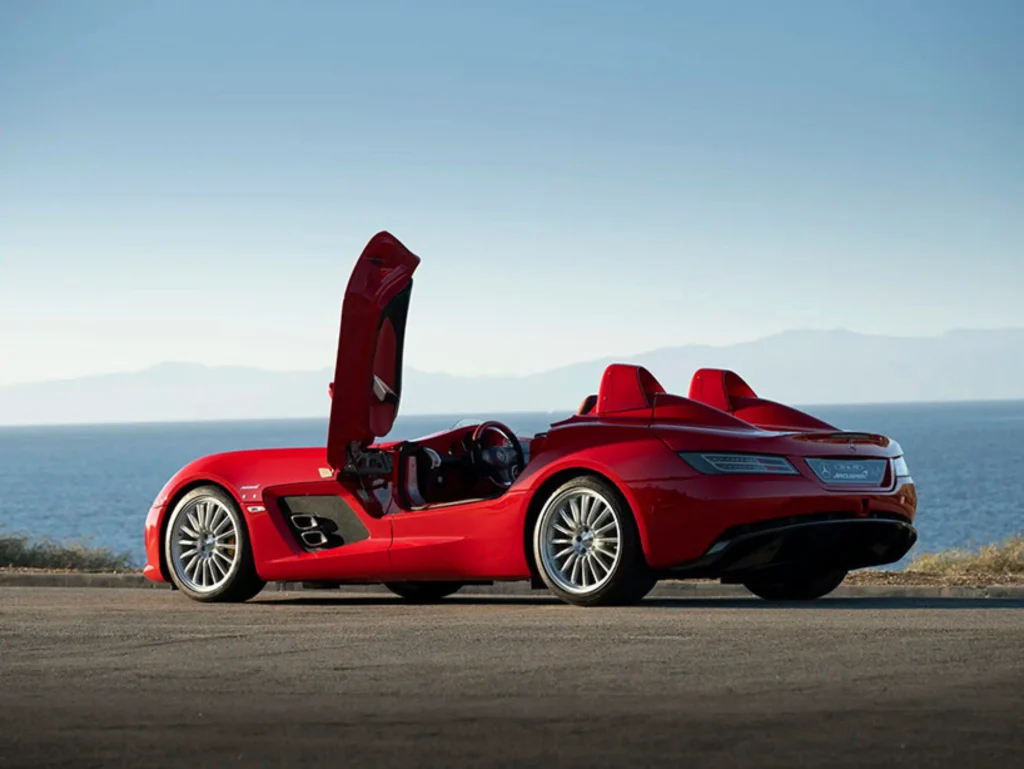
The Mercedes-Benz SLR McLaren Stirling Moss occupies a distinctive place in automotive design. It is neither a pure racing car nor a conventional roadster. It is a limited series that treated the absence of a windshield as a generative constraint rather than a loss. The resulting form is dramatic, purposeful, and still startling more than fifteen years after its introduction.
As this final example prepares to change hands, it reminds us that some of the most compelling design objects are defined as much by what they refuse as by what they include. In the case of the Stirling Moss, that refusal produced one of the most uncompromising and memorable supercars of its generation.