





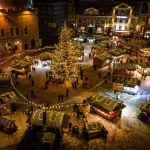
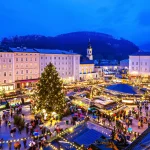
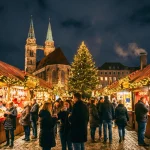
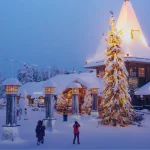
Christmas is a public holiday in well over 100 countries, and for more than two billion Christians it marks the birth of Jesus Christ. Over the centuries, the celebration has absorbed local customs, winter solstice traditions and commercial rituals. Today, people of many faiths take part in some form, through gift-giving, shared meals, music and lights.
The season also drives a large share of annual travel. Schools close, offices slow down, and families gather, so December becomes one of the busiest travel months. Many travelers go home, and more choose a destination just for the holidays. Cold-weather cities look their best in December, historic squares host markets for a few weeks only, and religious and craft traditions that are easy to miss in other months are on display.
For architects and planners, Christmas offers a useful case study. Temporary stalls, lighting, ice rinks and trees change how a public square is used and how people move through it. The 15 European cities to visit for Christmas below are not ranked. Each was selected for its built environment, its documented Christmas traditions, and the quality of its public spaces in December.
1. Strasbourg, France
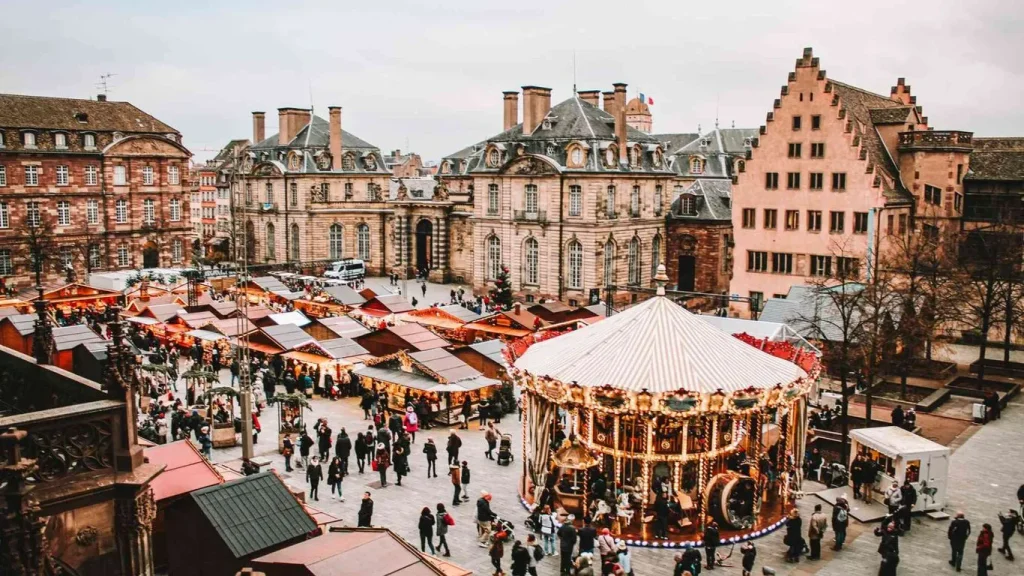
Strasbourg markets itself as the Capital of Christmas, and the claim has a history behind it. Its Christkindelsmärik dates to 1570, which makes it one of the oldest markets in Europe. The city sits in Alsace, where the Protestant Reformation shaped local customs. Reformers promoted the Christkind, or Christ child, as the gift-bearer in place of Saint Nicholas, and a decorated fir tree is recorded in Strasbourg as early as 1605.
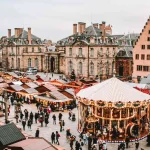
The market spreads over a dozen squares inside the Grande Île, a UNESCO World Heritage site. Start at Place de la Cathédrale, where stalls stand below the Gothic spire of Notre-Dame, which stands 142 meters tall and was the tallest building in the world from 1647 to 1874. Place Kléber carries the city’s large central tree, and the canals and half-timbered houses of Petite France are best seen at dusk when the lights come on.
2. Vienna, Austria
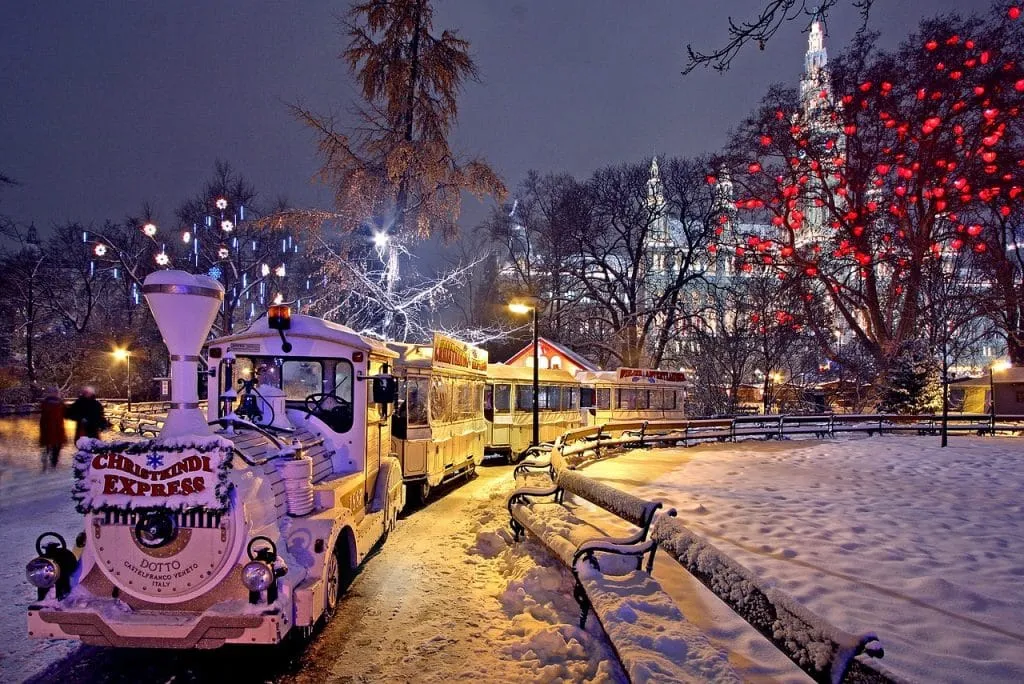
Vienna’s December markets are tied to the city’s Catholic and imperial past, and records of winter markets in the city go back to the late Middle Ages. The setting is what makes Vienna different from other entries on this list. Several markets use buildings of the Ringstrasse era as a backdrop, and visitors can compare their scale and detailing in a single evening.
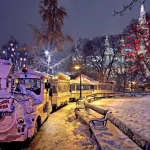
The market at Rathausplatz sits in front of the neo-Gothic City Hall by Friedrich von Schmidt, completed in 1883, with illuminated trees across the park. Schönbrunn Palace hosts a market in its baroque forecourt, and the Belvedere offers another among the palace gardens. For a smaller scale, walk the Biedermeier lanes of Spittelberg, where craft stalls fill the courtyards. On Sundays, the Hofburg Chapel holds Mass with the Vienna Boys’ Choir.
3. Prague, Czech Republic
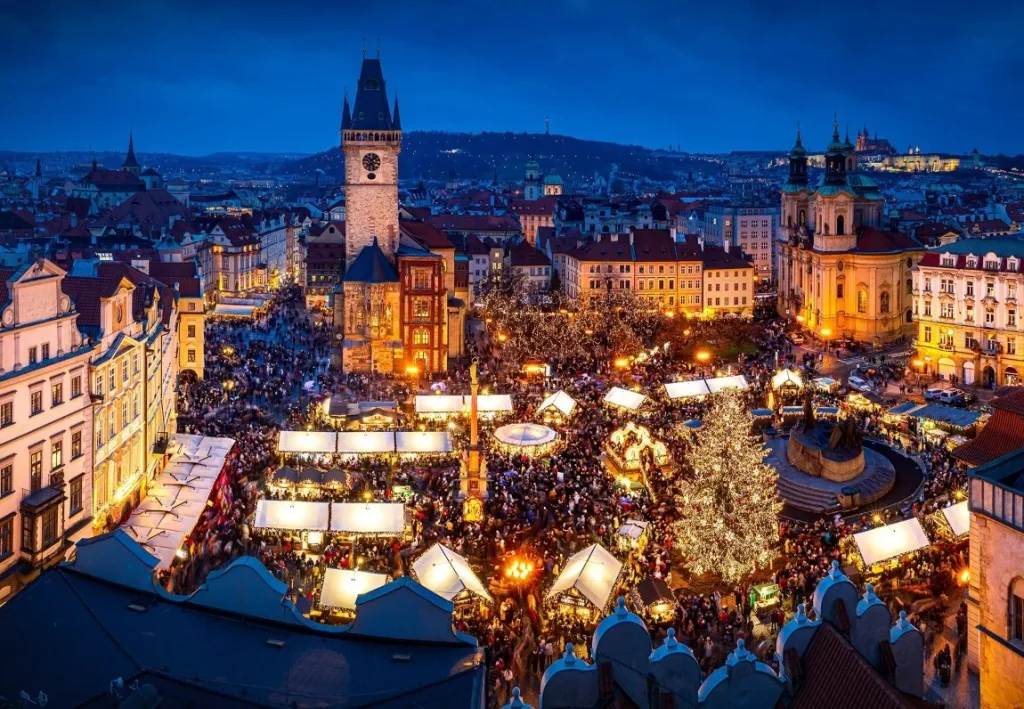
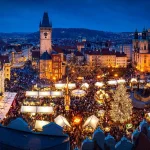
Prague works for Christmas because its Gothic, Renaissance, and Baroque layers sit within walking distance of each other. The Old Town Square market is the main draw, with stalls arranged below the twin towers of the Týn Church and beside the Astronomical Clock, which dates to 1410.
Czech traditions add a distinct local layer. Saint Nicholas Day on December 5 is marked in the streets by people dressed as Mikuláš, an angel, and a devil. On Christmas Eve, many families serve fried carp, and carp are sold from tubs on the street in the days before. After the Old Town, cross Charles Bridge to Malostranské náměstí in the Lesser Town, which has a quieter market, and continue uphill to Prague Castle. St. Vitus Cathedral is among the best examples of Gothic architecture in Central Europe.
4. Colmar, France
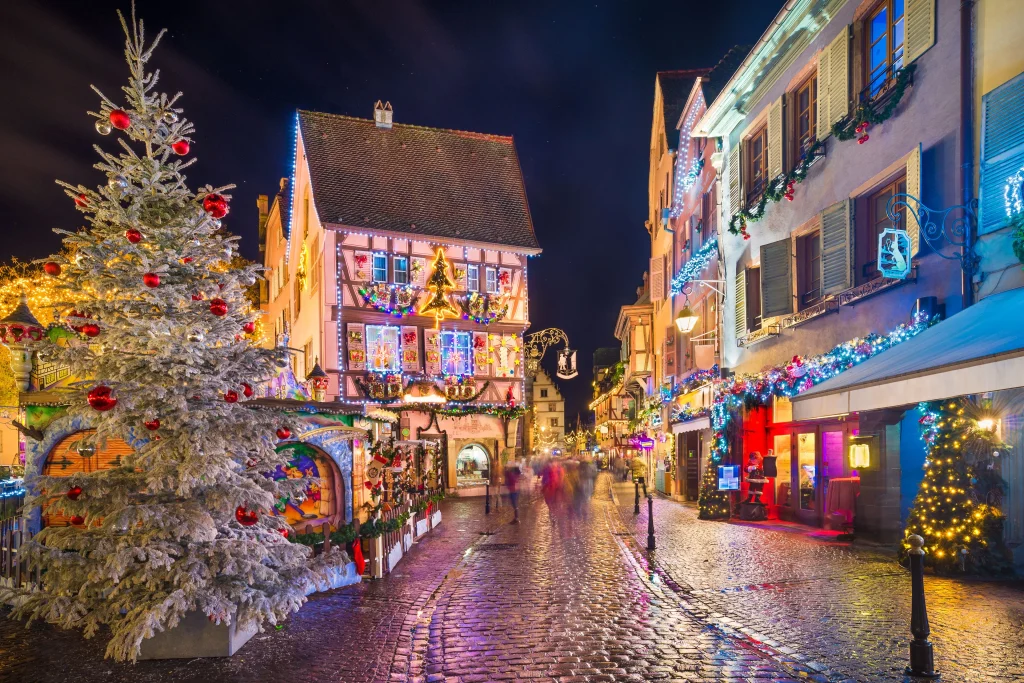
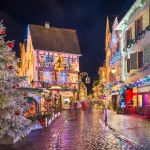
Colmar is small, with a population of about 70,000, and its scale is the reason it ranks high. The old town is compact enough to cross on foot in minutes, and almost every street is lined with Renaissance half-timbered houses painted in pastel tones. Like Strasbourg, it belongs to Alsace and shares the region’s Protestant-influenced Christmas customs.
The city runs several small markets rather than one large one, each with its own theme. The Koïfhus, the Old Customs House from 1480, anchors one of them. Nearby are the Maison Pfister from 1537 and the Maison des Têtes from 1609, both with richly decorated facades that residents dress with lights and garlands. The Petite Venise district, with its canals and timber balconies, is the best place for photographs. Colmar was also the birthplace of Frédéric Auguste Bartholdi, the sculptor of the Statue of Liberty.
5. Copenhagen, Denmark
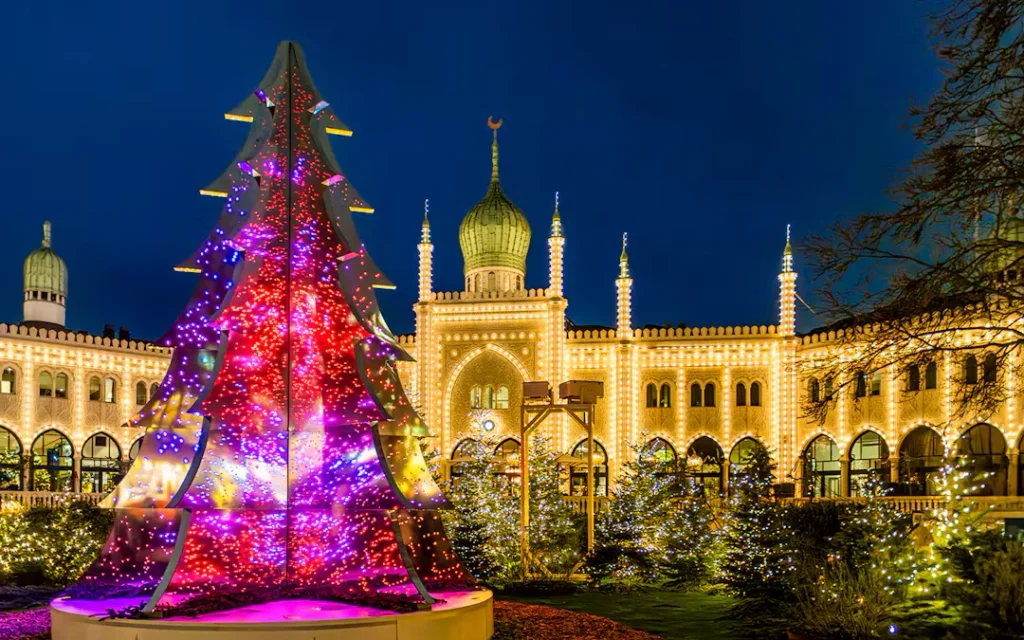
Copenhagen approaches Christmas through the Danish idea of hygge, which means warmth, simplicity, and comfort. The country is Lutheran, and the main family celebration takes place on Christmas Eve, with a meal, a tree lit with candles or lights, and a dance around the tree.
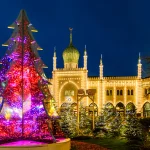
Tivoli Gardens, opened in 1843, runs a winter season with lit pavilions, a large lake display, and rides. The market at Nyhavn sets red stalls along a canal dug in the 1670s and lined with colorful 17th and 18th-century townhouses. For architects, the city adds contemporary buildings to the festive route. The Black Diamond extension of the Royal Library and the BLOX building, which houses the Danish Architecture Center, are both on the waterfront and worth a visit during the same trip. Strøget and Højbro Plads complete a good walking circuit.
6. Budapest, Hungary
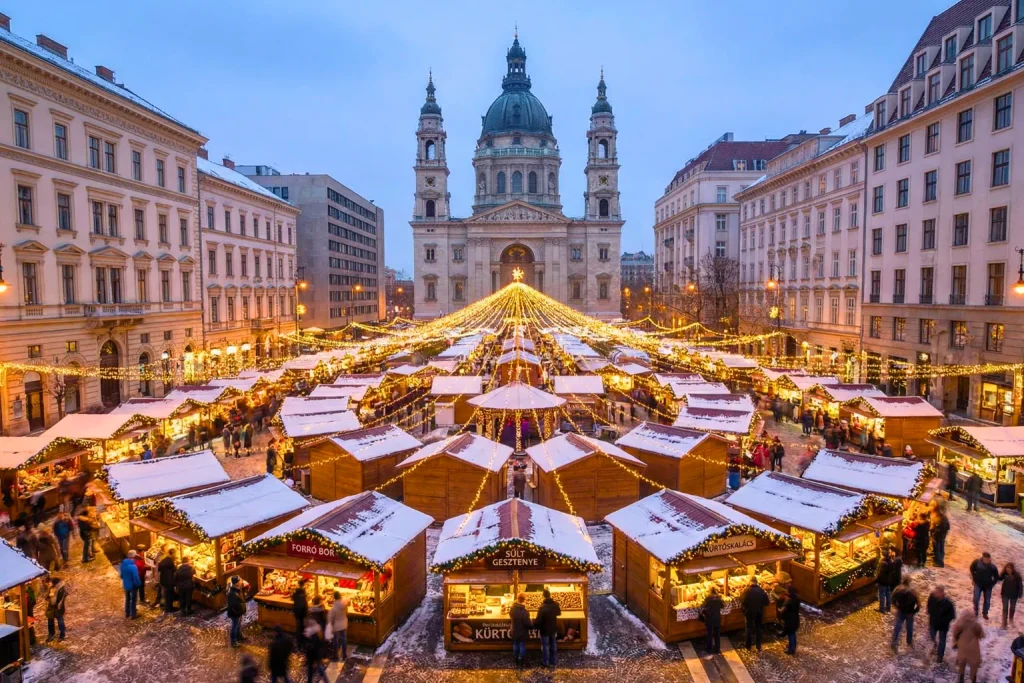
Budapest combines a Catholic tradition with Danube views that few cities can match. Hungarian children receive small gifts on December 6, Saint Nicholas Day, and the main family celebration follows on Christmas Eve.
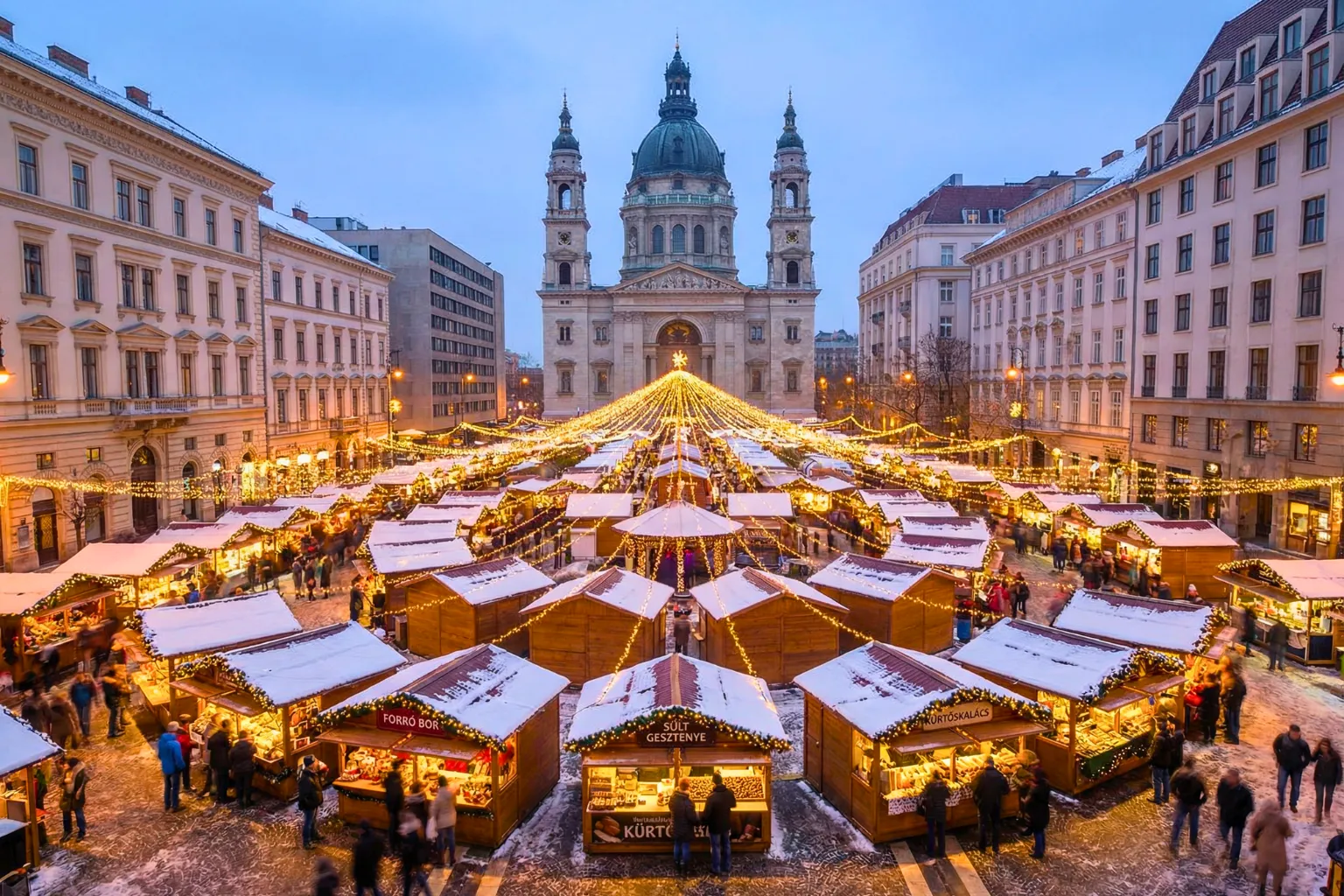
The market in front of St. Stephen’s Basilica is the most visited. The basilica was completed in 1905 in a neoclassical style, and its facade is used for a nightly light projection during the season. A second market occupies Vörösmarty tér, where you can try kürtőskalács, a sweet chimney cake baked over coals. In City Park, an ice rink opens in front of Vajdahunyad Castle, a complex that mixes several historical architectural styles. Finish with a walk to Fisherman’s Bastion and Buda Castle, then look across the river to the lit Parliament building.
7. Rothenburg ob der Tauber, Germany
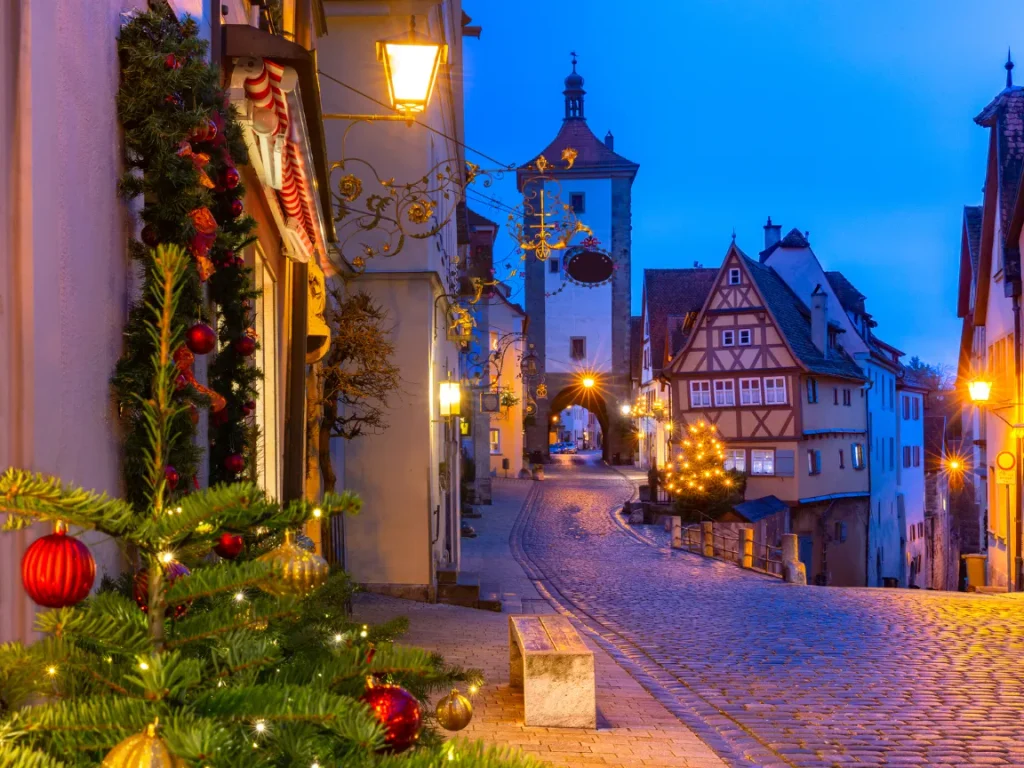
Rothenburg is a walled medieval town in Bavaria that has kept much of its historic fabric. It is the closest match to a storybook Christmas setting in this list. The town is Protestant, and its Reiterlesmarkt, held in the Marktplatz in front of the Rathaus, is among the better-known small markets in Germany.
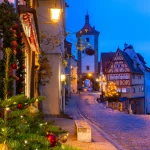
The Käthe Wohlfahrt Christmas Village and the German Christmas Museum make the town a year-round Christmas destination. Outside the market, the Plönlein, a small corner where two gates and half-timbered houses meet, is the most photographed spot. St. Jakob’s Church holds the Holy Blood Altar, carved by Tilman Riemenschneider between 1500 and 1505. Planners will find the town’s history useful. Rothenburg was damaged by bombing in March 1945, and much of its walled core was rebuilt afterward with the help of donations, following the historic street pattern.
8. London, England
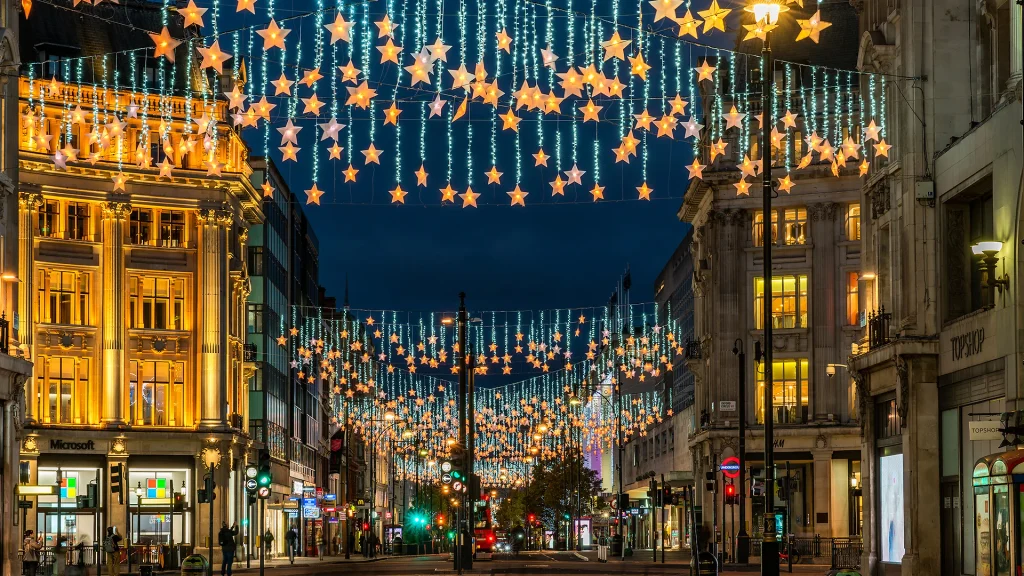
London’s Christmas is less about one historic market and more about the city as a stage. Many modern Christmas customs in the English-speaking world took shape in Victorian Britain. The first commercial Christmas card was produced in London in 1843; Charles Dickens published A Christmas Carol in the same year, and an engraving of Queen Victoria, Prince Albert and their children around a decorated tree, published in the Illustrated London News in December 1848, helped spread the Christmas tree beyond the court, where Queen Charlotte had introduced it in 1800.
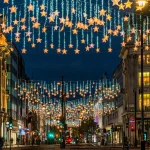
The lights on Regent Street, a tradition since the 1950s, and Oxford Street are the best-known displays. A large Norway spruce stands in Trafalgar Square each year, a gift from Norway since 1947 as thanks for British support in the Second World War. Winter Wonderland fills Hyde Park, while the Southbank Center Winter Market sits beside the Brutalist architecture of the Hayward Gallery and Queen Elizabeth Hall. Covent Garden’s market hall, designed by Charles Fowler in 1830, is covered in hanging decorations. Carol services at St Paul’s Cathedral are a quieter option.
9. Tallinn, Estonia
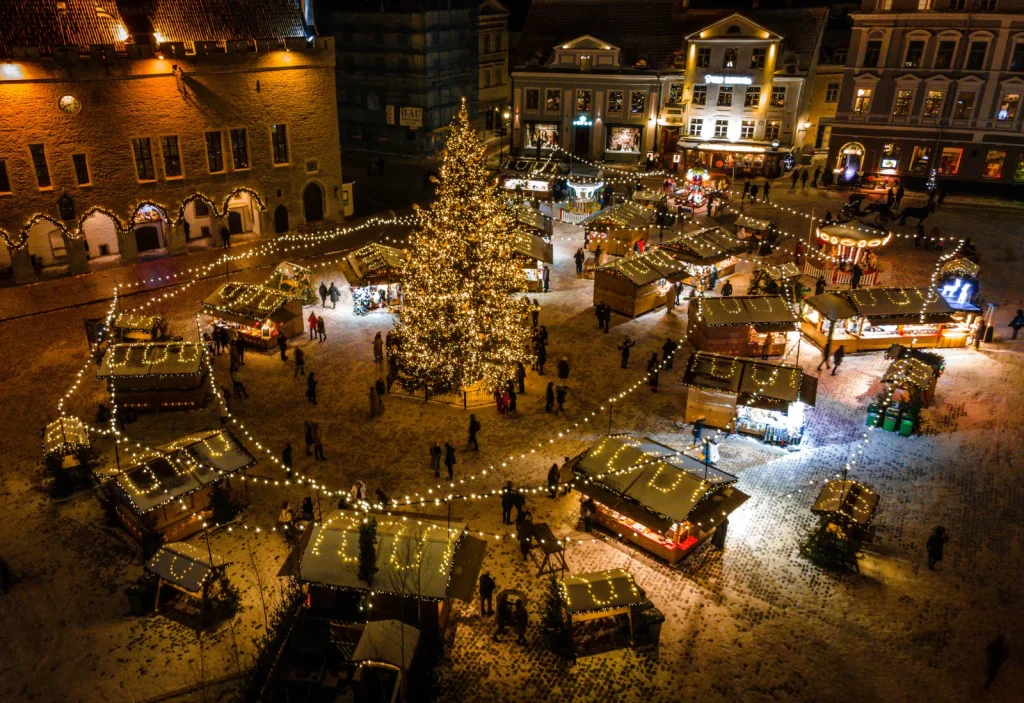
Tallinn makes one of the more specific claims on this list. The city says that a public Christmas tree was set up on its Town Hall Square in 1441, and local records connect it to the Brotherhood of Blackheads, a guild of unmarried merchants. Several European cities dispute who was first, but Tallinn’s account is among the best documented.
The Old Town is a UNESCO World Heritage site that preserves much of its Hanseatic street plan and medieval walls. The market sits in front of the Gothic Town Hall, which dates to the 14th and 15th centuries. From there, climb Toompea Hill to see the onion domes of Alexander Nevsky Cathedral, completed in 1900, and the Kohtuotsa viewing platform over the red roofs. The spire of St. Olaf’s Church and the Viru Gate give you further vantage points for evening photographs.
10. Salzburg, Austria
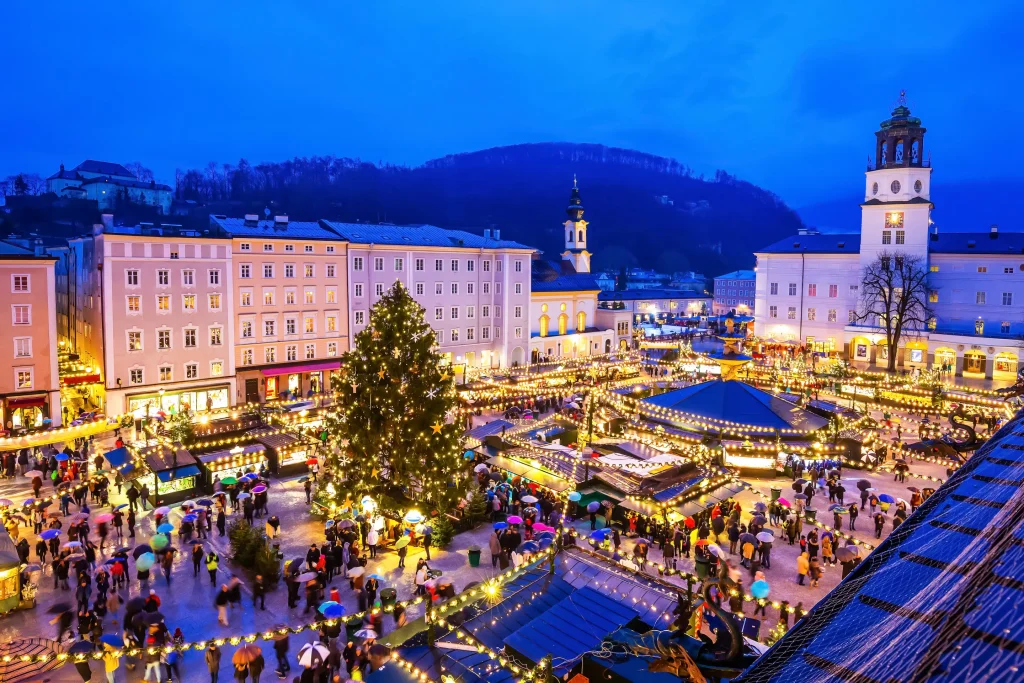
Salzburg’s place in Christmas history is musical. The carol Silent Night was first performed on Christmas Eve in 1818 in Oberndorf, a village just north of the city. The text was written by the priest Joseph Mohr, and the melody was composed by Franz Xaver Gruber, a local schoolteacher and organist. A small chapel now marks the site.
The city’s baroque character comes from its rule by Prince-Archbishops, who rebuilt it in the 17th century and earned it the nickname Rome of the North. The Christkindlmarkt at Domplatz and Residenzplatz stands in front of Salzburg Cathedral, consecrated in 1628, and a second market runs inside Hohensalzburg Fortress, one of the largest medieval castles in Europe that is fully preserved. Hellbrunn Palace, just outside the center, hosts its own Advent market in its courtyard. Advent concerts in churches and halls are a major part of the program.
11. Nuremberg, Germany
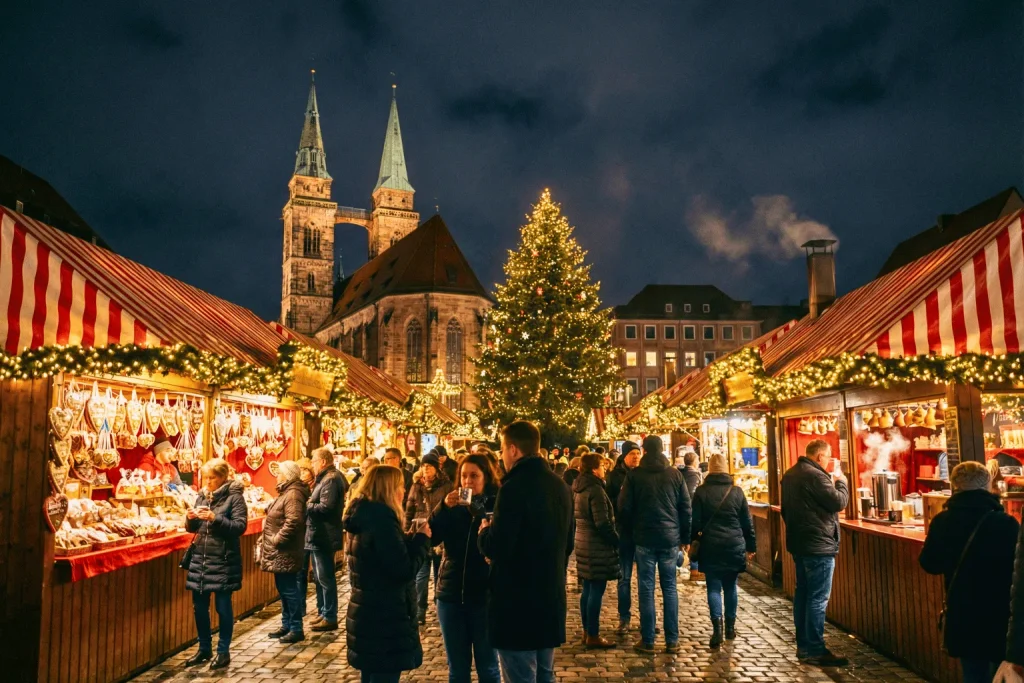
Nuremberg’s Christkindlesmarkt on the Hauptmarkt is probably the most famous in Germany, and its opening ceremony is unusual. A young person dressed as the Christkind recites a prologue from the balcony of the Frauenkirche, a Gothic church from the 14th century, before a crowd. The market’s records go back to the 17th century, and the custom is likely older. The city adopted the Reformation in 1525, which connects to the Christkind figure used here.
Local specialties include Nuremberg gingerbread, known as Lebkuchen, and Zwetschgenmännle, small figures made of dried prunes. The children’s market at Hans-Sachs-Platz and the Market of the Twin Cities, with stalls from partner cities, are good side visits. The Kaiserburg overlooks the old town from the north. Planners should note that the old town was largely destroyed in an air raid in January 1945 and rebuilt in the following decades, a long reconstruction that continues to inform debates on heritage and replication.
12. Rovaniemi, Finland
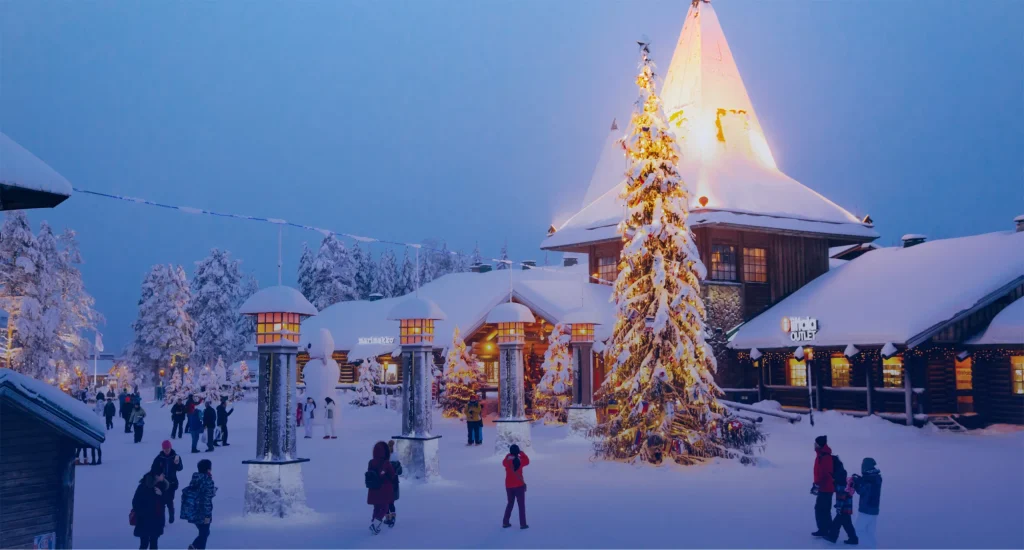
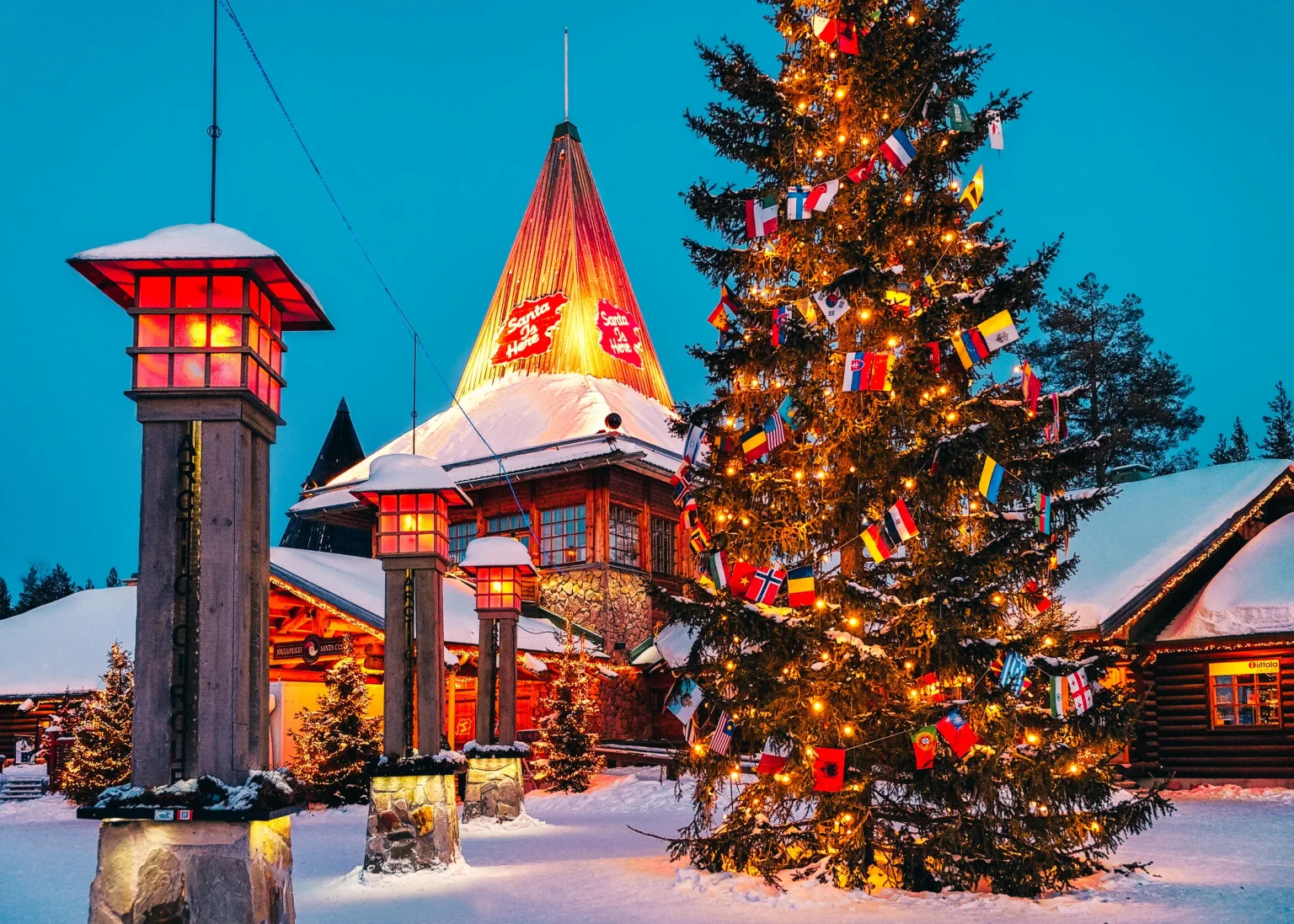
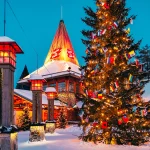
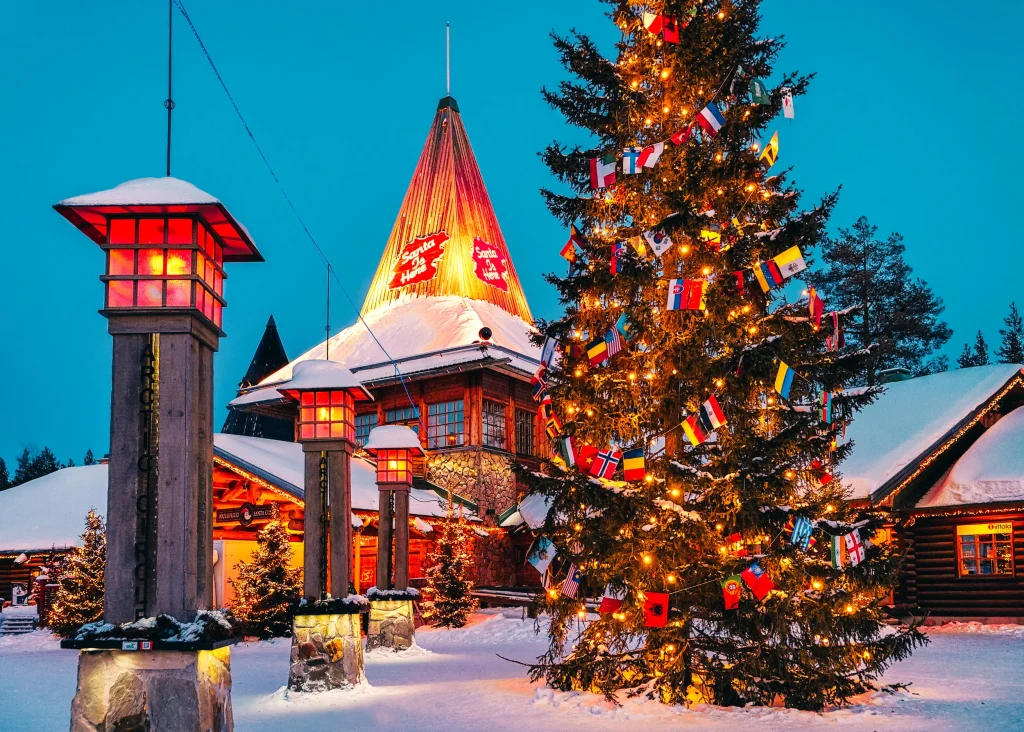
Rovaniemi differs from the rest of this list because its appeal is not a historic old town. The city sits on the Arctic Circle and is the official hometown of Santa Claus in Finland. The figure draws on Saint Nicholas of Myra, a fourth-century bishop known for secret gifts, and on the Finnish Joulupukki, a gift-giver who visits homes on Christmas Eve. The Santa Claus Village opened to visitors after a cabin was built at the Arctic Circle for a visit by Eleanor Roosevelt in 1950.
The city has a strong architectural story. German forces destroyed most of Rovaniemi in 1944 during the Lapland War, and Alvar Aalto prepared the reconstruction plan, with a street layout often compared to reindeer antlers. Aalto’s Lappia House and the city library remain in use. The Arktikum museum, by the Danish firm Birch-Bonderup and Thorup-Waade, opened in 1992, extends in a long glazed corridor toward the Ounasjoki river. Visitors can also see the northern lights, reindeer and husky farms in the area.
13. Munich, Germany
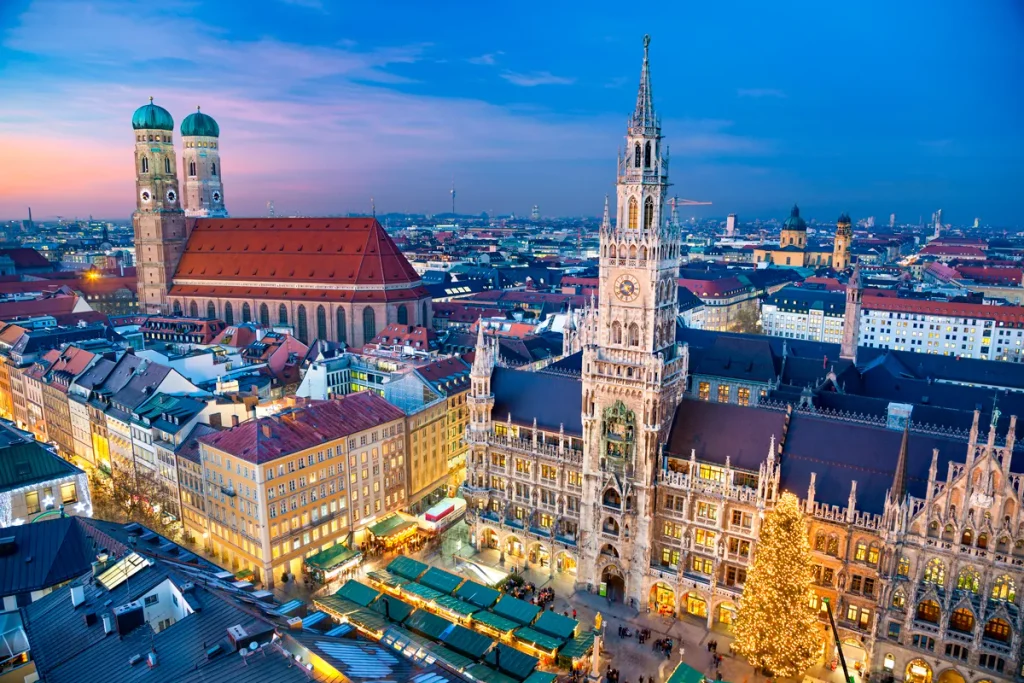
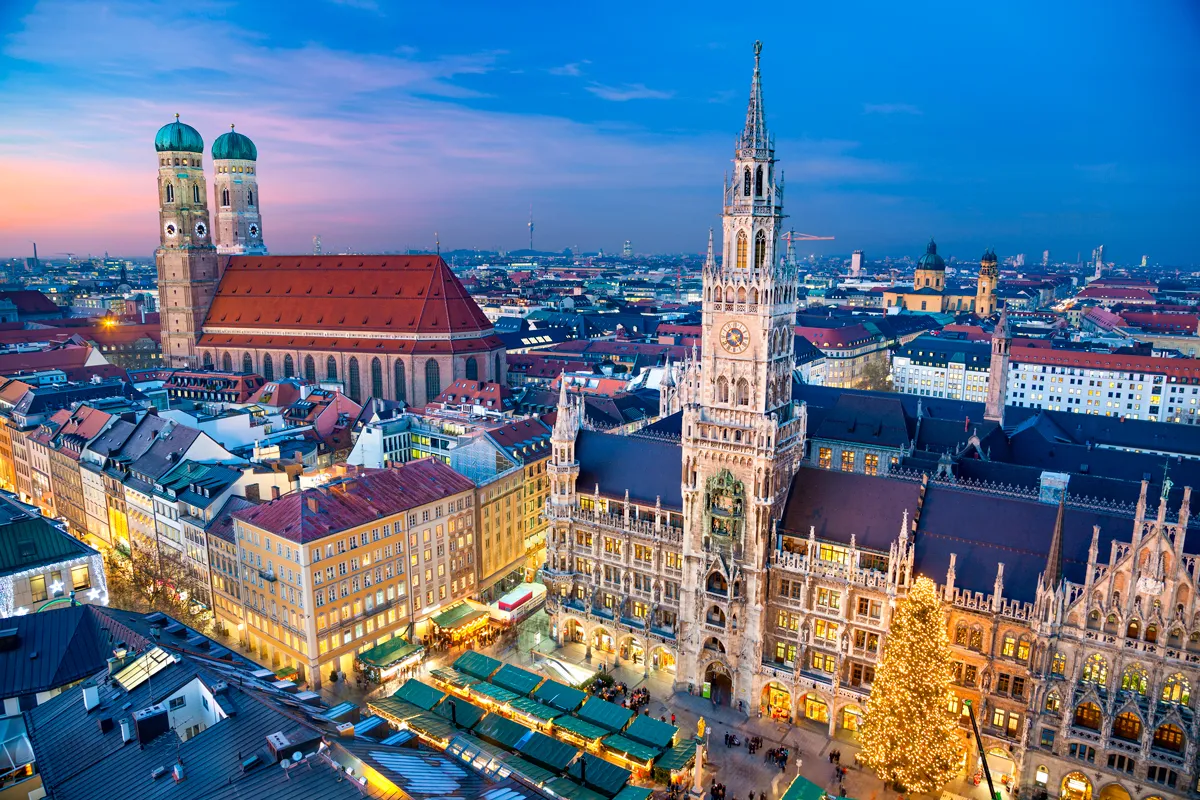
Munich represents Catholic Bavaria, where the Christmas season includes Advent wreaths, nativity scenes, and a strong link to Saint Nicholas Day. The market at Marienplatz centers on the Neues Rathaus, a neo-Gothic building by Georg von Hauberrisser, built between 1867 and 1909. Records of a Nikolaus market in the city date back to the 14th century.
Munich has the best nativity tradition on this list. The Kripperlmarkt, near Marienplatz, sells hand-carved nativity figures and scenery. The Residenz market is set in a courtyard of the former royal palace, and a medieval-themed market is held at Wittelsbacherplatz. In the English Garden, the market at the Chinese Tower is popular for its open setting. The Tollwood Winter Festival on the Theresienwiese fairgrounds adds a market with a focus on crafts and organic food, along with performances. Architects can add the Olympic Park, designed with Frei Otto‘s tensile roof for the 1972 Games, to the trip.
14. Zagreb, Croatia
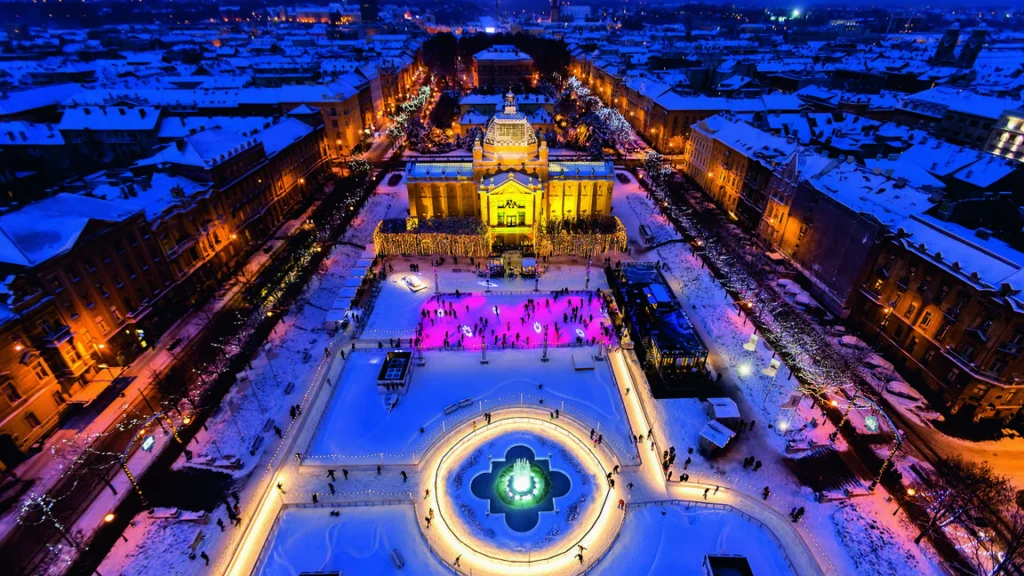
Zagreb earned its place through a deliberate municipal program. Advent in Zagreb began in the early 2010s and won the European Best Destinations online vote for best Christmas market in Europe three years in a row, for the 2016, 2017 and 2018 seasons. The city is predominantly Catholic, and Saint Nicholas Day on December 6 is an important date for children.
The program uses the city’s Austro-Hungarian urban structure. Ban Jelačić Square, the main plaza, holds a large tree and a stage, while Zrinjevac Park and King Tomislav Square host stalls and an ice park. These spaces belong to the Green Horseshoe, a sequence of parks and squares planned in the late 19th century by Milan Lenuci. In the Upper Town, visit the tiled roof of St. Mark’s Church, the Lotrščak Tower and the neo-Gothic Cathedral of the Assumption, designed in its present form by Hermann Bollé. The Strossmayer Promenade offers a view over the lower town.
15. Innsbruck, Austria
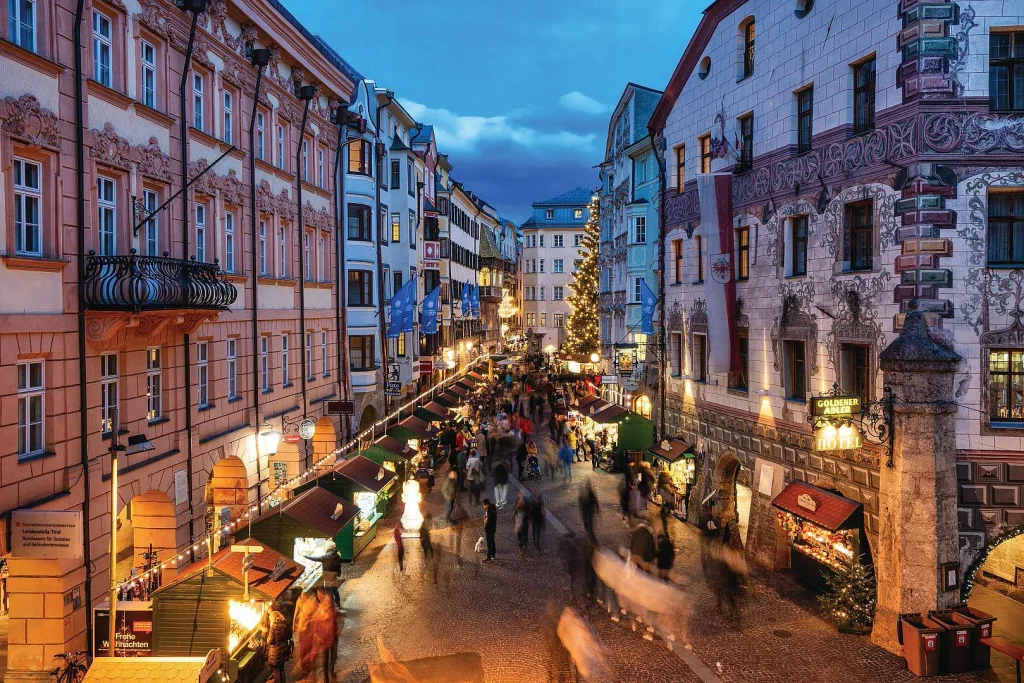
Innsbruck pairs an Alpine setting with a compact historic center. Tyrol is strongly Catholic, and the season includes Krampus processions around December 5, in which costumed figures walk the streets as companions to Saint Nicholas. The main market sits in the Old Town, beside the Golden Roof, a balcony covered in gilded copper tiles built around 1500 for Emperor Maximilian I.
Other markets are set along Maria-Theresien-Strasse, with the St. Anne’s Column and the Nordkette mountains in the background. The Hofkirche, with the monumental cenotaph of Maximilian I, is a short walk away. Innsbruck is also a strong choice for architects interested in contemporary work. ZHA designed both the Bergisel ski jump, completed in 2002, and the Hungerburg funicular stations, finished in 2007, and each can be visited in the same trip.
Seen together, these cities show that a good Christmas district depends on a few repeatable design decisions. Several cities also offer lessons on reconstruction and heritage. Rothenburg, Nuremberg and Rovaniemi each rebuilt after wartime destruction, with different approaches to replication and reinvention. Zagreb and Copenhagen show how a city can organize a seasonal program around its existing parks, canals and squares without major construction. Strasbourg, Colmar and Tallinn show how small cities can manage large crowds by spreading activity across many sites.