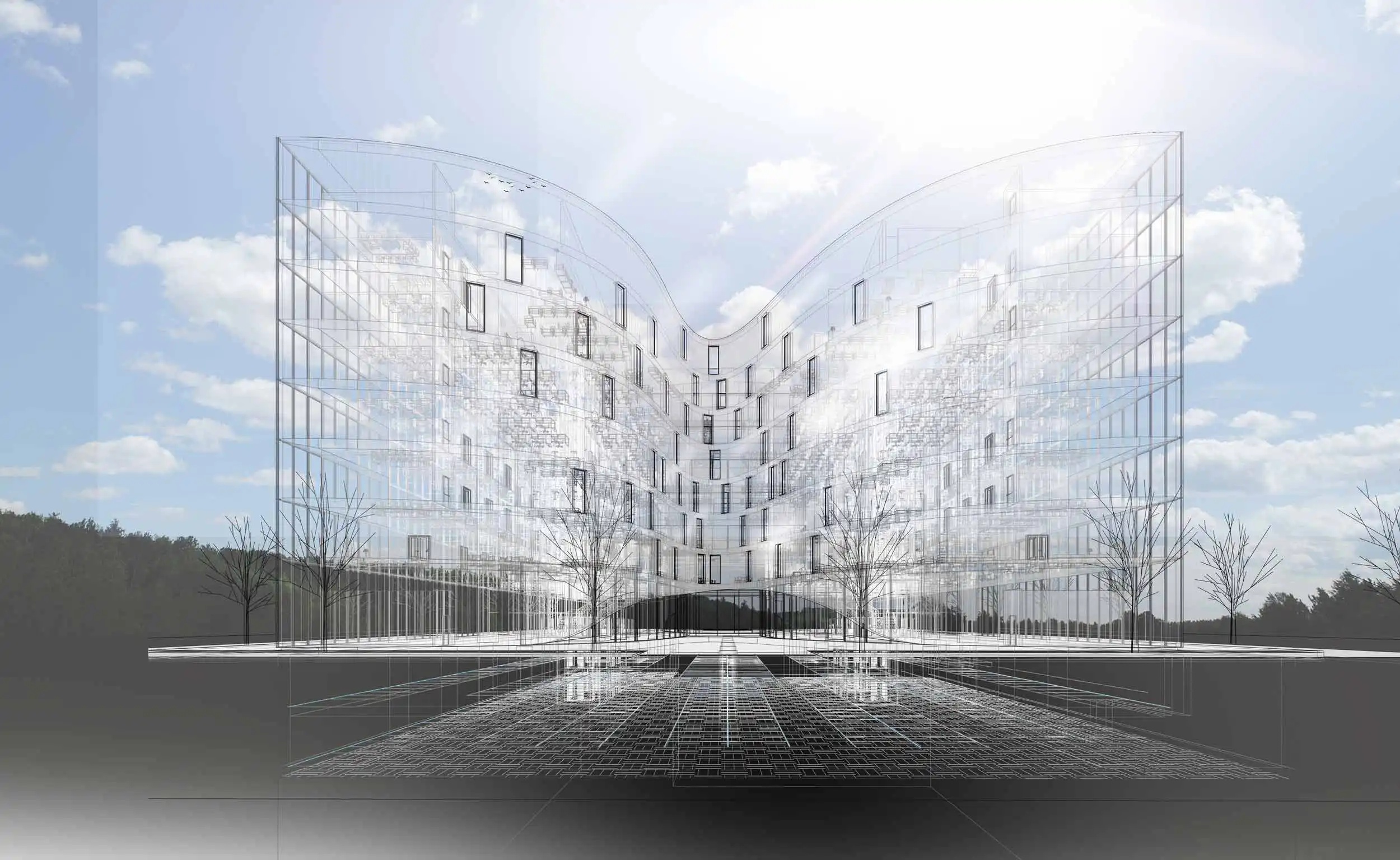


As artificial intelligence enters architectural design, it is beginning to influence not only how buildings are imagined and produced, but also how they are evaluated. The emerging question is whether an algorithm can become a genuine architectural critic, or whether it will simply teach architecture to conform to what machines can measure.
Architecture has always been accompanied by criticism. From the theoretical writings of Vitruvius to the polemics of the Modern Movement, from Reyner Banham’s technological assessments to the social and political critiques of contemporary architectural practice, the evaluation of buildings has never been limited to whether they stand up, function properly, or look convincing. Architectural criticism has attempted to understand what buildings represent, whose interests they serve, how they shape collective life, and what kind of relationship they establish between people and their environment.
Today, another participant is entering this conversation: artificial intelligence. Machine-learning systems can already analyze architectural drawings, generate design alternatives, assess energy performance, identify spatial patterns, and compare buildings against extensive datasets. Increasingly sophisticated tools can also produce written assessments of architectural projects, commenting on composition, functionality, sustainability, and spatial organization.
This development raises a question that goes beyond technological capability. If artificial intelligence can generate architectural proposals, can it also judge them? And more importantly, what happens when the authority to evaluate architecture begins to move from human critics towards systems trained on existing architectural knowledge?
The distinction matters. Designing a building and understanding its architectural significance are fundamentally different activities. A system might identify inefficient circulation, excessive energy consumption, or an unbalanced façade. Yet it may struggle to recognize why an apparently inefficient corridor creates an unexpected social encounter, why an uncomfortable public space becomes a place of political expression, or why a building that violates established aesthetic conventions deserves to exist.
The algorithmic critic is therefore not simply another digital tool. It represents a potential transformation in the production, evaluation, and cultural authority of architecture. Its arrival forces the profession to reconsider an uncomfortable question: are we developing machines that can understand architecture, or are we gradually redefining architecture according to what machines can understand?
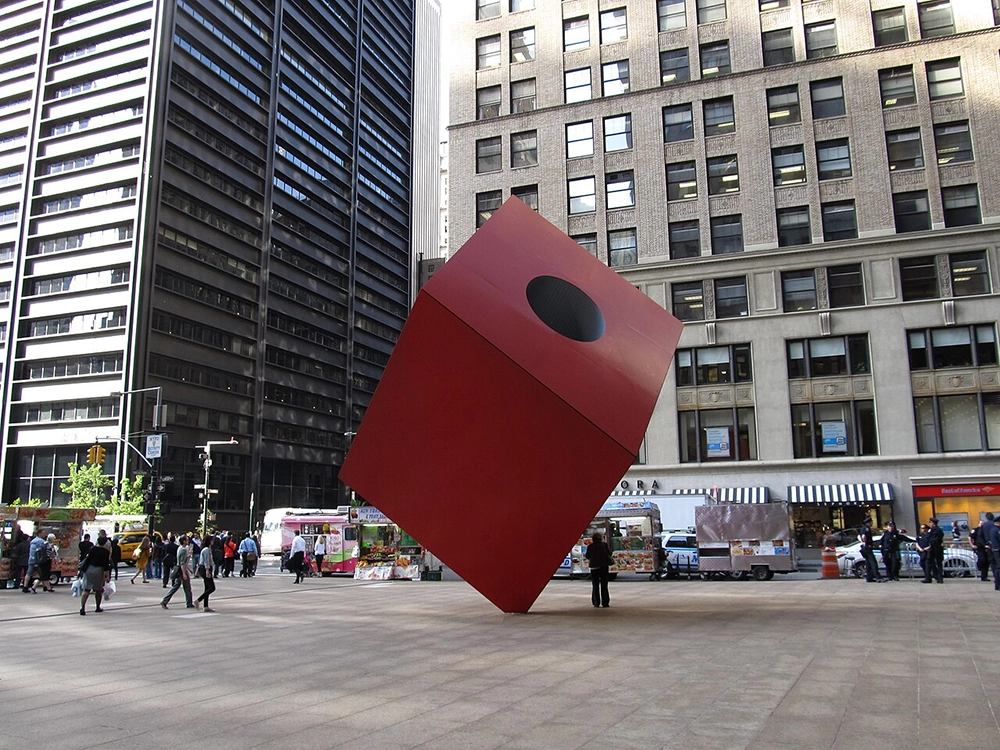
From Architectural Criticism to Computational Evaluation
Architectural criticism has never operated through a universally accepted set of criteria. Although technical performance, spatial organization, construction quality, and aesthetic composition provide useful points of reference, their relative importance changes according to historical circumstances and cultural perspectives.
A building considered radical in one period may become conventional in another. The exposed structural systems of High-Tech architecture, for instance, initially challenged established relationships between engineering and architectural expression. Projects by Richard Rogers and Renzo Piano demonstrated that mechanical systems, circulation, and structural components could become central elements of architectural identity rather than concealed technical necessities.
A computational assessment might recognize the structural clarity, circulation systems, and technological complexity of these buildings. It could also evaluate their energy consumption, material quantities, and operational performance. What it cannot automatically establish is the historical significance of making infrastructure visible, or the cultural implications of turning the building’s technical organization into its principal architectural expression.
This distinction reveals the difference between evaluation and criticism.
Evaluation generally measures a project against identifiable criteria. Does the building meet accessibility requirements? How much daylight reaches its interior? What is its predicted energy consumption? Are its structural components efficiently organized?
Criticism asks more difficult questions. Why were these particular criteria prioritized? What assumptions shaped the design? What does the building communicate about its society? Does its spatial organization reinforce existing inequalities or challenge them?
Artificial intelligence is particularly effective when the questions are sufficiently defined, and the relevant information is available. Computational systems can process large quantities of data and identify relationships that might remain invisible through conventional assessment. However, architectural criticism frequently begins precisely where established criteria become questionable.
A building cannot be understood entirely through the standards used to evaluate it. Sometimes the most significant architectural achievement is the decision to challenge those standards.

The Problem of Teaching a Machine What Good Architecture Looks Like
An algorithm does not develop architectural judgment independently of its training material. Its assessments are shaped by the information, classifications, visual references, and evaluation criteria through which it learns.
This creates an immediate problem: architectural history is not a neutral collection of successful buildings. It is a selective narrative shaped by institutions, professional hierarchies, publication practices, cultural preferences, and economic power.
For decades, architectural education and criticism have given particular attention to a relatively small group of celebrated architects and projects. The canonical histories of Modernism, Postmodernism, and contemporary architecture have often privileged European and North American examples, while vernacular traditions, informal construction practices, and less internationally visible architectural cultures have received comparatively limited attention.
If AI systems are trained predominantly on this established architectural record, their understanding of quality may reproduce its existing hierarchies.
Consider the difference between evaluating a minimalist concrete residence in Switzerland and a courtyard house in Yazd, Iran. Both may respond intelligently to climate, privacy, material availability, and patterns of domestic life. Yet their architectural languages emerge from different environmental conditions and cultural expectations.
An algorithm that associates architectural quality with a particular visual language could favor the abstract geometry of the first while treating the second as a historical or stylistic exception. Even if its assessment appears technically sophisticated, its underlying assumptions may remain culturally narrow.
The problem extends beyond regional representation. Architectural datasets also tend to privilege completed, photographed, and published buildings. Informal settlements, incremental housing, self-built environments, and ordinary neighborhood architecture are less consistently documented.
This matters because architecture does not exist exclusively in the buildings selected for professional recognition. Much of the built environment is produced through ordinary decisions made by households, local builders, municipalities, and communities operating outside the institutional structures of architectural culture.
An algorithmic critic trained on an incomplete architectural history risks confusing visibility with value. What is widely documented becomes easier to recognize; what is difficult to classify becomes easier to overlook.
The challenge, therefore, is not simply to make AI systems more knowledgeable about architecture. It is to question whose architecture constitutes their knowledge in the first place.

When the Image Becomes the Evidence
One of the most immediate applications of AI in architectural criticism is visual analysis. Contemporary image-recognition systems can identify building forms, façade patterns, material appearances, spatial arrangements, and stylistic characteristics. Generative systems can also compare architectural proposals with extensive visual references.
For an architectural publication, competition jury, or design studio, this appears particularly attractive. Instead of manually examining hundreds of submissions, an AI system might classify projects, identify recurring formal strategies, and produce preliminary assessments.
However, the growing reliance on architectural images introduces a fundamental distortion: the tendency to judge buildings through their representations rather than their physical and social realities.
Architecture has always been vulnerable to this problem. The development of digital rendering, architectural photography, and online publishing has made visual presentation an increasingly influential component of professional recognition. Some buildings are designed partly with their future photographs in mind.
The rise of AI-generated architectural imagery intensifies this condition. A proposal can now be transformed into a convincing visual narrative without having resolved its structural logic, construction details, environmental performance, or relationship with its surroundings.
An algorithmic critic examining such images may recognize formal coherence, compositional balance, and apparent material consistency. But a convincing image does not establish that the proposed building can be constructed, maintained, or inhabited as represented.
A façade that appears beautifully detailed may conceal an impractical assembly. A generous glazed interior may produce excessive cooling demands. A landscaped podium may look publicly accessible while remaining privately controlled.
The problem becomes particularly significant in architectural competitions, where visual communication frequently influences jury discussions and public reception. If AI tools begin ranking submissions according to image-based criteria, architects may find themselves designing not only for clients and users but also for automated systems that reward recognizable visual qualities.
The danger is not that machines will necessarily prefer beautiful architecture. It is that they may reward architecture that looks convincingly like the architecture they have already been trained to recognize.

The Quantification of Space: What Can Be Measured, and What Cannot?
Computational assessment becomes more complicated when it moves beyond images and into the measurable performance of buildings.
Building Information Modelling (BIM), environmental simulation, parametric design, and digital twins have already transformed the relationship between architectural design and technical evaluation. These systems allow architects to examine daylight distribution, thermal behavior, structural efficiency, material quantities, circulation, and operational performance.
Artificial intelligence extends these capabilities by identifying patterns across complex datasets and assisting with the comparison of alternative design decisions.
There are clear advantages. An AI-assisted assessment could reveal that a proposed office building provides insufficient daylight to its deeper floor areas, that a residential development has excessive dependence on mechanical cooling, or that a hospital’s circulation system creates unnecessarily long journeys for patients and staff.
Such observations can improve architectural decision-making. They also introduce an important distinction between measurable performance and architectural quality.
Consider the Salk Institute by Louis Kahn. Its monumental concrete architecture, carefully controlled spatial relationships, and central courtyard overlooking the Pacific Ocean demonstrate how structure, material, light, and collective experience can become inseparable.
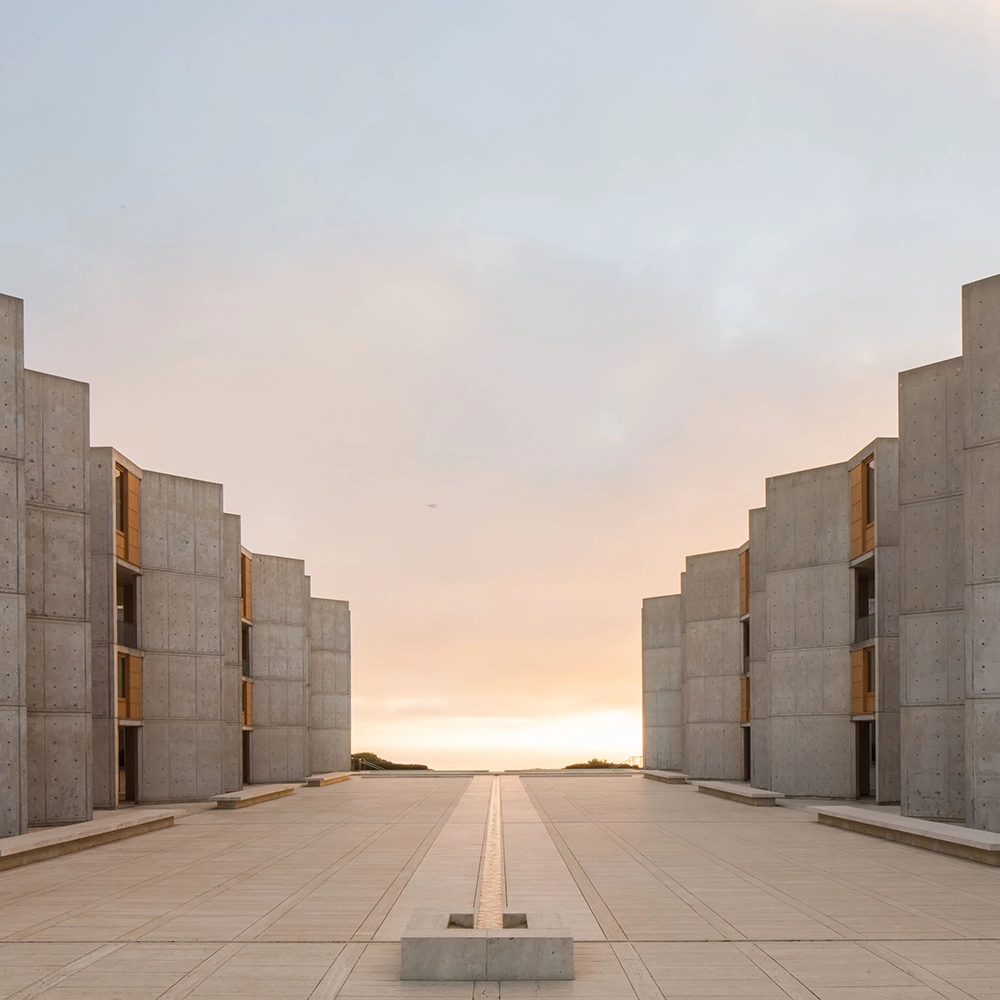
A performance-oriented system could examine its structural organization, daylight conditions, environmental characteristics, and material properties. These are legitimate aspects of architectural evaluation.
But the experience of the central courtyard cannot be reduced to its dimensions or solar exposure. Its significance emerges through the relationship between architectural form, the horizon, the movement of light, and the experience of inhabiting a space designed for scientific work.
The same difficulty appears in public architecture. A plaza may score highly in terms of pedestrian circulation, accessibility, and environmental performance while remaining socially unwelcoming. Conversely, a space with irregular edges, unexpected pathways, or apparently inefficient arrangements may support spontaneous encounters and informal activities.
The work of Jan Gehl has repeatedly demonstrated the importance of observing how people actually use public spaces rather than assuming that their architectural configuration determines their social success.
AI can assist this observational process by analyzing movement patterns, environmental conditions, and occupancy data. Yet behavioral patterns are not equivalent to human meaning. A person sitting alone in a public square might be resting, waiting, avoiding an unpleasant domestic situation, or simply enjoying the surroundings. The same recorded behavior can have entirely different meanings.
The architectural critic must therefore resist the temptation to treat everything that can be measured as everything that matters.
The Algorithmic Aesthetic: Will Buildings Begin to Please Their Evaluators?
Perhaps the most consequential implication of algorithmic criticism is its potential influence on architectural production itself.
Evaluation systems do not simply assess existing work. Once their criteria become known, they begin influencing the work being produced.
This is already familiar in other fields. Search-engine rankings influence how websites are written, social media metrics shape visual communication, and performance indicators influence institutional priorities. Architecture is not immune to similar mechanisms.
Imagine an architectural competition in which an AI system evaluates proposals according to spatial efficiency, façade regularity, energy performance, material economy, and similarity to previously successful projects. Architects would quickly learn which characteristics improve their scores.
Some might respond by optimizing their designs around those criteria, producing proposals that perform well according to the system but offer limited architectural experimentation.
This is not an inevitable outcome of AI-assisted evaluation. It is a risk associated with turning computational assessments into authoritative judgments.
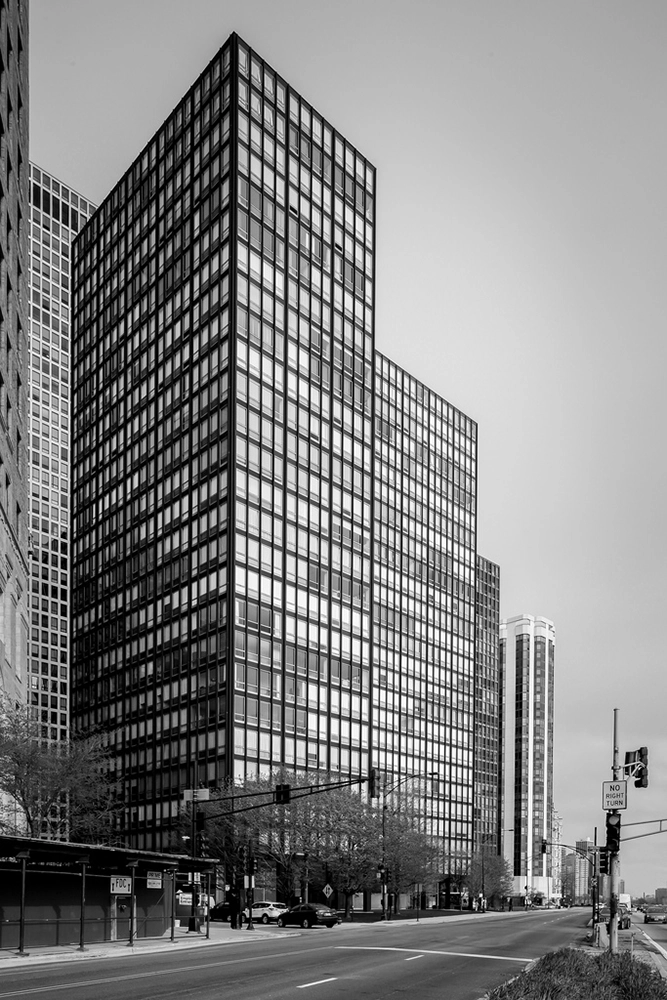
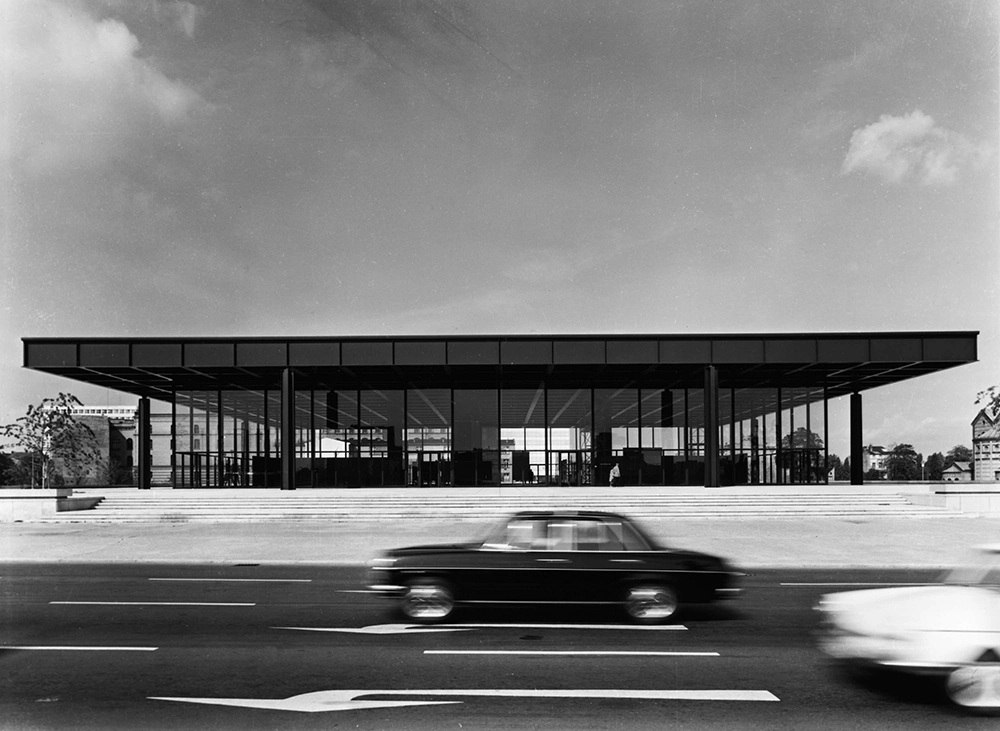
The history of architecture offers several warnings about the relationship between standards and creativity. The International Style, for example, established a powerful architectural language through principles of functional clarity, spatial continuity, and formal abstraction. These ideas generated significant architectural achievements, but their widespread adoption also produced buildings that sometimes ignored local climates, social practices, and cultural differences.
The problem was never that modernist principles were inherently misguided. It was that architectural ideas could become simplified into reproducible formulas when separated from the circumstances that originally gave them meaning.
Algorithmic evaluation could produce a similar condition, although with greater speed and consistency.
If systems repeatedly reward certain spatial configurations, proportions, material choices, or formal characteristics, these qualities may become increasingly common. Architectural diversity could gradually give way to a narrower language of computationally successful design.
This possibility deserves particular attention in large-scale housing and commercial development, where financial pressures already encourage repetition and standardization.
A developer seeking predictable returns may have little interest in architectural experimentation. An automated evaluation system that offers apparently objective confirmation of a standardized design could become another instrument supporting that preference.
The critical issue is not whether algorithms have aesthetic preferences. It is whether the profession will begin treating their preferences as evidence of architectural excellence.
The Missing Context: Architecture as a Political and Social Decision
Buildings are not isolated objects. They are embedded in systems of land ownership, economic inequality, public policy, environmental pressure, and cultural identity.
An algorithm may identify the most efficient arrangement for a housing development, but efficiency does not answer the question of who can afford to live there.
It may evaluate the accessibility of a public building while overlooking the broader urban policies that determine whether particular communities can reach it. It may assess a development’s environmental performance without examining whether its construction contributes to displacement or the privatization of previously accessible land.
These are not secondary concerns. They are central to architecture because buildings distribute resources, opportunities, visibility, and access.
Consider the Barbican Estate, designed by Chamberlin, Powell and Bon and developed over several decades following the destruction of parts of London during the Second World War.
The Barbican is an important example of how architecture can combine housing, cultural facilities, landscape, and elevated pedestrian circulation into a distinctive urban environment. Its architectural significance cannot be understood solely through its formal language or technical performance.
Its relationship with the surrounding city, its residential character, its cultural institutions, and the accessibility of its public spaces all contribute to its meaning.
An AI system might evaluate the spatial organisation of the estate or identify patterns in pedestrian movement. But understanding its social role requires asking more difficult questions about the relationship between collective urban life, residential exclusivity, cultural access, and the changing value of central London.
Similar questions emerge in contemporary urban developments, particularly those promoted through the language of smart cities. Sensors, surveillance systems, predictive analytics, and automated management platforms promise more efficient urban environments. Yet the same technologies can intensify surveillance, reinforce unequal access to services, and transfer control over public infrastructure to private operators.
An algorithmic critic that evaluates a building without examining these conditions risks treating political decisions as technical details.
The question is not simply whether a building works. It is for whom it works, under whose authority, and at whose expense.
Who Is Responsible When the Critic Is Wrong?
The growing use of AI in architectural assessment also introduces a professional accountability problem.
Architectural criticism has always involved subjective judgement, and human critics are not free from prejudice, institutional influence, or conflicts of interest. However, their arguments can be challenged, contextualised, and attributed to identifiable individuals.
Algorithmic assessments complicate this relationship. When an AI system ranks architectural proposals, identifies design weaknesses, or recommends particular interventions, its conclusions may appear impartial because they are generated computationally.
But computational consistency should not be confused with neutrality.
An assessment is only as reliable as the information and assumptions informing it. Incomplete project documentation, biased datasets, inaccurate environmental models, or poorly selected performance indicators can produce misleading results. The apparent precision of an algorithm may make these limitations less visible rather than less significant.
This becomes particularly problematic when automated evaluations influence decisions with long-term consequences, such as public procurement, planning approvals, housing investment, or architectural competition results.
If a proposal is rejected because an automated system considers its spatial organisation inefficient, who is responsible for examining whether that assessment reflects the actual needs of its future users?
If an AI tool favours one design over another because its training data contains more examples of a particular architectural language, should that decision be accepted as professional judgement?
Architects, clients, public authorities, and technology providers cannot simply transfer responsibility to software.
The role of professional judgement becomes especially important when an automated assessment conflicts with contextual knowledge or human experience. A responsible process should make its criteria transparent, allow competing interpretations, and retain identifiable human responsibility for consequential decisions.
An algorithm may provide evidence. It cannot become an excuse for avoiding accountability.
Beyond the Automated Verdict: The Architect as an Interpreter
The most productive future for AI in architectural criticism may lie somewhere between technological assistance and independent judgement.
There is little reason to reject computational analysis simply because it cannot reproduce every dimension of human experience. Architectural practice has always adopted tools that extend its capacity to investigate and represent space. Drawings, physical models, structural calculations, environmental simulations, and digital fabrication have all changed the possibilities of architectural production without eliminating the need for interpretation.
AI can contribute meaningfully to this process.
It can compare alternative spatial arrangements, identify inconsistencies in design documentation, examine environmental performance, retrieve relevant precedents, and reveal relationships between architectural decisions and their measurable consequences.
It can also help critics investigate buildings through multiple sources of information, making architectural discussion more informed and less dependent on visual impressions alone.
However, the value of these tools depends on how they are incorporated into the critical process.
An AI assessment of a housing project, for example, should not end with a ranking of unit efficiency or façade performance. It should prompt further investigation into housing affordability, household diversity, shared facilities, access to daylight, adaptability, and the relationship between private and collective space.
Likewise, an evaluation of a cultural building should consider not only circulation and environmental performance but also its relationship with the surrounding neighbourhood, its accessibility to different social groups, and the extent to which its spaces support cultural participation.
This requires a different understanding of the architect’s role. Rather than accepting automated recommendations as definitive answers, architects must become increasingly capable of interpreting computational evidence, identifying its limitations, and challenging the assumptions embedded within it.
The same responsibility applies to architectural critics. Their task may increasingly involve examining not only the buildings produced through AI-assisted processes but also the systems that evaluate them.
The important question will not be whether a machine can produce an architectural opinion. It will be whether that opinion can withstand scrutiny when confronted with the complexity of actual places and human lives.
Architecture Needs Better Questions, Not Just Faster Answers
The arrival of the algorithmic critic exposes a longstanding weakness in architectural culture: the tendency to confuse professional recognition with architectural value.
Buildings are frequently judged through familiar categories, including visual originality, technical innovation, sustainability, and functional efficiency. These criteria are useful, but none is sufficient on its own.
A building can be technologically advanced and socially exclusive. It can be environmentally efficient and culturally disconnected. It can become an internationally celebrated architectural image while contributing very little to the everyday life of its surroundings.
Artificial intelligence does not create these contradictions. It makes them harder to ignore by introducing new mechanisms through which architectural value can be classified and distributed.
Perhaps the most important contribution of algorithmic criticism will not be its ability to identify successful buildings, but its capacity to expose the assumptions behind existing definitions of success.
If a system consistently rewards energy efficiency but overlooks the embodied environmental cost of demolition and reconstruction, the problem is not simply an inaccurate calculation. It is an incomplete understanding of sustainability.
If it recognises formal coherence but overlooks the cultural meaning of a building’s material language, the problem is not insufficient visual intelligence. It is the absence of contextual interpretation.
And if it identifies an urban development as successful because its circulation systems are efficient while failing to recognise the displacement of existing communities, the problem is not computational performance. It is the definition of success itself.
Architectural criticism should therefore use AI to expand the range of questions asked about buildings, not to reduce those questions to a more manageable collection of numerical answers.
The Critic That Architecture Still Needs
Architecture does not need an artificial critic that agrees with established professional conventions, reproduces familiar aesthetic preferences, or delivers instant verdicts on complex design decisions. It needs critical processes capable of examining both measurable performance and the values that determine what is worth measuring.
Artificial intelligence can help reveal patterns, challenge assumptions, and make architectural assessment more informed. It can identify technical shortcomings that escape visual inspection and compare design alternatives with a level of consistency difficult to achieve through manual analysis alone.
But architecture is not simply the optimisation of space. It is the organisation of relationships between people, materials, institutions, landscapes, and time. Its significance frequently emerges through circumstances that cannot be anticipated by a dataset or adequately described through a performance indicator.
The real danger is therefore not that machines will replace architectural critics. It is that architects, developers, institutions, and even critics themselves may gradually accept computational judgement as a substitute for critical thinking.
A machine can tell us whether a building resembles successful precedents, whether its environmental performance meets selected targets, or whether its spatial organisation follows recognised patterns. Whether those precedents deserve to be followed, those targets are sufficient, or those patterns should be challenged remains a human responsibility.
The future of architectural criticism will probably involve both human and artificial intelligence. But their roles should not be confused. Algorithms can help us examine architecture more thoroughly; they should not determine the limits of what architecture is allowed to become.
The most valuable architectural critic, whether human or computational, is not the one that provides the fastest answer. It is the one that knows when the answer itself needs to be questioned.