



ecoLogicStudio treats microbes not as contaminants but as collaborators. Across two decades, the London practice has built installations and prototypes in which algae, fungi and cyanobacteria actively filter air, store carbon and grow material. By integrating living organisms into architectural systems, the studio explores how buildings can move beyond conventional construction methods to become active participants in environmental processes.
A forest does not separate structure from life. Trunks, roots, leaves and the invisible networks of fungi and bacteria form one continuous system that filters air, cycles nutrients and responds to changing conditions. That integrated logic drives the work of ecoLogicStudio, the London studio founded in 2005 by Claudia Pasquero and Marco Poletto. Rather than designing buildings that exclude living processes, the practice embeds those processes into the architecture itself so that walls, canopies and interiors become active metabolic systems.
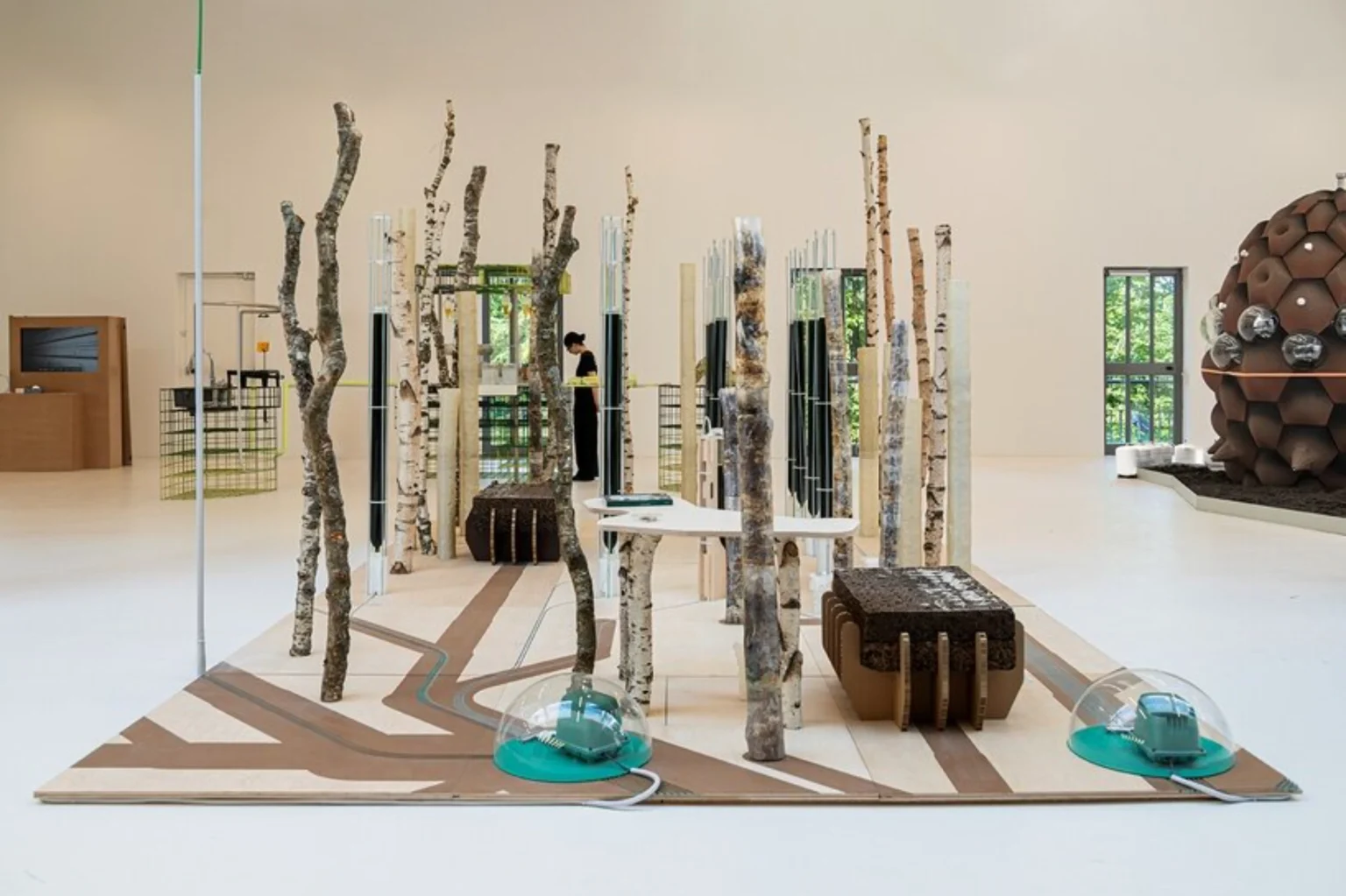
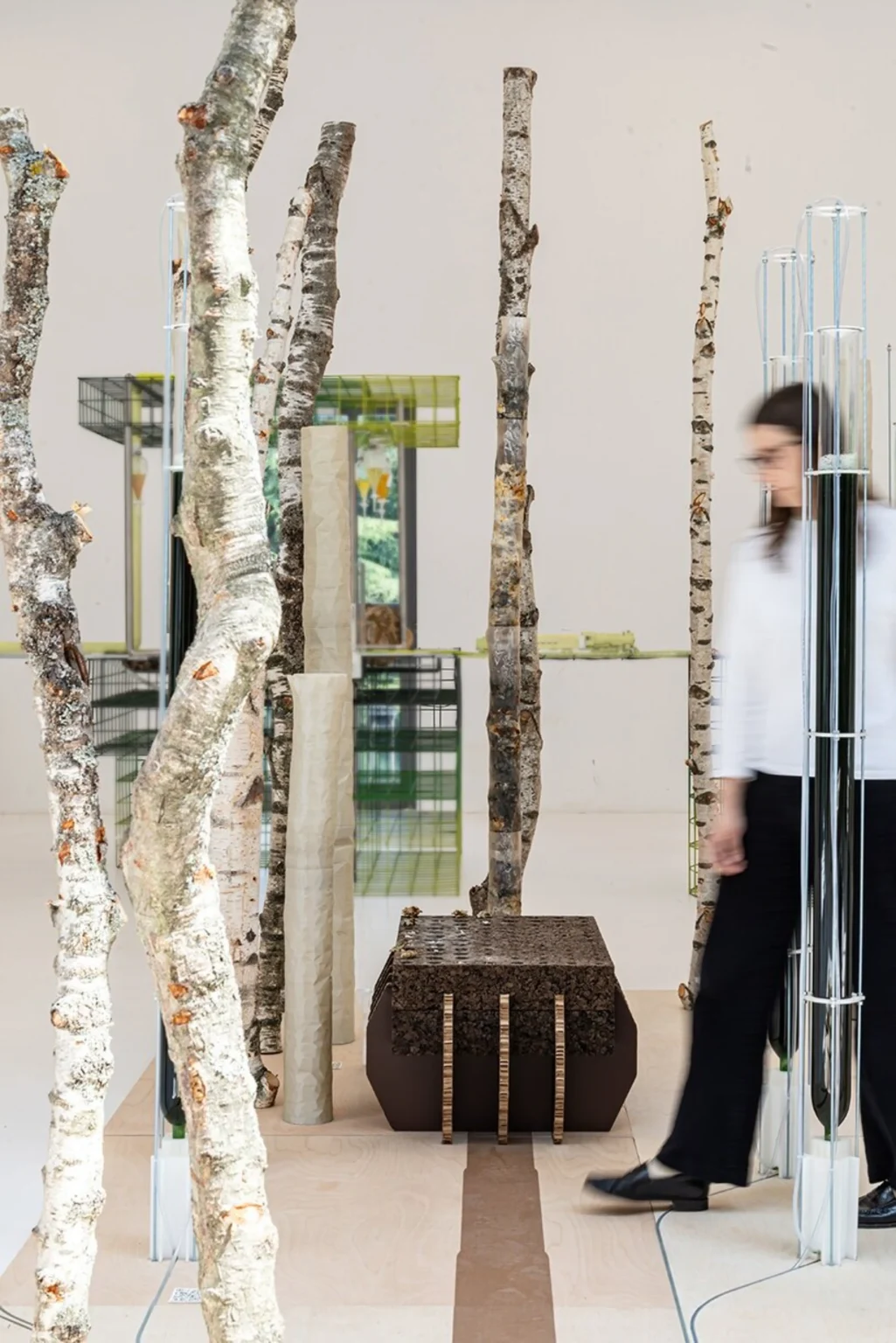
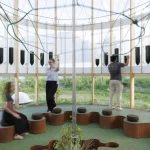
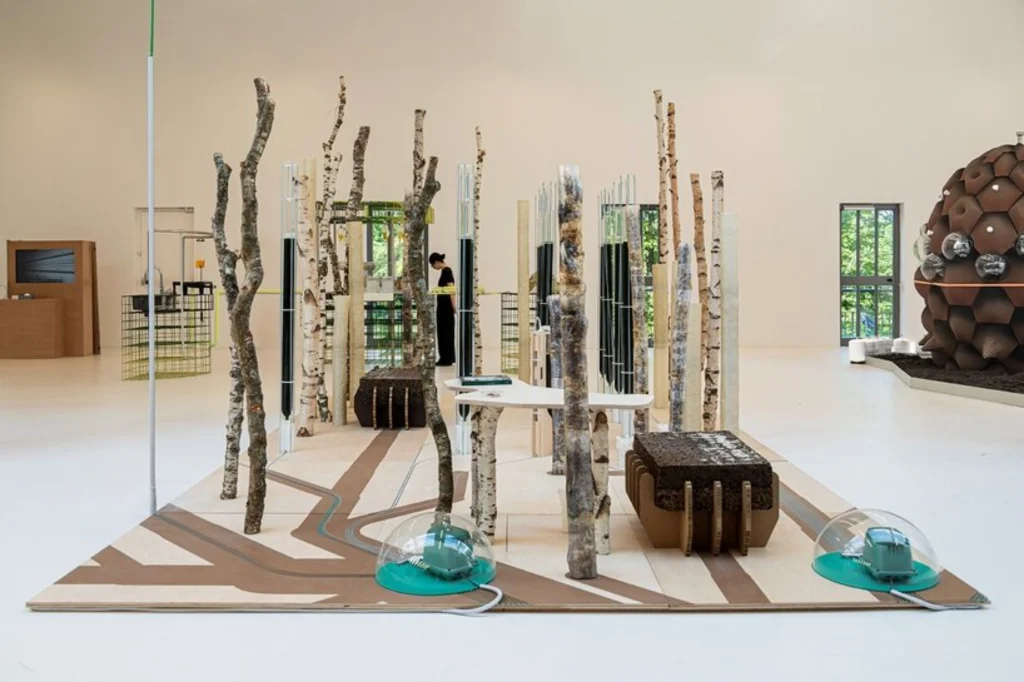
Their recent installation DeepForest³, shown in 2025 at the Triennale Design Museum in Milan as part of the exhibition We the Bacteria, makes the idea tangible. What looks at first like an abstracted grove of birch trunks is in fact a carefully orchestrated set of living components. 3D-printed bark-like shells made from algae biopolymers host mycelium networks that feed on spent coffee grounds and grow into fibrous insulation.
Glass vessels filled with cyanobacteria capture carbon dioxide from the gallery air and release oxygen. Other elements digest waste and support living lichen. The space does not merely house life; it is co-produced by it.
From Pavilion to Prototype
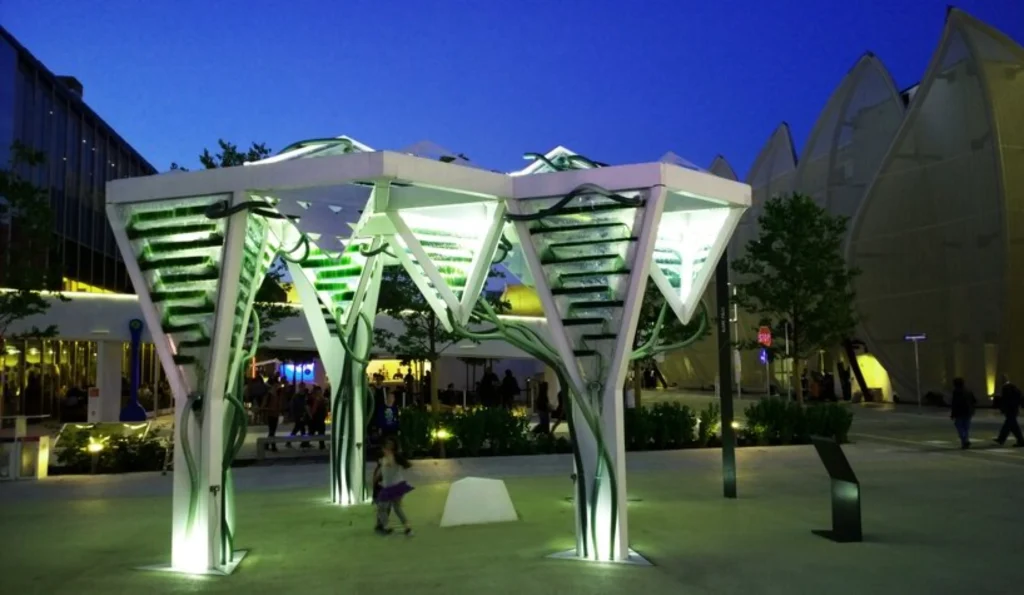
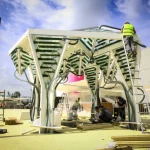
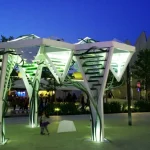
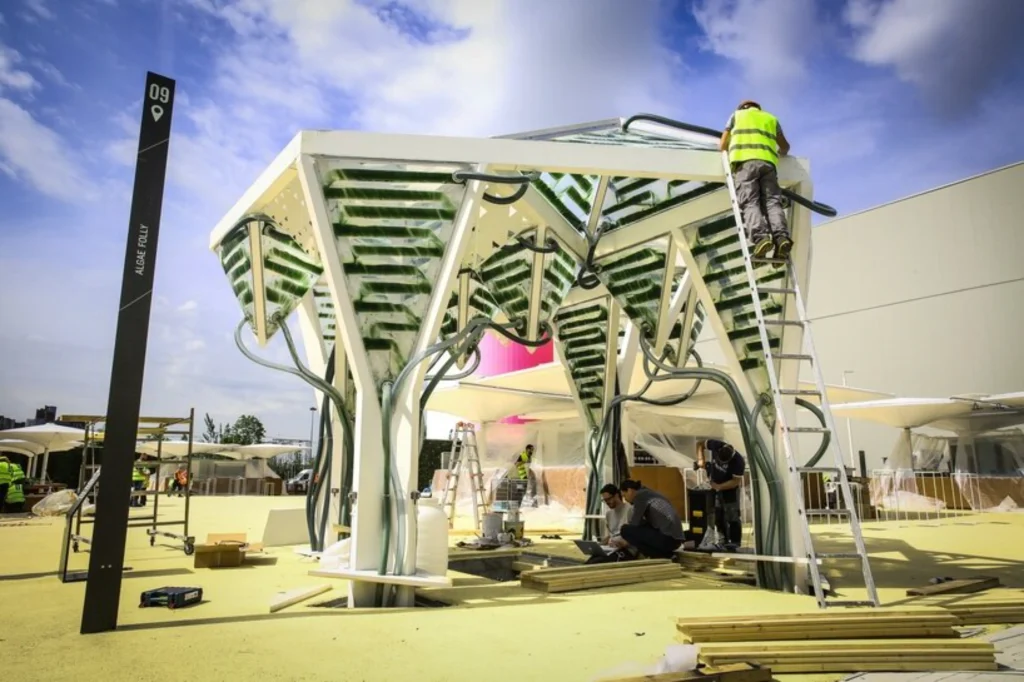
The studio’s trajectory can be traced through earlier projects that tested the same principles at different scales. At Expo Milano 2015, the Urban Algae Folly presented a canopy of triangular panels filled with spirulina. The microalgae grew more vigorously in sunlight, providing denser shade precisely when it was most needed, while visitors’ exhaled carbon dioxide fed the system. Architecture, solar energy and human presence formed a closed loop.
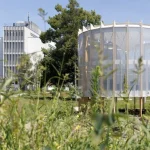
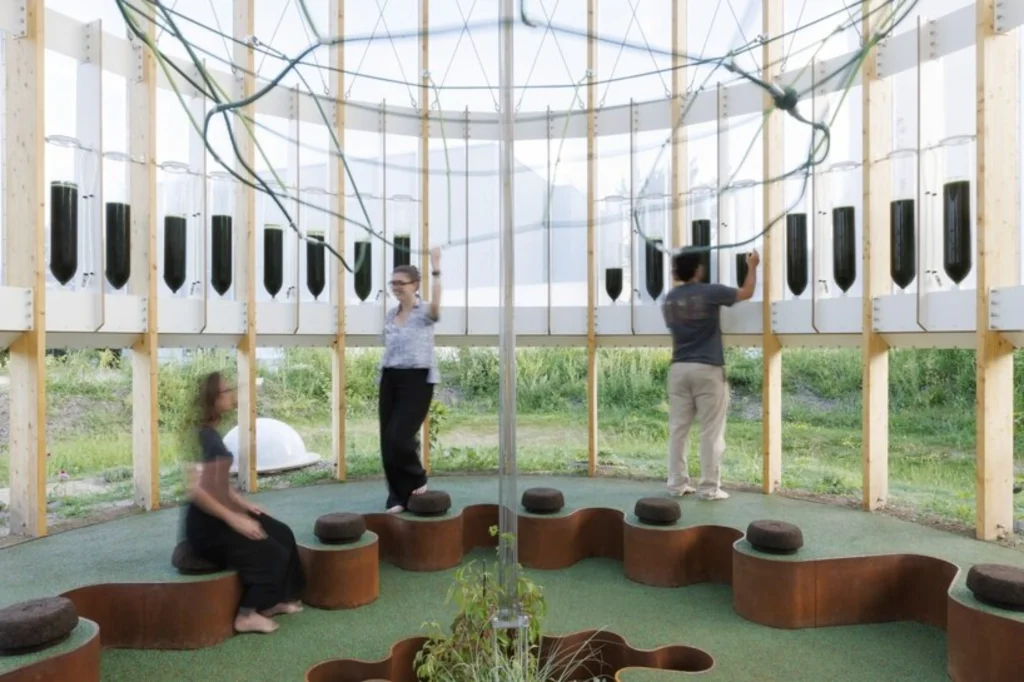
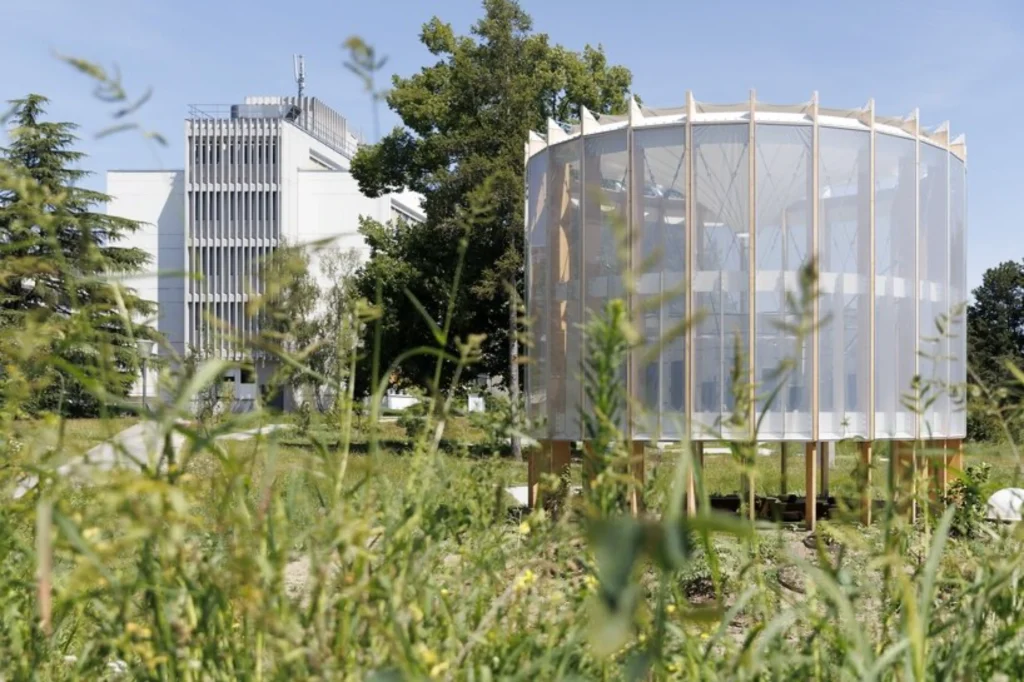
In Nyon, Switzerland, the AirBubble created what the studio called the world’s first biotechnological healthcare garden. A semi-transparent circular enclosure contained 36 glass bioreactors holding 350 liters of Chlorella algae. The living cultures filtered polluted air at a rate of 150 liters per minute, demonstrating that healthy environments need not be sterile. Medicinal plants completed the system, linking air quality directly to human wellbeing.
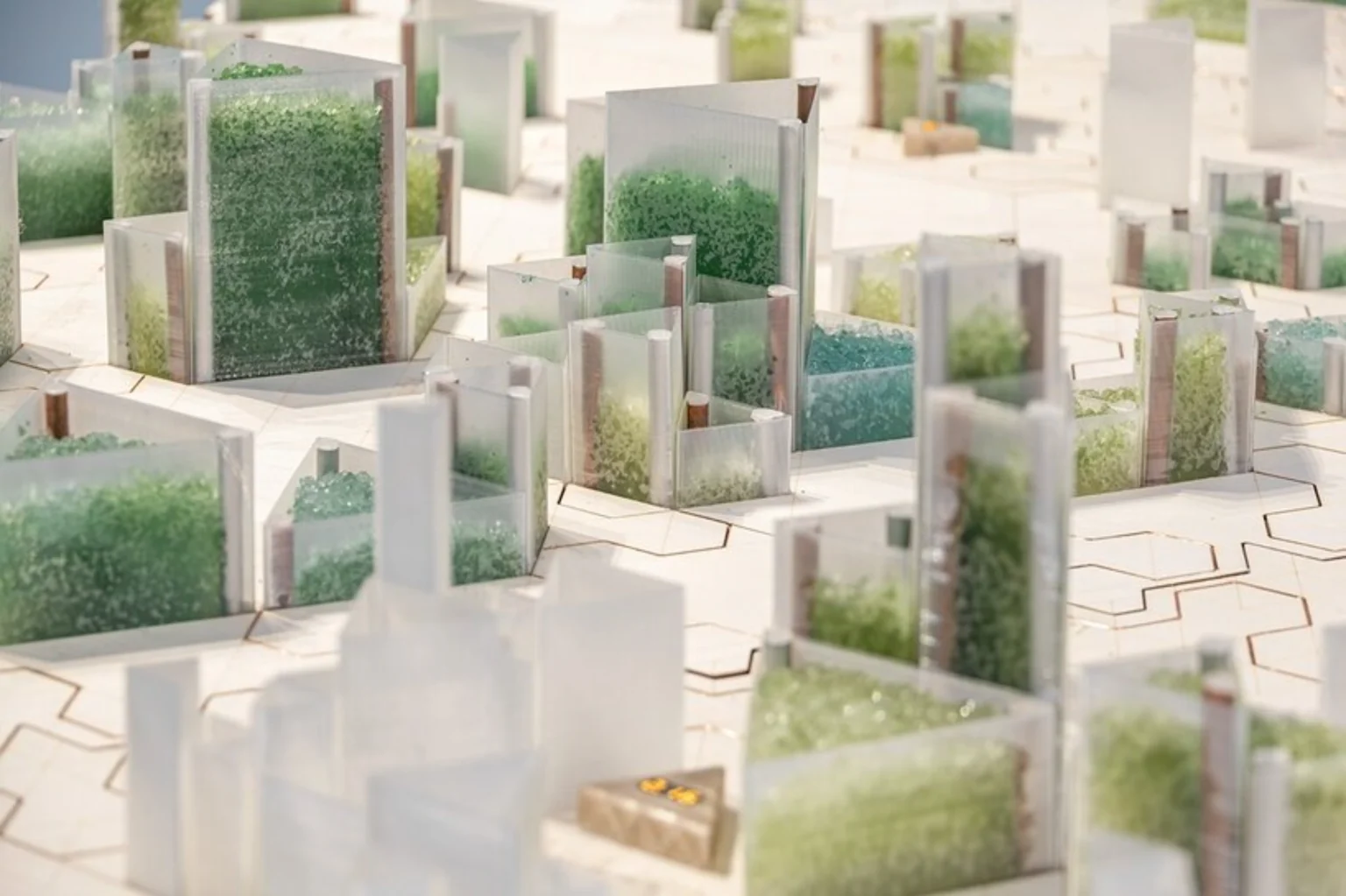
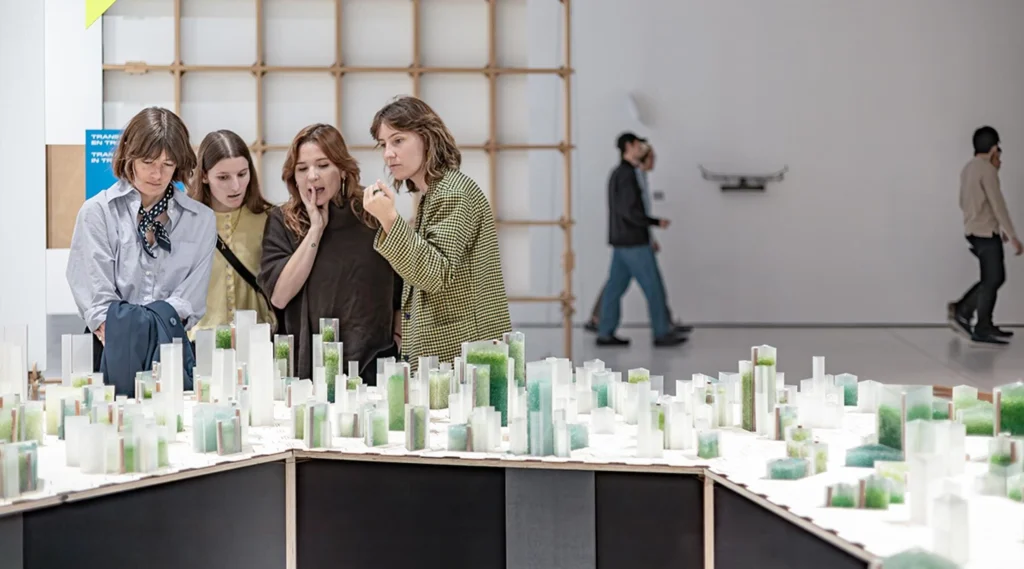
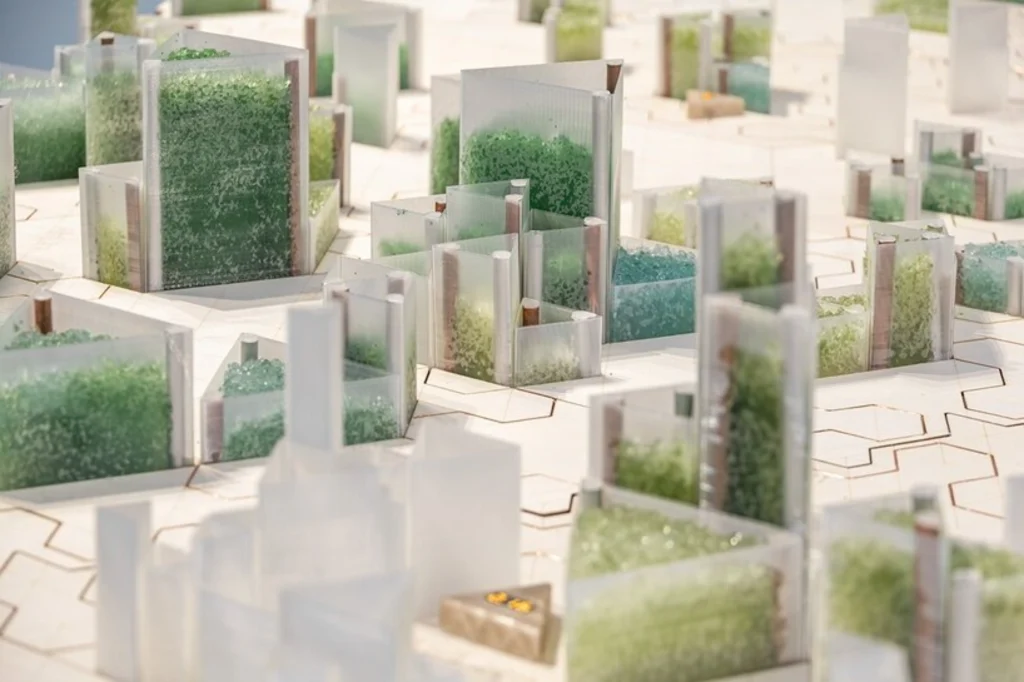
CryoflorE, developed with the Synthetic Landscape Lab at the University of Innsbruck, scaled the idea toward the urban. A hexagonal model of a cityscape filled with cyanobacteria captured photosynthetic energy and channeled it through copper networks, offering a speculative vision of bio-solar urban infrastructure.
Architecture as Metabolic System
What unites these projects is a refusal to treat living organisms as decoration or metaphor. Algae become structural filters. Mycelium becomes insulation that grows in place from urban waste. Cyanobacteria become carbon sinks that operate continuously. The architecture provides the conditions—light, nutrients, containment—while the organisms perform work that conventional mechanical systems would otherwise handle with energy-intensive equipment.
This approach challenges the modern preference for sterile interiors. Pasquero has noted that human identity itself is microbial and collective. If our bodies are ecosystems, then the spaces we inhabit should extend rather than interrupt those ecosystems. DeepForest³ makes the proposition domestic: a living room that breathes, digests, and insulates through biological processes rather than mechanical ones.
Parametric and Computational Dimensions of Living Systems
Although the materials are biological, the design process is highly computational. Growth rates of algae under different light spectra, nutrient concentrations, and flow rates can be modeled and optimized. The geometry of bioreactor vessels is refined so that surface area, light penetration, and fluid dynamics maximize photosynthetic efficiency. Mycelium growth patterns inside 3D-printed shells are simulated to predict density and structural performance of the resulting insulation layer.
These simulations feed directly into fabrication. Algae biopolymer recipes are adjusted digitally before printing. Vessel dimensions and internal baffles respond to parametric rules derived from biological performance data. The resulting components are not static products but calibrated habitats. In this sense, ecoLogicStudio practices a form of living parametricism: the parameters include metabolic rates and environmental feedback alongside geometric variables. The architecture becomes a set of rules that living systems continuously execute and modify.
The same logic extends to larger urban proposals. Bio-solar networks, air-filtering facades and waste-digesting surfaces can be arrayed according to solar access, pollution maps and waste streams. Computational tools allow the studio to test how distributed living systems might perform across a district rather than a single pavilion.
Toward Spaces That Grow With Us
ecoLogicStudio’s work does not claim that every building must become a bioreactor. It demonstrates that architecture can move beyond the exclusion of microbial life and begin to incorporate its capacities. Air purification, carbon sequestration, insulation, and even energy generation can be performed by organisms that require only light, nutrients, and appropriate containment.
The implications reach beyond individual projects. If buildings can host productive microbial communities, then the distinction between architecture and ecology softens. Maintenance becomes cultivation. Performance becomes metabolism. The home or office shifts from a sealed machine for living into an extension of the wider living systems that already sustain us.
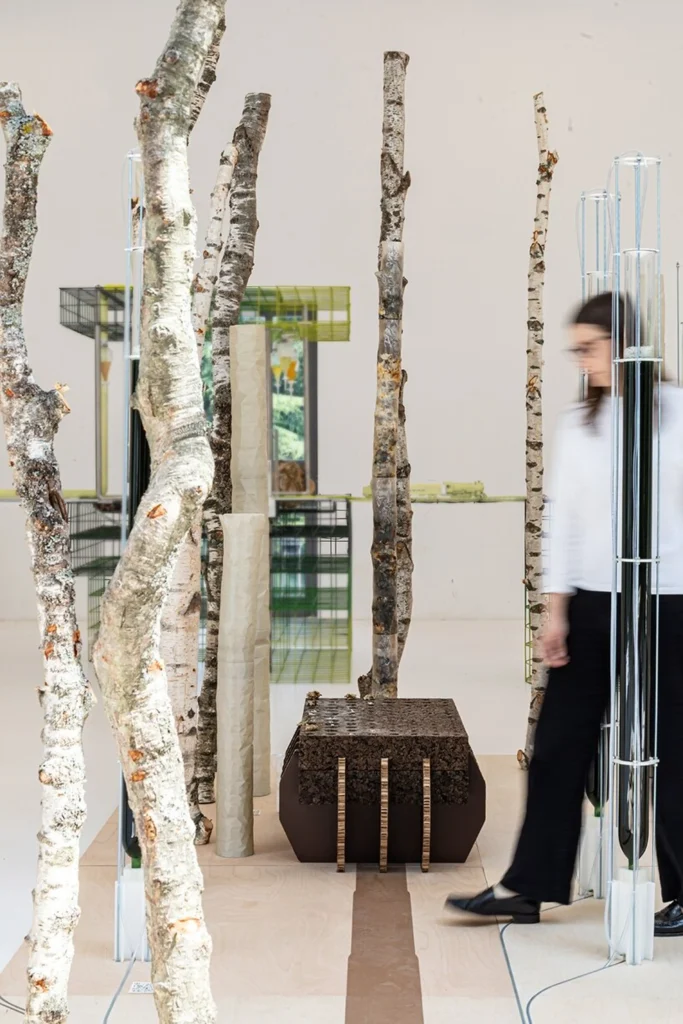
DeepForest³, the Urban Algae Folly, AirBubble and CryoflorE form a coherent body of evidence. Each tests a different aspect of the same proposition: that healthier spaces for human life can be built with, rather than against, the living organisms that share our environment. The forest on the museum floor is not a nostalgic image of nature. It is a working prototype of an architecture that grows, filters, and breathes alongside its inhabitants.