


On a mid-October evening in London, the Royal Institute of British Architects named the buildings it believes matter most right now. One stands on a sloping former car park in suburban Coulsdon. The other rises in the textile region of northern Bangladesh. Together they frame a clear statement about what architecture can still do.

The 2026 RIBA Stirling Prize and RIBA International Prize were announced on 15 October at Old Billingsgate. The evening also marked the 30th anniversary of the Stirling Prize, the UK’s most closely watched architecture award. In a year when housing, climate and social purpose dominate public conversation, the two winning projects landed with unusual clarity.
The Stirling Prize: Lion Green Road
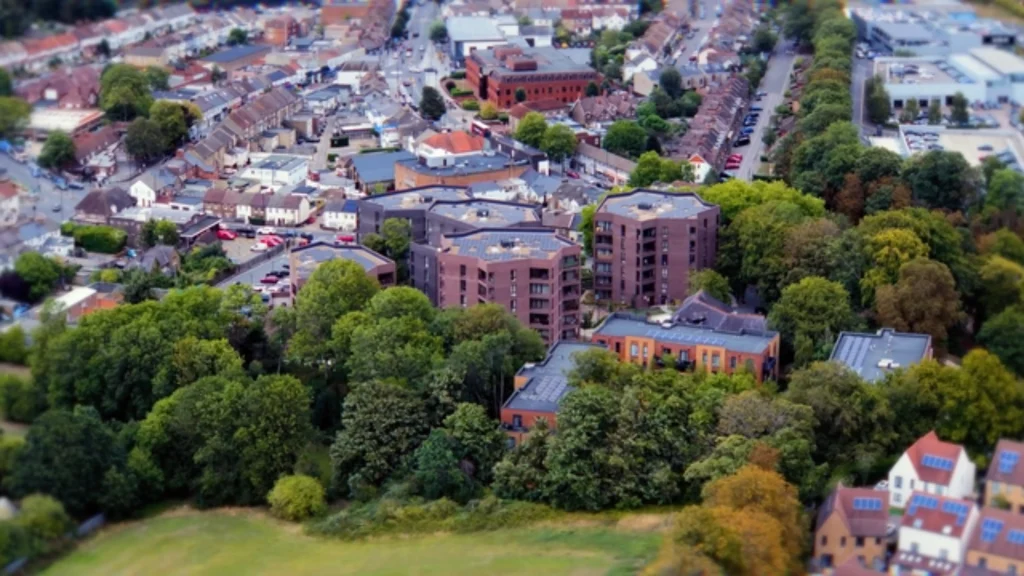
Image credit: RIBA
The Stirling Prize went to Lion Green Road in Coulsdon, south London, designed by Mary Duggan Architects with delivery architects RUFF Architects. The scheme provides 157 homes across five freestanding pavilion blocks on a site that drops eight meters from back to front. It was commissioned by Croydon Council through its former development company Brick by Brick and delivers an equal mix of affordable and private housing.
Rather than imposing a conventional street pattern on the difficult slope, the architects treated the topography as an opportunity. The five 13-sided blocks share a common plan yet are rotated and stepped individually. Every home is dual-aspect. Shared gardens, allotments, play spaces and a public route link the busy road to parkland and the embankment of the historic Surrey Iron Railway. Mature trees and a bluebell wood were retained.
RIBA President Chris Williamson, chair of the jury, described the project as proof that density can be achieved without sacrificing quality of place. “Through a consistent specification, with subtle variation in height and orientation, it offers housing at scale without uniformity,” he said. The architects have created what the jury called a living landscape.
Mary Duggan called the win extraordinary, unexpected, and humbling.
The project began in 2016 with a simple ambition: to make non-institutional housing that still felt generous. That it has now received the UK’s highest architectural honor says something about shifting priorities.
Lion Green Road is only the fourth housing scheme to win the Stirling Prize in three decades. Previous winners include Accordia in Cambridge, Goldsmith Street in Norwich and Appleby Blue Almshouse in London. Its selection in 2026 feels deliberate.
The International Prize: Green Field Factory
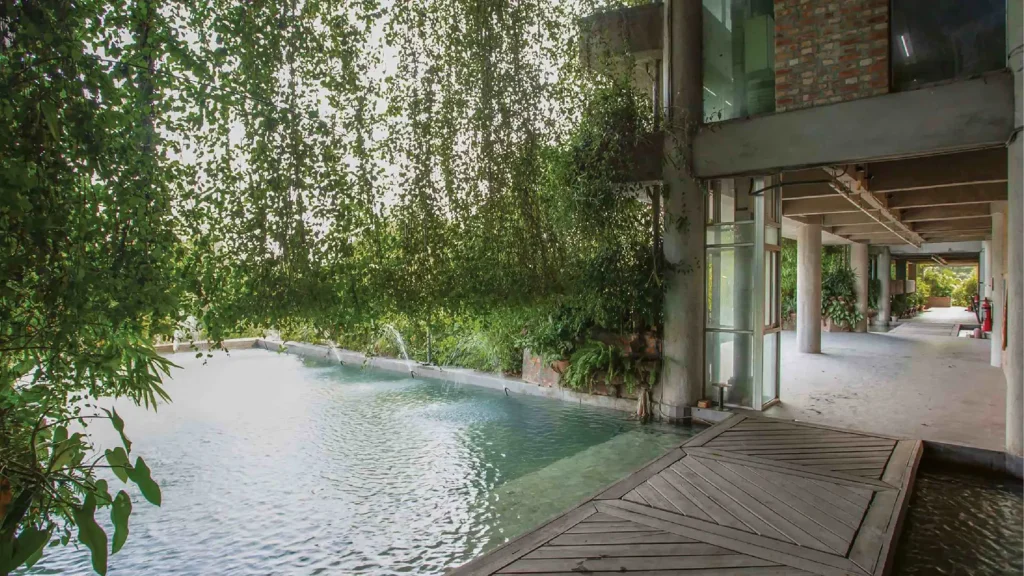
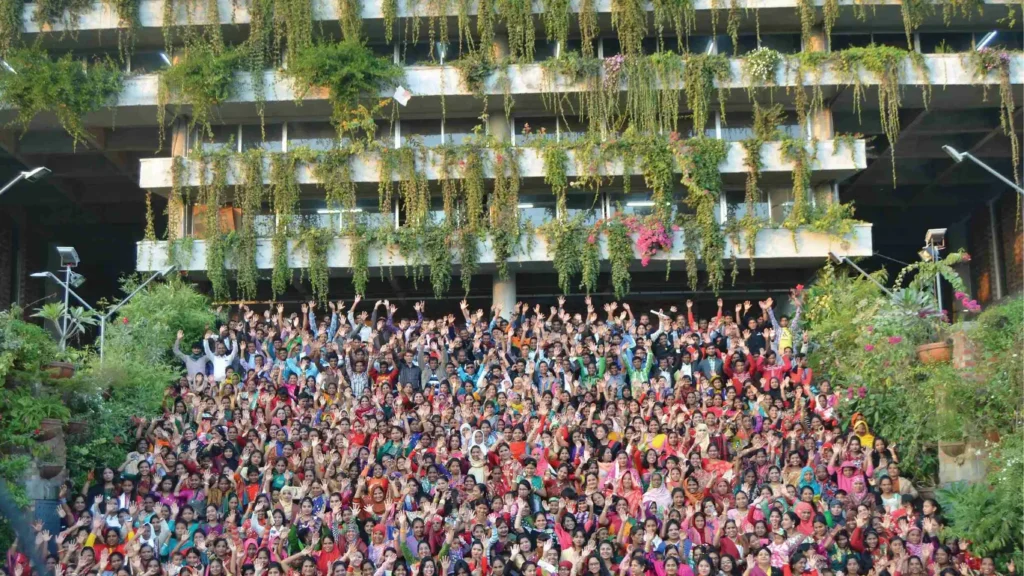
The RIBA International Prize was awarded to the Green Field Factory of Karupannya Rangpur Limited in Bangladesh, designed by Nakshabid Architects. The jury praised the project for dismantling traditional hierarchies and creating profound social and environmental change.
In a region defined by the textile industry, the factory reconsiders the relationship between workers, production and landscape. It moves beyond the standard industrial shed to create a workplace that offers dignity, better environmental conditions and a stronger connection to its setting. RIBA President Chris Williamson called it a thoughtful design that shows architecture’s capacity to improve everyday working life at scale.
The International Prize recognizes the most significant and inspirational building outside the UK. Previous winners have come from a wide geographic and typological range. Placing a Bangladeshi factory alongside a south London housing scheme on the same evening underscores the prize’s global outlook.
Why These Two Buildings Matter Together
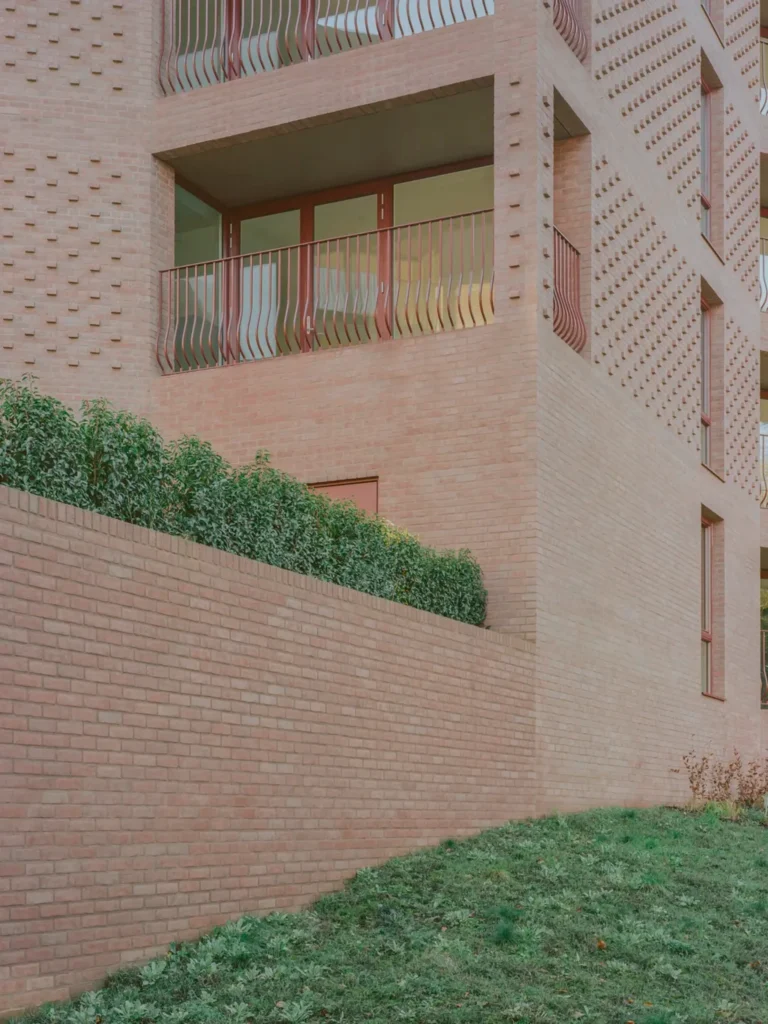
Image credit: RIBA
Awards often celebrate singular objects. This year’s pairing does something more useful. It places a modestly scaled, landscape-led housing project in suburban London next to a factory in Bangladesh and asks the same underlying question: what does architecture owe the people who use it every day?
Lion Green Road answers that question through careful siting, shared outdoor space and the refusal to treat affordable housing as residual. Green Field Factory answers it by rejecting the idea that industrial buildings must be harsh or hierarchical. Both projects treat their users as citizens rather than units of occupancy or labor.
The 30th anniversary of the Stirling Prize provided a natural moment for reflection. Over three decades, the prize has moved between cultural landmarks, educational buildings, infrastructure, and housing. Returning to housing in 2026, and pairing it with a workplace project from the Global South, feels like a recalibration rather than a coincidence.
The Wider Field
Six buildings were shortlisted for the Stirling Prize. The International Prize shortlist included BRAC University, Royale Belge and Z33 alongside the eventual winner. Each finalist represented serious architectural ambition. The jury’s final choices, however, favored projects that embed social and environmental intelligence into ordinary building types.
That emphasis matters. Spectacular form still attracts attention, yet the buildings that change daily life are often quieter. Both 2026 winners belong to that quieter tradition. They do not rely on novelty for effect. They rely on careful decisions about ground, orientation, materials and the spaces between buildings.
A Clear Signal
Architecture awards cannot solve housing shortages or improve factory conditions on their own. What they can do is direct attention and legitimize approaches that might otherwise be dismissed as idealistic or uneconomic. By choosing Lion Green Road and the Green Field Factory, the RIBA has given public weight to the idea that density, dignity and environmental care are compatible goals.
In Coulsdon, residents now live among trees, allotments, and long views on a site that once held only cars. In Rangpur, workers move through a factory that treats them as more than production units. These are not abstract achievements. They are concrete improvements in the places people actually inhabit.
The 2026 prizes will be remembered for the buildings themselves. They should also be remembered for the argument those buildings make together: that the most valuable architecture is often the architecture that makes ordinary life better, and that such architecture can appear in a London suburb and a Bangladeshi industrial district on the same night.