

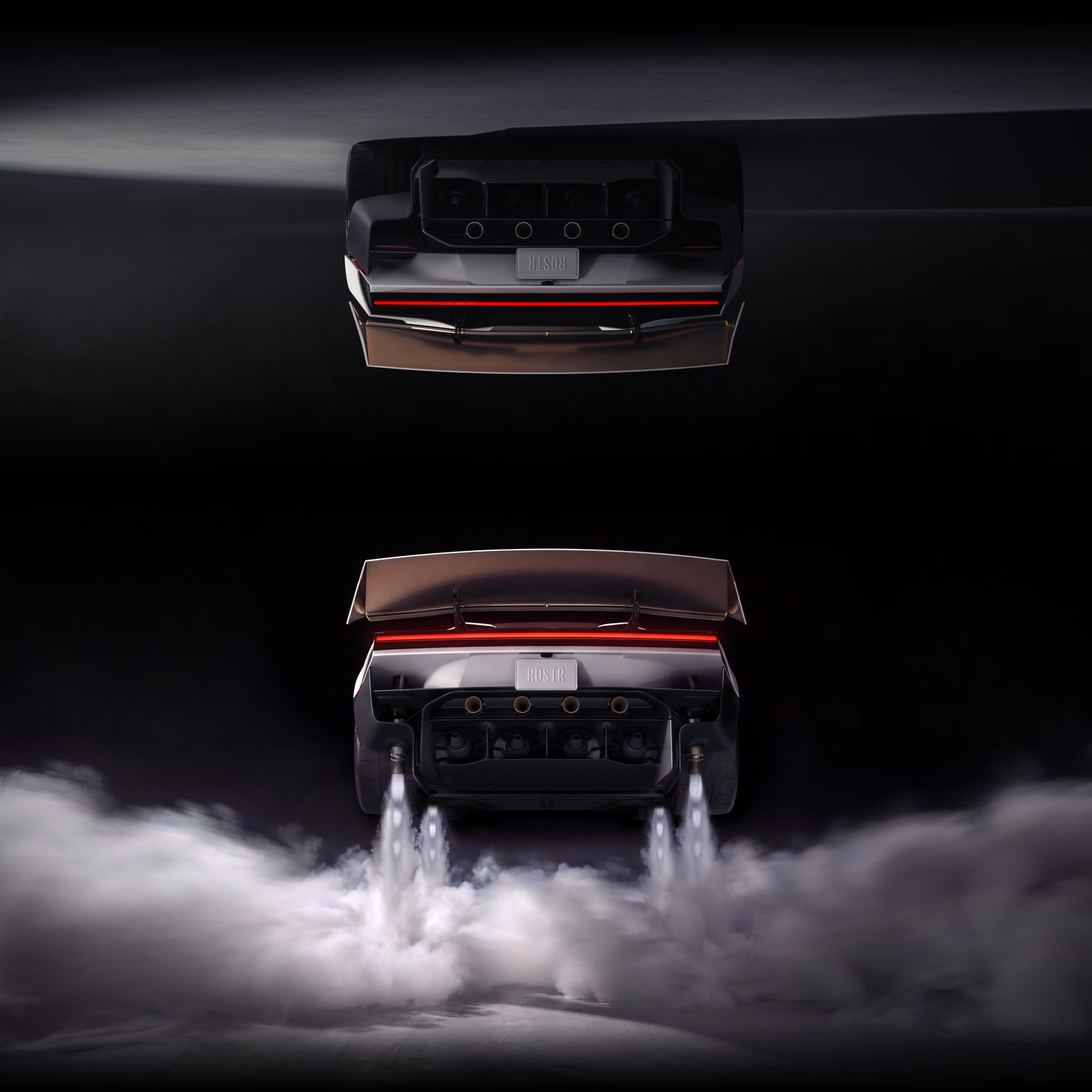


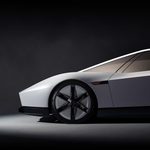
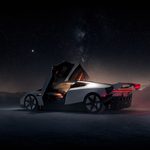
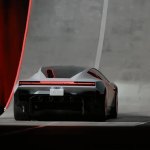
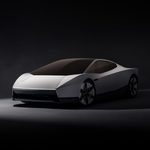
On a clear evening in mid-October at SpaceX’s test site in McGregor, Texas, a Tesla Roadster left the ground, rotated in the air, and landed again. The maneuver was called the kickflip. It looked like a stunt. It was also a carefully calculated demonstration of forces, sensors and software working in real time.
The car drove toward a line of parked Teslas that included a Model 3, a Model Y, a Cybertruck, a Cybercab, and a Semi. It launched, rose roughly seven meters, spun, and set itself down on the far side. Compressed-air thrusters developed by SpaceX provided the lift and attitude control.
The demonstration was dramatic, but the more interesting story sits underneath the spectacle: how a vehicle becomes a temporary flying machine through computational design rather than traditional aerodynamics.
From Road Car to Controllable Object
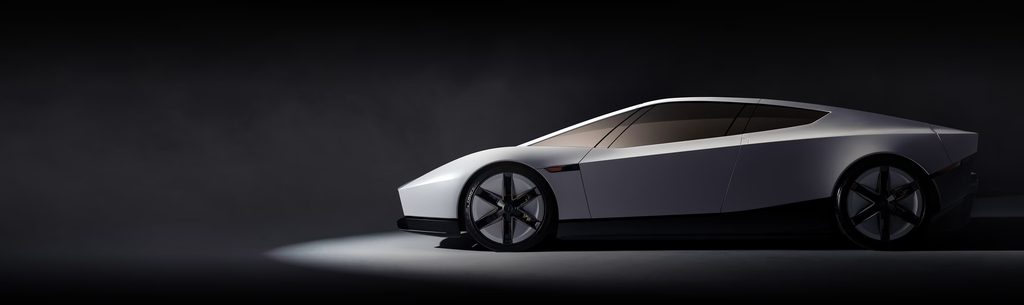
Most high-performance cars still obey the same basic rules. Grip is limited by the contact patch of the tires. Acceleration is limited by traction. Direction is limited by steering geometry and suspension. The new Tesla Roadster treats those limits as optional.
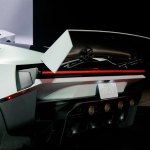
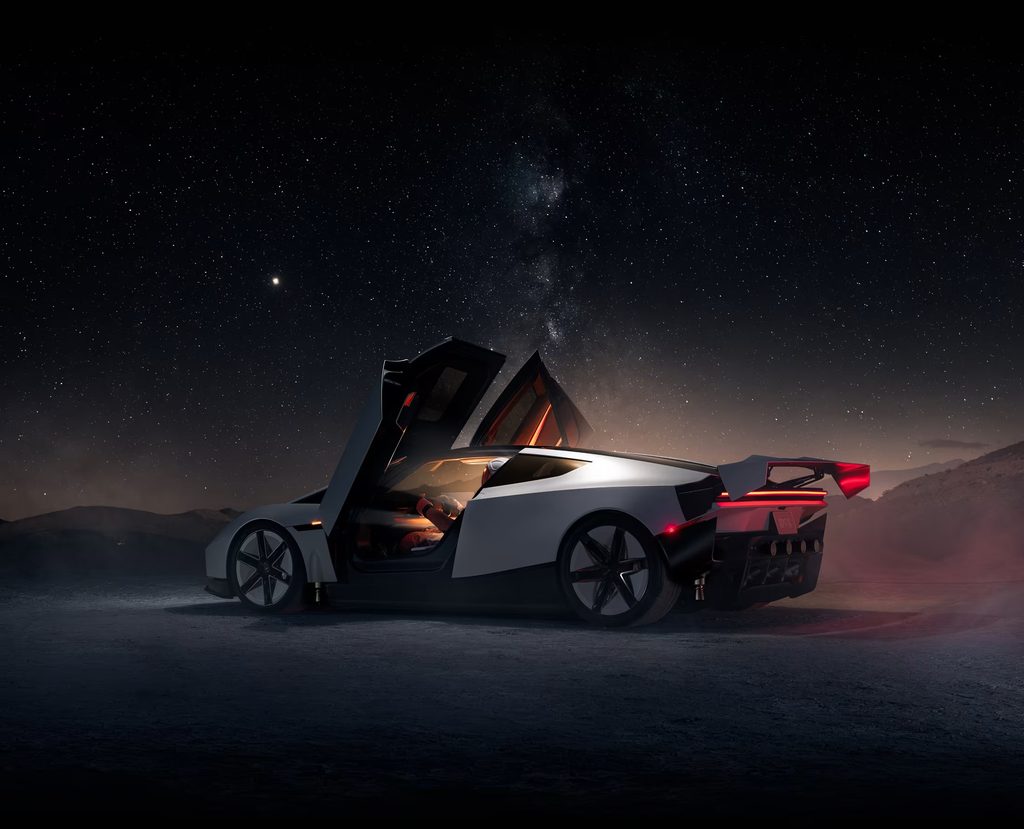
The top configuration, called Rocket, carries about 250 kilograms of compressed air in two carbon-overwrapped pressure vessels. Ten nozzles arranged around the body can fire short, precise bursts. The system is cold-gas: no combustion, no flame, only high-pressure air released through electric actuators. Because the tanks can be recharged by an onboard compressor, the car does not need special propellant.
This setup turns the vehicle into something closer to a controlled projectile for brief moments. The software must calculate orientation, residual velocity, available pressure and landing geometry in fractions of a second. That is a computational problem as much as a mechanical one. The car’s body becomes a rigid platform whose position in space is continuously solved rather than merely steered.
Tesla Roadster: Parametric Thinking in Motion
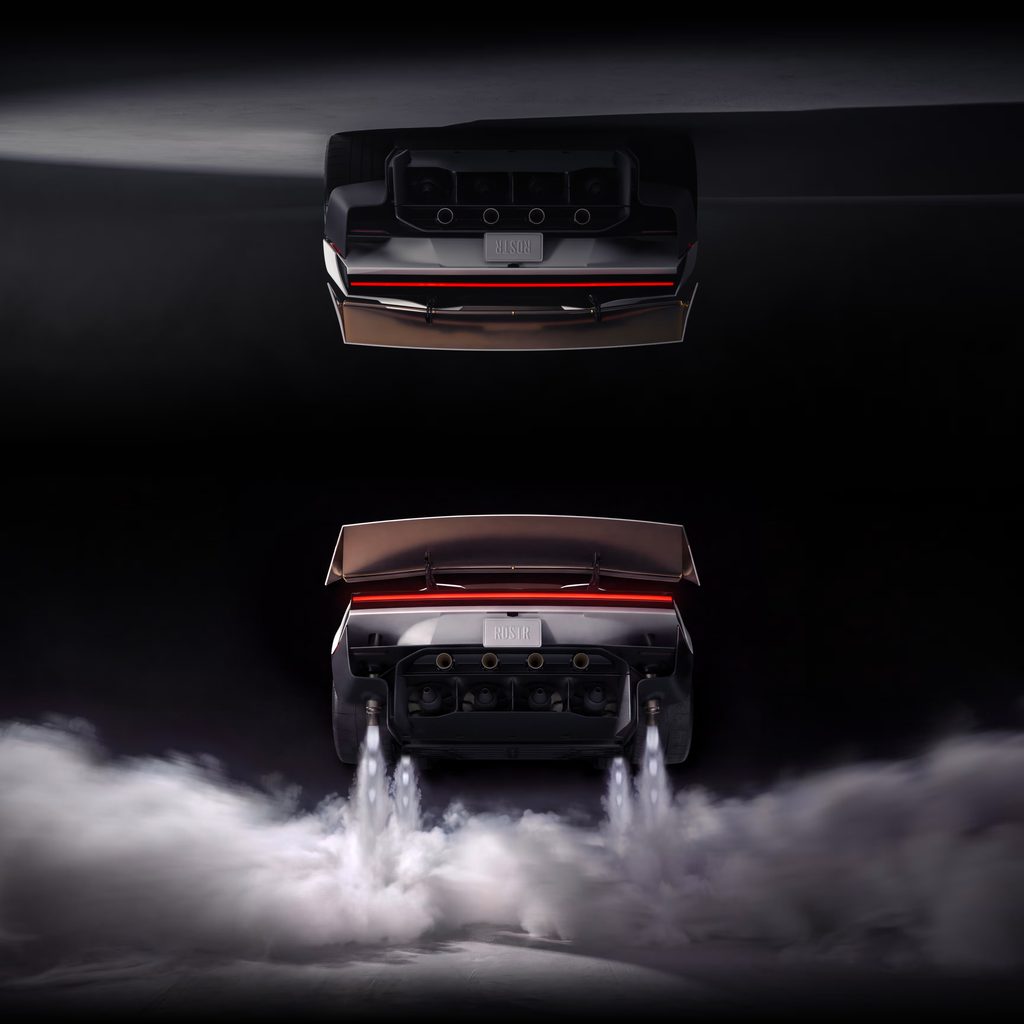
In architecture and product design, parametric systems allow a form to respond to changing inputs. The Tesla Roadster’s thruster array works in a similar way. Each nozzle is a variable. The control system adjusts thrust vectors according to the desired trajectory, much as a parametric model adjusts geometry according to constraints.
The “kickflip” itself is a choreographed sequence of those variables. Launch requires coordinated upward and forward thrust. Rotation requires differential firing. Landing requires precise deceleration so the suspension and chassis can absorb the remaining energy. The entire sequence is pre-modeled, simulated, and then executed by real-time control loops that correct for small deviations.
Tesla’s long collaboration with SpaceX is visible here. Rocket attitude control has always depended on rapid, small corrections. Translating that logic to a wheeled vehicle required new packaging, new safety margins and new software architectures, but the underlying computational approach is related. The car is no longer only a ground vehicle. For short intervals, it becomes a free-body object whose motion is governed by calculated impulses.
Three Layers of Capability
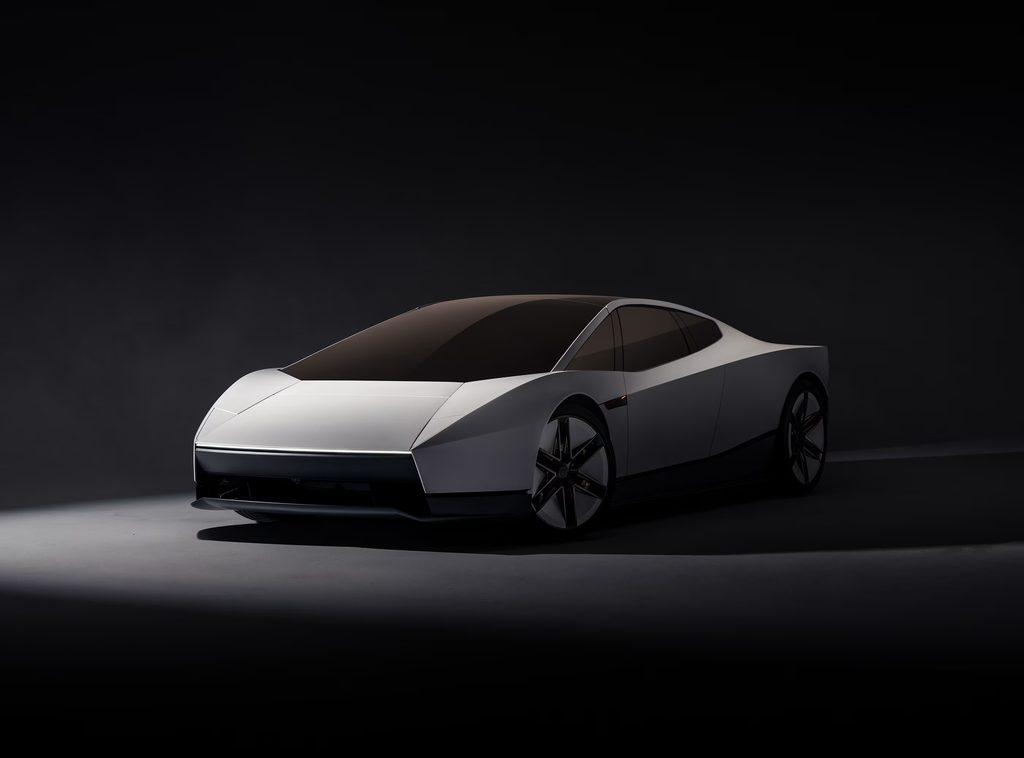
Tesla has structured the Roadster into three versions that reflect different relationships between the road and the air.
The Performance version remains road-legal and focuses on active aerodynamics plus a multi-mode suction system that can generate significant downforce. The Thrust version adds rear-mounted cold-gas thrusters for extreme acceleration. The Rocket version, invite-only and not approved for public roads, carries the full perimeter array that enables the aerial maneuvers shown in Texas.
This tiered approach is itself a form of parametric design. The same chassis can accept different levels of thrust hardware and control software. The fundamental geometry stays constant while the performance envelope expands or contracts according to regulatory and practical limits.
Production is targeted for 2028. Whether that date holds is another question, given Tesla’s history of ambitious timelines. What the demonstration made clear is that the engineering direction is no longer purely about faster acceleration or higher top speed. It is about expanding the set of possible motions a car can make.
Design Implications Beyond the Stunt
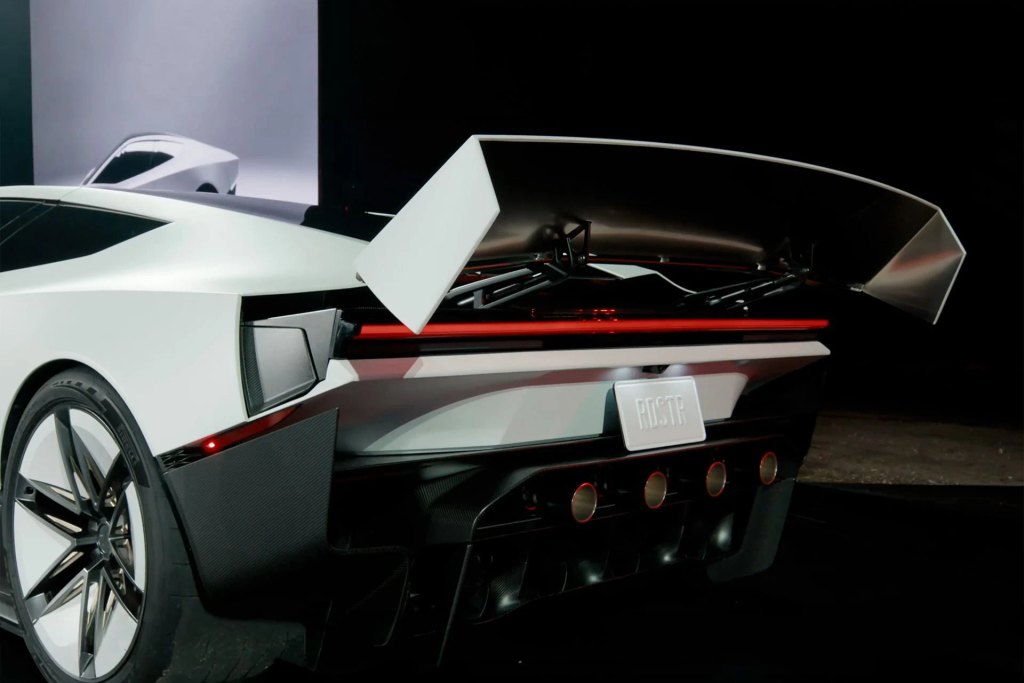
The kickflip will be remembered as a spectacle. Its deeper significance may lie in how it reframes the relationship between vehicle form and vehicle behavior. Traditional car design optimizes shape for airflow while the car remains on the ground. Once thrusters enter the picture, the body must also serve as a stable platform for force vectors that act in multiple directions.
Packaging becomes critical. The pressure vessels, nozzles, valves and sensors must fit within a form that still looks and functions like a sports car. Weight distribution changes with every kilogram of compressed air. Structural loads during launch and landing differ from those of ordinary high-speed driving. All of these factors feed back into the computational model that governs both the car’s shape and its control systems.
There is also a cultural shift. For decades the most extreme performance cars have competed on the same axes: power, grip, weight, aerodynamics. Adding controlled flight, even for seconds, opens a different axis. It asks designers and engineers to think in three dimensions rather than two, and to treat the vehicle as a system that can temporarily leave the surface that has always defined it.
Limits and Reality
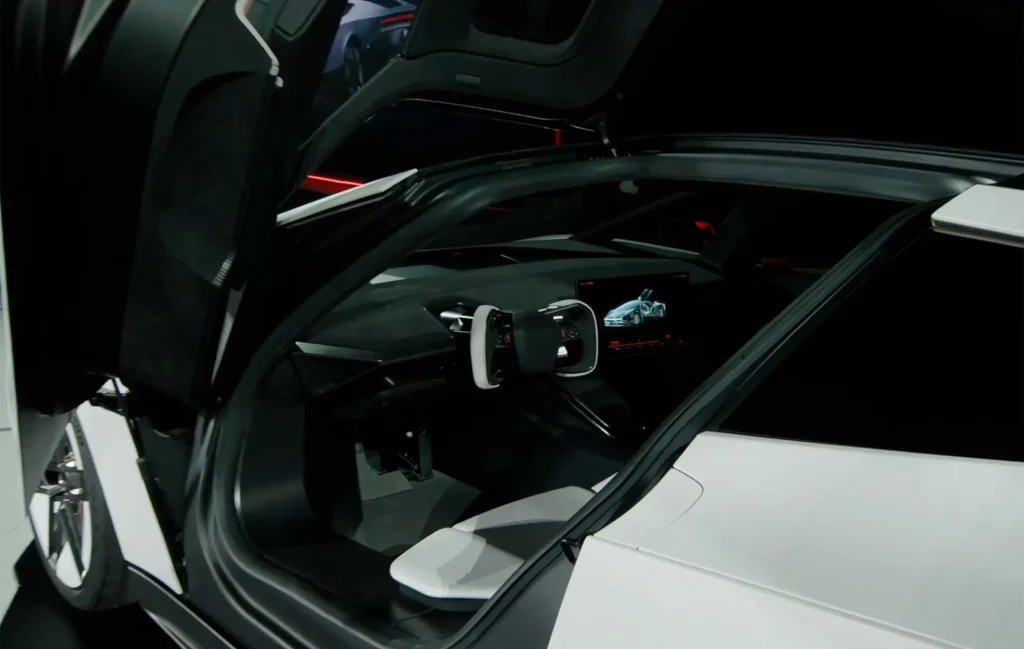
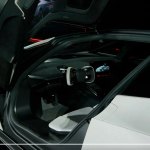
Tesla has been careful to note that the most extreme features are not approved for public roads. The Rocket version is positioned as a limited, invitation-only machine. The demonstration itself was performed without a human driver for safety. These caveats matter. The technology is real enough to lift a production-intent vehicle and control its orientation, yet it remains far from everyday use.
Still, the direction is clear. Computational power, sensor fusion and precise actuation have reached a point where short-duration flight is no longer science fiction for a wheeled vehicle. The Tesla Roadster’s kickflip is less a promise of flying cars in city traffic and more a proof that the boundary between ground vehicle and aerial object can be crossed under tightly controlled conditions.
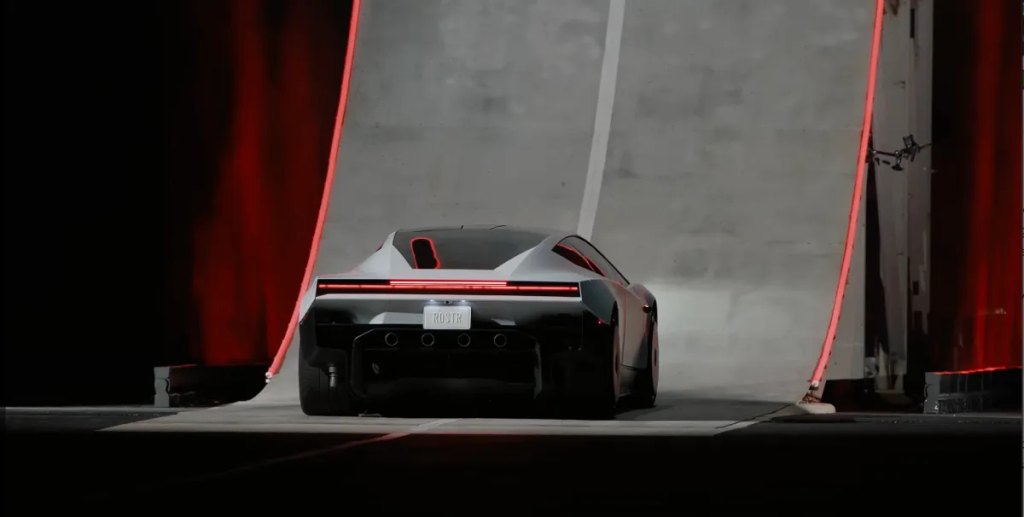
In design terms, that boundary crossing is the interesting part. The car is no longer only a product of mechanical engineering and industrial design. It is also a real-time computational system whose behavior is continuously recalculated. The form still matters, but the algorithms that decide when and how the thrusters fire matter just as much.
When the Tesla Roadster eventually reaches production, most owners will never perform a kickflip. What they will experience is a machine whose performance envelope has been expanded by the same thinking that made the stunt possible. That expansion, more than the jump itself, may be the lasting design story of the evening in Texas.