


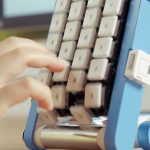
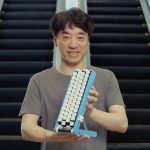
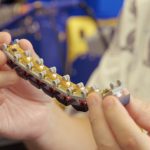
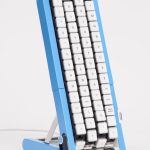
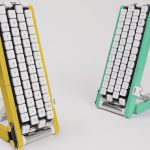
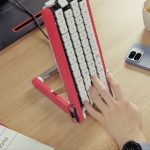
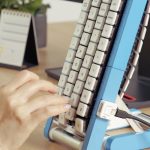
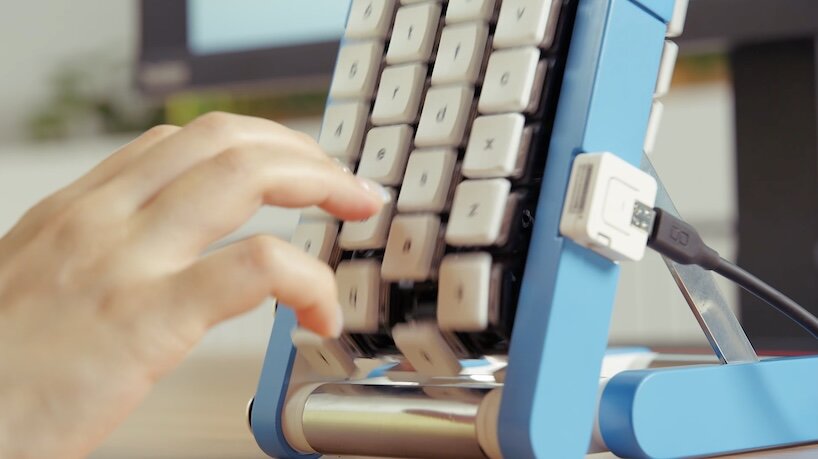
Most keyboards sit still and wait for your fingers. Google Japan has decided the opposite arrangement might be more interesting. On 1 October 2026, the company’s Gboard team released its annual experimental hardware concept: four vertical conveyor belts carrying a total of 116 keys that circulate continuously under a user’s hand. You do not reach for the letter. You wait for the letter to arrive and press it as it passes.
The device is called the Gboard Kurukuru Version. “Kurukuru” suggests a spinning or circulating motion in Japanese, which describes the mechanism accurately. Each of the four belts holds twenty-nine keys. Uppercase and lowercase characters occupy separate positions, removing the need for a Shift key.
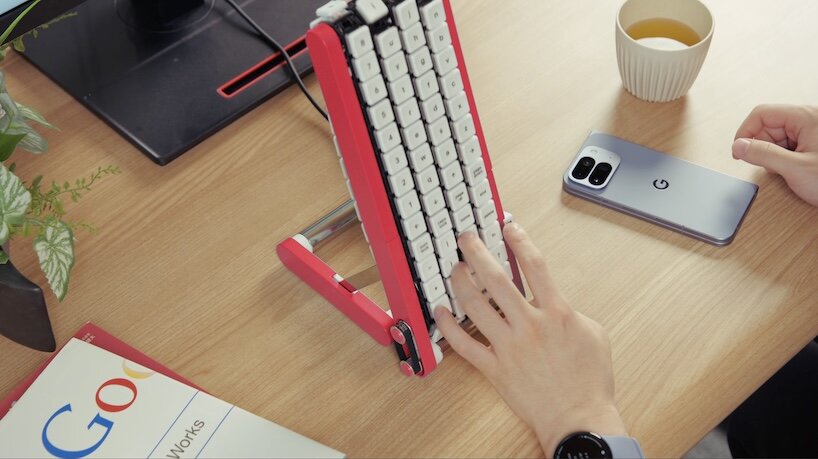
The belts are motor-driven and can run at different speeds. A voice cue can announce the approaching character for those who prefer audio guidance. A faster “speed mode” exists for anyone willing to treat typing more like a rhythm game.
One Hand, One Finger, One Cup of Tea
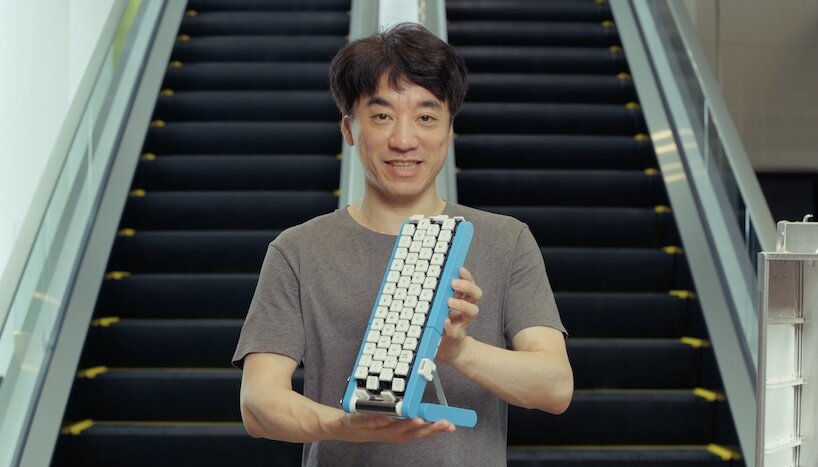
The stated purpose is one-handed or even single-finger typing. On a conventional keyboard, using only one hand forces the arm and palm to travel across a wide field of keys. Fatigue sets in quickly. With Kurukuru, the hand stays relatively still while the interface does the traveling. Google’s own description imagines the free hand holding a mouse or, more leisurely, a cup of tea.
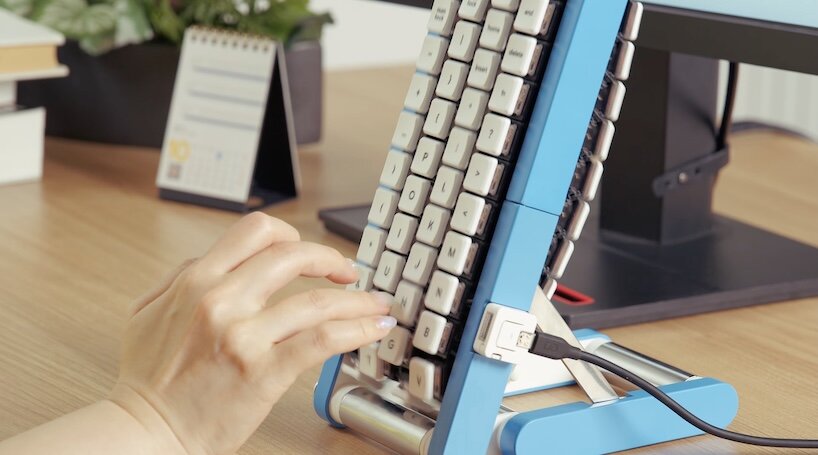
The concept is deliberately playful. Google Japan has made a tradition of releasing improbable physical keyboards each year around the same date. Previous editions experimented with dials, dual faces and other unconventional layouts. The conveyor-belt version continues that lineage while remaining fully functional as a typing device, provided the user is willing to wait for the correct key to come around.
From Factory Floor to Desktop
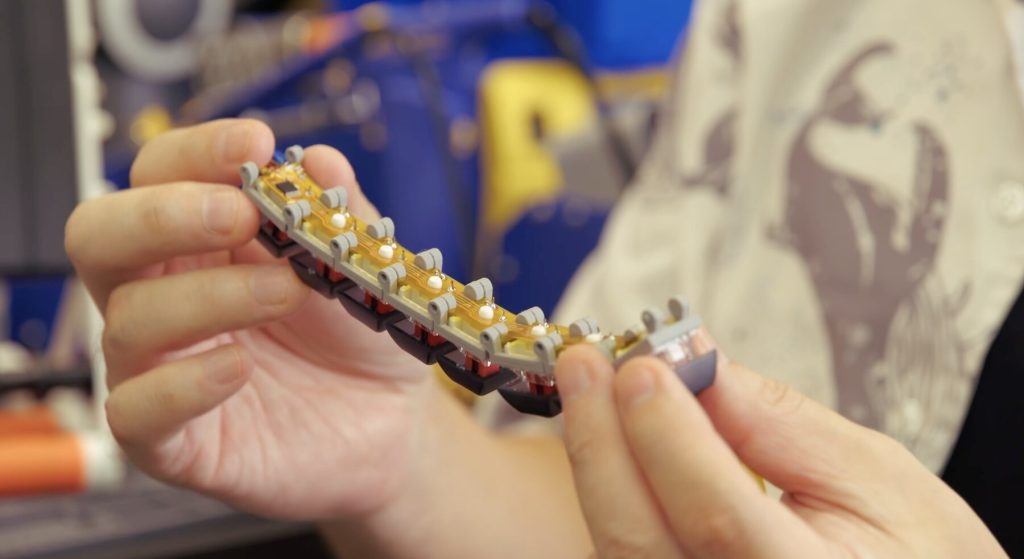
The mechanical inspiration is straightforward. Factory conveyor belts move parts to workers rather than forcing workers to walk to the parts. A rotary stamp offered another reference for compacting a long sequence of characters into a continuous loop. Flexible circuits allow the electrical connections to travel with the moving keys. The finished prototype stands upright on a desk, the four belts running in parallel like miniature production lines.
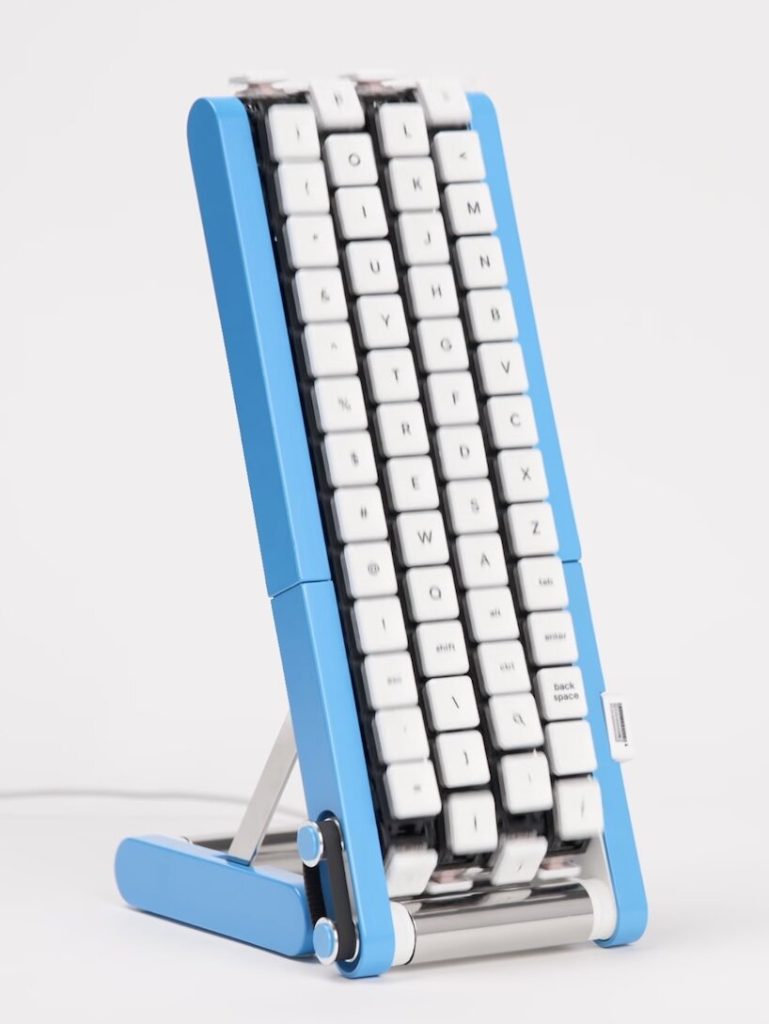
Nothing about the project is intended for retail sale. Google has published the complete design files, firmware, and 3D-printable components on GitHub under an open-source license. Anyone with access to a 3D printer, low-profile switches, a small motor, and basic electronics can attempt a build. The documentation includes assembly steps and a parts list. Color variations, higher-speed models, and a shorter mobile-oriented version have been mentioned as possible future explorations, though none are confirmed products.
Gboard: What the Experiment Actually Tests
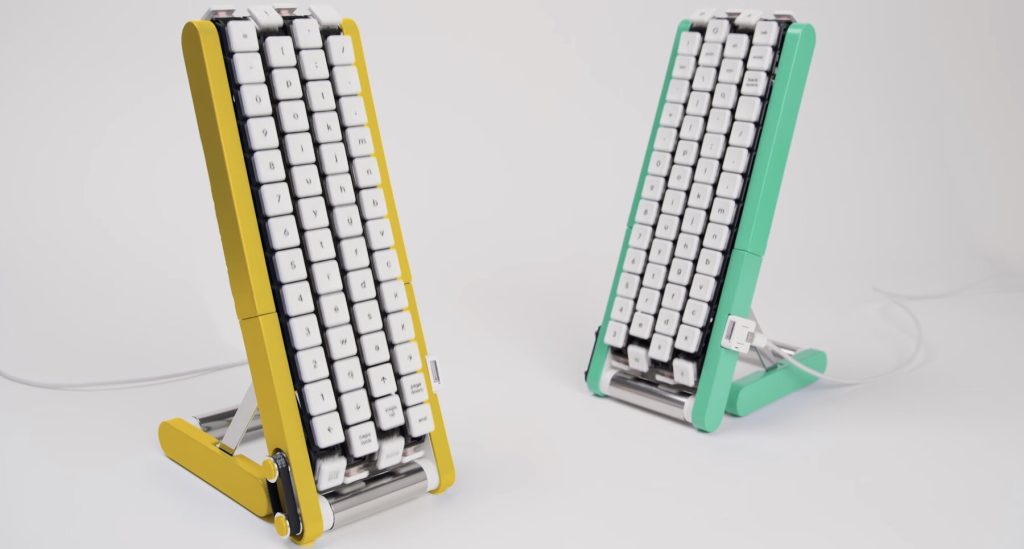
At first glance, the keyboard looks like a joke. Closer inspection reveals a serious question about interface design. For decades, the assumption has been that the human body should adapt to the fixed geometry of the machine. Kurukuru reverses the hierarchy. The machine adapts its geometry, continuously presenting options to a stationary hand. The cost is time: every character requires waiting for its turn on the belt. The benefit is reduced physical reach and the possibility of true single-finger input without contortion.
Whether anyone will type novels on such a device is beside the point. The value lies in the provocation. By making the keys move, Google Japan forces a reconsideration of what a keyboard is allowed to be. The open-source release extends the experiment beyond the company’s own workshop, inviting makers, accessibility researchers and curious engineers to test the idea further.
In the end the Kurukuru Version is less a product than a temporary rearrangement of priorities. For a few weeks in the autumn of 2026, the most familiar tool on the desk has been asked to do the walking so that the hand can stay still. The belts keep turning. The keys keep arriving. And somewhere a cup of tea remains within easy reach of the free hand.