

Architectural competitions occupy a distinctive place in the profession. They offer architects an opportunity to explore ideas beyond the limits of routine commissions, respond to challenging briefs, and present proposals to a wider audience. For emerging practices in particular, competitions can provide visibility and a chance to demonstrate their approach to design. For clients and institutions, they can introduce a broader range of perspectives and reveal possibilities that might not emerge through conventional procurement.
At their best, competitions create a space for architectural debate. They invite different interpretations of a shared problem and encourage participants to question familiar solutions. The process can bring together diverse design approaches, stimulate public discussion, and contribute to the development of architectural culture. Yet the value of this format depends not only on the quality of the winning proposal, but also on how the process is structured and how the work of all participants is acknowledged.
As competitions become an increasingly visible part of architectural culture, it is worth considering how they can remain inspiring while also being fair and sustainable for the professionals who take part.
The Investment Behind a Proposal
A competition entry is rarely just a drawing or a single design idea. Depending on the brief, it may involve research, site analysis, design development, technical studies, environmental strategies, visualizations, models, writing, and coordination among several contributors. Even a relatively concise submission can require a meaningful investment of time and resources.
These efforts carry real costs. Staff needs to be paid, software and equipment maintained, and specialist advice may be required. For participating offices, the decision to enter therefore involves weighing the potential benefits against the resources needed to prepare a convincing proposal. The uncertainty is part of the competition format: only a limited number of entries can be selected, and not every participant can receive a commission or prize.
This does not make competitions inherently unfair. Rather, it highlights the importance of matching the scale of the requested work with the opportunities and compensation offered. When a brief asks for extensive technical development, detailed documentation, or a highly resolved design, organizers should consider whether the submission requirements are proportionate to the resources available to participants.
Opportunity and Unequal Starting Points
Competitions are often valued for their openness. A shared brief can allow practices with different backgrounds and levels of experience to respond to the same challenge. In principle, the strength of an idea can matter more than the size or reputation of the office presenting it.
In practice, however, participants do not always begin from equivalent positions. Larger firms may have dedicated teams for visualization, research, model making, sustainability, and technical development. Smaller studios may rely on a handful of people who must balance competition work with the demands of ongoing projects. Access to consultants, financial reserves, and available working hours can all influence the level of detail a team is able to produce.
This difference does not diminish the value of open competition. It does suggest that organizers can make participation more accessible by setting realistic submission requirements, providing clear information early, and avoiding unnecessary demands for elaborate presentation material. A well-designed brief should allow the quality of an architectural response to come through without making production capacity the primary measure of a team’s potential.

The Value of Speculative Design
One of the most distinctive features of architectural competitions is their capacity to support speculative thinking. Participants can test spatial concepts, explore unfamiliar materials, imagine new relationships between buildings and public space, and consider environmental or social questions from different angles. Some proposals may never be built, but the ideas developed through the process can still contribute to professional discussion.
At the same time, competition work can become highly elaborate, sometimes extending far beyond what is necessary to communicate the central idea. Detailed renderings, extensive diagrams, and multiple layers of technical information may improve a submission when they respond directly to the brief. When they become expected regardless of the competition’s purpose, however, they can add considerable pressure without necessarily improving the quality of the architectural debate.
A useful distinction is between competitions seeking conceptual exploration and those seeking a developed, implementation-ready proposal. The first should leave room for clear, imaginative thinking; the second may reasonably require more detailed work, but should also recognize the additional effort involved. Aligning the requested level of development with the competition’s objectives can make the process more focused for everyone.
The People Behind the Presentation
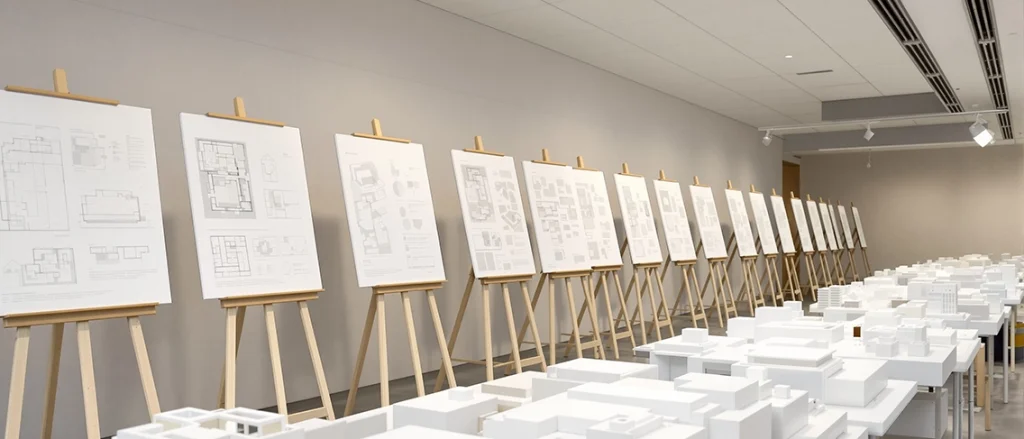
The final competition board often presents architecture as a coherent visual statement. Behind it, however, there may be a collective effort involving architects, researchers, interns, engineers, visualizers, graphic designers, writers, and administrative staff. Their contributions help turn an initial concept into a persuasive and carefully prepared submission.
Recognizing this collective effort is important, particularly when deadlines are demanding. Competition periods can involve concentrated workloads, and the enthusiasm surrounding a promising opportunity may encourage teams to work beyond reasonable limits. For younger professionals and interns, the experience can be valuable, but it should also offer appropriate supervision, learning, and recognition. Professional development is most meaningful when it takes place within a respectful working environment.
A healthier competition culture would make room for ambition without treating exhaustion as a measure of commitment. Clear schedules, manageable requirements, and responsible working practices can help ensure that the creative energy competitions generate is sustainable for the people producing the work.
Transparency, Feedback, and Professional Learning
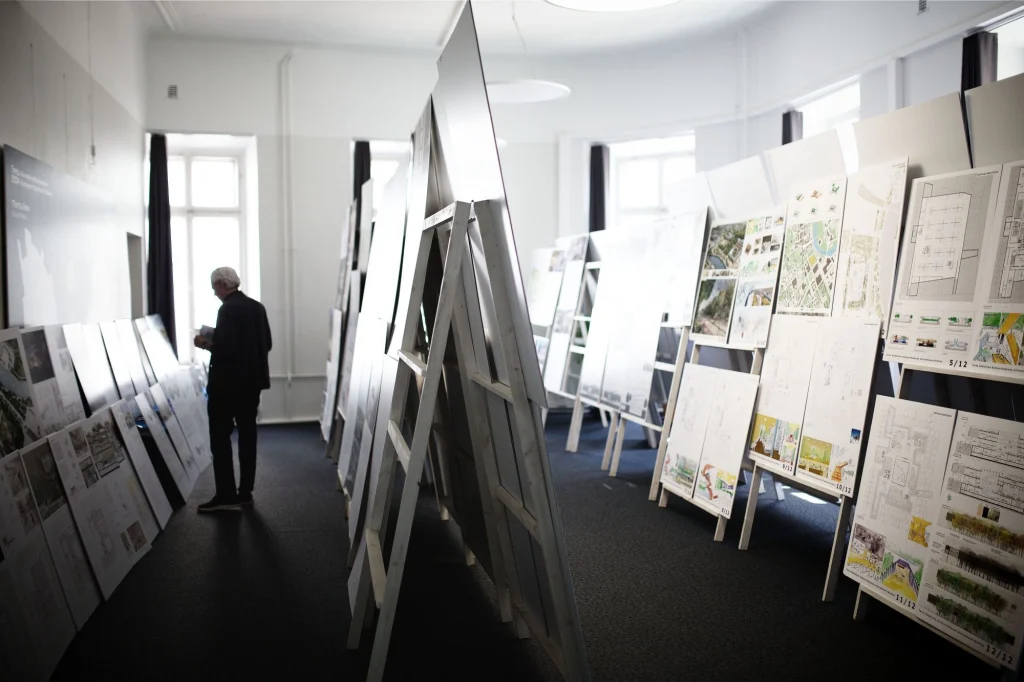
The jury process is another important part of the competition experience. Architectural quality cannot always be assessed through fixed numerical measures; questions of context, atmosphere, social value, feasibility, and innovation require informed judgment. Nevertheless, participants benefit when evaluation criteria are clearly communicated, and the decision-making process is as transparent as possible.
Feedback can be especially valuable for teams that do not win. A concise explanation of the jury’s reasoning, comments on shortlisted proposals, or a public discussion of the selected schemes can help participants understand how their ideas were received. Such practices turn the competition into more than a selection mechanism. They create opportunities for learning and allow a wider audience to engage with the range of solutions developed in response to the brief.
Not every competition can provide detailed individual feedback, particularly when participation is extensive. Even so, organizers can consider practical ways to share the jury’s priorities and explain the outcome. This small investment in communication can strengthen trust and improve the experience for future participants.

Designing Better Competition Frameworks
The future of architectural competitions does not depend on abandoning the format, but on refining it. A few principles can make a meaningful difference. First, submission requirements should be proportionate to the scale and purpose of the project. A conceptual brief should not demand the same level of documentation as a commission that is close to implementation.
Second, compensation and recognition should reflect the amount of work requested. Where a competition requires substantial design development, a paid shortlist or a reasonable honorarium can help acknowledge the professional resources involved. Prizes, clear pathways to further work, and appropriate credit for shortlisted teams can also make the opportunity more meaningful.
Third, organizers should communicate the rules, timetable, intellectual property arrangements, evaluation criteria, and intended use of submitted material from the outset. Participants should understand how their proposals may be displayed, published, or developed after the competition. These measures protect both sides and create a clearer foundation for collaboration.
Finally, competitions can be designed to value ideas rather than sheer volume of production. Concise submissions, focused questions, and carefully chosen deliverables often make it easier for juries to compare proposals on their architectural merits. They can also reduce unnecessary work for participants.
Beyond the Winning Proposal
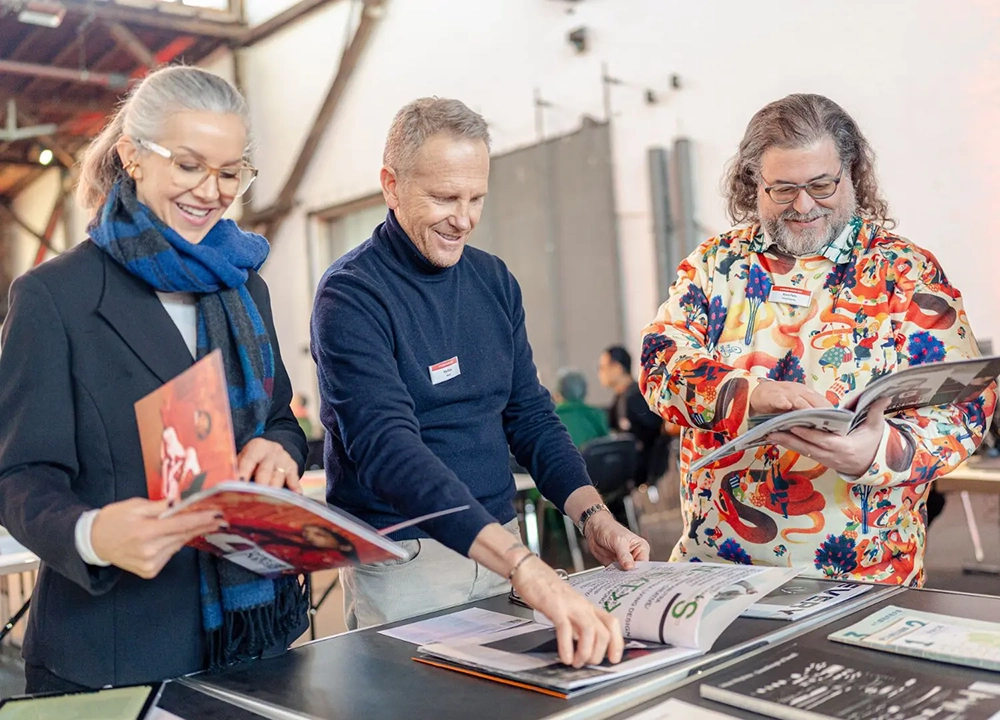
The success of an architectural competition should not be measured only by the winning design. It should also be assessed by the quality of the discussion it generates, the range of voices it makes possible, and the professional relationships it helps establish. A thoughtful competition can give emerging practices a platform, encourage established offices to rethink familiar approaches, and help clients discover a more ambitious understanding of their project.
This broader view requires recognizing architecture as both creative exploration and collective professional labor. The design idea matters, but so do the people, time, knowledge, and resources that bring it into view. When these contributions are acknowledged, competitions can become more constructive spaces for exchange rather than isolated contests in which only the final result receives attention.
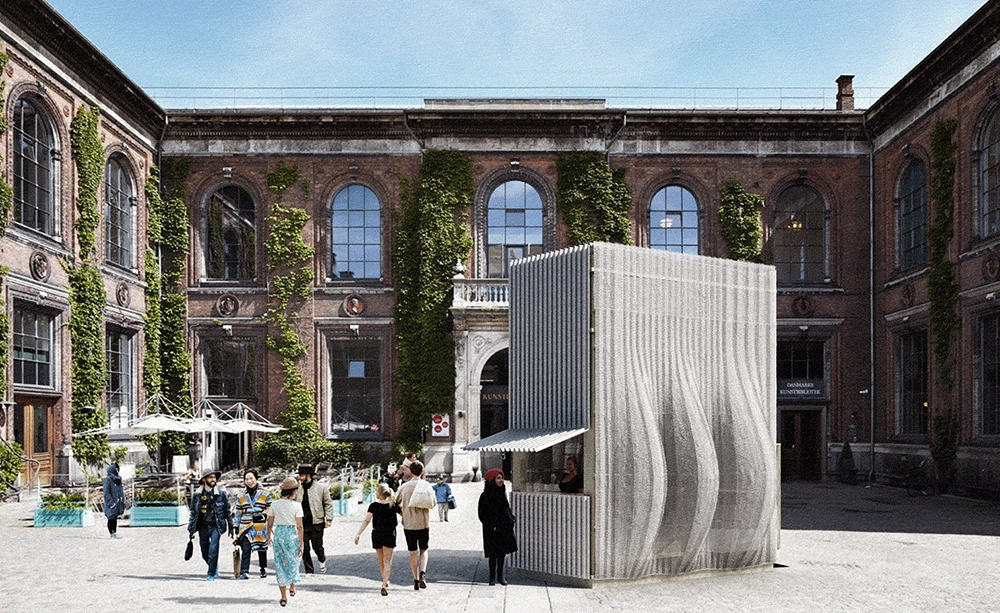
Architectural competitions remain valuable because they make room for possibilities that may not otherwise be explored. Their long-term contribution will be strongest when creative ambition is matched by clear expectations, transparent processes, proportionate demands, and respect for participants. The aim is not to make competitions less challenging, but to make them more rewarding and sustainable for everyone involved.