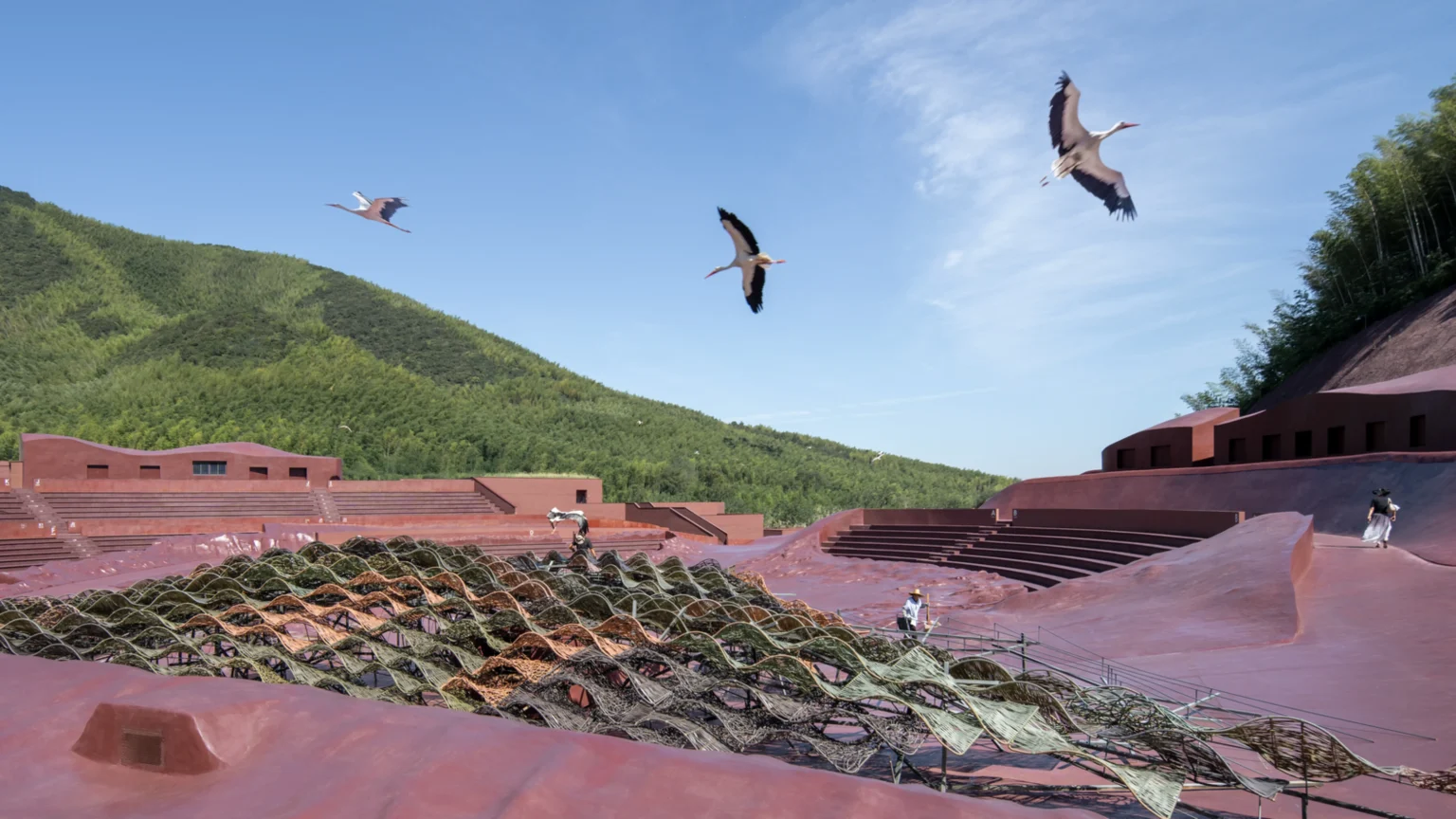


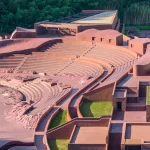
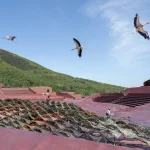
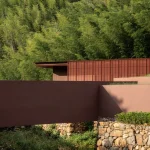
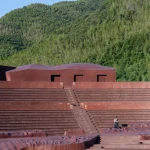
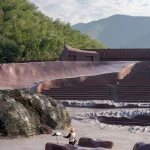
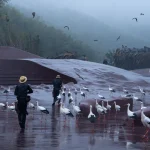
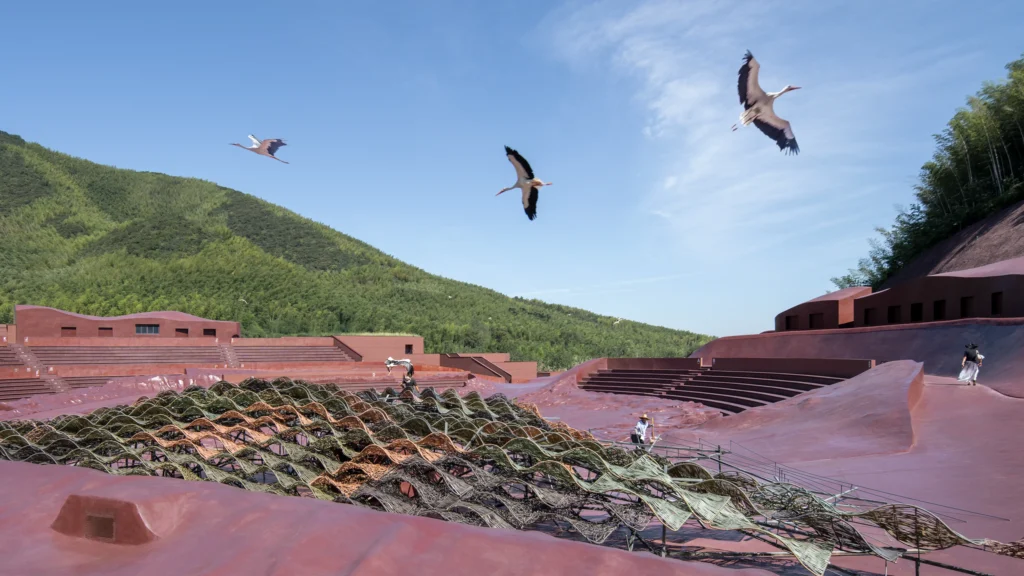
In most theaters, the animals, if they appear at all, arrive in cages or on leashes. At the Earth Valley Theater near Yixing, in Jiangsu Province, the birds fly freely. The architecture was shaped so that their paths and the audience’s sightlines form one continuous landscape.
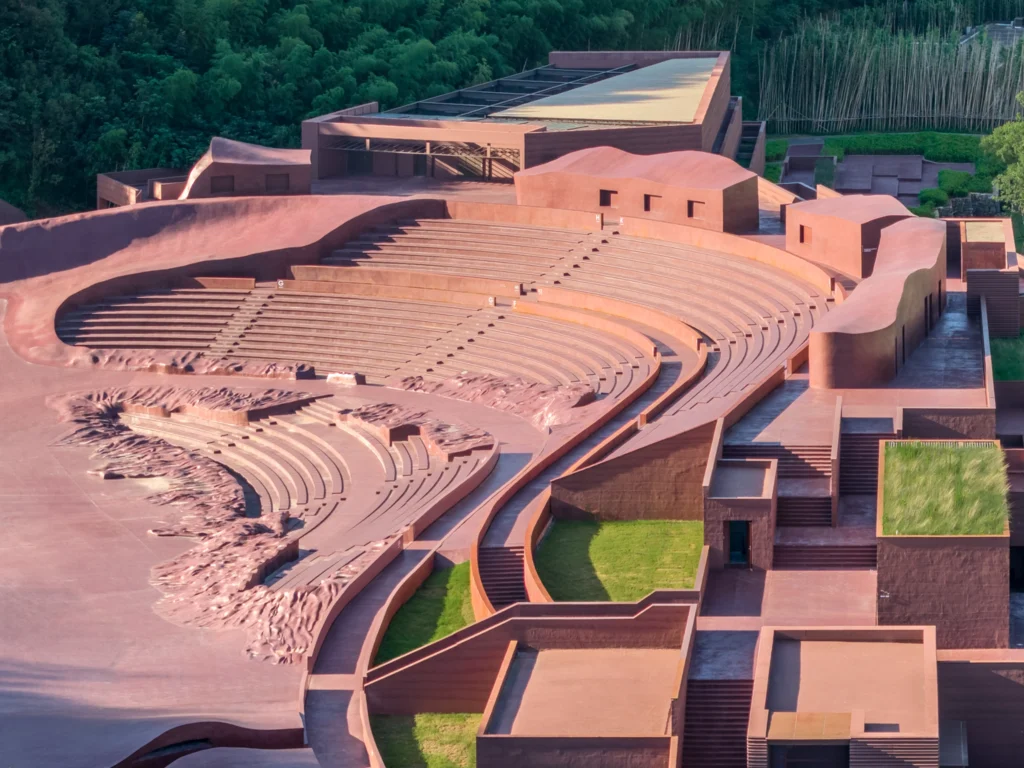
Designed by GOA (Group of Architects) and completed in 2025, the 9,200-square-meter open-air venue sits in a natural T-shaped valley on the edge of Yaohu Town. It was built for Dancing with the Birds, a Sino-French ecological performance directed by Fan Yue. The project treats architecture, topography, avian behavior, and theatrical narrative as a single system rather than as separate layers.
Architecture that follows the land
Photography © Chen Xi Studio
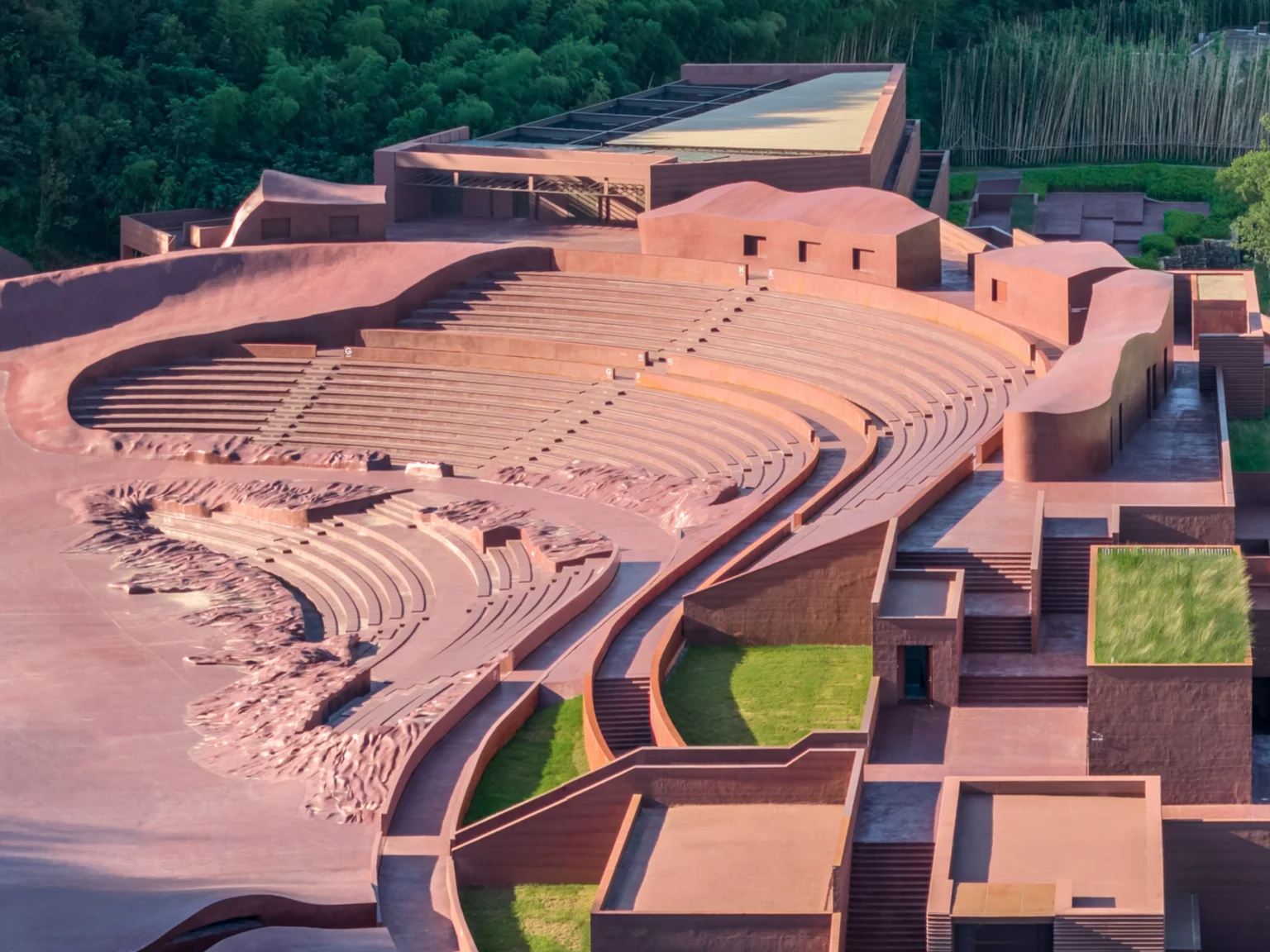
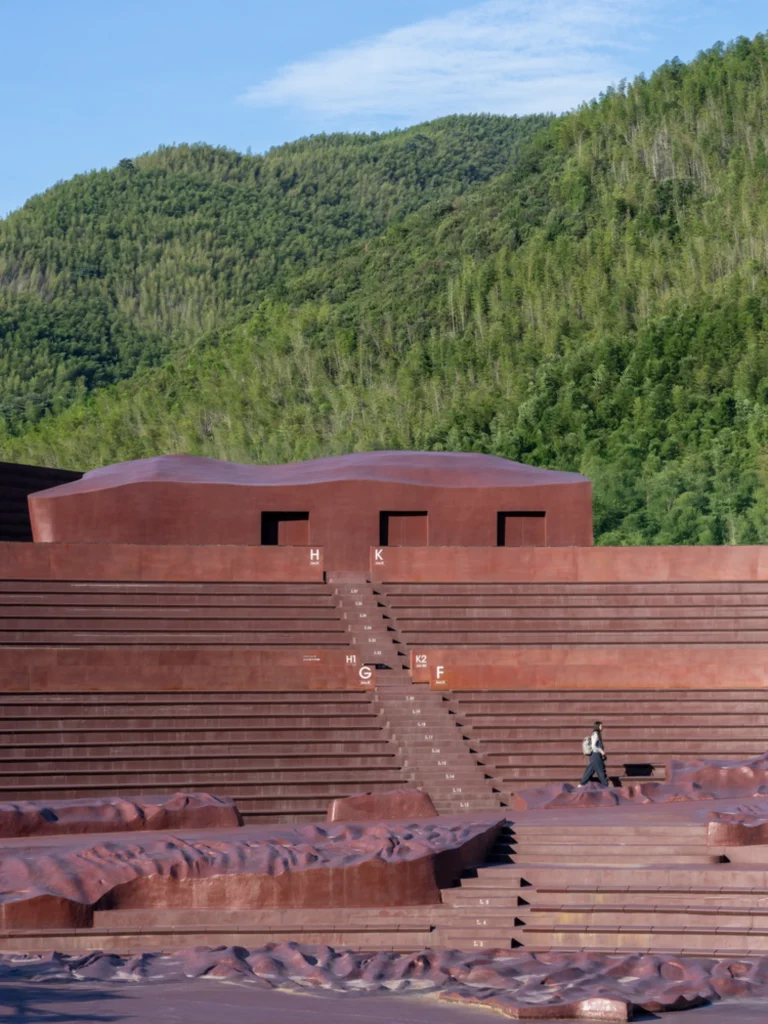
The design began with the existing valley. Instead of placing a large object on the ground, GOA allowed the terrain to dictate the form. A stepped public plinth faces the road and contains the main arrival spaces, creating a clear threshold between everyday town life and the performance landscape beyond. Visitors pass through one of three entrance halls and then descend along paths that follow the undulating ground.
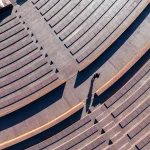
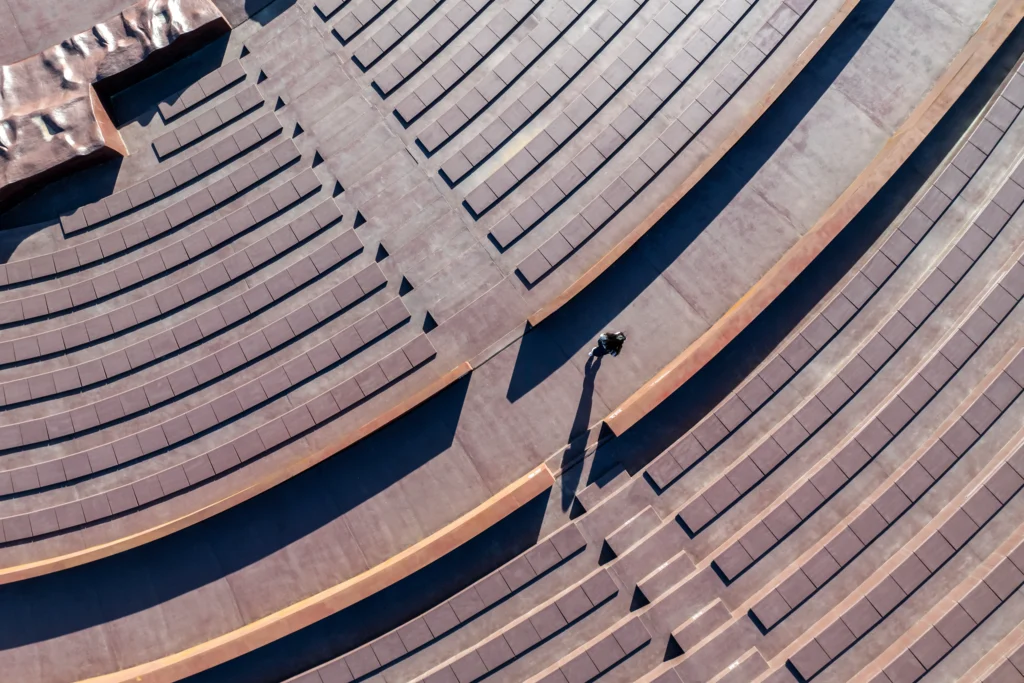
At the center, a roughly 2,300-seat amphitheater is sunk into the valley. The seating slopes were coordinated with known flight trajectories of the birds so that raptors and other species can pass above and around the audience while remaining at controlled distances. The surrounding hills, already part of the birds’ familiar environment, become both habitat and theatrical backdrop.
Shared rather than displayed
Traditional aviaries enclose animals for human observation. Earth Valley Theater reverses that relationship. Bird habitats, nesting structures, and resting areas are integrated into the wider landscape. Automated sliding doors and programmable, flicker-free LED lighting that mimics natural daylight cycles allow the birds to move with a degree of autonomy. Specialist advice from Puy du Fou informed the design of these systems so that the architecture supports, rather than forces, avian behavior.
The result is a form of interspecies cohabitation. Spectators watch a performance that includes free flight; the birds inhabit a terrain that has been carefully adjusted but not completely domesticated. Architecture becomes the medium that makes this shared occupancy possible.
Material and regional identity
Photography © Chen Xi Studio
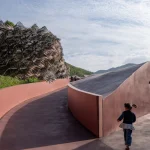
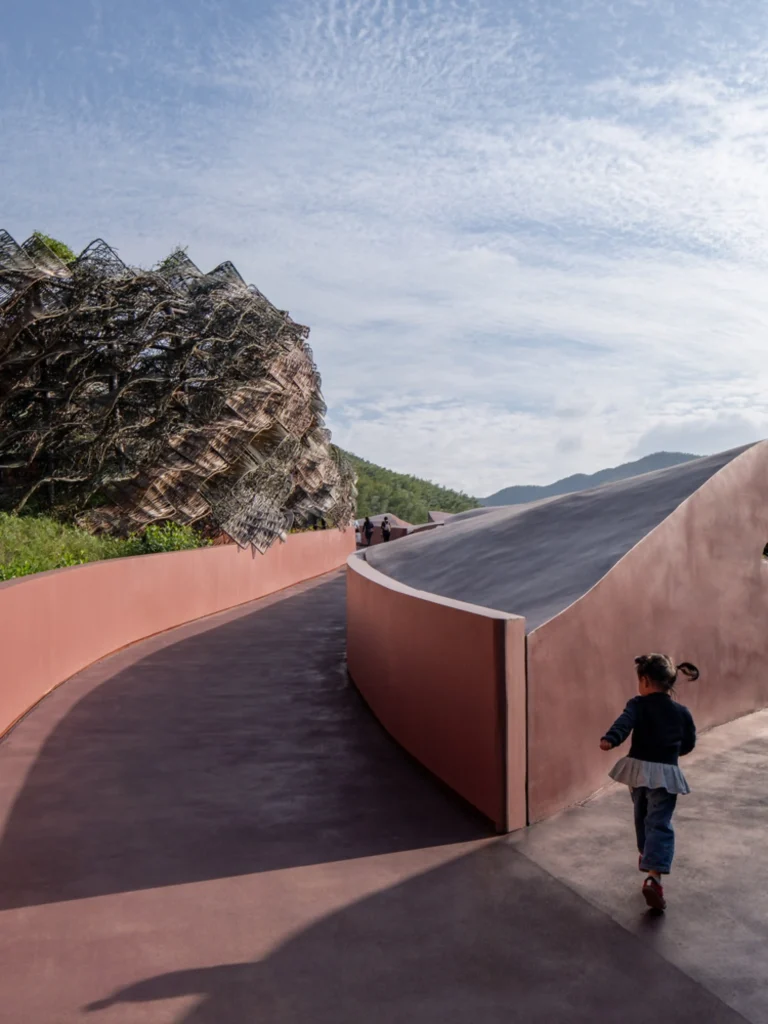
Yixing is known for its pottery tradition and for nearby bamboo forests. GOA translated both into contemporary, weather-resistant forms. Public and performance areas use CNC-shaped concrete that was later hand-sculpted on site, then finished with coatings that recall the texture of raw pottery and rammed earth.
Bamboo references appear in the central stage installation and aviary façades, realized in durable high-density polyethylene that simulates woven patterns without the maintenance problems of natural fiber.
These material choices keep the project rooted in place while meeting the technical demands of an outdoor performance venue that must also serve as a functioning habitat.
Circulation and experience
Photography © Chen Xi Studio
From the entrance plazas, paths diverge. Some lead along stepped decks beside water; others follow the natural contours of the valley. The sequence is designed as a gradual transition from the geometric order of the arrival complex into a more fluid landscape experience. By the time visitors reach the amphitheater they have already left the ordinary town behind and entered a constructed yet still open environment.
The same paths carefully separate spectator movement from the more protected aviary zones, allowing both groups to occupy the site without constant conflict.
A total work of art
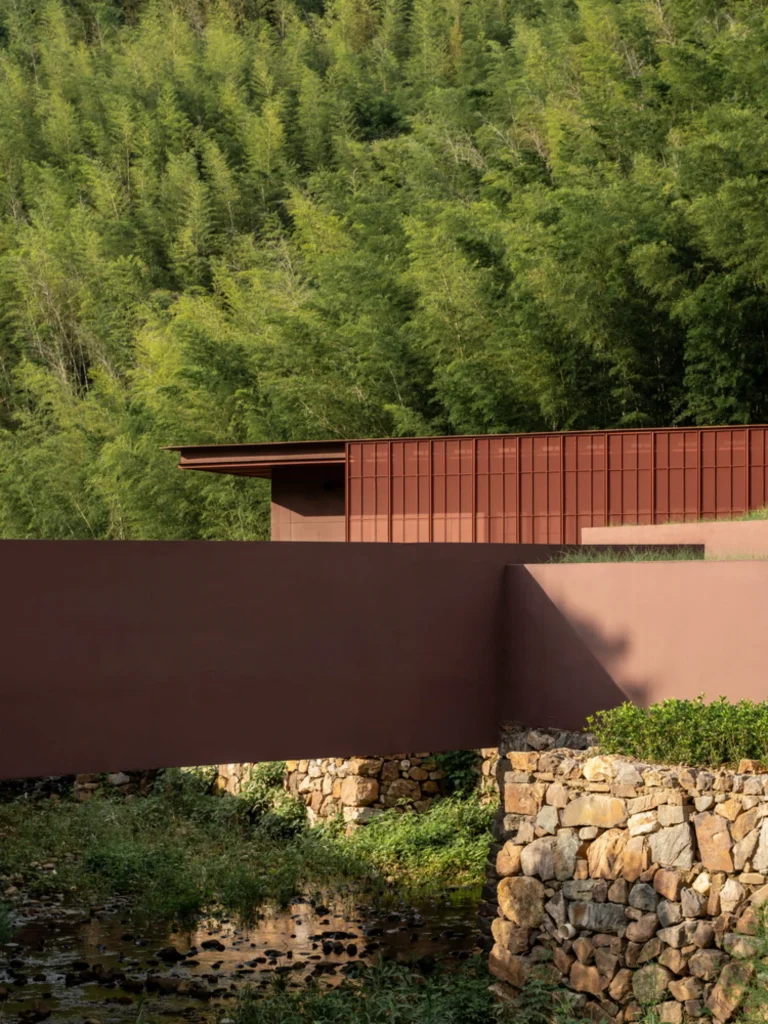
The architects describe the project as a Gesamtkunstwerk, a total work of art in which landscape, architecture, performance and ecology are inseparable. That ambition is visible in the way the seating, the flight paths, the lighting, and the material surfaces all serve the same dual purpose: supporting a human spectacle while remaining legible and usable for the birds.
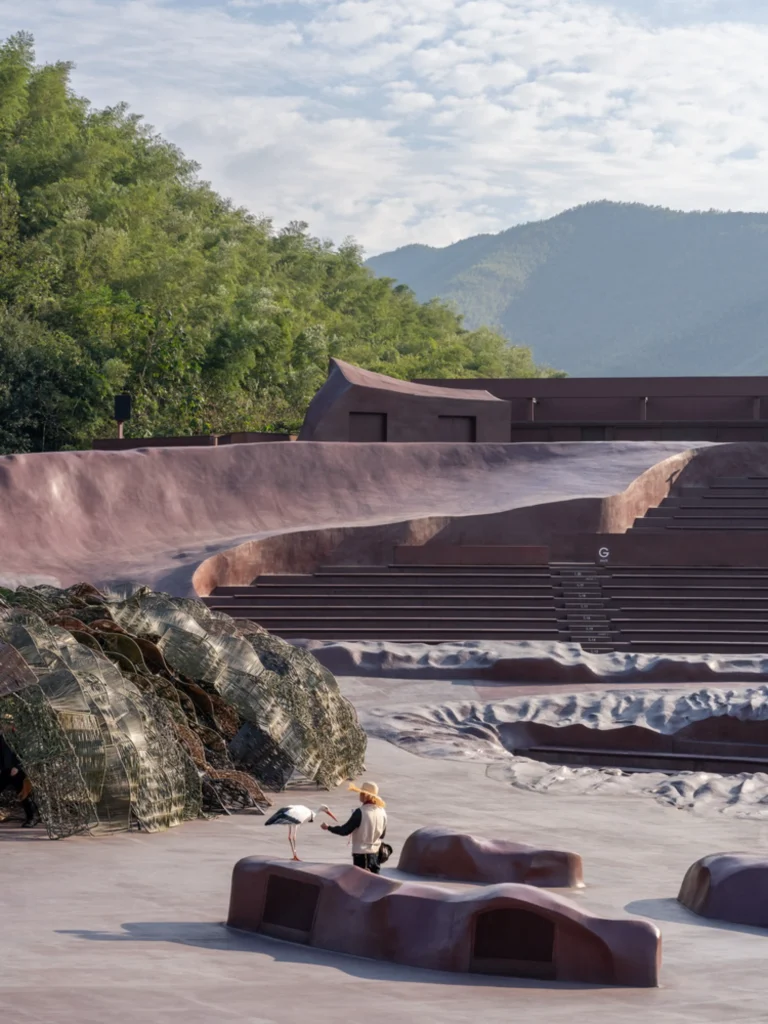
Whether the model can be repeated elsewhere depends on the availability of suitable topography, the willingness of performance companies to work with living animals under less controlled conditions, and the long-term management of the habitats. For now, Earth Valley Theater stands as a rare example of architecture that treats non-human inhabitants as active participants rather than as scenery or exhibits.
After the performance
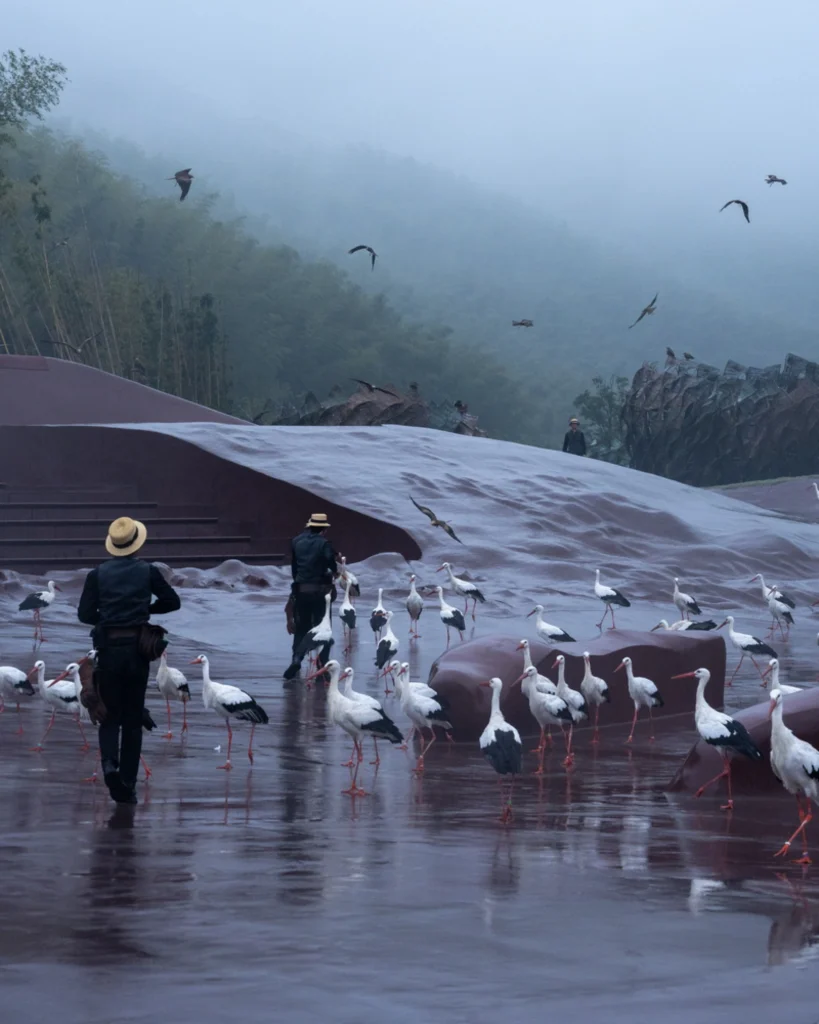
When the show ends, the valley does not empty completely. The birds remain. The paths and seating continue to frame a landscape that is both cultural and ecological. In that quiet interval, the project’s central idea becomes clearest: the same ground can hold human attention and animal life without one canceling the other. The architecture does not resolve every tension between the two, but it creates a precise and generous space in which both can occur at once.