



For decades, architectural and engineering practices worldwide treated digital building models as internal design assets. While three-dimensional Building Information Modeling (BIM) streamlined interdisciplinary coordination within private studios, regulatory authorities continued to evaluate compliance through flat, two-dimensional PDF blueprints and physical paper drawings.

Singapore’s Building and Construction Authority (BCA) has permanently closed that technological divide.
Through the full operational rollout of CORENET X, Singapore has officially mandated integrated 3D BIM submissions for all major building plan approvals. Voluntary digital submissions and 2D CAD fallbacks have been phased out. Under the new regulatory framework, presenting a fully compliant, computable 3D digital building model is no longer a competitive edge or a progressive option—it is the sole legal gateway to securing a building permit in the nation-state.
The Death of 2D Permitting: Why Flat Plans Failed Modern Cities

Traditional regulatory review processes were built for an era of physical draft boards. When complex contemporary skyscrapers are flattened into two-dimensional sets, critical spatial information is lost in translation.
This analog approval model created persistent friction points across urban development pipelines:
Sequential Regulatory Bottlenecks: A project team historically submitted separate 2D drawing sets to multiple statutory boards, including fire safety, urban redevelopment, environmental health, and land transport authorities, leading to months of fragmented, back-and-forth revisions.
Manual Compliance Oversight: Plan examiners physically measured door clearances, fire stair paths, and structural setbacks on static sheets, an oversight process vulnerable to human error and delayed site schedules.
Automated Rule Checking: Code as Executable Software
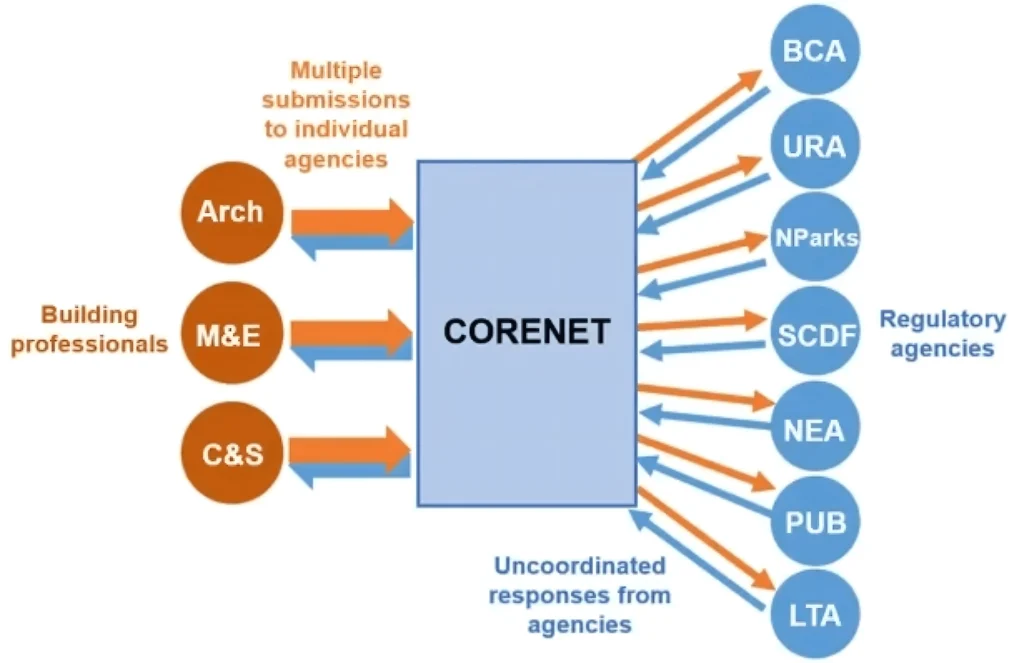
At the heart of the CORENET X system is a fundamental shift in how building regulations are interpreted. Instead of human inspectors manually interpreting text-based building codes against drawing sets, Singapore has encoded its entire regulatory framework into machine-readable algorithms.
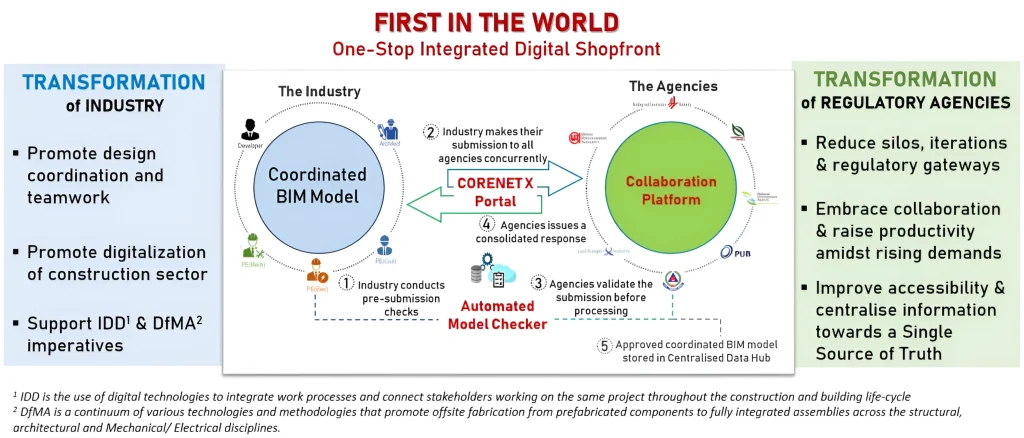
By using open Industry Foundation Classes (IFC) standards, the system’s automated rule-checking engine parses the rich data embedded within building components:
When an architectural firm uploads a project file, the validation engine automatically verifies geometric spatial constraints alongside embedded material attributes. Non-compliant door widths, obstructed egress paths, or structural envelope violations are flagged instantly within the 3D space, drastically reducing approval timelines from months to days.
Industry Friction and the Cost of Technological Elevation
While the mandate positions Singapore at the global forefront of construction technology (ConTech), the regulatory shift has created significant operational pressure across AEC (Architecture, Engineering, and Construction) firms.
Transitioning from visual modeling to computable, regulatory-grade BIM demands rigorous model discipline. Small design studios face substantial upfront costs in software licensing, hardware upgrades, and specialized BIM manager training.
However, government leadership maintains that the long-term economic gains far outweigh initial transition friction. By eliminating design clashes prior to site breaking, developers avoid costly on-site re-work, material waste, and construction delays—aligning with Singapore’s broader economic mandate to boost construction productivity and digital transformation.
Building the Living Digital Twin of a Nation
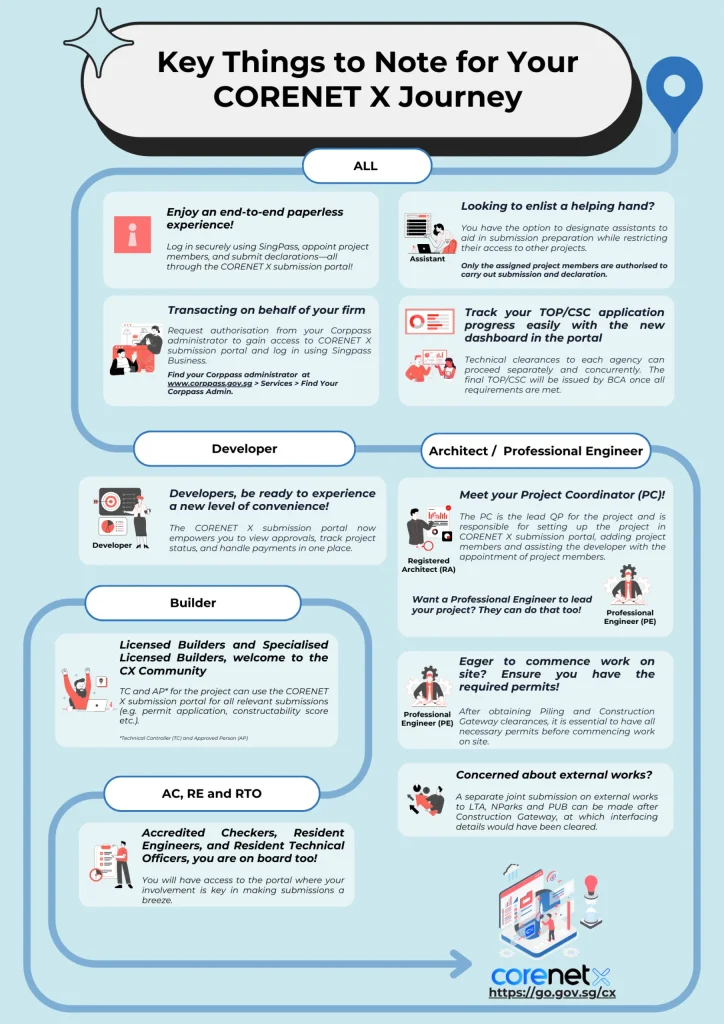
Singapore’s digital submission requirement is not merely an administrative upgrade; it serves as the foundational data feed for Virtual Singapore, a dynamic 3D digital twin of the entire island nation.
When approved 3D models transition from construction to completion, their geospatial geometries plug directly into the national spatial data infrastructure. Urban planners utilize this live digital mesh to simulate microclimate thermal dynamics, solar exposure, wind corridors, and underground transit integration with pinpoint accuracy.
The New International Standard for Urban Permitting
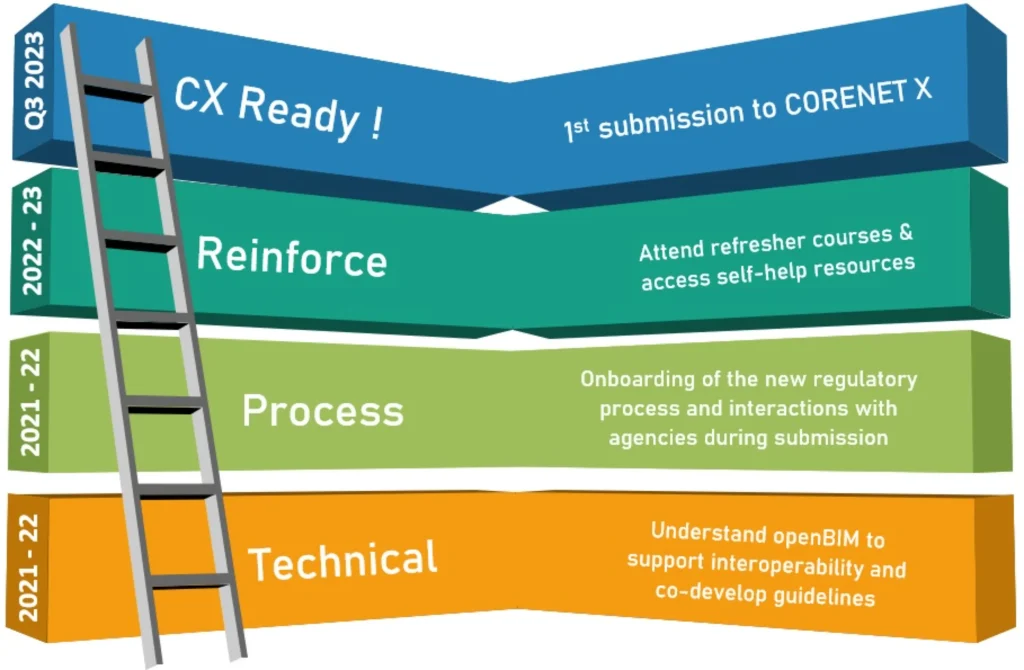
Singapore’s enforcement of mandatory 3D BIM submissions marks a point of no return for global municipal governance. By transforming static building codes into executable code, the city-state has demonstrated that modern urban density cannot be managed through paper-era workflows. As cities worldwide grapple with aging infrastructure, housing demands, and sustainability targets, Singapore’s CORENET X framework provides a proven blueprint: the future of building regulation is digital, automated, and three-dimensional.