

For years, Nvidia’s influence over artificial intelligence was measured in processors, data centers, and the enormous demand for its GPUs. Now, the company is moving closer to the place where AI begins: the developer’s screen.
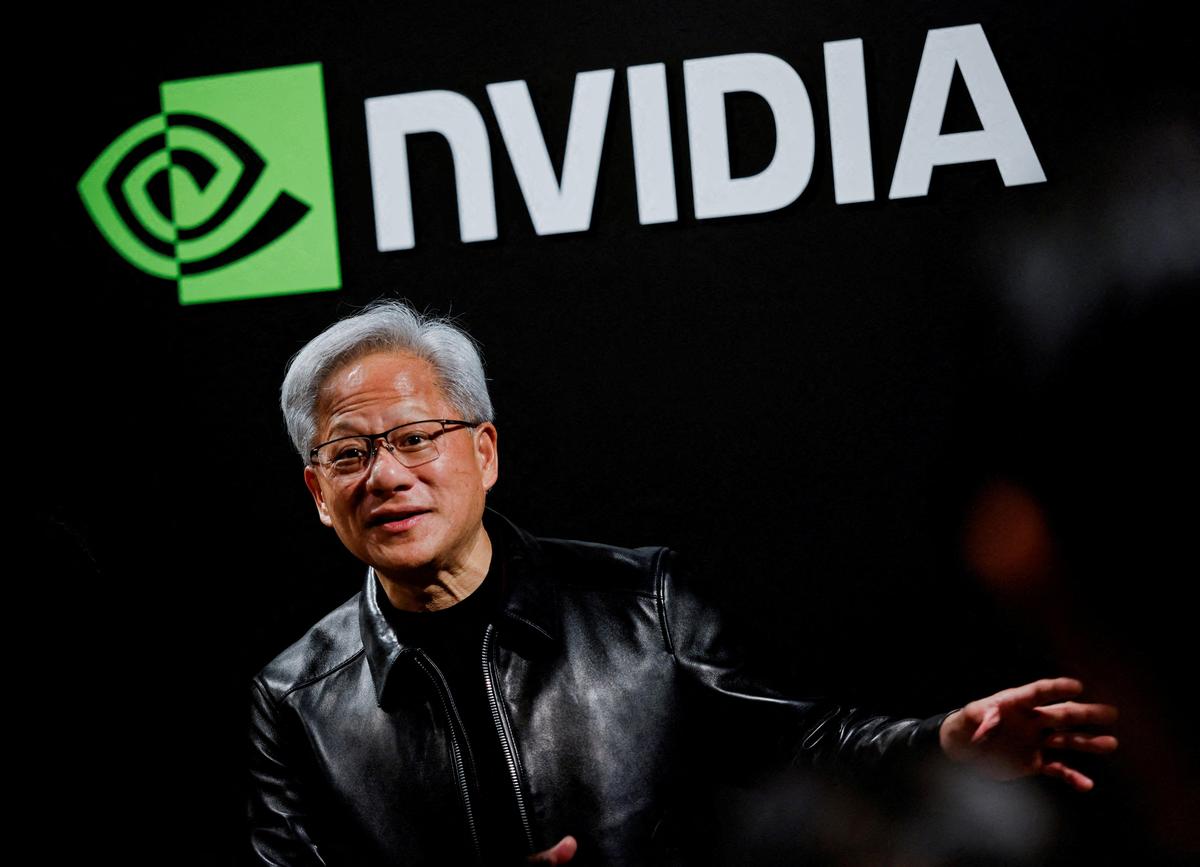
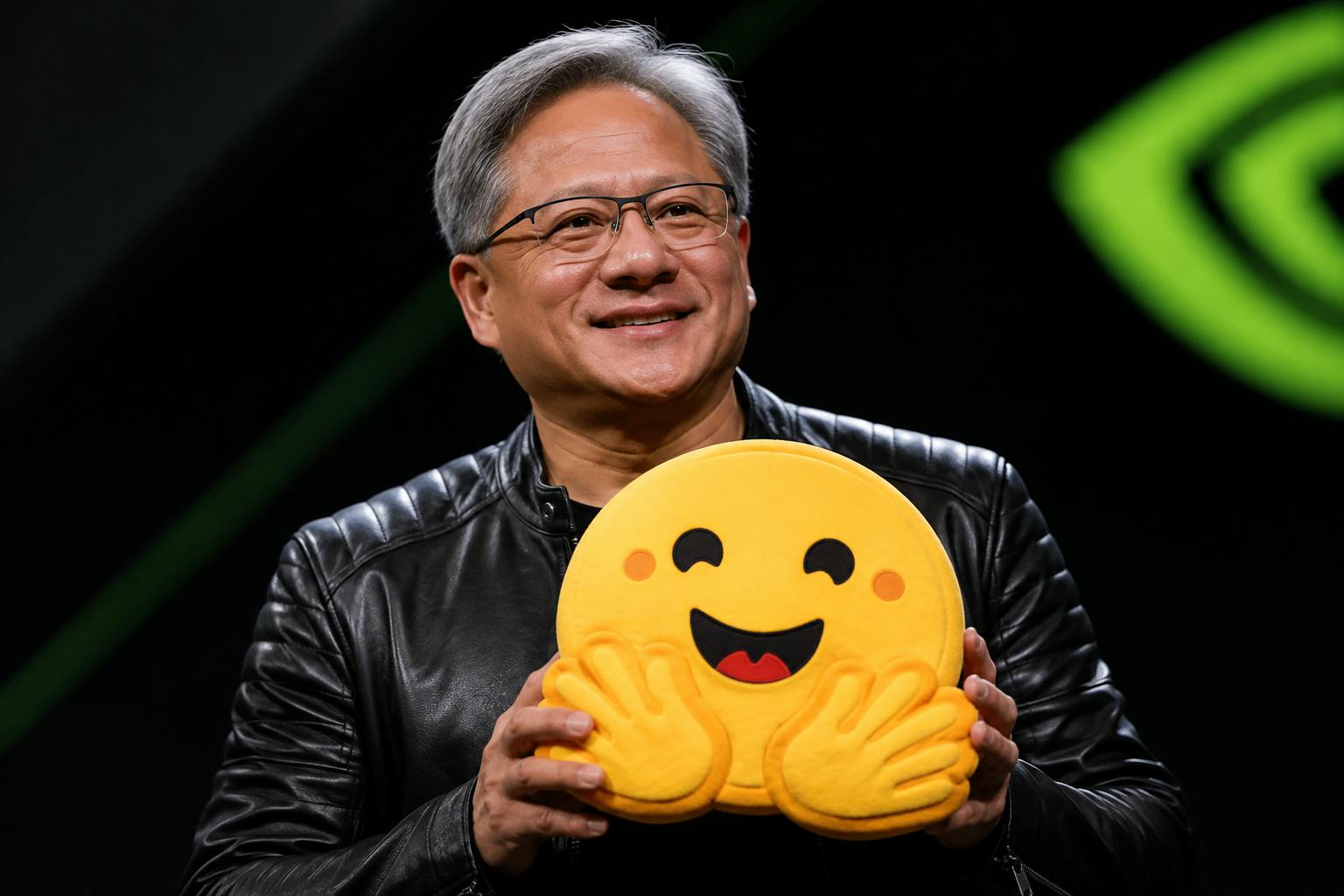
Nvidia has agreed to acquire Hugging Face for $12.93 billion, bringing the popular open-source AI platform into the chipmaker’s expanding technology ecosystem. The deal gives Nvidia a stronger position in the software, models and developer tools that shape how artificial intelligence is built and deployed.
The transaction is more than a large technology acquisition. It reflects a shift in the AI industry from competing over computing power alone to controlling the platforms through which models are discovered, adapted, shared, and put into production.
A strategic move beyond chips
Nvidia remains the dominant supplier of the graphics processors used to train and run many advanced AI systems. Yet the company’s latest move suggests that hardware leadership may not be enough in the next phase of the market.
Hugging Face operates as a central hub for open AI models, datasets and applications. Its platform is used by more than 18 million developers, researchers and creators, with over 3 million models, 500,000 datasets and 1 million applications reportedly shared across the ecosystem.
That reach gives Nvidia access to a vast community working across research, enterprise technology, robotics, education and creative industries. Instead of meeting developers only when they purchase computing capacity, Nvidia will now have a closer relationship with the tools and workflows they use every day.
The acquisition is Nvidia’s second-largest purchase, according to CNBC, following its $20 billion deal for Groq assets in December. It is considerably larger than Nvidia’s nearly $7 billion acquisition of Mellanox in 2019.
Why Hugging Face matters

Hugging Face has become one of the most visible homes of open-source AI. Its importance comes from the way it lowers the barrier to experimentation.
Researchers can publish models. Developers can download and fine-tune them. Companies can evaluate different systems before committing to a commercial provider. Students and independent teams can access tools that once required the resources of a major technology laboratory.
This open structure has helped accelerate the spread of language, vision, audio and multimodal models. It has also encouraged a culture of collaboration in which improvements can travel quickly between universities, startups and global technology companies.
For Nvidia, Hugging Face offers a route into this activity without requiring every project to begin inside Nvidia’s own software environment. The platform can become a strategic layer connecting models, frameworks, inference engines, cloud services and hardware.
That position could prove more valuable as AI systems become modular. Developers increasingly want to choose the most suitable model and deployment platform for a particular task rather than depend on one vertically integrated supplier.
The promise of an open platform
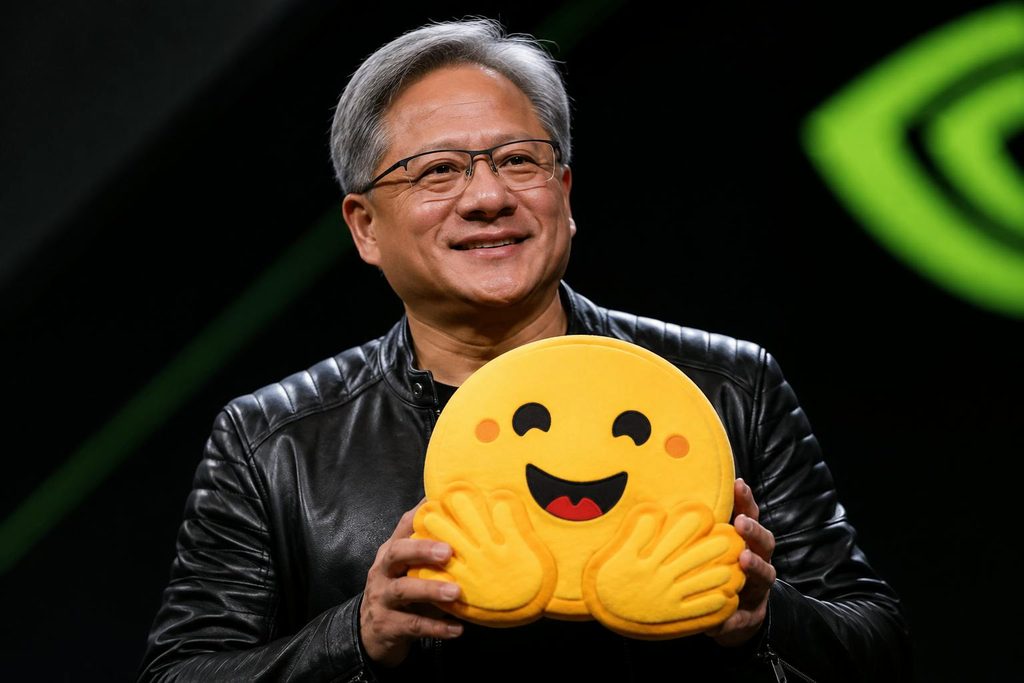
CEO Jensen Huang said Hugging Face will remain an open platform for the wider AI ecosystem. Developers are expected to retain the ability to choose their preferred models, frameworks, cloud providers, inference engines and computing platforms. Nvidia computing will not be mandatory for building or deploying through the platform.
That commitment will be closely watched.
Hugging Face’s appeal has been built on its broad neutrality. The platform serves projects that run across different hardware and cloud environments, including systems that compete with Nvidia’s products. If the company preserves that openness, Nvidia could gain influence while protecting the trust that made Hugging Face valuable.
If developers begin to believe that the platform is quietly steering them toward Nvidia hardware, the acquisition could create friction. Open-source communities tend to support collaboration, yet they are highly sensitive to control, access and vendor lock-in.
The deal’s success may therefore depend on governance as much as technology. Nvidia will have to demonstrate that ownership does not narrow the ecosystem’s choices.
A new distribution layer for AI
The most important asset in the transaction may be distribution.
AI development is becoming crowded with new models, tools and deployment options. A developer may encounter hundreds of systems designed for different languages, industries and performance requirements. Hugging Face helps organise this expanding field.
Its platform functions as a discovery layer, a testing ground and a collaboration network. Nvidia can now participate in the full journey from model publication to commercial deployment.
This could influence how models are optimised, benchmarked and adopted. Better infrastructure may help users run larger systems more efficiently, while improved tools could make it easier to move models from experimentation into production.
The impact may extend beyond software. Robotics companies, architecture studios, manufacturers and design researchers are increasingly using AI for perception, simulation, automation and generative workflows. A more powerful open-model ecosystem could shorten the distance between a research idea and a working physical application.
The security question
The acquisition arrives after Hugging Face was reportedly affected by a hacking incident, raising questions about the security of open AI repositories and the tools surrounding them.
Open platforms provide substantial benefits, but they also create complex risks. Malicious code, compromised credentials, manipulated datasets and unsafe model files can move through a shared ecosystem. As AI models gain access to sensitive systems, security becomes inseparable from platform design.
Hugging Face CEO Clément Delangue has argued that the incident reinforces the need to strengthen open-source AI rather than retreat from it. Huang has similarly suggested that transparent collaboration can give defenders an advantage by allowing more people to inspect and improve security tools.
This acquisition could bring significant resources to this challenge. The company will face pressure to improve safeguards while preserving the speed and openness that attract researchers and developers.
What changes for the industry?
The deal signals that AI competition is moving up the stack.
- Chip companies are becoming software companies.
- Model platforms are becoming strategic infrastructure.
- Open-source communities are becoming acquisition targets.
- Developer access is becoming as important as computing capacity.
The purchase strengthens its ambition to be seen as a complete AI platform rather than a component supplier. For Hugging Face, it offers capital, infrastructure and global scale at a moment when open models are becoming more capable and commercially relevant.
Ownership versus openness
This acquisition of Hugging Face places one of the world’s most influential open AI communities inside the company that has gained the most from the AI hardware boom. That contrast gives the deal its significance.
The future of artificial intelligence may be shaped by companies that control chips, clouds and computing capacity. It may also be shaped by the communities that build, modify and distribute the models running on them.
Hugging Face gives Nvidia a direct connection to that community. Whether the acquisition becomes a bridge between open development and industrial scale, or another step toward a more concentrated AI economy, will depend on what Nvidia does with that access. The company has promised to keep the platform open. The industry will now be watching how that promise is implemented.