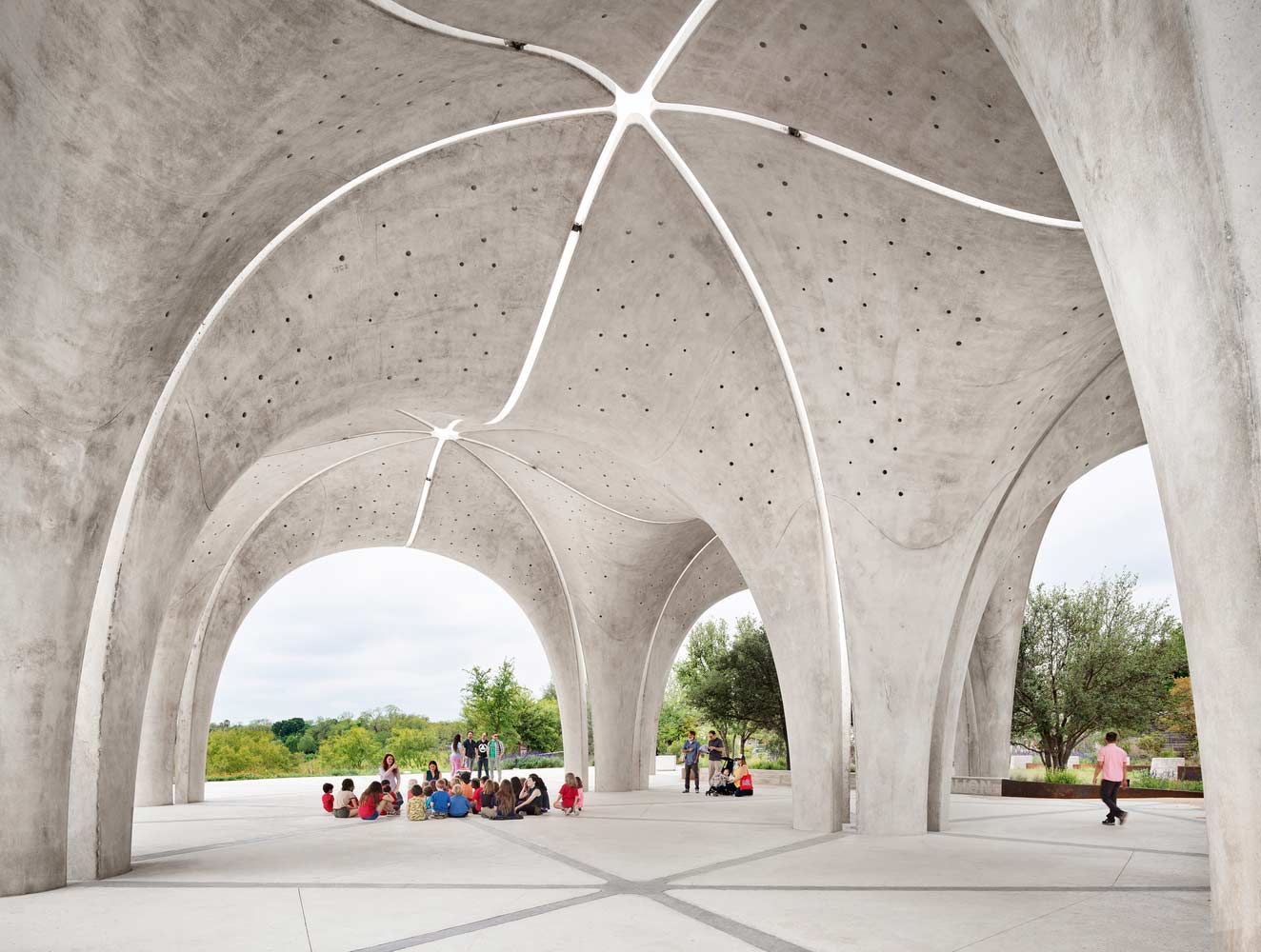

Architecture has become increasingly global. Buildings are designed by international practices, financed by multinational developers, constructed through globally distributed supply chains, and represented through the same digital platforms. A project in Dubai can be designed in London, engineered in Singapore, rendered in Los Angeles, and built with materials sourced from several continents. Architectural ideas travel even faster. Glass towers, parametric façades, exposed concrete, adaptive reuse, mixed-use developments, and minimalist interiors circulate through competitions, magazines, social media, and software libraries with almost no regard for national borders.
Yet this globalization creates a fundamental architectural question: Can global architecture ever be truly local?

The question is more complicated than simply deciding whether a building looks traditional or contemporary. Being local is not necessarily a matter of using regional materials, copying historical forms, or decorating a modern building with familiar motifs. At its deepest level, locality concerns the relationship between architecture and the particular environmental, cultural, social, economic, and political conditions of a place. Global architecture becomes genuinely local when it responds to those conditions rather than merely importing a visual language developed somewhere else.
The challenge is that contemporary architecture operates within a global system while buildings remain physically rooted in specific places. Architecture therefore exists between two opposing forces: global standardization and local specificity.

The Rise of a Global Architectural Language
The globalization of architecture is not a recent phenomenon. Modernism itself promoted an international architectural language that attempted to move beyond historical styles and national boundaries. Architects such as Le Corbusier, Ludwig Mies van der Rohe, and Walter Gropius developed ideas that could theoretically be applied across different geographical contexts. Functional planning, reinforced concrete, steel structures, curtain walls, and standardized construction offered architecture a universal vocabulary.
The ambition had considerable advantages. Architecture could become more technologically advanced, economically efficient, and responsive to modern life. But the universal language also created tensions. Buildings designed according to supposedly universal principles sometimes ignored climate, cultural practices, local construction traditions, and the social patterns of particular communities.
Globalization has intensified this condition. Today, the same architectural references can appear in cities separated by thousands of kilometres. Airport terminals, shopping centres, luxury hotels, corporate headquarters, and residential towers often share remarkably similar spatial and visual characteristics.
The result is what might be called architectural sameness. Cities compete for global recognition while simultaneously becoming visually difficult to distinguish from one another. The irony is almost impressive: everyone wants their city to become unique, so they commission buildings that look like everyone else’s.

Locality Is More Than Appearance
One of the most persistent misunderstandings in contemporary architecture is the idea that a building becomes local simply by looking local.
A project may use stone from the region, incorporate traditional patterns, or reinterpret an old architectural motif while remaining fundamentally disconnected from its context. Such strategies can produce an attractive image of locality without creating a meaningful relationship with place. True locality is more complex.
Climate is one of its most fundamental dimensions. A building in a hot and dry region should respond differently to solar radiation, ventilation, thermal mass, water scarcity, and outdoor living than a building in a cold northern climate. Local architecture historically developed through long processes of adaptation to such conditions. Contemporary technology can modify those responses, but it cannot eliminate the physical realities of geography.
Culture is equally important. Buildings accommodate patterns of everyday life. The relationship between private and public space, the organization of family life, attitudes toward communal activities, patterns of hospitality, gendered spatial practices, and relationships between indoor and outdoor environments can vary significantly between societies.
Consequently, a building can be technologically global while remaining culturally local. The question is not whether architects should reject global technology. It is whether technology can be used without erasing the particularities of place.
The Problem With “Regional Style”
The search for local identity has sometimes produced another problem: the invention of a superficial regional style.
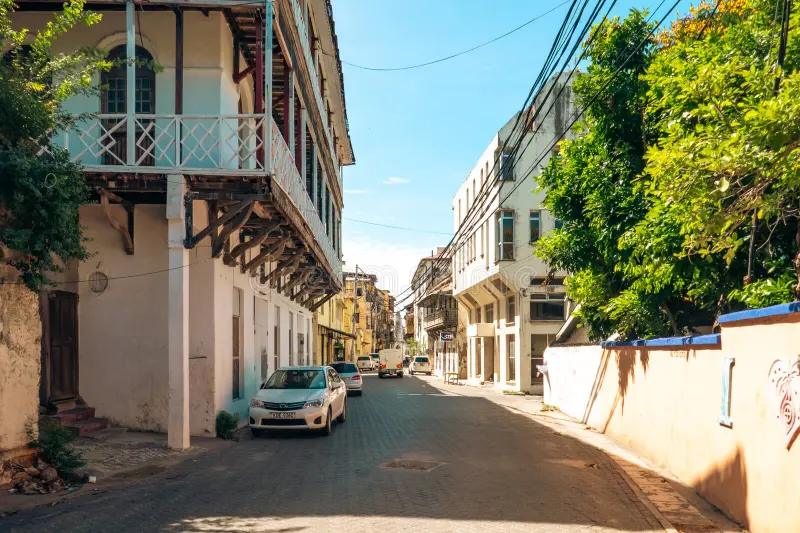
When architects attempt to make an international building appear local, they may attach recognizable cultural symbols to an otherwise generic structure. Traditional arches, geometric patterns, ornamental screens, local colours, or familiar roof forms become visual signs of identity. This approach can reduce culture to decoration.
Local identity should not function as a costume applied to a global building. It should influence how the building works, how people use it, how it interacts with its surroundings, and how it responds to environmental conditions.
This distinction is particularly important in rapidly developing regions. Cities in the Middle East, Asia, and Africa frequently face pressure to produce globally recognizable architecture while maintaining cultural identity. The result can range from sophisticated reinterpretations of local traditions to buildings that simply reproduce a collection of regional clichés.
The strongest projects tend to avoid both extremes. They neither copy historical architecture nor completely ignore it. Instead, they identify the principles behind local architectural traditions and reinterpret them through contemporary techniques.

Globalization Does Not Have to Mean Homogenization
Global architecture is often criticized for producing uniformity, but globalization itself is not necessarily the problem. The more important issue is how global knowledge is translated into local conditions.
Architects today have access to technologies, materials, research, environmental modelling, digital fabrication, artificial intelligence, and construction methods that were unavailable to previous generations. These tools can actually strengthen local architecture when used intelligently.

Digital technology, for example, allows architects to analyse solar exposure, wind patterns, thermal performance, pedestrian movement, and environmental conditions with extraordinary precision. Parametric design can generate façades that respond to local climatic conditions rather than simply reproducing a universal curtain-wall system.
Similarly, global construction technologies can be combined with regional materials and craftsmanship. Contemporary structural systems do not necessarily require the abandonment of local building traditions. Instead, they can provide new possibilities for interpreting them. The distinction is therefore not between global and local, but between generic application and contextual adaptation.
Local Materials and the Question of Authenticity
Materiality provides another important connection between global architecture and locality. Using local materials can reduce transportation impacts, support regional industries, preserve craft knowledge, and create a sensory relationship between architecture and landscape. Stone, brick, timber, earth, ceramics, and other materials often carry geographical associations that cannot be separated completely from their cultural histories.
Yet local material does not automatically create local architecture. A building may be covered entirely in locally sourced stone while its spatial organization, environmental performance, construction logic, and social function remain imported. Conversely, a building using technologically advanced or internationally manufactured materials may still respond deeply to its location.

Material locality should therefore be understood as part of a broader system. What matters is not simply where a material comes from, but how it is used, transformed, detailed, maintained, and connected to local knowledge.
This is especially relevant as architecture confronts environmental challenges. Local sourcing can become meaningful when it is integrated with broader strategies for reducing embodied carbon, adapting to climate, and strengthening regional economies.
The Importance of Everyday Life
Perhaps the strongest test of local architecture is not visual but social. Does the building understand how people actually live?
Architecture becomes local when it accommodates everyday behaviour rather than merely representing cultural identity. A successful public building, for instance, should respond to how people gather, move, rest, meet, celebrate, work, and occupy public space. A residential building should understand household structures and patterns of domestic life. Urban design should respond to local rhythms rather than assuming that a universal model of public space will function everywhere.
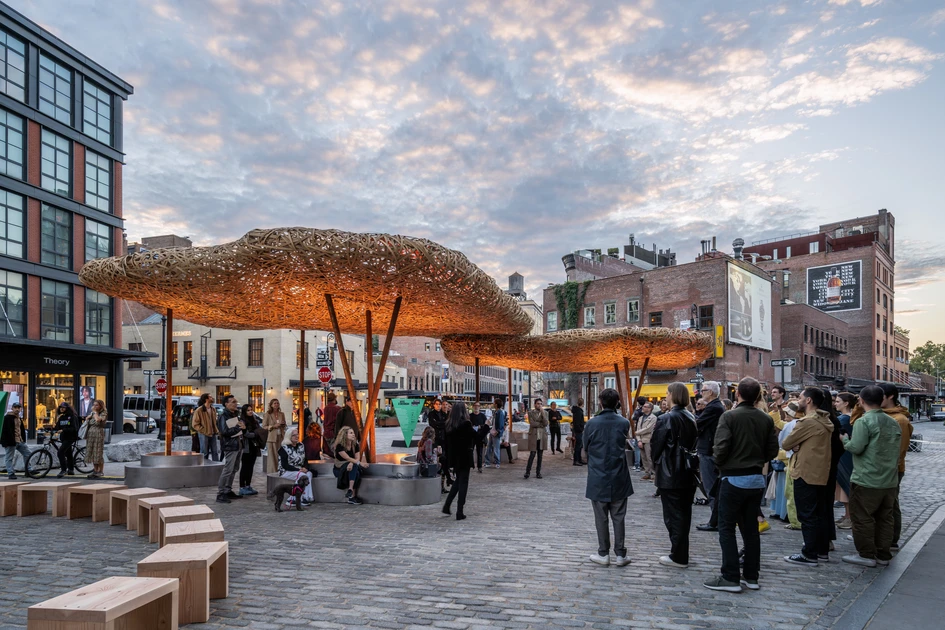
This is where community participation can become important. Local knowledge often contains information that cannot be discovered through satellite imagery, environmental software, or international design guidelines.
Residents understand seasonal patterns, informal routes, social boundaries, uncomfortable spaces, valued places, and everyday adaptations. They know which spaces are genuinely public and which are technically public but socially avoided.
Global architects can bring expertise, but local communities possess another kind of expertise: knowledge of place. A genuinely local architecture should allow these forms of knowledge to influence design.
Can a Global Architect Design a Local Building?
The increasing internationalization of architectural practice raises an uncomfortable question about authorship. Can an architect who has never lived in a particular place produce architecture that belongs to it? There is no simple answer.
Architects have always worked outside their places of origin. Cross-cultural exchange has been fundamental to architectural history. Ideas have travelled through trade, migration, education, colonialism, political networks, and professional exchange for centuries. The problem emerges when external expertise becomes detached from local knowledge.

An international architect can produce a local building if the design process is genuinely attentive to its context and involves local expertise. This requires research, collaboration, adaptation, and sometimes a willingness to abandon assumptions developed elsewhere. The architect’s role consequently shifts from being the sole author to becoming a translator between different forms of knowledge.
Local Identity in the Age of Social Media
Digital culture has made this issue even more complicated. Architectural images circulate globally within seconds. A distinctive façade can become an international trend before the building is even completed. Instagram, Pinterest, architecture websites, and AI image-generation platforms have created an enormous visual library from which designers draw inspiration.
This has expanded architectural creativity, but it has also accelerated imitation. Buildings are increasingly designed with their photographic identity in mind. A structure may be optimized for the aerial photograph, the competition board, or the social-media feed rather than for the pedestrian experience.

This creates a paradox. The more architecture attempts to become globally visible, the greater the risk that it becomes globally interchangeable.
Local architecture therefore requires something that digital culture does not naturally encourage: attention to physical experience. Sound, temperature, smell, texture, shadow, movement, material ageing, vegetation, and human interaction cannot be fully captured by an image. A building belongs to a place not because it photographs differently, but because it behaves differently there.
Toward a Hybrid Architecture
The future is unlikely to produce a purely local or purely global architecture. Instead, the most productive direction may be hybrid. Hybrid architecture does not mean randomly combining international forms with traditional decoration. It means allowing global technologies, knowledge, and professional practices to interact with local environmental and cultural conditions.

A contemporary building in Tehran, Nairobi, Tokyo, Barcelona, or Melbourne should not be expected to look completely different simply because it is located somewhere else. Nor should it look identical.
The meaningful differences may appear in orientation, shading, spatial hierarchy, material use, landscape, circulation, public-private relationships, construction methods, and patterns of occupation. In this sense, locality becomes less about style and more about performance and relationship.
A local building should perform according to its climate, participate in its urban environment, support its community, and reflect the specific conditions of its site. Its identity can emerge from these relationships rather than being imposed through visual symbolism.
Beyond the False Choice Between Global and Local
The debate between global and local architecture sometimes creates a false binary. It suggests that architects must choose between technological progress and cultural authenticity, or between international design and regional identity. They do not.
The real challenge is to develop architecture capable of operating within both systems simultaneously. Global knowledge can provide new technologies, research methods, structural systems, and environmental strategies. Local knowledge can provide understanding of climate, culture, materials, social behaviour, and place. The architecture of the future will need both.
The question, therefore, is not whether global architecture can be truly local in the sense of becoming completely detached from global influence. That is neither possible nor necessarily desirable. Architecture has always evolved through exchange.
A more useful question is whether global architecture can become specific. It can, when architects stop treating locality as an aesthetic package and begin understanding it as a complex relationship between people, environment, culture, technology, economy, and place.
Global architecture does not need to abandon the world in order to belong to a place. It needs to engage with the place seriously enough to become something that could not have been produced there in exactly the same way anywhere else.
That may be the real measure of local architecture in a global age: not whether a building looks traditional, nor whether it uses local materials, but whether its existence is deeply connected to the conditions that produced it.
In an increasingly standardized architectural world, specificity may become the new form of authenticity. And perhaps that is the strange lesson of globalization: the more connected architecture becomes, the more important it is to understand exactly where a building stands.