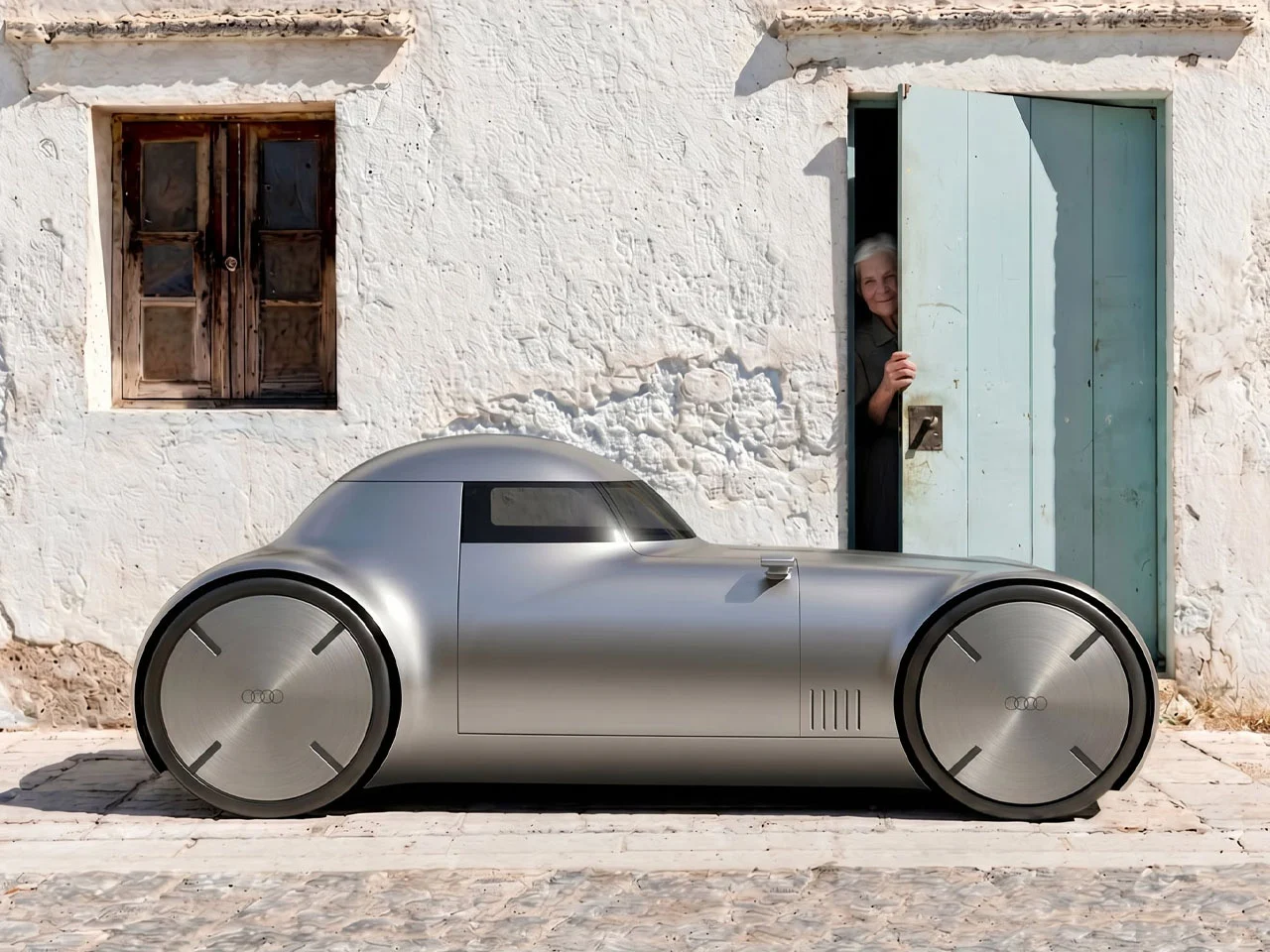
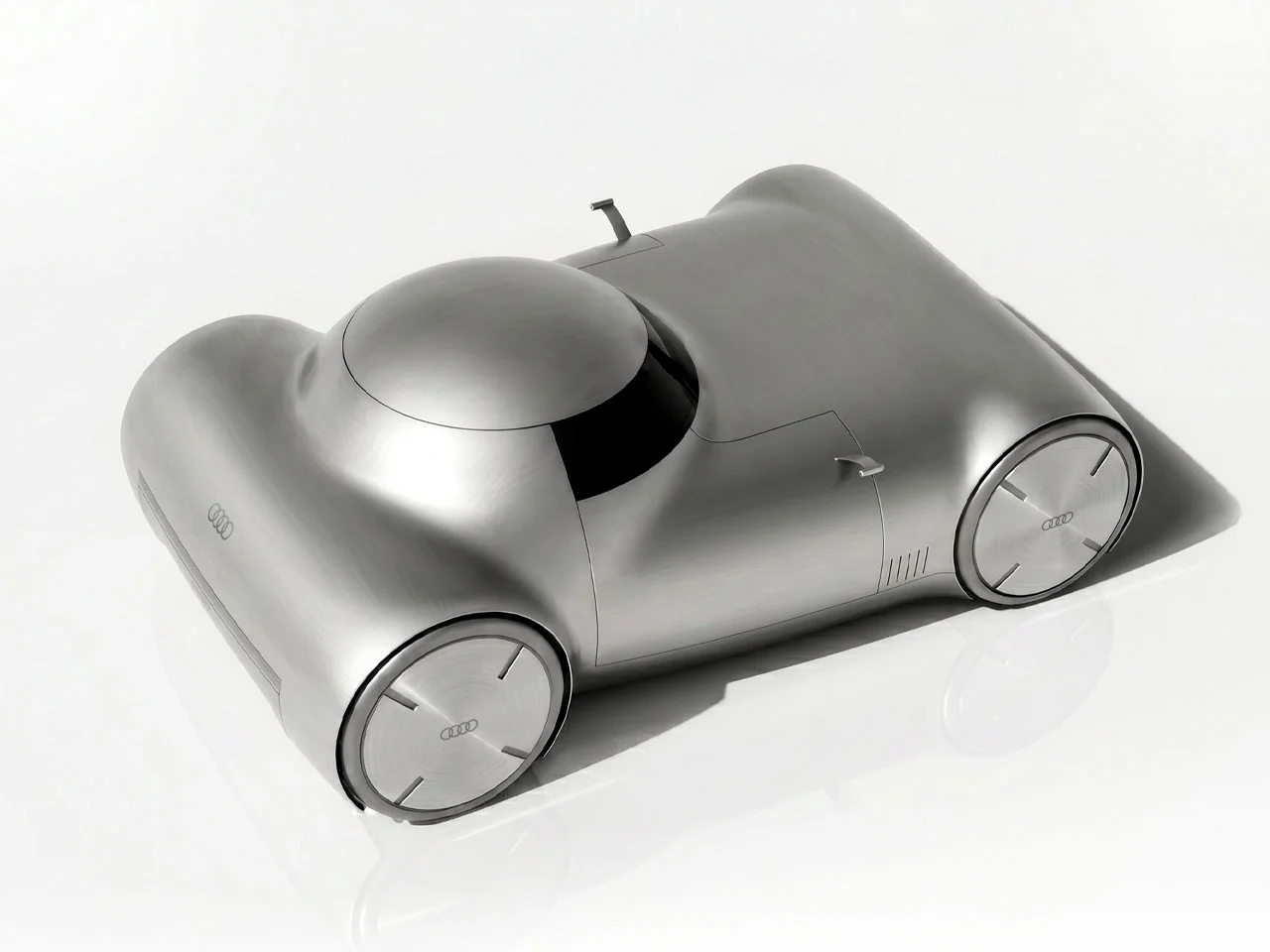



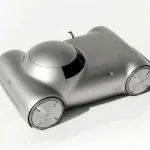
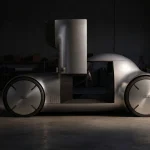


What if an electric vehicle didn’t need a conventional body? That’s the question industrial designer Wini Camacho explores with the Audi Zero One Sphere, an experimental EV concept that strips the automobile down to its most essential elements.
The vehicle is built around four structural tubular modules surrounding a central spherical cockpit, creating one of the most unconventional automotive concepts seen this year. While it remains an independent design study, it presents a compelling vision for how future electric mobility could become lighter, more modular, and visually transparent.
A Minimalist EV Built Around Four Tubes and a Sphere
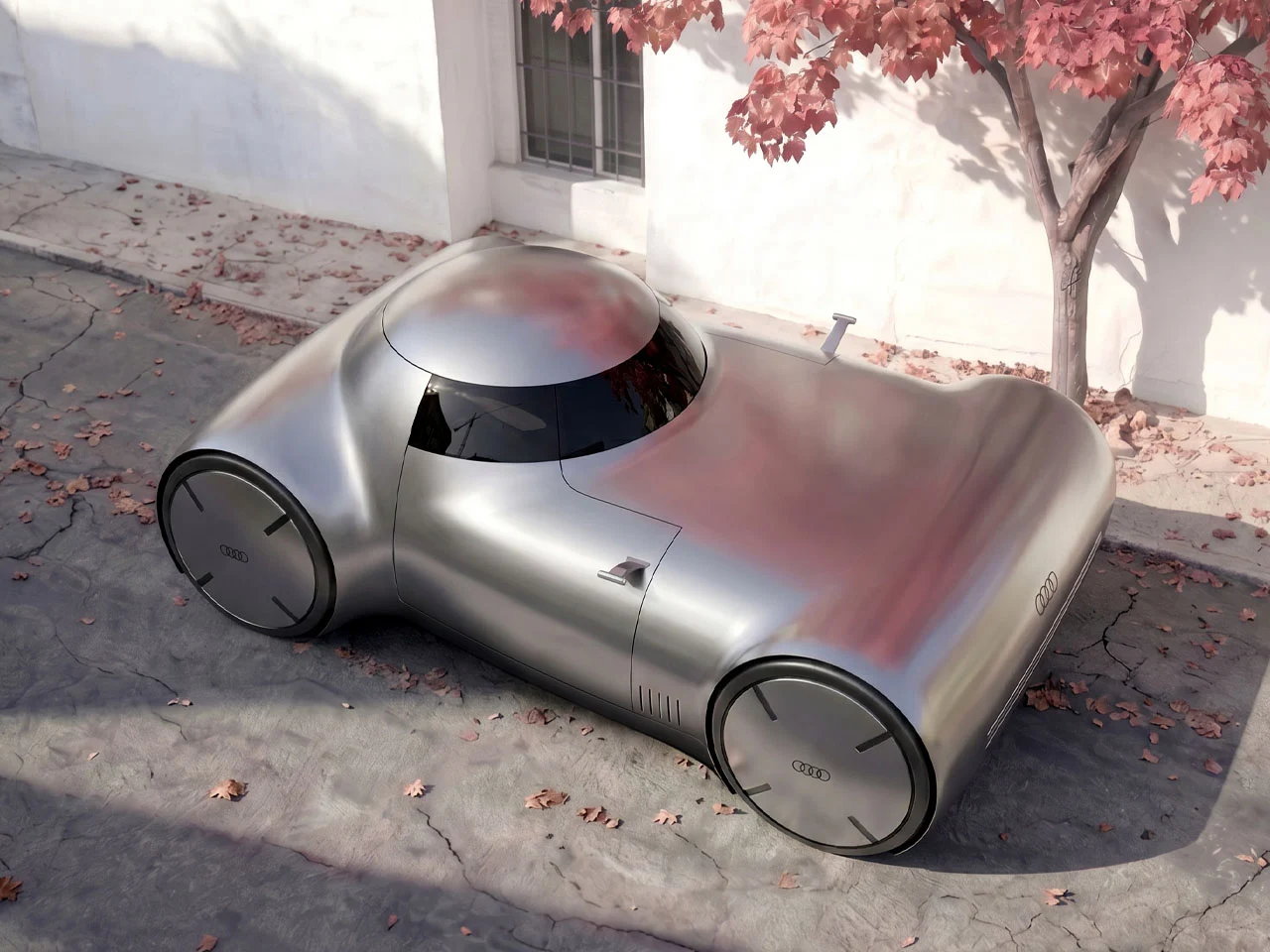
At first glance, the Audi Zero One Sphere barely resembles a conventional car. Instead of enclosed body panels, fenders, or a traditional chassis, the concept consists of:
- Four cylindrical structural tubes form the vehicle’s frame
- A transparent central spherical cabin
- Exposed wheels positioned at the outer corners
- Minimal exterior bodywork
- Open architecture emphasizing lightweight construction
This radical approach visually exposes the vehicle’s structure instead of hiding it beneath metal panels. The result is a machine that appears almost skeletal while maintaining balanced proportions.
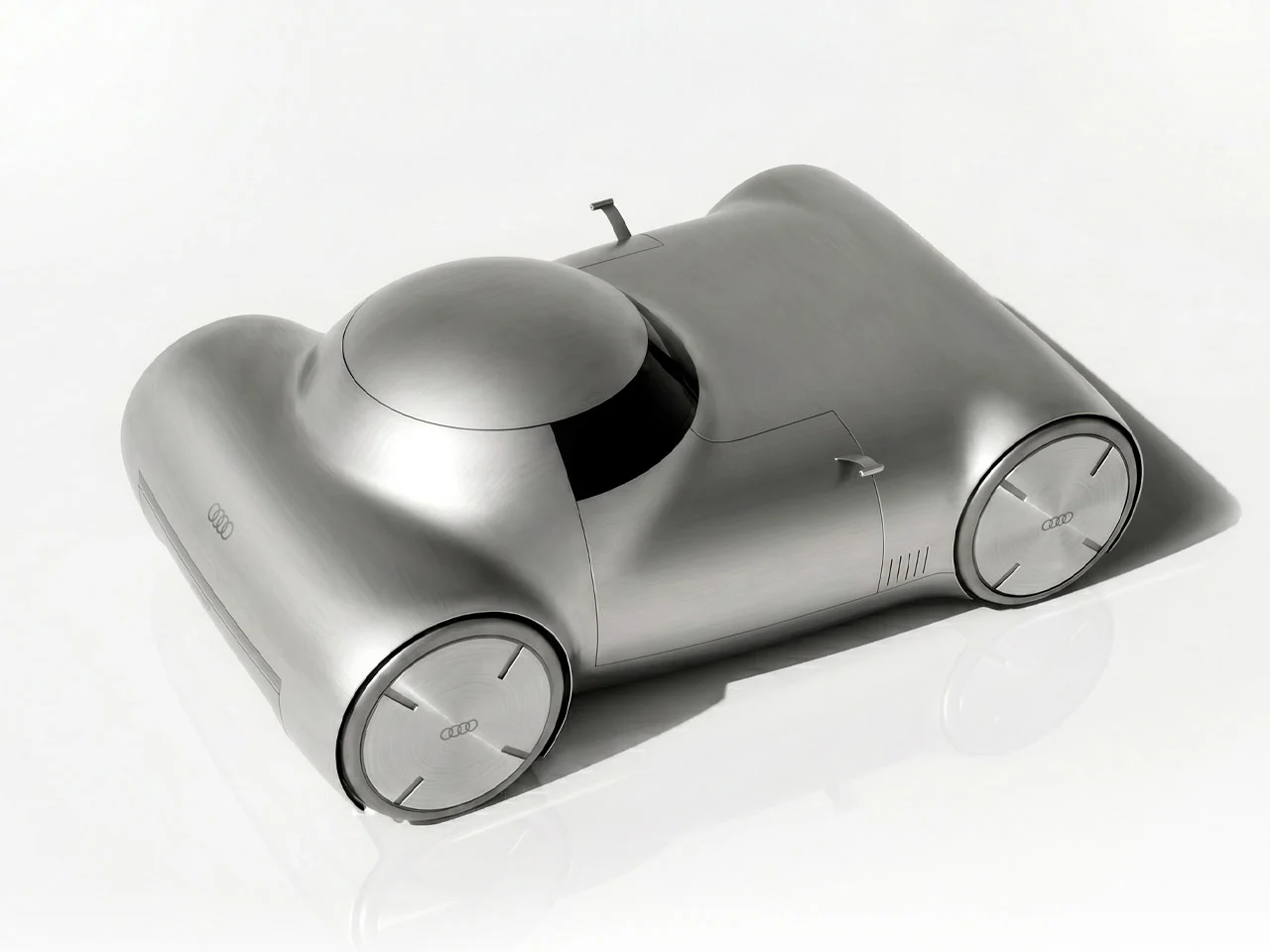
According to Camacho, removing unnecessary mass is central to the design philosophy, allowing the vehicle’s engineering to become part of its visual identity.
Transparent Cockpit Creates a Floating Cabin
The centerpiece of the concept is its glass-like spherical cockpit. The transparent sphere encloses the driver in a panoramic viewing environment while becoming the focal point of the vehicle’s architecture. The design creates an almost floating driving pod that visually separates the cabin from the structural frame.
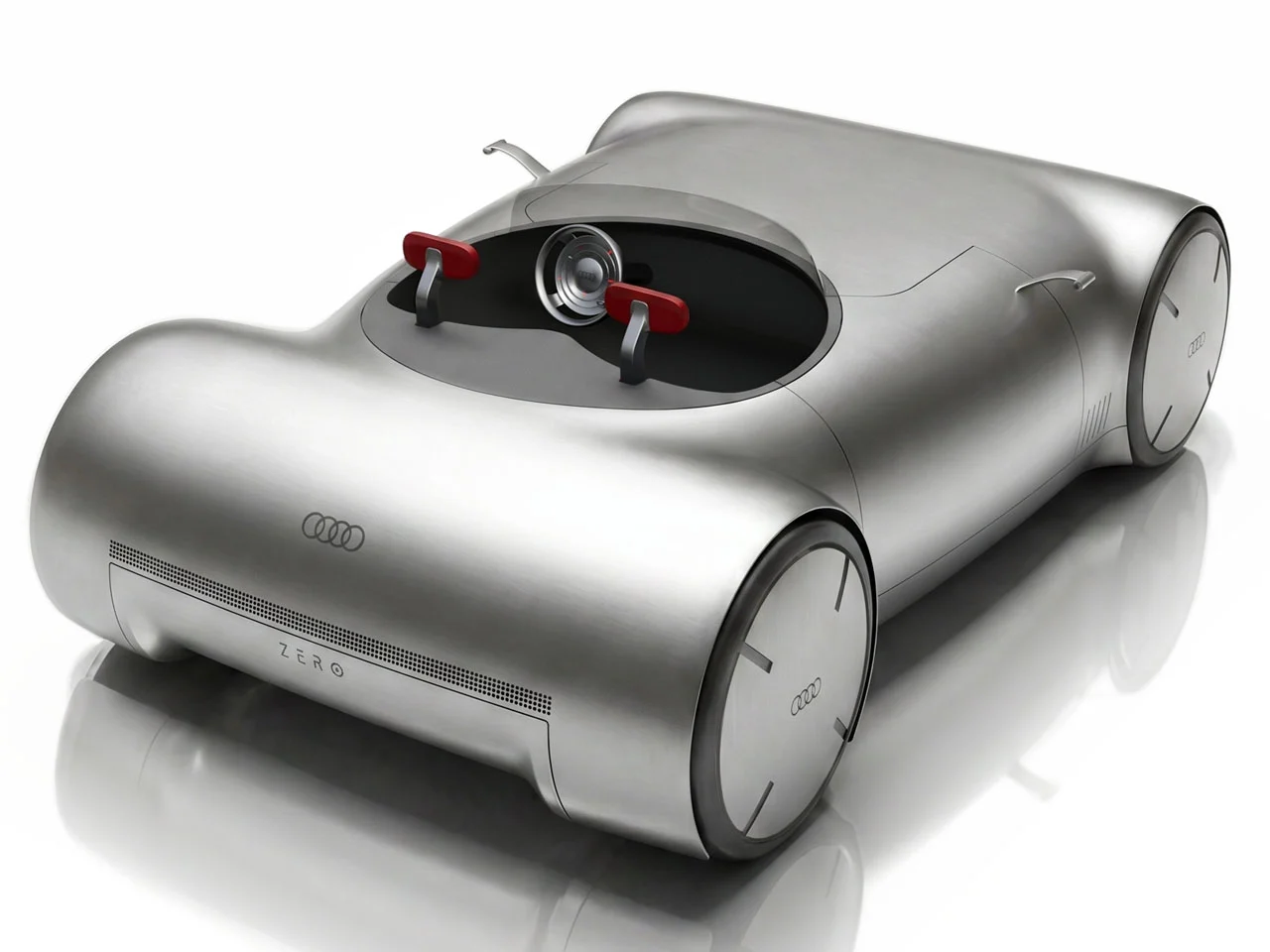
The concept demonstrates how future EV packaging could rethink visibility, openness, and spatial perception instead of simply adapting combustion-era proportions.
Single-Seater Designed for Urban Mobility
The Audi Zero One Sphere is envisioned as a single-seat electric vehicle optimized for city transportation.
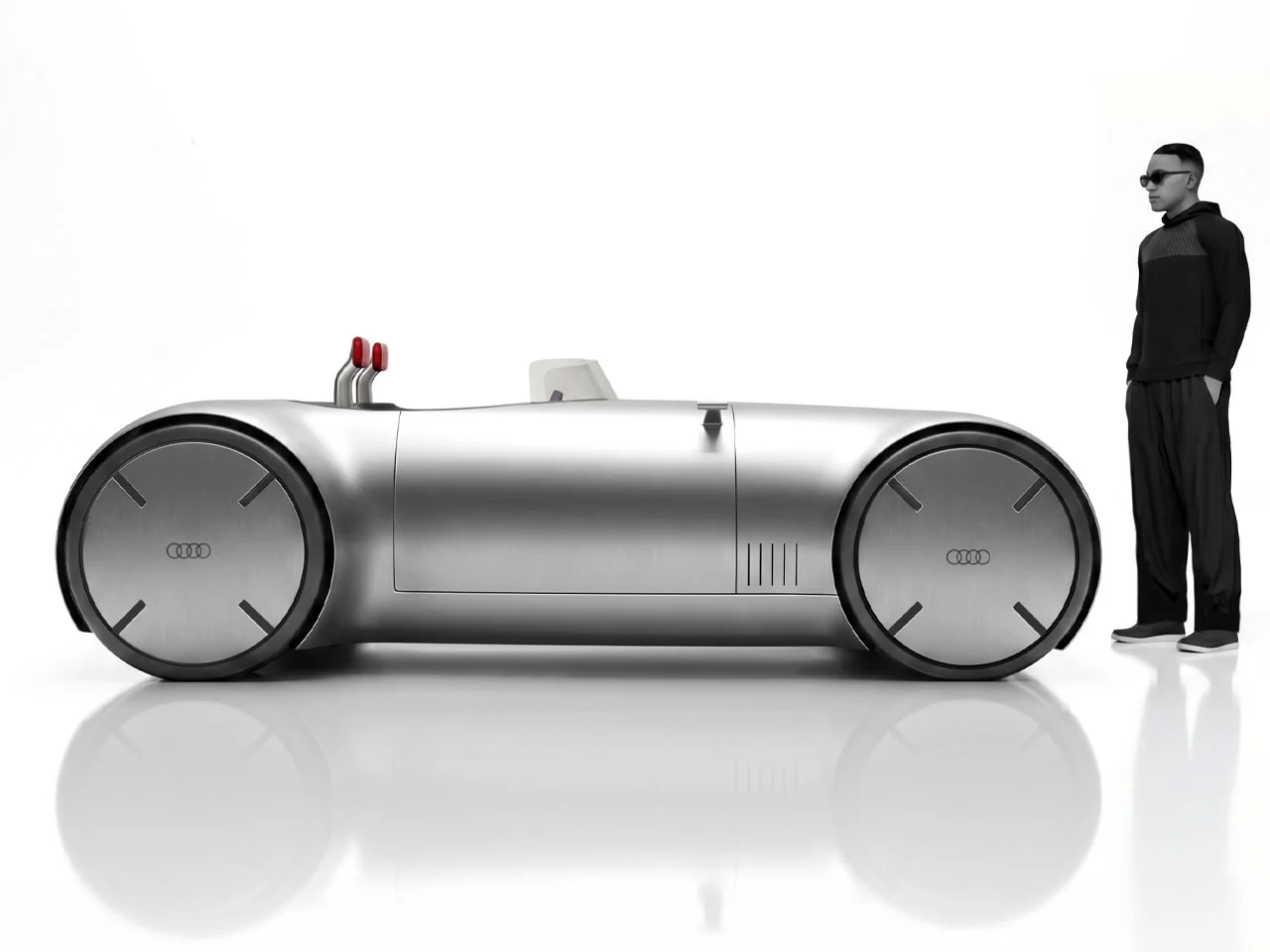
Its compact footprint measures approximately:
- Length: 3.1 meters
- Width: 1.85 meters
These dimensions place it well below the size of conventional sedans yet wider than many microcars, providing added stability.
Camacho imagines the concept serving dense urban environments where compact mobility and maneuverability matter more than passenger capacity.
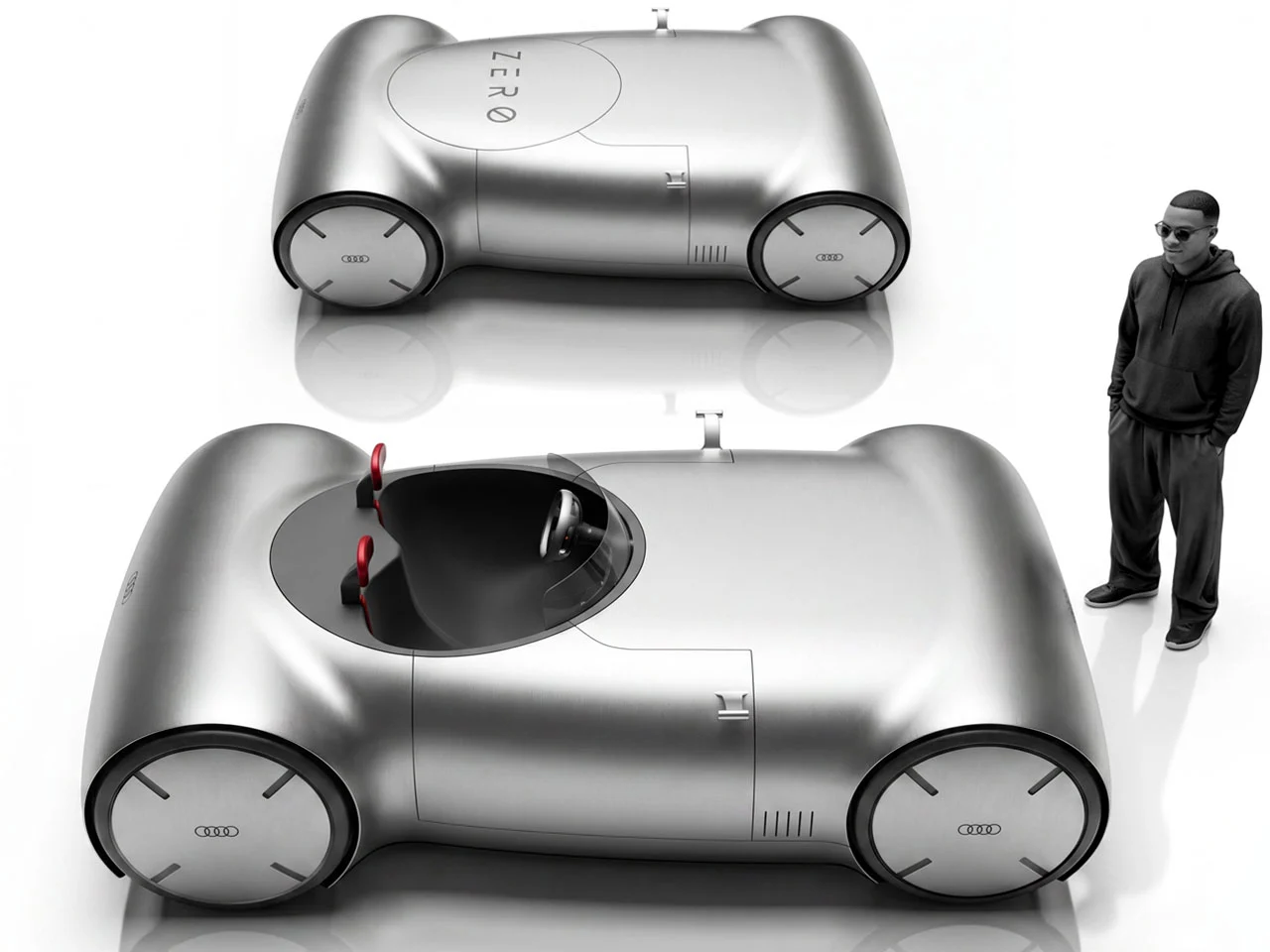
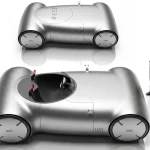
Coupe or Open Roadster in One Design
One of the concept’s most intriguing characteristics is its adaptable body configuration.
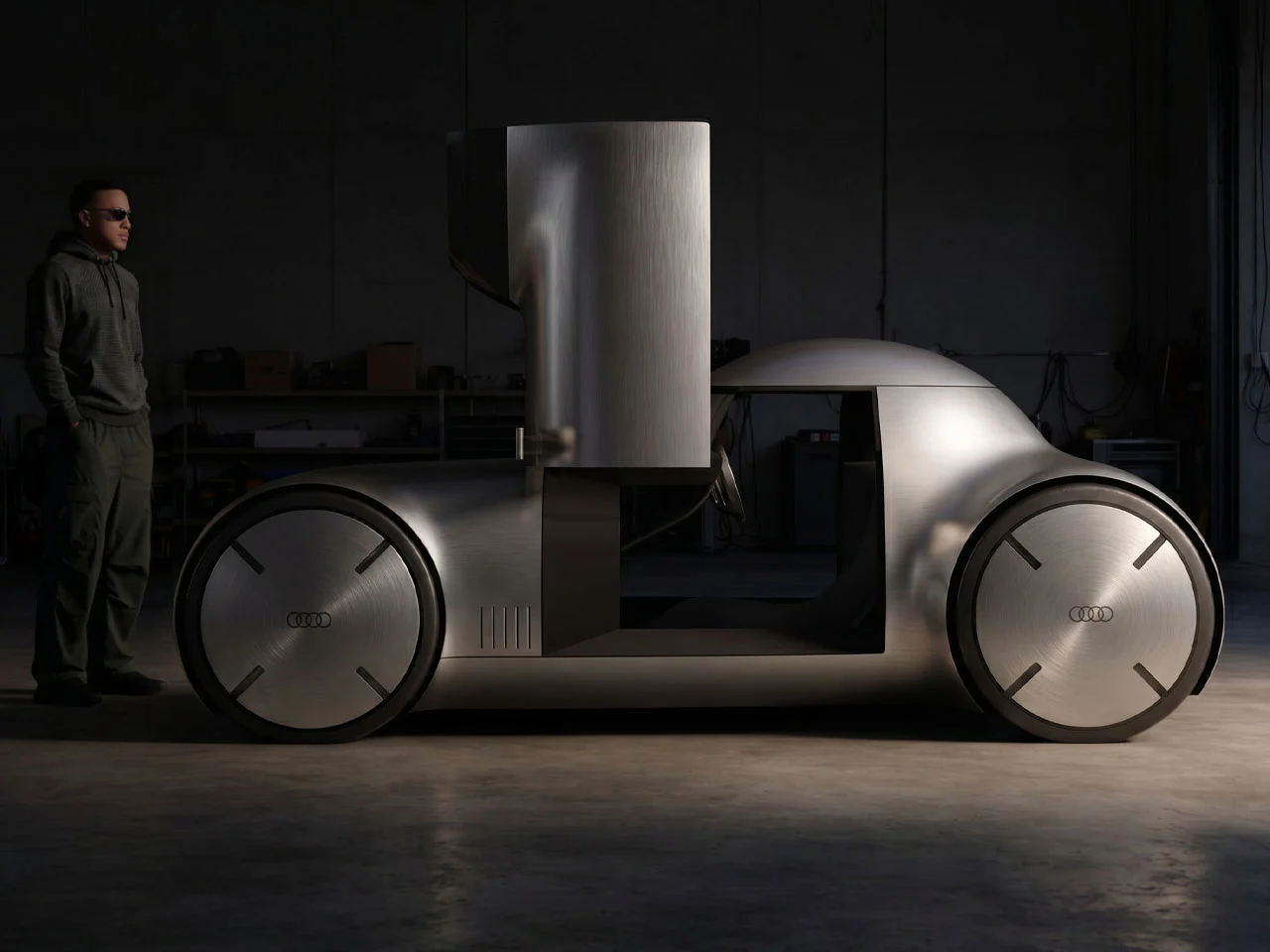
The Zero One Sphere can be visualized as either:
- a futuristic enclosed coupe, or
- An open-top roadster.
Without relying on heavy bodywork, the vehicle’s architecture naturally supports multiple interpretations while preserving its distinctive geometric identity.
This flexibility highlights how modular EV platforms could eventually enable different body styles from a common structural system.
Physical Controls Replace Screen-Dominated Interiors
While many futuristic EV concepts envision fully digital cabins dominated by touchscreens, Camacho takes a different approach.
The Audi Zero One Sphere retains physical driving controls, emphasizing tactile interaction between driver and machine instead of eliminating traditional inputs entirely.
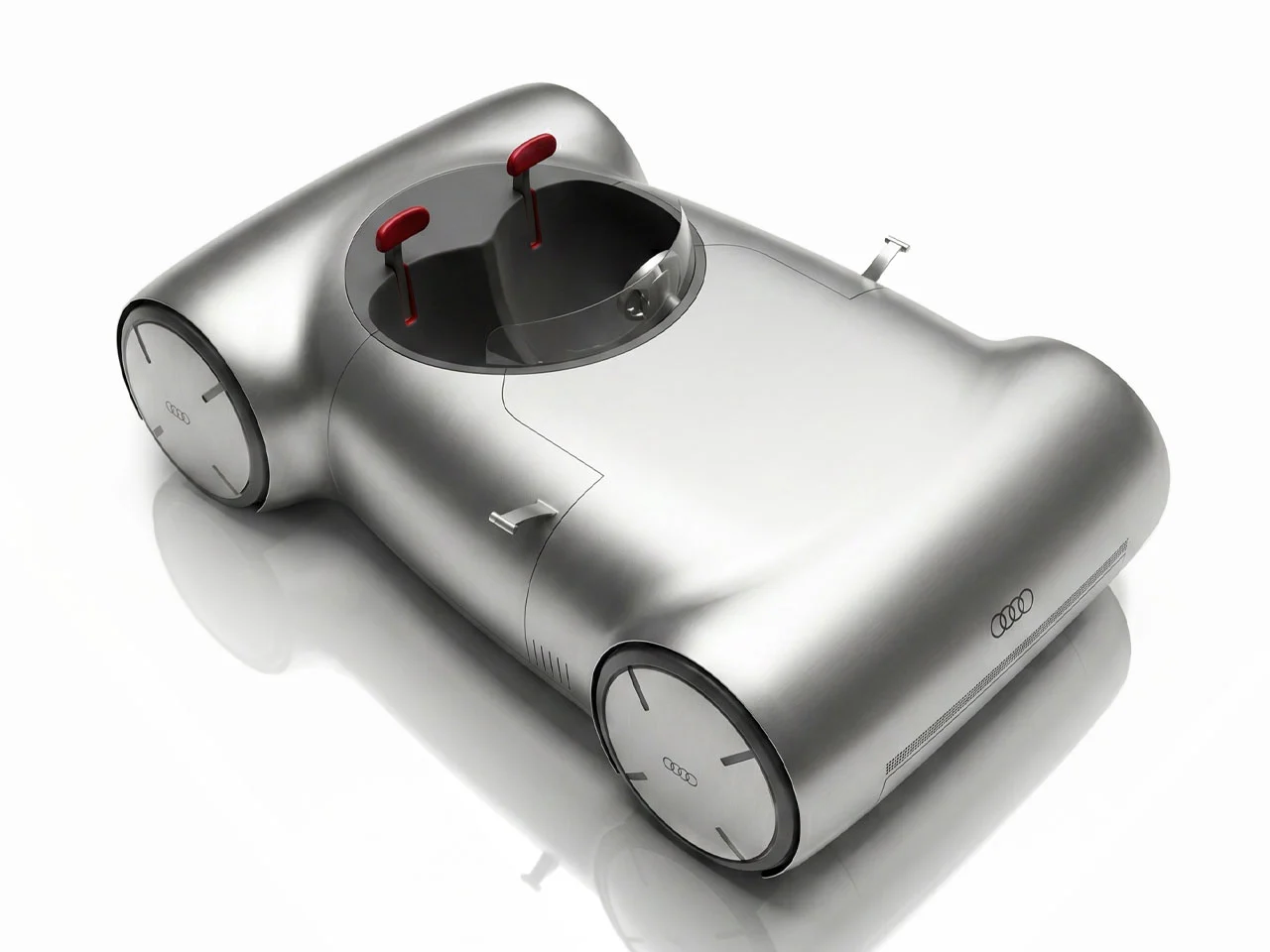
The concept suggests that future mobility can embrace advanced technology without sacrificing engaging human-centered interfaces.
Radical Geometry Defines the Exterior
Instead of flowing curves, the concept relies on bold geometric forms.
Its visual identity combines:
- exposed cylindrical structures
- angular proportions
- sharp intersecting lines
- futuristic LED lighting
- minimal enclosed surfaces
The exposed mechanical architecture gives the vehicle an appearance closer to industrial product design than traditional automotive styling. Every structural element becomes part of the vehicle’s aesthetic language.
Lightweight Thinking Beyond Traditional EV Design
Electric vehicles often inherit proportions established by internal combustion cars despite requiring completely different packaging.
The Audi Zero One Sphere challenges that convention by asking what happens when designers start from a blank page instead.
Its minimalist architecture demonstrates how electric platforms could reduce visual weight while expressing structural efficiency.
Although no technical specifications such as battery capacity, driving range, or motor output have been released, the concept focuses primarily on rethinking vehicle architecture instead of showcasing performance figures.

Designed by Automotive Designer Wini Camacho
Wini Camacho is no stranger to futuristic vehicle design.
Before creating the Audi Zero One Sphere, Camacho contributed to the Denza concept presented in Beijing in 2012. His latest project continues that experimental design approach by exploring how electric mobility can break free from traditional automotive conventions.
The Audi Zero One Sphere serves as a provocative exploration of how electric vehicles might evolve if designers prioritize lightweight structures, modular geometry, and transparent architecture over traditional bodywork.
While its four-tube construction may seem unconventional today, concept vehicles like this often influence broader conversations around future mobility, sustainable design, and next-generation vehicle packaging.
Audi Zero One Sphere Specifications
Designer: Wini Camacho
Vehicle Type: Electric vehicle concept
Seating: Single occupant
Length: 3.1 m
Width: 1.85 m
Structure: Four tubular frames with a central spherical cockpit
Body Style: Coupe / Open roadster concept
Production Status: Independent design study (not an official Audi production model)