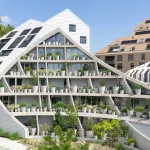
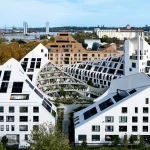
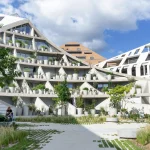
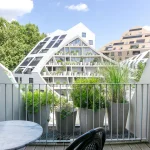
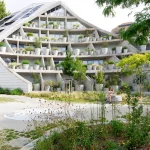
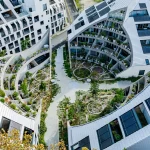
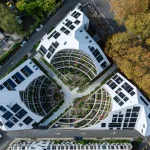
In the heart of Bordeaux’s former industrial district, La Vallée Verte, designed by Dutch architecture firm MVRDV, transforms a former military and industrial landscape into a vibrant urban neighborhood. Guided by the Bastide Niel masterplan, the project preserves historic traces while introducing innovative parametric design strategies that maximize sunlight, sustainability, and community life. At the center of this transformation stands La Vallée Verte, a residential development where architecture, history, and hundreds of plant-filled loggias combine to create a living green valley within the city.
History Meets Contemporary Urban Design in Bastide Niel
Located on the right bank of the Garonne River in Bordeaux, Bastide Niel occupies a site once defined by industrial facilities and military barracks. Rather than erasing the area’s past, MVRDV’s masterplan preserves historic buildings and the original urban layout, weaving them into a new network of intimate streets and public spaces.
The district’s compact streets create shade and pedestrian-friendly environments, while the preserved heritage structures maintain a strong connection to Bordeaux’s history.
Architect Winy Maas and the Parametric “Suncuts” Strategy
Led by MVRDV founding partner Winy Maas, the Bastide Niel masterplan employs a parametric design method known as “suncuts.” This innovative strategy shapes building volumes to ensure that every structure receives adequate daylight throughout the year.
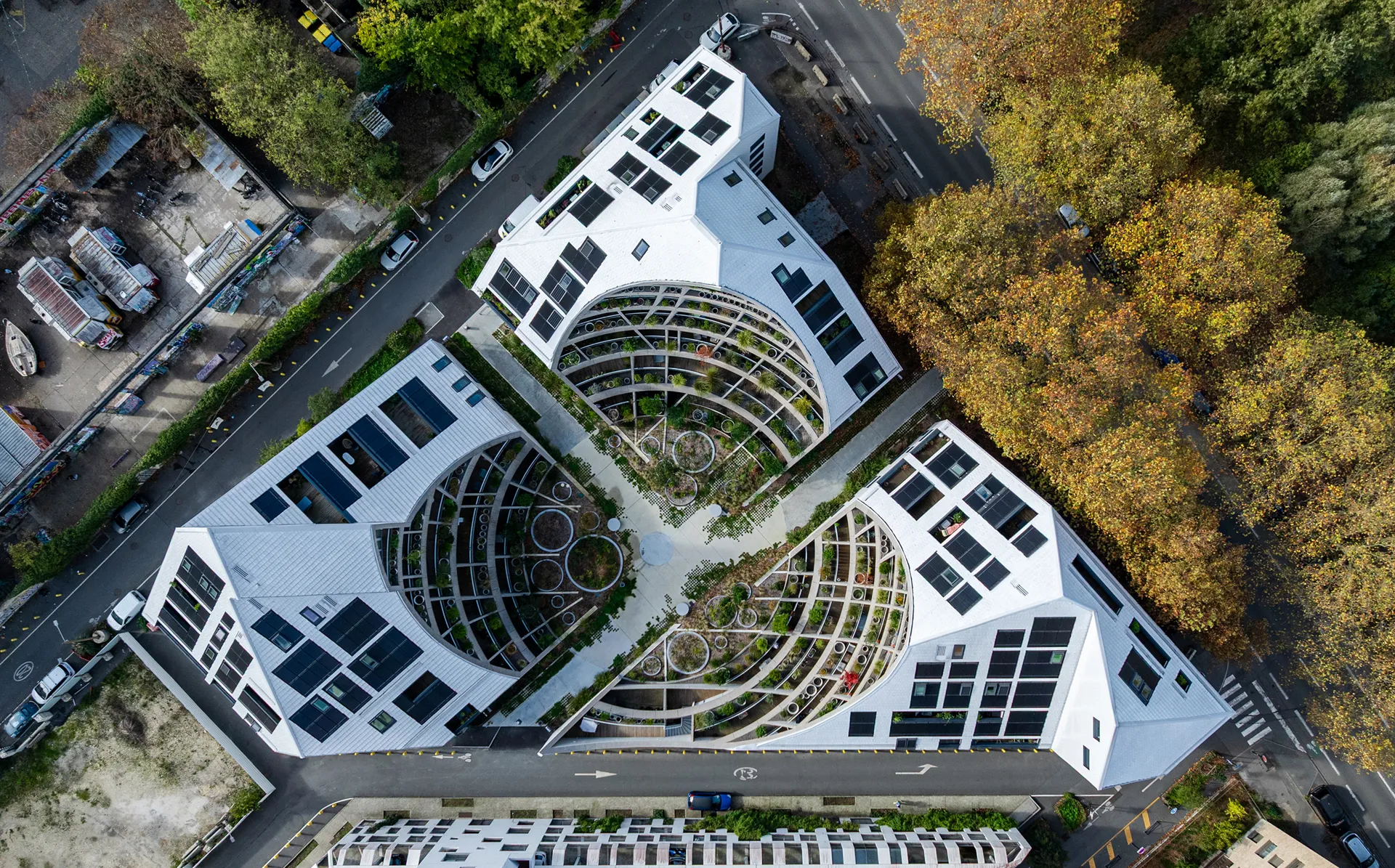
The resulting roofscape features unusual slopes and angular forms that resemble floating icebergs across the city skyline. Beyond creating a distinctive visual identity, the approach prevents buildings from overshadowing one another, enhancing comfort, energy efficiency, and urban livability.
A Green Valley Hidden Within the City
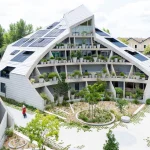
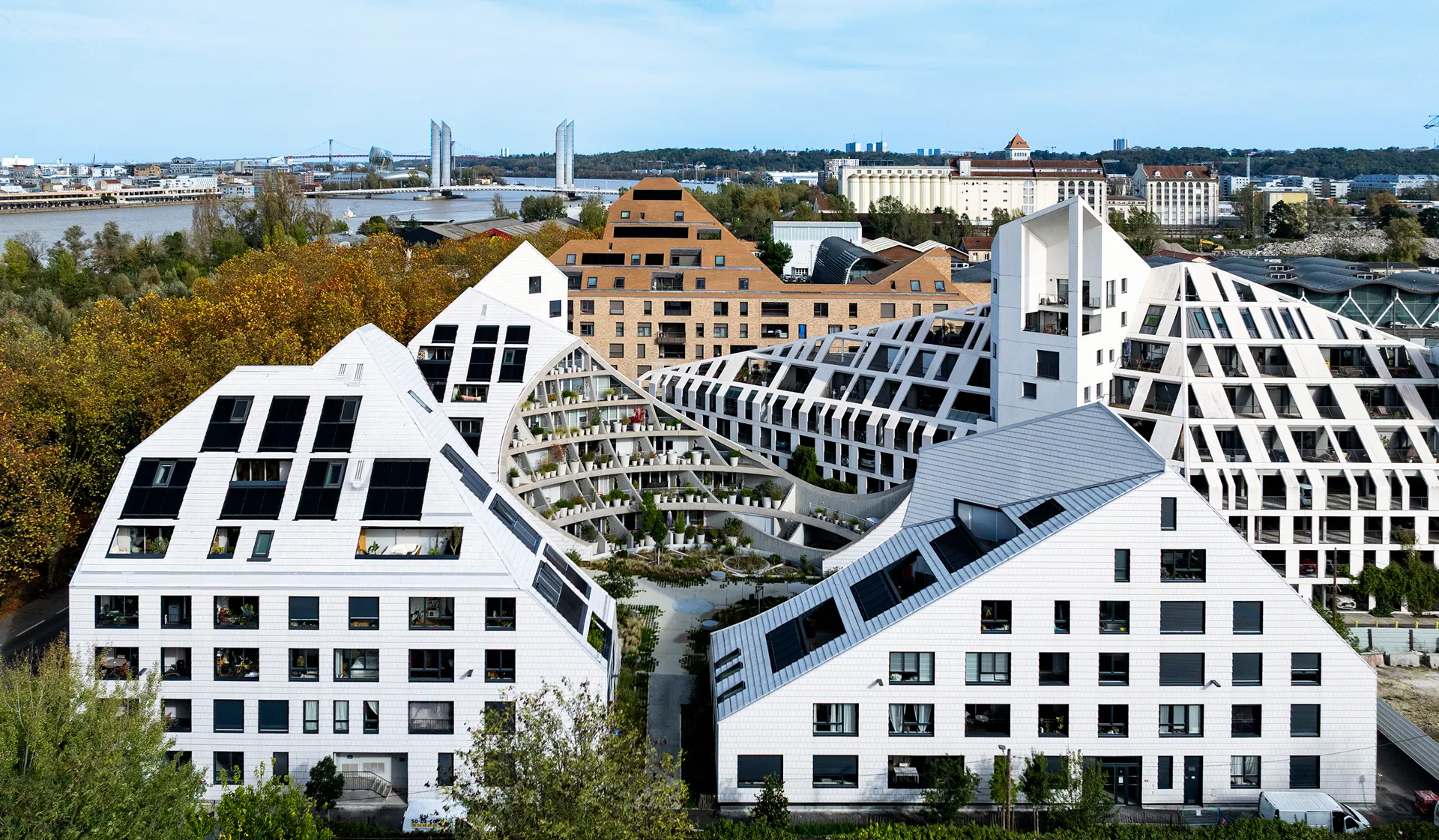
Positioned on a triangular plot along Quai des Queyries, La Vallée Verte consists of three interconnected residential buildings.
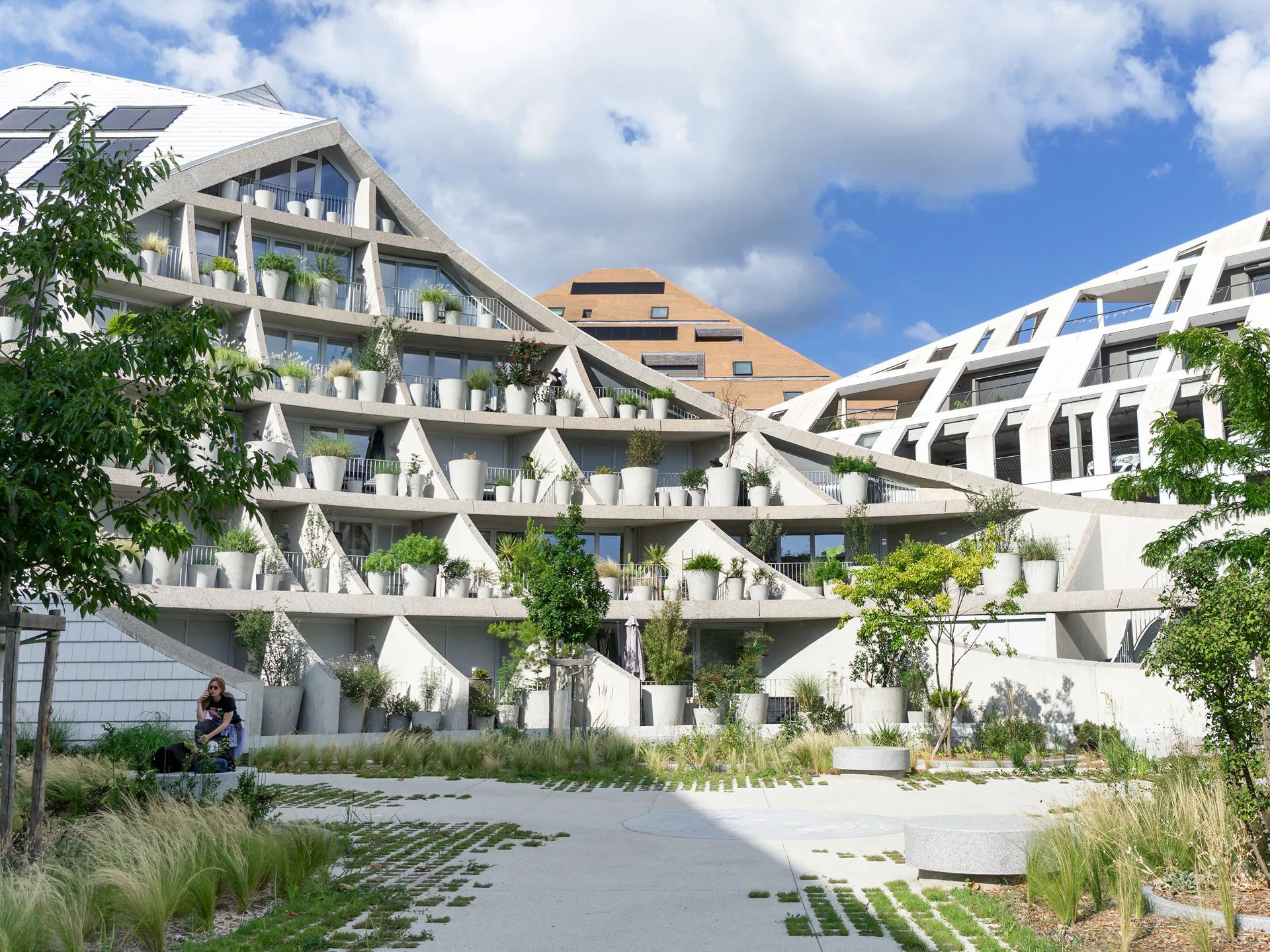
Externally, the structures feature smooth, light-grey tiled façades designed to reduce the urban heat island effect and comply with the daylight requirements established by the masterplan.
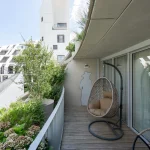
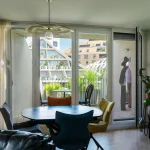
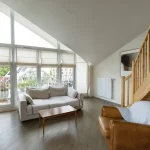
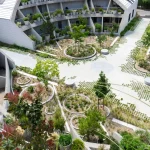
Inside, however, the project reveals its most remarkable feature, which is a circular courtyard overflowing with greenery. The buildings are carved inward to create a lush central landscape that feels separate from the surrounding city. Full-height openings connect apartments to private loggias overlooking this green sanctuary, creating a unique relationship between residents and nature.
Plant Pots Turn Architecture into a Living Ecosystem
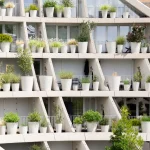
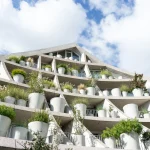
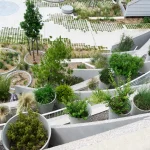
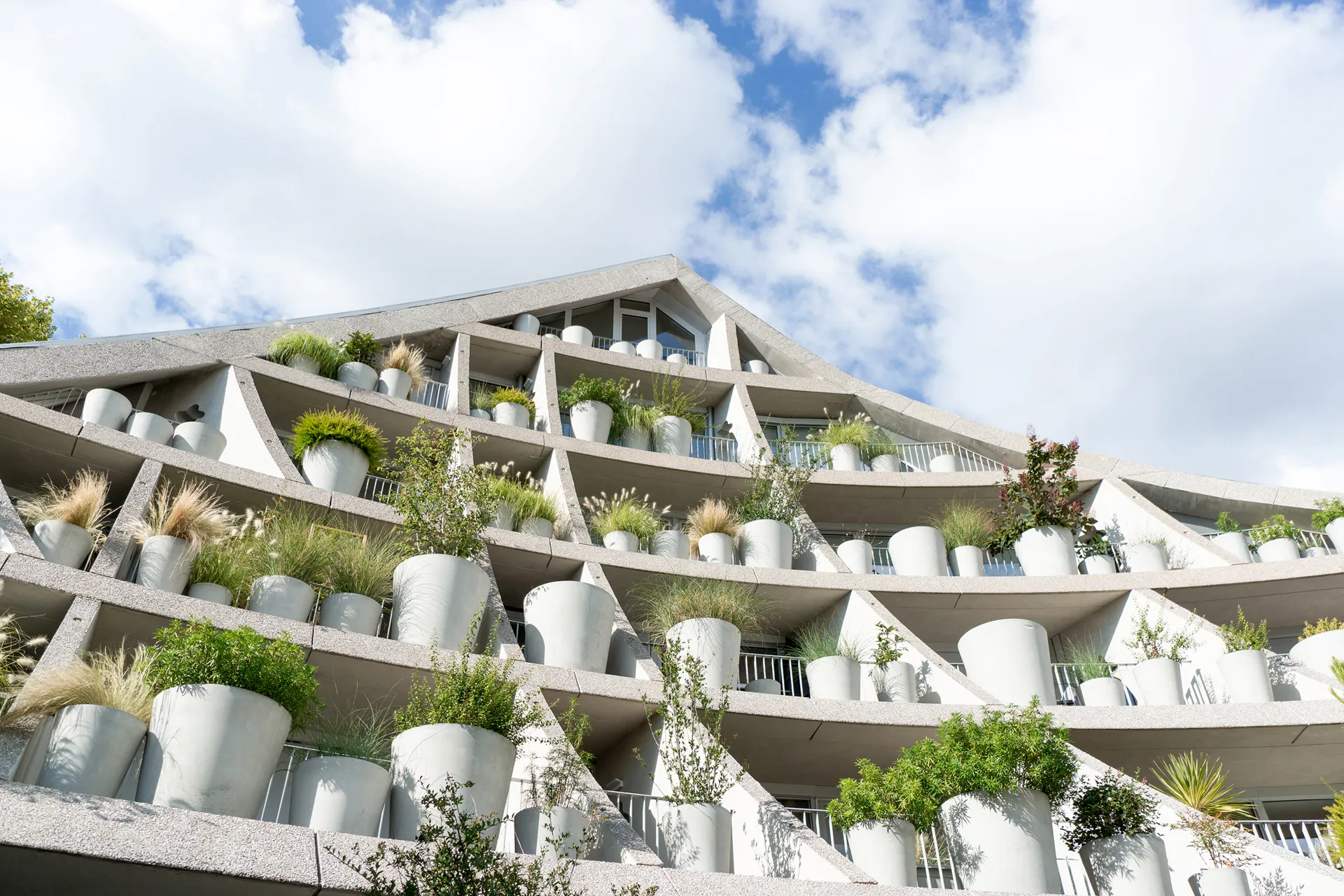
One of the project’s defining elements is the extensive use of plant pots lining the edges of the residential loggias. These planters support a wide variety of vegetation, including flowering shrubs, evergreen species, deciduous plants, and even small trees.
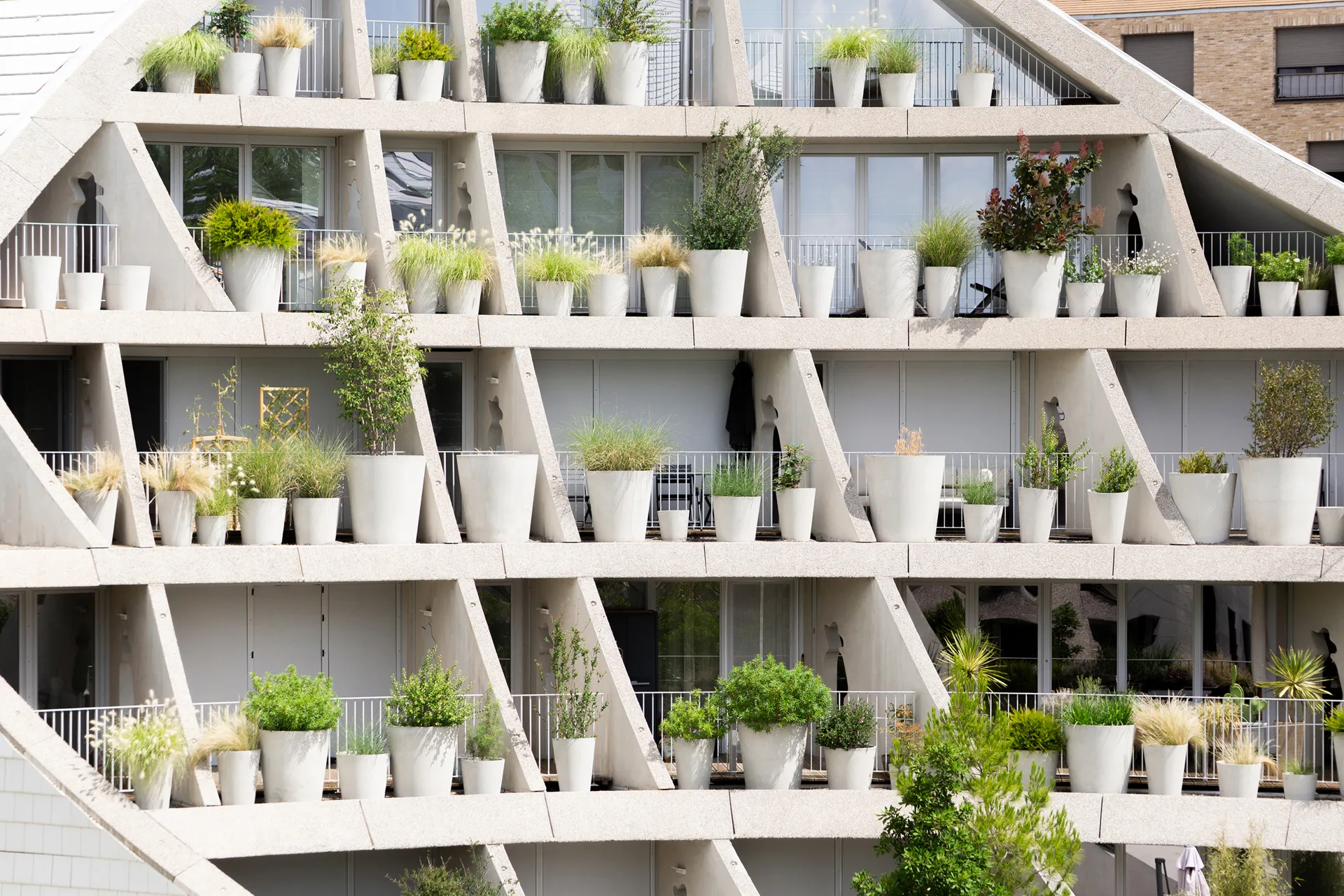
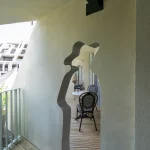
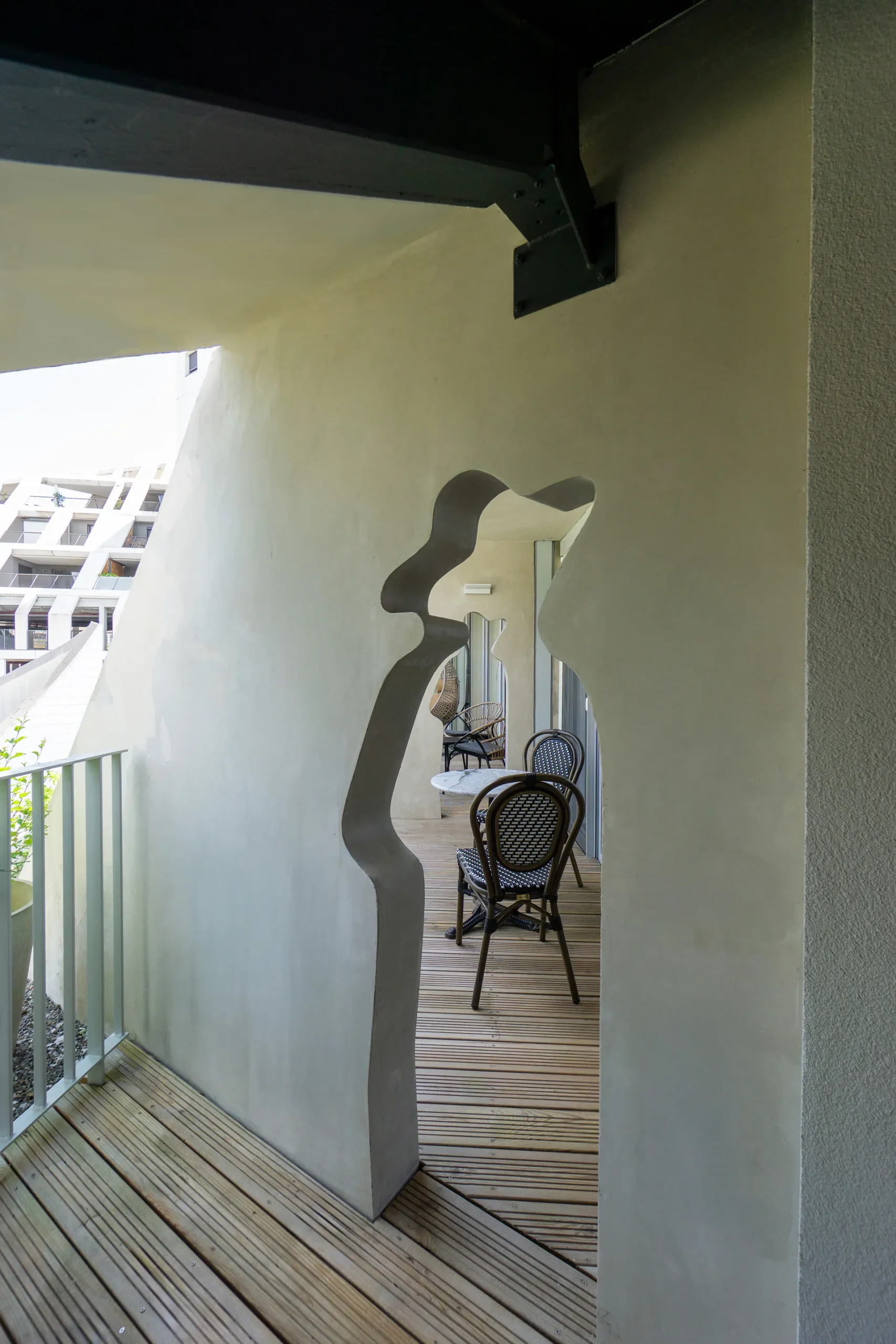
The arrangement recreates the layers of a natural valley ecosystem, introducing biodiversity at multiple heights throughout the buildings. To maintain the health of this living landscape, dedicated access routes allow professional gardeners to reach every balcony. Playful person-shaped openings and steel doors, inspired by the silhouette of gardeners wearing wide-brimmed hats, celebrate the ongoing care required to sustain the greenery.
Beyond aesthetics, these plant-filled spaces improve air quality, support urban biodiversity, and foster a stronger connection between residents and nature, transforming La Vallée Verte into a model for sustainable residential architecture.
Sustainability Beyond the Green Façades
La Vallée Verte forms part of the Bastide Niel district’s certification under France’s EcoQuartier initiative. The development connects to a district heating network and incorporates photovoltaic panels that contribute renewable energy to the buildings.
Its porous landscape design allows rainwater absorption and flood management—an essential feature given the site’s location within the Garonne River floodplain. Elevated ground-floor apartments and consolidated above-ground parking further enhance resilience while reducing embodied carbon.
Project Credit: MVRDV