

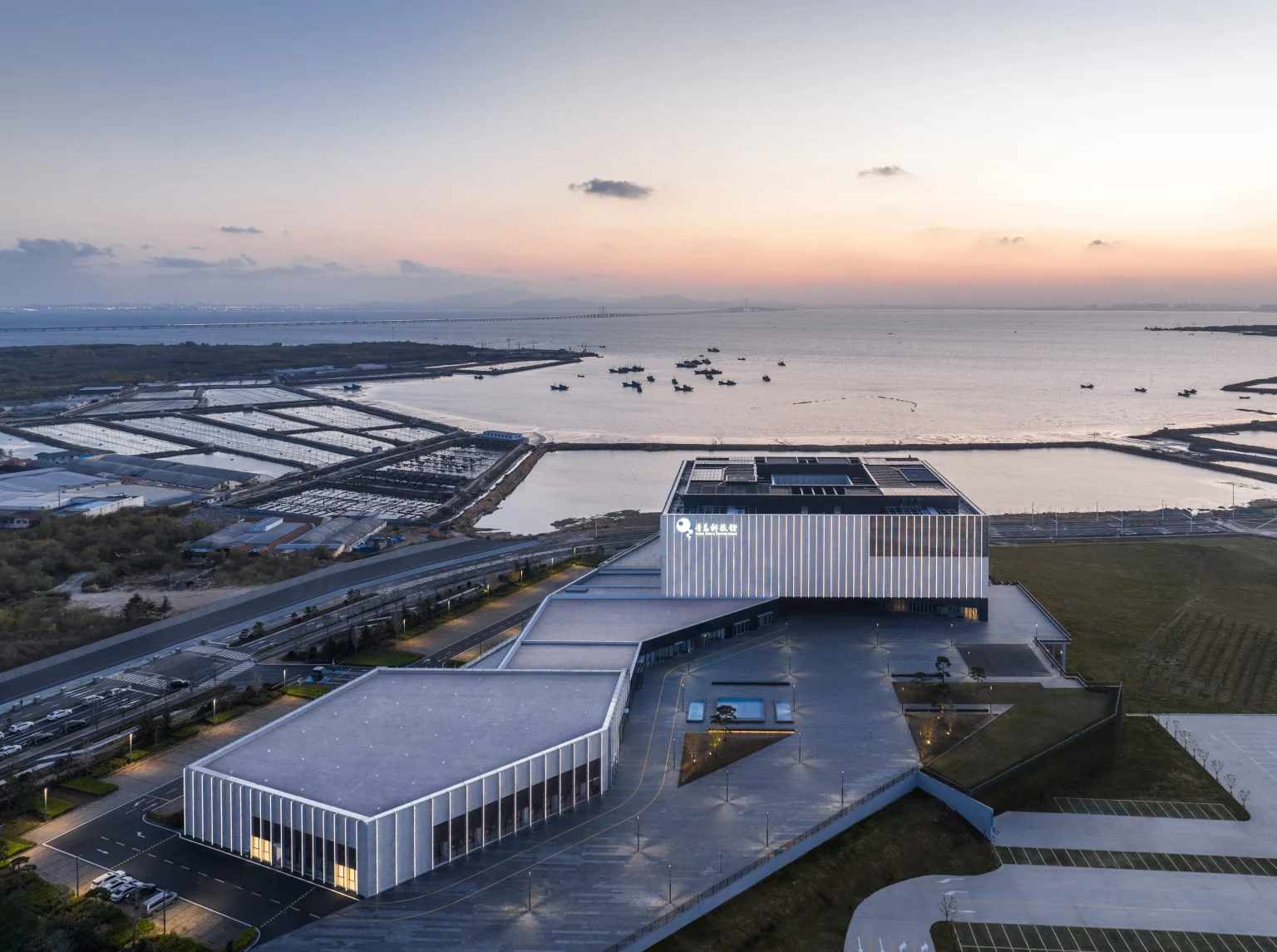


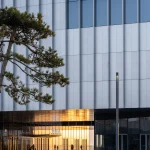
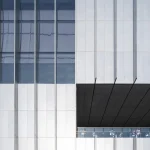
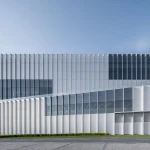
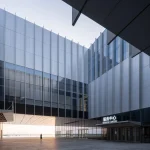
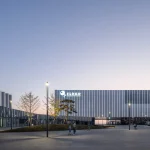
Designed by von Gerkan, Marg and Partners Architects, the Qingdao Science & Technology Museum stands on Hong Island as a major cultural and scientific landmark overlooking Jiaozhou Bay. The project reflects Qingdao’s position as one of China’s leading centers for marine research while also acting as a catalyst for future waterfront development. Rooted in themes of water, marine science, and public engagement, the museum combines exhibition spaces, conference facilities, public circulation paths, and panoramic sea views within a compact yet expressive architectural form.
Expanding Qingdao’s Scientific and Cultural Waterfront
Since the 1980s, Qingdao has steadily expanded around Jiaozhou Bay, evolving from its historic old town on the southeastern shoreline toward newly developed districts across the bay. The museum occupies a strategically important site within this urban transformation and strengthens the city’s growing scientific and cultural identity.
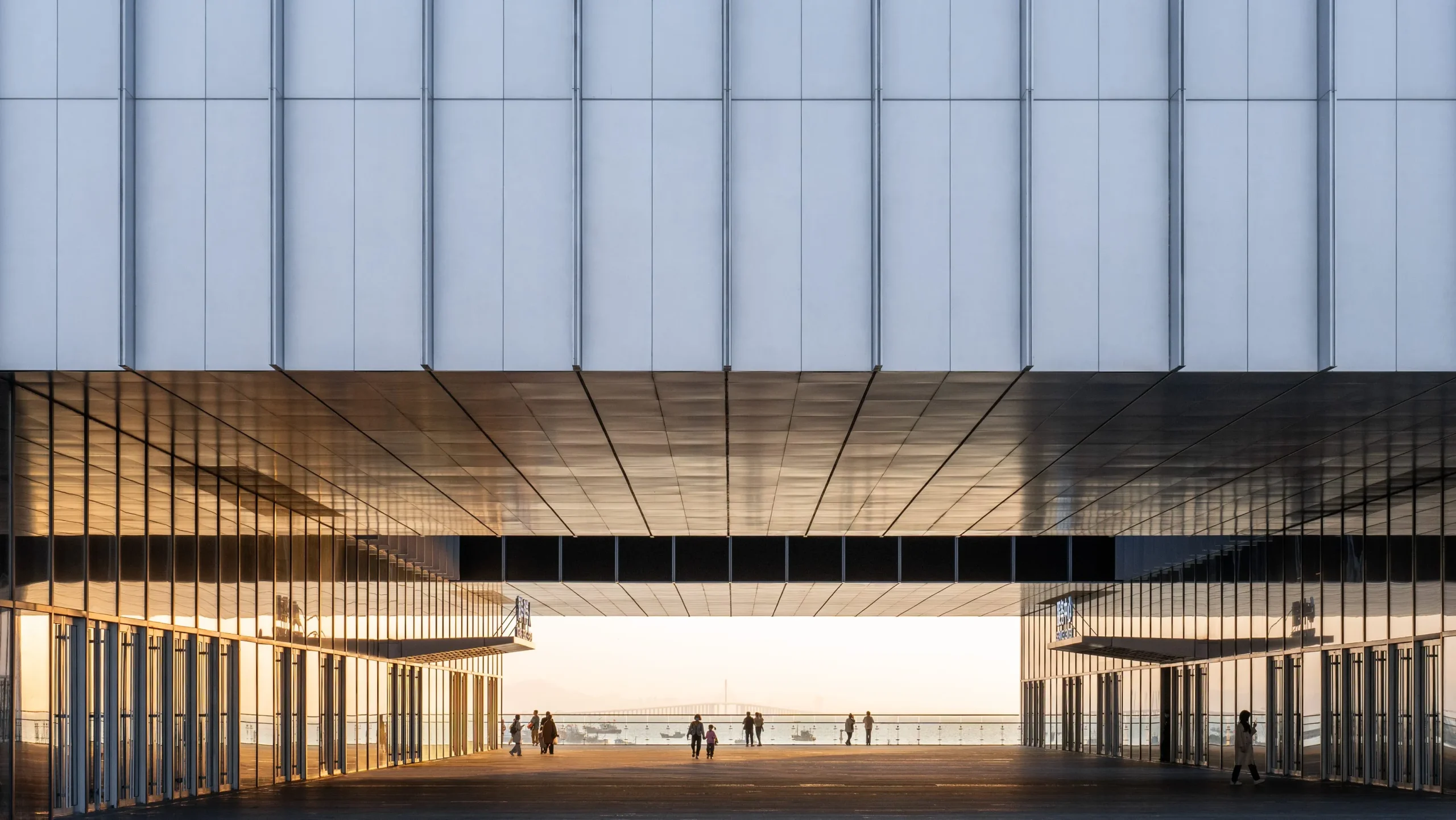
Qingdao is home to many of China’s national marine research institutions as well as the Ocean University of China, making marine science a defining part of the region’s identity. The Qingdao Science & Technology Museum helps bring this research culture into the public realm while encouraging further development of the partially built waterfront zone. Its relocation from the originally planned seaside promenade to the northeastern edge of Jiaozhou Bay highlights the project’s long-term urban significance.
A Cube-Like Structure Oriented Toward the Sea
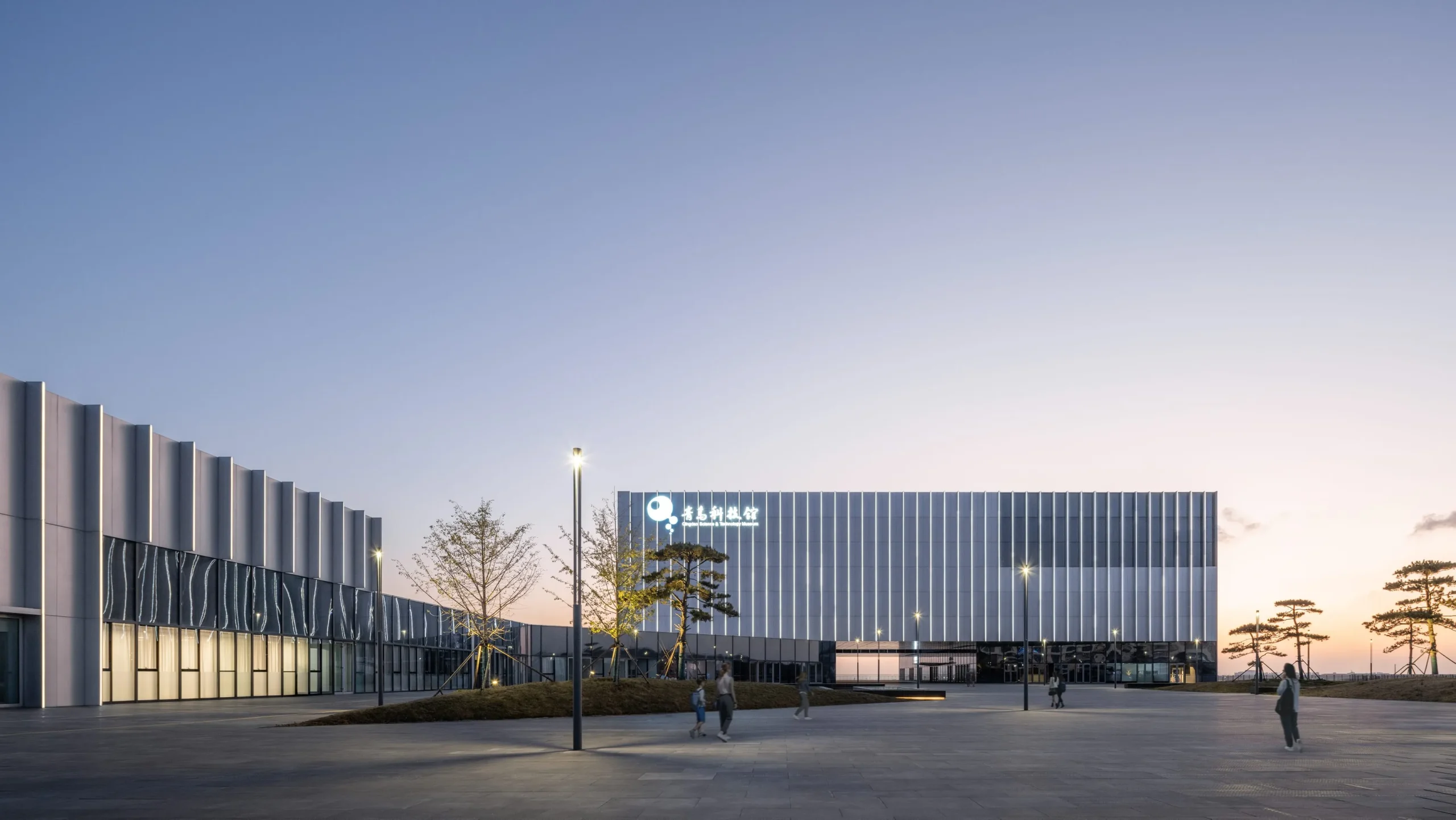
The architecture is shaped around the experience of living by and with water, which also forms the central theme of the museum exhibitions. The building takes the form of a compact cube resting on a podium directly at the water’s edge, creating a strong visual landmark along the bay.
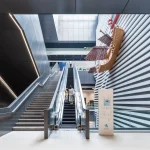
A public pathway cuts through the ground floor and leads visitors toward an observation terrace overlooking the waterfront. Throughout the building, circulation routes and visual axes remain consistently oriented toward the sea, allowing water to remain a continuous point of reference before, during, and after the museum experience.
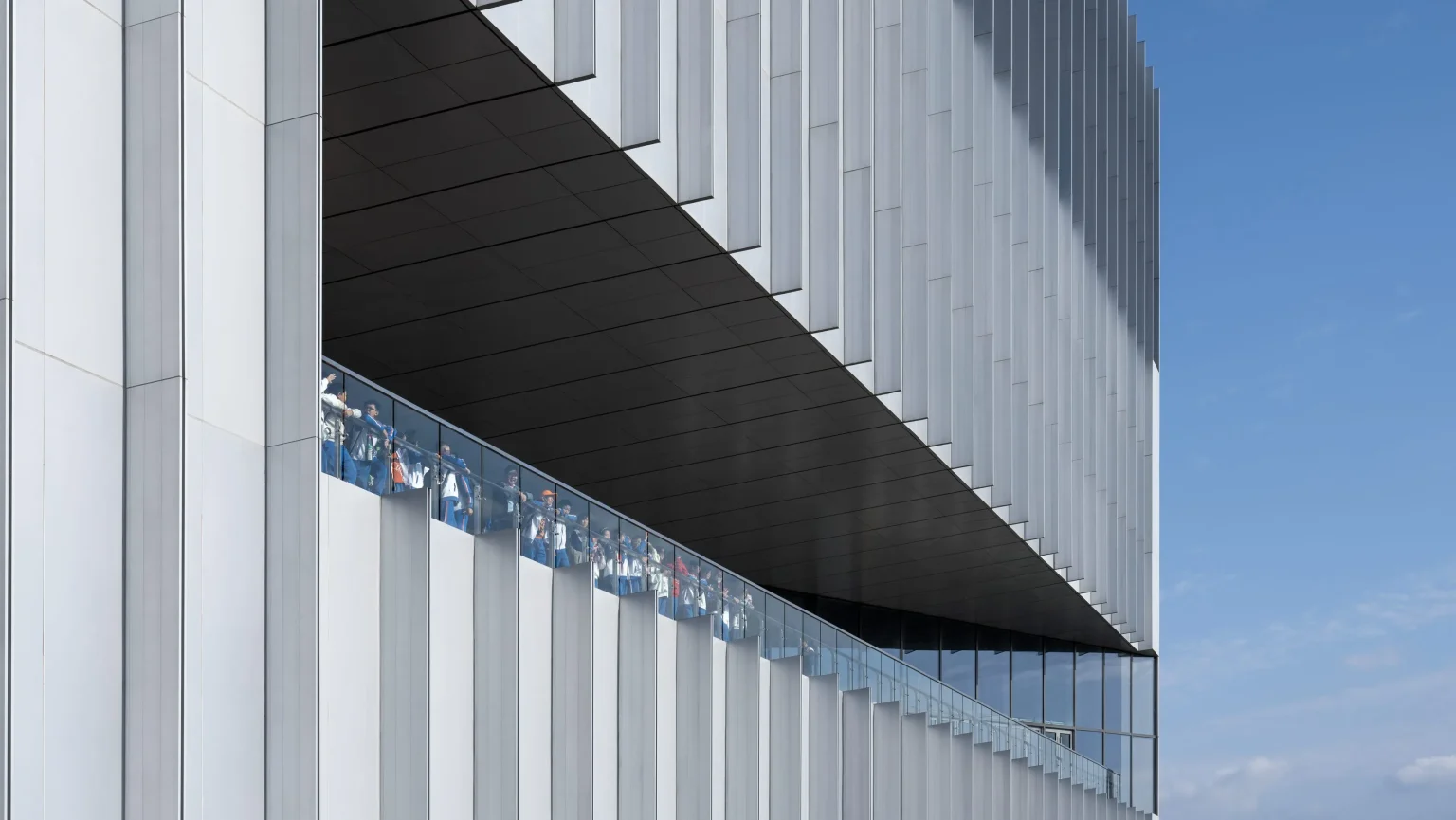
Large openings puncture the metal façade to frame views across Jiaozhou Bay while visually linking the exhibitions to the surrounding marine landscape. Vertical fins give rhythm and texture to the façade, creating changing visual effects throughout the day as light conditions shift across the surface.
Courtyards, Exhibition Spaces, and a Layered Visitor Experience
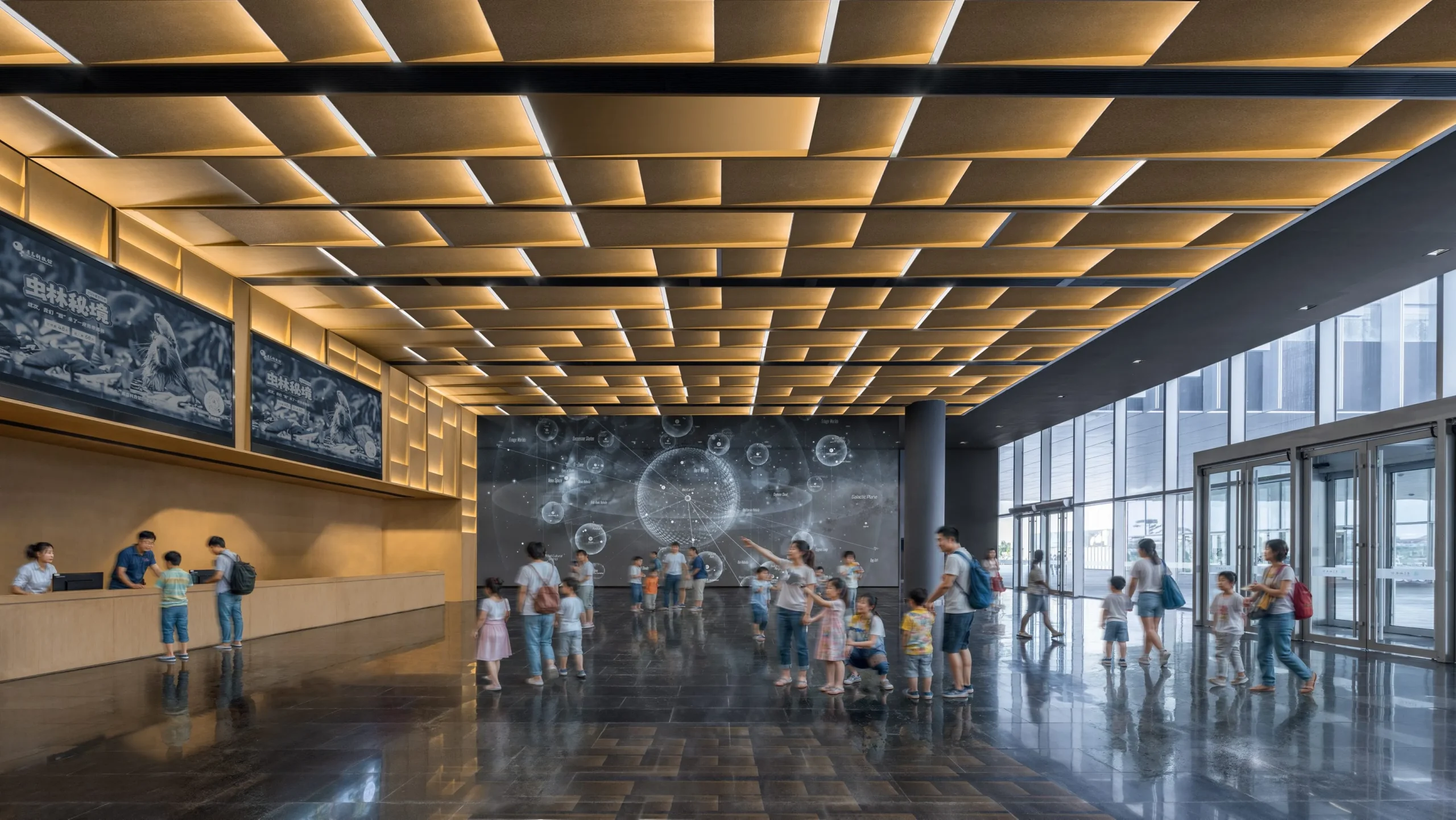
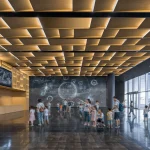
Two entrances guide visitors through a central courtyard that organizes the museum into distinct functional zones. One entrance provides access to the exhibition halls, café, and retail areas, while the second entrance leads toward conference and event facilities located on the opposite side of the building.
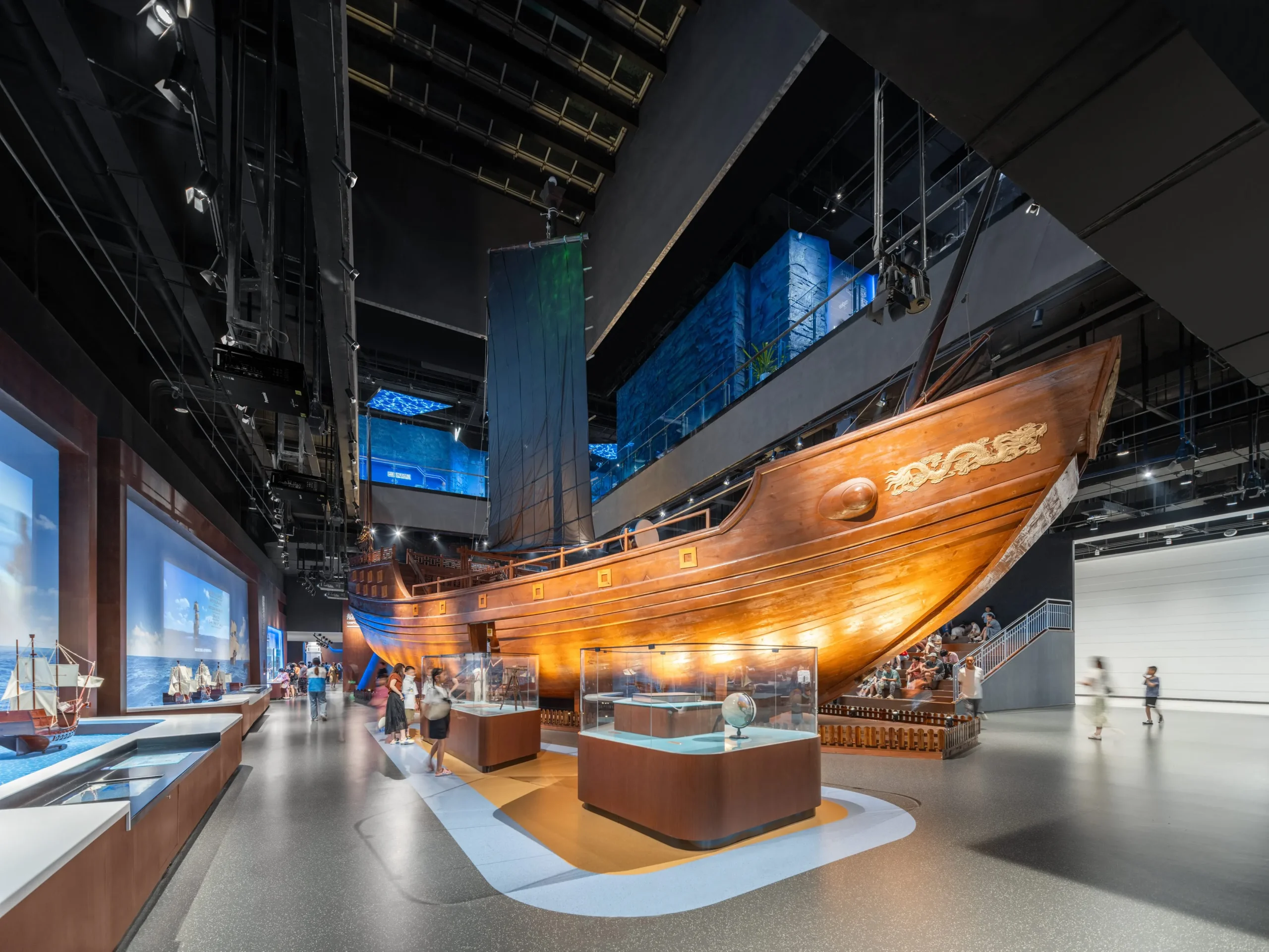
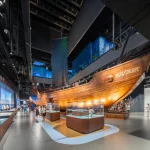
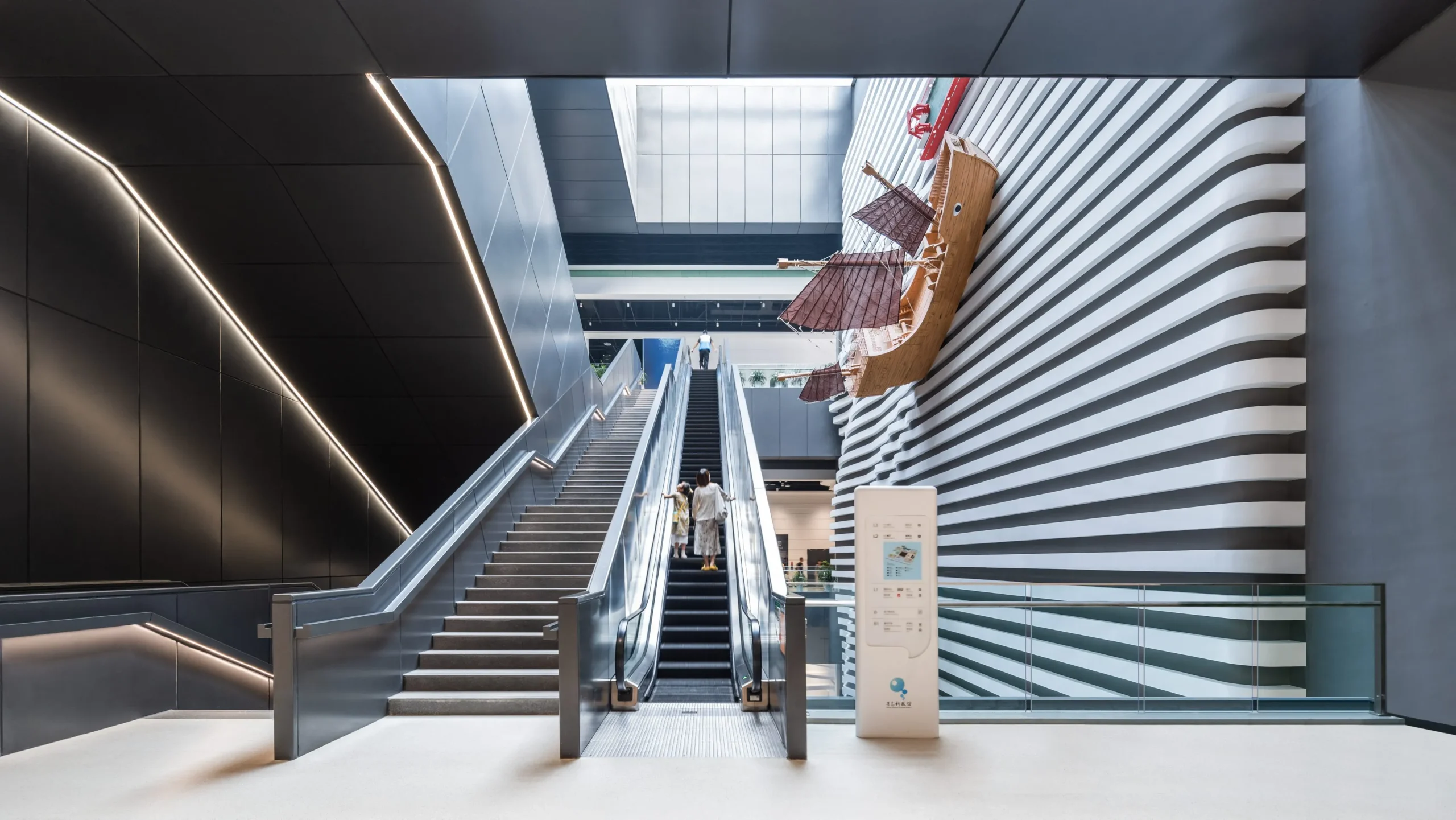
The exhibition program of the museum explores the history of the sea, marine biodiversity, underwater habitats, contemporary ocean research, and the evolution of shipping. At the center of the exhibition sequence stands a historic multi-story wooden junk, creating a dramatic vertical focal point within the galleries. The interaction between the exhibition spaces and the framed coastal views strengthens the connection between architecture, content, and landscape.
Dynamic Façade Design and Future Expansion Plans
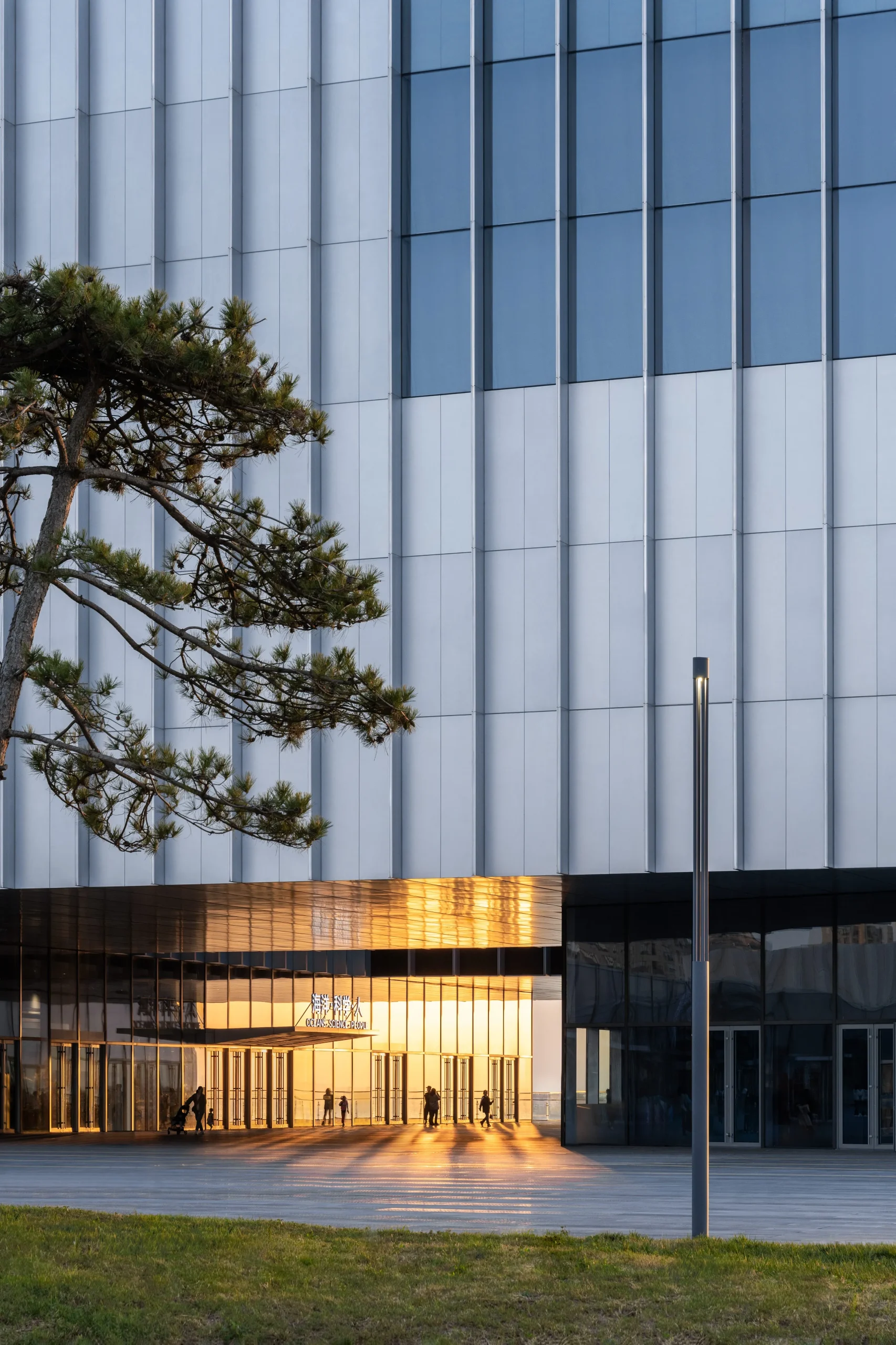
The museum’s façade combines metal cladding, vertical fins, and integrated lighting systems to create a constantly changing architectural expression. During the day, the façade responds to shifting sunlight and weather conditions, while integrated LED elements illuminate the structure at night, turning the museum into a glowing landmark within Qingdao’s urban skyline.
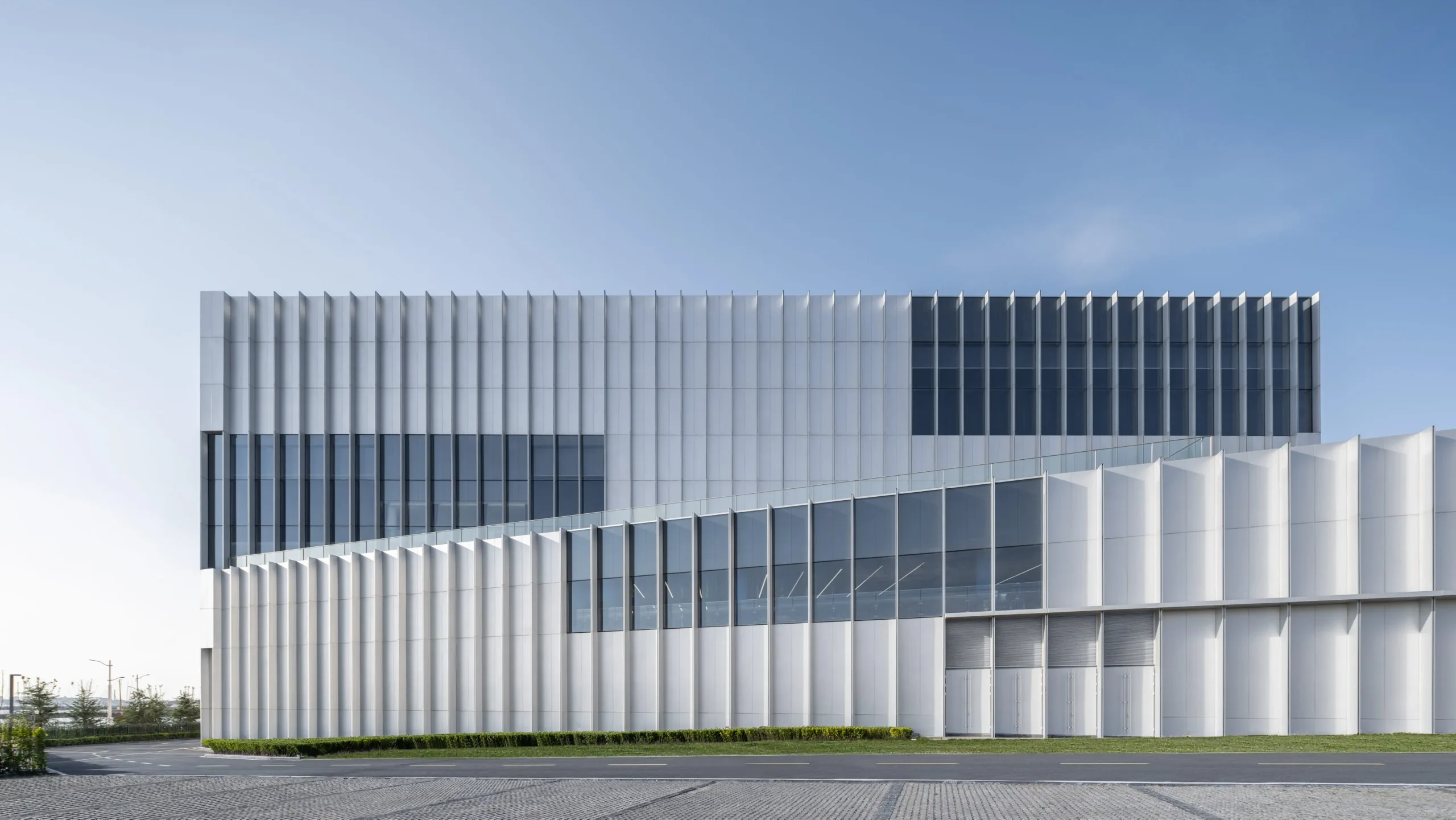
The completed Qingdao Science & Technology Museum represents the first phase of a larger cultural masterplan for the waterfront site. Future development will expand the complex with additional attractions, including a marine aquarium and a planetarium, further establishing the district as a major scientific, educational, and cultural destination connected to Qingdao’s coastal identity.
Credit: Gerkan, Marg and Partners