

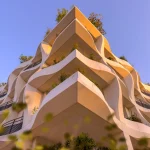
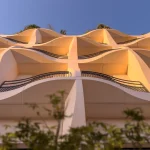
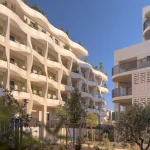
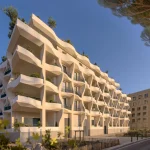
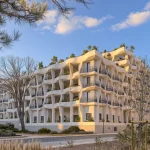
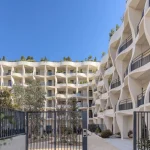
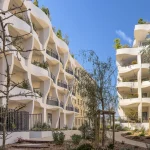
Delivered in March 2026 as part of the emblematic “Jardins Secrets” development, this residential project by Vincent Callebaut and Vincent Callebaut Architectures introduces two bioclimatic residential buildings into the heart of Montpellier’s Cité Créative. Located on the historic grounds of the former École d’Application de l’Infanterie (EAI), the project brings together Théia for Bouygues Immobilier and Opale & Sens for Vestia Groupe, creating a total of 113 residential units, including 28 affordable homes representing 25% of the overall development.
Awarded First Prize in the 2021 competition launched by the City of Montpellier, the project reflects a new model of Mediterranean urban living where climate responsiveness, biodiversity, and social diversity are integrated into architectural form. The development was later recognized with the “Silver Pyramid for Global Quality,” awarded by the Real Estate Developers Federation of Occitanie-Mediterranean, acknowledging its excellence in environmental and urban quality.
A Mediterranean Project Inspired by Art Nouveau
The Jardins Secrets Project responds to a dual ambition: preserving the memory of a former military site while inventing a new generation of dense, green, and regenerative Mediterranean urbanity. Situated less than one kilometer from Montpellier’s historic Ecusson district, the project establishes a dialogue with the surrounding heritage architecture while asserting a distinctly organic contemporary identity.
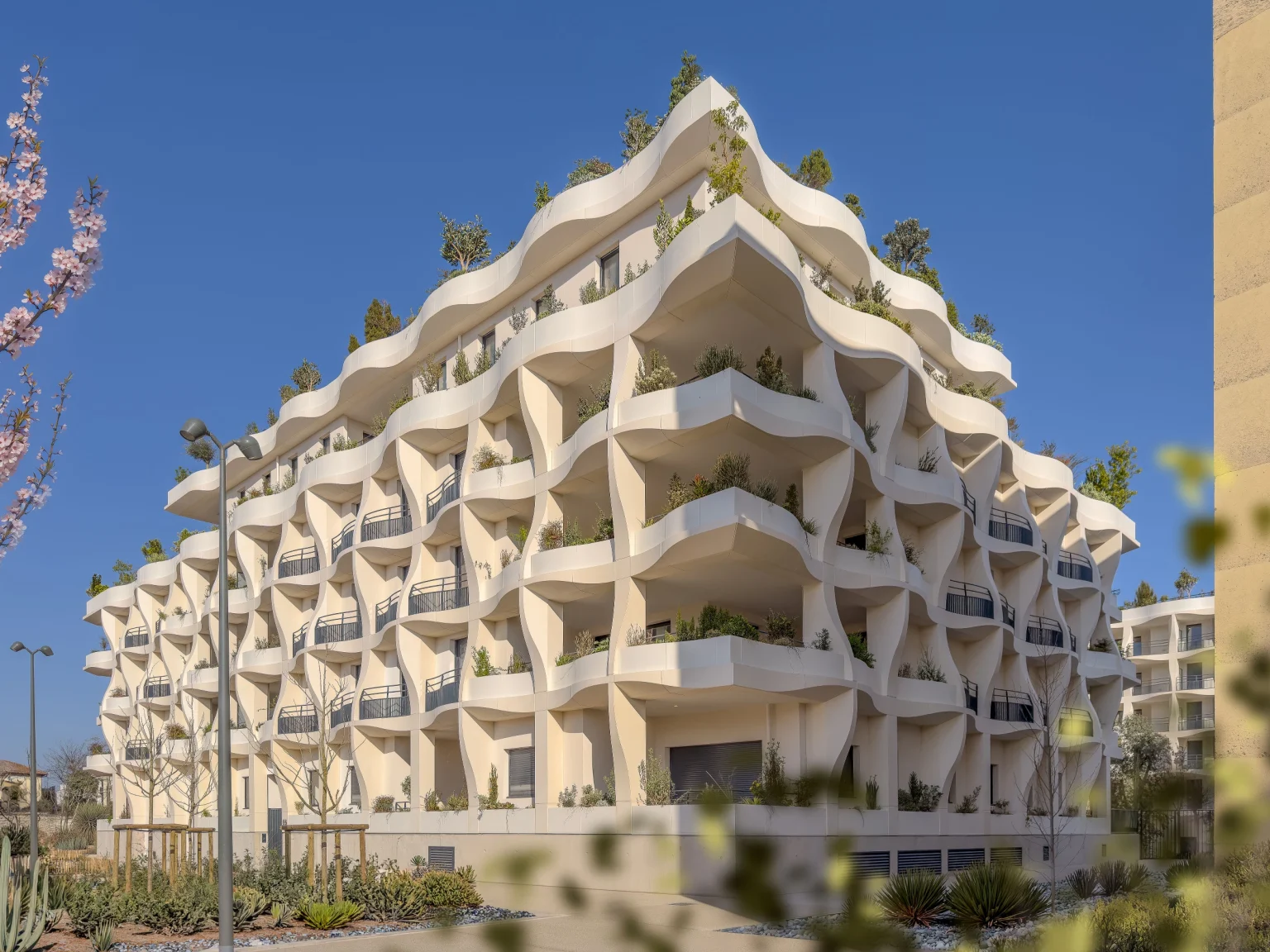
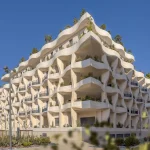
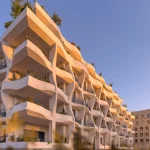
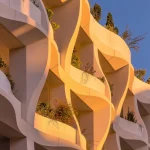
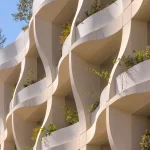
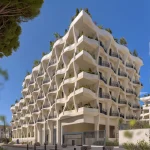
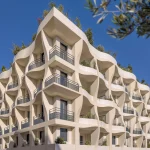
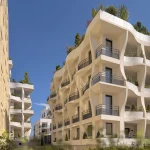
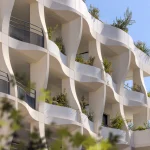
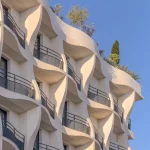
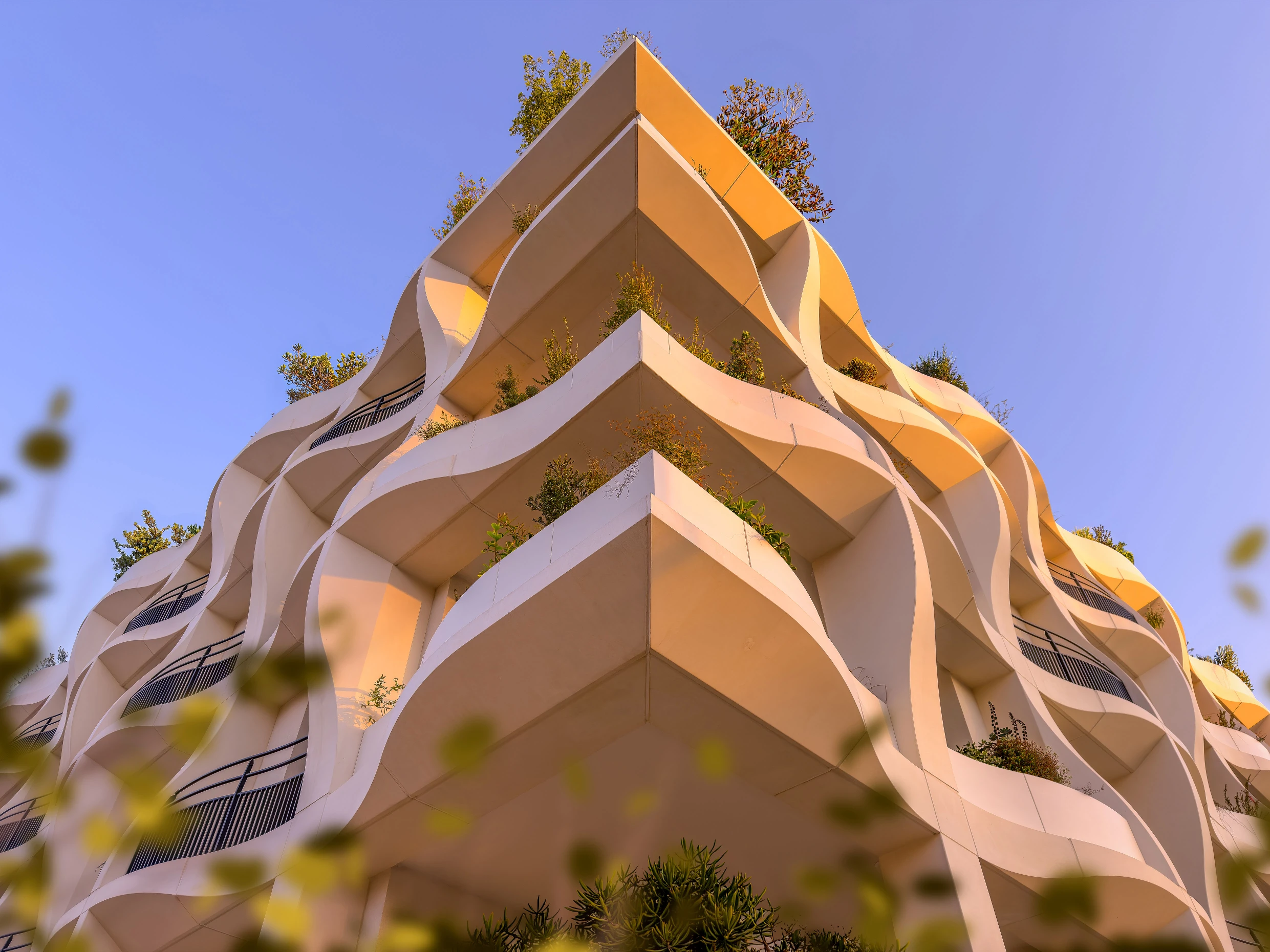
Inspired by the legacy of Victor Horta, Antoni Gaudí, and Émile Gallé, the architecture revisits Art Nouveau through the lens of contemporary biomimicry. Théia and Opale & Sens are conceived as shell-like structures shaped by the Mediterranean sun, sea, and wind. Their façades function as breathable exoskeletons, alternating between protection and porosity, filtering sunlight, directing air movement, and creating stabilized microclimates for residents.
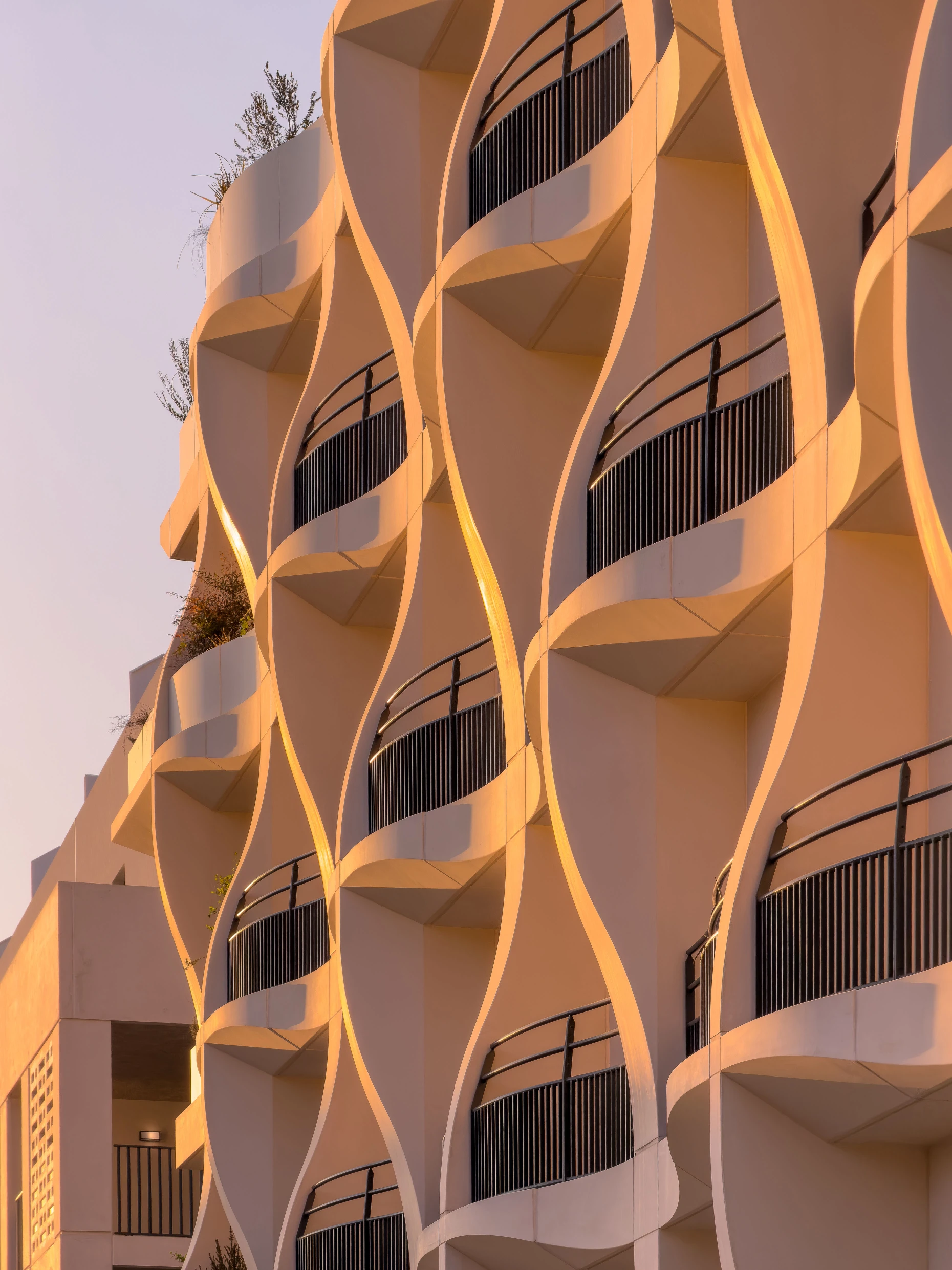
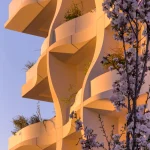
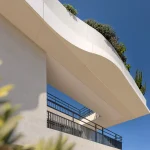
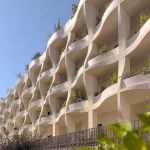
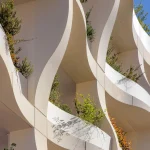
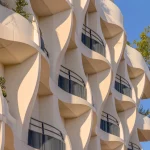
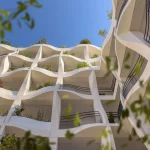
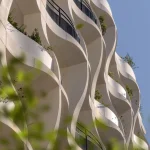
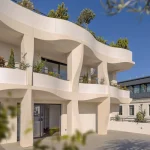
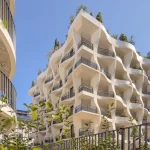
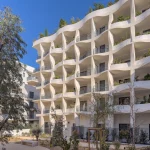
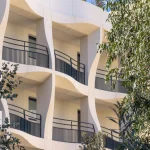
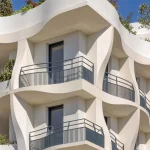
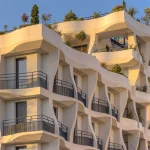
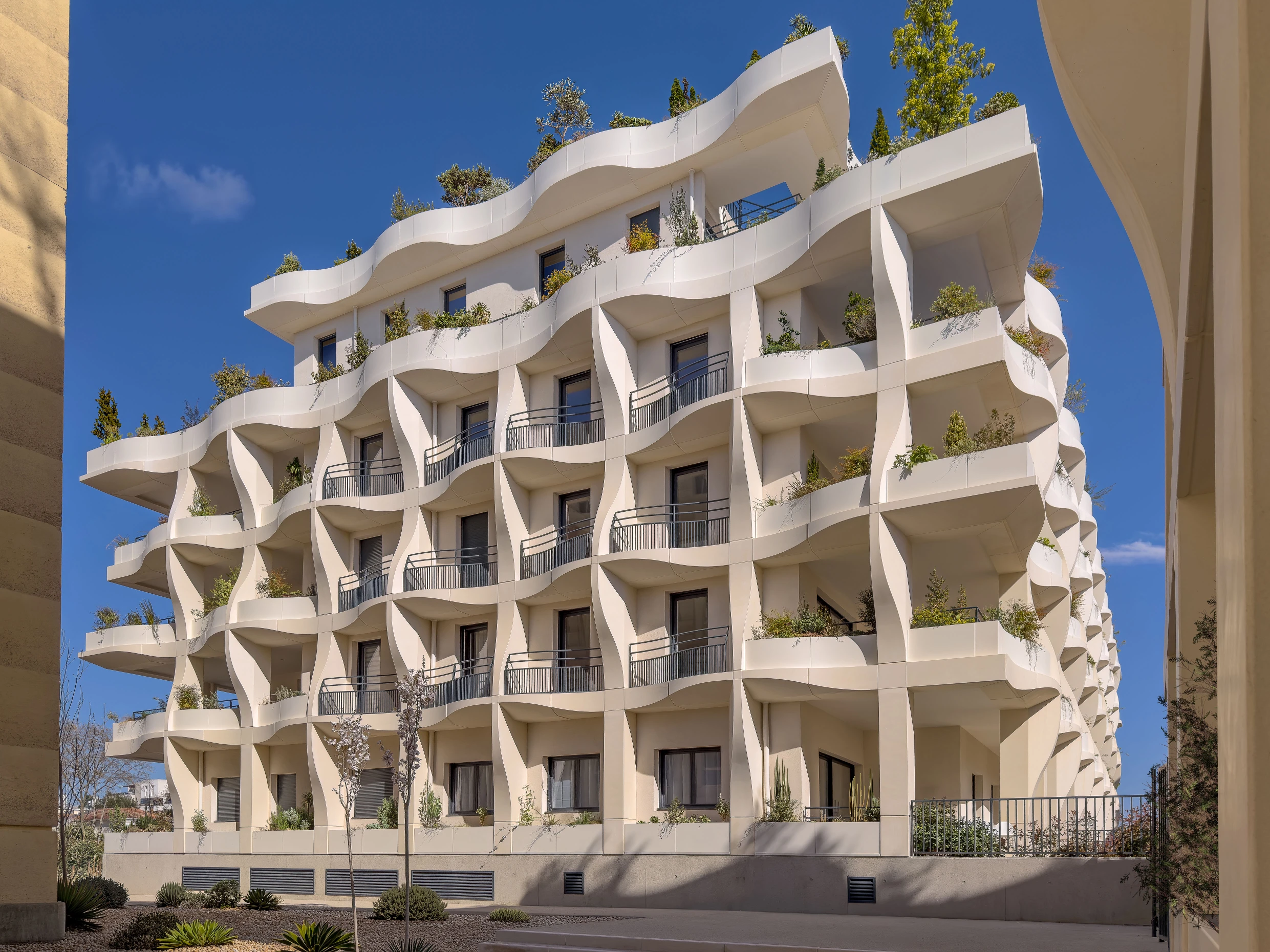
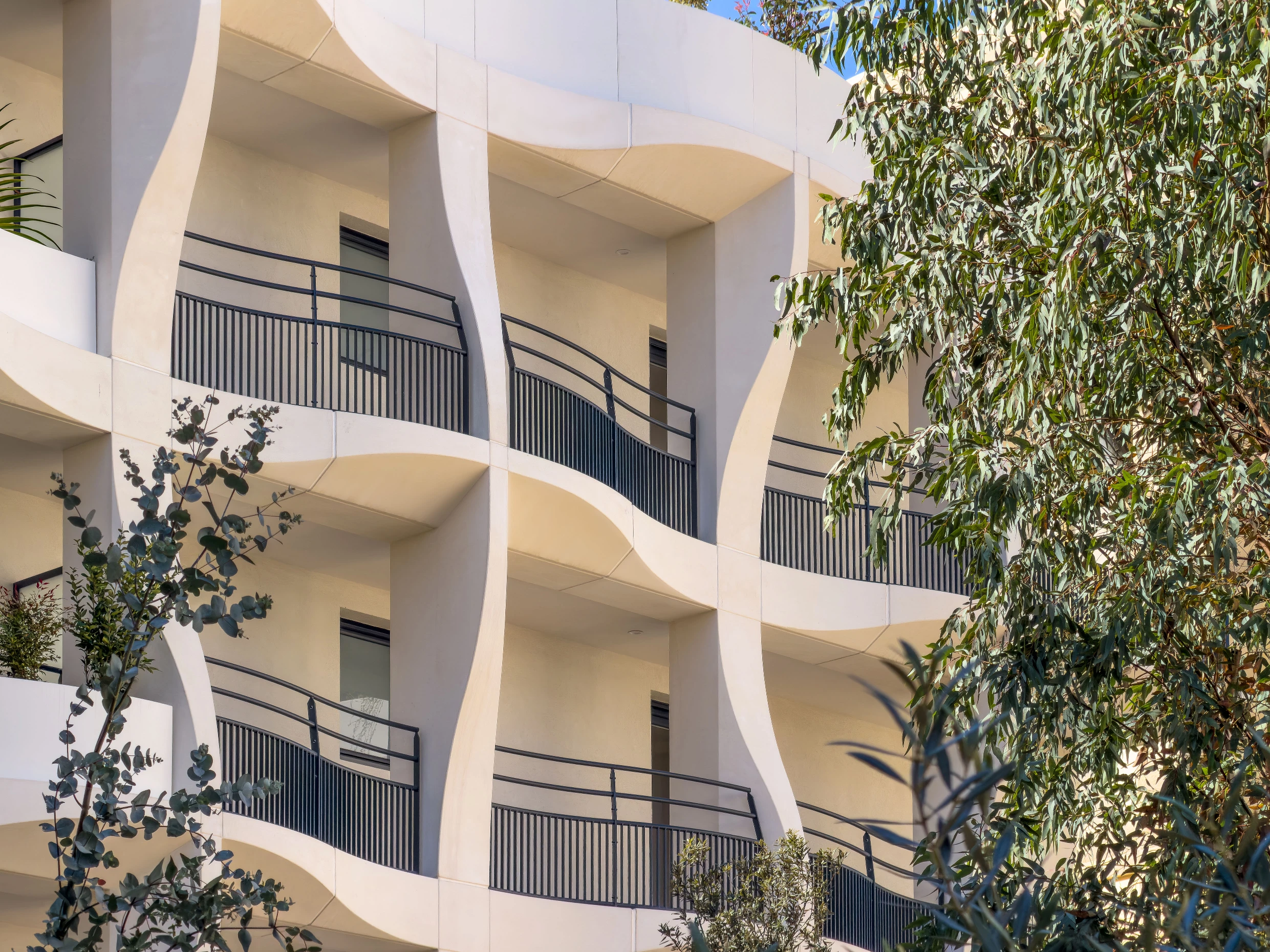
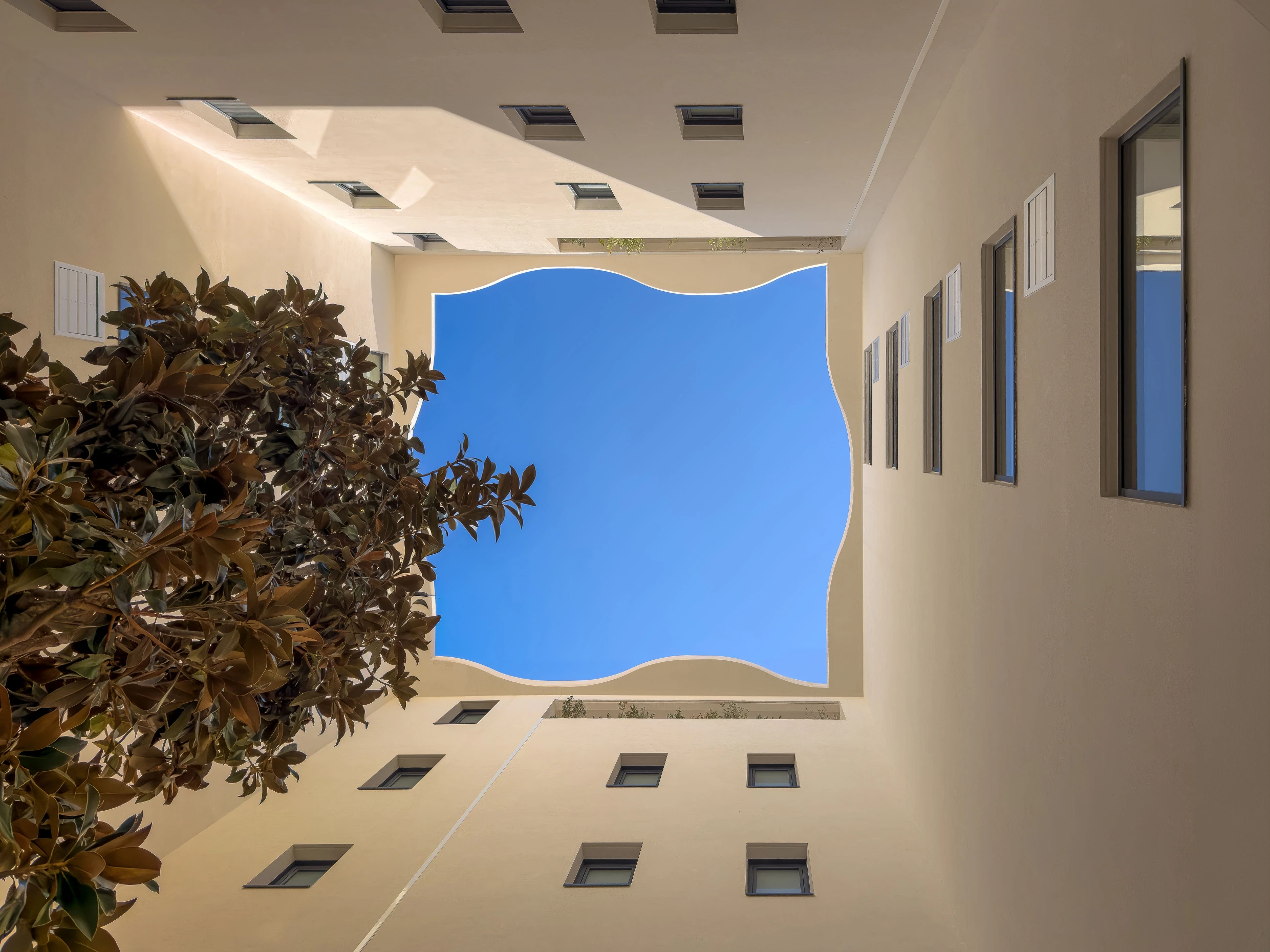
These sculptural envelopes, composed entirely of convex and concave curves, act like finely carved moucharabiehs. They enhance thermal inertia, solar shading, and natural cross-ventilation while rejecting rigid geometry in favor of fluid forms inspired by nature. This approach reflects an “Art Nouveau 2.0” language where form follows climate, and architecture becomes both poetic and performative.
Ecological Project Strategies and Regenerative Biodiversity
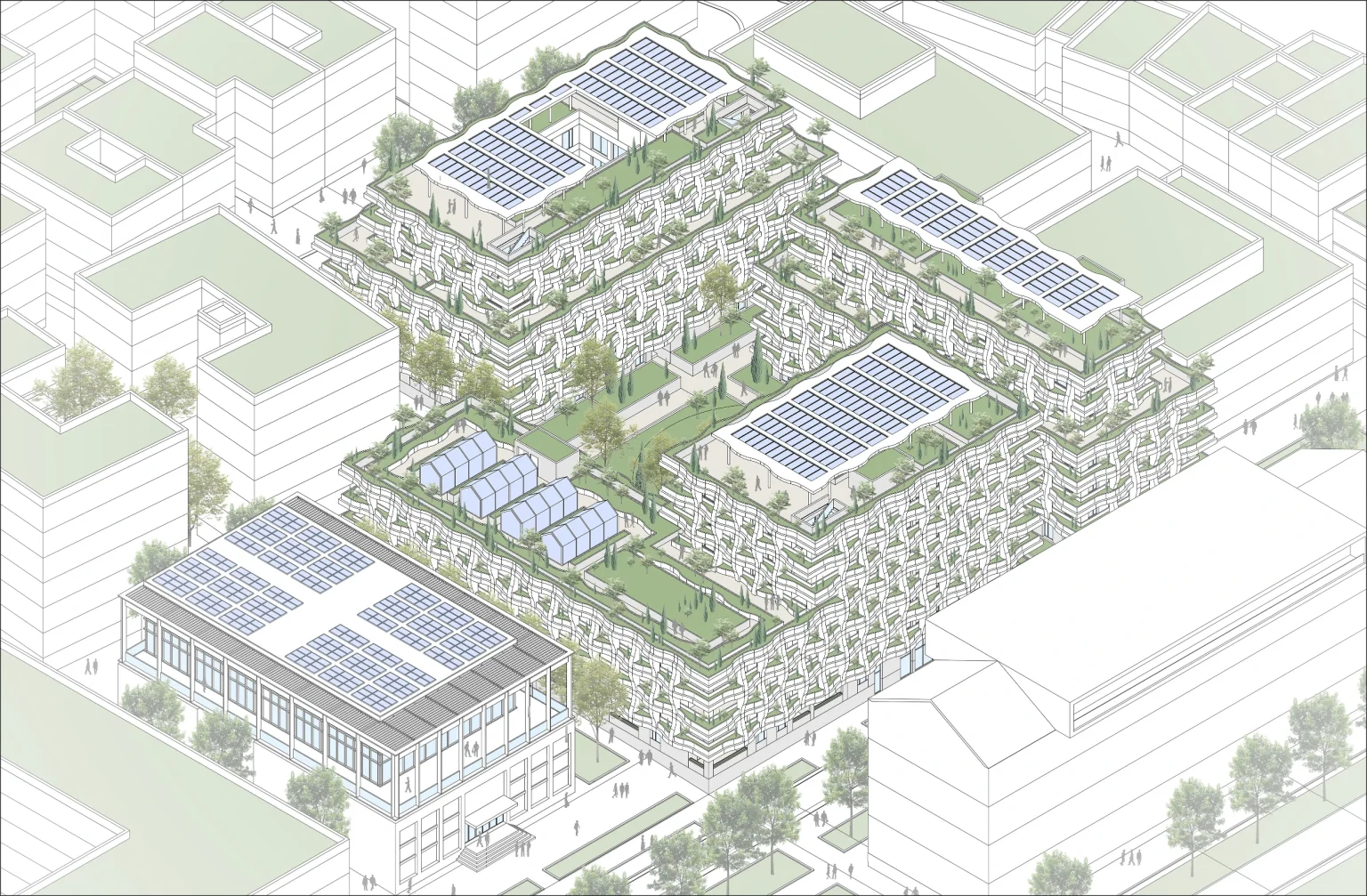
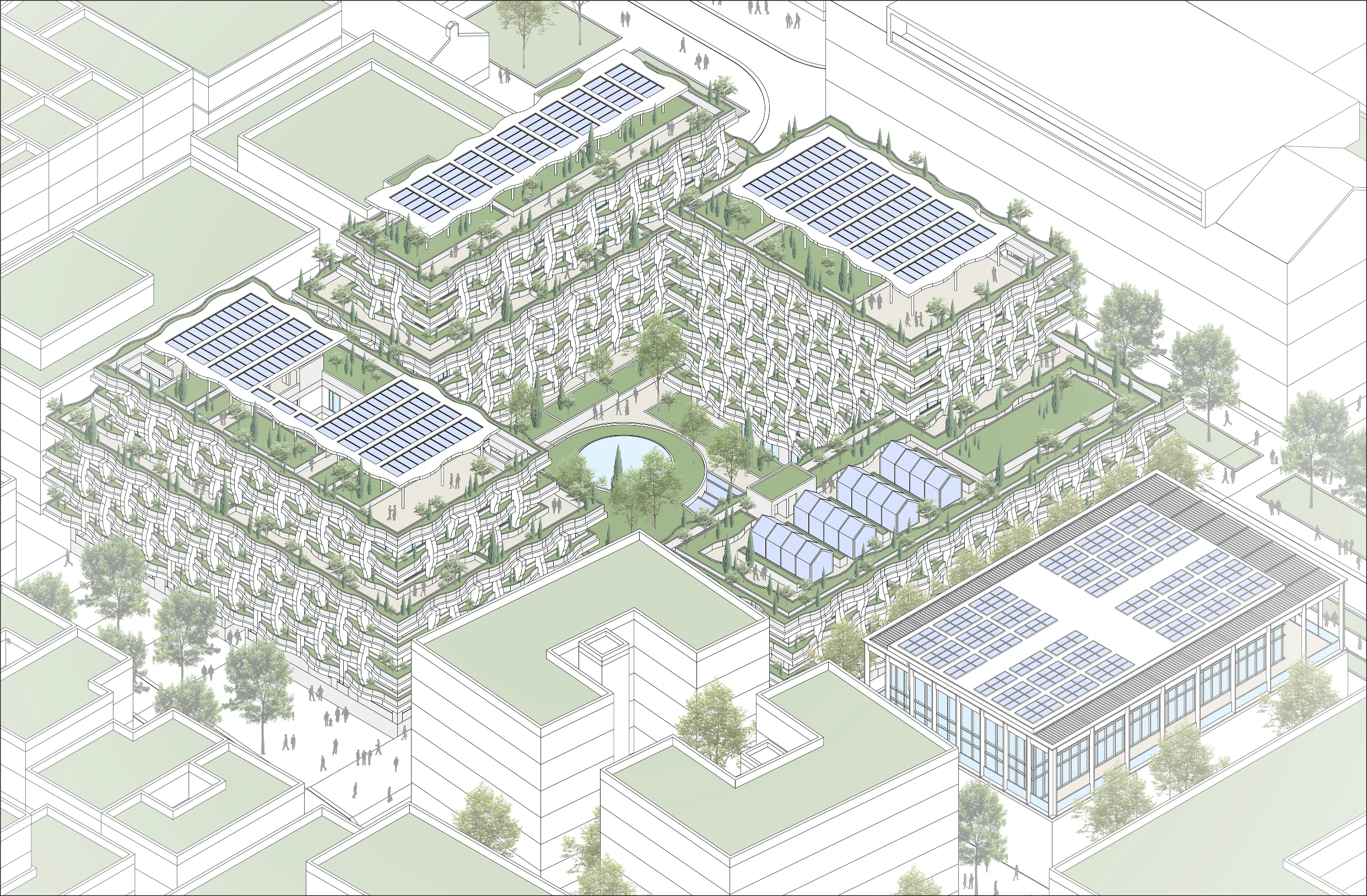
At the center of the Cité Créative, the project extends the ecological continuity of nearby Parc Montcalm, forming a living corridor where built spaces and vegetation coexist in permanent interaction. Ecology is not treated as an accessory but as a structural principle.
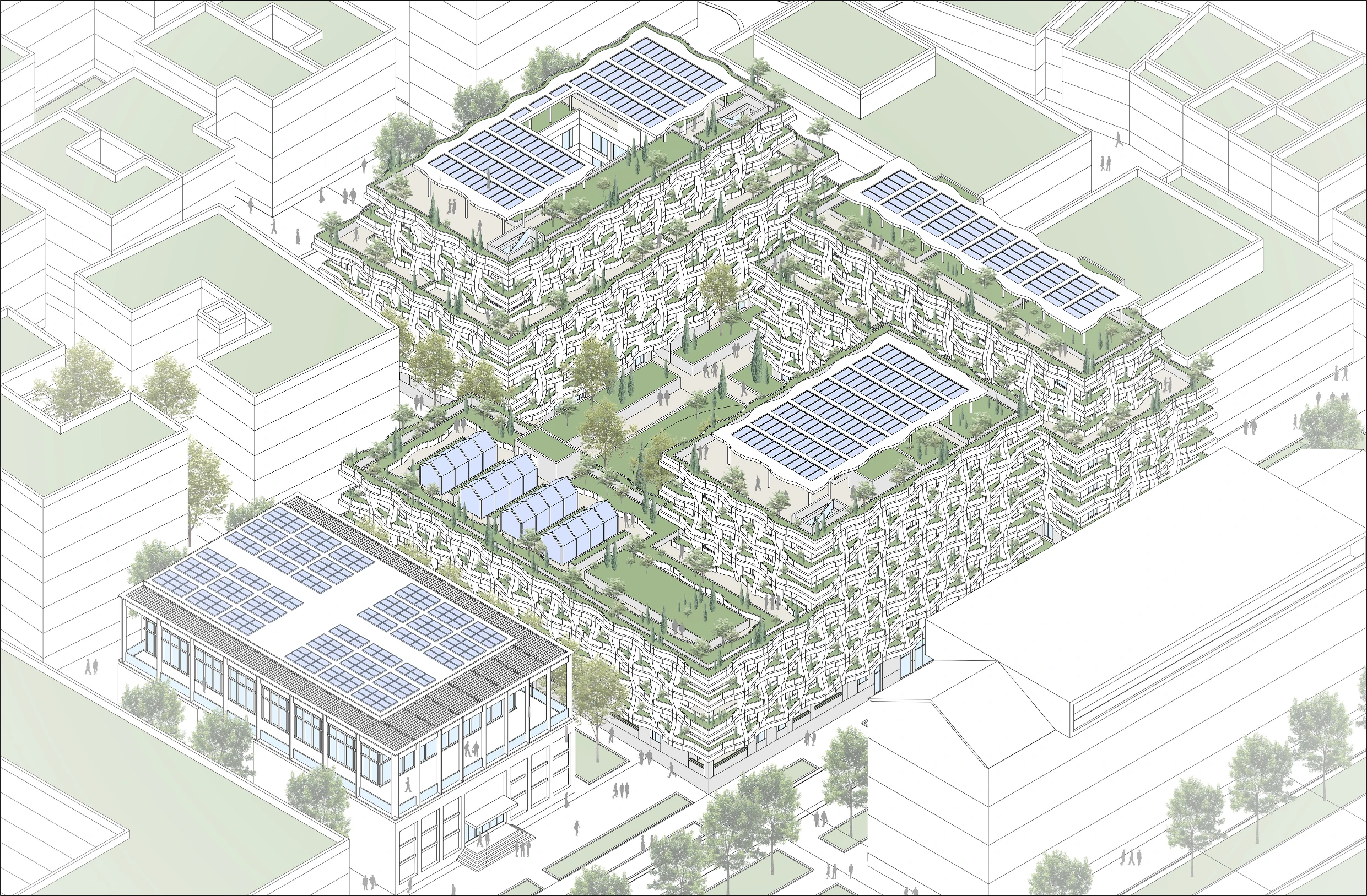
Rainwater harvesting and greywater recycling systems operate in a closed loop to irrigate suspended gardens and landscaped areas. A low-carbon structural system is paired with high-performance thermal insulation to reduce environmental impact, while dense Mediterranean vegetation inspired by local garrigue ecosystems creates urban cooling through evapotranspiration and provides habitat for endemic flora and local fauna.
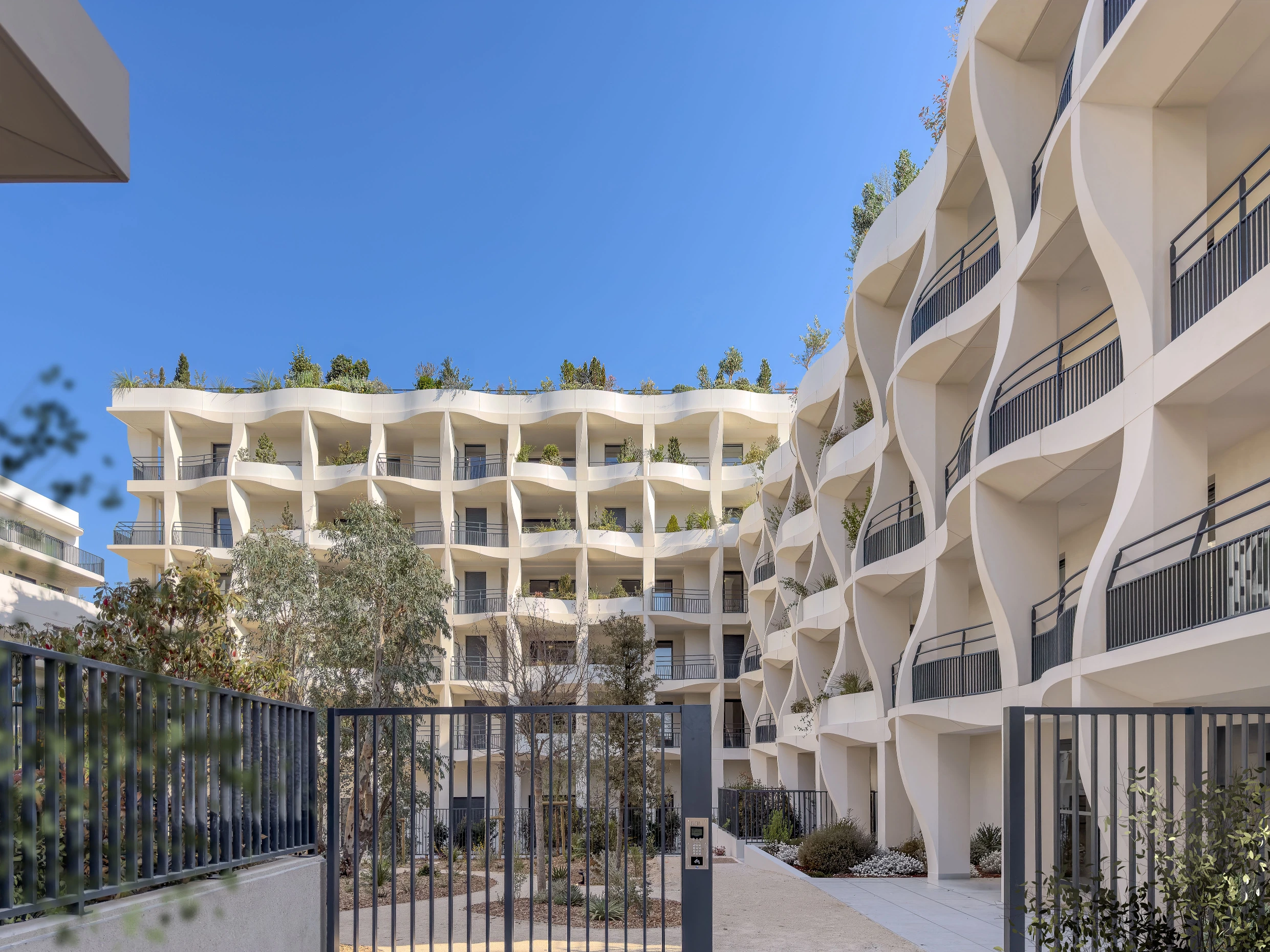
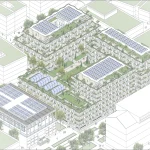
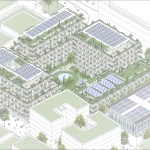
Both buildings are connected to the district biomass boiler and include rooftop photovoltaic panels, ensuring low operational energy demand and alignment with current RE2020 environmental performance standards. The result is a project that moves beyond sustainability toward true regenerative urban ecology.
A Dense Yet Porous Urban Project Morphology
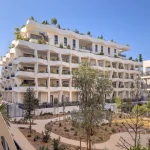
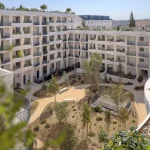
The 113 apartments are organized around a large central courtyard at ground level, designed in open soil rather than sealed surfaces. This landscape core functions as a vegetal sponge, allowing large trees to root directly into the earth, reducing runoff, combating urban heat, and improving thermal comfort across the site.
The urban design is articulated through public pedestrian pathways that connect the wider Cité Créative district, alongside shaded private alleys and vegetated patios that enhance summer comfort. Ground-floor levels were raised by one meter at the request of the chief urban planner, preserving resident privacy while respecting the scale and height of adjacent preserved heritage buildings.
This balance of density and porosity allows the project to maintain urban compactness without sacrificing environmental quality or human comfort.
Théia: Bioclimatic Housing for Bouygues Immobilier
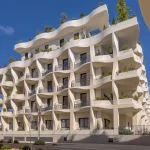
Developed for Bouygues Immobilier, Théia occupies an L-shaped volume with five floors along Rue Frida Kahlo and three floors along the lane leading toward the future rehabilitated cinema, Le Cocon. The building contains 75 housing units, including 17 affordable homes, with apartment typologies ranging from T2 to T5.
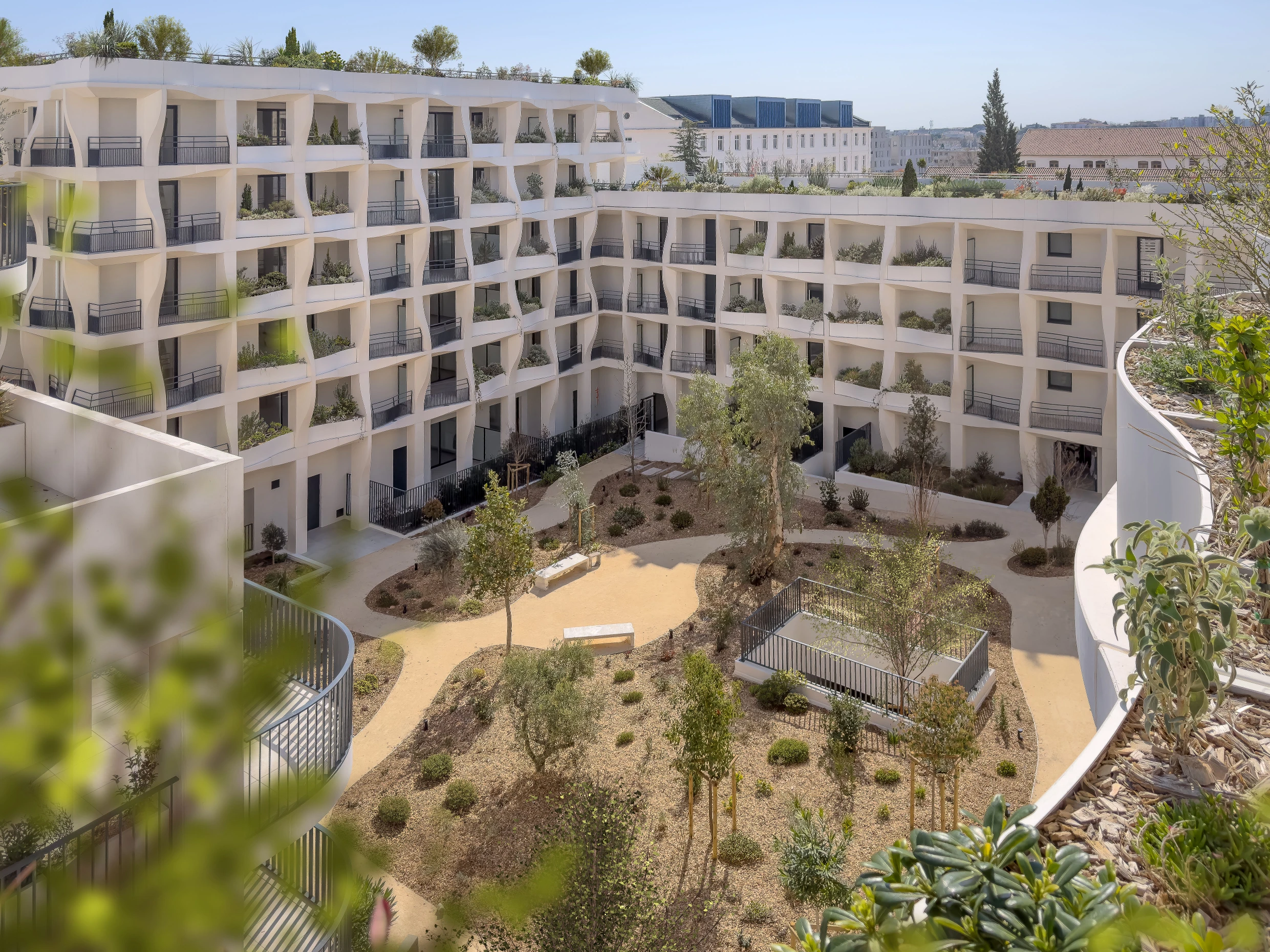
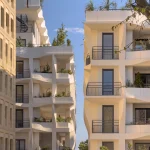
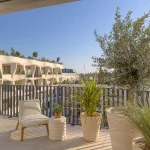
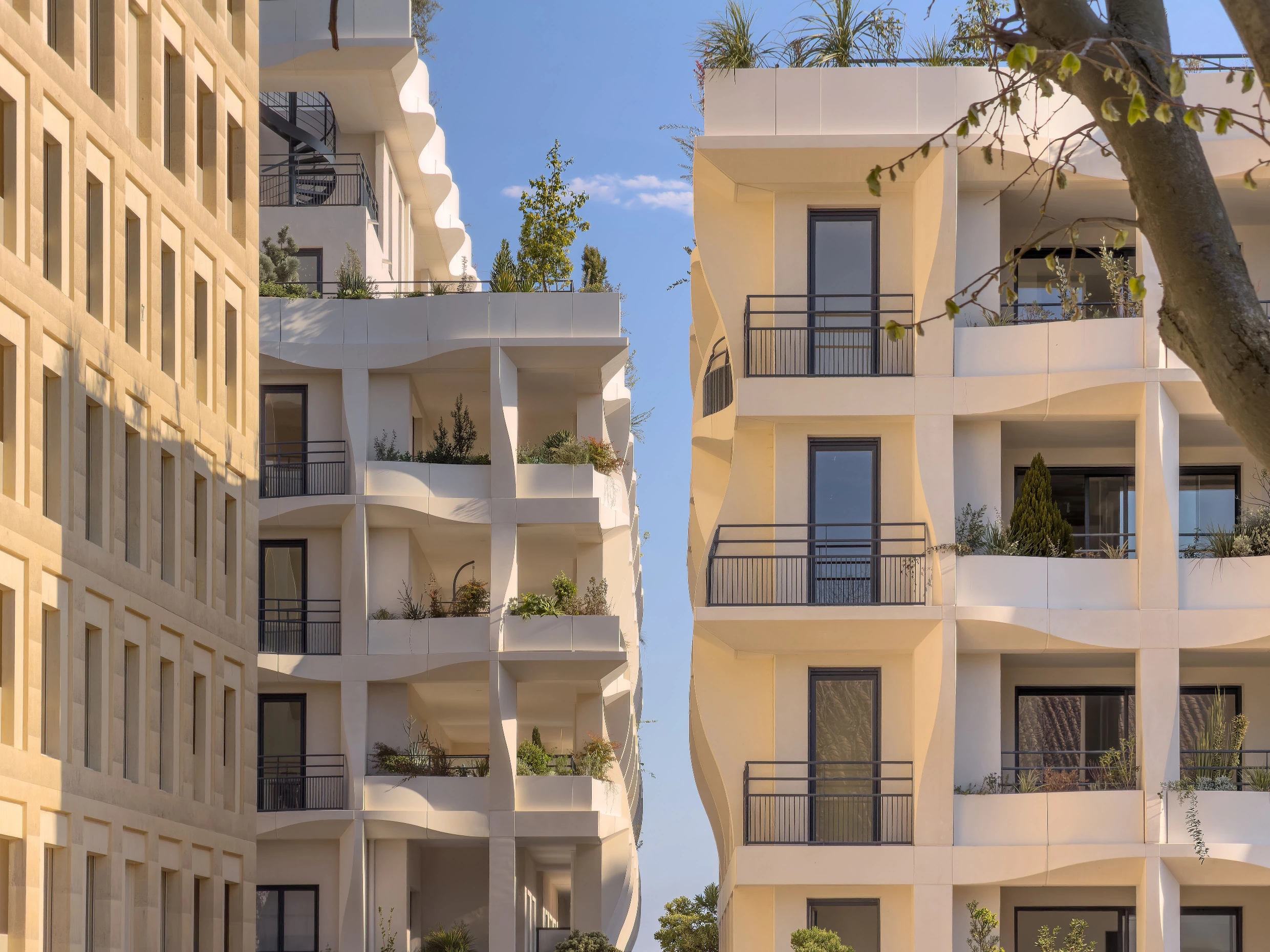
The residences are designed as cross-ventilated or multi-oriented units, maximizing natural airflow and daylight. Deep 3.5-meter loggias extend the living rooms into generous outdoor “bonus rooms” overlooking the landscaped heart of the plot and the city skyline. Curved raised planters ensure privacy while strengthening the building’s soft architectural language.
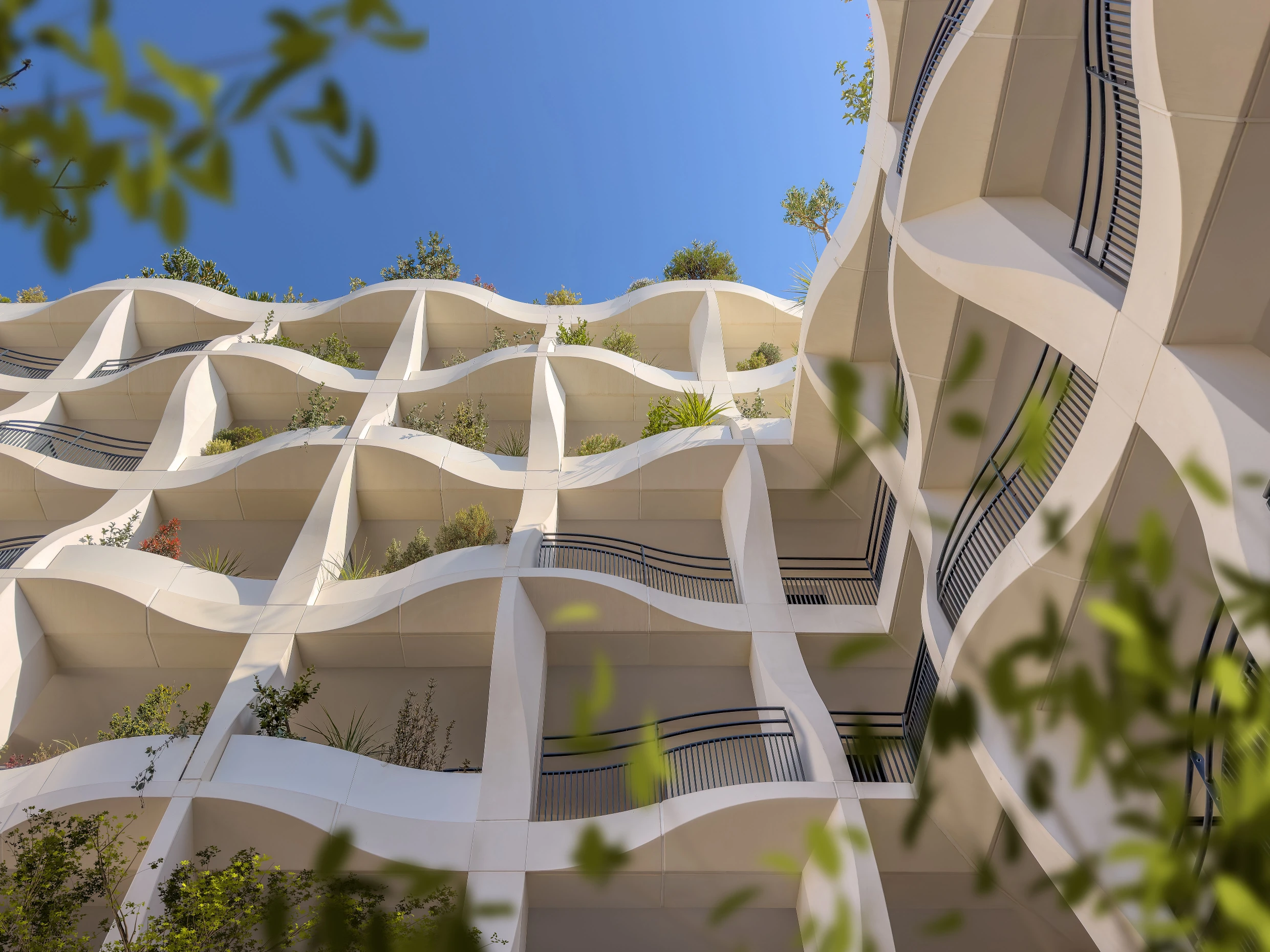
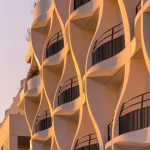
Bedrooms open onto Haussmann-style balconies with curved wrought-iron railings, creating a refined relationship between private interiors and the street. Accessible rooftop terraces provide panoramic views across Montpellier, while the outer corner of the building addresses the arrival of the newly completed tram line 5.
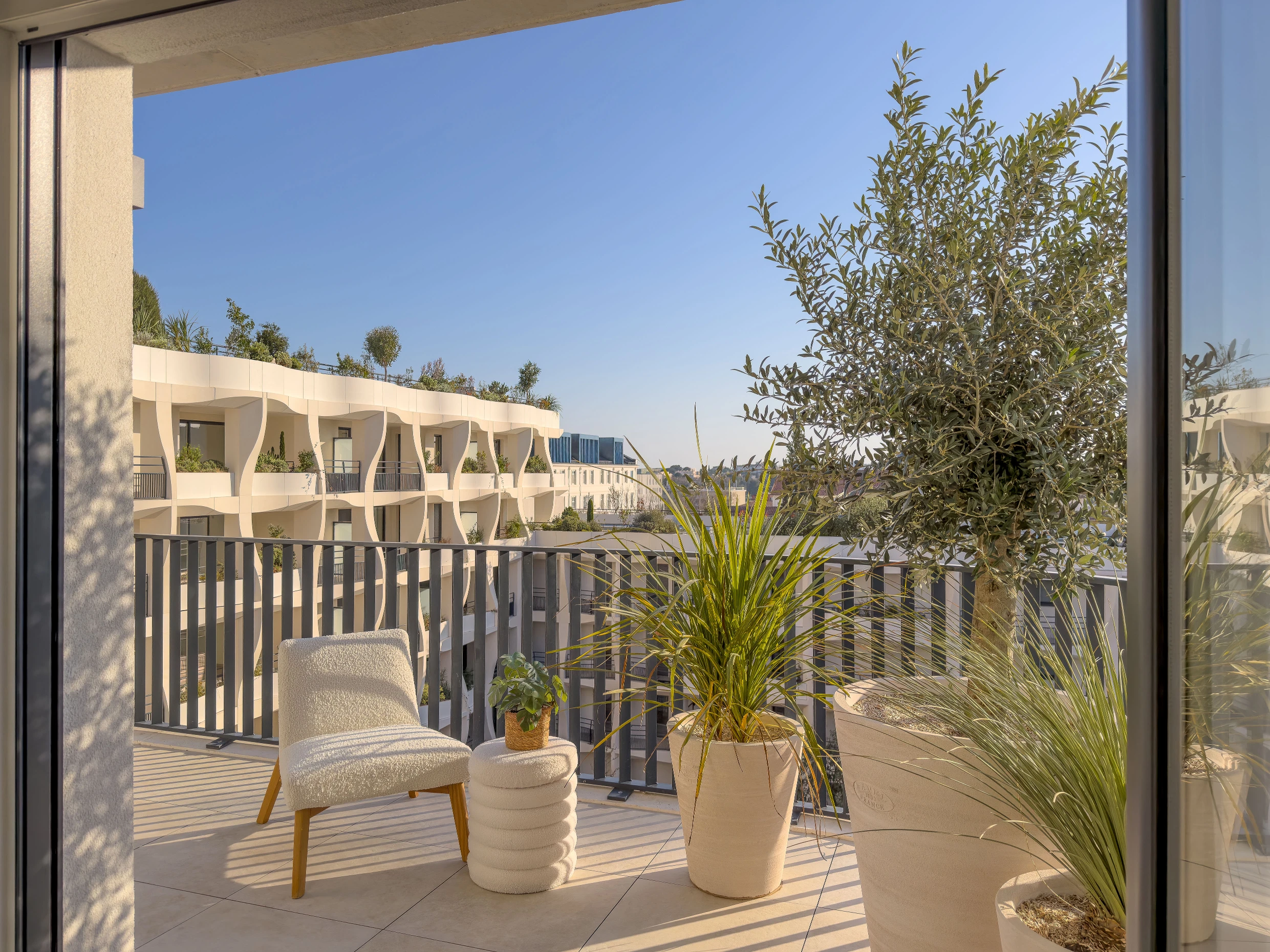
To preserve open soil in the central garden, shared parking is located beneath the buildings and naturally ventilated through a large central patio. Ground-floor bicycle rooms and basement parking support soft mobility and sustainable urban living.
Opale & Sens: Compact Urban Living with Climate Intelligence
Designed for Vestia Groupe, Opale & Sens rises to three floors, with a recessed duplex double top floor at levels R+4 and R+5 set back by 3.5 meters around the perimeter. Located along Allée Mila Racine, the building contains 38 housing units, including 11 affordable homes.
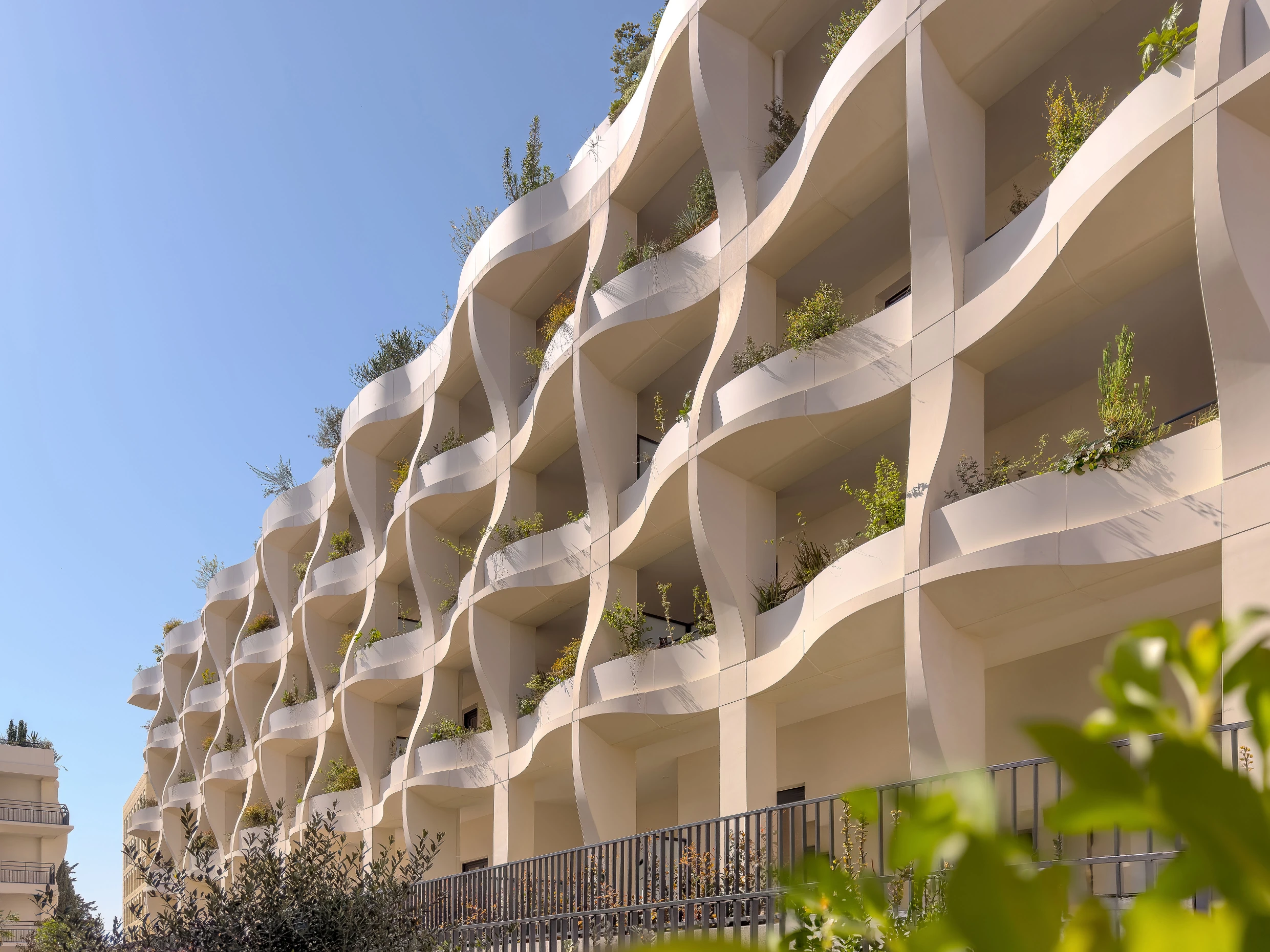
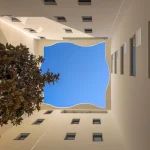
Its defining feature is a full-height central patio that brings natural ventilation deep into the building while creating a calm urban buffer between public and private space. This vertical void also accommodates access to the residential lobbies and bicycle rooms, enhancing circulation and comfort.
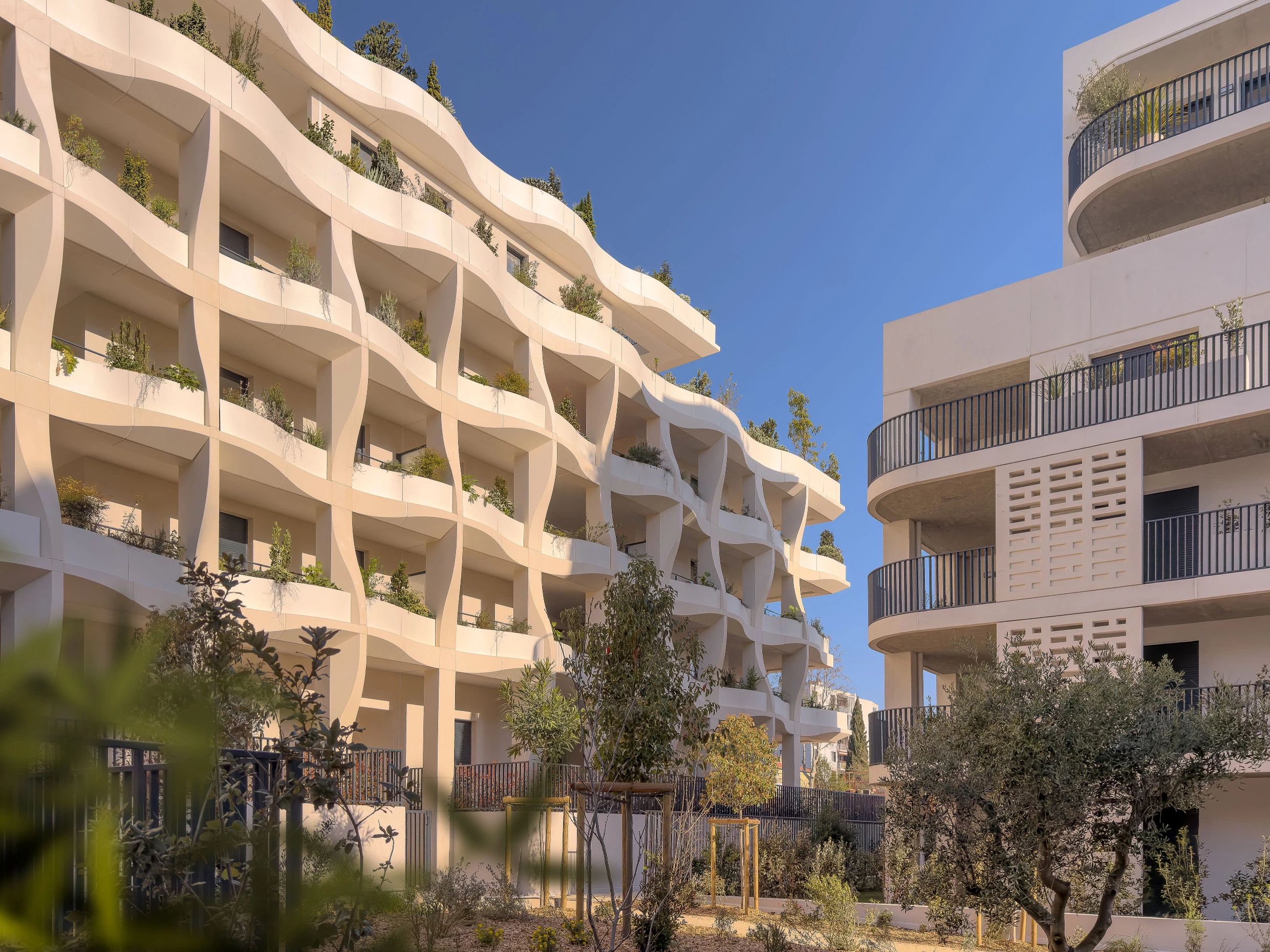
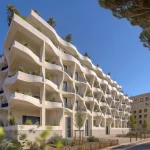
The façades alternate between vegetated loggias facing the internal garden and corner conditions, and Haussmann-style balconies facing the street. Ground-floor apartments benefit from elevated private gardens, while continuous balconies trace fluid wave-like lines across the planted façade overlooking the courtyard, reinforcing the project’s urban cool island effect and visual identity.
Towards a Regenerative Urban Housing Project
Jardins Secrets represents a new model of regenerative urbanity where density and biodiversity are no longer in opposition. Open-soil community gardens, shaded pathways, vegetated roof terraces, material sobriety, and shared renewable energy systems create a framework for resilient and socially connected urban living.
The project restores ecological cycles of water, energy, and biodiversity while fostering social interaction through shared outdoor spaces and communal gardens. It demonstrates how affordable housing can be both environmentally ambitious and architecturally expressive.
Through Théia and Opale & Sens, Art Nouveau is reinterpreted as a contemporary ecological language. Architecture becomes a mediator between inhabitants, climate, and nature, producing a living urban environment where aesthetics, comfort, and resilience coexist.
Jardins Secrets Project Facts Sheet
Project Title: Jardins Secrets Project
Buildings: Théia + Opale & Sens
Location: Montpellier, Cité Créative, Jardins Secrets, France
Status: Built and Delivered – March 2026
Type: Competition, First Prize Winner (2021)
Total Residential Units: 113
Affordable Housing Units: 28 (25%)
Gross Floor Area: 8,209 m² (Théia: 5,364 m²; Opale & Sens: 2,845 m²)
Théia Client: Bouygues Immobilier
Opale & Sens Client: Vestia Groupe
Architecture: Vincent Callebaut Architectures
Lead Architect: Vincent Callebaut
Structure: André Verdier Ingénieur Conseil
MEP: Dexo
Landscape: Land’Act Paysages & Territoires
Construction Cost: ACEEC
Control Office: Groupe Qualiconsult
Urban Planner: West 8
City of Montpellier: Groupe SERM / SA3M Montpellier, Ville, Métropole et Ccas
MOEX Théia: CIC DELMAS
MOEX Opale & Sens: Rémi Bonnaure
Main Contractor: Sectp
Facade: Rampa Prefa
Planters: Atech
Plant & Tree Nursery: Sariviere
Grey Water Recycling: Fgwrs
Certifications: NF Habitat HQE – High Environmental Quality
Award: Silver Pyramid for Global Quality – Real Estate Developers Federation of Occitanie-Mediterranean & GIP
© Vincent Callebaut Architectures, Paris