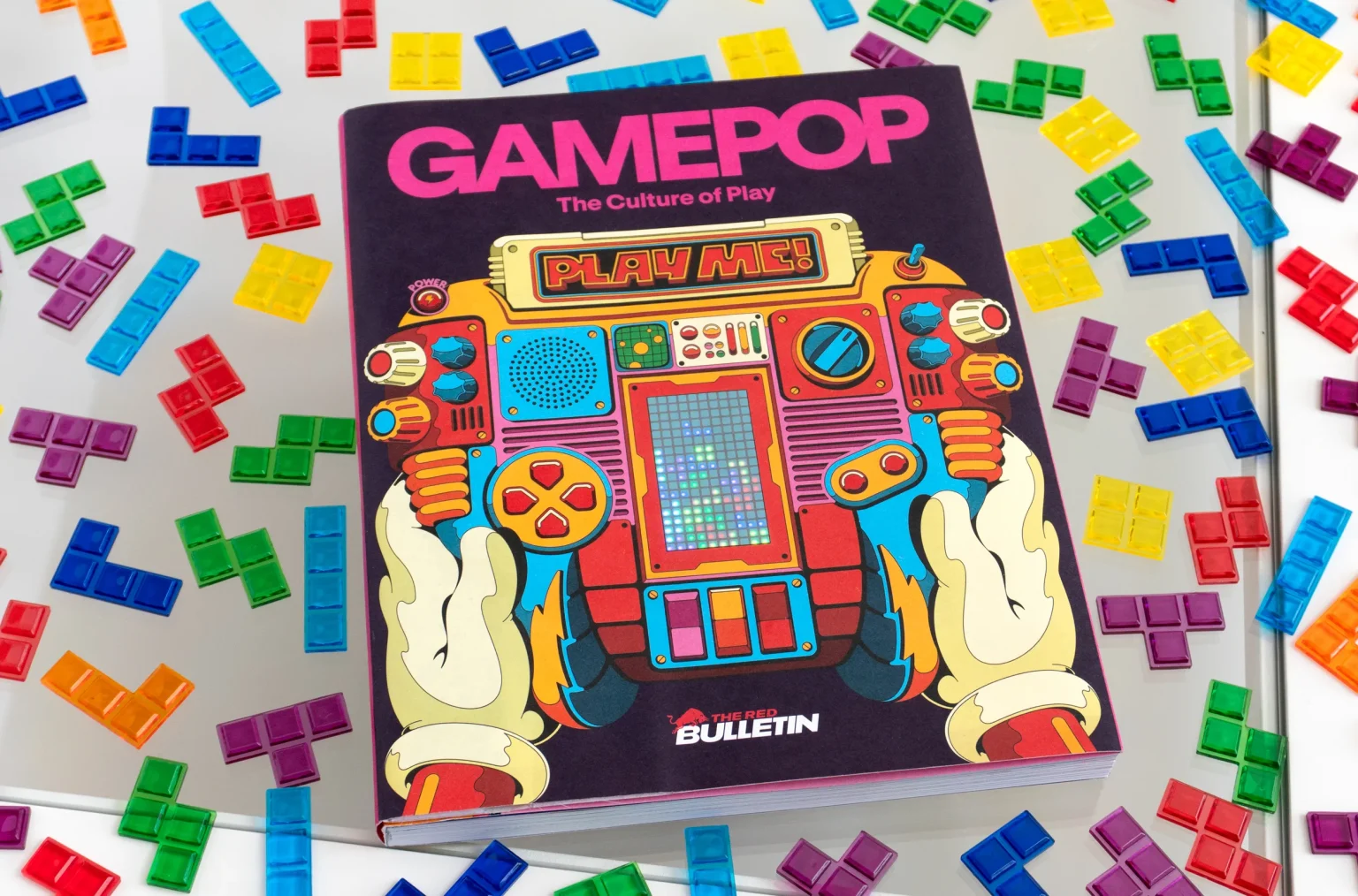




Red Bull has turned a printed magazine into a working game console. The result is the GamePop GP-1, a limited-edition magazine cover that runs a fully playable version of Tetris directly on paper. It’s a product built as part of Red Bull’s gaming-focused publication, designed to be held, pressed, and played like any handheld device, except it still behaves like a magazine. Only a small batch was produced, with just 150 copies featuring the playable cover, positioning it more as a collector-grade product than a mass-market release.
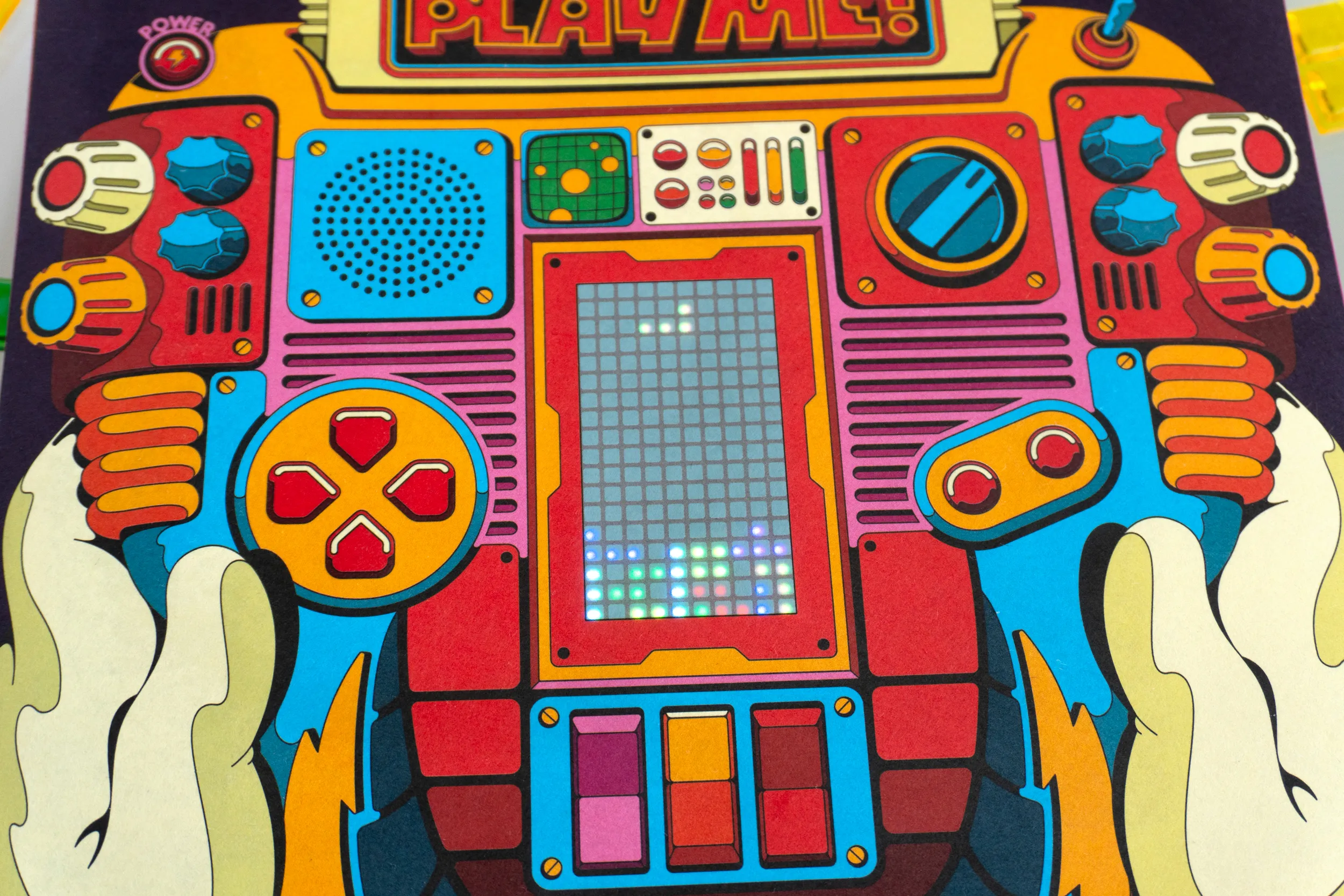
The GamePop GP-1 is a fully embedded gaming system inside a magazine cover. It incorporates print production with compact electronics to create a hybrid object.
The product was developed by Kevin Bates, known for creating the ultra-thin Arduboy. His expertise in compact, low-power gaming hardware directly shaped this build. Red Bull’s media division led the concept and production, using Bates’ experience to translate a niche hardware idea into a branded physical product
This partnership is unique because it brings together two very different worlds. Consumer electronics prototyping, on the one hand, involves designing and testing compact, low-power devices. On the other hand, commercial print manufacturing focuses on scale, materials, and physical distribution. Bringing these together turns a standard magazine into a functional electronic product.
How a Magazine Becomes a Tetris Gaming Device
GamePop GP-1 is a remarkable piece of engineering: a flexible printed circuit board (PCB) seamlessly embedded between layers of paper. This smart design lets the magazine bend and fold like a regular print copy, but it also quietly holds all the electronics needed to play Tetris. The circuit itself is only about 0.1 mm thick, combining flexible sections with small rigid areas to keep the components both compact and durable.
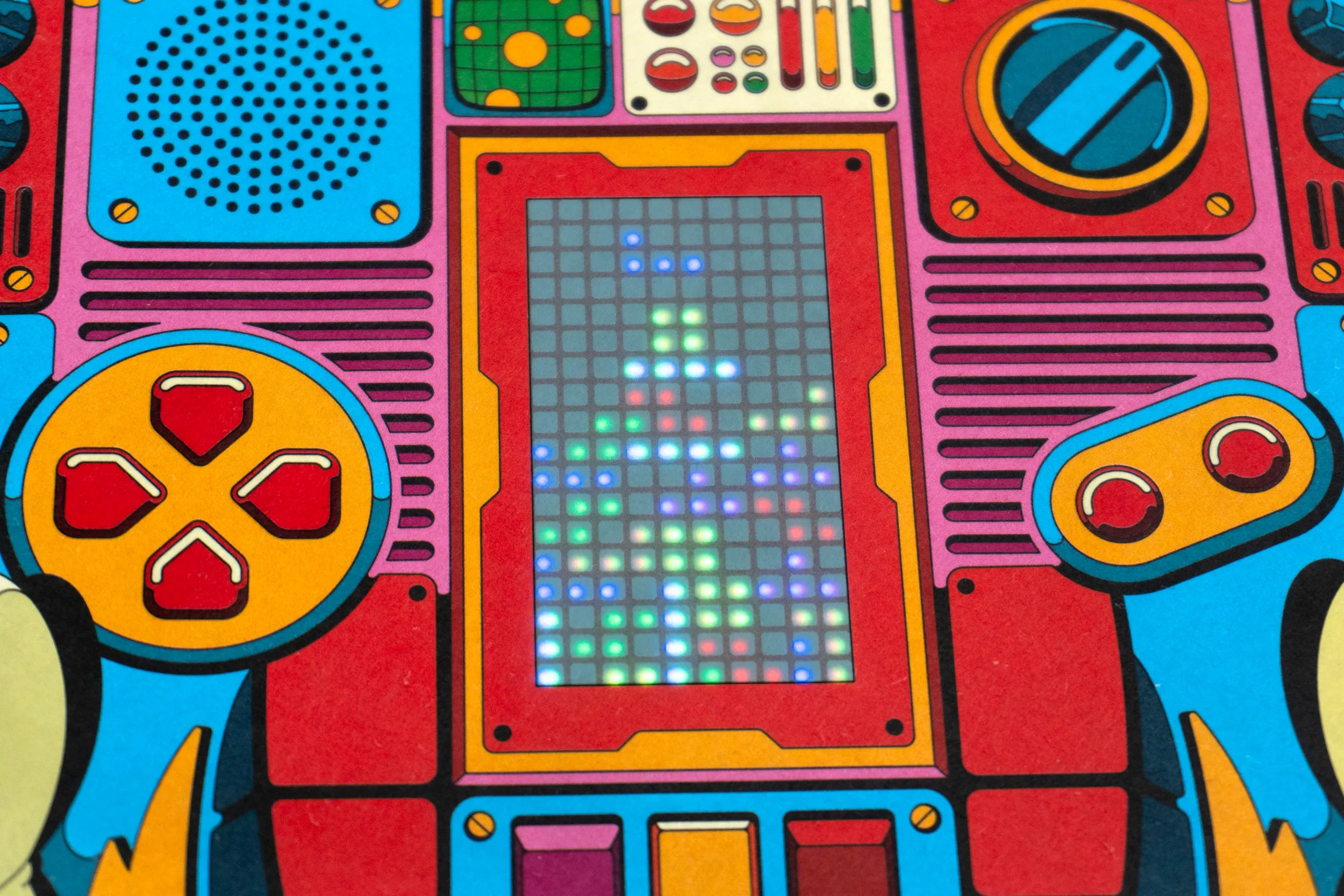
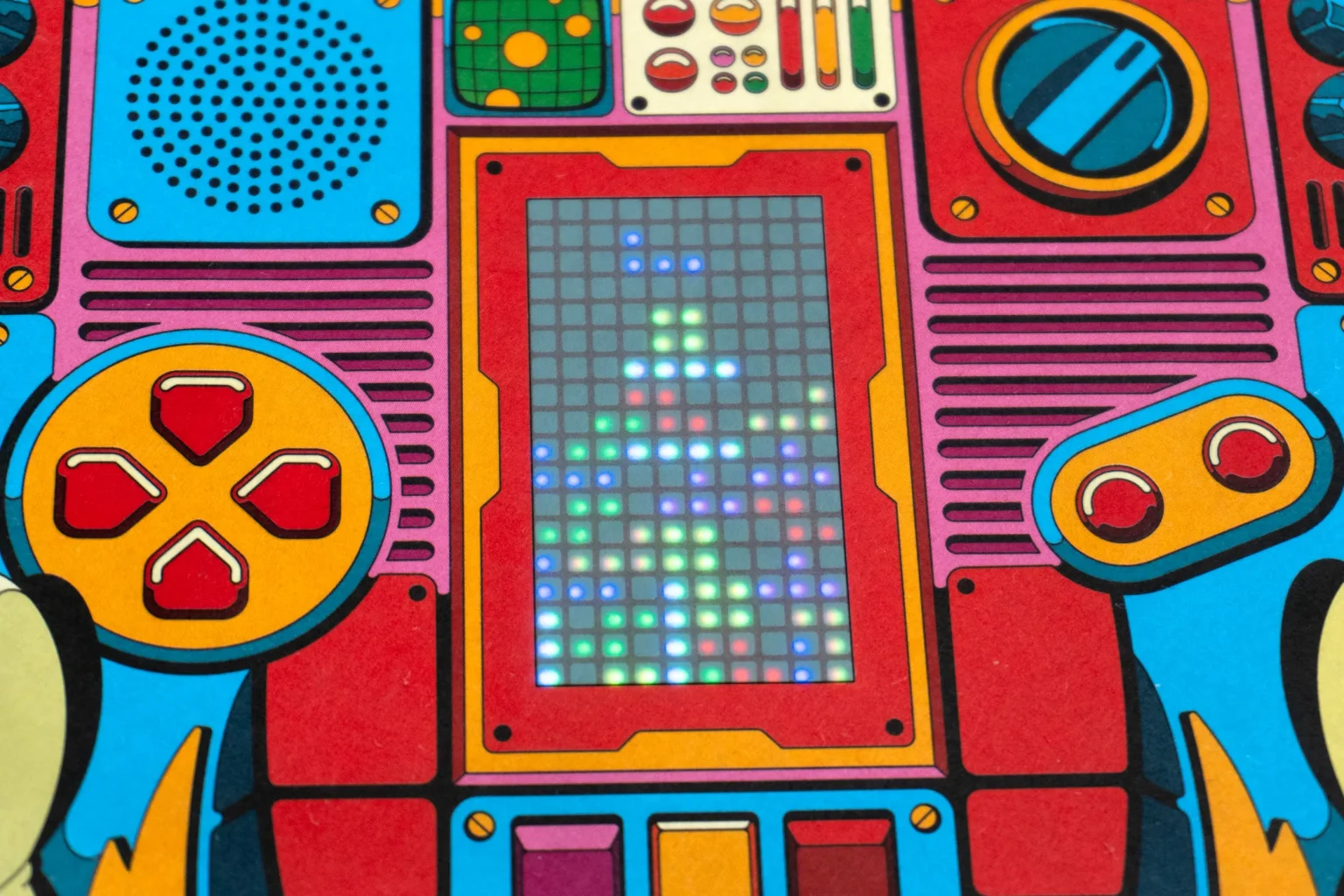
The magazine comes alive with an 180-LED RGB matrix. Each tiny light works together to display the Tetris blocks clearly and responsively. The setup uses less power than standard displays, bends with the paper without breaking, and integrates smoothly into the printed cover.
Even the controls are part of the innovation. The buttons’ capacitive touch sensors are carved directly into the copper of the circuit. When you press them, the paper’s subtle flex gives just enough feedback to make it feel interactive while keeping the surface completely flat.
Behind the settings, a 32-bit ARM microcontroller orchestrates the experience. Nestled on a thin, rigid segment near the spine, it handles every aspect of the game from running the Tetris engine to managing the LED display and processing your input. Essentially, it turns the magazine into a fully functional, miniature embedded device.
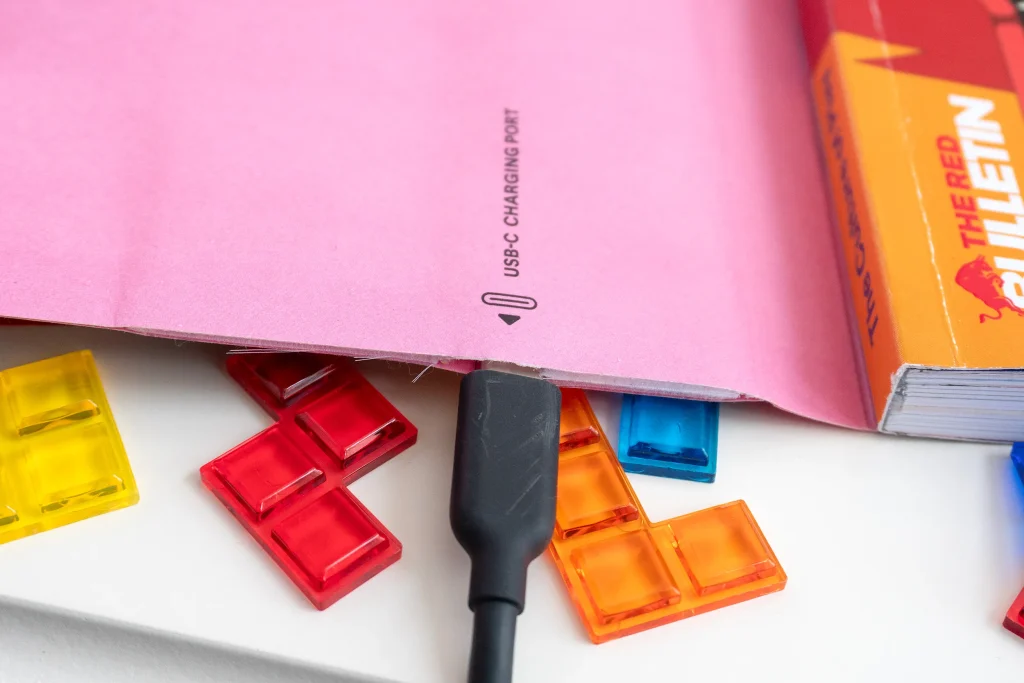
Power comes from four rechargeable coin-cell batteries hidden within the cover. Charging is just as ingenious: a USB-C interface is tucked into the paper edge, with contacts exposed for a cable connection. There’s no bulky port sticking out, just a clean, functional design that keeps the system running while preserving the magazine’s sleek form. The system delivers around two hours of gameplay per charge, making it functional.
Balancing Technology and Limitations
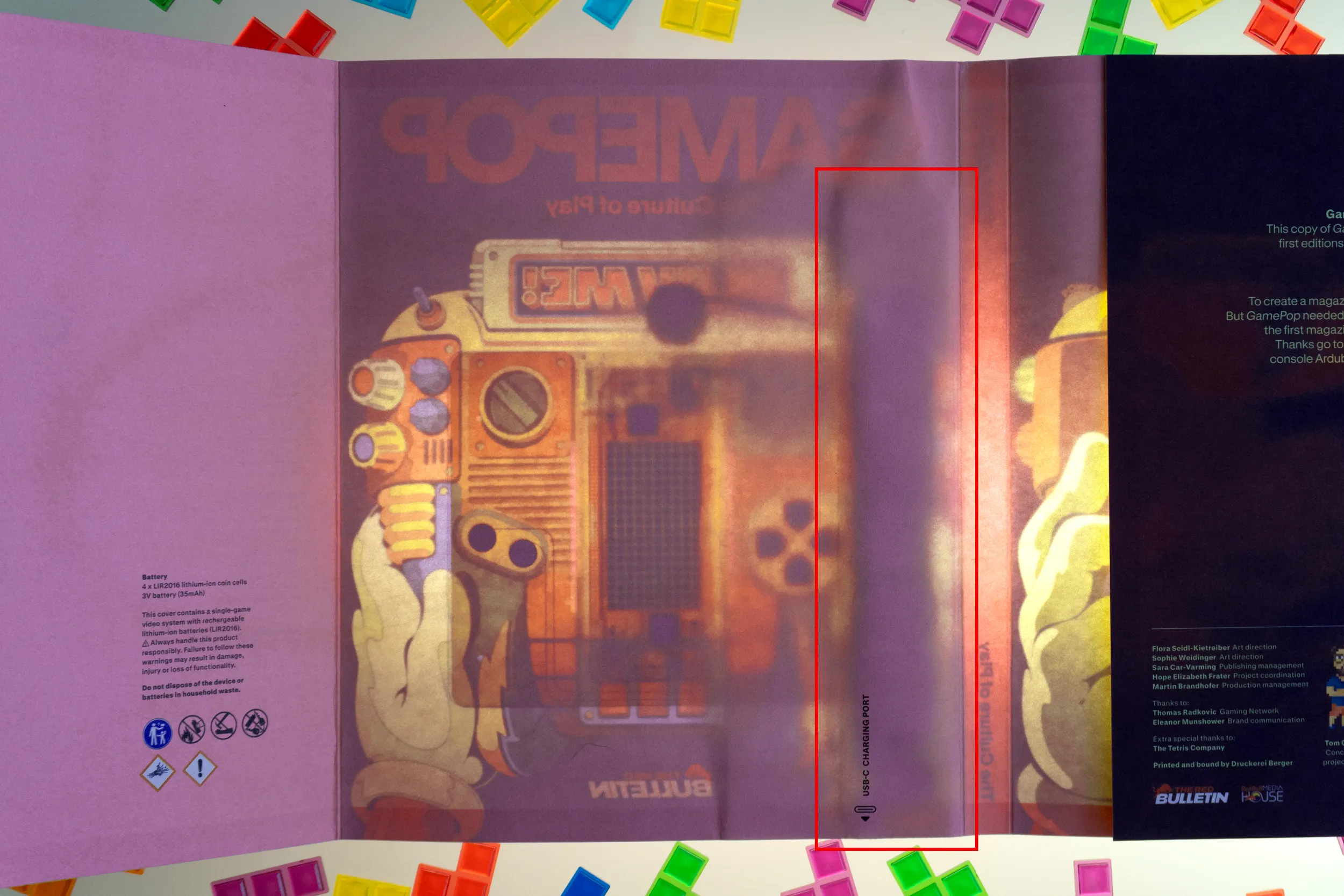
The production process merges traditional magazine printing with flexible PCB fabrication, followed by manual or semi-automated embedding. The electronics are carefully “sandwiched” between paper layers, demanding precise alignment and compatible adhesives. This procedure goes beyond standard publishing; it’s more like assembling a thin consumer electronic device within a print workflow.
The GP-1 is intentionally minimal. It does not include advanced Tetris features like piece holding, offers limited audio playback, has no game-saving capability, and runs on a short battery life. These limitations are due to practical constraints, including power capacity, space limitations, and the complexity of manufacturing such a thin, flexible device.