




Some of architecture’s most unforgettable concepts and design proposals never made it past the drawing board, yet they inspire designers to date. These visionary design concepts defied conventional designs, rethought the fabric of cities, and stretched the limits of technology and creative ambition. Although unbuilt, these unique proposals ignited conversations, influenced generations of designers, and reshaped the way we imagine space and society. The unbuilt architectural projects are a reminder that architecture’s power is not measured solely by what stands in concrete and steel, but also by daring ideas that dare to imagine something greater.
Read further to explore 10 striking unbuilt architectural projects influencing designers to date.
1. Cathedral Fold, France
Architects: John Beckmann, Masaru Ogasawara, and Viviance Liao (Axis Mundi Design LLC)
Typology: Cultural, Religious
Location: Strasbourg, France
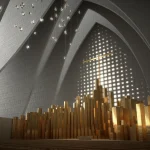
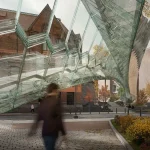
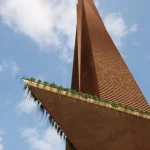
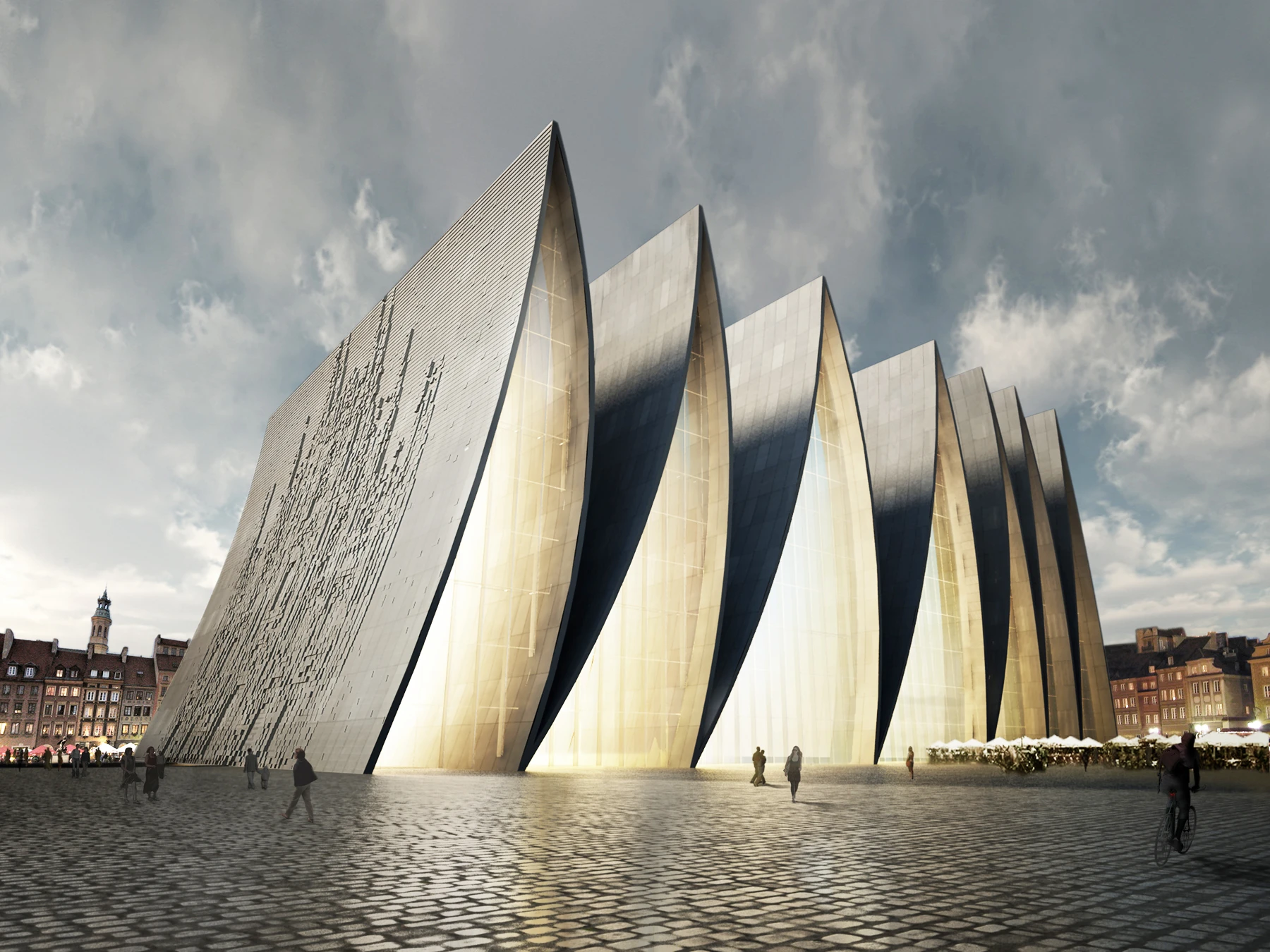
The design concept was envisioned in 2011 by John Beckmann, Masaru Ogasawara, and Viviane Liao of Axis Mundi Design LLC. The “Cathedral Fold” was proposed as a daring vision for a new cathedral in Strasbourg, France. Although it remained unbuilt, the scheme reinterpreted sacred architecture through a dynamic composition of unfolding arches emerging from a submerged Latin cross plan. Balancing reverence with reinvention, the design sought to translate centuries-old spiritual symbolism into a contemporary architectural language. It reflected a simple yet powerful idea that enduring faith draws strength from its history but remains alive by continually reimagining itself for the present.
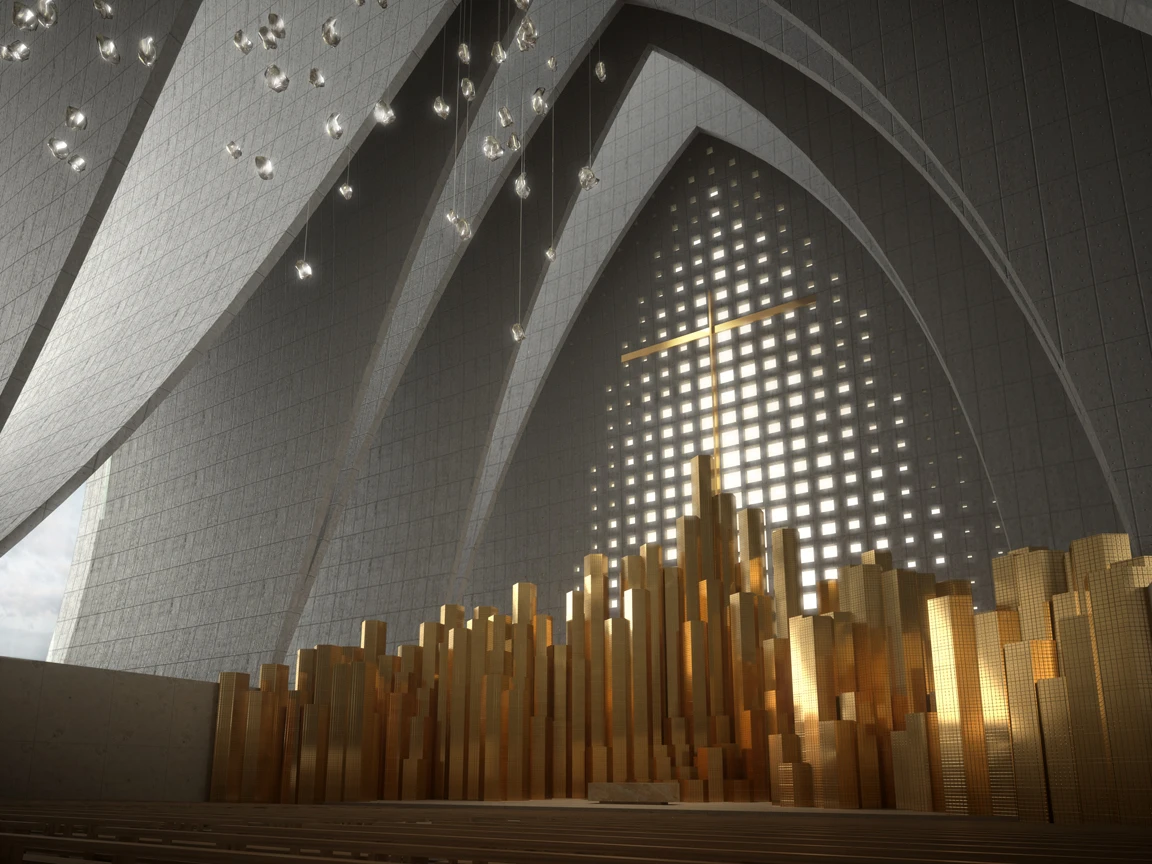
Axis Mundi’s concept revolves around a rhythmic sequence of ogival concrete arches creating light-filled volumes evoking the grandeur of a cathedral. Imagined as an “Invisible Cathedral,” the proposal balances structural precision with quiet poetry. A digitized bas-relief of a Gothic façade was animated in the front elevation, emerging at sunrise as shadows traced its contours, dissolving into restraint. The design showcases a refined interpretation of the Latin cross plan, from the naves, transept, and choir distilled to their essence. The architecture also bridges heritage and modernity, transforming Gothic tradition into a language of contemporary form and light.
2. Tokyo National Stadium, Japan
Architect: Zaha Hadid Architects
Typology: Hospitality & Sports – Stadium
Location: Tokyo, Japan
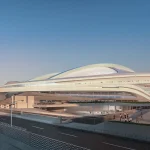
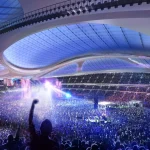
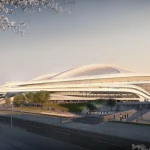
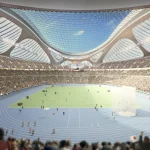
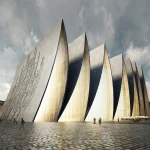
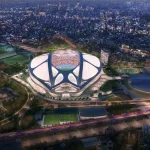
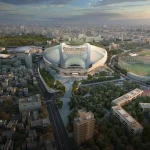
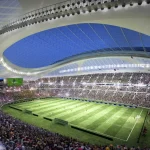
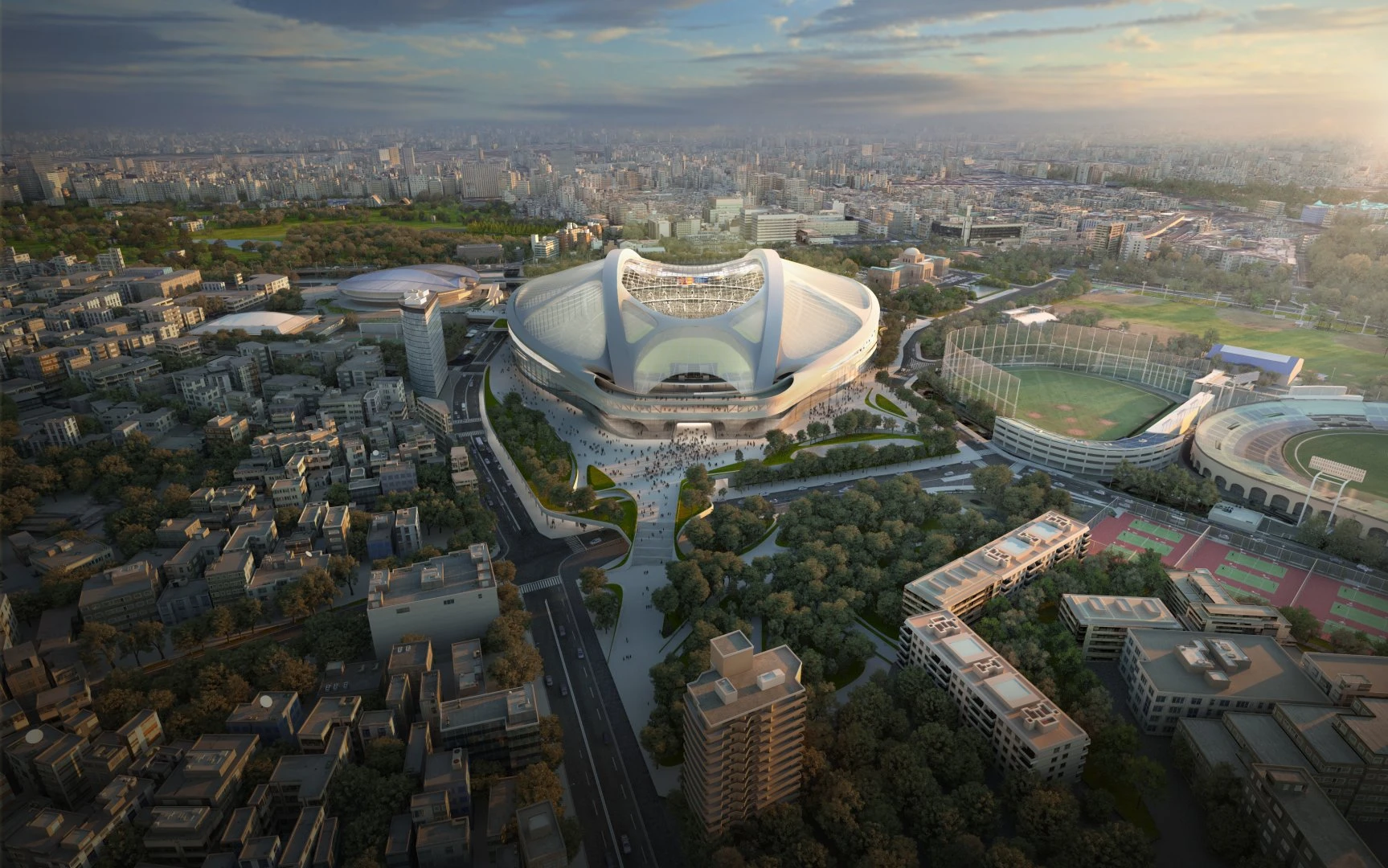
Designed by Zaha Hadid Architects, the proposed Tokyo National Stadium was envisioned as far more than a venue for sport but conceived as a cultural landmark shaped by movement, structure, and urban sensitivity. Planned as the 80,000-seat centerpiece of the 2020 Tokyo Olympics, the design emerged from a winning international competition. Its form unfolds as a seamless interplay of the stadium bowl, exposed structural framework, lightweight cladding, and integrated museum spaces, creating a composition that feels both intricate and effortless. The sweeping elevation guides visitors naturally toward its entrances; the massive structure sits within the city as a powerful architectural presence.
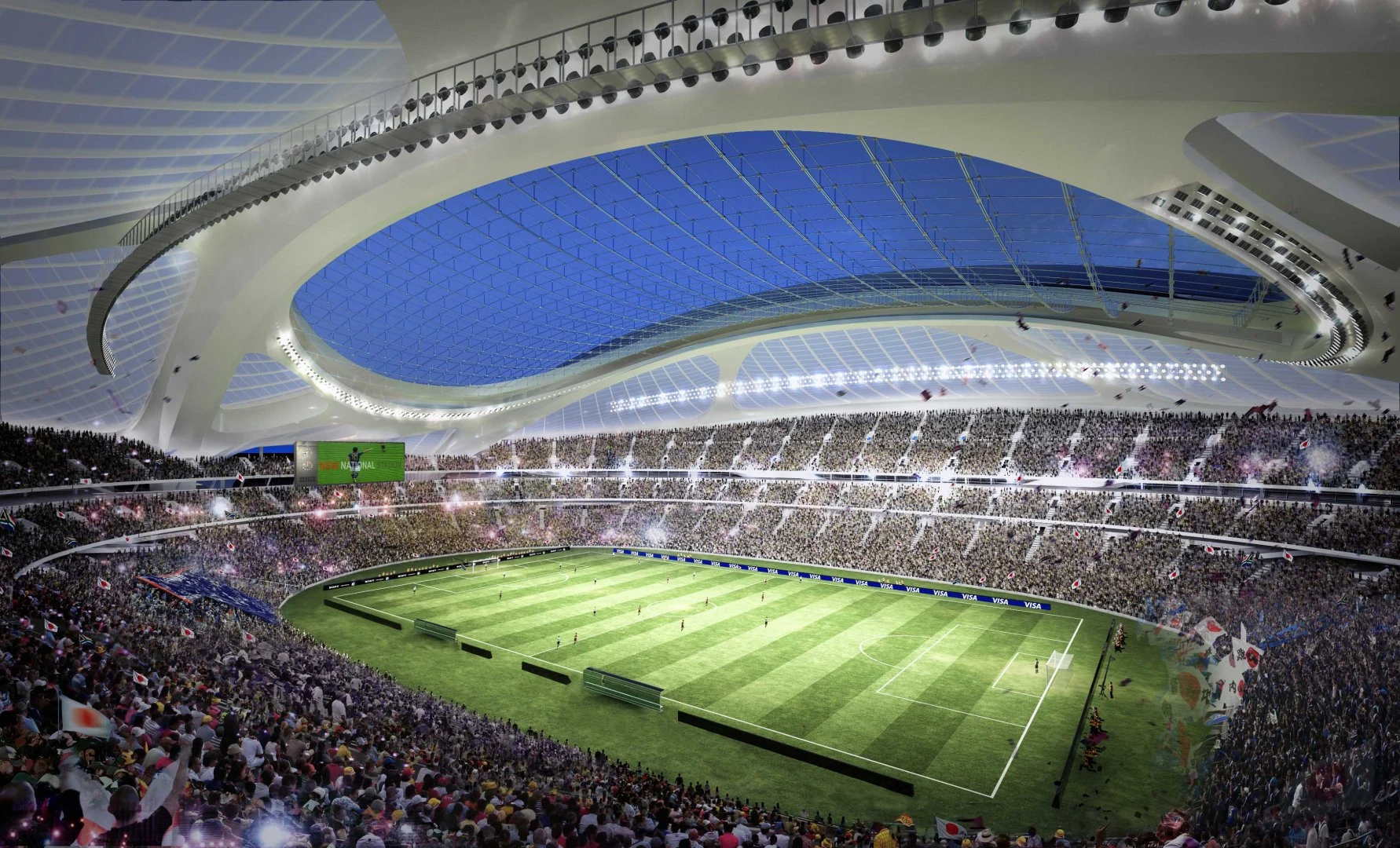
Despite being selected as the winning proposal, Zaha Hadid Architects’ Tokyo National Stadium remains unbuilt. The ambitious design remains unbuilt due to design concerns from rising costs, environmental concerns, and growing civic opposition reshaping the project’s fate. The stadium’s story now stands as a reminder that even the most celebrated designs exist within a larger social, economic, and environmental dialogue, where architecture must answer not only to ambition but also to the city it serves.
3. Musée national des beaux-arts du Québec, Canada
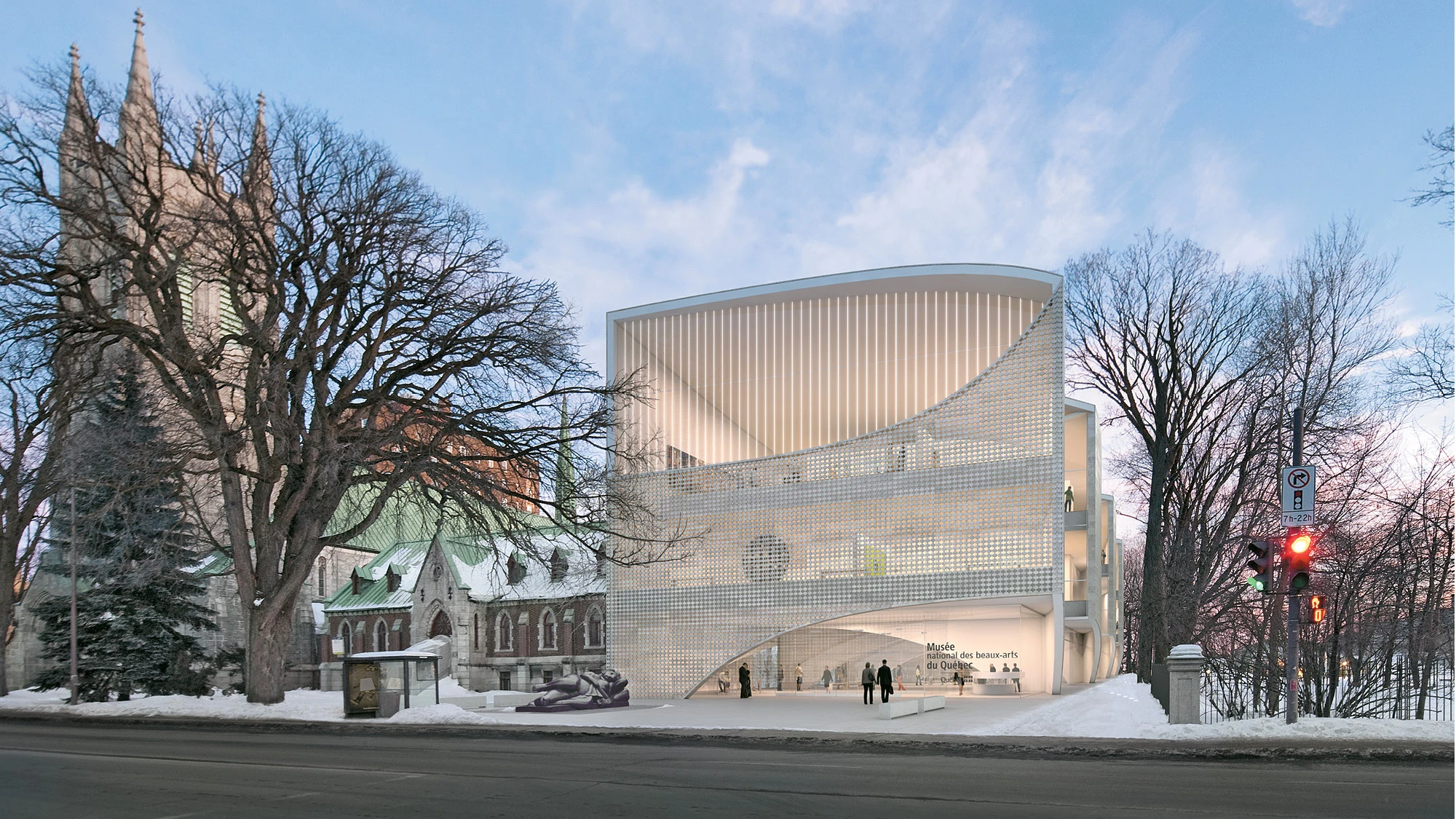
Architect: Allied Works Architecture
Typology: Cultural – Gallery Museum
Location: Quebec, Canada
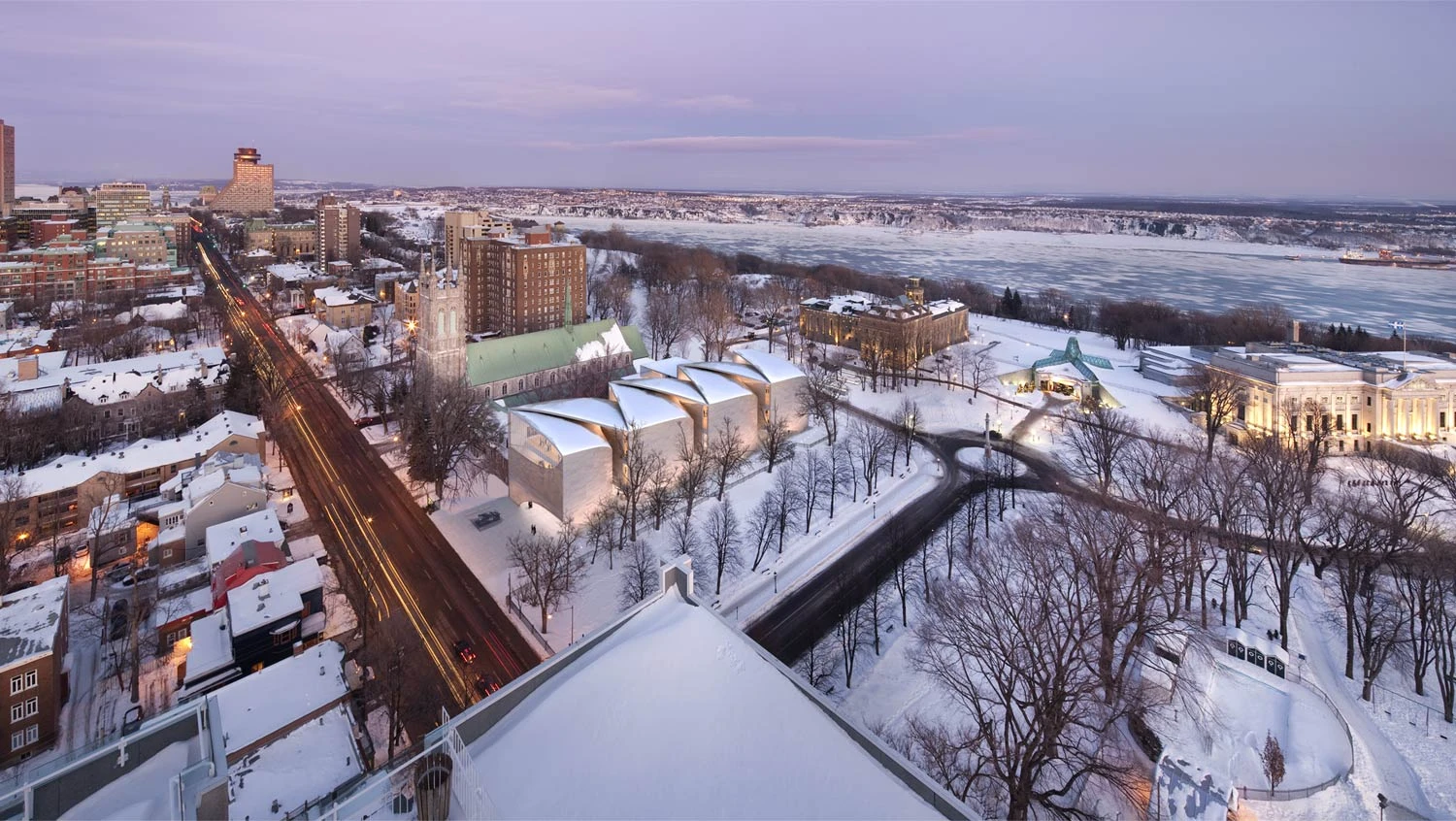
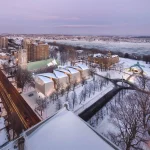
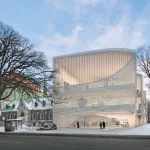
Set within a historic park overlooking the St. Lawrence River and the Plains of Abraham, the Musée National des Beaux-Arts du Québec was designed as the cultural heart of Québec. For its expansion, Allied Works Architecture envisioned a striking new 110,000-square-foot pavilion designed to house temporary exhibitions, permanent collections, and vibrant public gathering spaces. The proposal imagined five interlocking concrete shells, shaping a powerful dialogue between architecture, history, and terrain. The Allied Works Museum proposal was selected as a finalist in the international architectural competition in 2010 and remains an unbuilt architectural proposal.
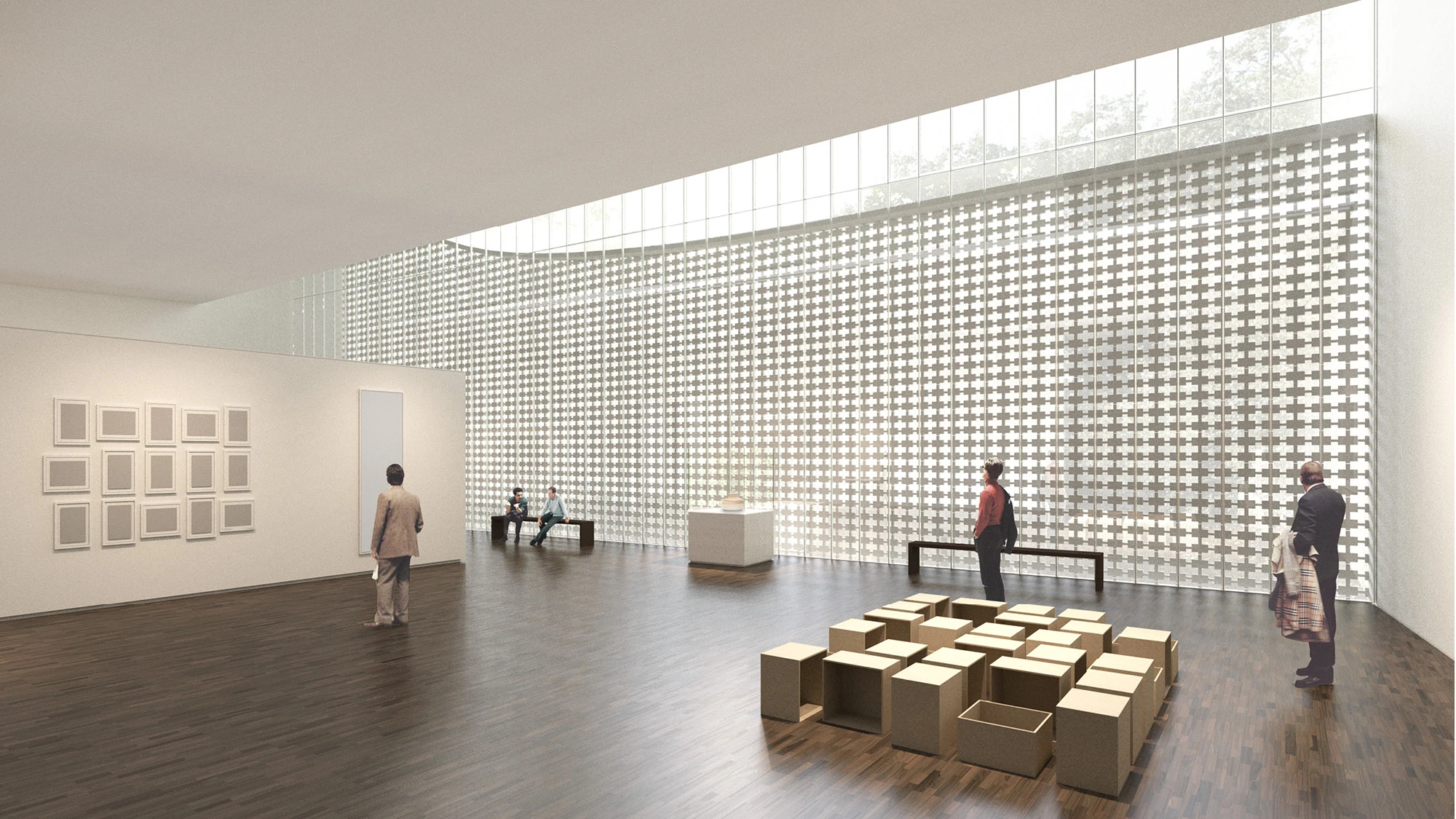
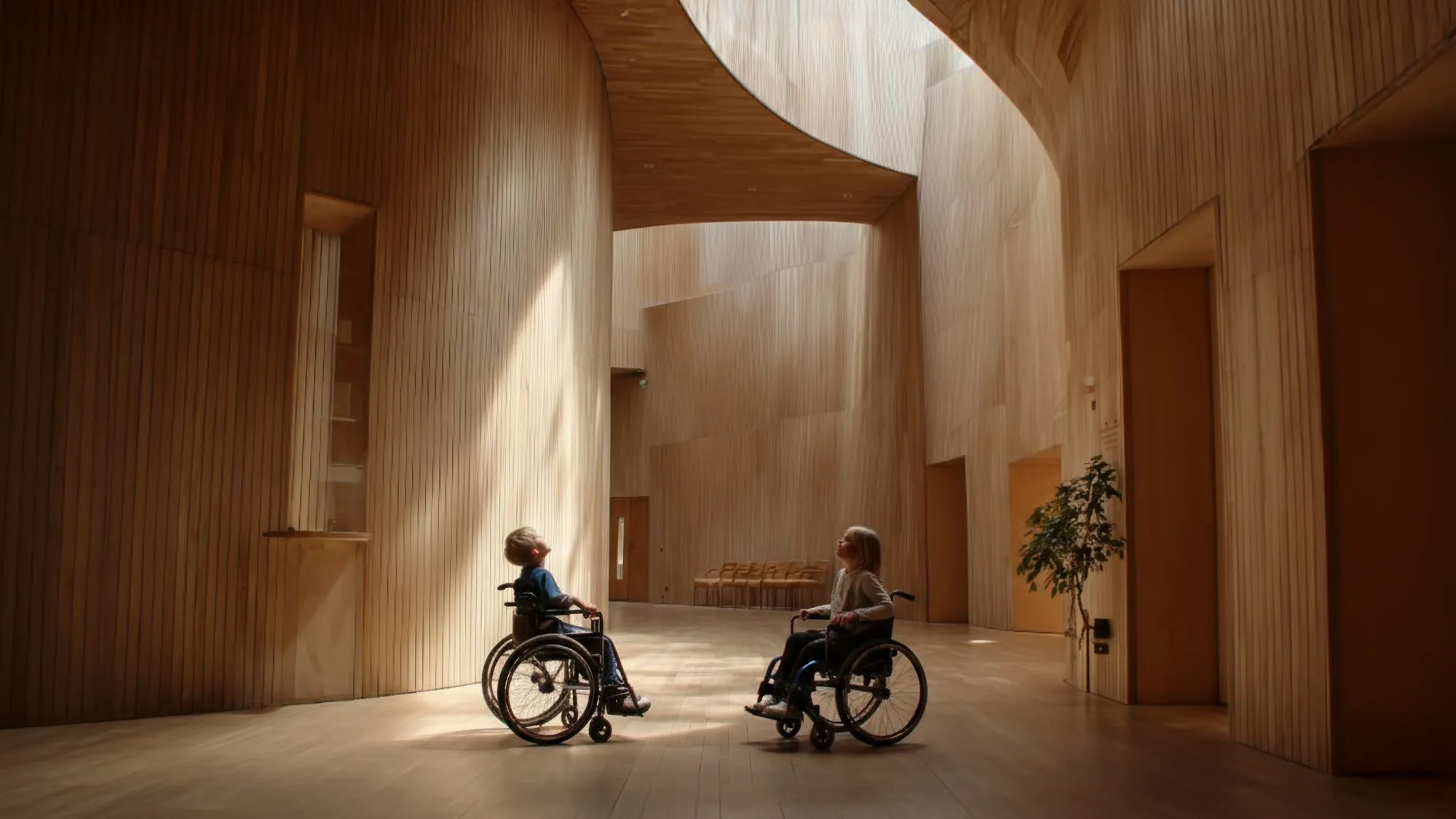
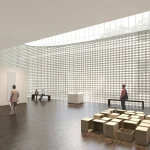
The design was conceived as more than a museum expansion; the pavilion was imagined as a civic landmark, designed with outward-looking landscapes. At the heart of the heart is the Grand Hall, forming a dynamic gathering space, visually connecting visitors to the galleries above. Soft northern light filters through the vaulted openings, flooding the exhibition spaces with a gentle, soft light. The architecture’s concrete shells are cantilevered at ground level, inviting the surrounding park inward and shaping a serene courtyard shared with the neighboring Dominican church. The museum experience showcases a concept where landscape is woven together with the structure, light, history, and art into a composition that feels both powerful and quiet.
4. Stone Towers, Egypt
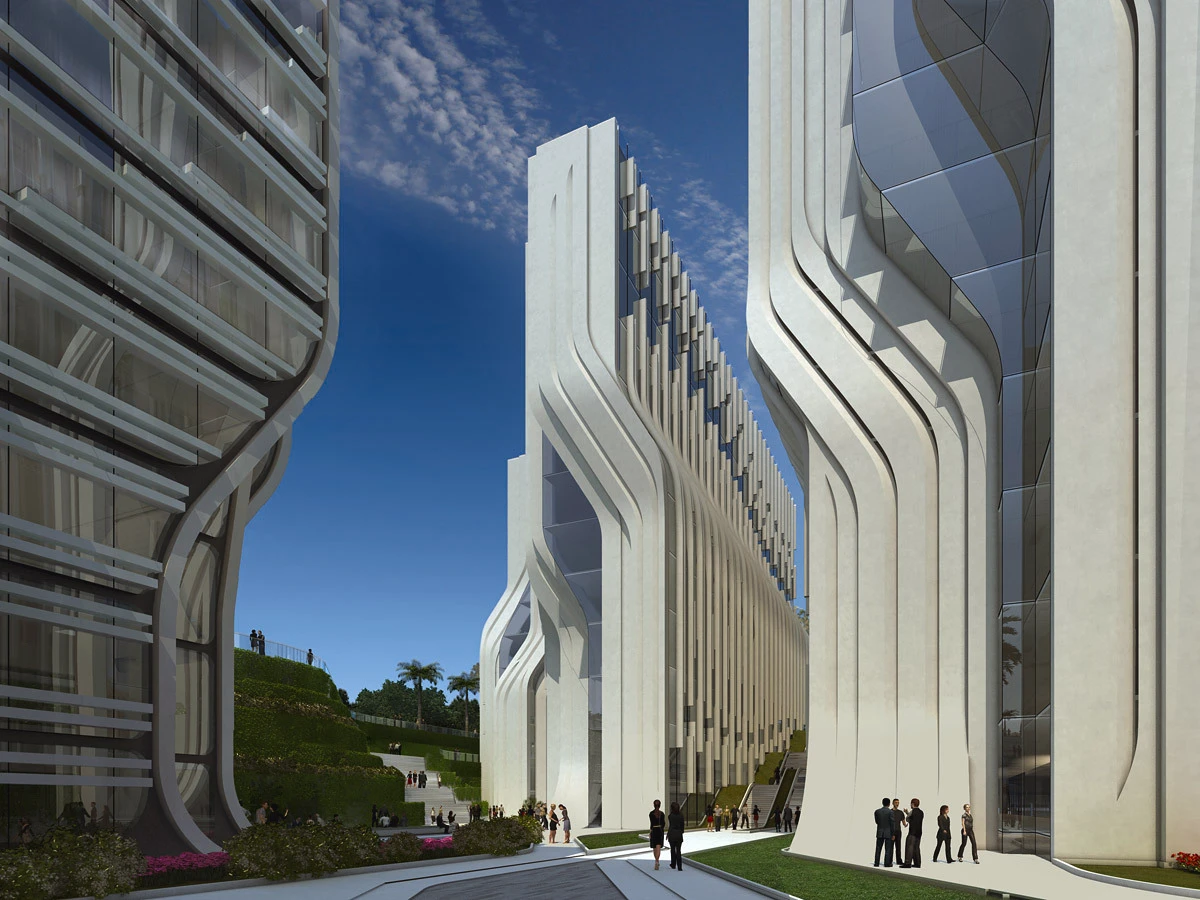
Architect: Zaha Hadid Architects
Typology: Cultural – Gallery Museum
Location: Cairo, Egypt
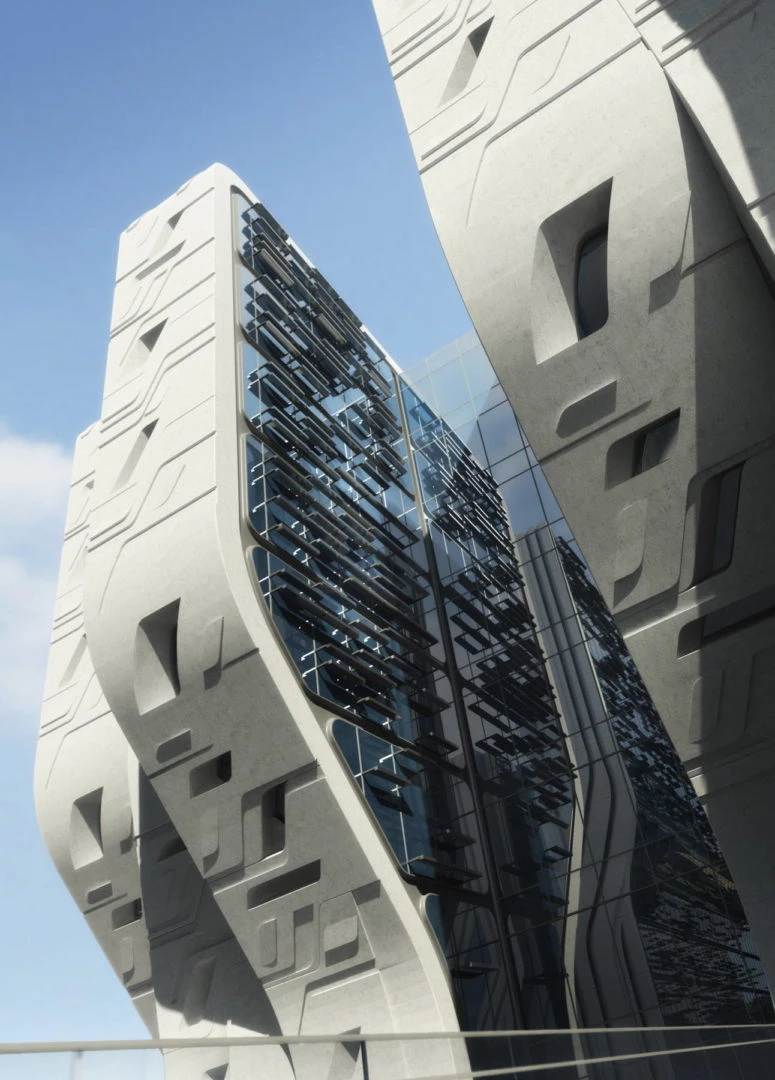
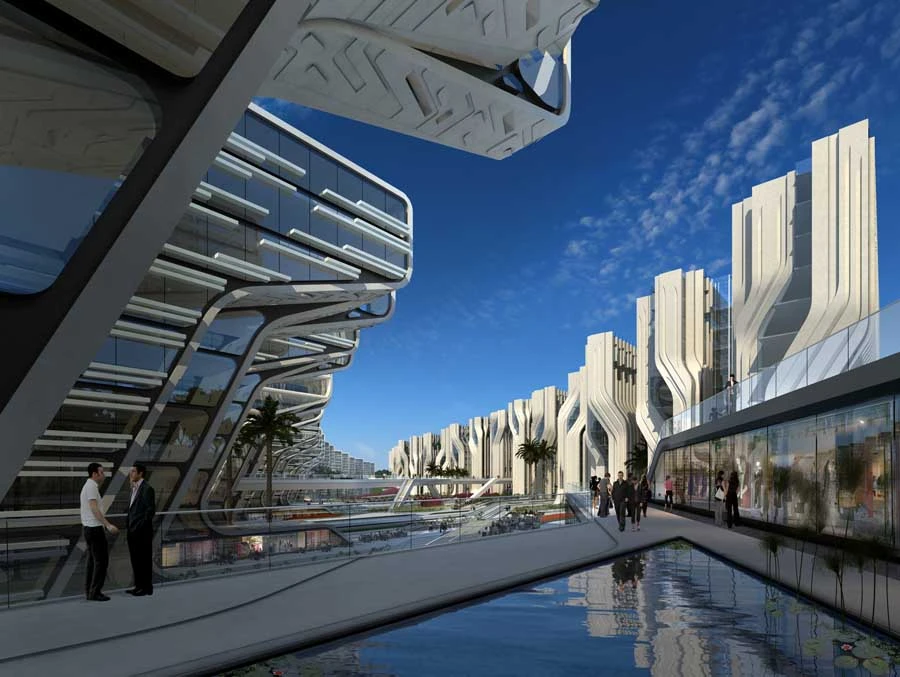
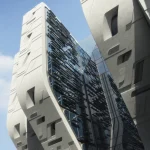
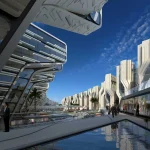
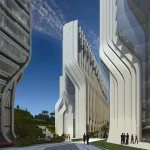
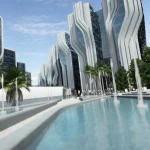
Envisioned by Zaha Hadid Architects for Egypt’s Rooya Group, the Stone Towers were designed as a bold new landmark for Cairo’s Stone Park district. The proposal imagined a dynamic mixed-use landmark responding to the city’s rapid growth. The towers blend offices, retail spaces, five-star business hotels, serviced apartments, and vibrant food and beverage venues into one sculptural composition. At its heart, a sunken landscaped plaza known as the “Delta” was designed to anchor the architecture. With ZHA’s signature fluid forms and ambitious thinking, the towers are positioned as a visionary response to Cairo’s evolving skyline.
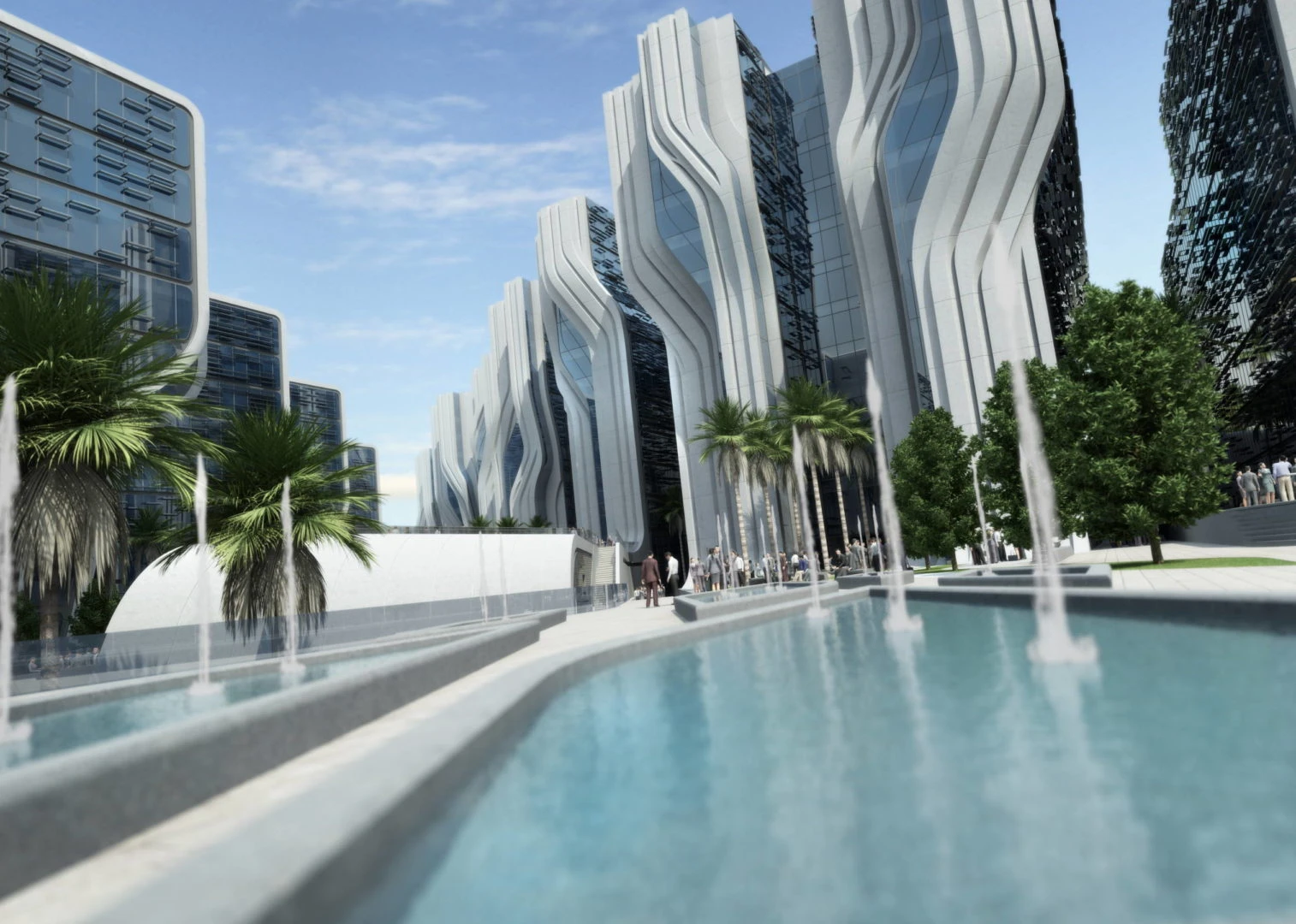
The proposed façade drew inspiration from ancient Egyptian stonecraft, layering intricate patterns and textures that come alive under Cairo’s intense sun. Along the north and south elevations, a sculptural interplay of projections, recesses, and carved voids was designed to deepen the shadow lines and the fluid curves of each tower. The intricate design elements form a rhythmic composition, creating a unified architectural statement with individual character. Though the project ultimately remained unbuilt due to some financial hurdles, political complexities, and public scrutiny, the vision was a bold exploration of geometry, heritage, and contemporary ambition.
5. Masterplan for Seoul’s International District Waterfront, South Korea
Architect: HENN Architecture
Typology: Urban Planning – Waterfront development
Location: Seoul, South Korea
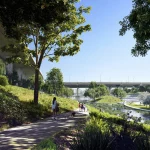
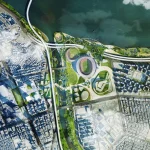
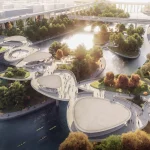
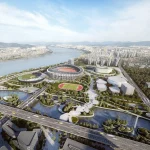
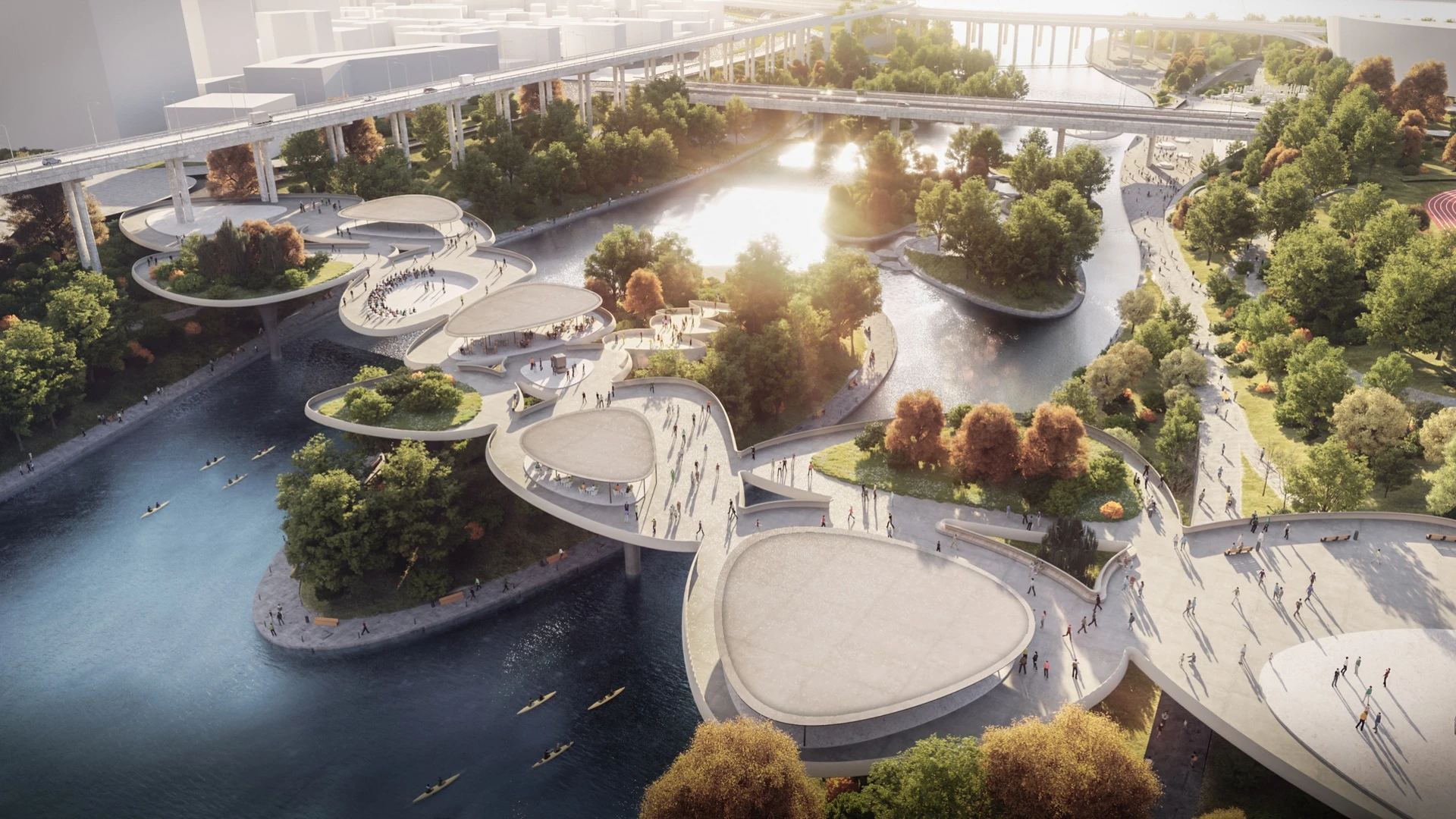
Conceived by HENN, the Seoul International District Waterfront masterplan was envisioned as a meeting point of the Tancheon and Han Rivers as a living, breathing civic landscape. The design was conceptualized as an ecological and cultural park to transform the river into a dynamic public hub woven with multifunctional green spaces into a new recreational heart for the city. At its center, the “Stepping Stone Bridge” acts as both a landmark and a gathering place, showcasing traditional Korean symbolism flowing organically with the surrounding ecosystem.
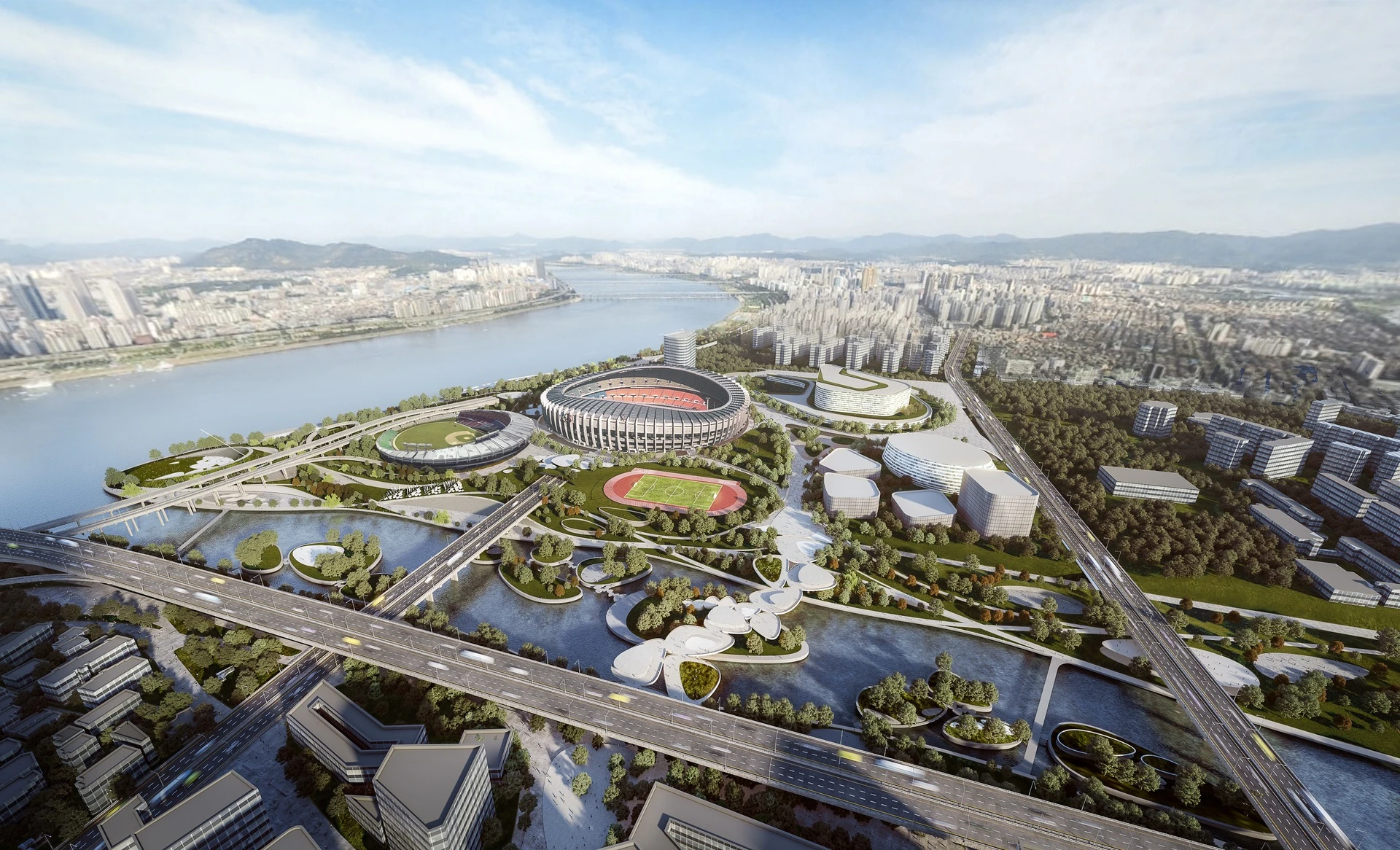
The masterplan, although it remains unbuilt, presents a broader vision for Seoul, where urban architecture meets riverside calm. The proposal reimagines the city center by restoring the site’s historic character and refining the public realm that is shaped by open landscapes and renewed ecological vitality. Primarily aimed at the waterfront by strengthening the connection between the river and the city, transforming the confluence into a shared civic destination. At the heart is a symbolic stepping stone bridge, formed by varied platforms set across water and land, drawing from Korean traditions of ascension and movement, turning cultural memory into an immersive spatial experience.
6. Vilnius Airport arrival terminal, Lithuania
Architect: UAB APLAN
Typology: Transport | Airport
Location: Vilnius, Lithuania
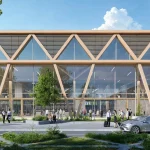
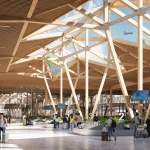
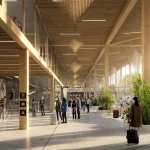
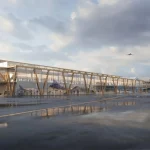
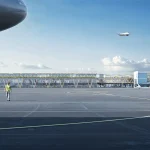
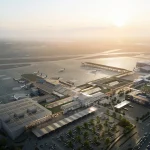
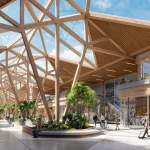
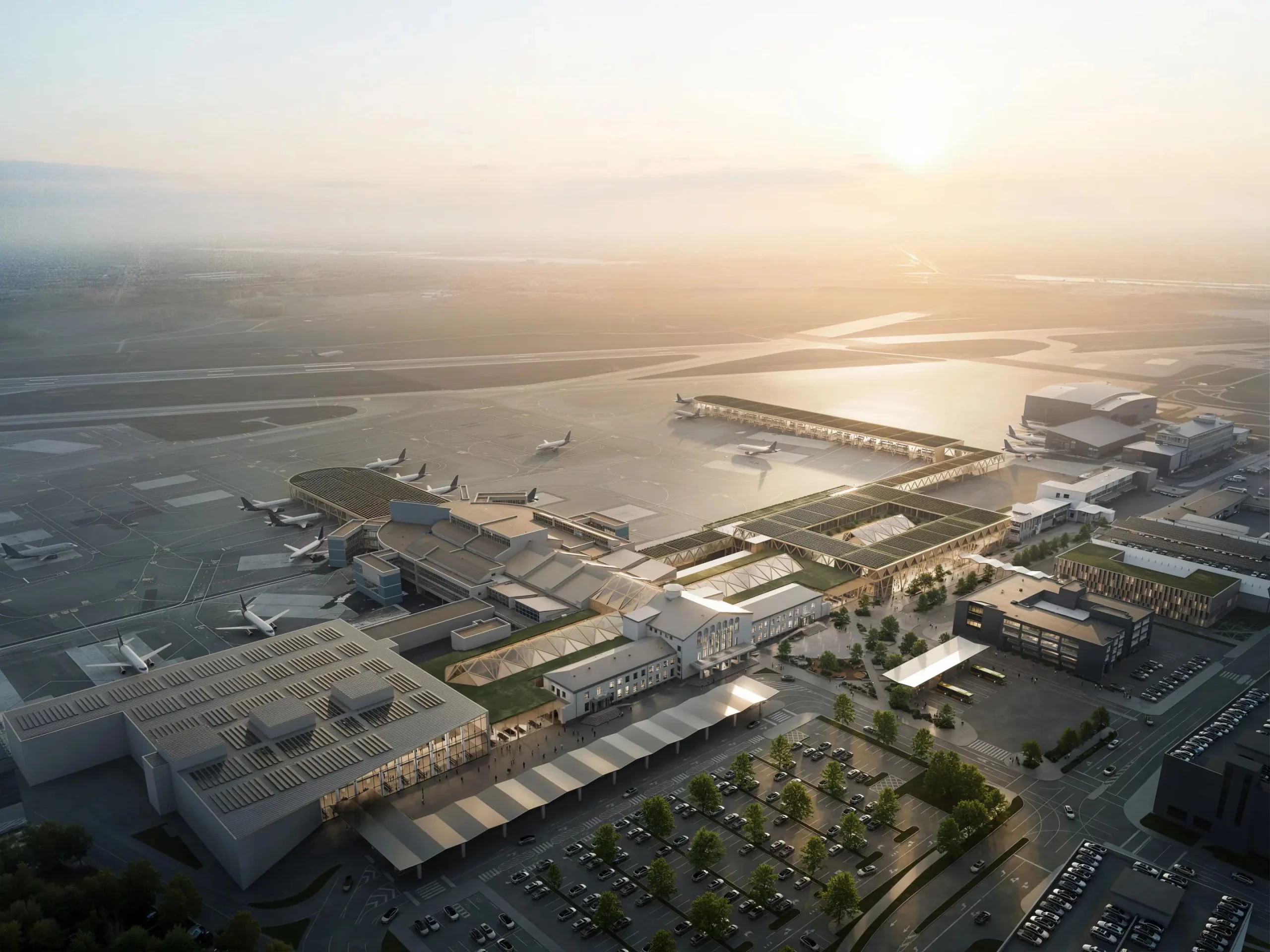
The design was proposed by UAB APLAN in collaboration with INBO. The competition proposal for the Vilnius Airport arrivals terminal unfolded under the poetic concept titled “Sonata.” The design is rooted in the geometry of traditional Lithuanian sodai gardens; the design translates cultural symbolism into a contemporary form. The architect envisioned the terminal as a bridge between the nation’s heritage and its futuristic architectural aspirations. Drawing inspiration from local landscapes, craftsmanship, and aviation infrastructure, the architecture connects tradition and innovation, welcoming travelers with a space that feels both meaningful and forward-looking.
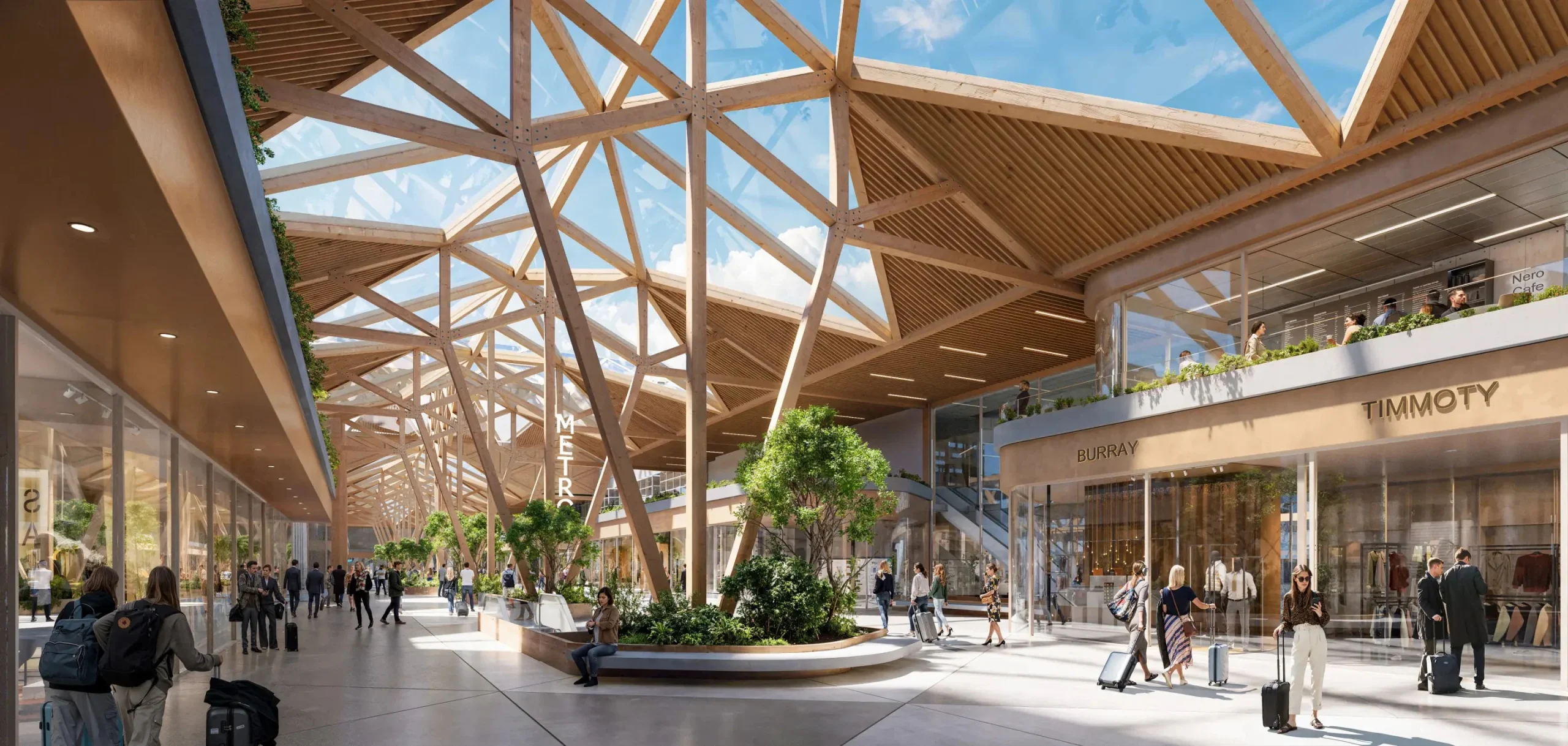
The airport design proposal was titled ‘Sonata,’ a design of an infrastructure shaped around human experiences. Conceived to make travelers feel at ease from the very first step inside, the terminal unfolds through generous, light-filled spaces, integrated greenery, and intuitive circulation that guides movement effortlessly. Warmth and hospitality are embedded in its atmosphere, ensuring every arrival feels considered and welcoming. Sustainability is woven seamlessly into the architecture itself, expressed using local timber, modular construction, forward-thinking green technologies, and efficient engineering strategies that balance innovation with responsibility.
7. Glass Bridge, USA
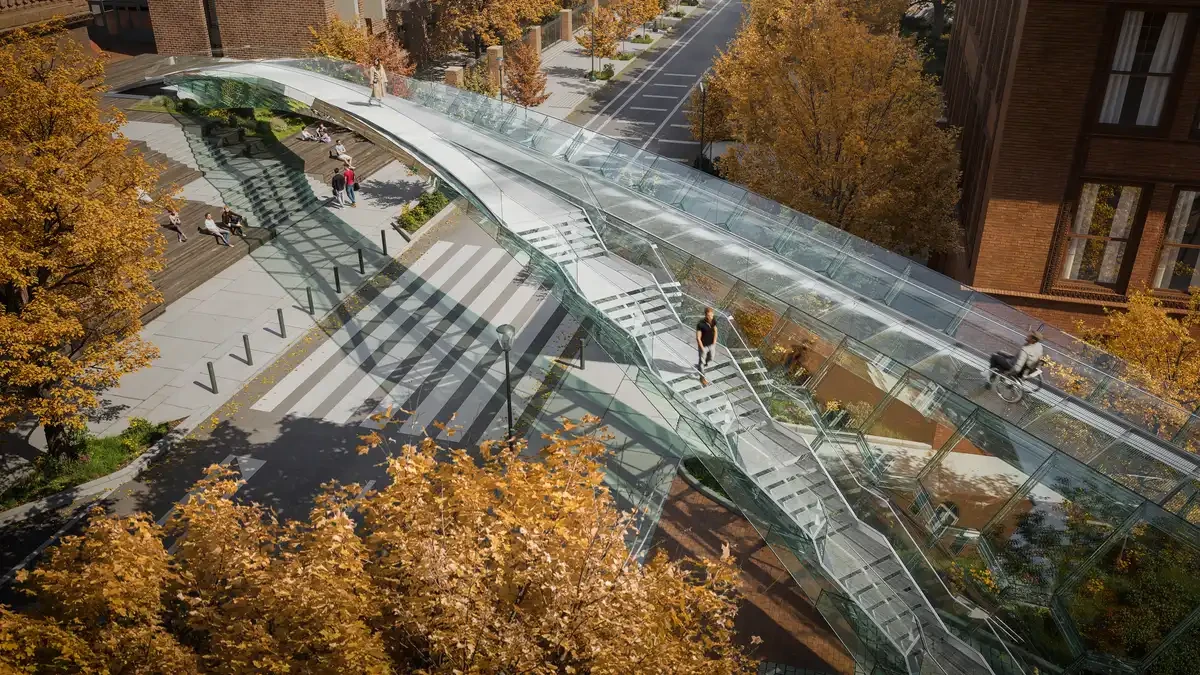
Architect: Massive Form
Typology: Public, Pedestrian
Location: Philadelphia, Pennsylvania, USA
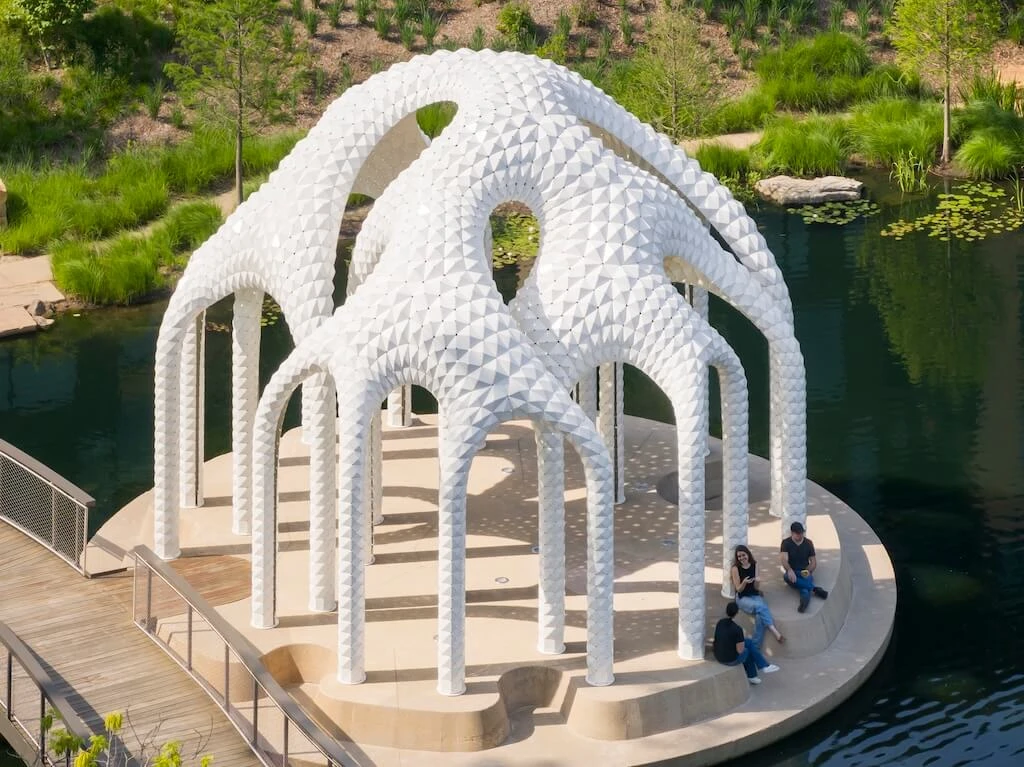
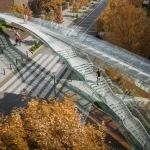
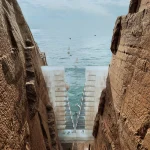
Imagined by Massive Form, under the leadership of Masoud Akbarzadeh, the Pedestrian Modular Glass Bridge rethinks how transparency in architecture can be reimagined. Conceived as a bold experiment in sustainable structural design in Philadelphia, the project was visualized as a 10-meter prototype at the Corning Museum of Glass. Rather than relying on heavy mass, the bridge was designed to stand as a system of modular glass components that gain strength from form itself. The result is both delicate and daring, a vision of infrastructure that feels almost invisible, yet remarkably resilient.
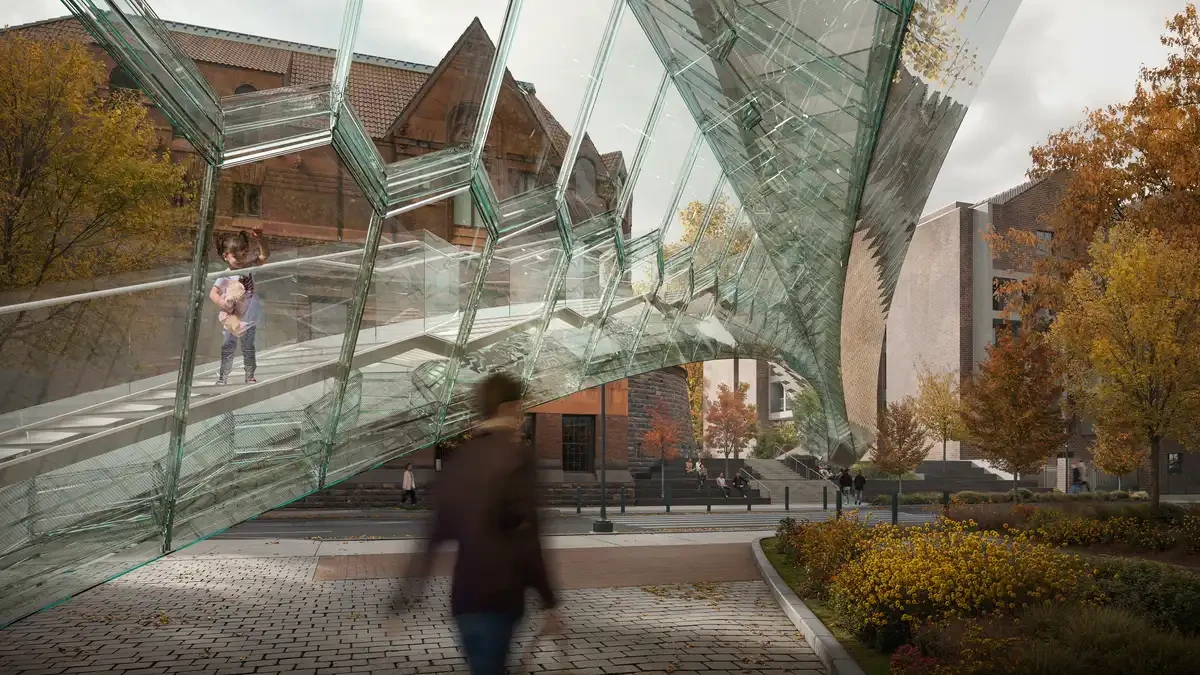
The project began with a bold question: What if glass, a symbol of fragility, could carry weight like stone? This experimental bridge proposal turns that question into a striking reality. The structure is inspired by traditional compression principles, with design replacing bulky reinforcements with the quiet intelligence of geometry. Composed of 124 slender, hollow glass modules, each only 16 millimetres thick, joined with acrylic connectors, the structure supports itself through form alone. Every piece is meticulously designed, proving that building with transparency requires both craft and precision. The design remains unbuilt, yet just a prototype, showcasing a glimpse into a future where architecture is lighter, recyclable, and beautifully in tune with circular design thinking.
8. The Illinois, Chicago
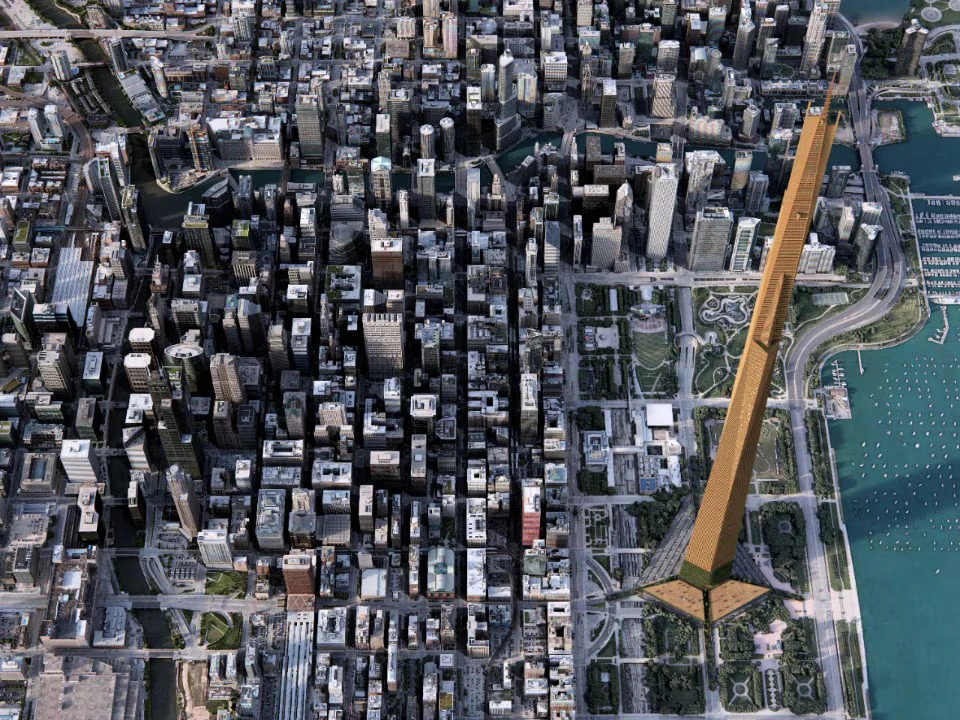
Architect: Frank Lloyd Wright
Typology: Mixed Use
Location: Chicago, Illinois, USA
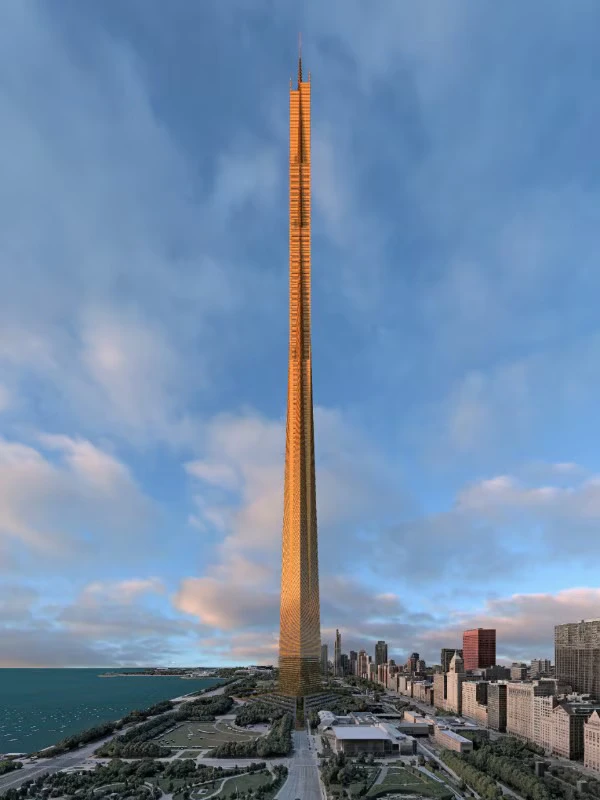
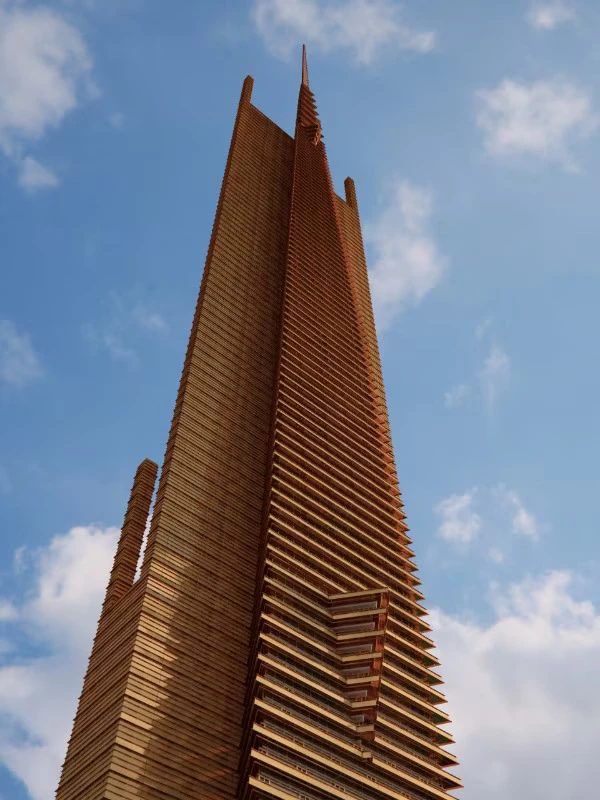
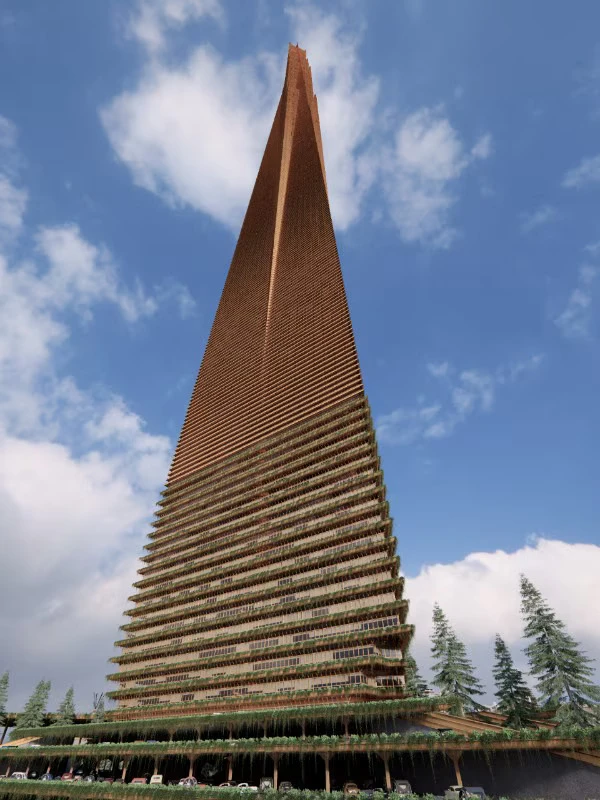
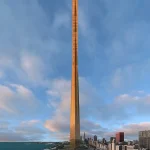
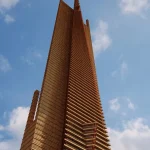
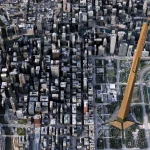
The ’ Mile High Illinois ’, known as one of the most iconic unrealised skyscrapers designed by the American architect Frank Lloyd Wright. The visionary proposal for Chicago in 1956 envisioned a skyscraper soaring 1,609 meters into the sky. Conceived as more than just a skyscraper, it was imagined as a self-contained urban ecosystem of 528 floors, designed to accommodate over 100,000 people, complete with space for cars, aircraft, and even atomic-powered elevators. Though never built, the concept pushed architectural thinking decades ahead of its time. In recent years, architect David Romero digitally reinterpreted Wright’s original drawings, giving new visual life to one of architecture’s most audacious dreams.
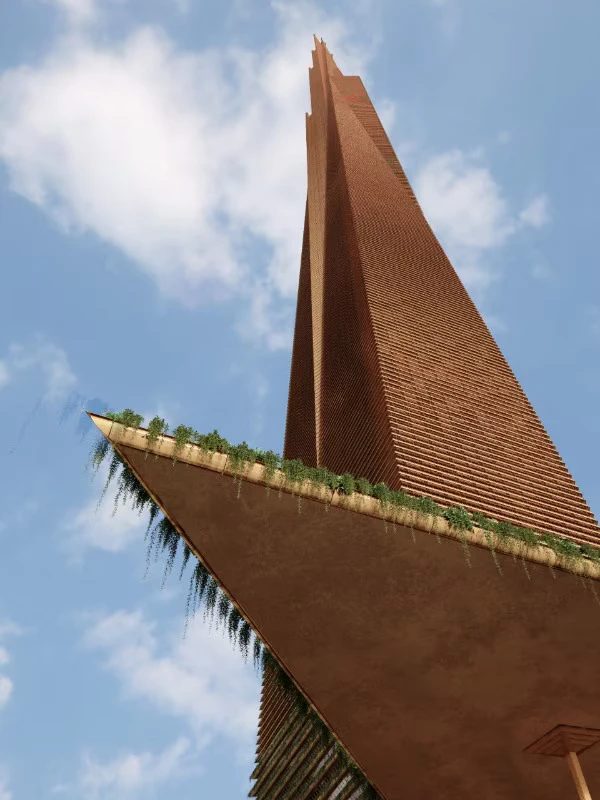
Envisioned as a vertical city rather than a mere skyscraper, the skyscraper was designed with an astonishing 528 floors, refined to 365. Spanning over 18 million square feet of built space, the architect imagined parking for 15,000 cars, landing pads for 100 helicopters, anticipating a future where mobility extended beyond the street. At its heart, a massive structural core plunged fifteen stories into the earth, branching outward like a tree to steady the tower against wind and gravity. Though it never moved beyond drawings, the project continues to influence conversations around density, engineering, and the idea of cities growing upward.
9. Ice Cube Hotel, Saudi Arabia
Architect: Kalbod Design Studio
Typology: Hotel – Hospitality + Sport
Location: Magna, Neom, Saudi Arabia
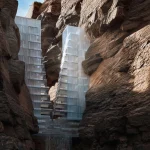
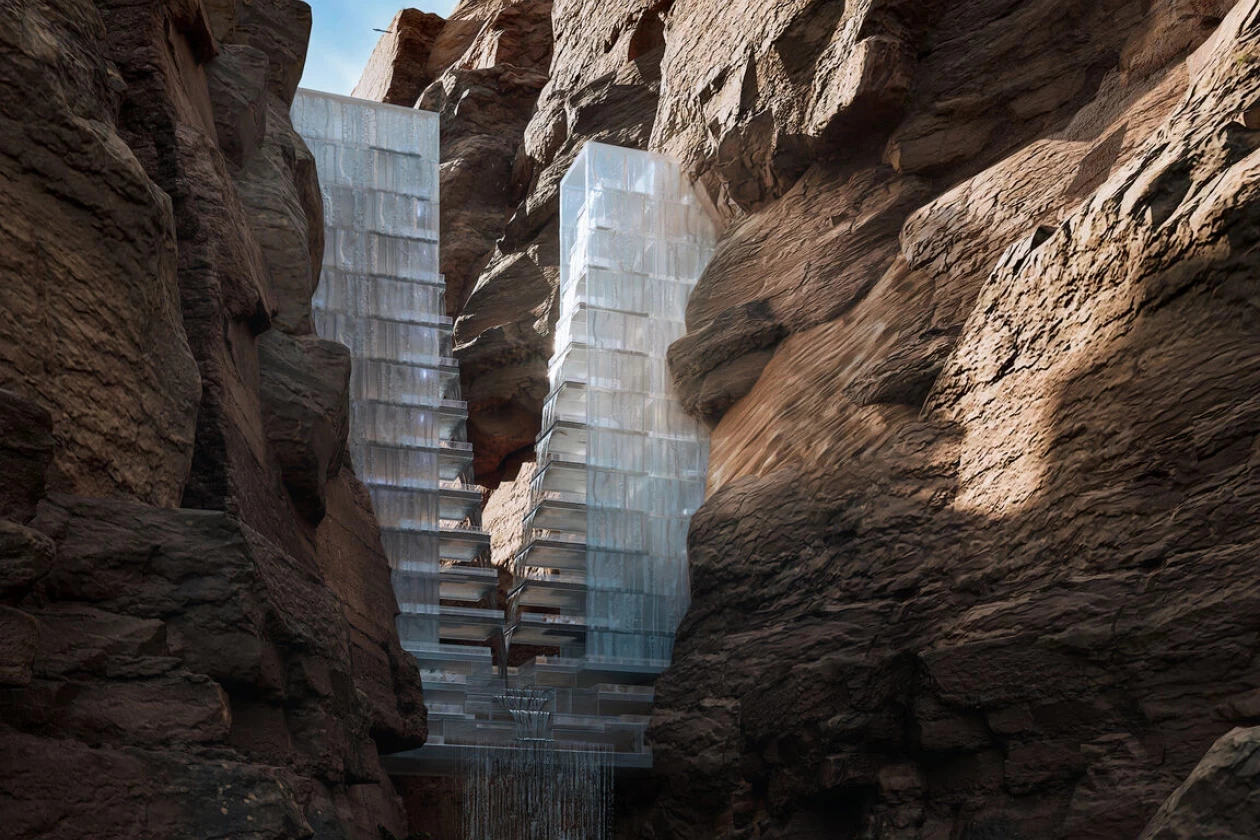
Envisioned by Kalbod Design Studio, the Ice Cube Hotel was imagined as a dramatic architectural statement inspired by NEOM’s vision for the future of living. Conceived as a crystalline volume suspended between massive towering granite cliffs at the entrance of Wadi Tayyib Al Ism in Saudi Arabia’s Tabuk province. The design proposal, envisioned in 2024, explores a bold dialogue between design, technology, and environmental consciousness. Situated above the winding mountain road, providing breathtaking views across the Gulf of Aqaba, though never realized, the concept endures as a powerful symbol of visionary hospitality shaped by nature, innovation, and ambition.
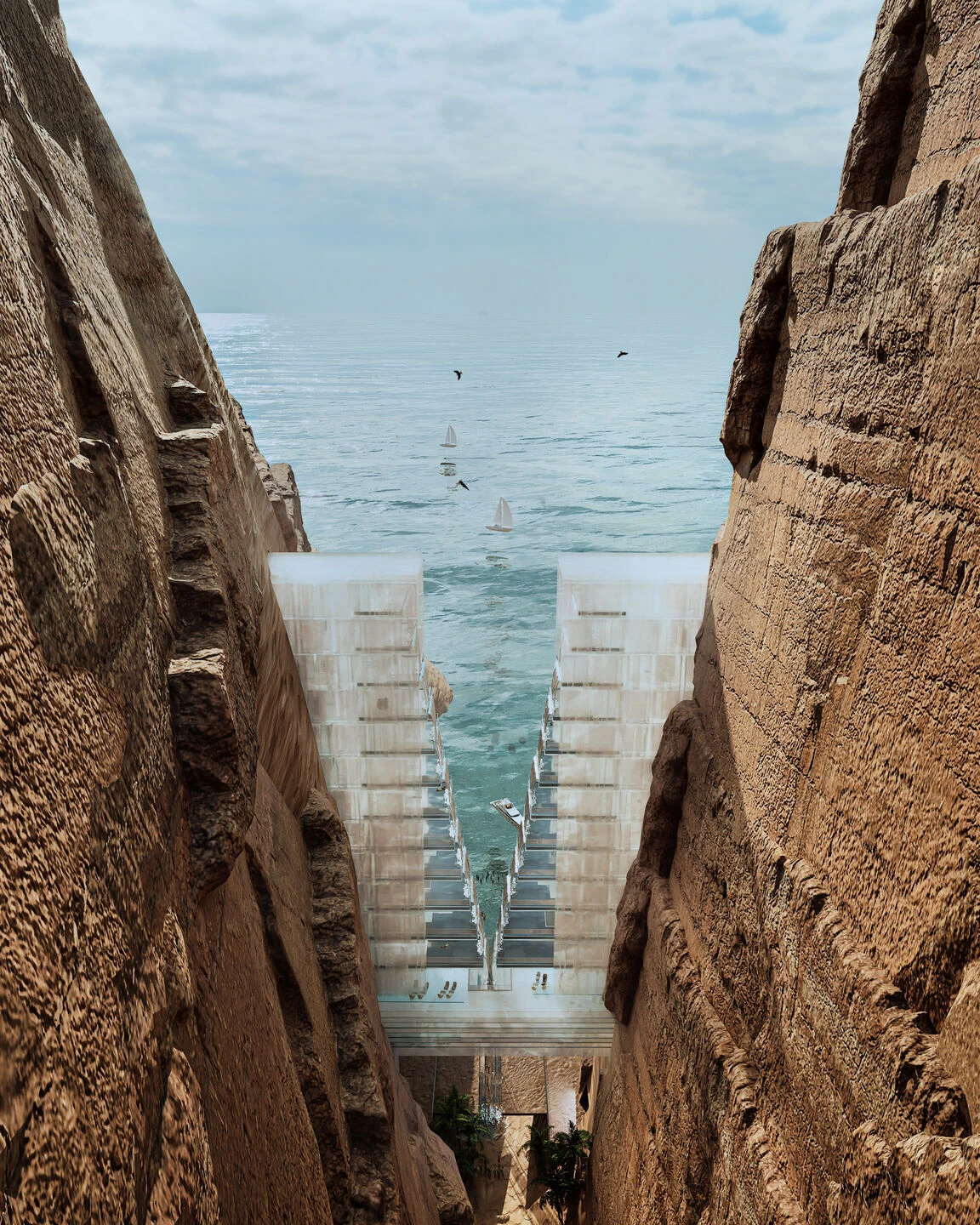
Designed to appear almost weightless, the hotel’s architecture plays with the illusion of transparency and light. Translucent cement for its structure from floors, walls, and ceilings, with the architecture stacked as a series of monumental ice-like volumes, delicately shaped for each private suite. As the building rises, the levels pull apart, increasing privacy while enhancing the drama of suspension between the cliffs. Envisioned as part of NEOM’s portfolio of transformative destinations, the concept of sweeping views of the Gulf of Aqaba and the rugged cliffs beyond offers guests an experience suspended between innovation and landscape.
10. Asian Cairns, China
Architect: Vincent Callebaut Architectures
Typology: Mixed Use
Location: Shenzhen, China
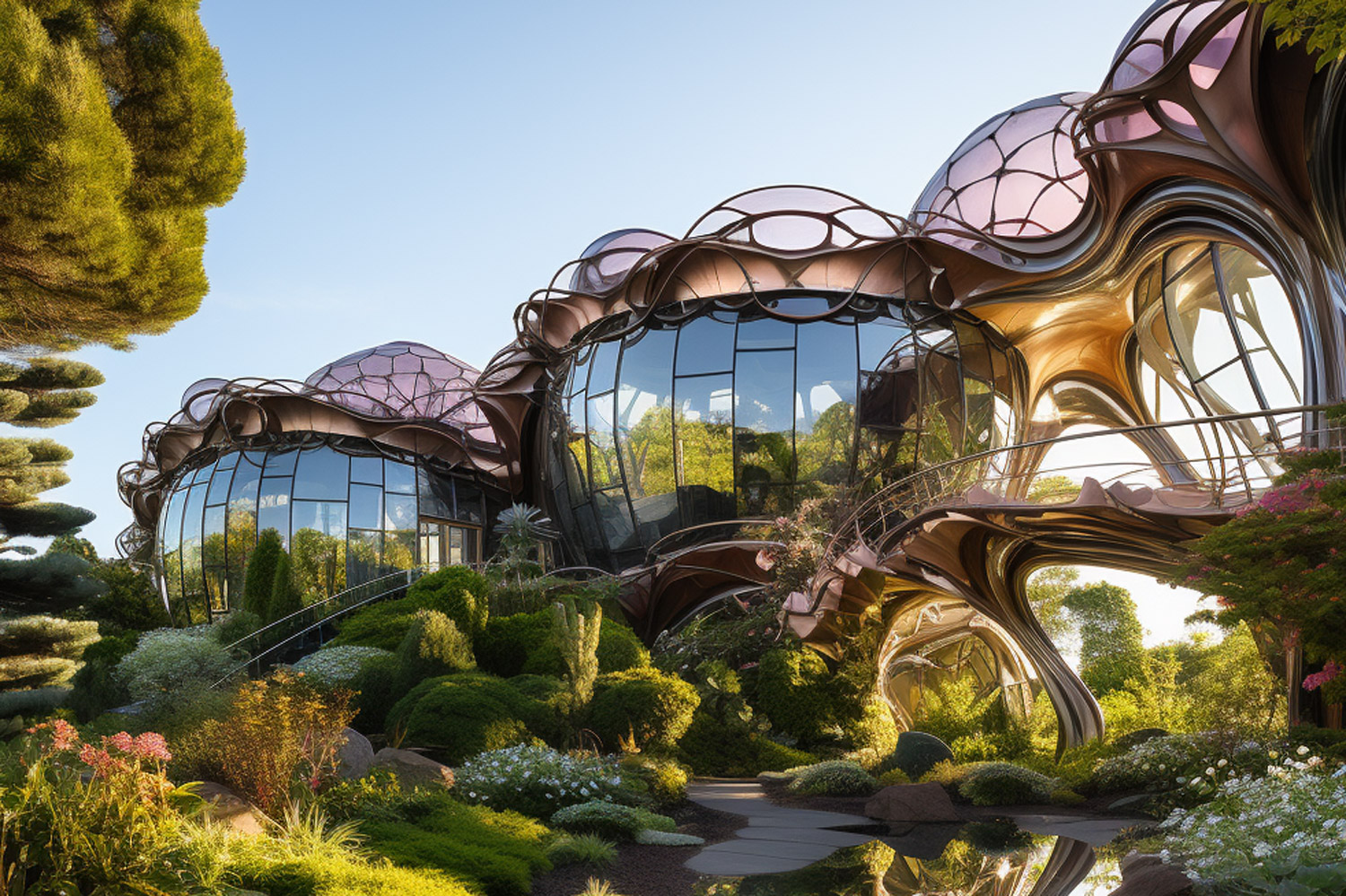
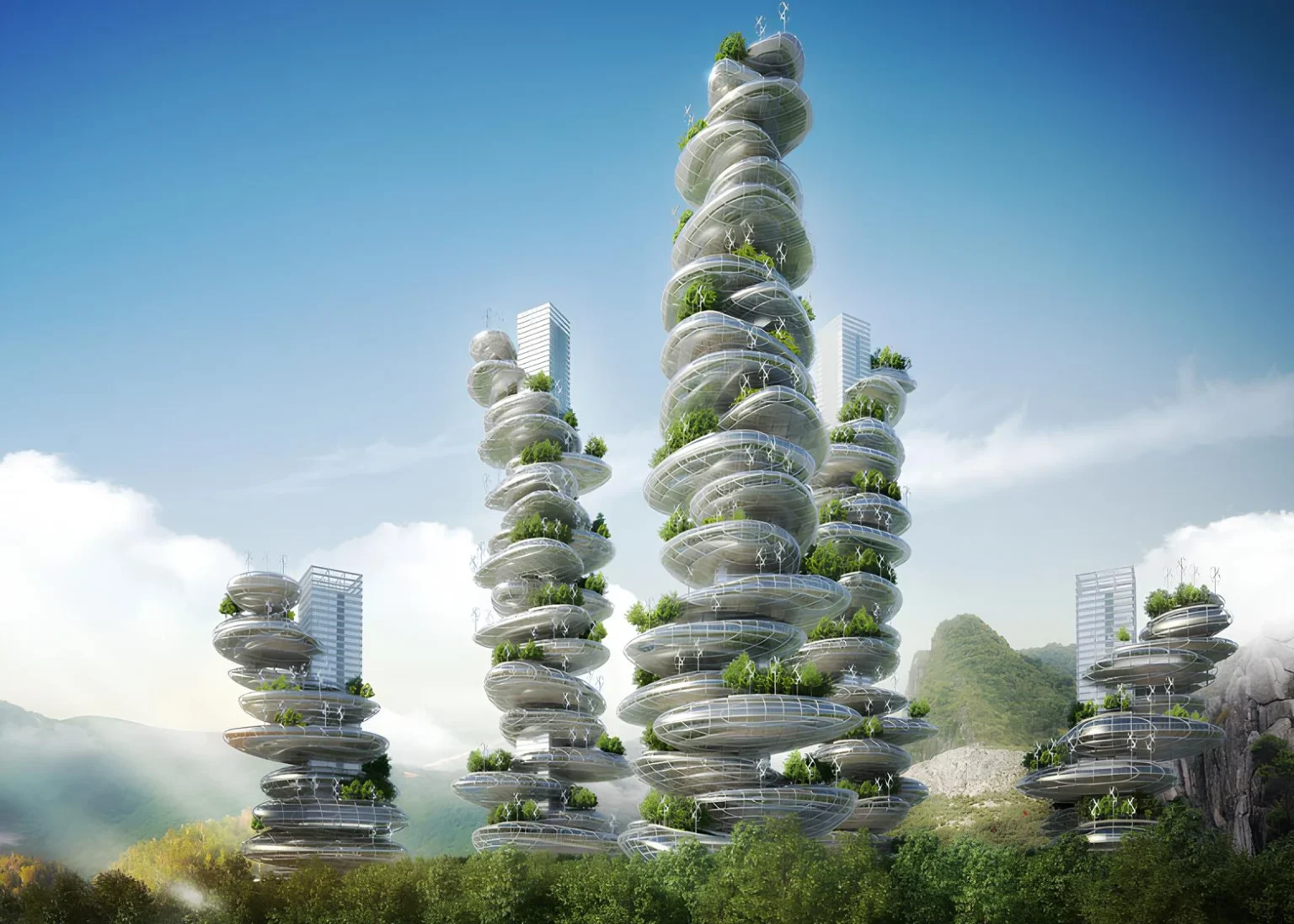
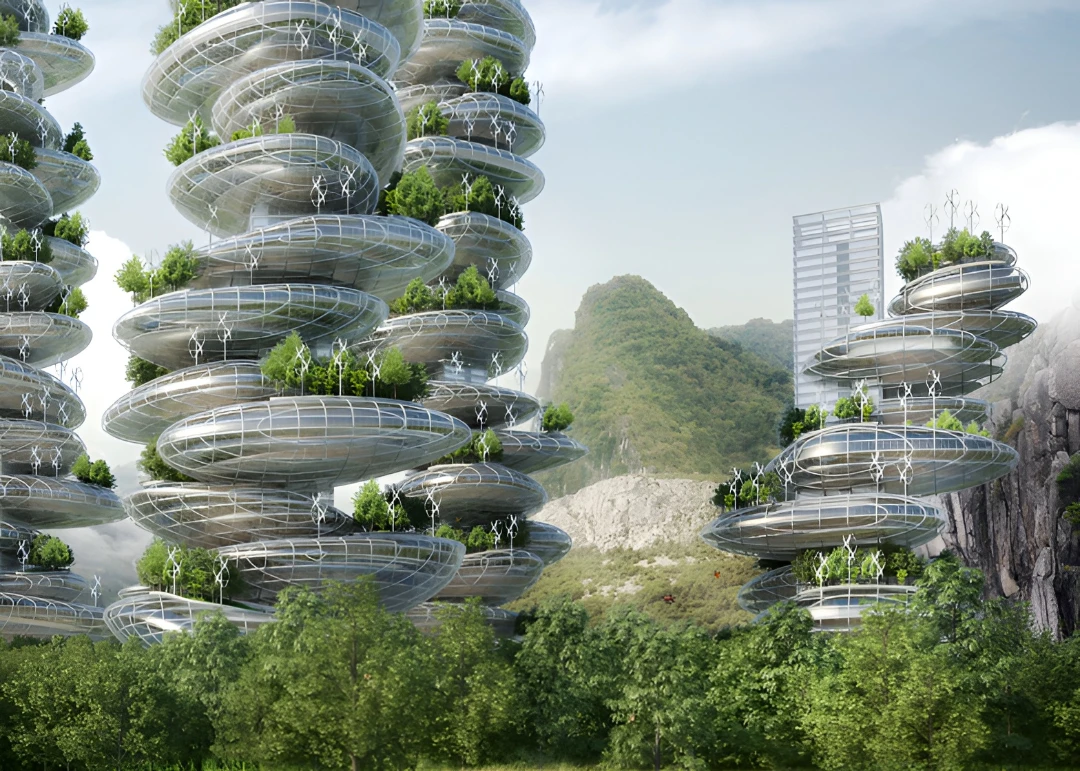
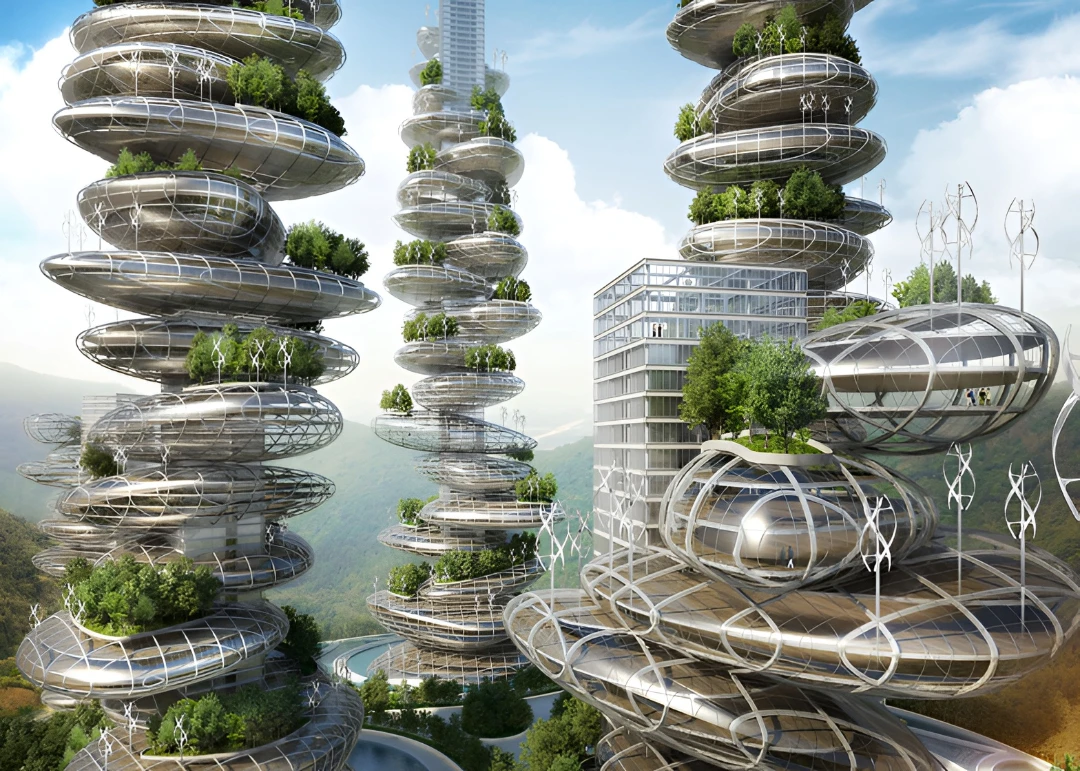
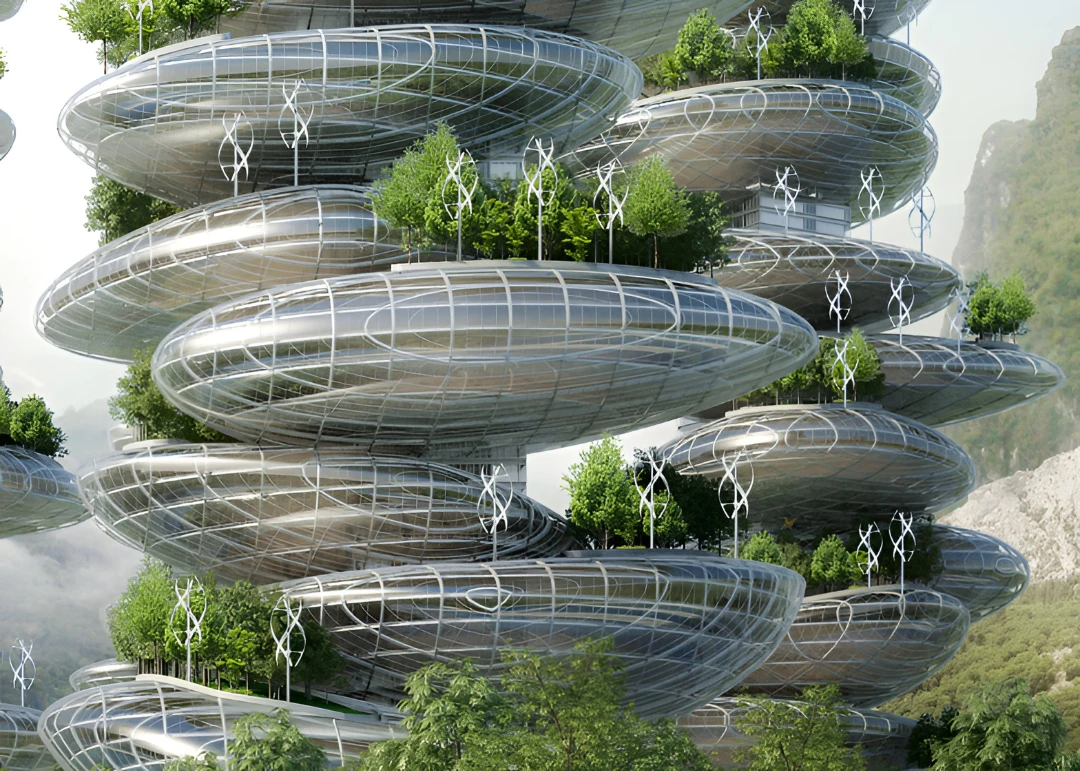
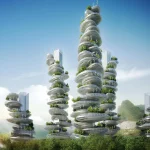
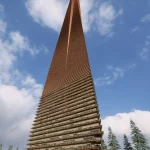
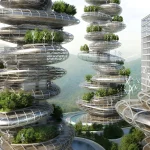
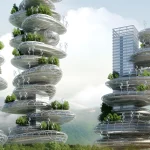
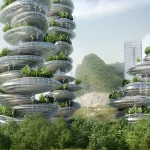
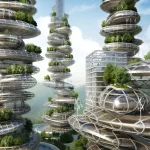
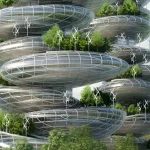
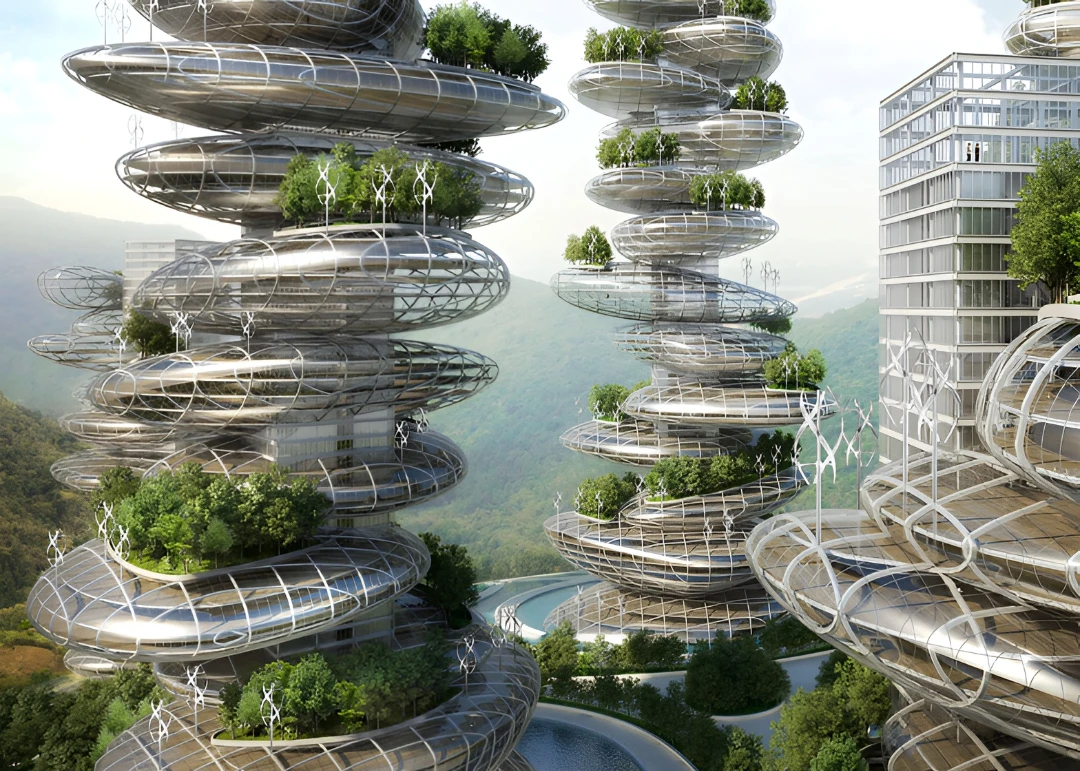
Belgian architect Vicent Callebaut’s designs revolve around city architecture that breathe, grow, and give back to the planet. Through the Asian Cairns design proposal, he envisions a new kind of skyline shaped by “farmscrapers,” vertical landscapes that merge agriculture, housing, and renewable energy into one living architectural system. The design is envisioned as futuristic urbanization in rapidly expanding Chinese megacities like Shenzhen. The project imagines towers that produce more energy than they consume through urban farming, wind power, and solar harvesting.
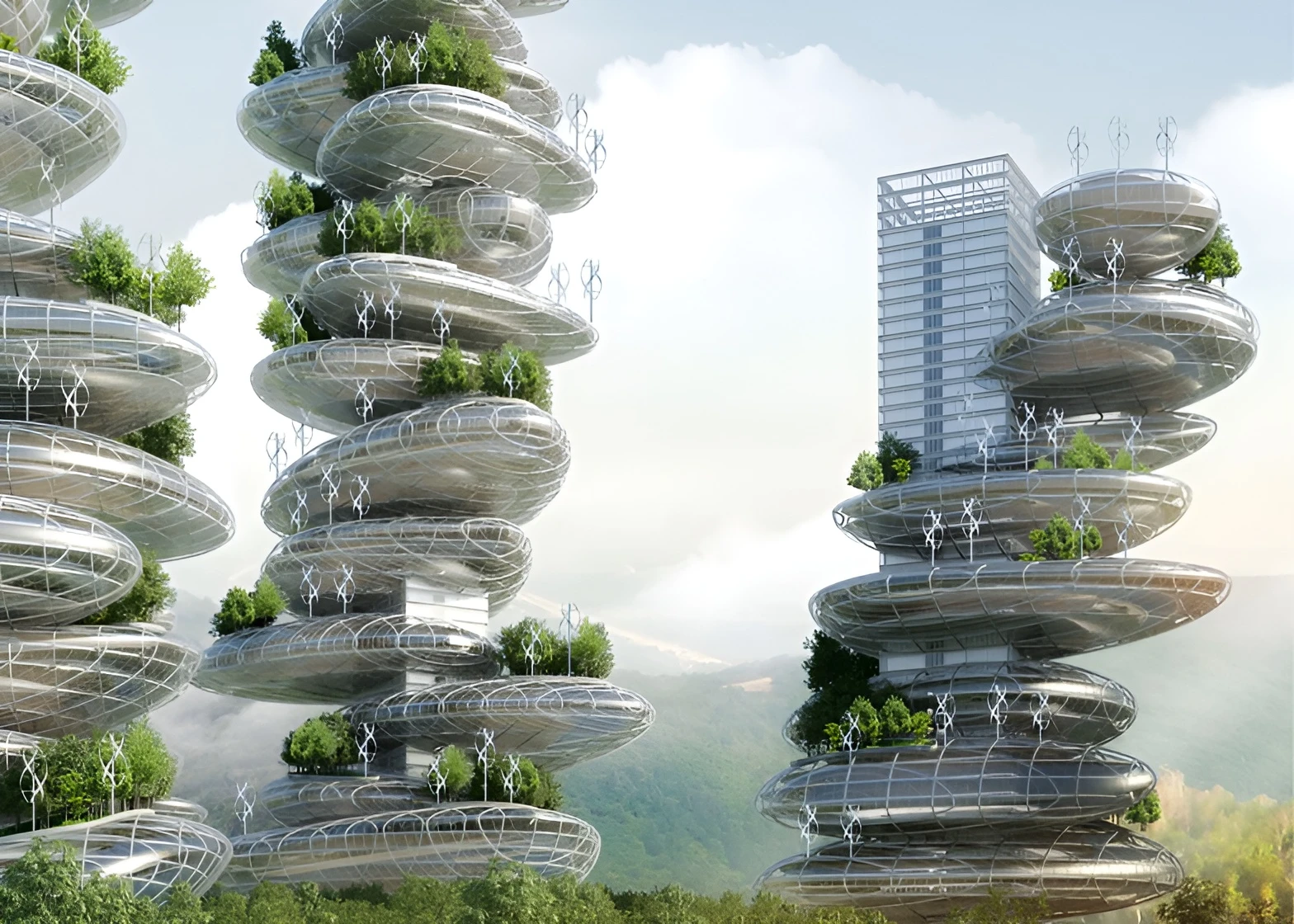
Rather than separating city and countryside, the architecture proposes a future where they coexist in balance, a model of urbanism that nurtures both community and climate. The design through architecture aims to improve the quality of life for the inhabitants and create a coexisting balance with architecture and sustainability. The design features a stacked egg-like design structure and features a residual Neolithic practice of piling stones into tall markers. The megalithic modules that form six mixed-use towers serve to pile up housing, offices, and leisure spaces. The initiative proposes the integration of vertical farms, renewable energy sources, and green spaces within urban settings to combat these issues.