
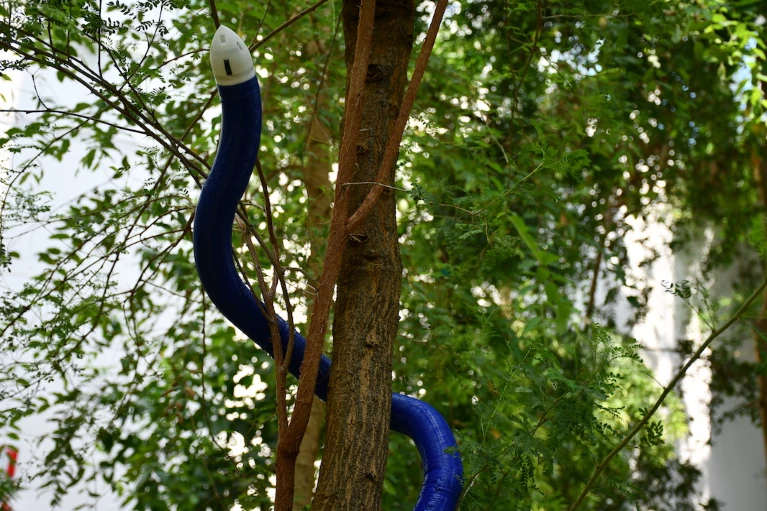

For decades, engineers have struggled to move robots through the kinds of spaces nature navigates with ease, tight gaps, uneven ground, fragile surfaces. Instead of adding more wheels or joints, researchers began looking elsewhere: to vines that climb walls, roots that probe soil, and plants that grow their way around obstacles. From this line of thinking emerged FiloBot, a self-growing robot that advances not by walking or rolling, but by extending itself, echoing the behavior of climbing plants.
Developed by a team at the Italian Institute of Technology under the leadership of Barbara Mazzolai, FiloBot is the result of nearly ten years of research into plant-inspired motion and growth. By combining additive manufacturing, sensory feedback, and autonomous growth algorithms, the robot is able to fabricate its own body as it moves, adapting its form to complex, unstructured environments. Rather than forcing machines to conquer terrain, the project suggests a different approach: letting robots grow into the world, much like plants have done for millions of years.
Biomimetic Inspiration
Climbing plants optimize growth by responding to environmental stimuli such as gravity and light. Two distinct tropic behaviors are central:
- Phototropism: growth toward light sources, maximizing photosynthetic access.
- Skototropism: growth toward shade when seeking support structures, often exhibited by vines before twining around a host.
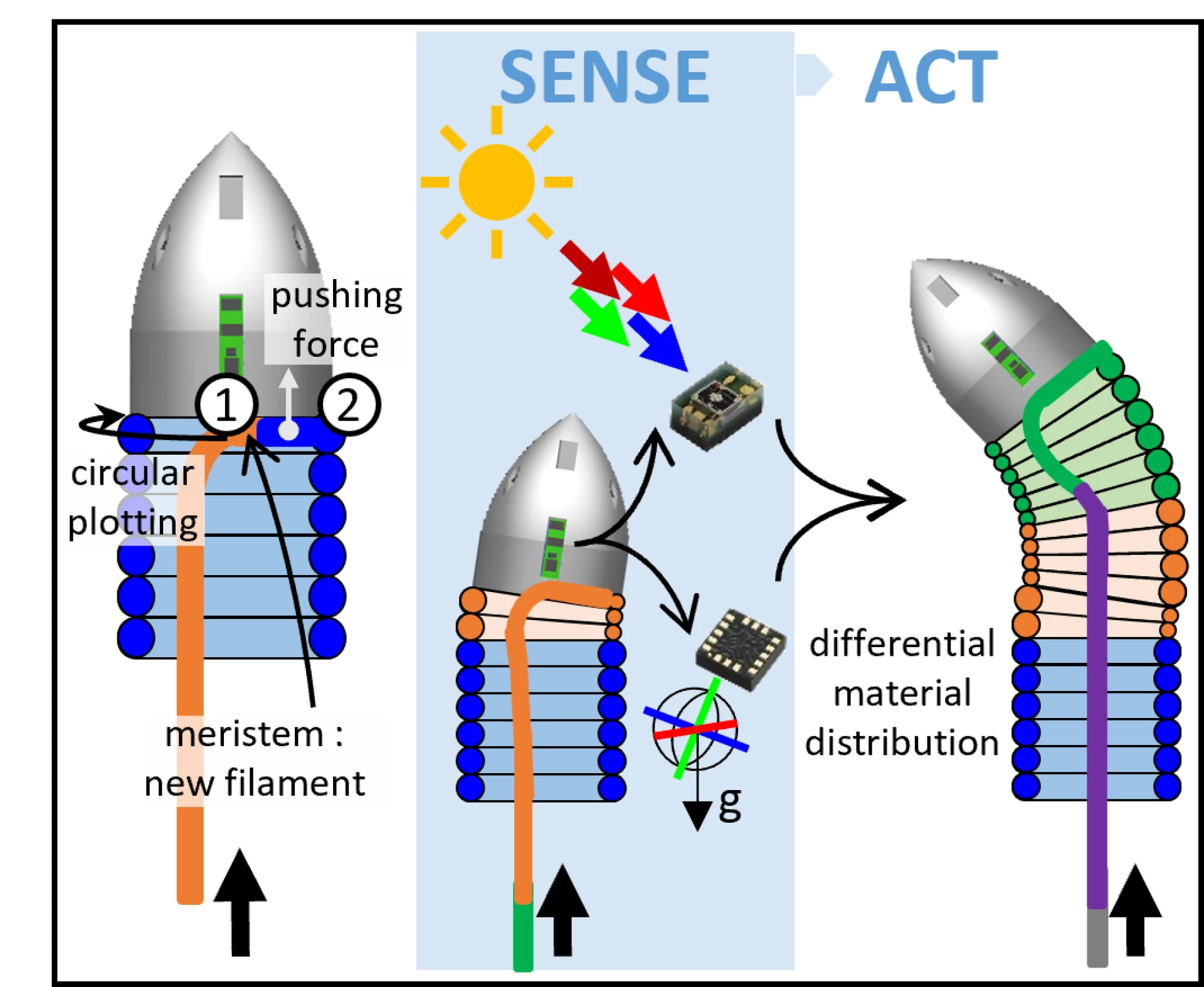
FiloBot operationalizes these mechanisms through integrated head sensors that detect light intensity and gravity vectors. By modulating growth direction based on this data, the robot mimics how vines locate and latch onto supports in natural environments.
This biomimetic strategy shifts robotic control from preprogrammed motion sequences toward environmentally reactive growth, enabling the robot to choose growth directions based on external cues.
Structural Engineering: Additive Manufacturing as Growth Mechanism
FiloBot’s self-extension is a novel use of onboard additive manufacturing. A miniature 3D printer residing at the base extrudes a thermoplastic filament that becomes the robot’s stem-like body.
- The head continuously pulls filament from a spool and passes it through a heated extruder.
- Filament is deposited in concentric layers behind the head, solidifying upon cooling to extend length.
- By varying extrusion temperature, deposition speed, and material distribution, the robot controls structural stiffness and curvature.
Directional control is achieved by asymmetrical deposition: increasing material on one side causes bending toward the opposite direction, allowing the robot to steer toward light or around obstacles. This fabrication-as-locomotion strategy effectively blurs the distinction between body growth and navigation, distinguishing FiloBot from traditional mobile platforms.
Sensory Integration and Autonomous Response
FiloBot’s head integrates multiple sensors:
- Light sensors detect spectral intensity gradients.
- Inertial measurement units (e.g., gyroscopes) assess orientation relative to gravity.
- Control electronics adjust firmware parameters in real time to reinforce desired growth trajectories.
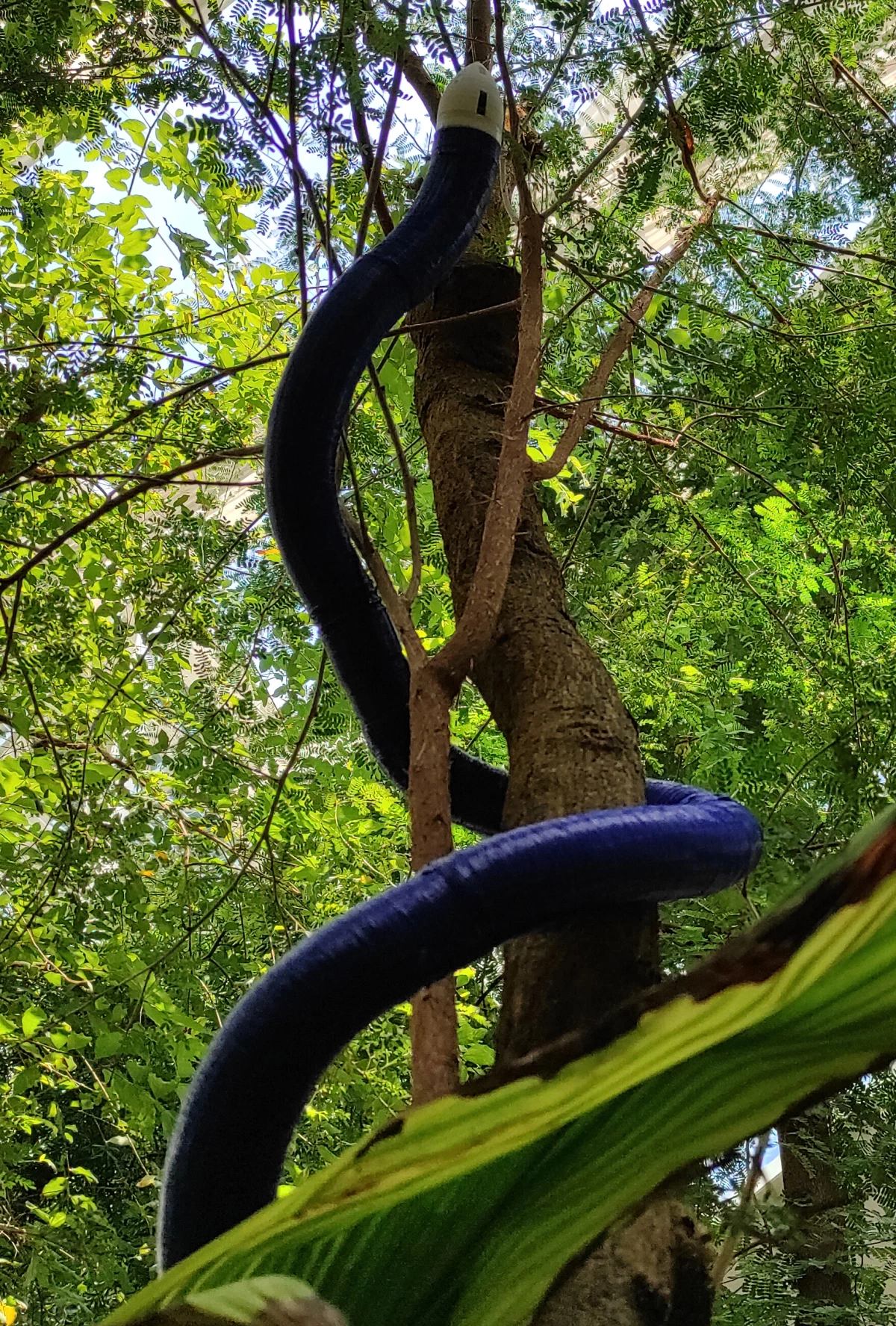
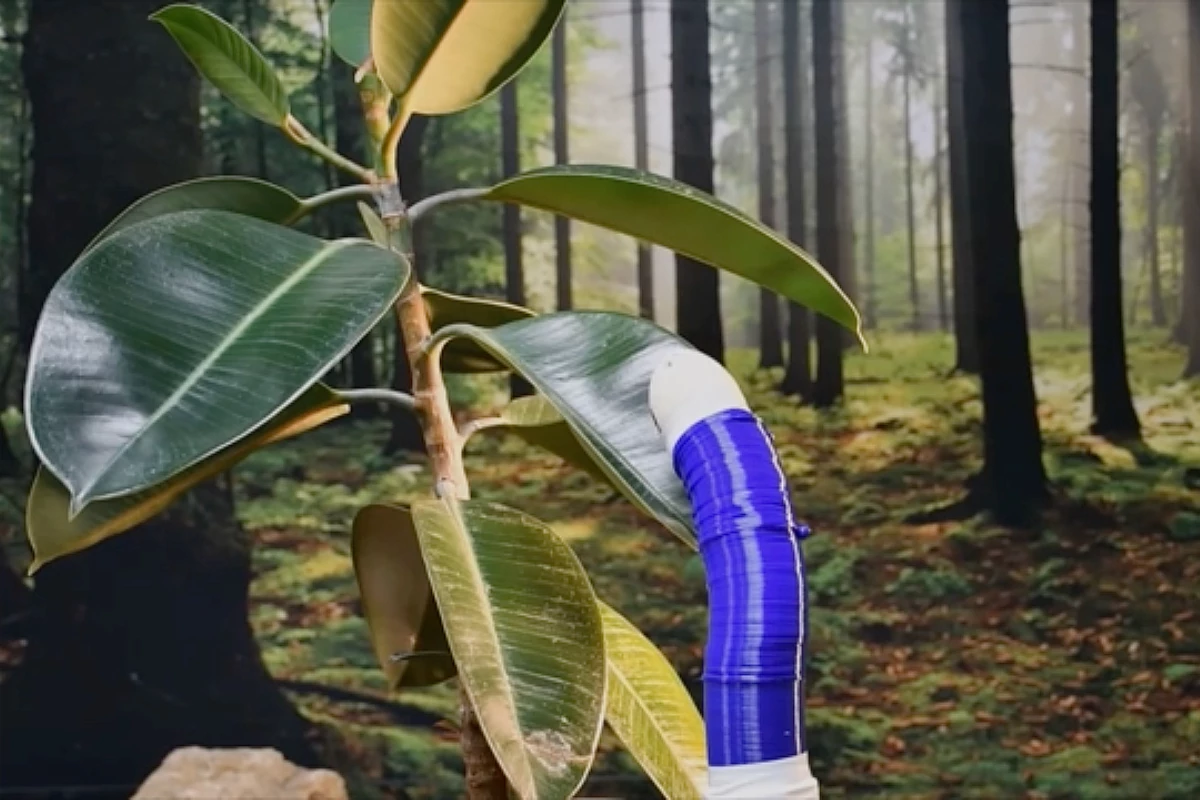
This sensor suite supports feedback-driven adaptation, enabling FiloBot to perform gravitropism-informed upward growth or skototropism-based support seeking, akin to how vines adjust to both light availability and structural anchor points. One notable capability involves identifying shade cast by an existing plant leaf and adjusting growth to ascend toward a trunk, a direct robotic implementation of skototropic behavior.
Mechanical Properties
A key engineering challenge in self-growing robots is balancing structural strength with energy efficiency:
- When FiloBot encounters a void or must support its own weight, increased material thickness enhances rigidity.
- Conversely, when a support structure is detected, the robot reduces material deposition, creating a lighter, more flexible body segment.
These modulations save energy and accelerate growth, potentially extending operational lifespan during complex navigations. Adjustments to extrusion temperature and filament feed rates serve as proxies for material mechanics, allowing real-time tuning of body stiffness during growth
Comparison with Conventional Robots
Unlike conventional robots that rely on wheels, legs, or fixed manipulators, FiloBot’s growth-based navigation circumvents many terrain constraints:
- Traditional mobile robots require path planning and locomotion systems that may fail in uneven or debris-filled spaces.
- FiloBot, leveraging its growth, can cross voids and adapt its body shape to negotiate irregular environments without pre-mapped motion plans.
This places FiloBot in a class with other growing robots such as soft vine robots and continuum structures, but its unique integration of 3D printing and sensor-based environmental responsiveness elevates its autonomy and adaptability.
Search, Rescue, and Environmental Robotics Applications of FiloBot
The potential applications of self-growing robotic systems like FiloBot span several domains:
- Search and Rescue: Navigate collapsed infrastructure or confined spaces unreachable by conventional robots.
- Environmental Sensing: Deploy in forests or rugged terrain to monitor ecological conditions.
- Self-Building Infrastructures: Conceptual frameworks suggest robots that could build or reinforce structures while adapting to environmental feedback, inspired by the natural intertwining of plant stems.
While current iterations require base station power and tethered operation, future advances may incorporate onboard energy harvesting and lightweight power systems to enable truly autonomous growth.
FiloBot suggests a quieter, more patient vision of robotics, one that trades speed and force for attentiveness and adaptation. By growing rather than moving, the robot responds to gravity, darkness, and spatial constraints in much the same way a plant finds its way through the world. Its body takes shape as it advances, shaped by sensory feedback and continuous fabrication, allowing it to adjust course without resisting its surroundings. In this approach, robotics shifts from controlling space to listening to it, offering a glimpse of machines that learn how to belong within complex environments rather than dominate them.
Credits: Italian Institute of Technology (IIT)