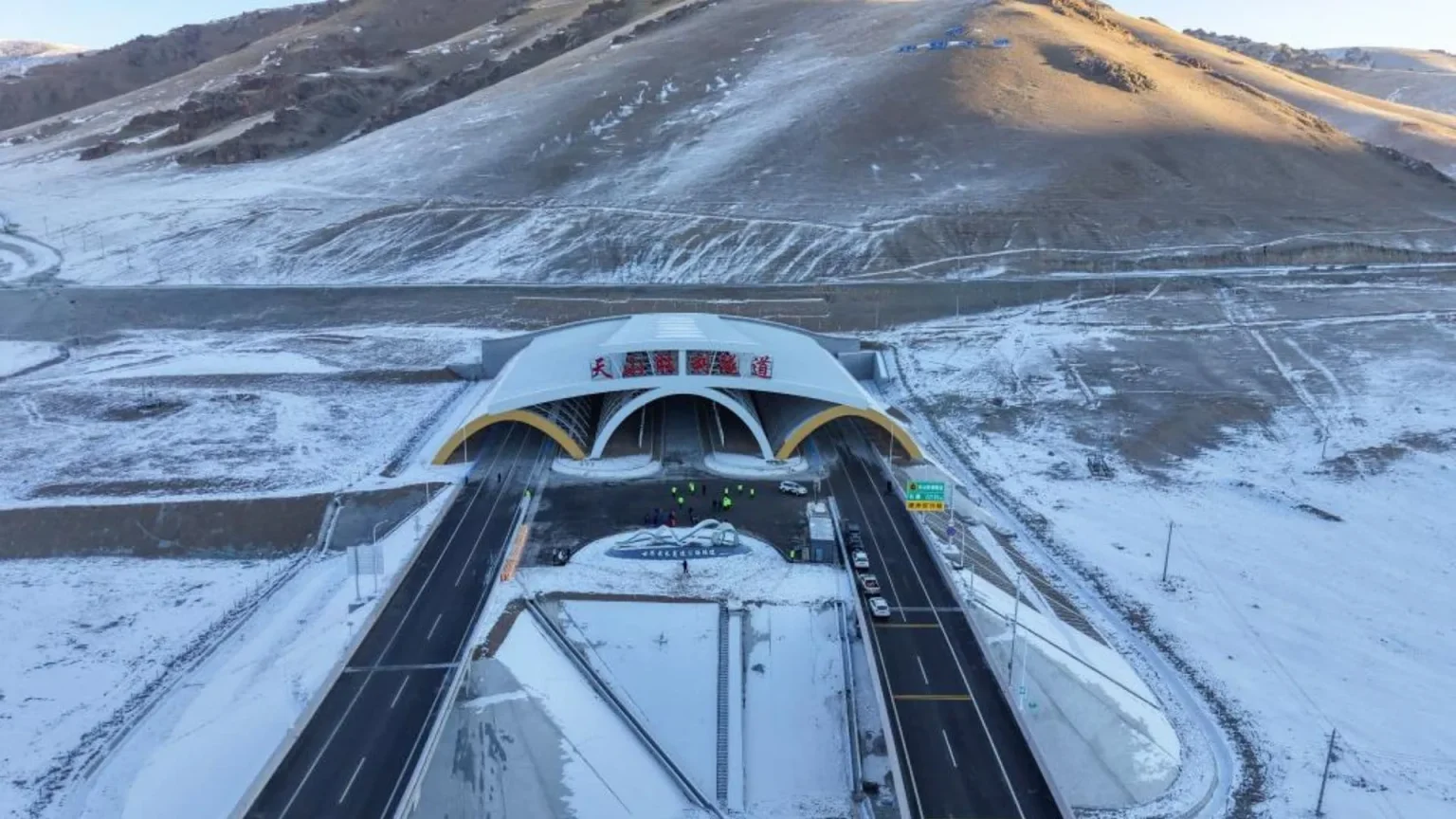

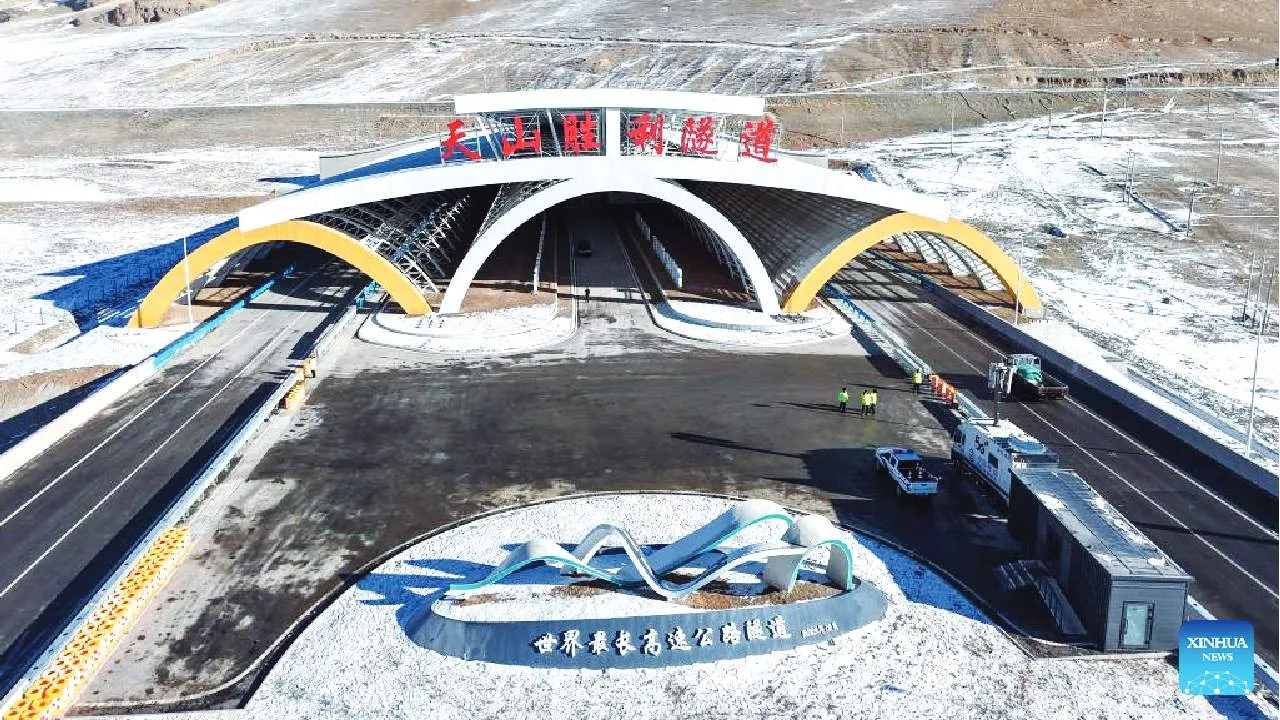
China opened the Tianshan Shengli Tunnel, now recognized as the world’s longest expressway tunnel, to public traffic on 26 December 2025. The 22.13-kilometer tunnel runs through the central Tianshan Mountains in the Xinjiang Uygur Autonomous Region and forms a central part of the G0711 Urumqi-Yuli Expressway.
The tunnel’s opening marks a major milestone in China’s infrastructure expansion. It significantly reduces travel time across the previously difficult mountain terrain. What once took several hours as a treacherous mountain drive can now be completed in approximately 20 minutes via the tunnel section.
The expressway route, including the tunnel, enhances connectivity between northern and southern Xinjiang. It shortens the overall journey between the regional capital Ürümqi and cities such as Korla and Yuli from around seven hours to roughly three hours.
Engineering and Construction of Tianshan Shengli Tunnel
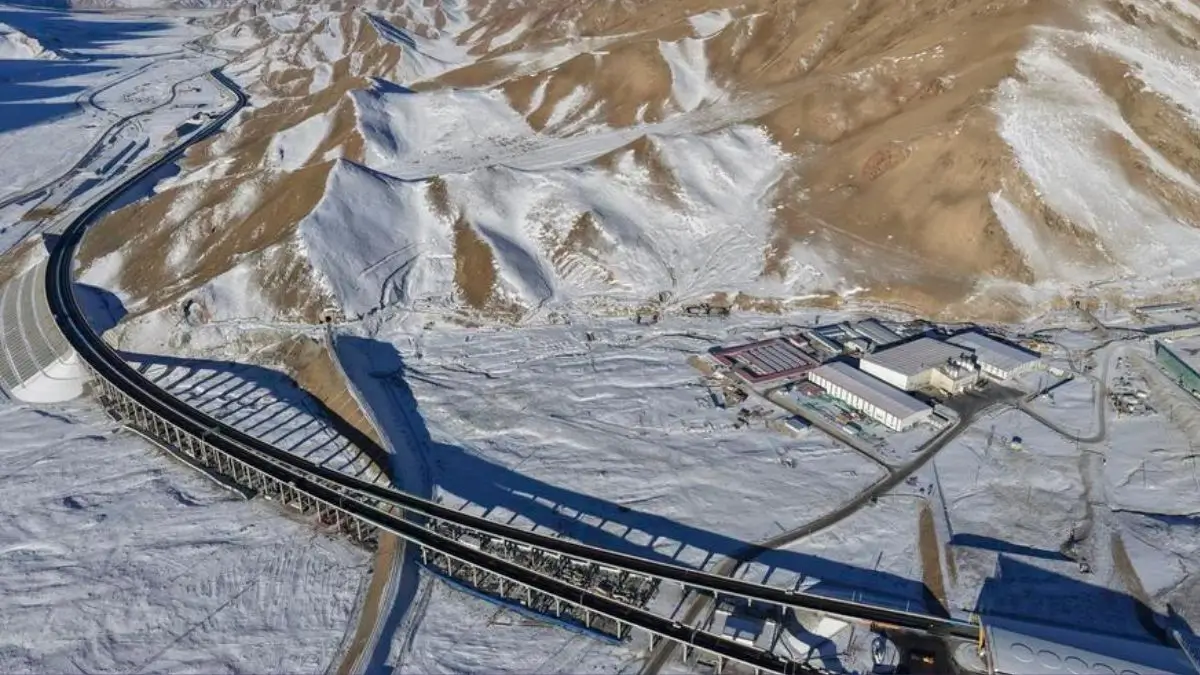
The tunnel project began with construction in April 2020 and was completed over roughly five years, overcoming a range of difficult conditions in the Tianshan Mountains, where average elevations exceed 3,000 meters.
Construction required advanced engineering techniques to deal with complex geology, harsh weather, and extreme terrain. To speed up excavation and manage risks, engineers adopted a “three tunnels plus four shafts” construction process. Under this approach, two main traffic tunnels were built alongside a central pilot tunnel, which improved access, ventilation, and safety during tunneling.
The four vertical shafts, reaching depths of up to 700 meters, allowed simultaneous work at multiple points and provided critical ventilation and construction access.
Mechanized methods played a key role—tunnel boring machines (TBMs) were used for the pilot tunnel, while the main tunnels were excavated using highly mechanized drilling and blasting techniques. Supporting structures include a double-layer lining with anchor bolts, steel arches, and shotcrete, ensuring long-term stability underground.
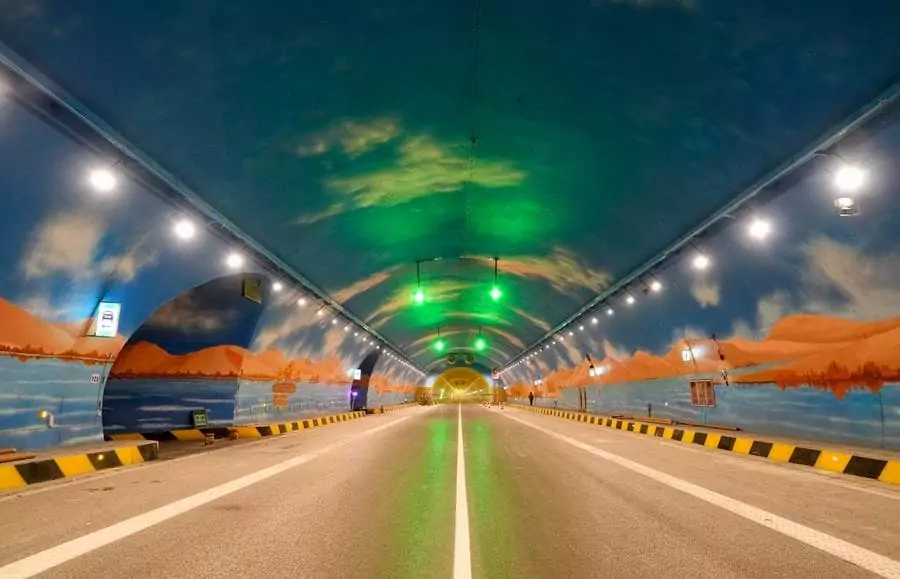
The tunnel’s construction team faced extreme low temperatures, rough alpine conditions, and complex rock formations, requiring continuous adaptation of tunneling methods. The Tianshan Shengli Tunnel consists of two parallel tubes, each with two traffic lanes, and forms a key link between northern and southern Xinjiang.
Besides boosting travel efficiency, the project is intended to support broader economic and logistical development across the region by improving transport links to eastern economic centers and international routes. The tunnel was constructed through demanding geological conditions, reflecting a significant engineering achievement.
The Tianshan Shengli Tunnel’s inauguration emphasizes China’s continued investment in major transportation infrastructure, aiming to enhance regional integration and strengthen all-weather connectivity across western parts of the country.