











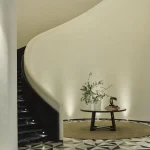
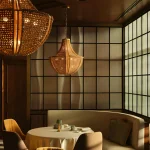

Across diverse geographies, hotels are increasingly conceived as narrative spaces, shaped by the rhythms of their surroundings and the stories embedded in their sites. Rather than asserting themselves through spectacle, these projects unfold gradually, revealing how material, light, and structure can translate climate, culture, and memory into architectural experience. In this context, hospitality becomes less about destination and more about dwelling, observation, and connection.
The selection that follows brings together ten hotel projects that approach hospitality as a cultural and spatial inquiry. Each one reflects a careful negotiation between architecture and context, using design to frame everyday rituals, respond to landscape, and create environments that feel both contemporary and deeply rooted.
1. Populus, United States
Architect: Studio Gang
Location: Denver, CO, United States
Completed: 2024
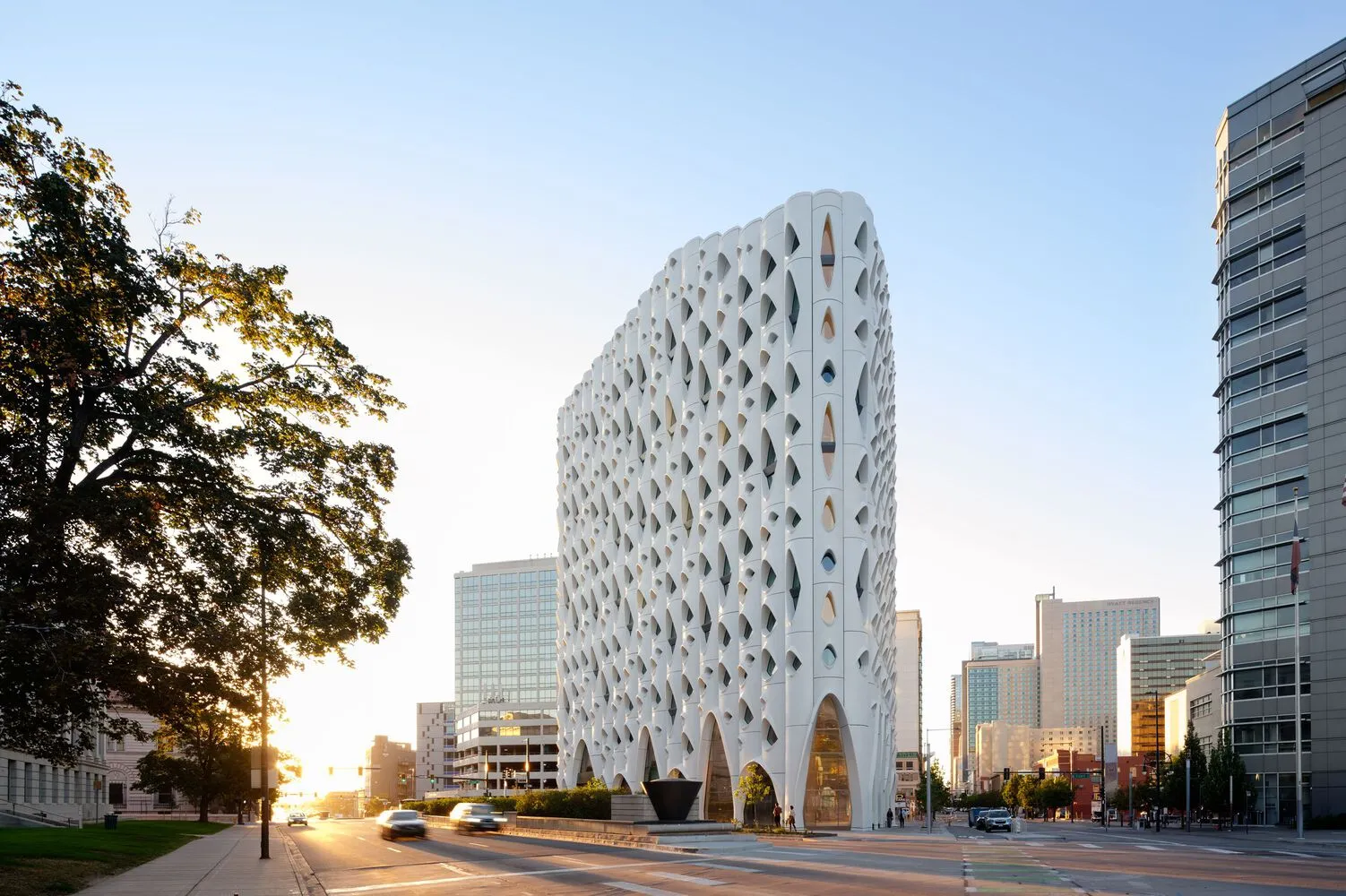
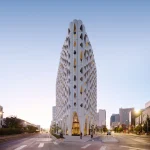
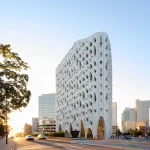
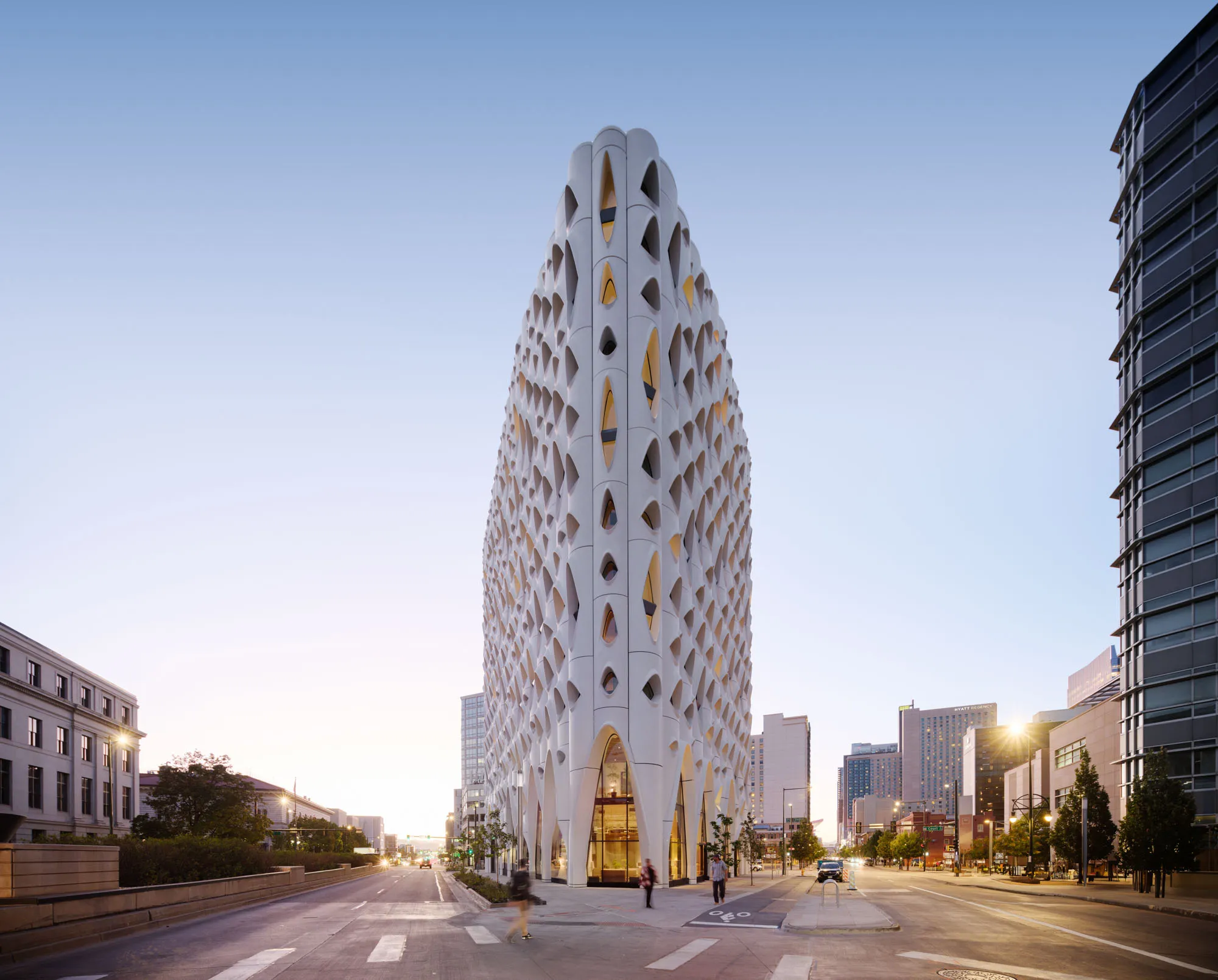
Populus, designed by the internationally renowned ‘Studio Gang’ under the leadership of Jeanne Gang, rises on a prominent corner site as a welcoming presence on all three of its façades. Thoughtfully positioned, the hotel seamlessly connects Denver’s civic, arts, and commercial districts, inviting both residents and visitors into its lively public realm.
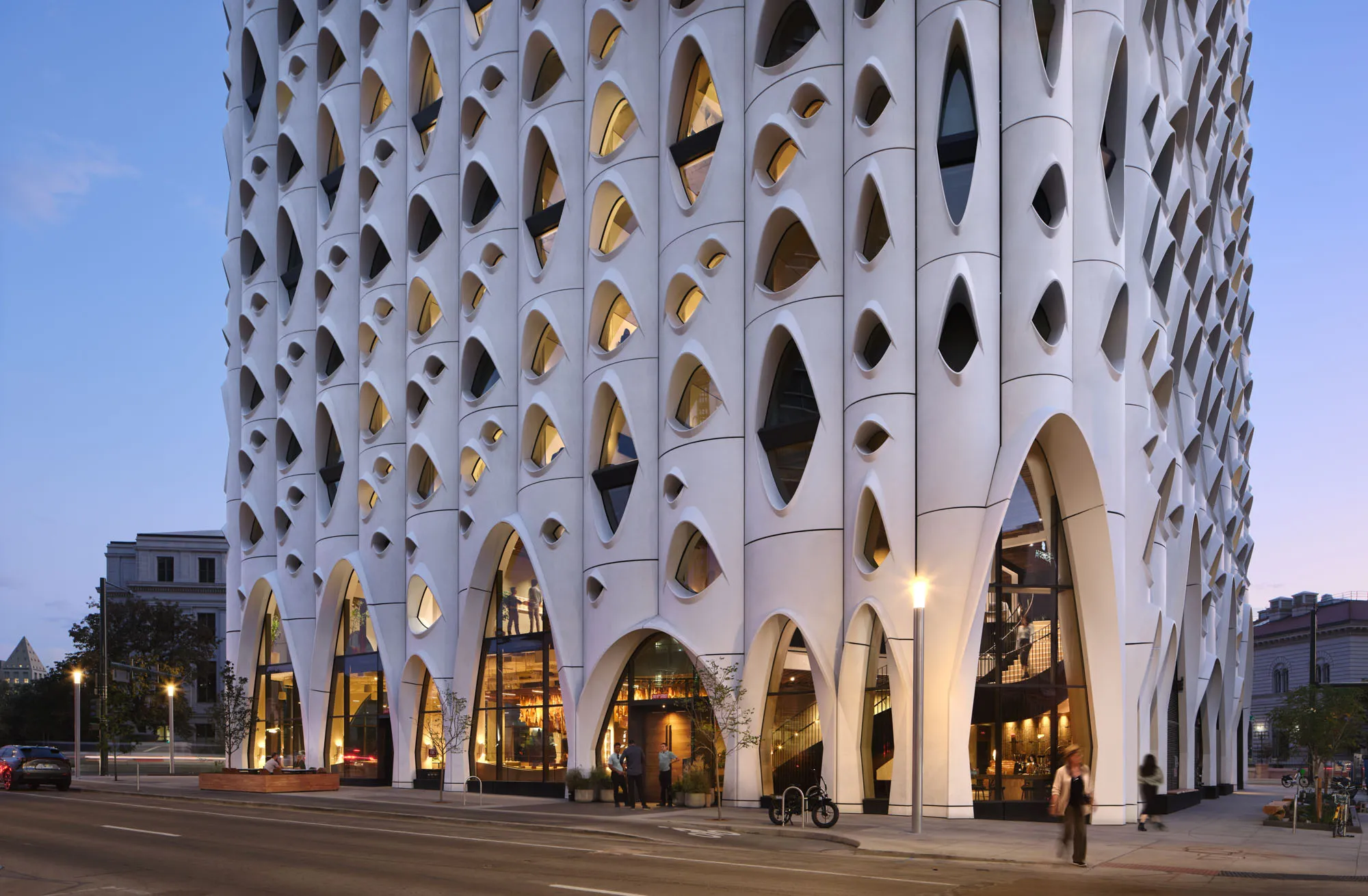
The 265-room hotel’s facade design draws inspiration from the growth processes of the state’s native aspen trees and aims to create a new architectural icon for Denver.
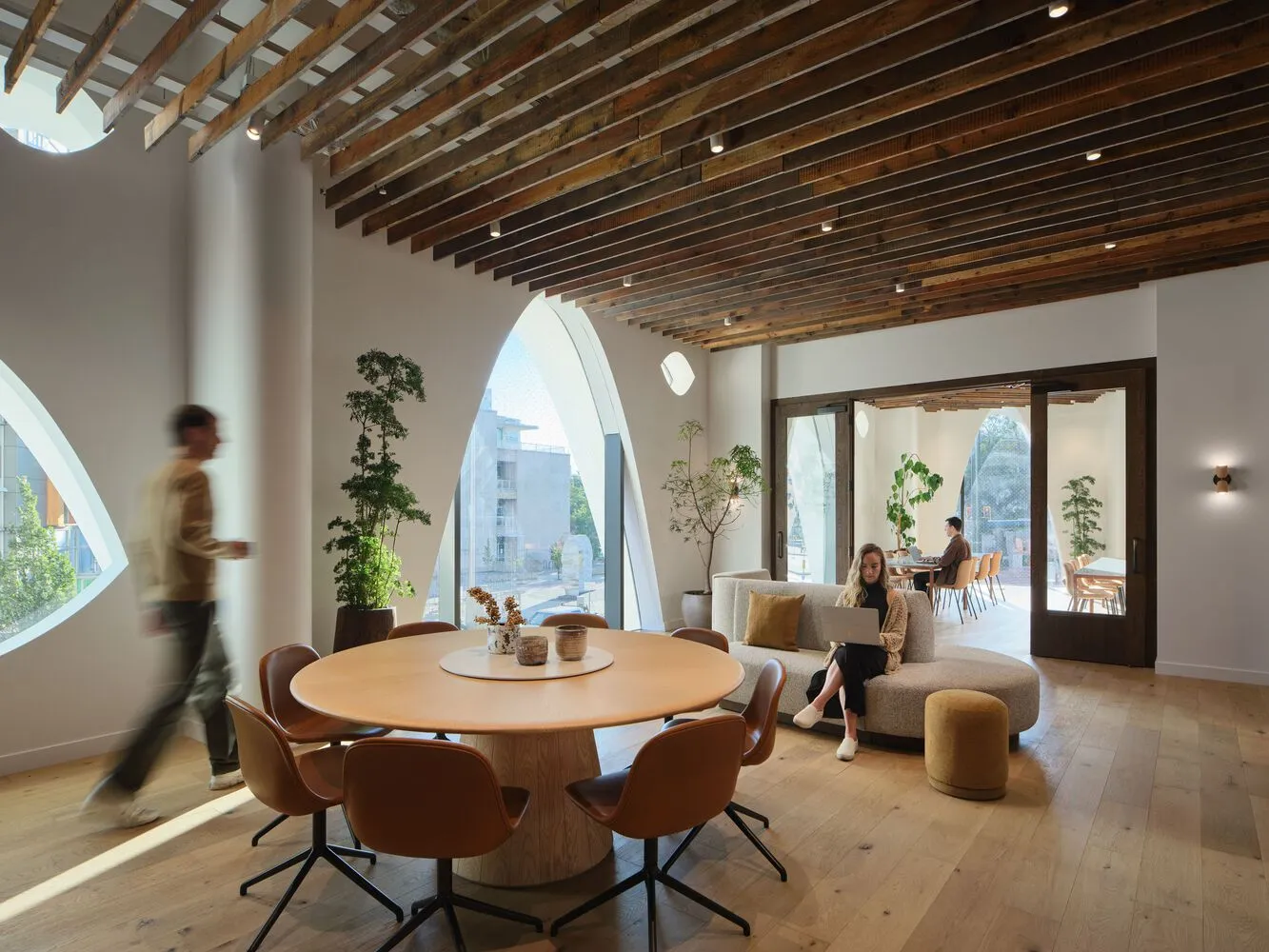
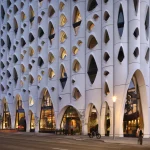
Populus reveals a sculptural façade where rhythmic patterns with vertical scallops align with each guest room, seamlessly blending form and function with ease. Inspired by aspen tree markings, the climate-responsive windows feature projecting lids that provide shade and manage rainwater. The design is rooted in sustainability; the hotel maximizes its compact triangular footprint, uses fly ash–infused concrete to reduce cement utilization, and redefines downtown hospitality by prioritizing green mobility over on-site parking.
2. Fogo Island Inn, Canada
Architect: Saunders Architecture
Location: Fogo Island, Newfoundland, Canada
Completed: 2014
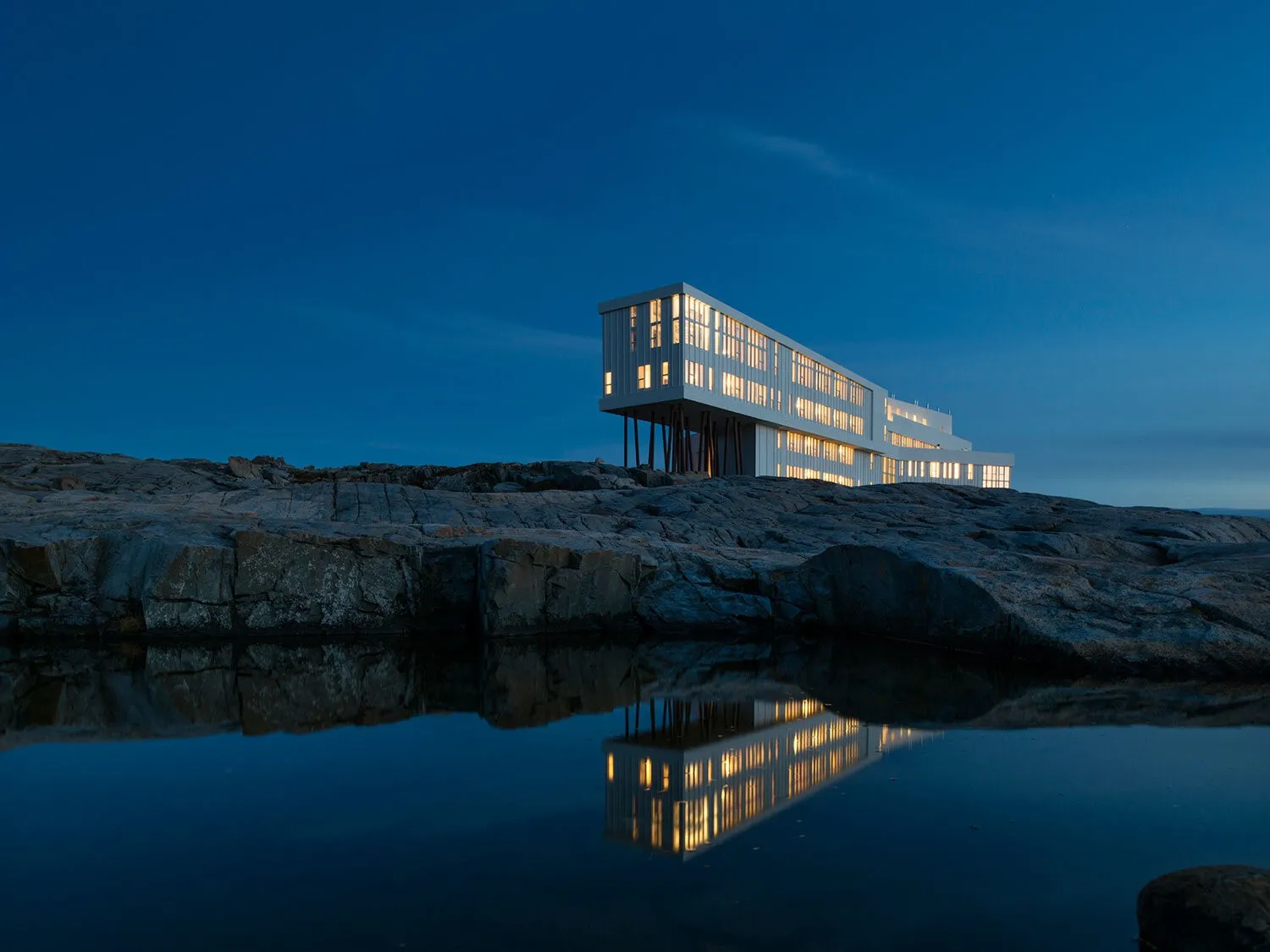
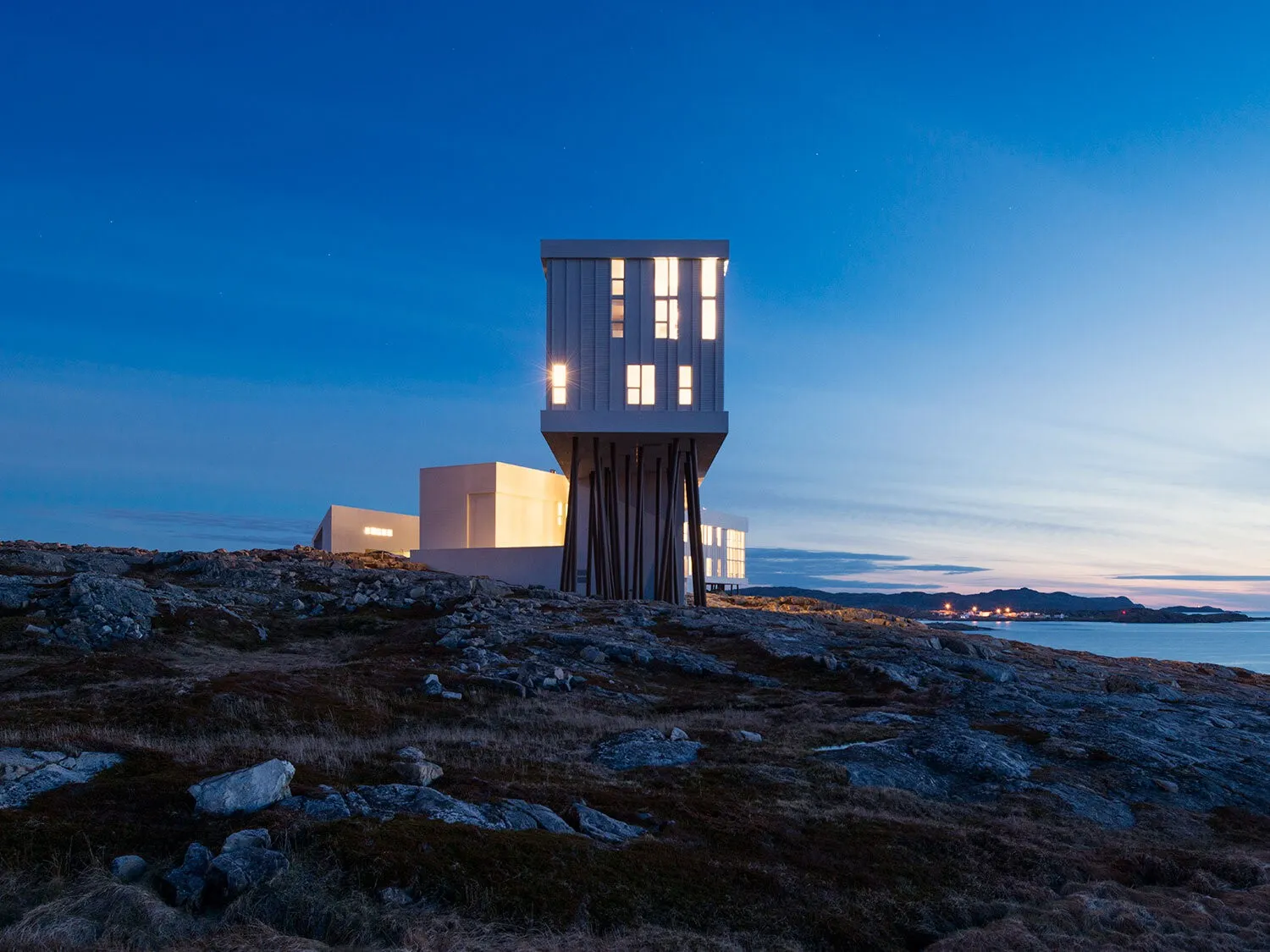
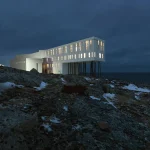
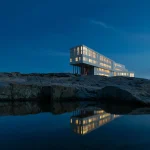
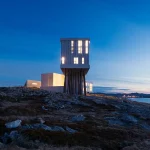
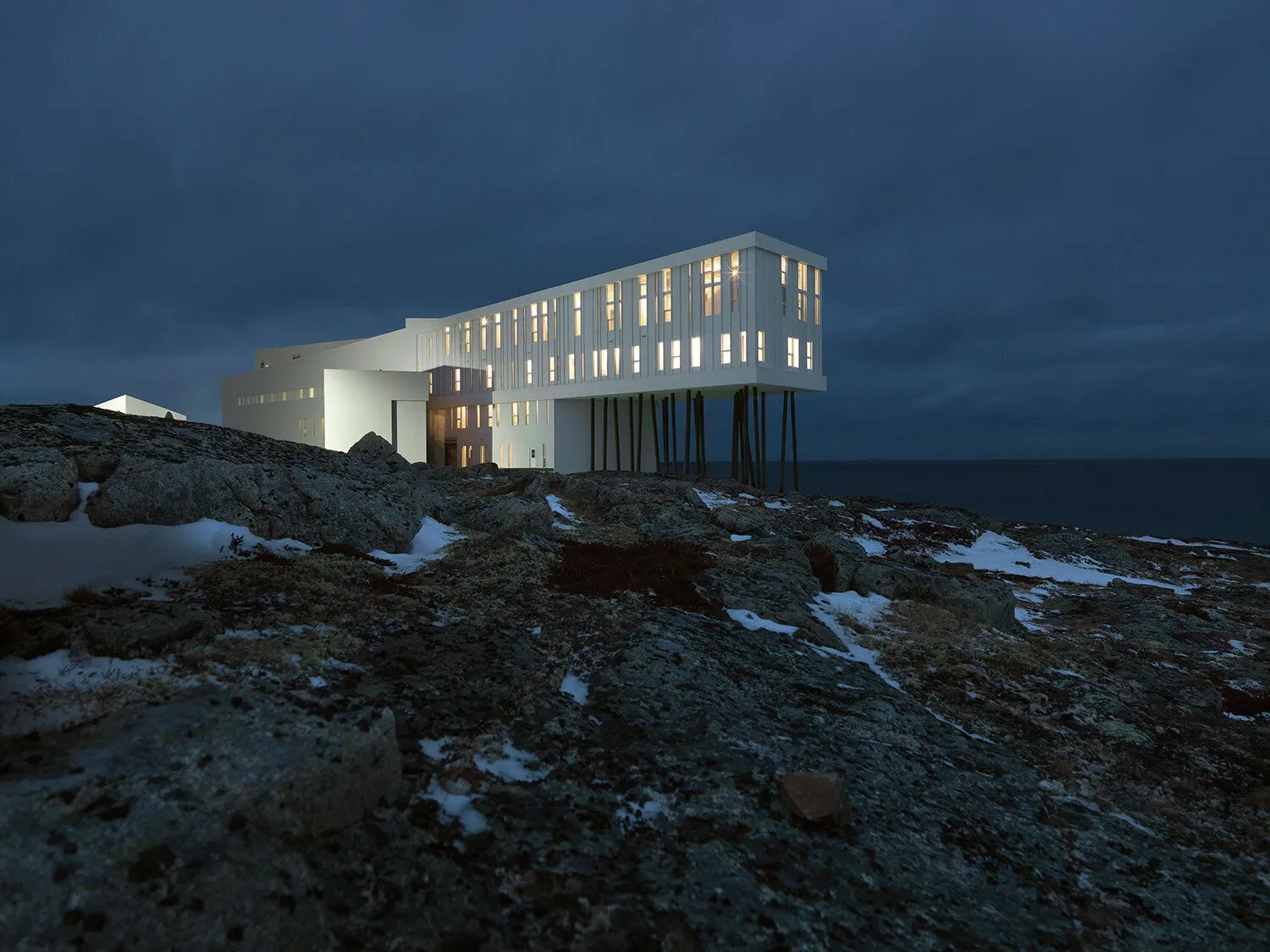
Designed as a public retreat for Fogo Island, the project offers 29 guest rooms set between the close-knit communities of Joe Batt’s Arm and Barr’d Islands along the Back Western Shore. Its striking X-shaped plan, formed by intersecting volumes, creates a sculptural form that responds to the rugged landscape.
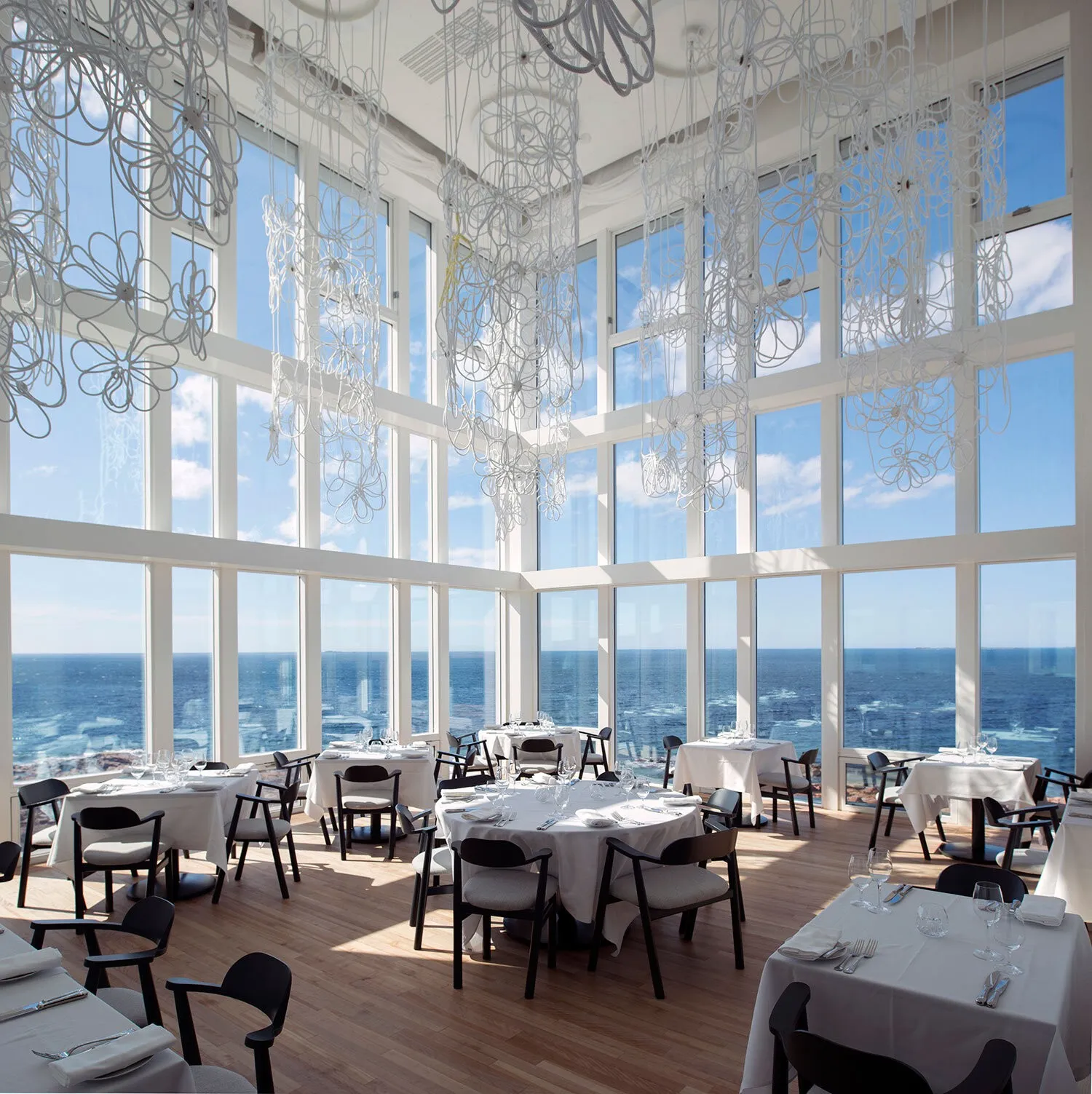
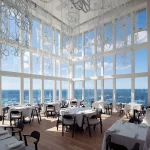
The public spaces integrated in the hotel unfold as cultural and social architectural integration, featuring an art gallery curated by Fogo Island Arts alongside a dining room, bar, and lounge celebrated as Canada’s most notable new culinary destinations.
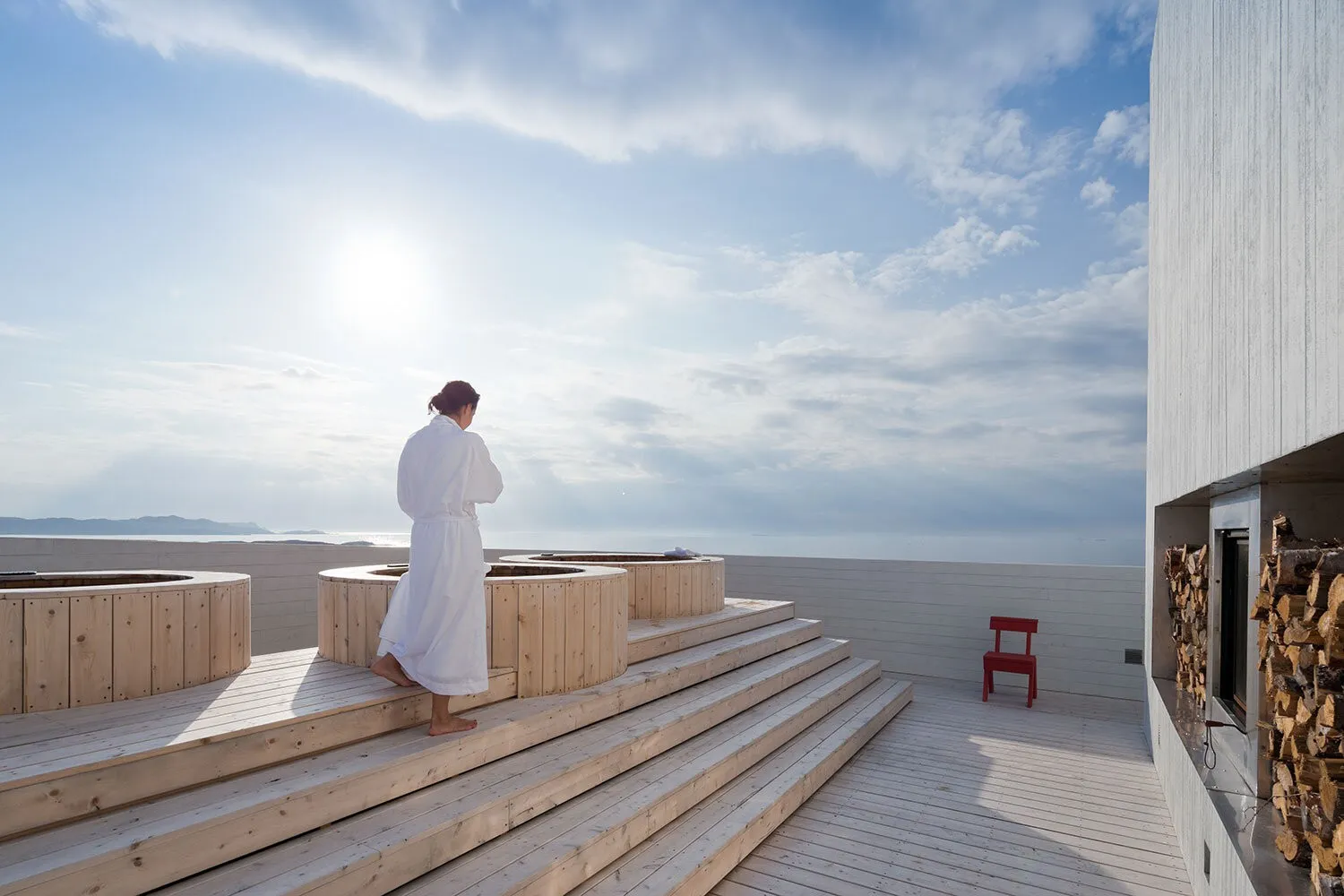
Shaped by a distinctive X-plan and lifted on traditional “shore” legs, the architecture treads with low carbon impact. The design utilizes sustainable strategies from high-performance insulation and advanced glazing with rainwater reuse, solar heating, radiant floors, and acoustic refinement, creating a serene retreat where comfort and sustainability coexist.
3. Rosewood Doha, Qatar
Architect: Ibrahim M. Jaidah
Location: Marina, Lusail, Qatar
Completed: 2025
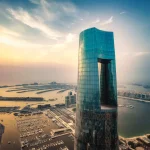
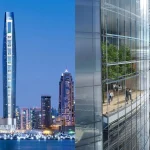
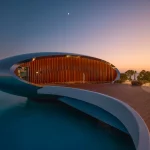
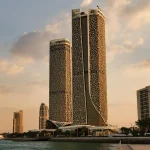
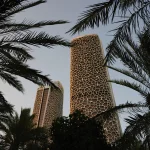
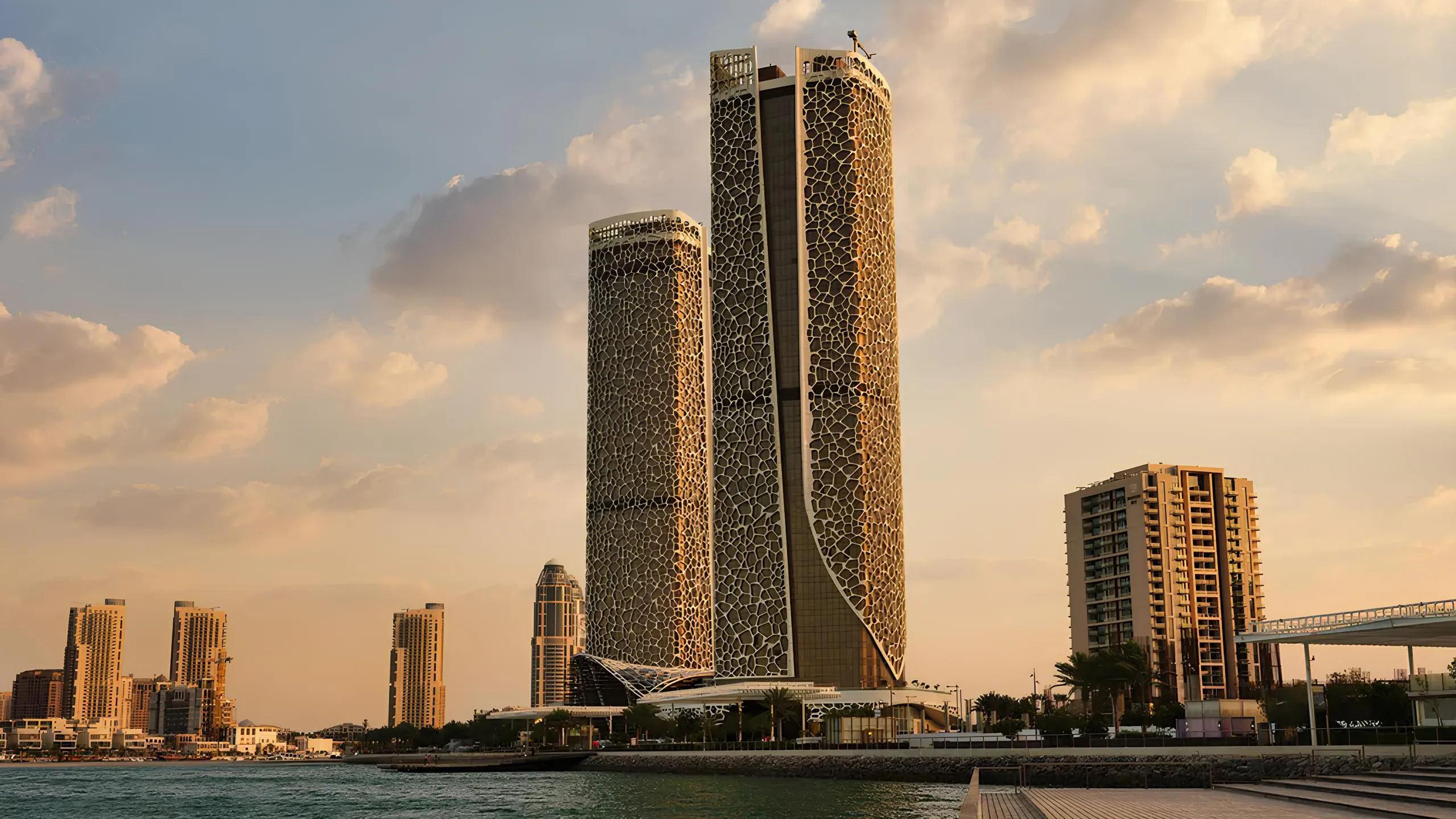
The Rosewood Doha Hotel is designed as an architectural centerpiece of Lusail, a dynamic new city bordering the Qatari capital. Designed as Qatar’s most iconic luxury stay, the hotel was envisioned by architect Ibrahim M. Jaidah, who conceived a sculptural exterior lattice as a homage to the coral reefs surrounding Qatar.
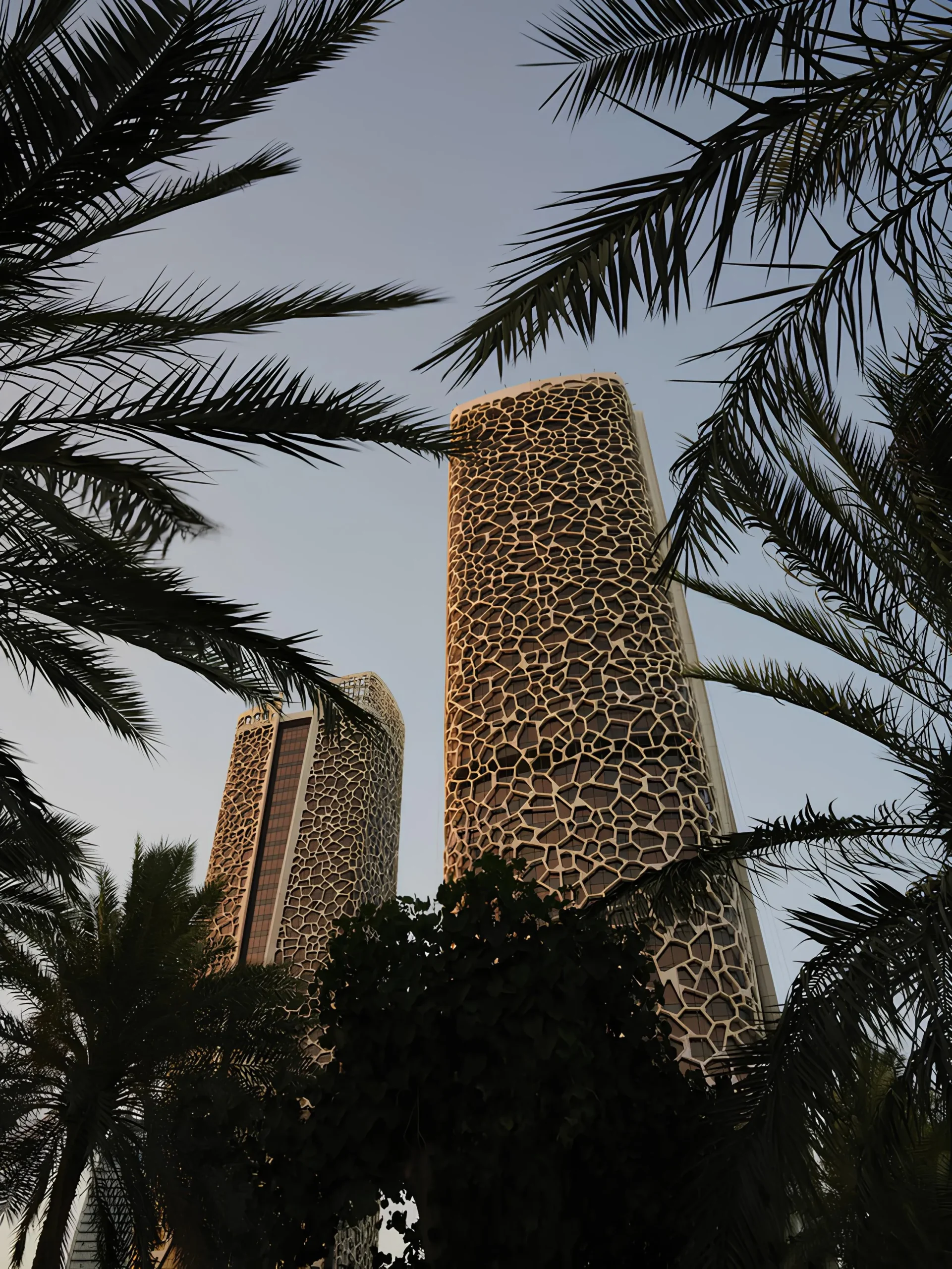
Situated along Doha’s waterfront, Rosewood Doha is designed as a bold yet poetic architectural addition to Qatar’s capital and the city’s luxury hospitality scene. Designed with a fluid, marine-inspired form, the twin towers are wrapped in a sculptural façade echoing the textures of coral, creating a striking dialogue between the Arabian Gulf and the urban skyline. The architecture employs an organic language that responds to the coastal setting, striking a balance between contemporary living and the natural environment.
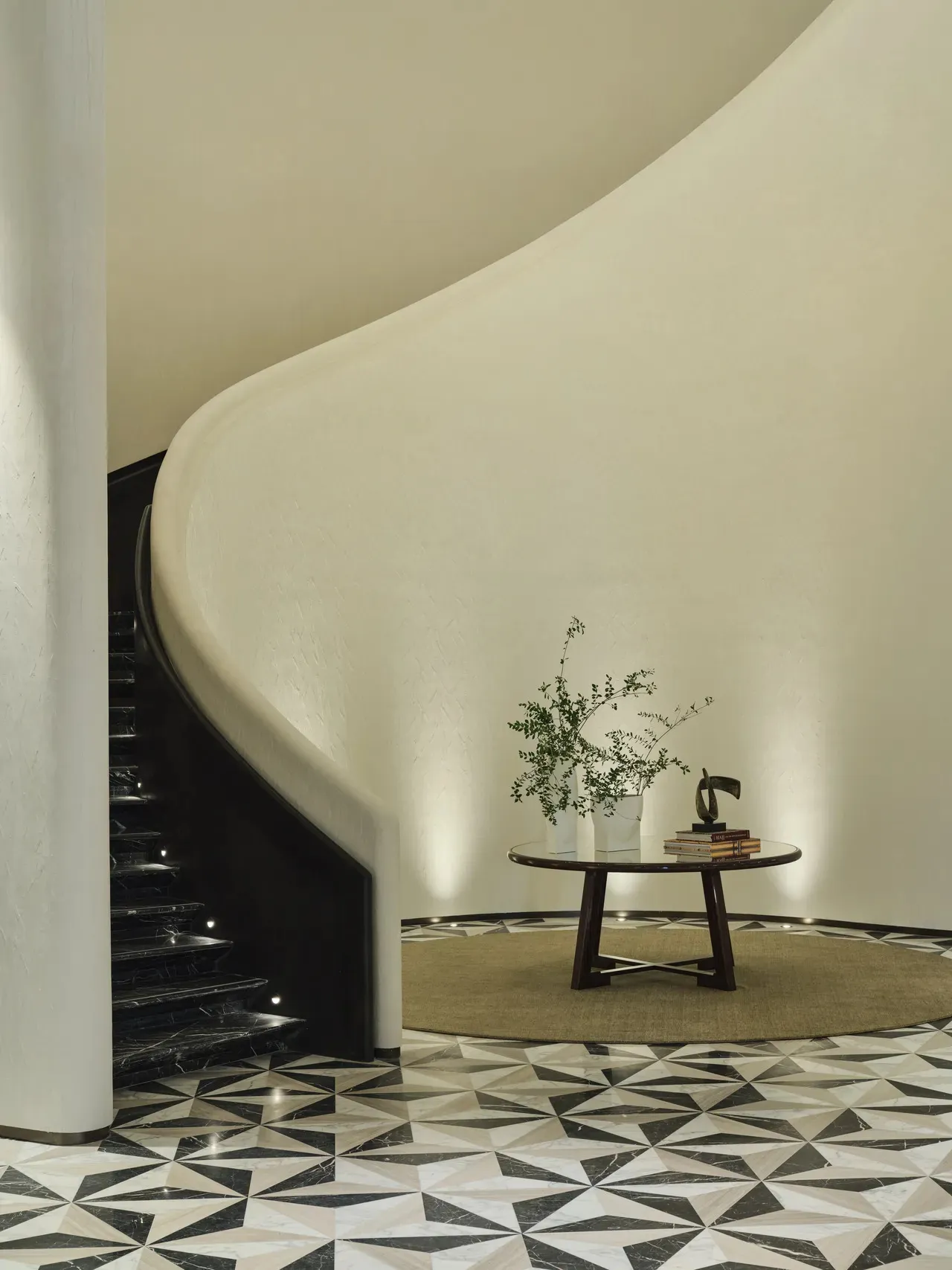
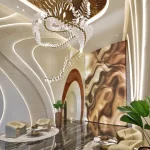
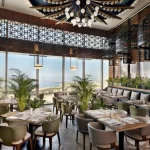
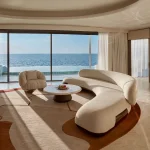
The hotel unfolds as a refined journey of luxury shaped by light, craft, and context. The luxury interiors feature a sophisticated palette of warm neutrals accented with burnt orange tones inspired by the desert, and sea-inspired turquoise brings the Qatari landscape indoors. Rooted in the spirit of karam, the tradition of heartfelt generosity of the interiors weaves contemporary elegance with locally inspired details, from textured surfaces and sculptural lighting to finely crafted materials that echo the region’s cultural heritage.
4. Bambu Indah Tree House, Indonesia
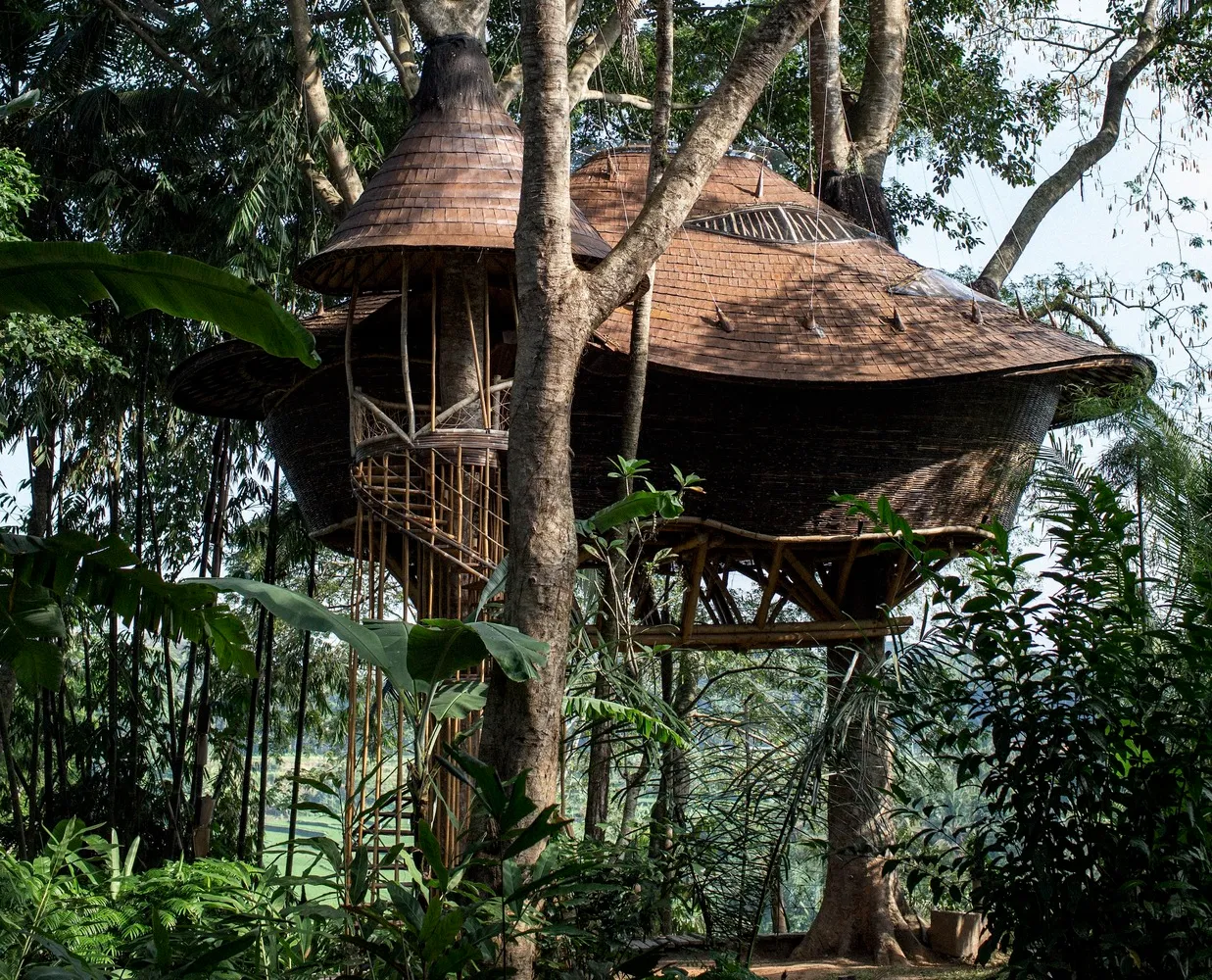
Architect: IBUKU
Location: Kecamatan Ubud, Indonesia
Completed: 2021
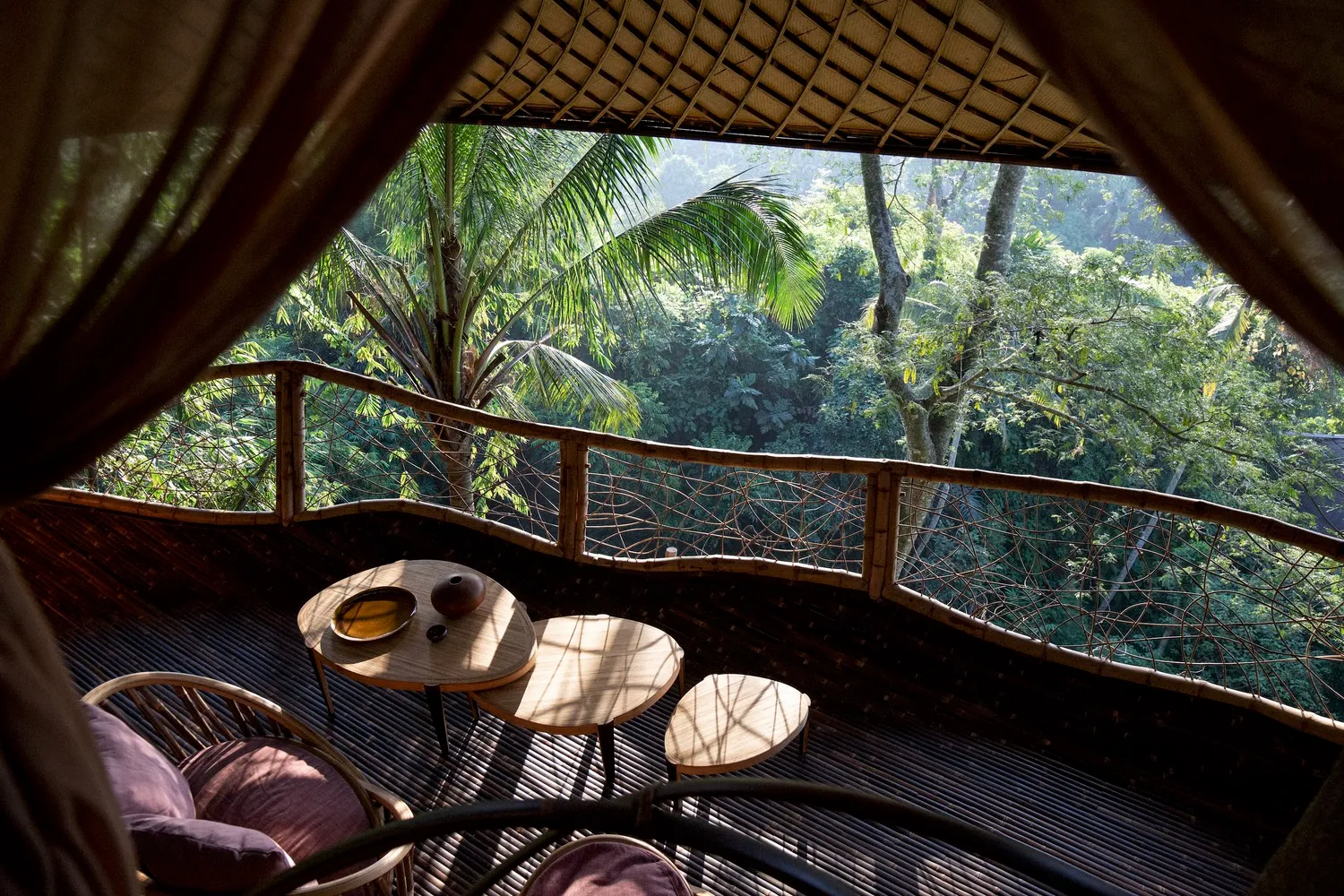
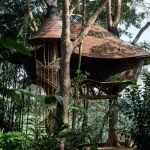
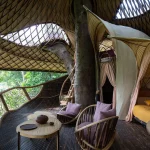
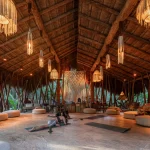
The Bambu Indah Treehouse, designed by the iconic architecture studio IBUKU, is an eco-resort showcasing innovative bamboo architecture. The treehouse is one of the inspiring hospitality architectures, continuing to inspire architects and designers. The characteristic treehouse was designed and built among three interconnected trees within the jungle canopy. The resort’s structure forms a large, basket-like enclosure, where the floor transitions seamlessly into the sloped walls. The iconic feature is the entire structure, conceived and built using bamboo as the primary construction material.
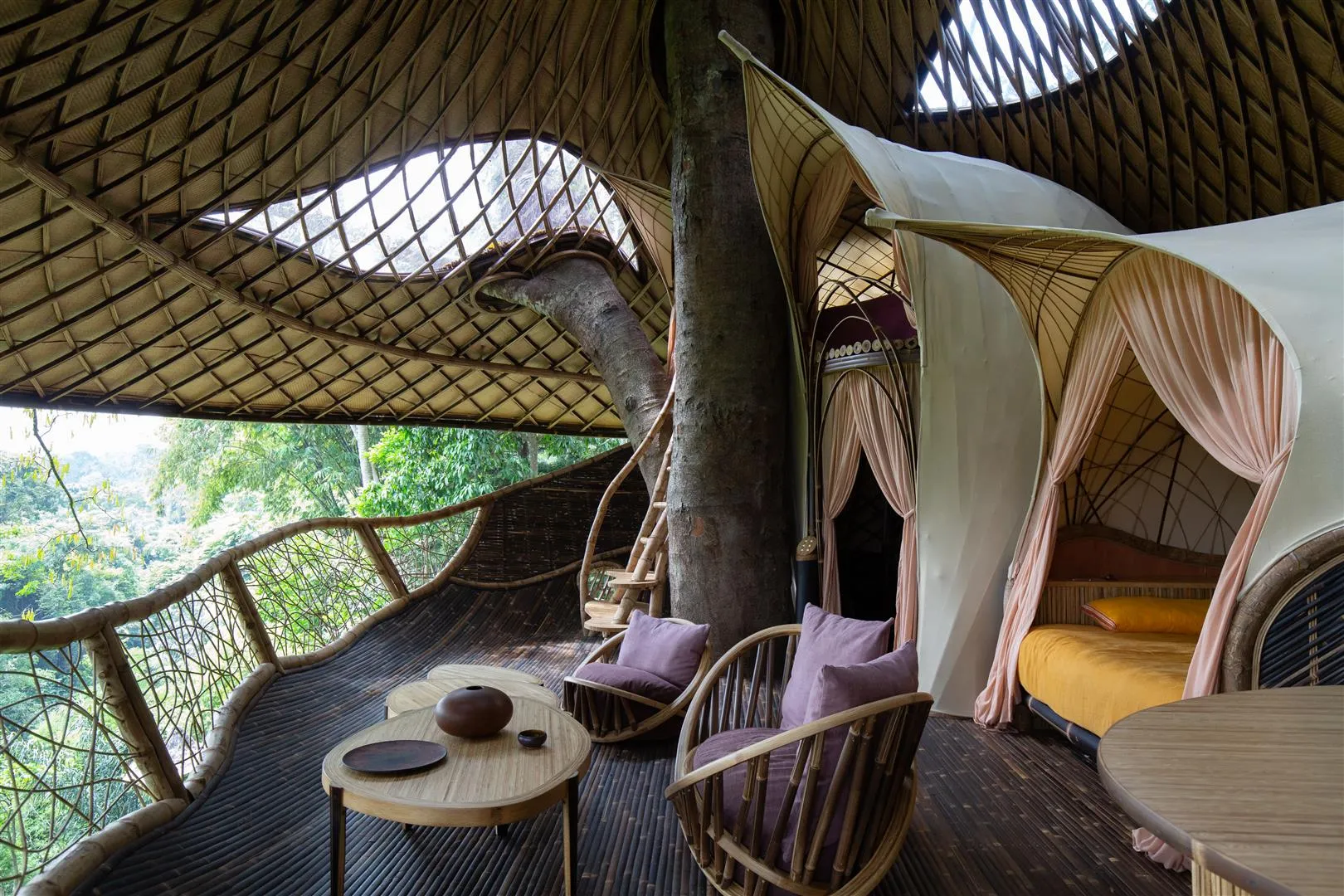
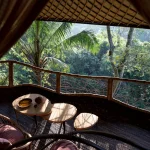
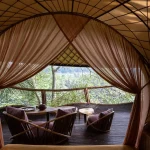
One of the world’s first eco-resorts, it stands as a poetic balance between sustainable architecture and design rooted in nature. Shaped like a vast woven basket, the floor gently rises to form sloping walls, while a light and flowing organic roof wraps around three existing trees. Carefully placed skylights flood the interiors with natural light, resulting in 180-degree sweeping views across the terraced landscape of the Sayan Ridge.
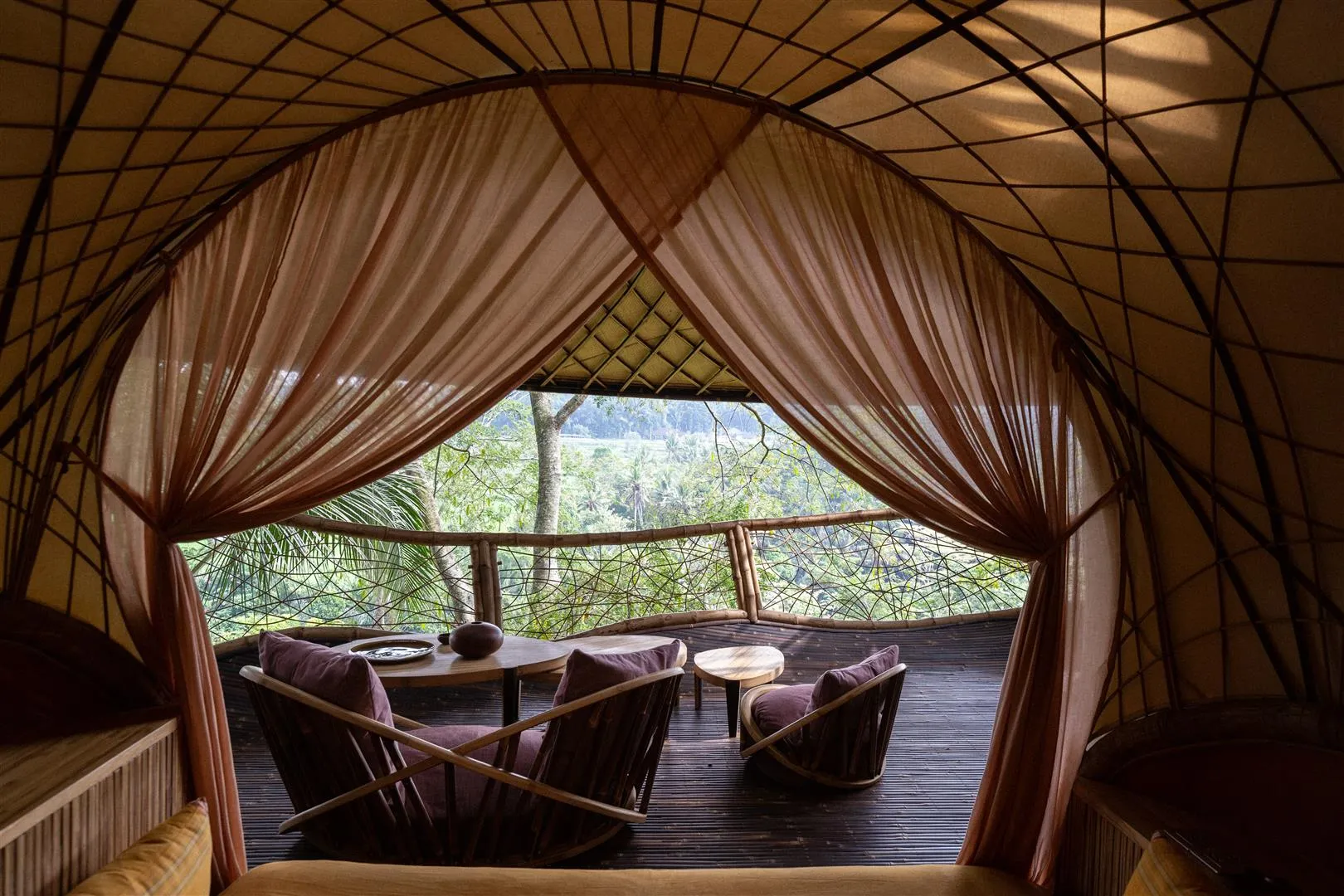
Handcrafted details and organic forms shape an immersive resort, while the interiors showcase how comfort and nature exist in quiet harmony. Every space feels thoughtfully designed, blurring the line between refined luxury and ecological living. The architecture is a benchmark in sustainable design, and the interiors demonstrate how responsible architecture can heighten the sense of adventure while offering a deeply luxurious, nature-connected hospitality experience.
5. Shebara Resort, Saudi Arabia
Architect: Killa Design, Red Sea Design (Developer), Oppenheim Architecture (Concept Ideation), Studio Paolo Ferrari (Interior Design)
Location: Sheybarah Island, The Red Sea Destination
Completed: 2025
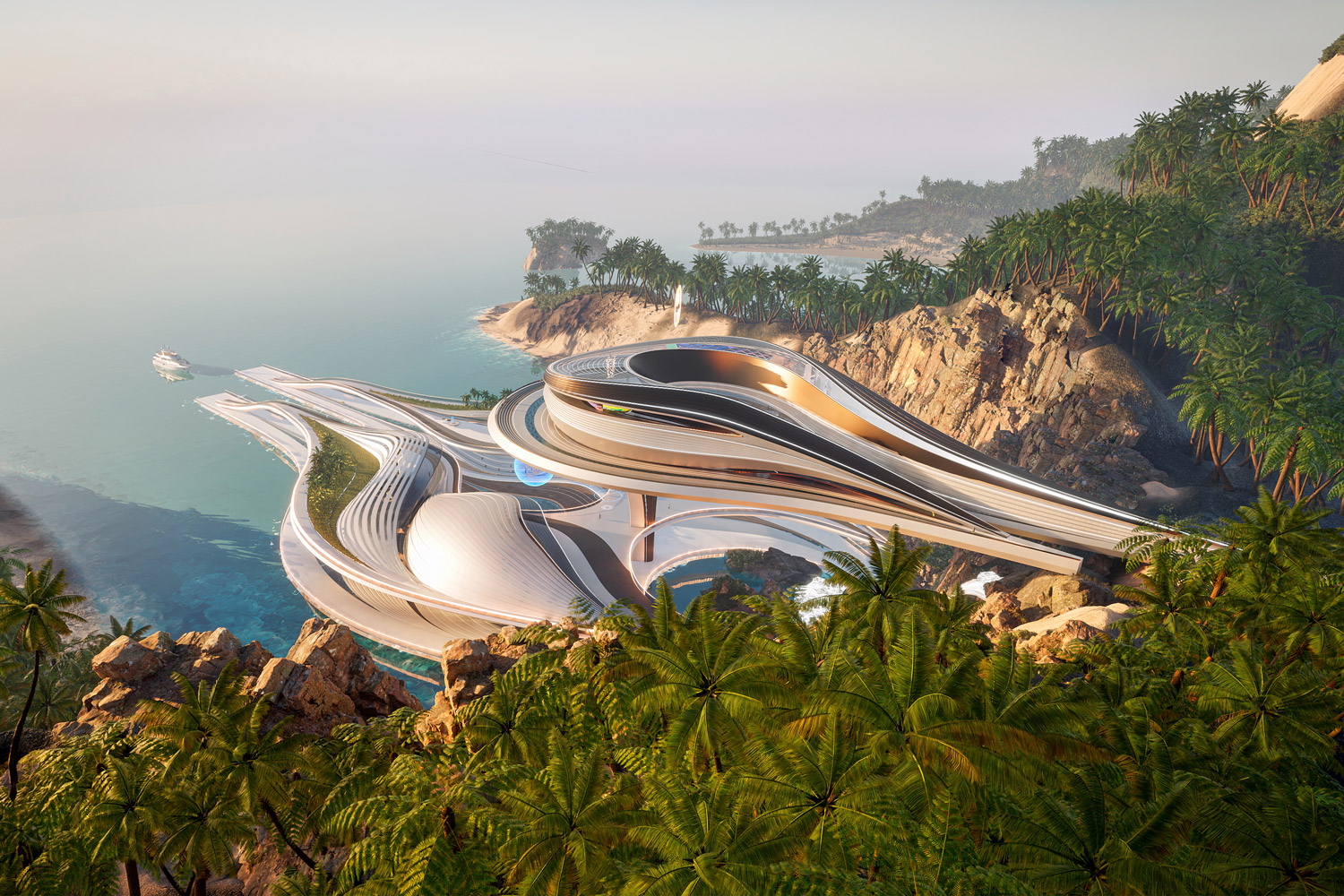
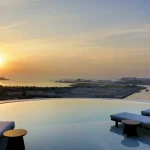
The luxury eco resort situated in Saudi Arabia’s pristine Red Sea landscape, the Shebara Resort, redefines hospitality and luxury through a sustainable lens. Designed by Killa Design and operated by Red Sea Global, the eco-resort functions as a self-sufficient destination while integrating sustainable practices. Embracing the ambitious Zero X vision of zero energy, zero water, and zero waste, Shebara emerges as a futuristic hospitality icon where regenerative design with refined comfort and luxury exist in effortless harmony.
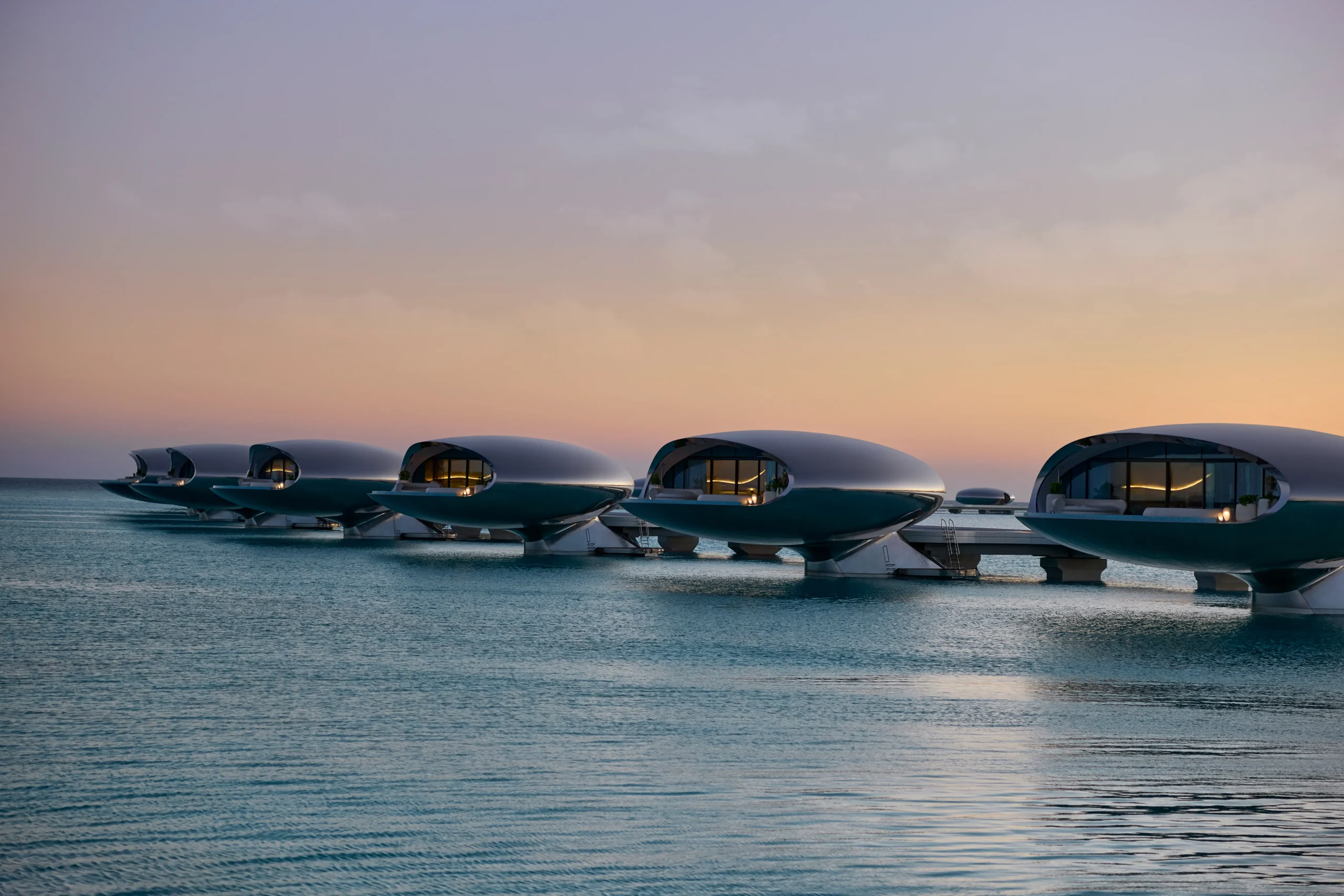
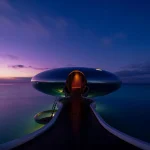
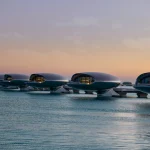
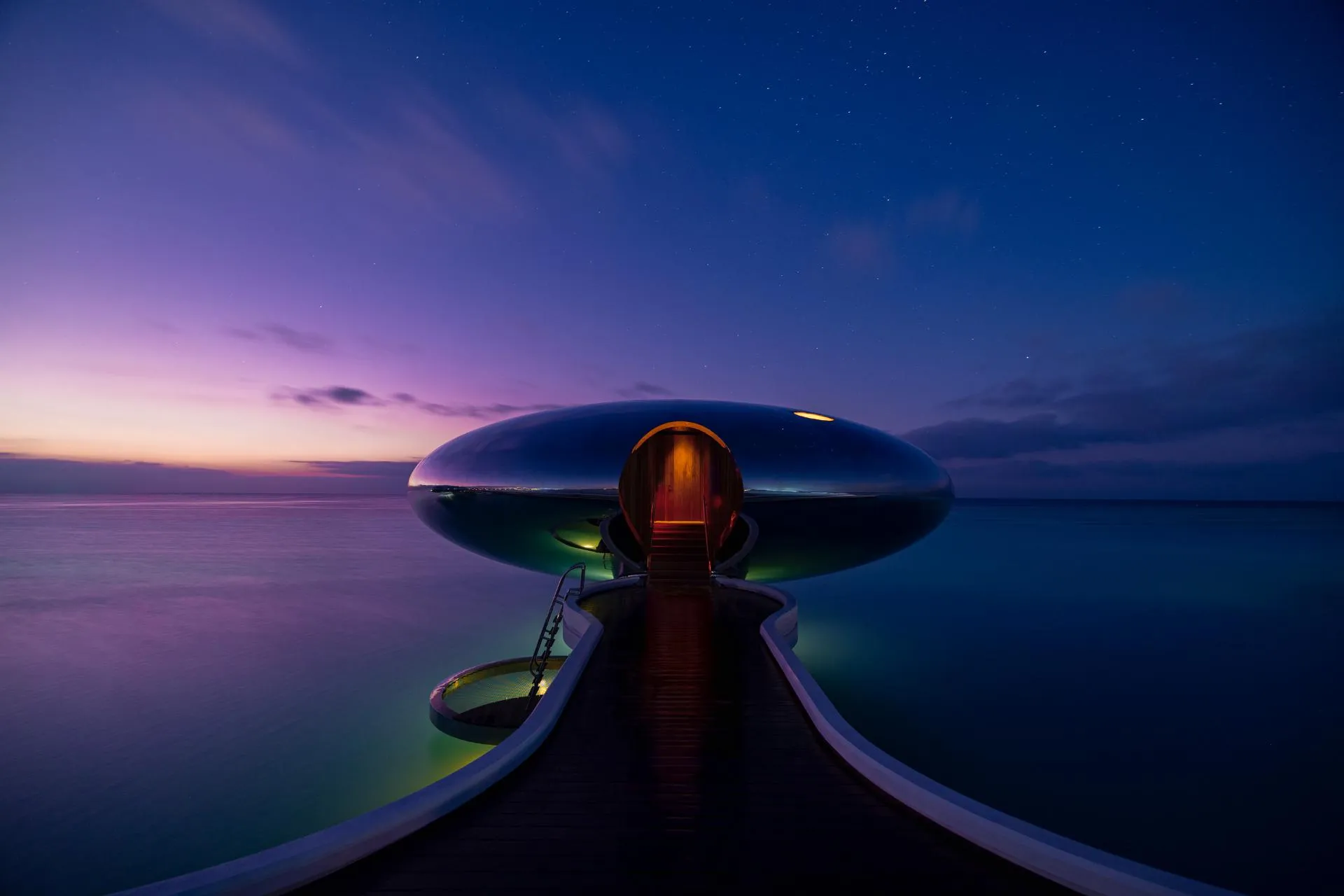
The eco-resort set amid a rich island ecosystem of mangroves, dunes, and coral reefs, Shebara Resort reimagines luxury through a gentle dialogue with nature. Inspired by the quiet birth of a pearl, each villa floats like a luminous orb above the Red Sea, powered entirely by an on-site solar farm and supported by closed-loop water and energy systems. The resort delivers a seamless, future-forward hospitality experience aligned with Saudi Arabia’s Vision 2030, where indulgence and environmental responsibility exist in harmony.
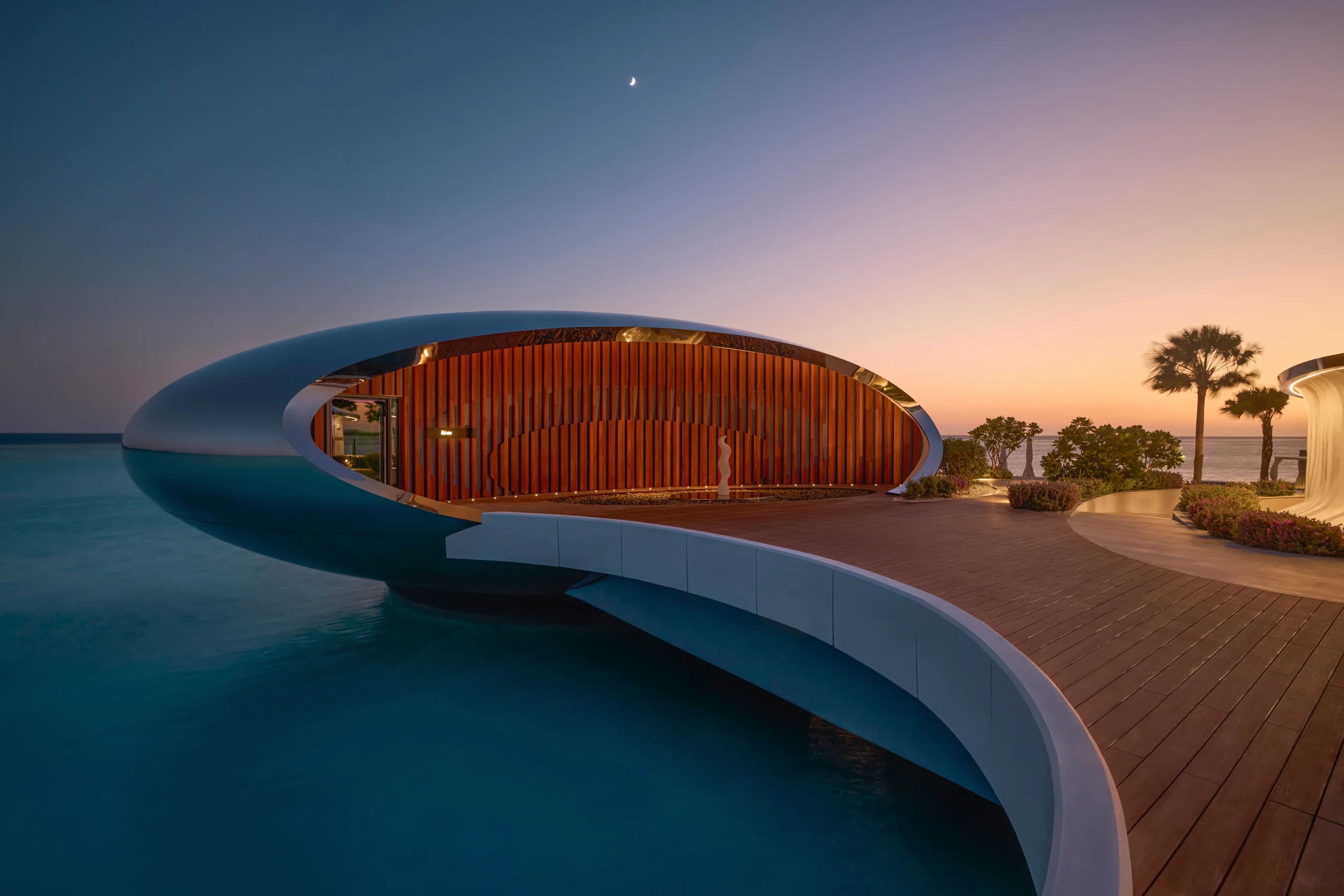
The architecture is clad in mirror-finished stainless-steel villas that shimmer against the sky and sea, gently echoing the changing colors of the Red Sea. To protect the fragile island ecosystem, each villa was fully fabricated offshore and carefully placed on site, allowing the landscape to remain untouched. The carved openings shape private pool terraces with framed ocean views. The carved entrances guide guests inward with a space that senses calm movement with an ease of understated luxury.
6. Dialogue with Nature-Commune STORE, China
Architect: Atelier Global
Location: Houyuan Village, China
Completed: 2025
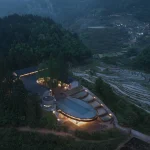
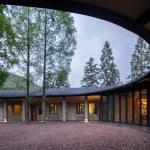
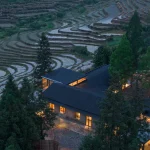
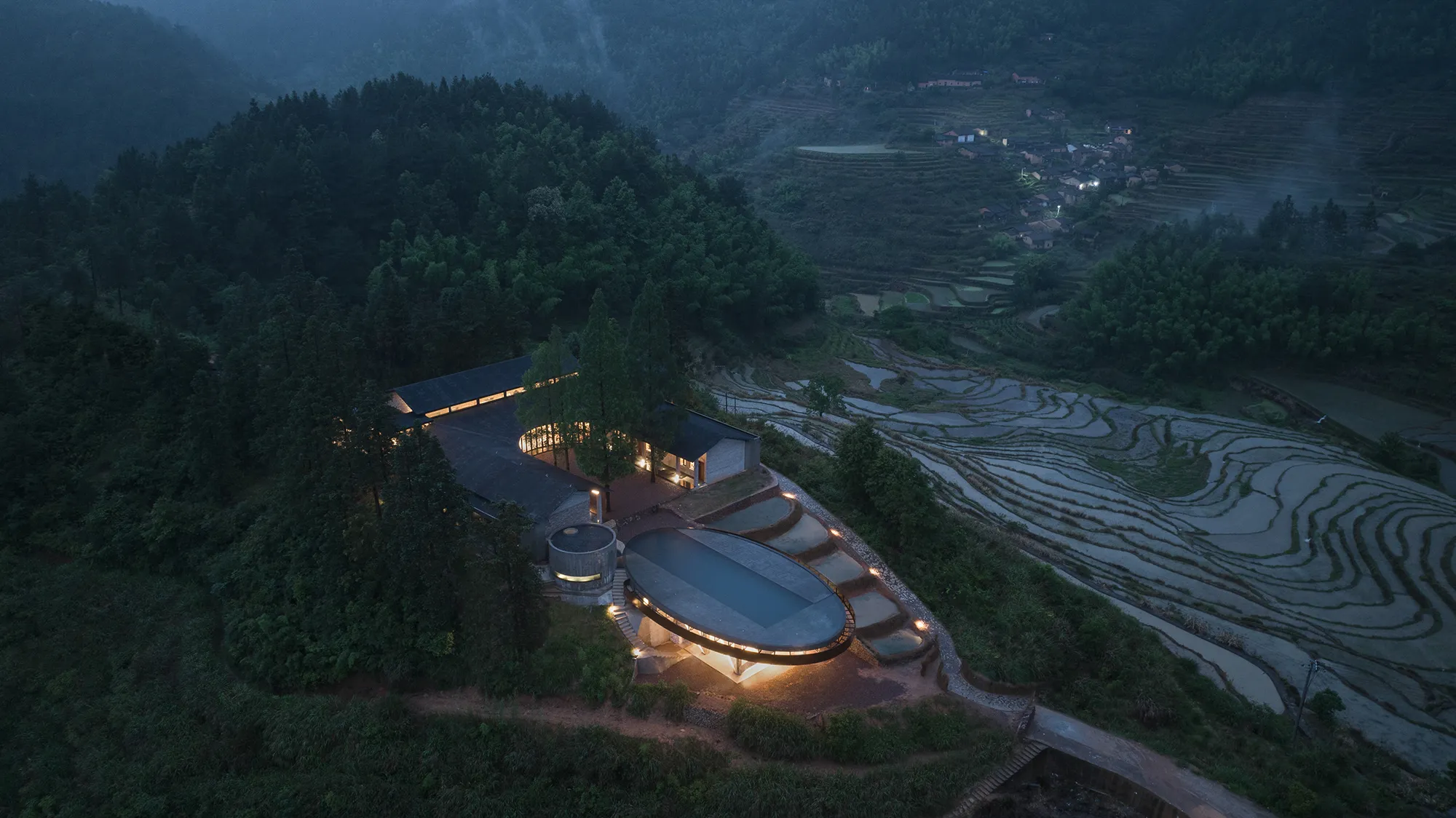
Nestled within the serene landscape of Houyuan Village, the Dialogue with Nature–Commune Store by Atelier Global breathes new life into a former rural school, reimagining it as a soulful hospitality retreat. Framed by misty mountains, bamboo forests, and cascading rice terraces, the architecture gently weaves organic, contemporary forms with a deep respect for agricultural heritage. Designed as a project that celebrates the culture, community, and village life of rice cultivation, offering a design that reconnects with nature and rediscovers a sense of community.
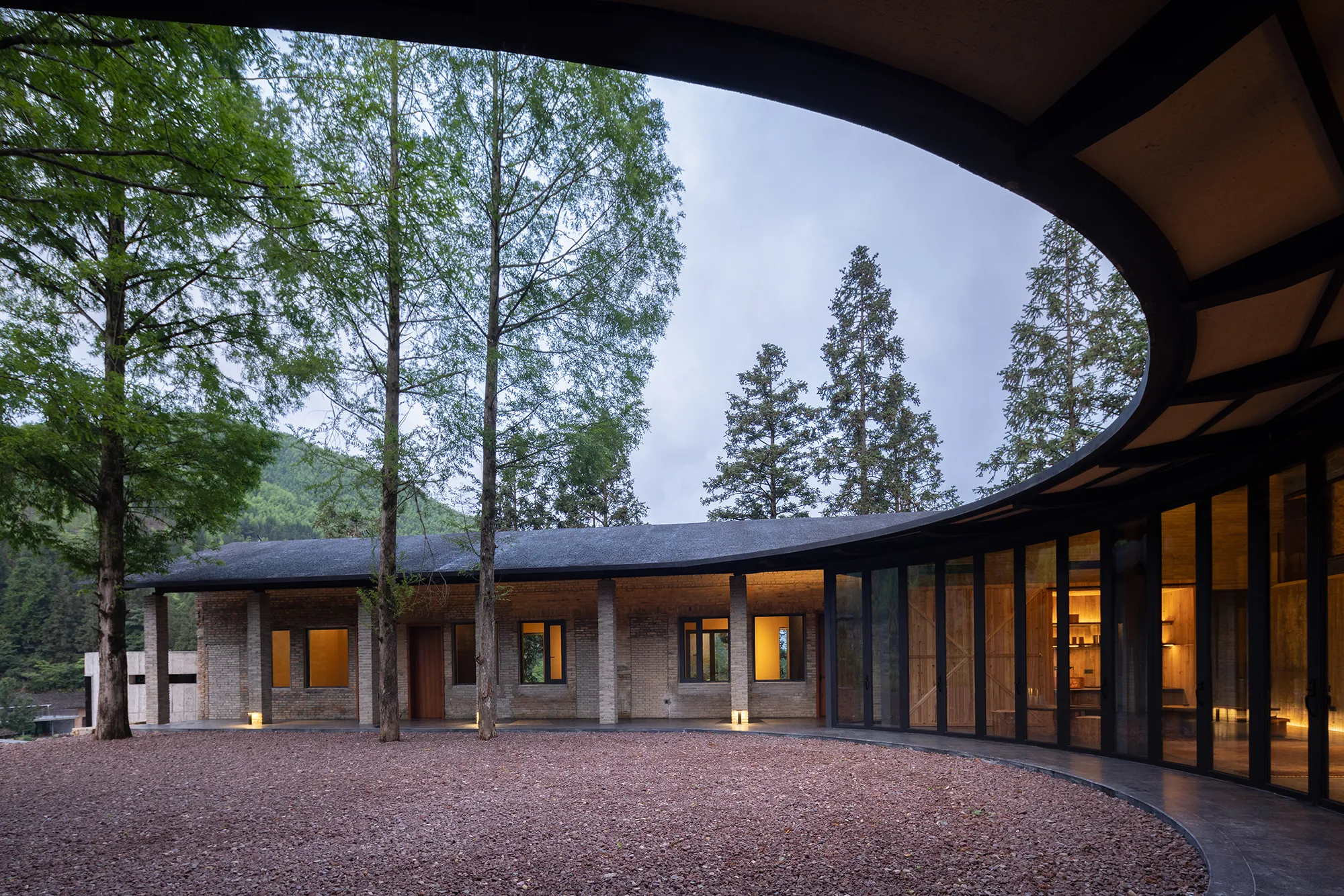
Reimagined from an abandoned rural primary school, The Commune Store emerges as a soulful hospitality retreat in Houyuan Village, gently reviving the region’s deep-rooted rice culture. Shaped as an architectural dialogue with nature, the design feels grounded in community, where the design is shaped by simplicity and warmth through the spatial experience from former classrooms reinterpreted as intimate spaces. By preserving the original structure and carefully reshaping its layout, the design breathes new life into the building, allowing history, landscape, and everyday life to seamlessly integrate.
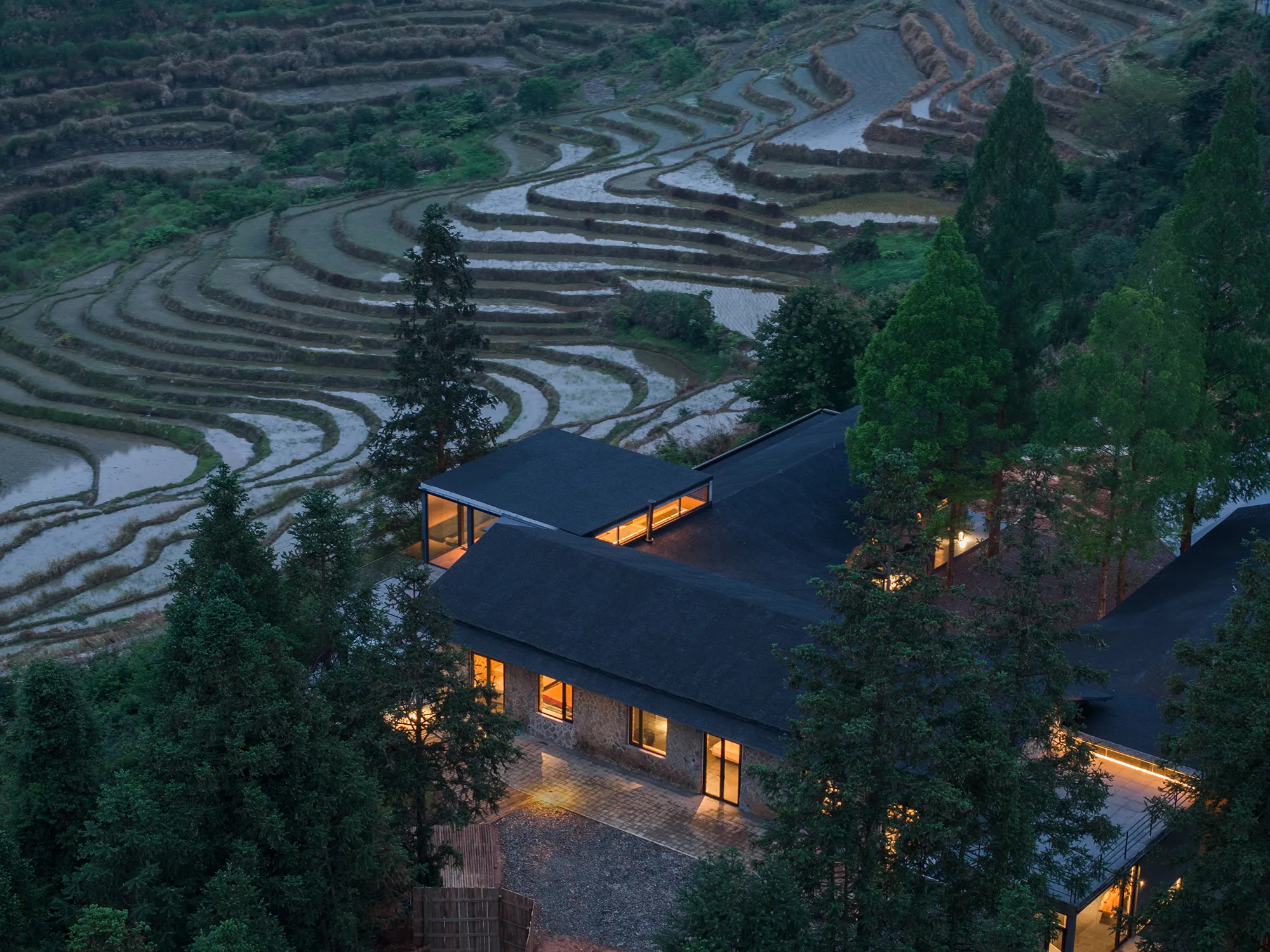
At the heart of the interiors, a light-filled communal living room unfolds as a welcoming core, with former classrooms thoughtfully reimagined as guest rooms around it. The design flows in a gentle circular rhythm, inspired by terraced fields and mountain contours, shaping an oval infinity pool and circular hot spring that settle naturally into the landscape. Grounded material choices, such as textured black gravel finishes, blend function with visual aesthetics. Sustainability is embedded into every layer of the experience, from shaded transitional spaces that promote natural ventilation and soften sunlight with eco-friendly materials to the recycling of materials.
7. Ciel Dubai Marina, Dubai
Architect: NORR
Location: Dubai, UAE
Completed: To be Completed in 2025
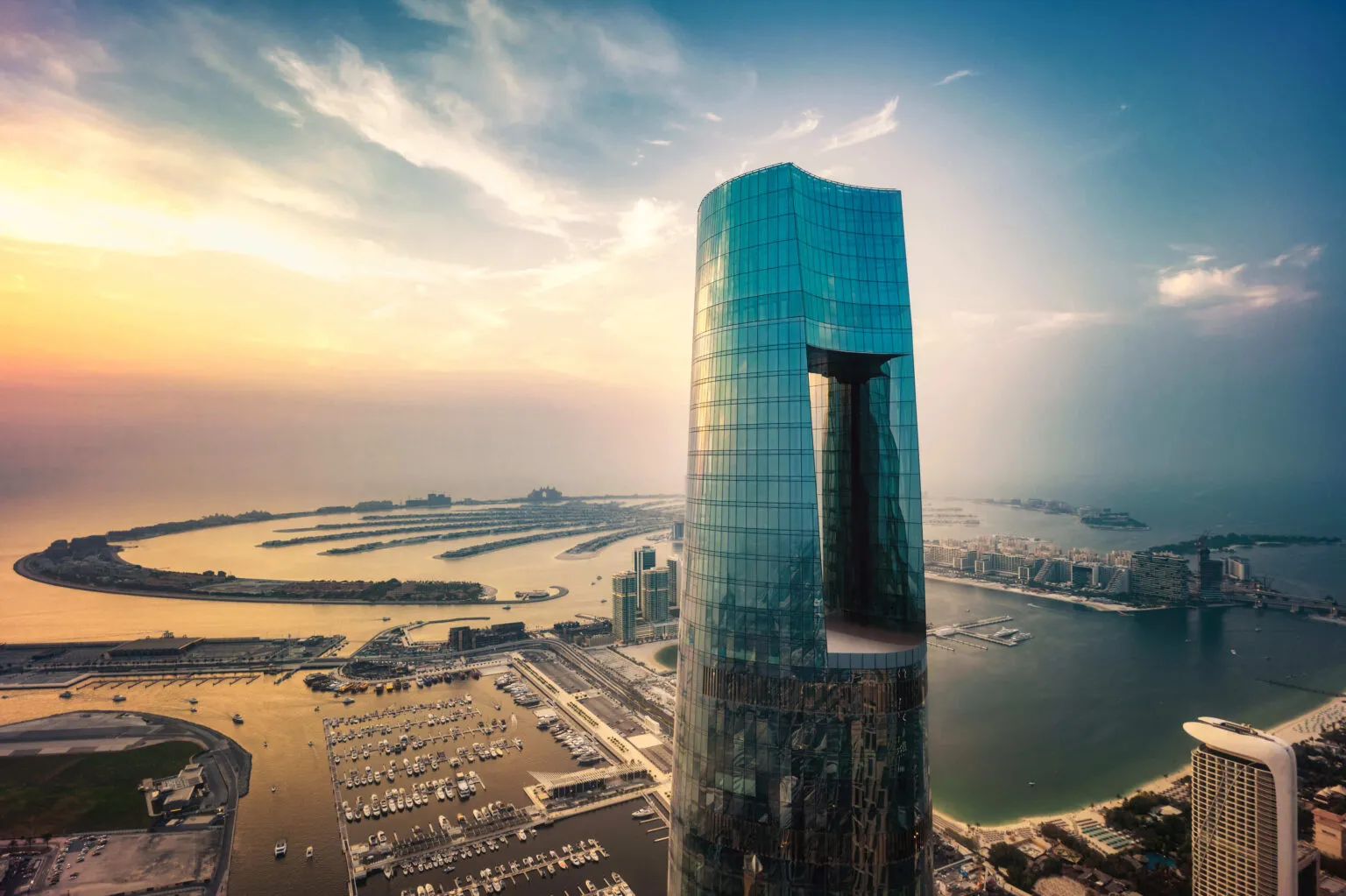
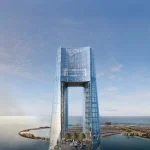
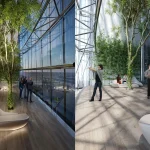
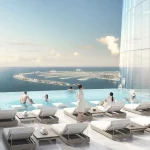
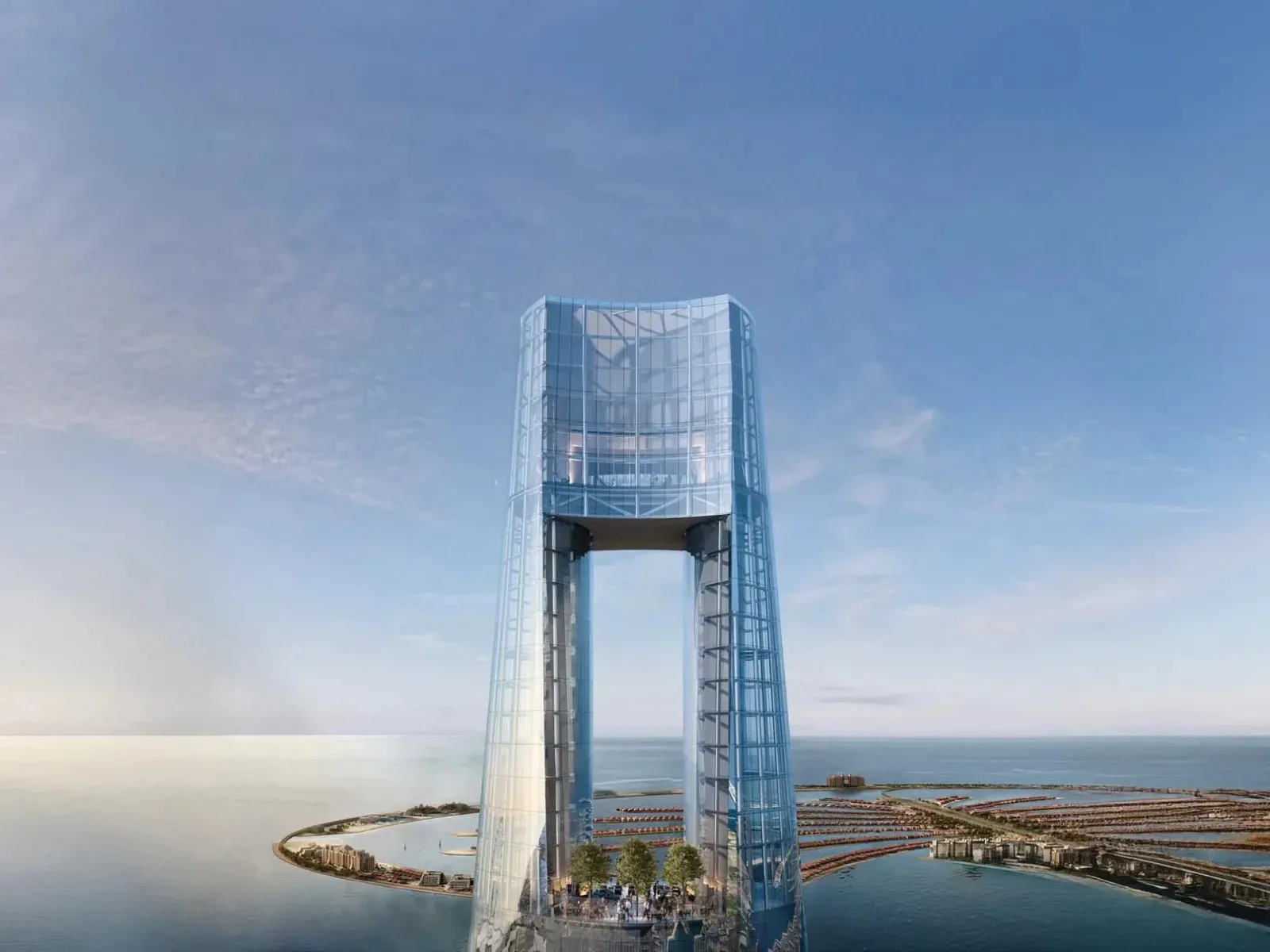
Ciel Dubai Marina is one of the most ambitious hospitality architectures dominating the Dubai skyline, featuring one of the tallest hotels in the world, and is expected to be completed by 2025. Designed by NORR Group, the tower is composed of 81 floors, reaching an astounding height of 373 meters, setting a global benchmark for hotel architecture. The hotel tower features a vertically stacked architecture with enclosed gardens throughout the entire building. The façade and design are singular in form, although the detailing of the tower and podium is intentionally abstract and minimalist.
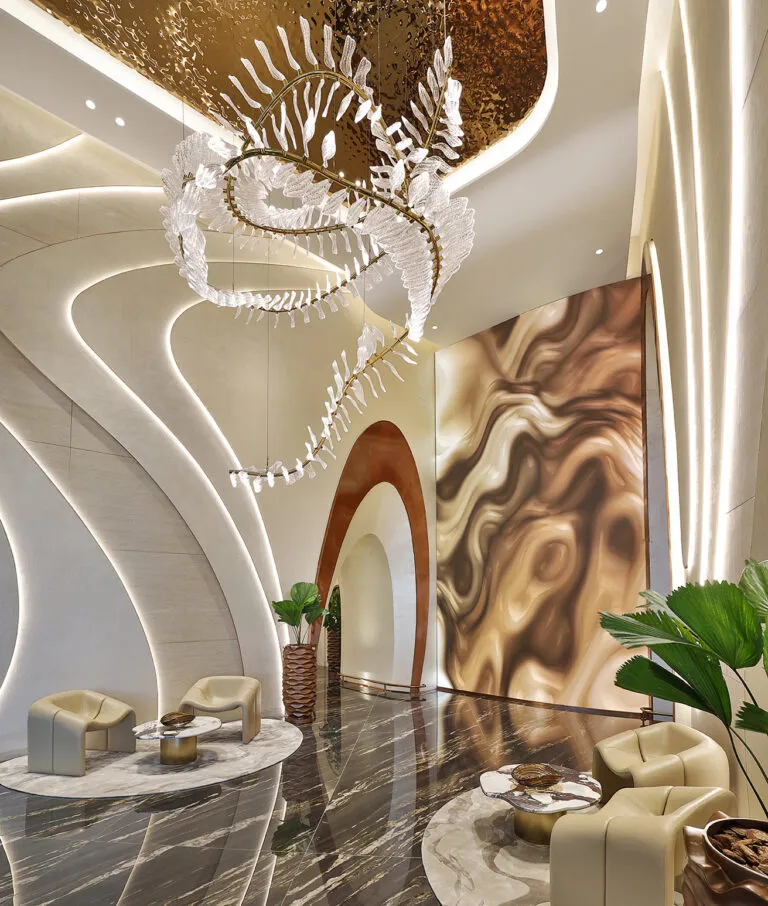
The architecture of Ciel is the result of a deeply collaborative design process where architects and engineers worked in close balance to resolve ambitious design challenges, including efficiency, sustainability, naturally ventilated terraces, and complex bent glass. construction. The tower’s evolving form reflects an iterative approach that pushes architectural boundaries while balancing performance.
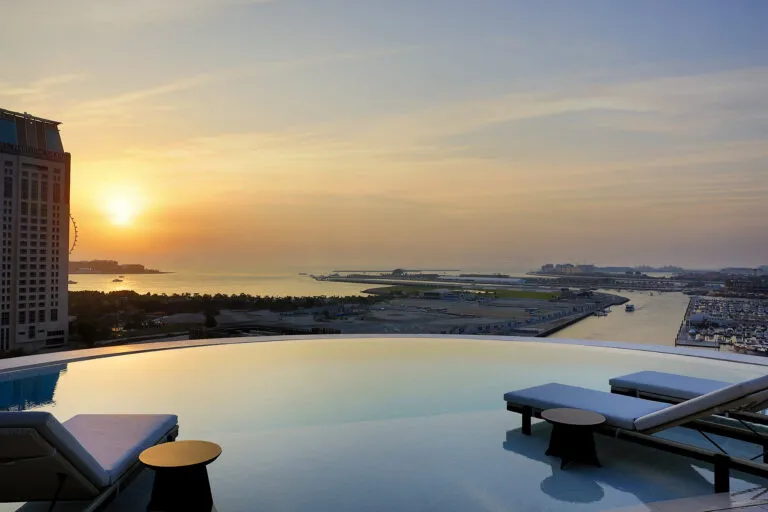
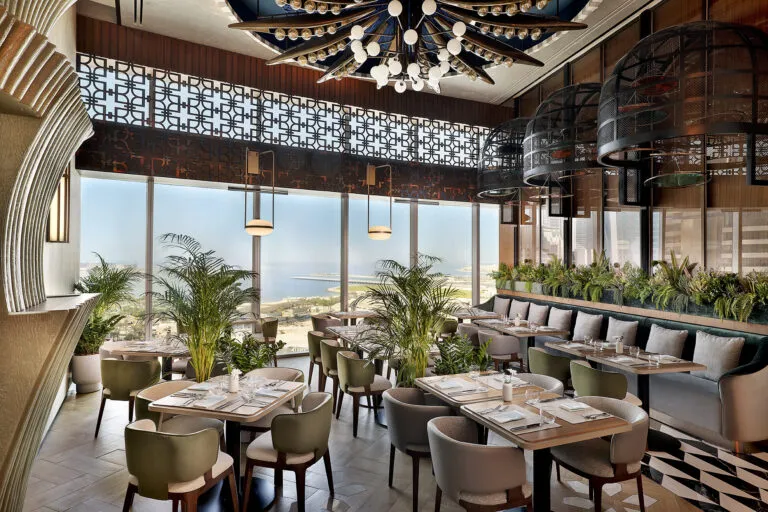
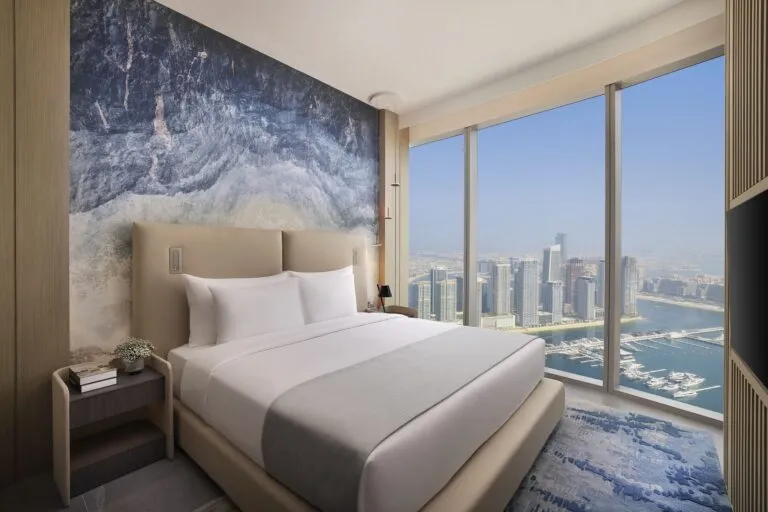
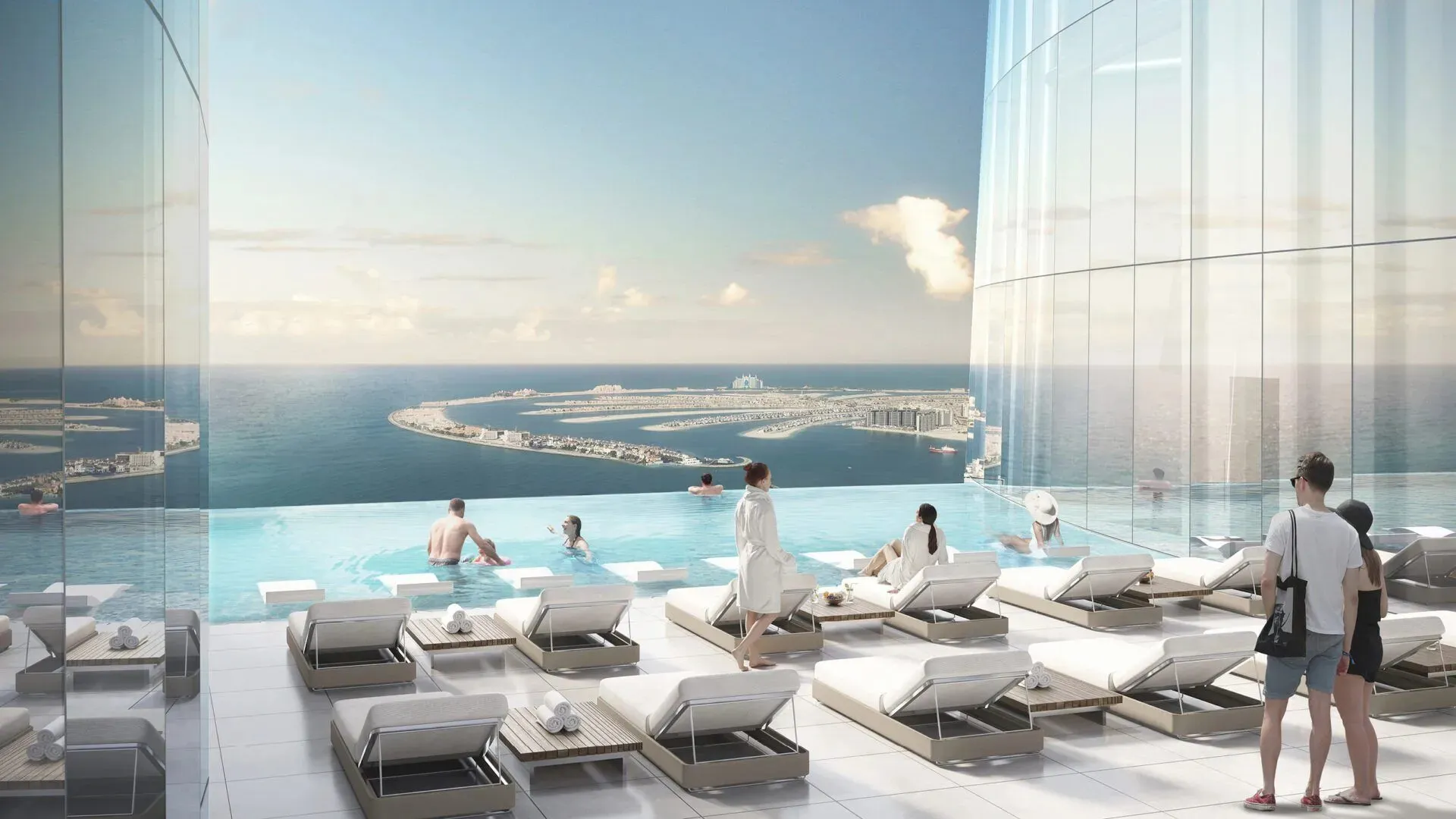
The hotel can host up to 1,000 guests in rooms and suites and features a 300-meter-tall atrium within the tower. The topmost level of the hotel is designed with elevated social spaces, including sky terraces, an infinity pool, and panoramic dining and lounge venues. The top level also features an observation deck with dramatic views of the horizon.
8. Six Senses Kyoto, Japan
Architect: BLINK Design Group
Location: Kyoto Higashiyama district, Japan
Completed: 2024
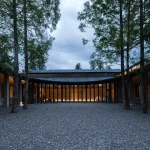
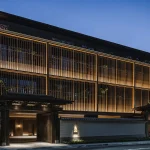
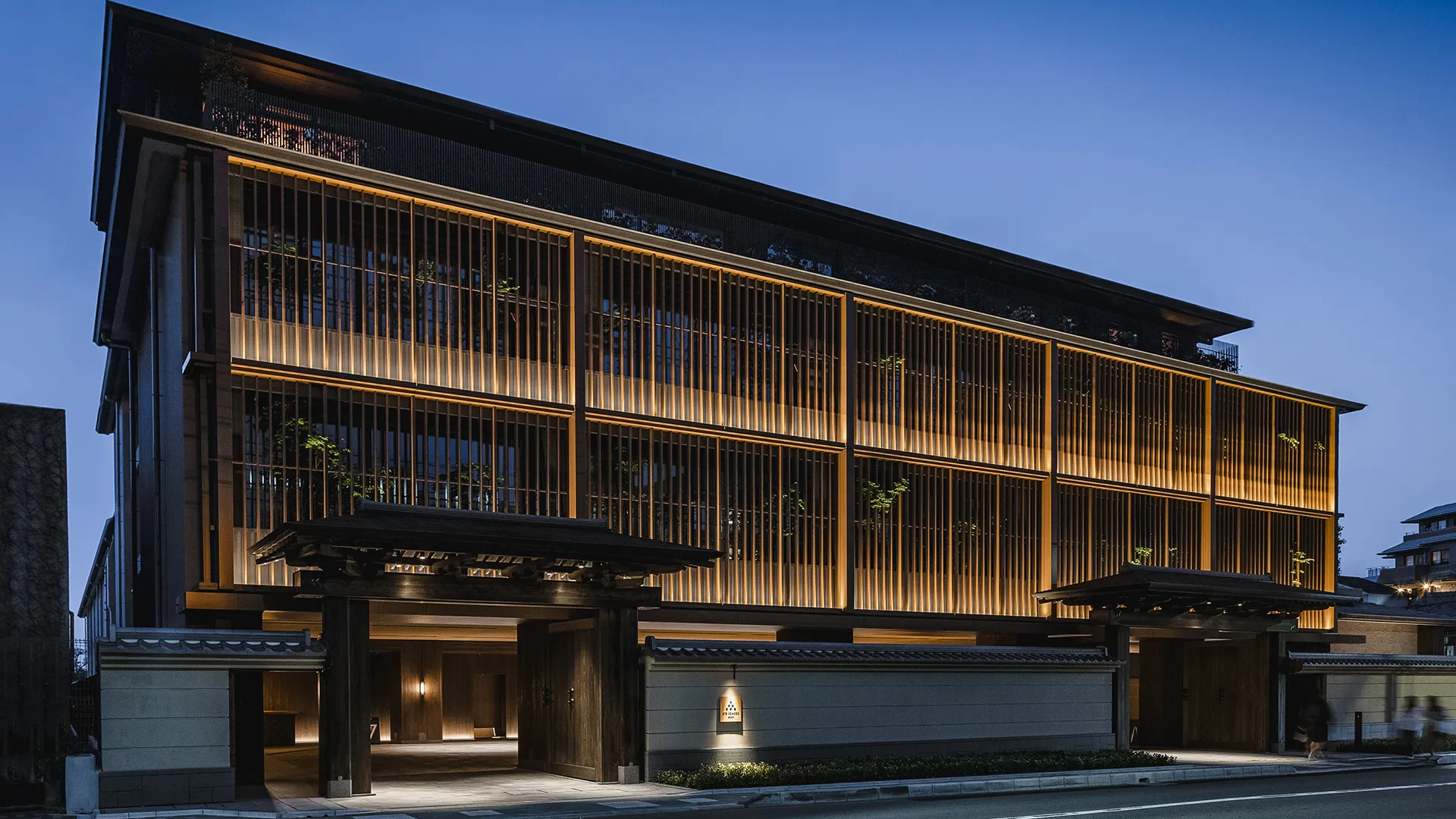
Designed by BLINK Design Group under the creative direction of Clint Nagata, Six Senses Kyoto was officially opened in 2024, marking the studio’s debut in Japan. The architecture is rooted in the cultural soul of Kyoto’s Higashiyama district; the hotel weaves together Japanese tradition, wellness, and sustainability into a refined hospitality experience. Drawing inspiration from Japanese folklore and time-honored crafts, the architecture and interiors reinterpret old-world elegance through a contemporary lens, through an immersive retreat that feels deeply connected to its rooted yet modern luxury in a sense.
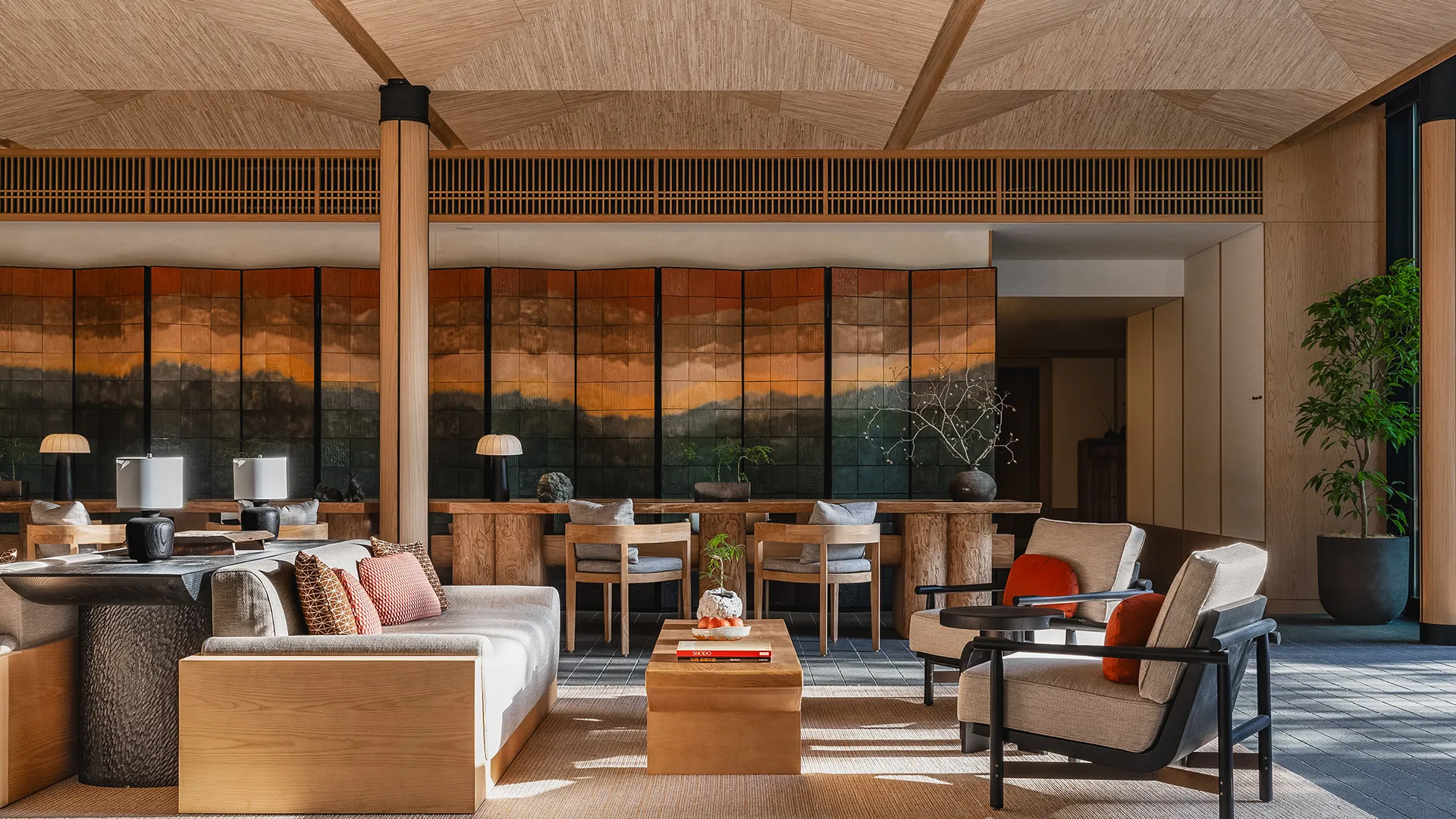
The hotel’s architecture strikes a graceful balance between tradition and modernity, with an exterior that reinterprets classic Japanese forms through a contemporary sense. Inside, the spaces unfold with a sense of ‘Asobi gokoro,’ a spirit of playful curiosity expressed through subtle details, layered textures, and Japanese poetic references. Whimsical details drawn from Kyoto’s heritage, folklore, and literary traditions are gently woven into the design, creating interiors that feel both refined and lighthearted to the visitors.
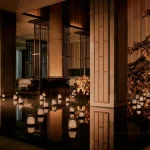
The hotel’s architecture unfolds as an immersive journey where cultural narrative and contemporary comfort blend seamlessly. From the moment of arrival, each space has been thoughtfully designed, from lobby spaces overlooking views into a calm inner courtyard, with gently winding pathways that invite exploration and pause.
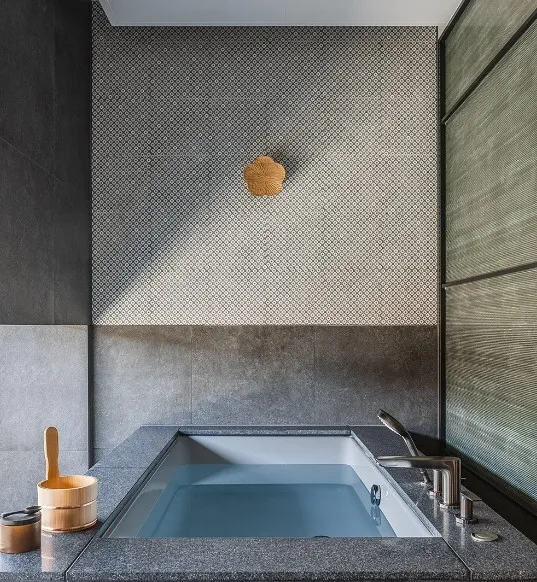
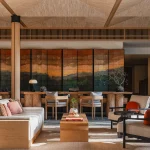
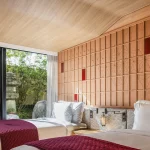
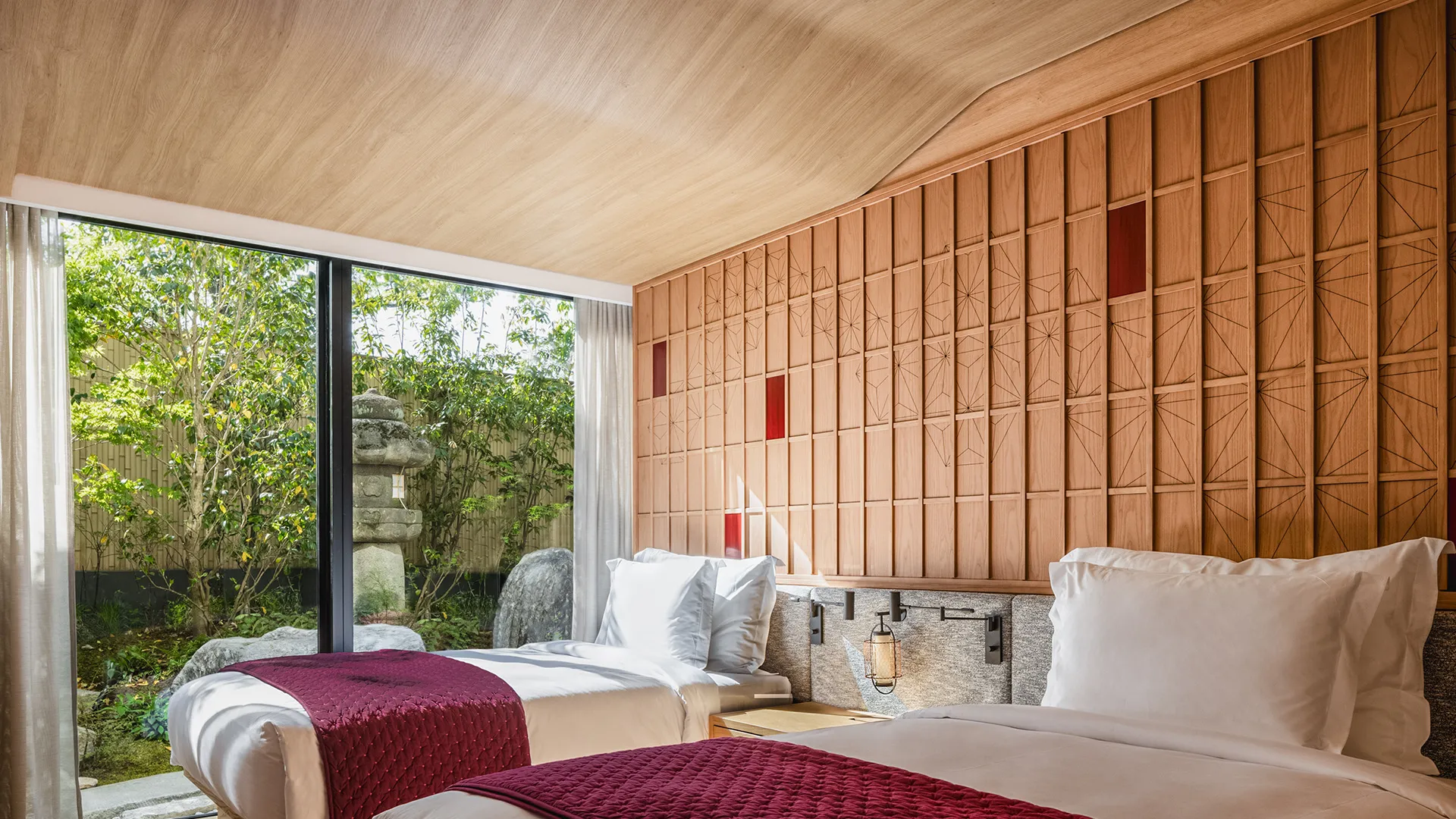
Natural textures, earthy materials, and a muted palette foster a quiet dialogue with nature, while subtle design motifs inspired by traditional Japanese patterns bring a sense of playfulness and heritage to both rooms and shared spaces. Earthen textures, natural materials, and interior tones that encourage a connection to nature in interiors.
9. Aman Nai Lert, Thailand
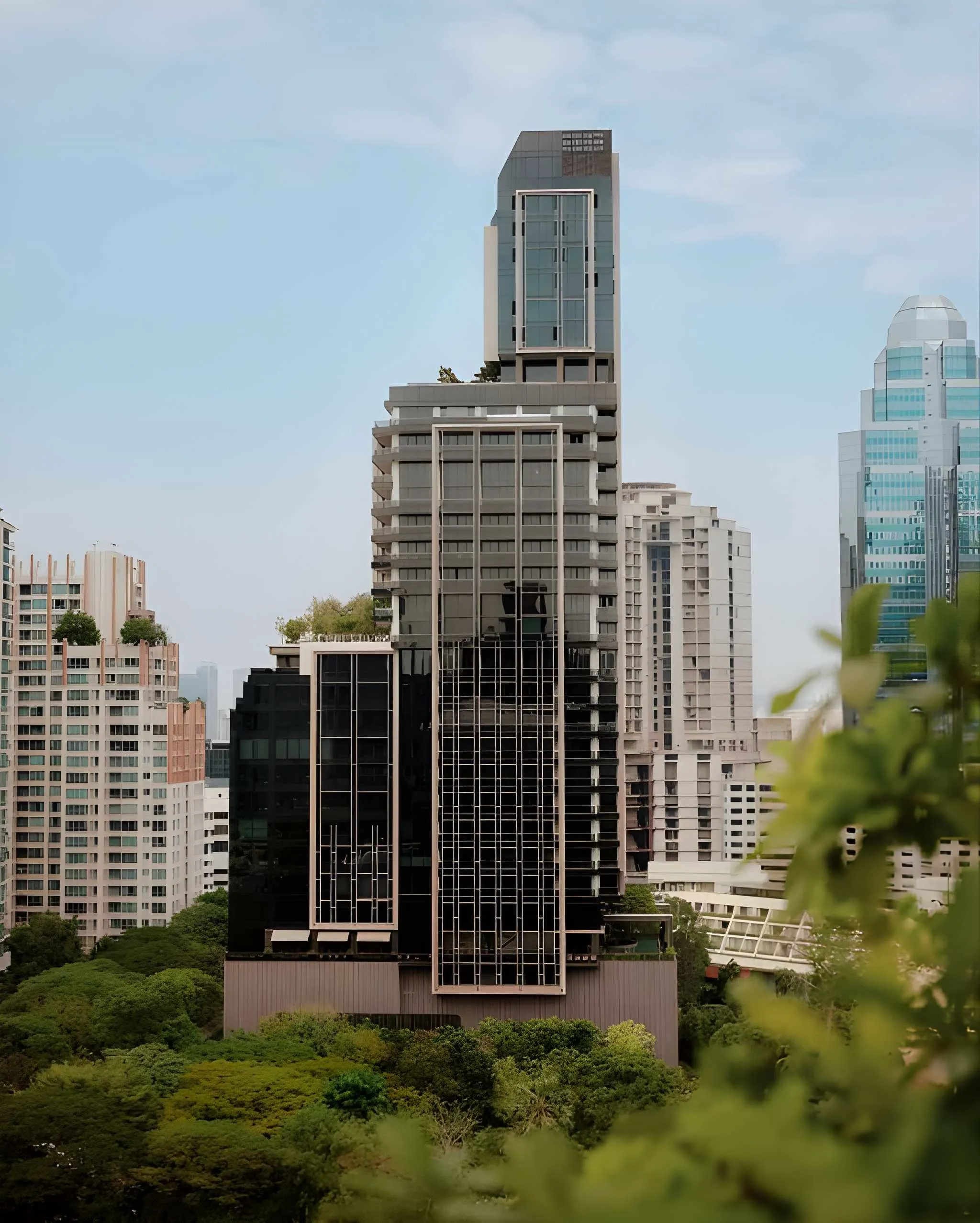
Architect: Denniston | Jean Michel Gathy
Location: Bangkok, Thailand
Completed: 2025
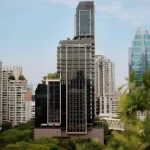
Aman Nai Lert is an exquisite urban hospitality sanctuary in the heart of Bangkok, offering an intimate collection of 52 suites designed by Jean-Michel Gathy’s studio, Denniston. Rooted in Thai cultural traditions and shaped by contemporary restraint, the architecture creates a serene dialogue with the surrounding Nai Lert Park. Interiors by David Schoonbroodt transform the hotel into a layered, timeless architectural masterpiece that balances heritage, landscape, and modern luxury.
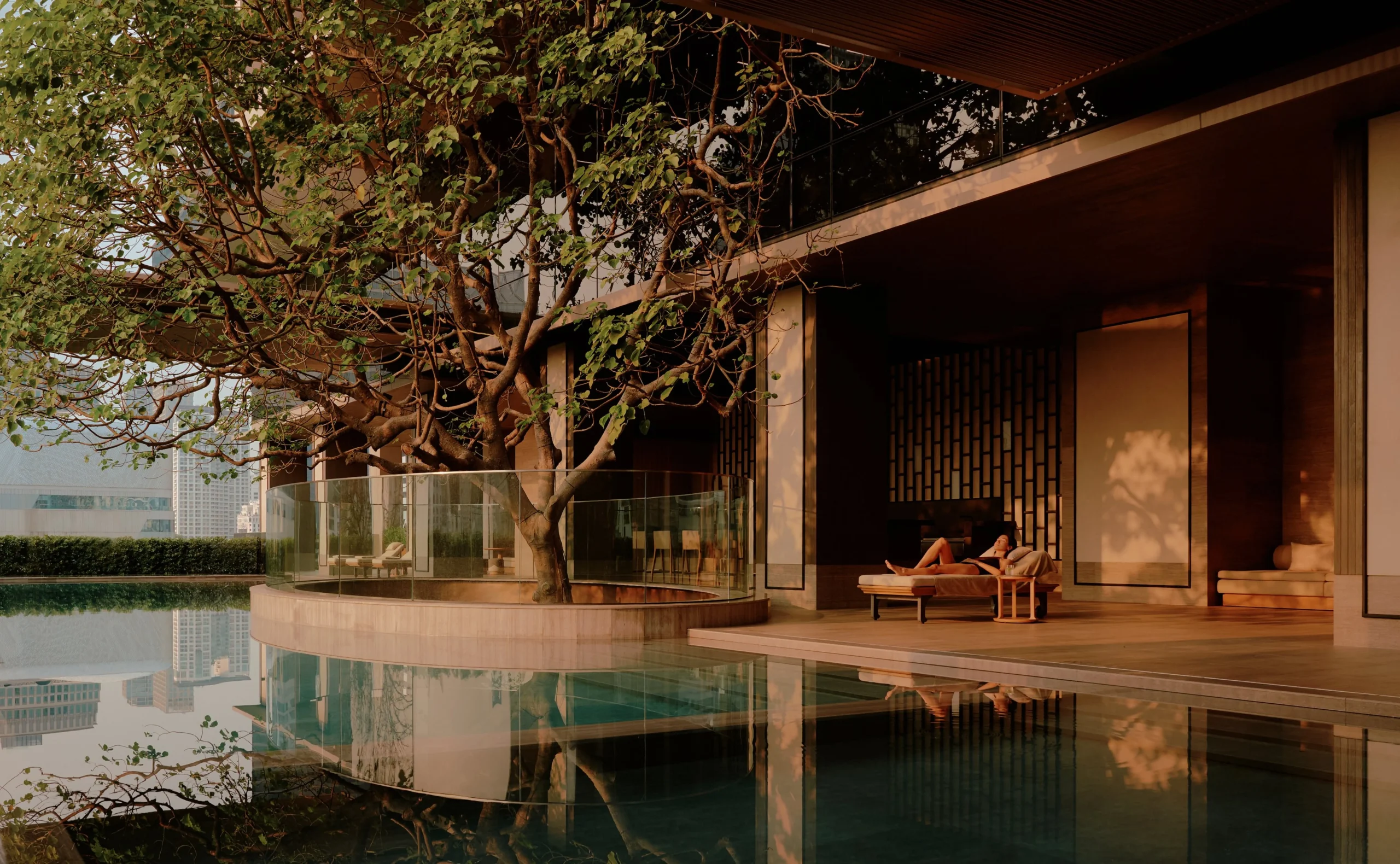
At the core of the hotel’s design stands the century-old Old Rain Tree, which shaped the building’s orientation, structure, and symbolic meaning. The architect’s respect for the architecture deeply connected to Nai Lert Park, Khun Pag, agreed to the site’s development on one unwavering condition: that the beloved tree be preserved, even if the architecture had to adapt around it.
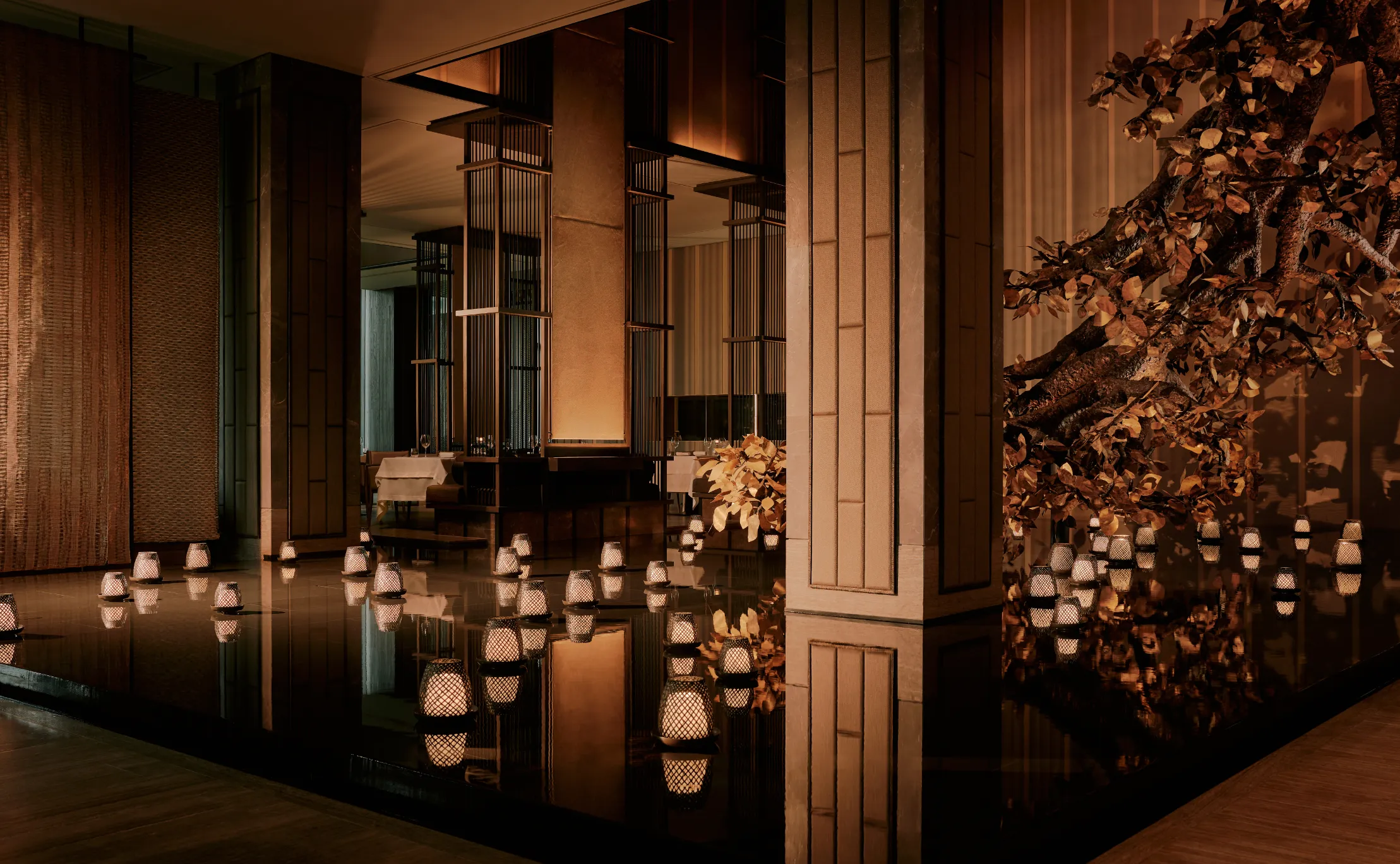
Inside, this natural gesture is echoed by a dramatic metal tree sculpture suspended within a three-storey atrium. Conceived as an artistic interpretation rather than a literal replica, the sculpture grows downward, embodying a thoughtful dialogue between nature, craft, and architecture.
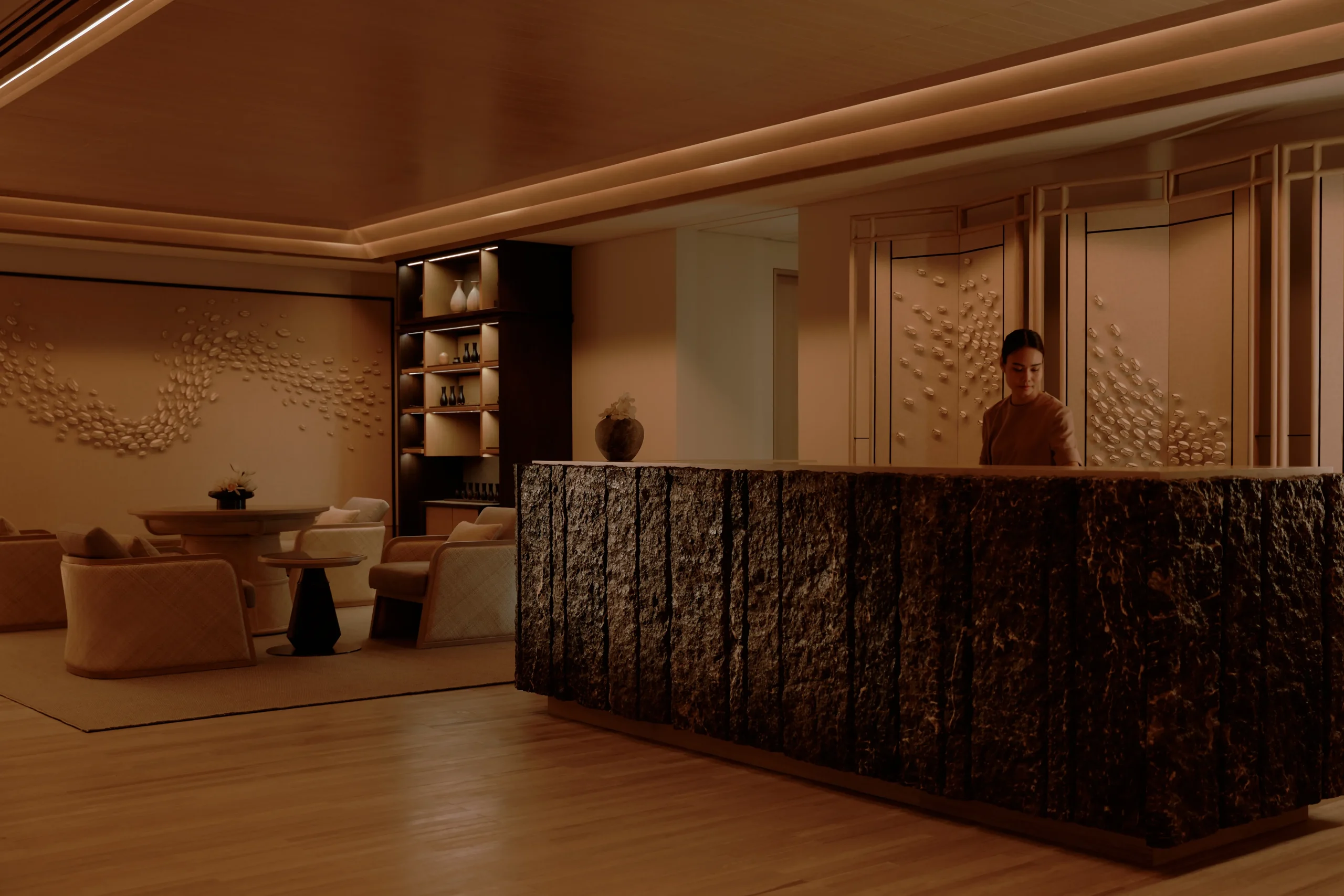
The hotel features 52 generously sized suites, each spanning 94 square meters, with floor-to-ceiling windows that frame serene garden and city views. Interiors balance traditional influences with contemporary refinement, creating calm, elegant spaces that feel both rooted and modern. Aman’s signature sense of refined simplicity is expressed through bespoke furnishings by local artisans, curated antiques, and thoughtfully composed social spaces.
10. Hotel Naya Bacalar, Mexico
Architect: AM Arquitectura
Location: Bacalar, Quintana Roo, Mexico
Completed: 2024
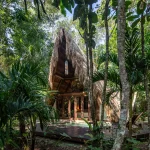
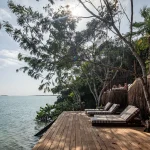
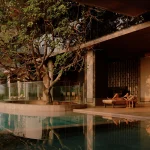
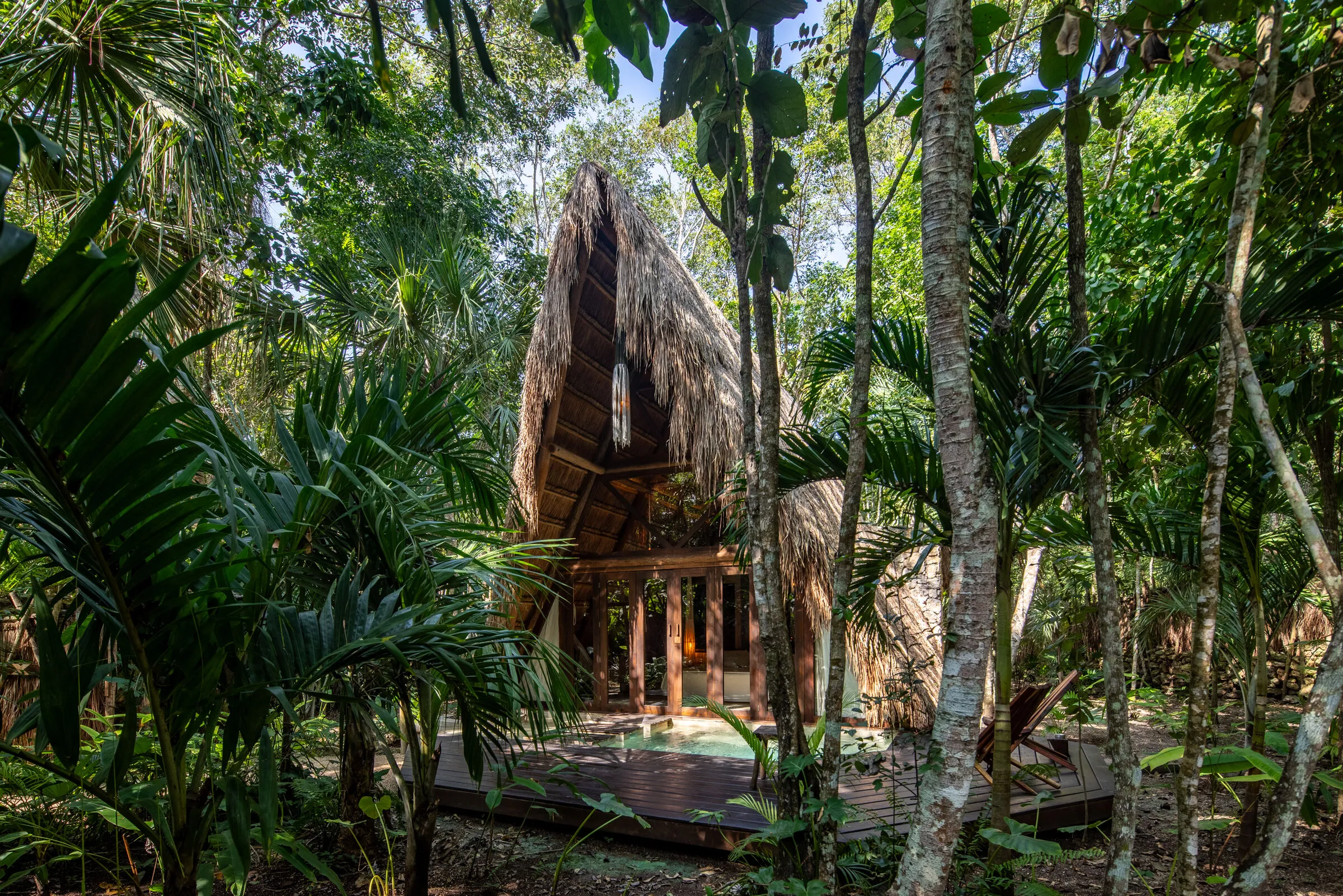
Hotel Naya Bacalar, designed by AM Arquitectura, is a sustainable boutique resort located along the shores of the Bacalar Lagoon in the Mexican Caribbean. The region is defined by lush landscapes, with dense jungle, limestone terrains, and vibrant aquatic ecosystems. The hotel positions itself within the context not as a hindrance but as a seamless insertion within the jungle’s lush fabric.
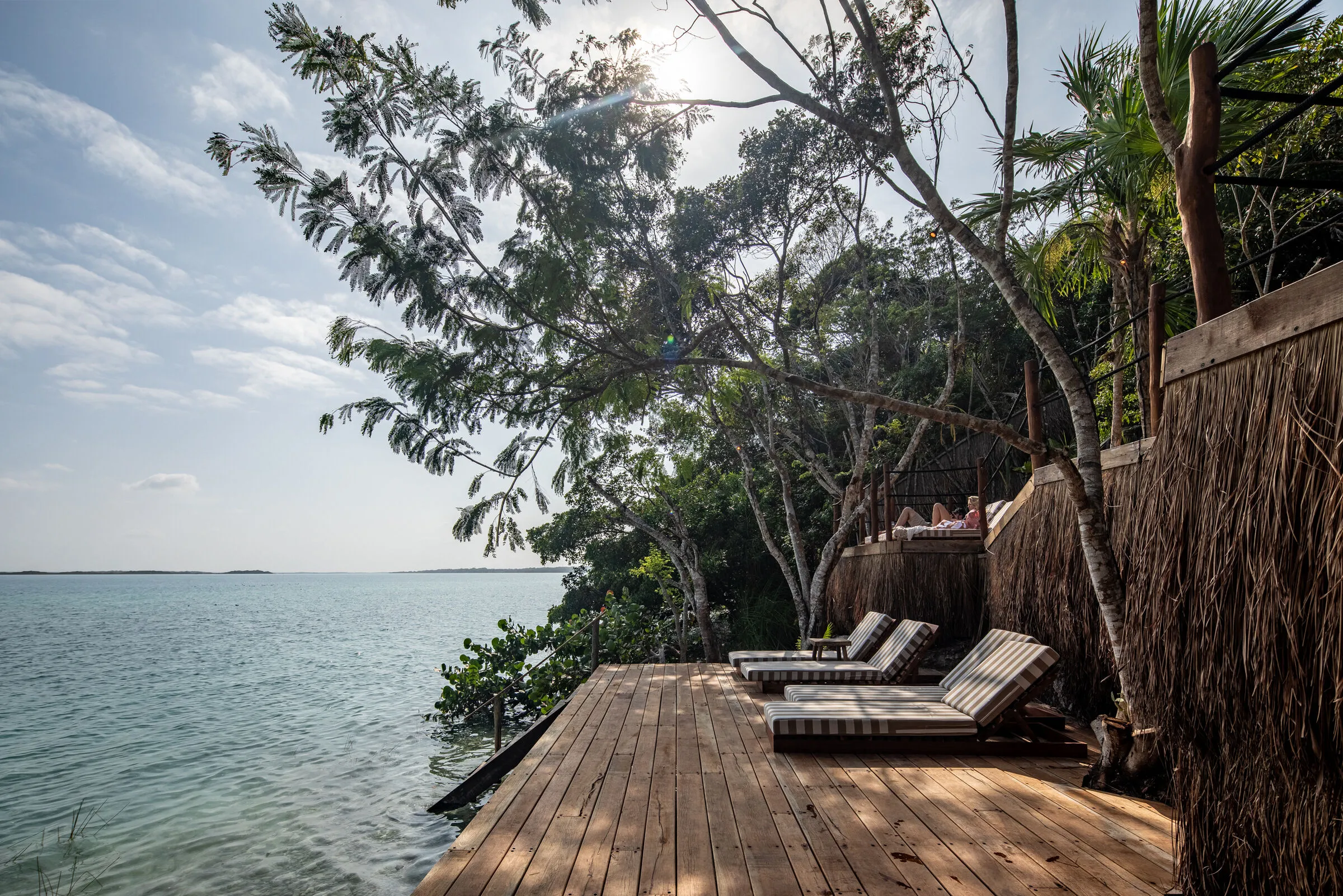
“We sought to dissolve the boundaries between architecture and nature, using local craft not just as ornament, but as structure, atmosphere, and memory”—AM Arquitectura Architects.
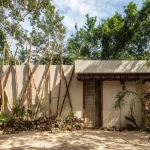
The architecture, designed and constructed primarily with timber, and all design strategies integrated, create an intimate dialogue with the surrounding landscape and seashore context. The materials have been thoughtfully used in a way that creates tension by using hard materials such as stone to create organic and fluid forms, while the organic and soft materials create hard geometric figures with strong angles.
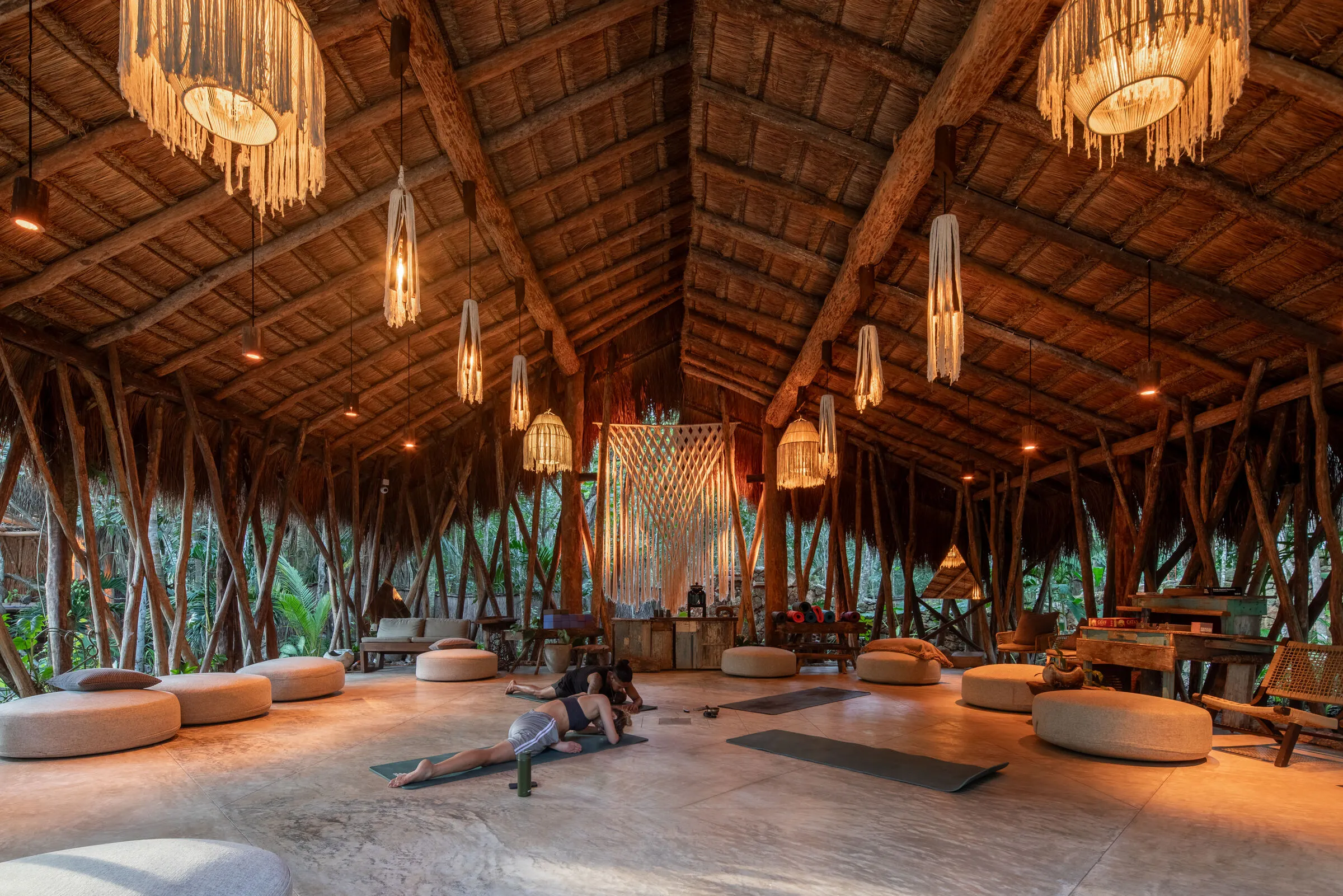
Thirteen secluded cabins are set among existing trees and oriented toward open clearings, balancing privacy with a strong connection to nature. Limestone, timber, and textured natural materials shape each retreat, while a lagoon-side restaurant anchors the experience as a shared gathering point. A meandering white-gravel path links the site, reinforcing a soft, organic flow through the landscape.