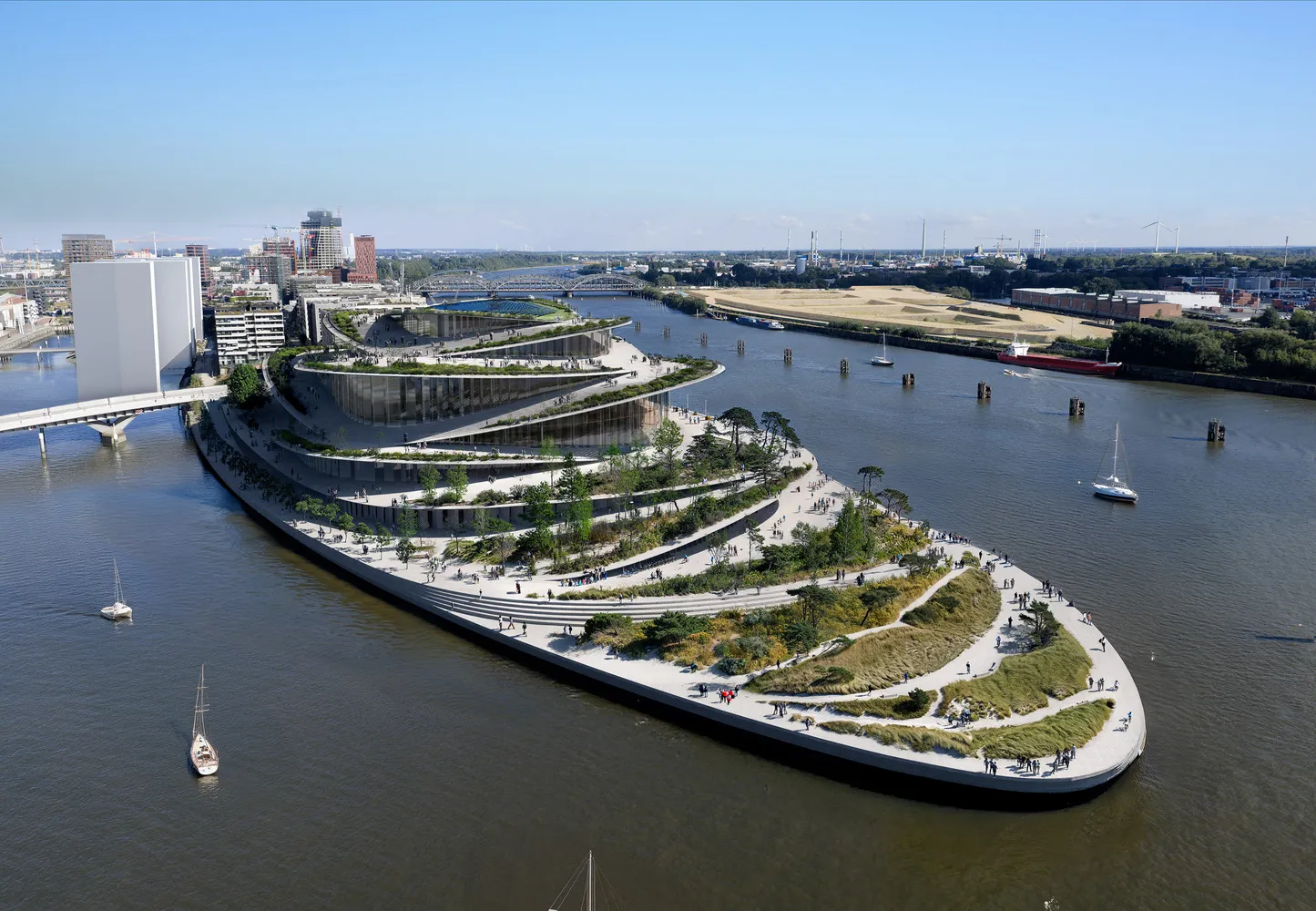
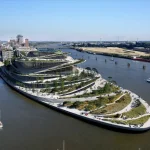
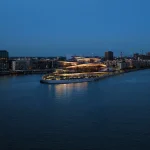
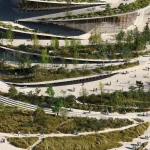
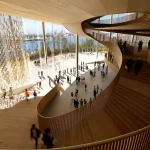
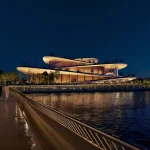
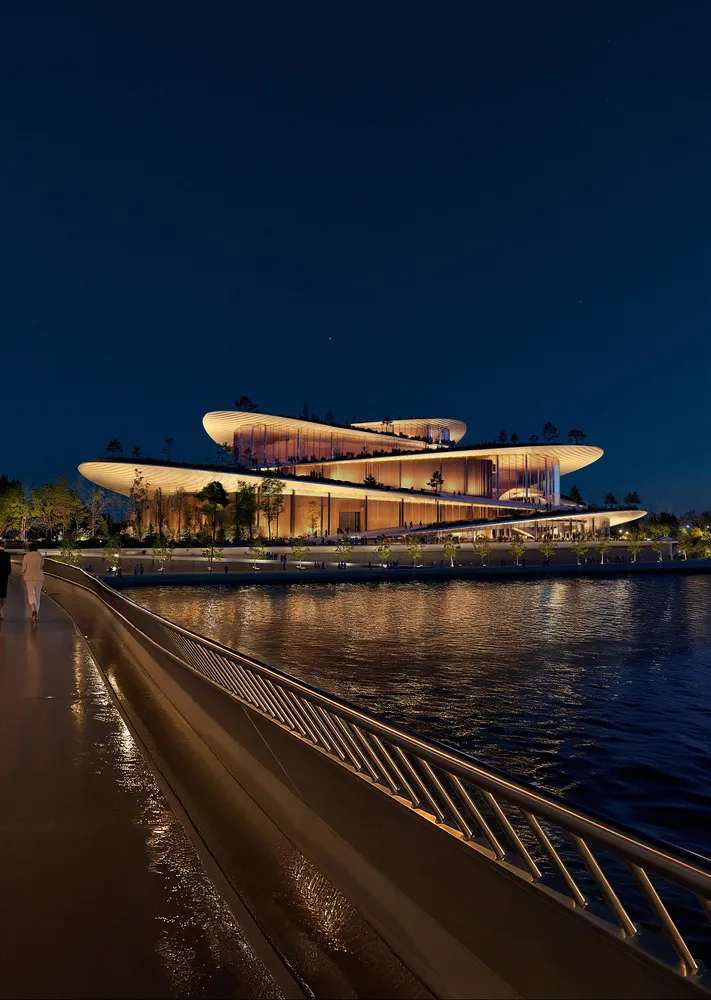
Hamburg’s waterfront is preparing for its next leap. On the Baakenhöft peninsula, between the Elbphilharmonie and the Elbtower, the New Hamburg State Opera is set to become the city’s newest cultural landmark. BIG’s (Bjarke Ingels Group) proposal treats the building as an extension of the ground itself, a terrain of terraces and ramps that invites people to wander across its roof and through its public spaces as if it were part of the shoreline.
The commission follows an international competition supported by the Kühne Foundation, which will also partner with the city and the opera company on the project. The new building will replace the company’s mid-century house on Dammtorstraße and relocate the opera company to the harbor. It continues the local habit of placing major cultural institutions beside the water.
The complex will unite the opera and ballet, adding performance rooms, production areas, and public spaces that open directly to the Elbe. Planning work between BIG, the city, and the foundation is expected to continue through 2027.
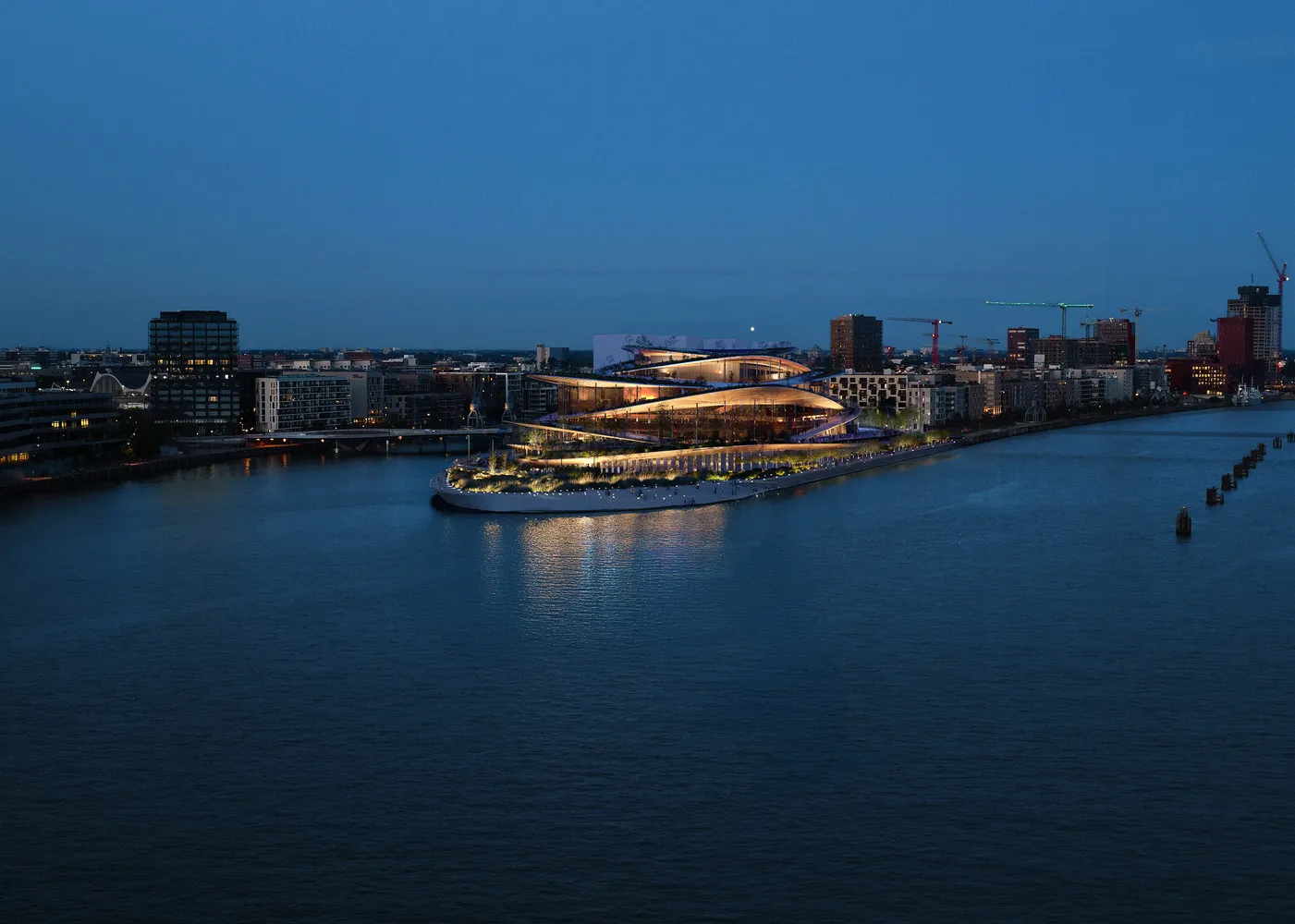
BIG’s Strategy for Baakenhöft’s Unique Conditions
Baakenhöft occupies a strategic position in HafenCity’s redevelopment. The peninsula is flat reclaimed land exposed to tides and heavy rain. Rather than treating these conditions as obstacles, BIG’s proposal absorbs them into the design. The site is approached as part of a larger system that links water management, public access, and the long promenade that runs along the Elbe.
Three primary public routes bring people to the building from the waterfront, from a new pedestrian spine known as Opera Street, and from the quay. The opera becomes a destination entered from many directions rather than one formal entry.
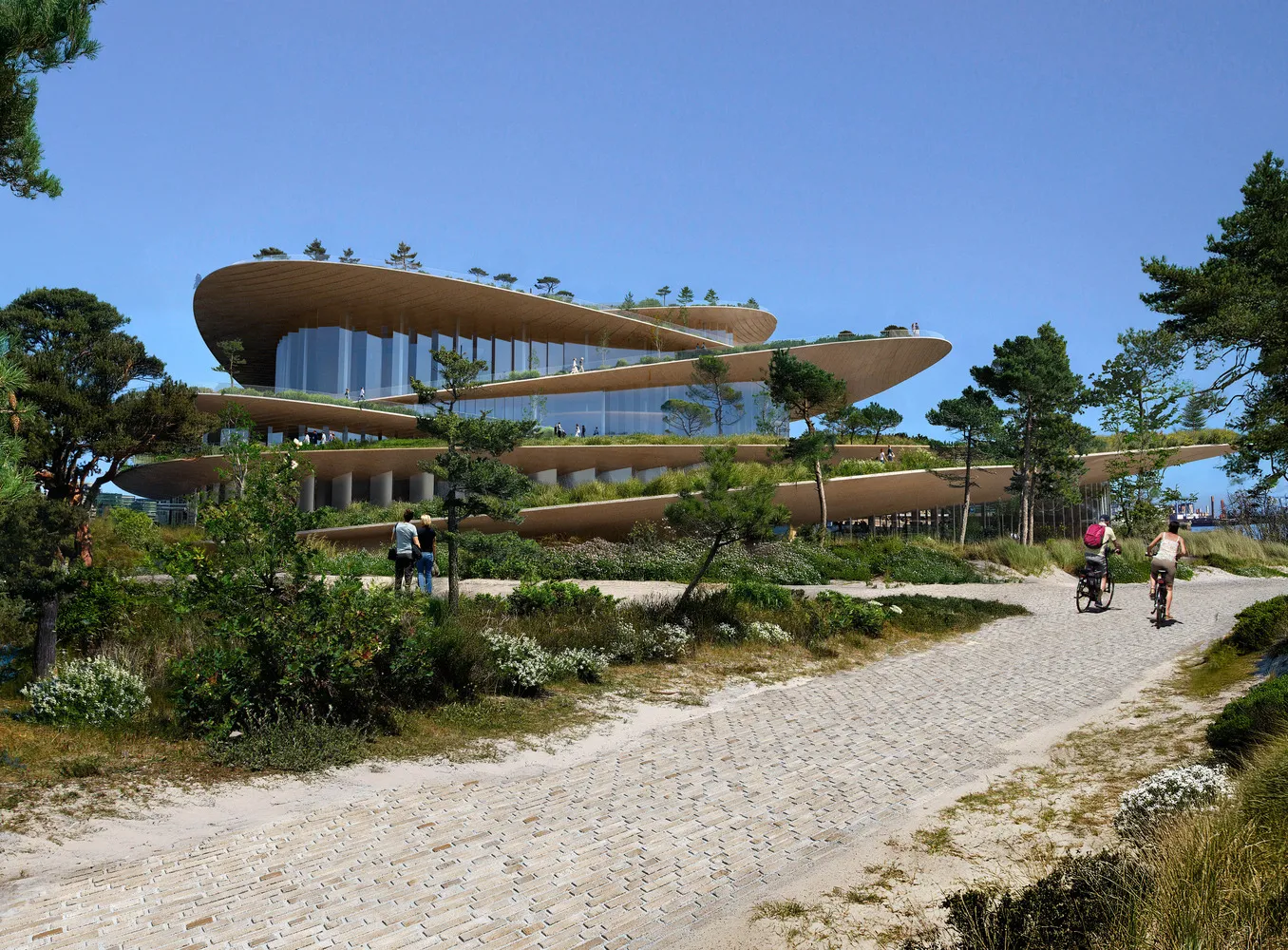
A Walkable Roofscape That Extends Hamburg’s Waterfront
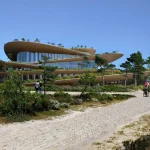
The design is conceived as a continuation of HafenCity’s waterfront terrain. Its defining feature is a circular roof that lifts in planted terraces and opens toward the harbor. The form radiates outward like expanding sound waves from the performance spaces at the center. Instead of standing apart, the building presents itself as a public landscape that gradually rises into a cultural venue.
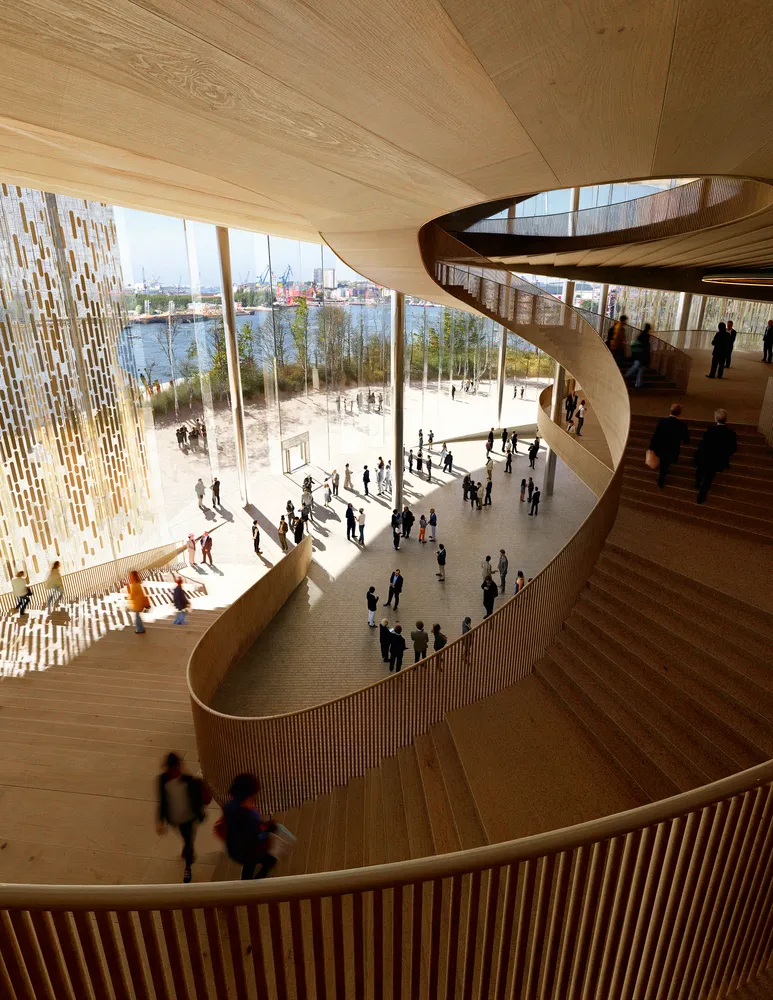
Stone paving from the surrounding park extends straight into the foyer, softening the boundary between the city and the interior. Timber staircases and broad ramps lead to upper terraces that serve as viewing decks, gathering spots, and informal performance areas. Much of the building’s public activity is arranged vertically, making the building accessible even when no performances are scheduled.
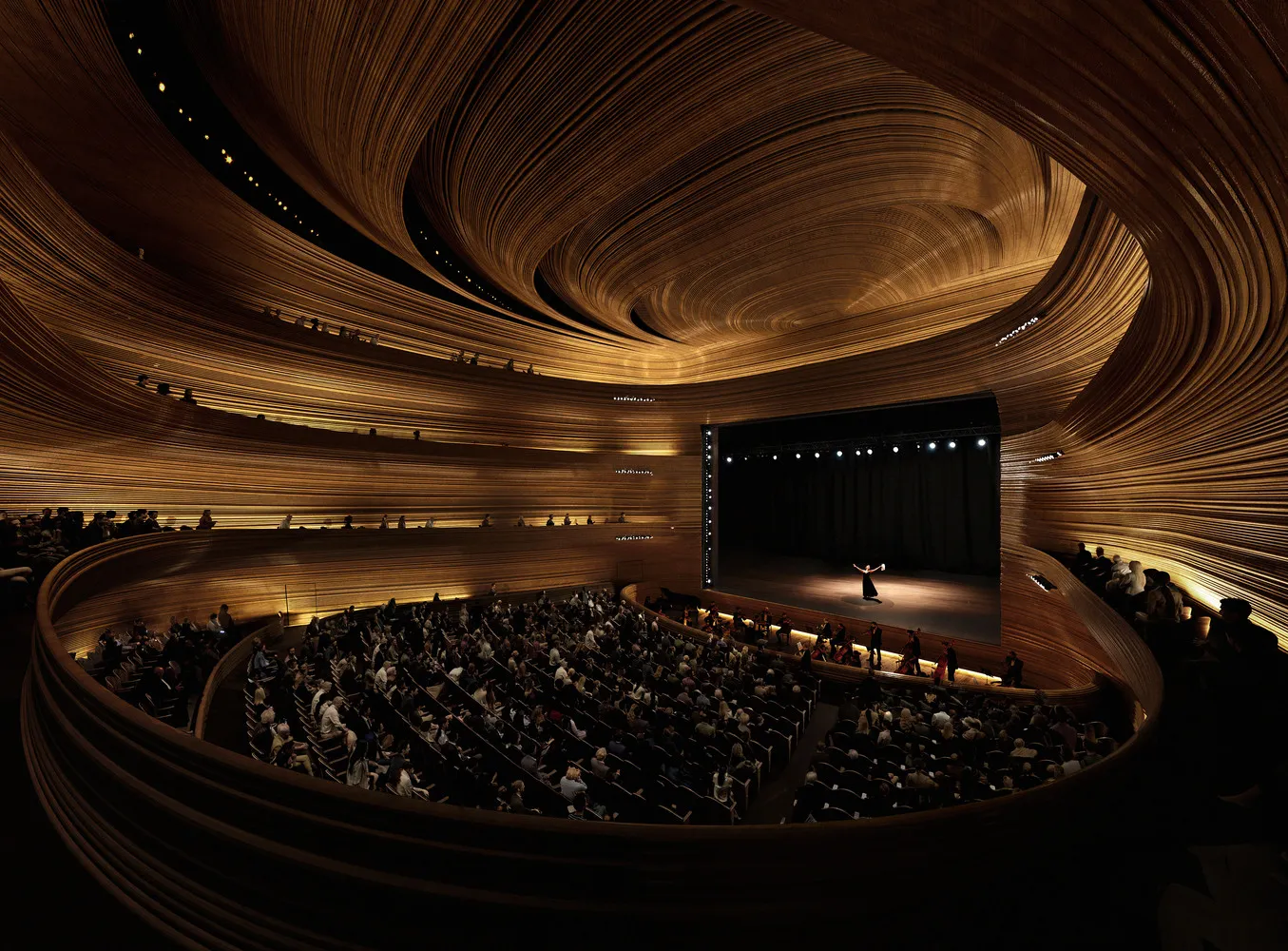
Inside the Heart of the Opera
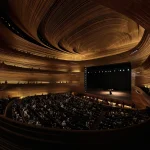
At the center of the building, the main hall acts as its pulse. Layered timber balconies form horizontal rings that shape both the acoustics and sightlines, creating a continuous shell. The hall prioritizes intimacy and clarity, drawing focus to the stage while creating an enveloping sound field. Partner Jakob Sand calls it the heart of the opera, a measured interior that balances the openness of the building’s exterior.
The 45,000-square-meter complex houses all opera and ballet operations under one roof. The main stage, studio stage, rehearsal rooms, workshops, technical spaces, and offices sit close to one another, keeping production and performance within easy reach.
Visitors passing through corridors can glimpse sets, costumes, and preparations in progress. The design makes the work behind the curtain part of the experience, revealing how an opera is assembled rather than hiding it until showtime.
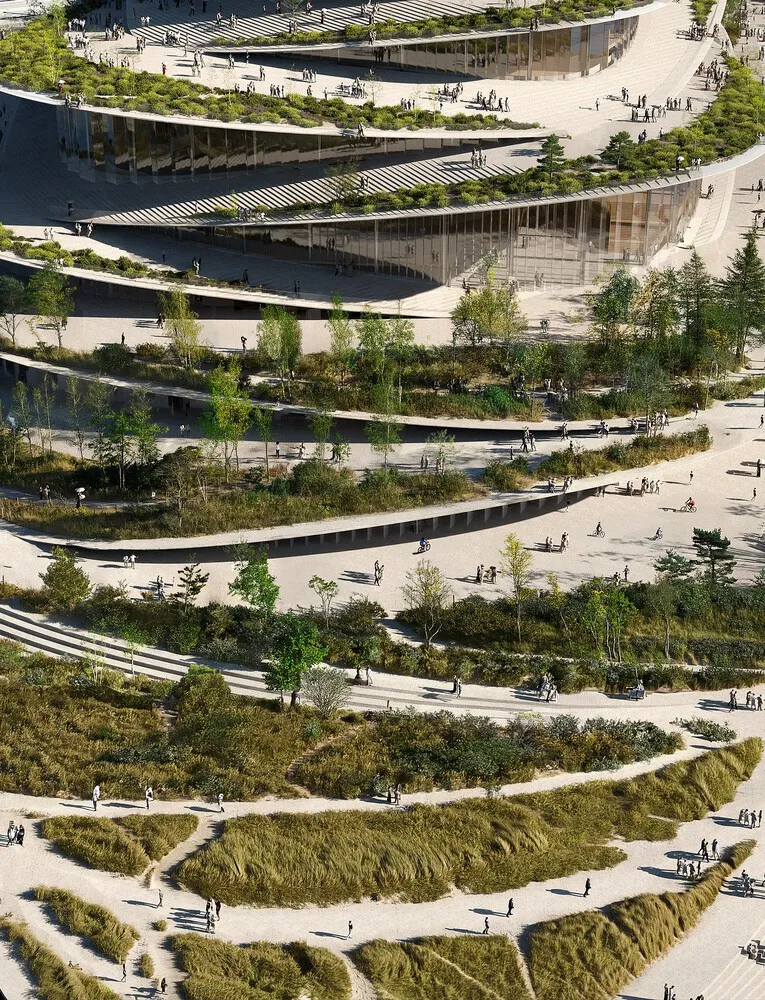
Climate-Resilient Landscape Built for the Waterfront
The landscape is designed to work with the site’s exposure to tides and heavy rain. Terraced gardens, planted dunes, wetland pockets, and rainwater basins manage stormwater and rising water levels. Retention areas, permeable paving, and engineered soils strengthen HafenCity’s flood resilience and anchor the building in its waterfront context.
The planting strategy draws on native species to boost biodiversity. The roof functions as a habitat as much as a public space, offering shade, filtering water, and creating small shifts in climate that are rare in a cultural complex of this size.
Structural Innovation Behind BIG’s Vision
Structural engineer Bollinger + Grohmann now takes on the central challenge behind BIG’s concept. The planted, walkable roof must work as both a public park and a structural shell, carrying soil, trees, visitors, and the long-span volumes of the auditorium below. Its exposure to weather adds another layer of complexity, making waterproofing, drainage, and wind performance critical in the next phase.
Materials remain under review, but the project already leans on a palette of timber, stone, planted roofs, and engineered cladding that can follow the curved form of the structure. The competition images suggest a sculpted exterior, but the final facade and building systems will be resolved during the upcoming design stages.
The Next Phase for Hamburg’s New State Opera
With the competition complete, the project now enters a period of detailed refinement. The next two years will bring cost studies, environmental assessments, and structural development. Key decisions on auditorium capacity, facade materials, and construction sequencing remain open. A public exhibition in HafenCity will introduce the design to the broader city and invite public feedback.
As planning progresses and funding negotiations continue, the New Hamburg State Opera positions itself as the next cultural anchor on the waterfront, extending Hamburg’s cultural geography east toward Baakenhöft.
BIG frames the project as a hybrid of public park, performance house, and production campus. It is a building meant to be walked on, wandered through, and used throughout the day, not only during performances. The opera would operate as a civic landscape as much as a cultural institution, offering Hamburg a model for how architecture can remain open, ecological, and closely tied to daily urban life.
Image credit: © Yanis Amasri | Bjarke Ingels Group (BIG)