
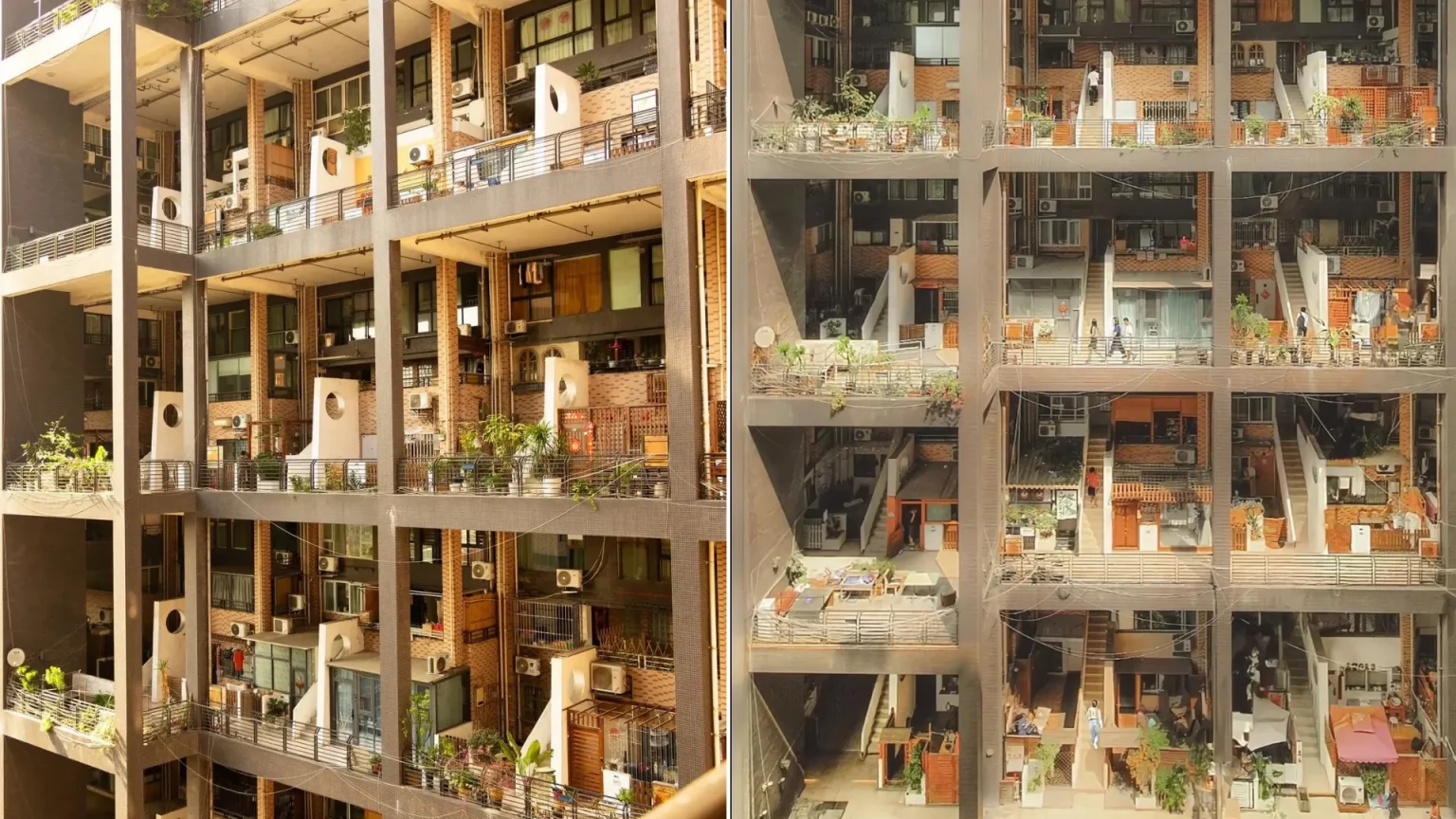

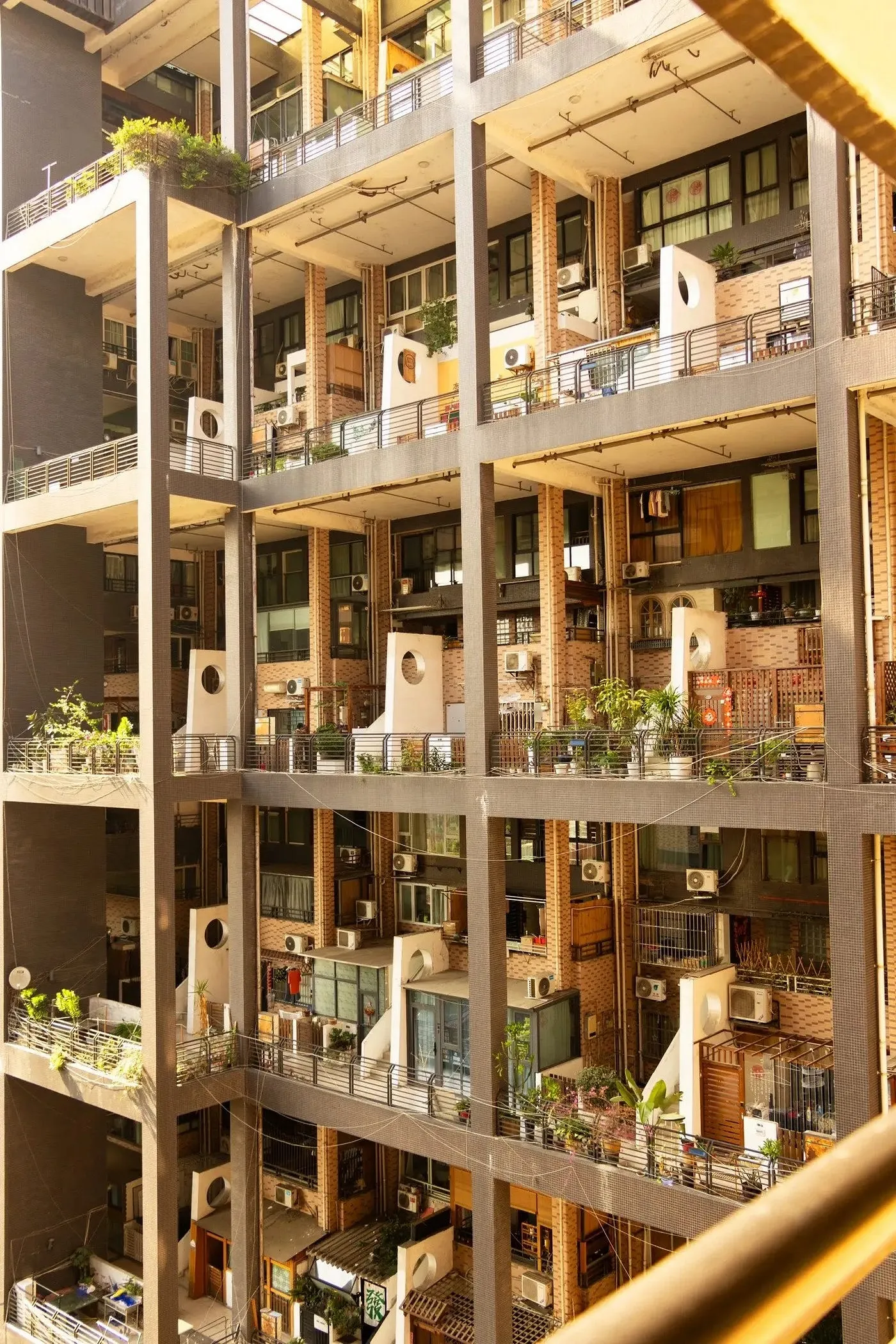
In Chengdu’s Wuhou District, tucked along Xinxiwang Road, stands an architectural wonder that has captured the imagination of locals and internet viewers alike, the residential complex known as Manhattan Nature. Built between 2000 and 2009, this vertical community is composed of over 1,300 homes arranged in a striking grid-like formation that gives the illusion of a giant dollhouse.
What makes Manhattan Nature truly remarkable is its design approach. Every few stories, the building incorporates open voids or courtyards, which break up the monolithic façade and allow natural light and fresh air to penetrate deep into the structure. These voids not only contribute to its toy-like appearance but also enhance ventilation and daylight for residents. The effect is surreal when someone walks along the corridors; passersby appear as if they were tiny figurines in a diorama.
The Manhattan Nature Dollhouse Look That Captivated Social Media
Manhattan Nature is a fully functional urban development. The complex occupies a plot of about 16,667 square meters, with a plot ratio of 4.0 and a building density of 35 percent. It also has a substantial number of parking spaces, some 377 spots, and a generous greening rate of roughly 30.5 percent. Property management is handled by Chengdu Heli Property Services, while the development was carried out by Chengdu Helda Real Estate Development Co., Ltd., underlining that the dollhouse effect was no mere publicity stunt but part of a planned, managed investment.
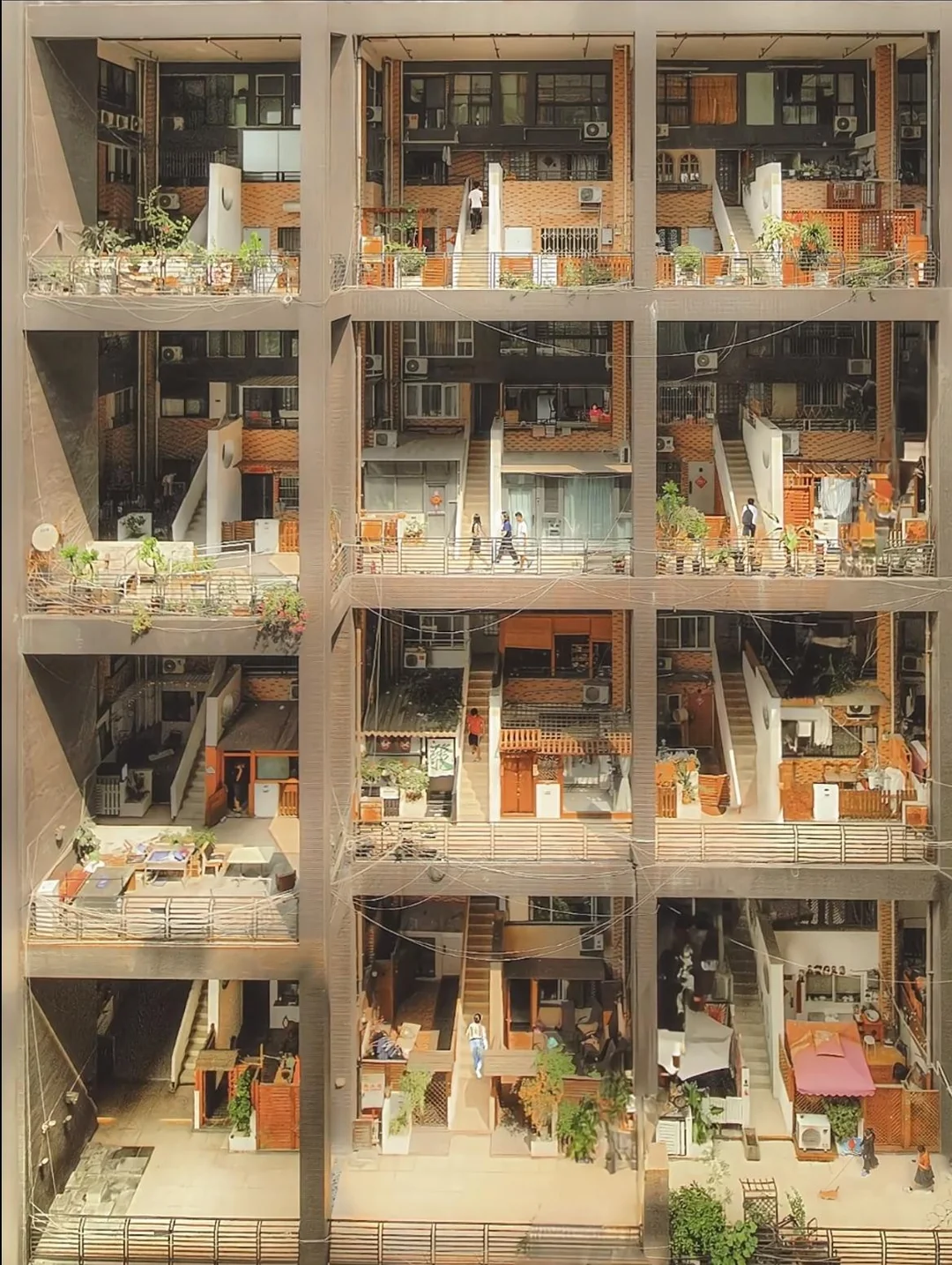
The visual impact of Manhattan Nature has made it something of a social-media star. Videos and photos shared on platforms like TikTok and Douyin highlight how the pastel-colored façades and staggered balconies come together to form an almost toy-like environment. The open-work design floods the units with light, and the courtyard breaks in the structure lend a sense of airiness rarely found in high-density housing.
Manhattan Nature Inspires Visitors and Sparks Debate About Real Urban Living
The unique design has become an attraction in its own right, drawing photographers, tourists, and prospective homebuyers, thereby adding a dimension of value not just in residential terms but also in experiential and marketing appeal. The popularity of the building, combined with its efficient use of space and light, suggests that Manhattan Nature was conceived not only as housing but also as a long-term, sustainable investment.
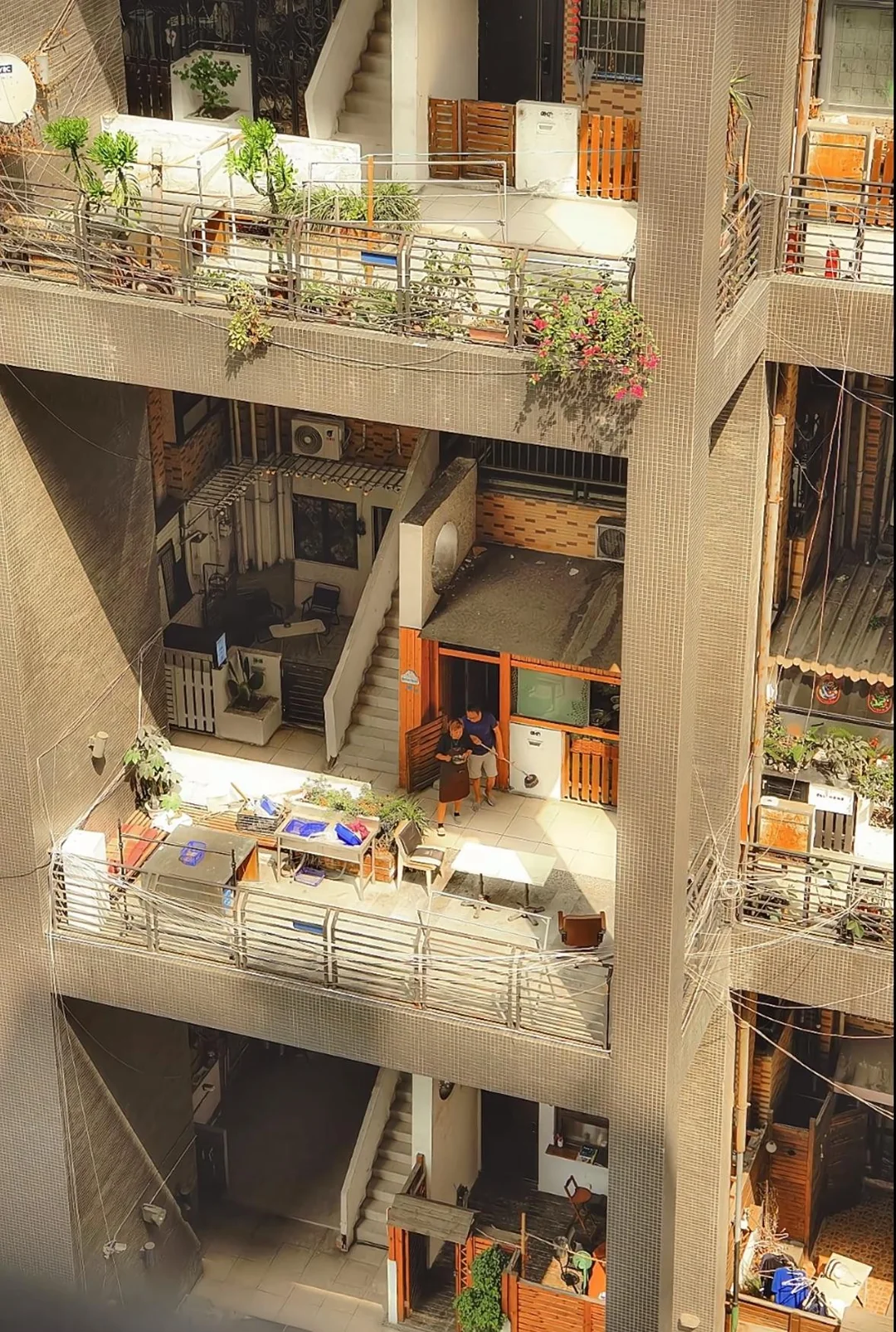
Yet the building’s whimsical beauty has also prompted deeper reflections on urban living. On one hand, its openness and design speak to a progressive urban ethos, one that does not sacrifice humanity for density; corridors and stairs feel more like communal terraces than mere means of circulation.
On the other hand, some critics have asked whether the playful façade obscures practical challenges, noise, privacy, and maintenance, among others, that come with such an exposed structure. As one commenter put it, “It’s easy for childhood sweethearts to reconnect at a place like this,” hinting at the romantic fantasy, but others note the potential chaos of four families sharing a single grid square.
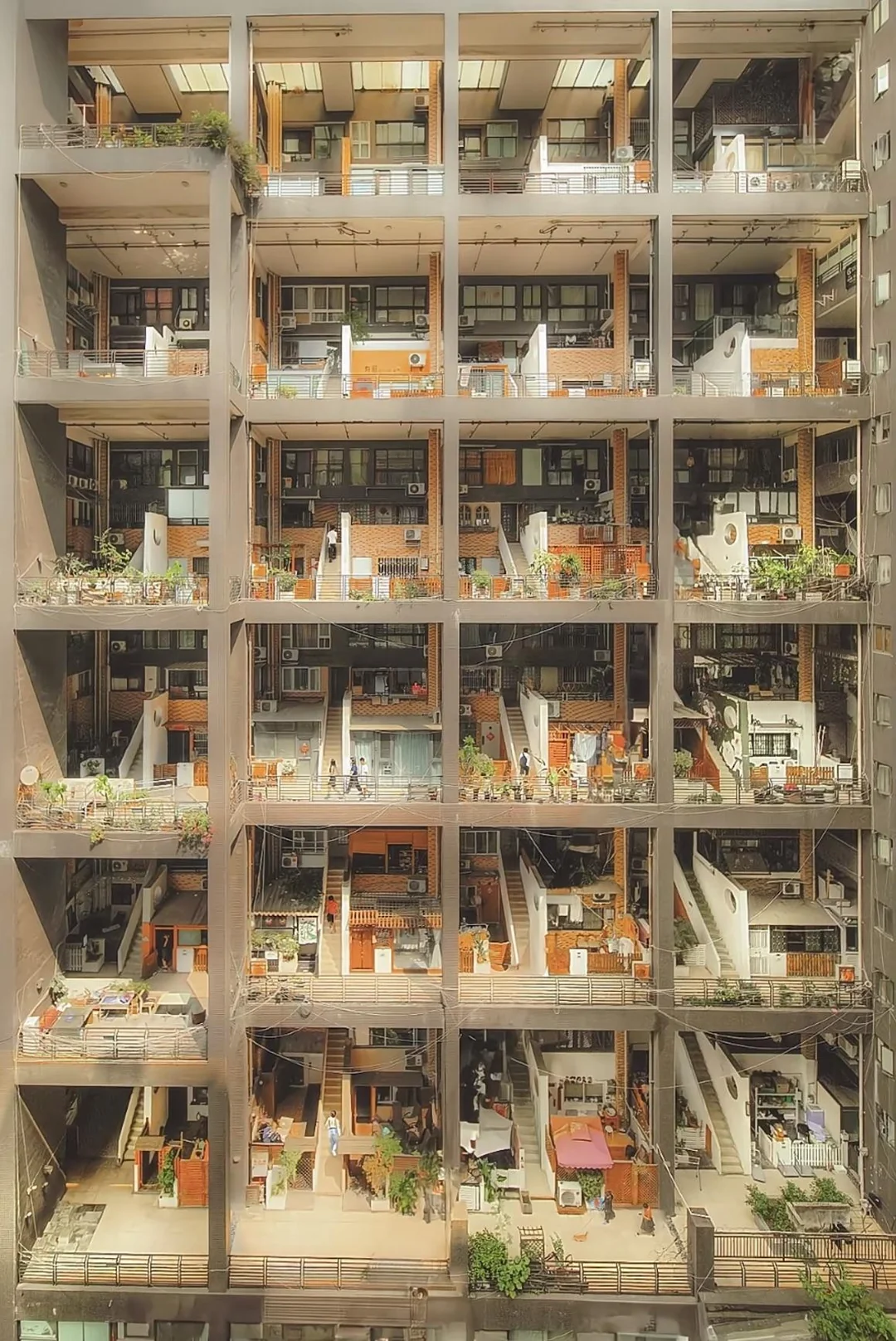
Manhattan Nature stands as a symbol of Chengdu’s willingness to experiment with form and function. It challenges conventional high-rise design by blending vibrant aesthetics with architectural pragmatism. Rather than hiding its structure behind blank façades, this complex embraces its grid, its voids, and its vertical circulation to offer an environment that feels both open and densely populated.
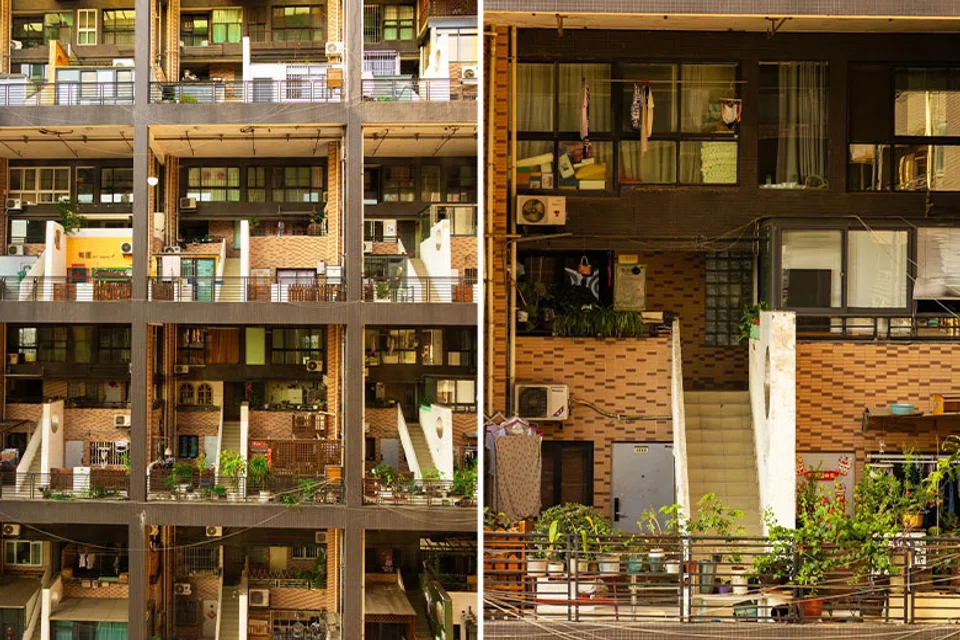
Ultimately, Manhattan Nature expresses how modern Chinese cities can reconcile high density with creativity, how residential spaces can double as art, and how architecture can evoke emotion without sacrificing utility. For many, it remains a dreamlike world, a real-life dollhouse, but firmly rooted in the realities of urban life.
Photo credit: Duoyin/TikTok