


Dubai, one of the seven emirates that make up the United Arab Emirates, has transformed from a small fishing village into one of the world’s most futuristic cities in just fifty years. Becoming one of the world’s wealthiest cities, Dubai has produced some of the most daring and groundbreaking engineering and architectural achievements to date.
Nourished by its Emirati culture while boldly embracing the future, Dubai has gained global attention with its ambitious architectural projects that challenge norms in both scale and vision. Expanding its land into the sea through man-made islands, the city presents a vision filled with “the world’s most.”
Dubai, the city of modernity, glamour, and dreams, continually redefines boundaries with its structures holding numerous titles, including the tallest skyscraper, the largest shopping mall, the most innovative museum, and the tallest hotel.
In this article, we will examine some of Dubai’s most iconic landmarks:
1. Burj Khalifa
Architect: Skidmore, Owings & Merrill (SOM)
Year: 2010
Height: 828 meters
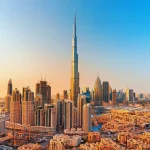
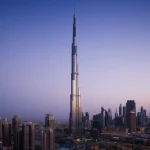
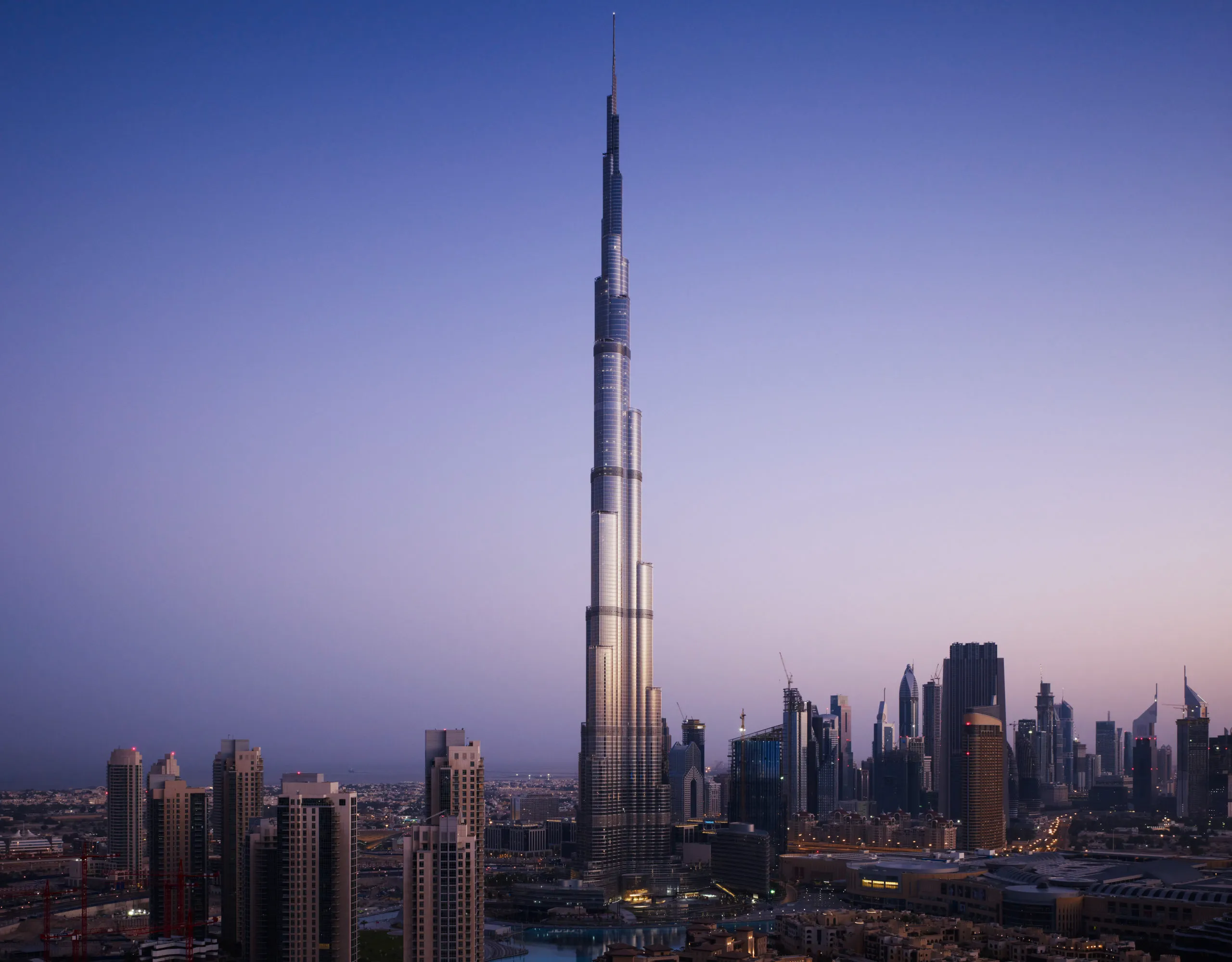
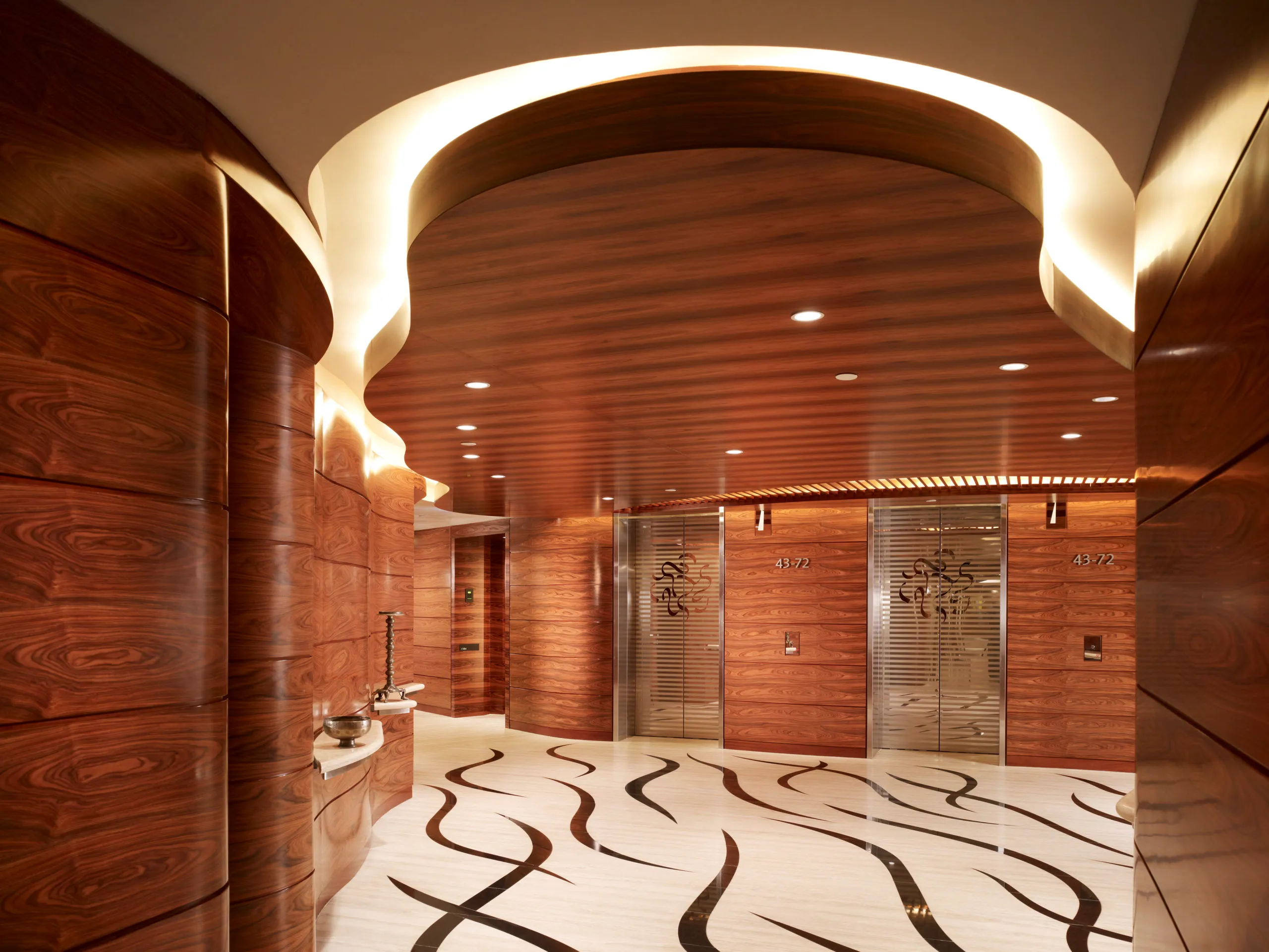
One of Dubai’s most iconic landmarks, the Burj Khalifa, holds the title of the world’s tallest skyscraper with a height of 828 meters. The mixed-use tower, comprising 162 floors, houses offices, retail spaces, residential units, and an Armani Hotel. The Burj Khalifa’s design combines local cultural influences with cutting-edge technology to achieve high performance in the harsh desert climate.
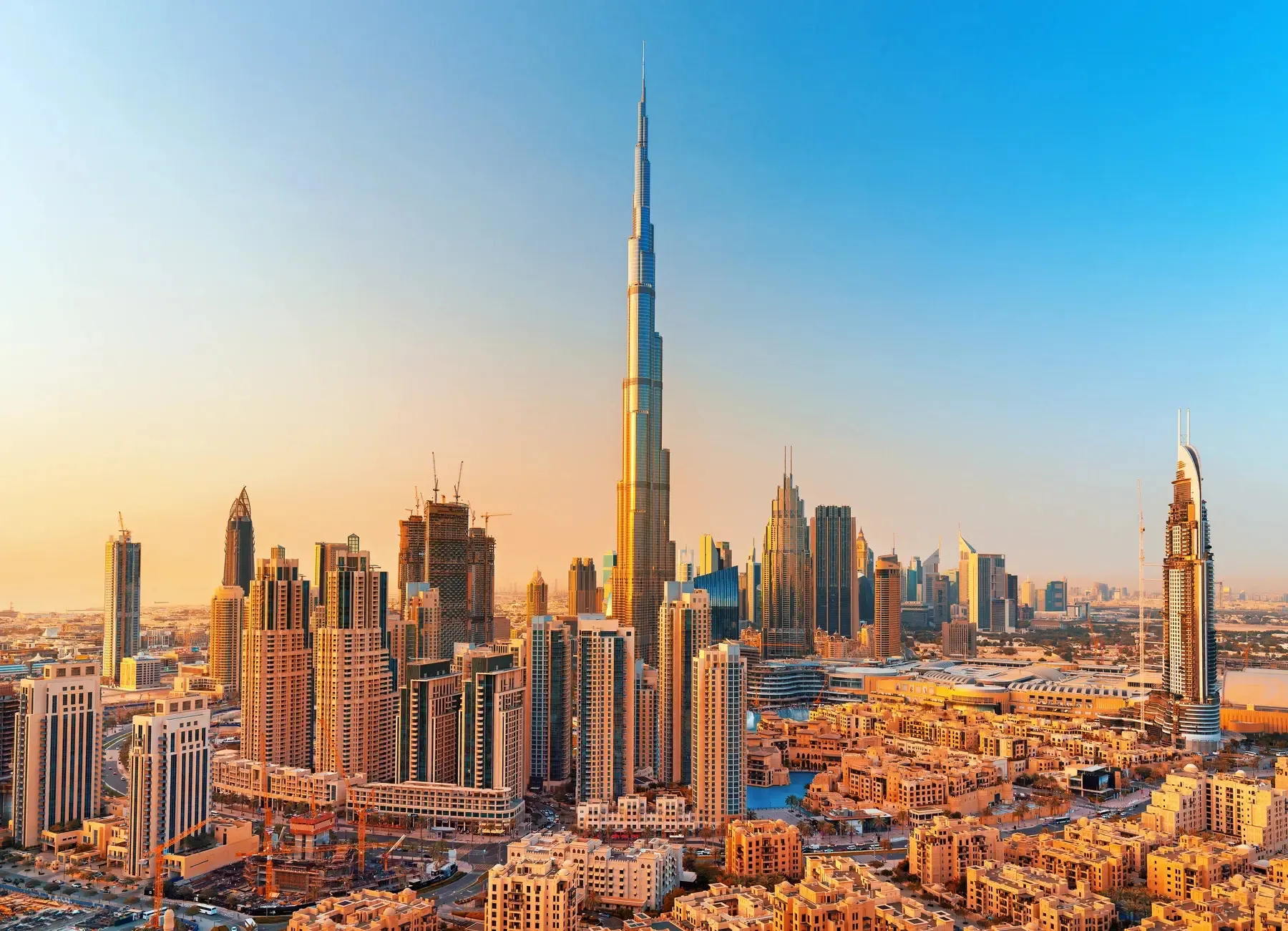
Designed by SOM, the Burj Khalifa was inspired by the geometry of a regional desert flower and the pattern systems embodied in Islamic architecture. The tower’s Y-shaped plan enhances the skyscraper’s structural strength while providing panoramic views of Dubai from every floor.
The glass-clad reinforced concrete tower is composed of sculpted volumes arranged around a central buttressed core. Rising from a flat base, the Burj Khalifa tapers upward in a spiraling pattern, reducing its mass as it ascends toward the sky. At its pinnacle, the central core is revealed and shaped into a spire, emphasizing its elegant verticality.
2. Dubai Mall
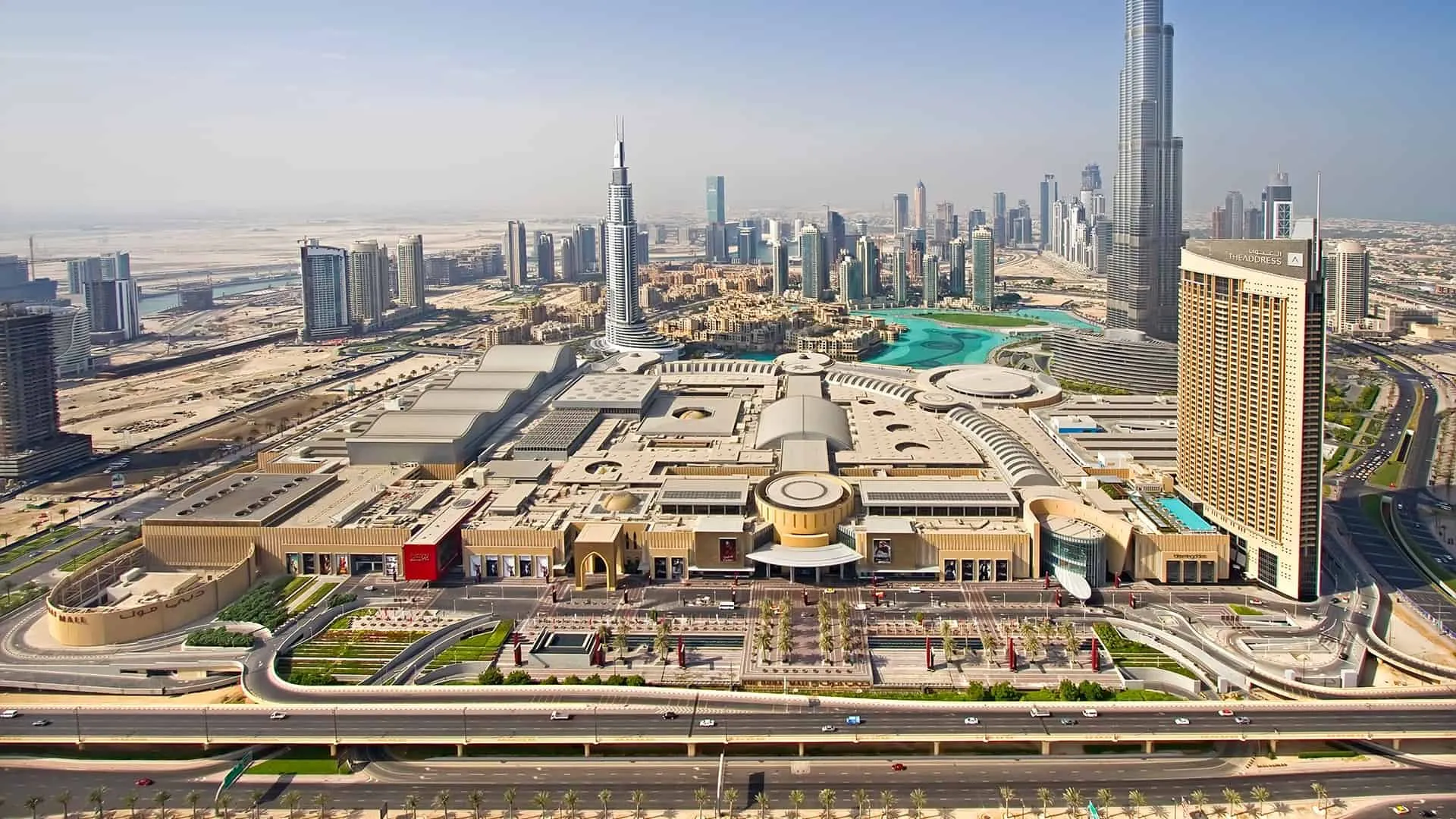
Architect: DP Architects
Year: 2008
Area: 1200.000 m²
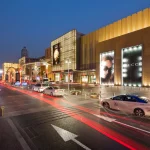
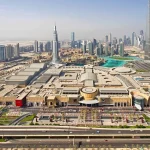
Located in Dubai, the city with the most, the Dubai Mall is the world’s second-largest shopping mall. Located right next to the Burj Khalifa, the four-story, massive mall is a hub for tourism and prestige for Dubai. Designed with the vision of creating the ultimate in modernity and luxury, the Dubai Mall is divided into eight distinctly characterful zones, each with nodal points, internal streets, and facades that enhance legibility. Inspired by the rich motifs and patterns of Arab culture, the mall’s design incorporates a pattern language resembling endless constellations, giving its façade a texture unique to the region’s heritage.
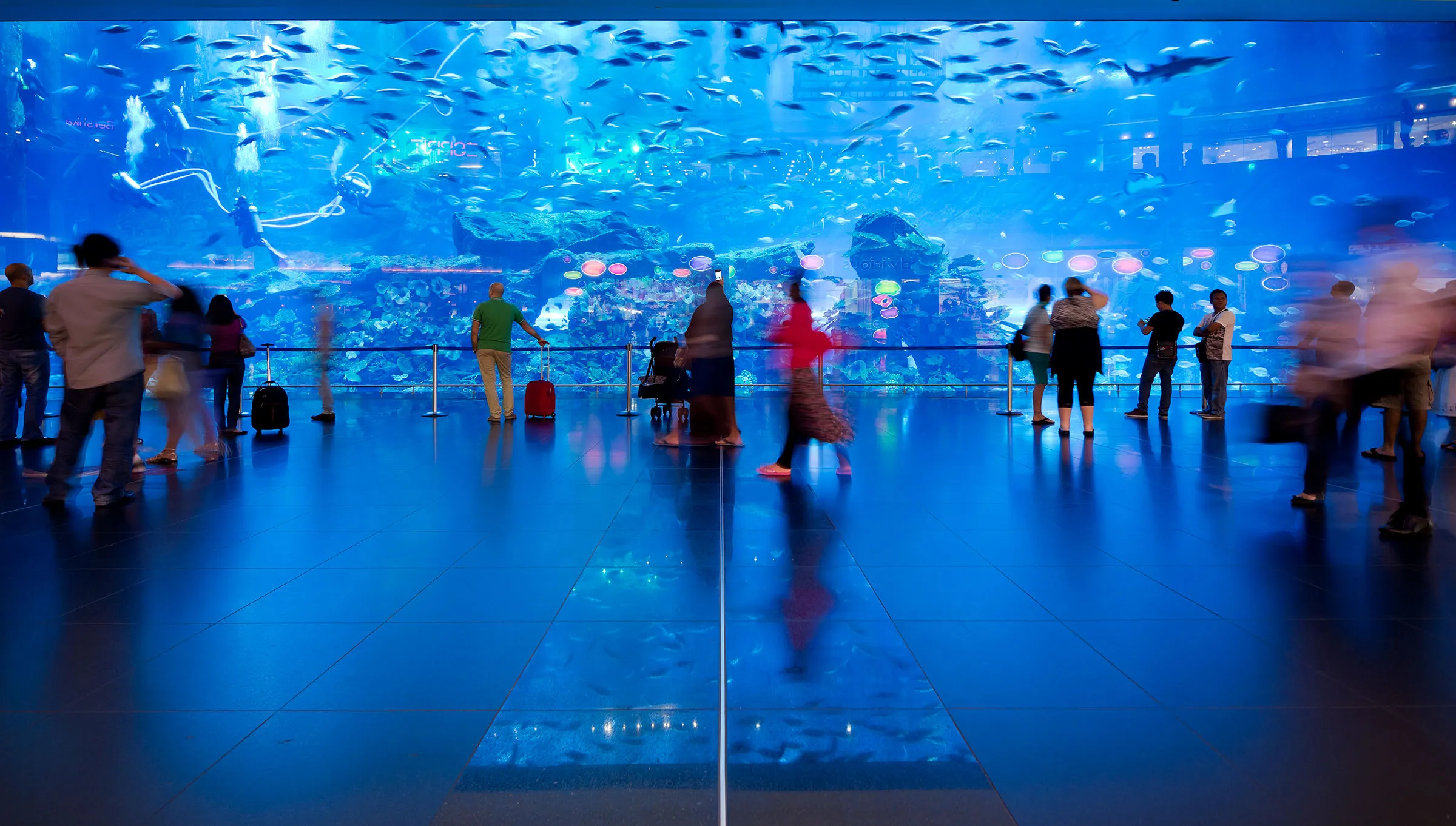
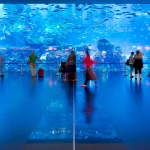
The Dubai Mall boasts one of the world’s largest aquariums, the world’s largest candy store, an ice rink, a massive indoor theme park (SEGA Republic), a 5-star luxury hotel, movie theaters, restaurants and cafes, and over 1,200 stores. Therefore, the Dubai Mall is not just a shopping mall; it is a micro-urban project born from the interactions between residents and visitors.
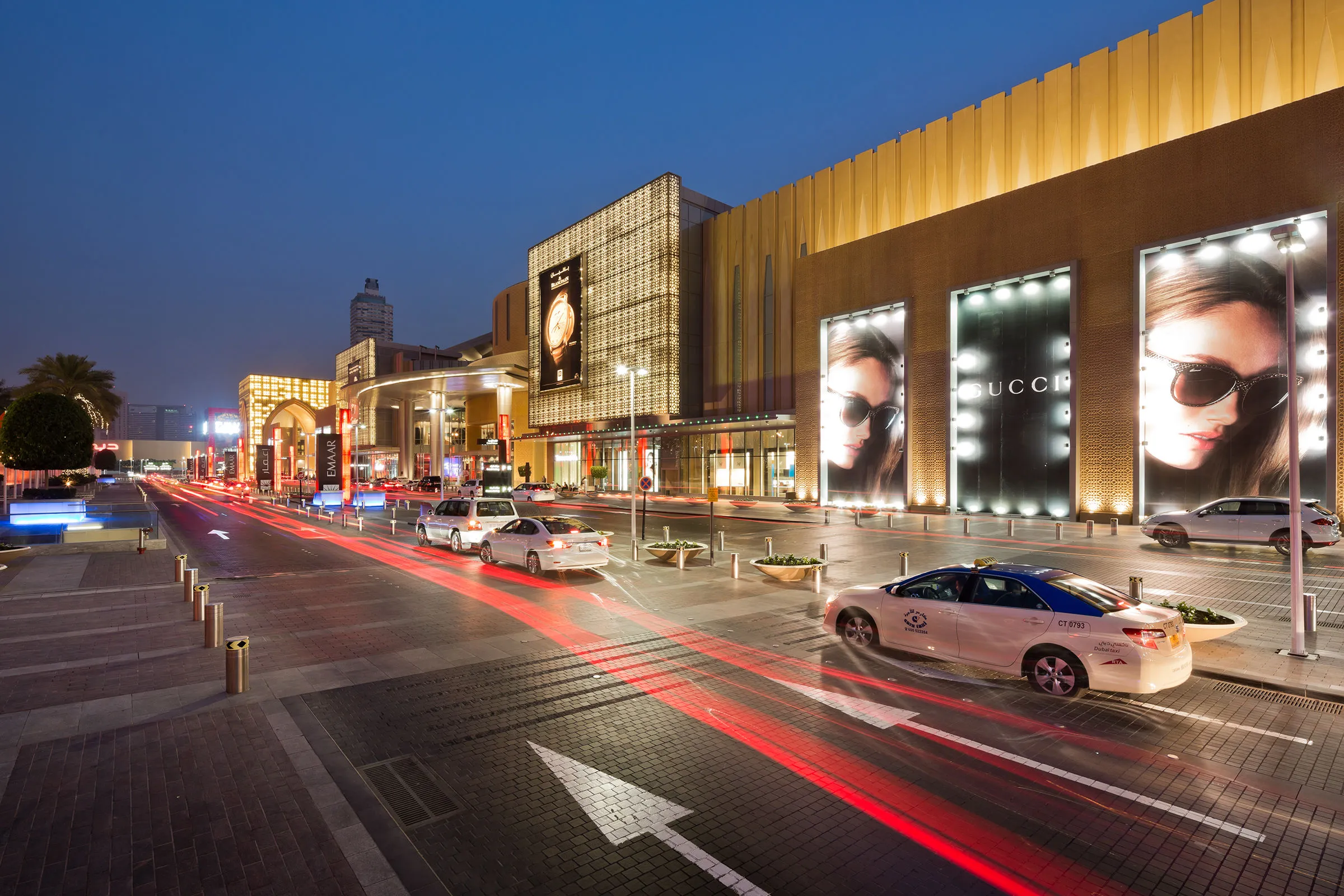
Designed with sustainability and climate responsiveness in mind, the Dubai Mall is a single-mass structure with a low surface-area-to-volume ratio, minimizing heat gain through its external walls. Full-height glazing is limited to a few select areas for architectural impact and views. Skylights are designed to reduce glare and excessive heat gain through strategically placed shading, double-glazing, and the use of low-emissivity glass.
3. Burj Al Arab
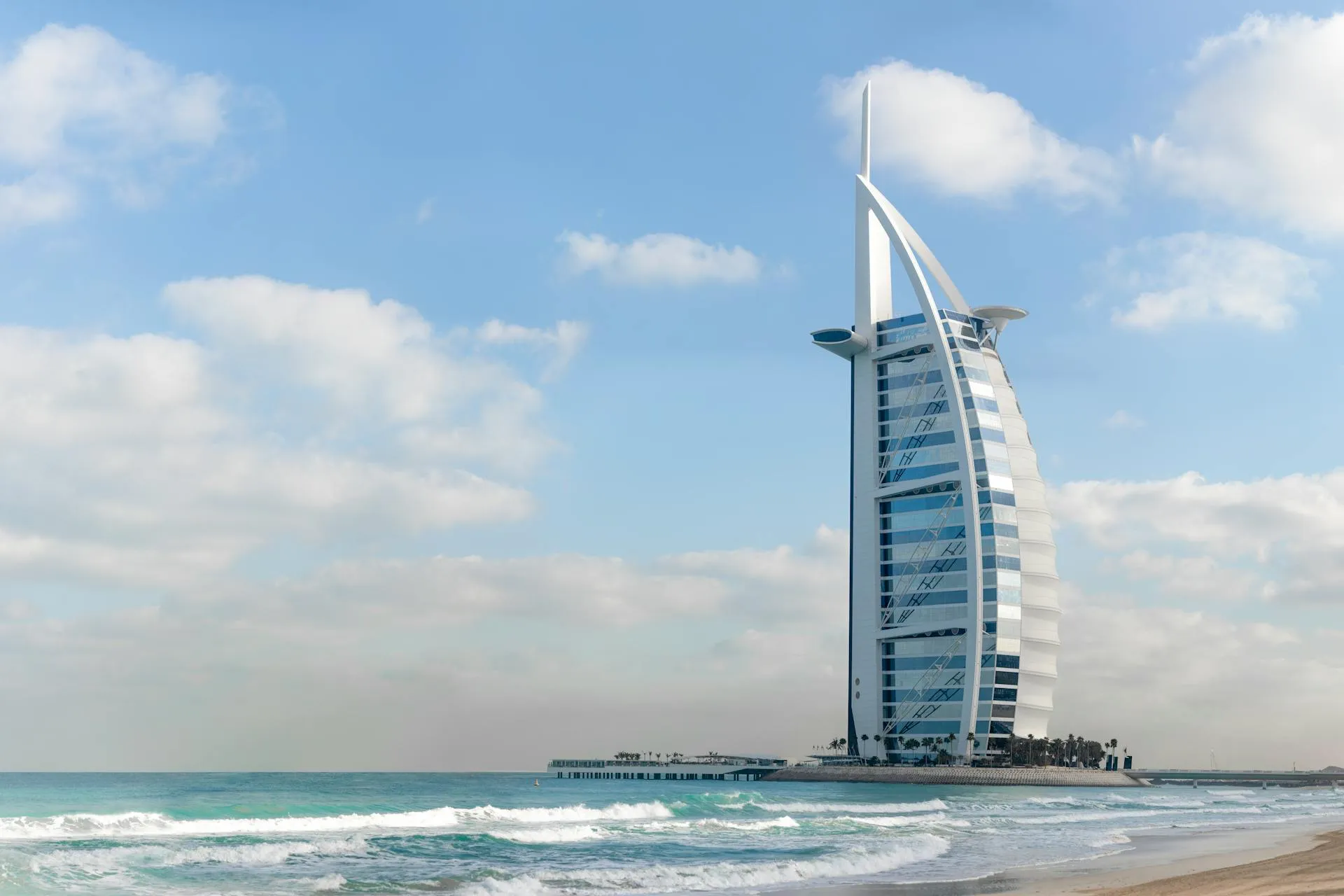
Architect: Tom Wright
Year: 1999
Height: 321 meters
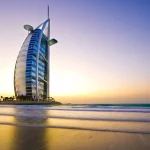
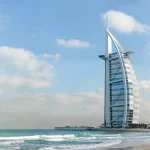
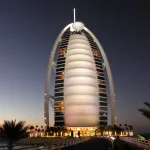
Dubai boasts numerous high-rise hotels. In fact, many of the world’s tallest hotels are located there. One of these, the Burj Al Arab, is one of Dubai’s most prominent landmarks, with its shape reminiscent of a dhow. Built on an artificial island located 280 meters off the Dubai coastline, the hotel features one of the world’s tallest atriums, soaring dramatically between two massive curved wings that create a vast open space.
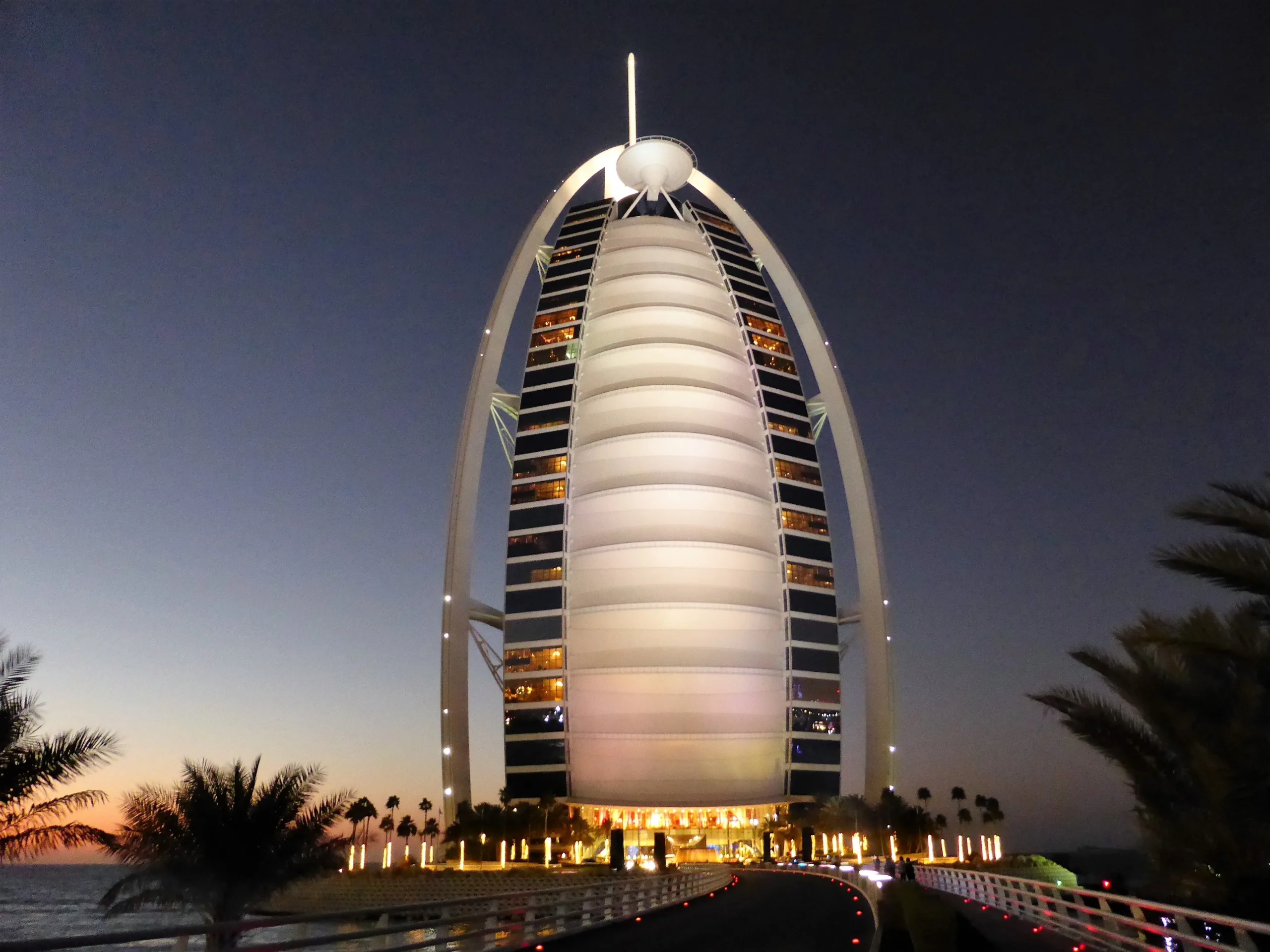
Anchored to the seabed with 230 concrete piles extending 45 meters below sea level, the Burj Al Arab’s reinforced concrete core and steel exoskeleton, supported by inclined steel braces, together form its distinctive sail-like silhouette. A honeycomb-shaped concrete block protects the island from the waves.
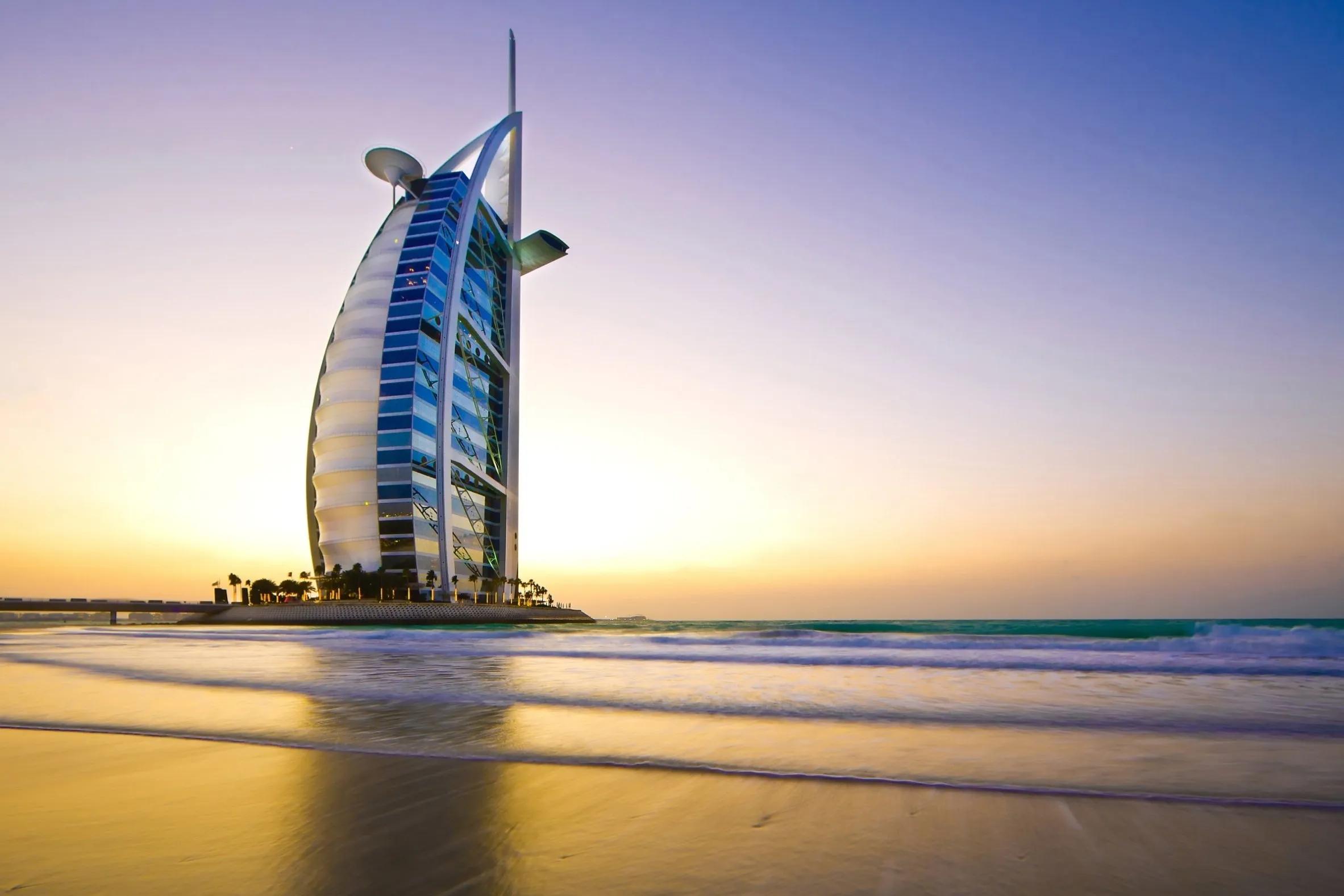
The Burj Al Arab, which has achieved iconic status due to its distinctive form and façade, is also notable for its luxurious interiors, designed by renowned interior designer Khuan Chew. More than 30 different Statuario marbles are used for walls and floors throughout the hotel. Approximately 1,790 square meters of 24-karat gold leaf were used to decorate the interior, and approximately 86,500 hand-set Swarovski crystals were engraved on the mirror frame in the Junsui bar and at the entrance.
4. Dubai Frame
Architect: Fernando Donis
Year: 2018
Height: 150 meters
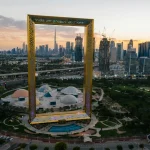
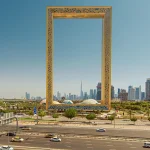
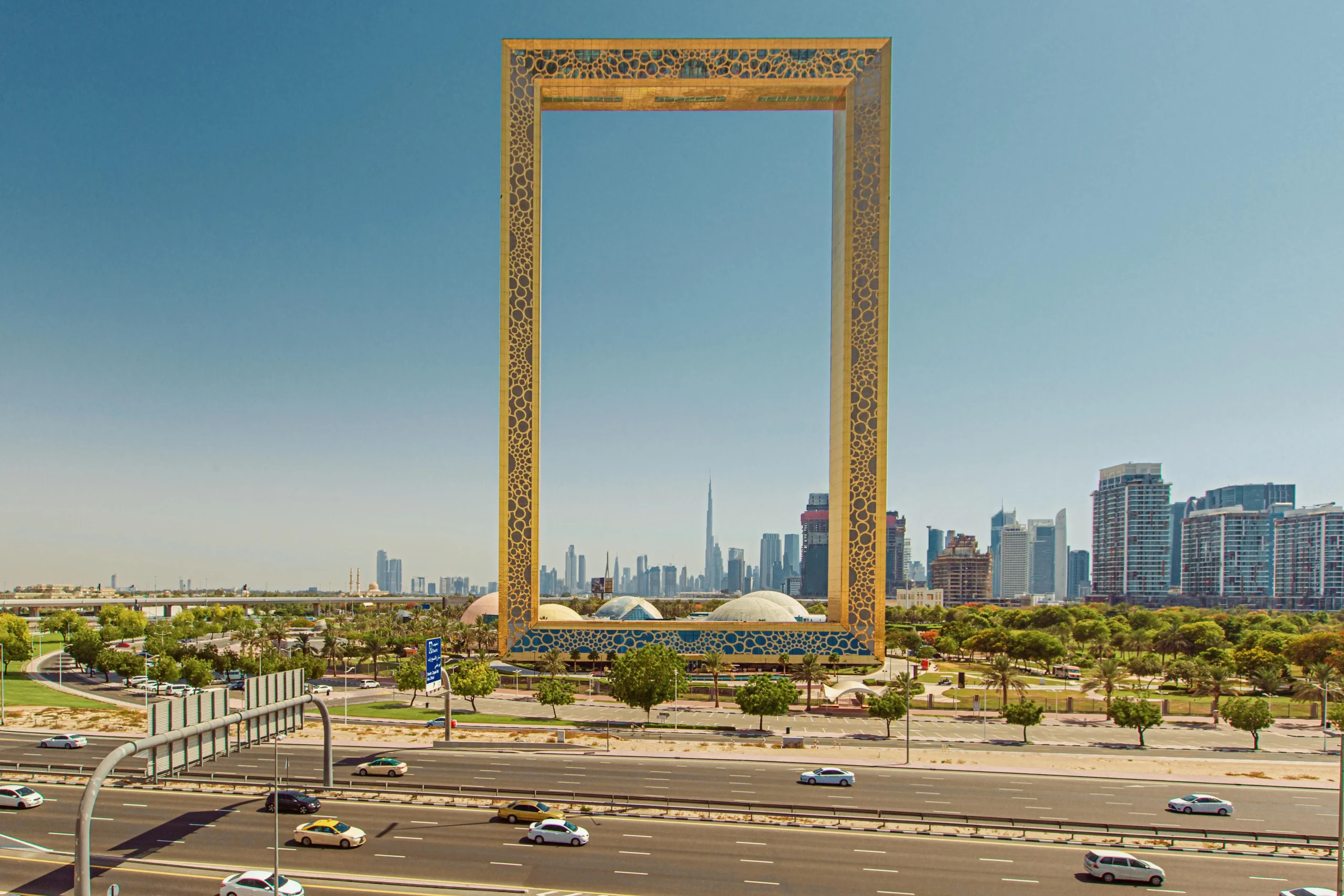
One of the most iconic landmarks in the city of Dubai, the Dubai Frame stands 150 meters tall and holds the title of the largest picture frame in the world. Designed as a bridge between Old Dubai and New Dubai, this massive photo frame provides a view of Dubai’s many landmarks. The two 150-meter-high towers are connected by a 93-meter-long bridge, which offers 360-degree views of Dubai.
The bridge’s 25-meter glass panel, designed for the view, gives visitors the feeling of walking on air. This incredibly thick glass can support a tremendous amount of weight. The primary materials used to build this giant are reinforced concrete, aluminum, steel, and glass.
5. Museum of the Future
Architect: Killa Design
Year: 2022
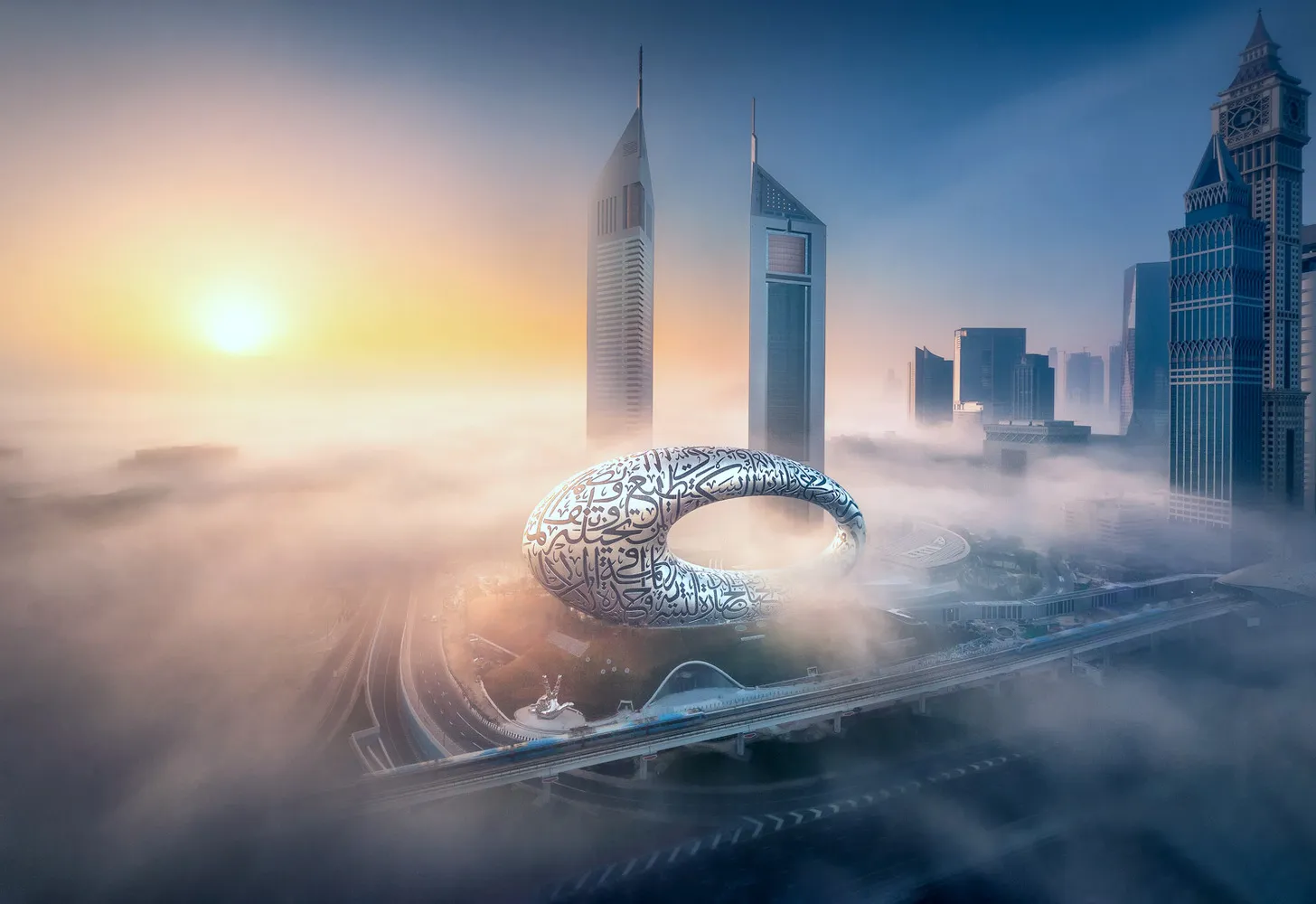
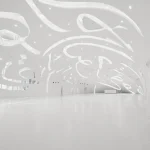
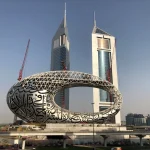
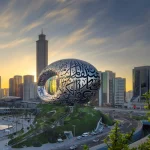
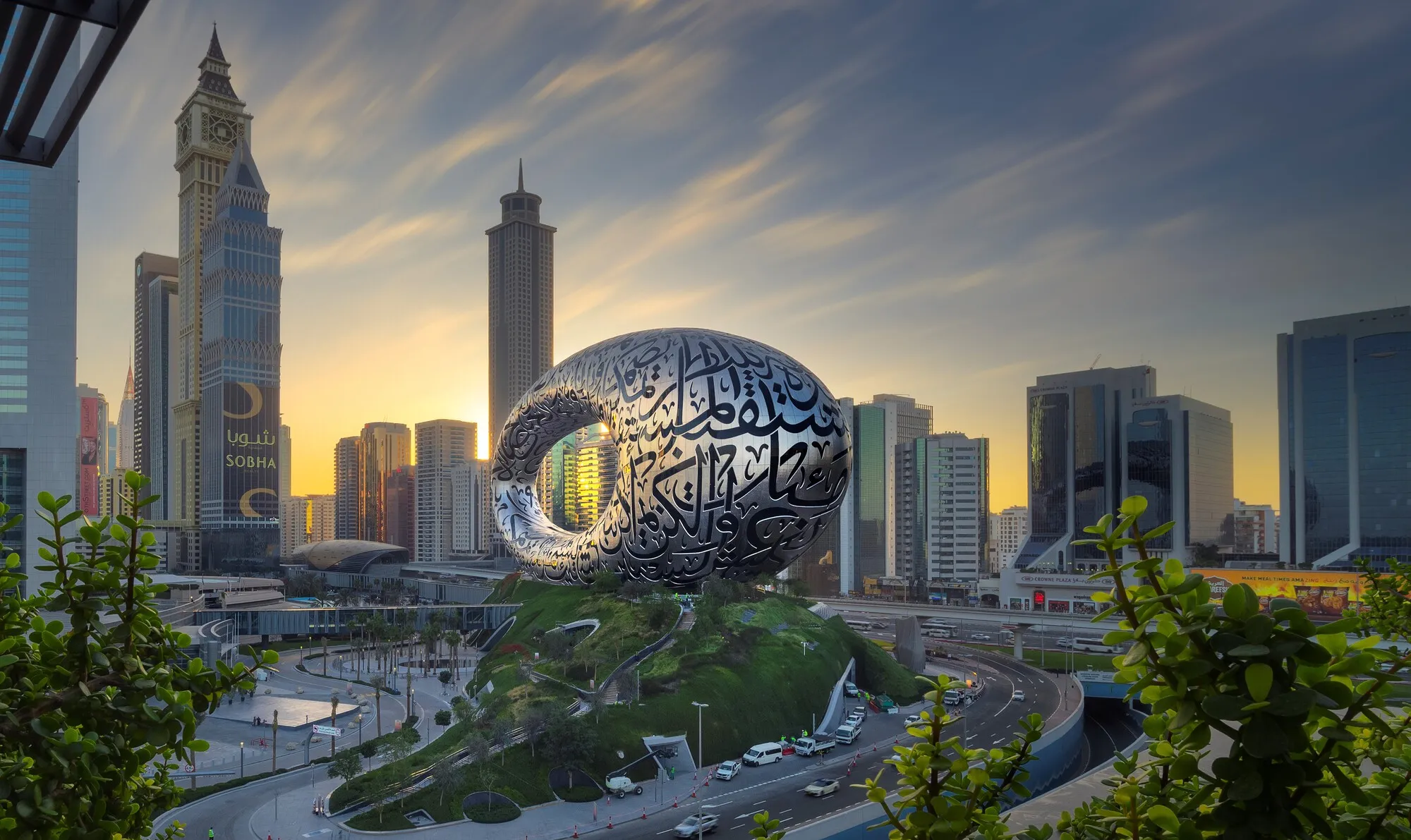
One of the most innovative museums in the world, the Museum of the Future is among the most iconic landmarks adorning the Dubai skyline. An exhibition space for innovative and futuristic ideologies, services, and products, the museum consists of three main elements: the green hill, the museum, and the void. The green hill, which elevates the structure above the nearby metro line and introduces a rare patch of greenery in the heart of Dubai, represents the Earth, with roots grounded in place, time, and history. The torus-shaped form of the museum symbolizes the vision of the UAE Prime Minister, representing humanity’s ability to push the boundaries of modern engineering and construction methodologies.
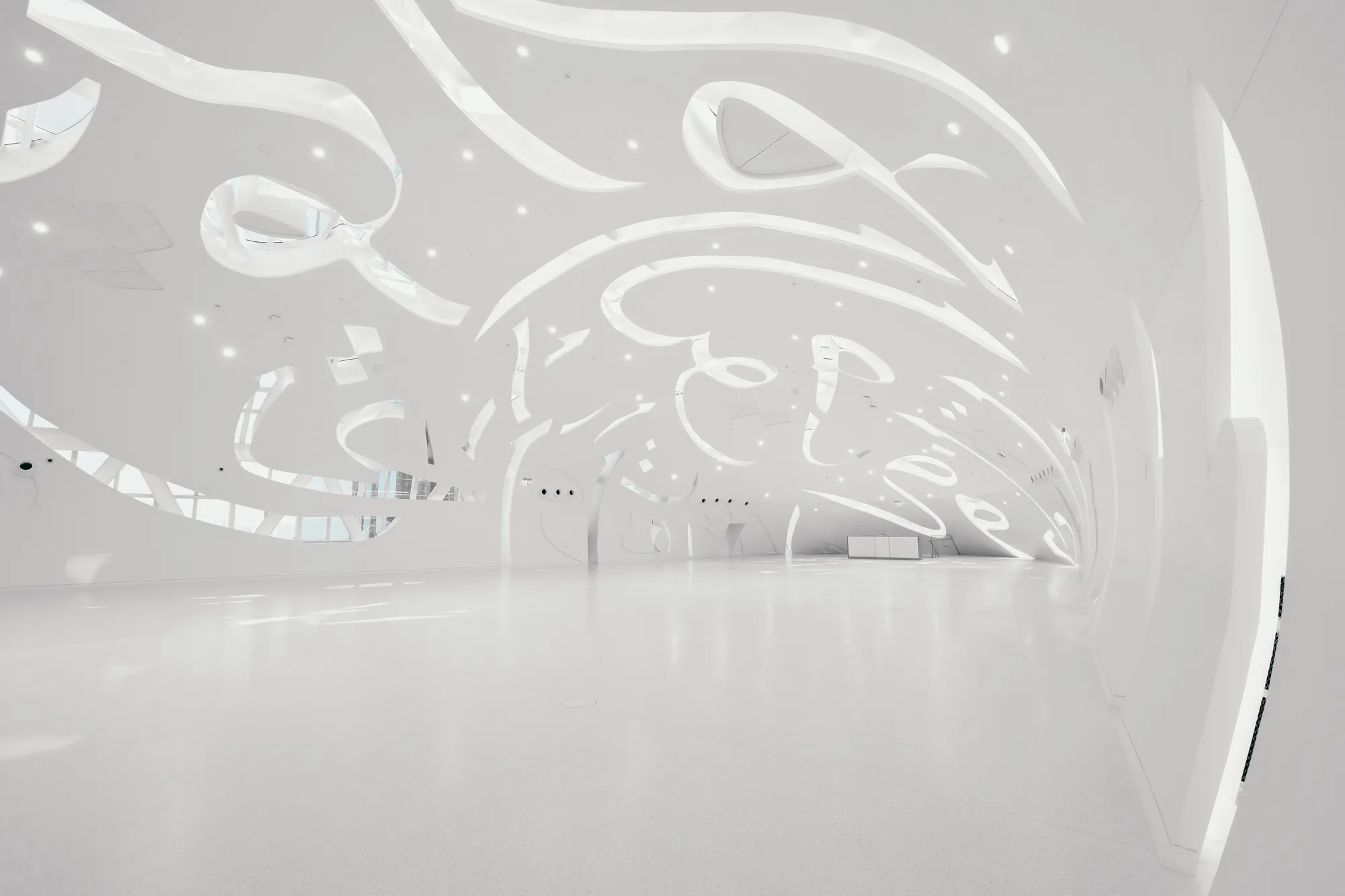
The void represents the “unknown,” and people who seek the unknown innovate and discover new horizons and ideas that help guide humanity towards a better future. The Museum of the Future pushes design boundaries with its intricate steelwork and façade. Each panel of the façade is engraved with Arabic calligraphy, forming the museum’s window openings while conveying quotes from the UAE Prime Minister about the region’s and the world’s future.
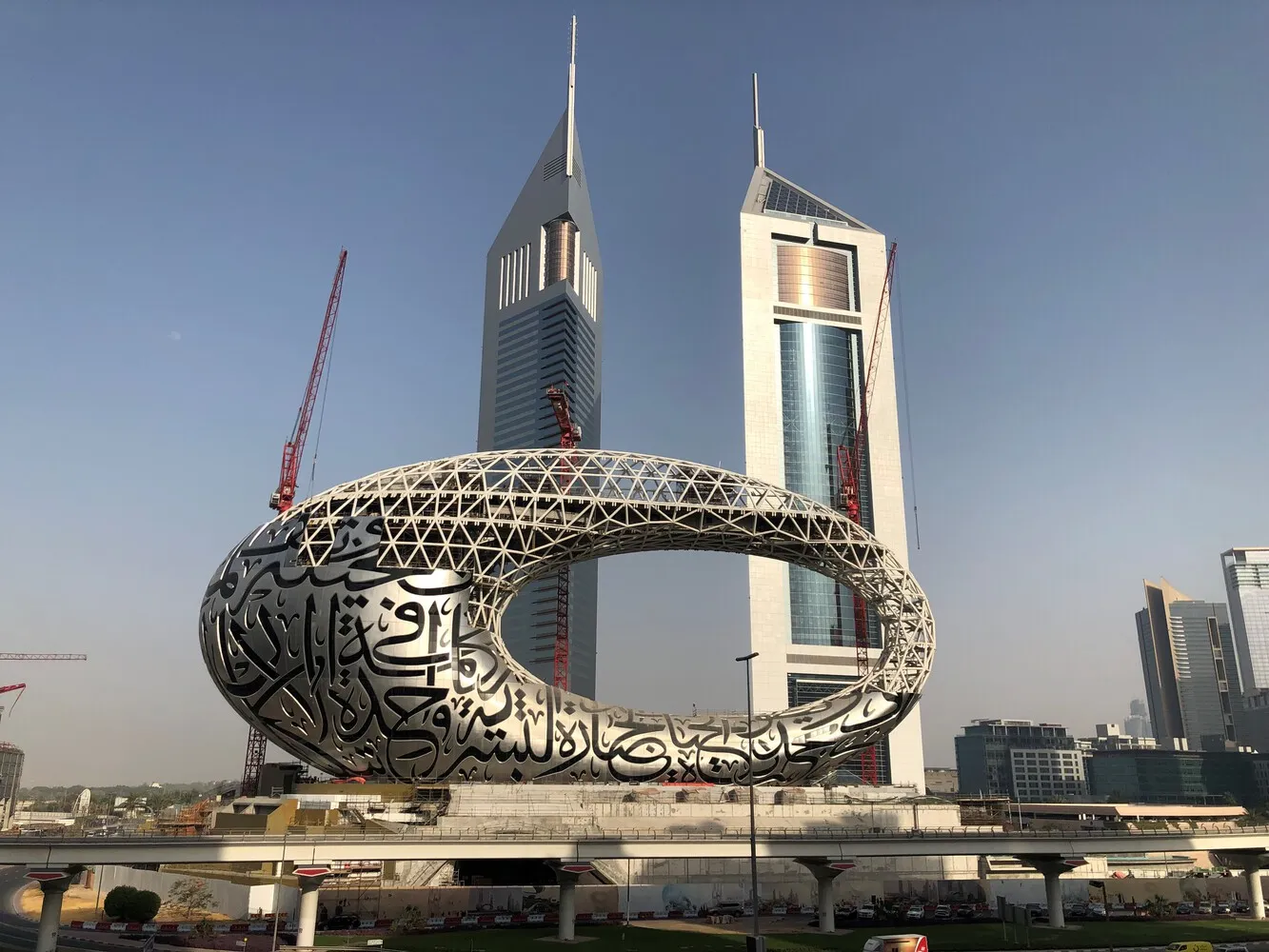
Designed with a commitment to sustainability principles, the Museum of the Future achieved LEED Platinum certification by incorporating passive solar design, low-energy and low-water engineering solutions, recovery strategies for both energy and water, and building-integrated renewable energy from an off-site solar array.
6. Ain Dubai
Architect: Snøhetta
Year: 2021
Height: 250 meters
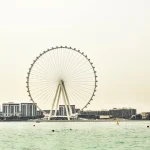
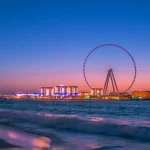
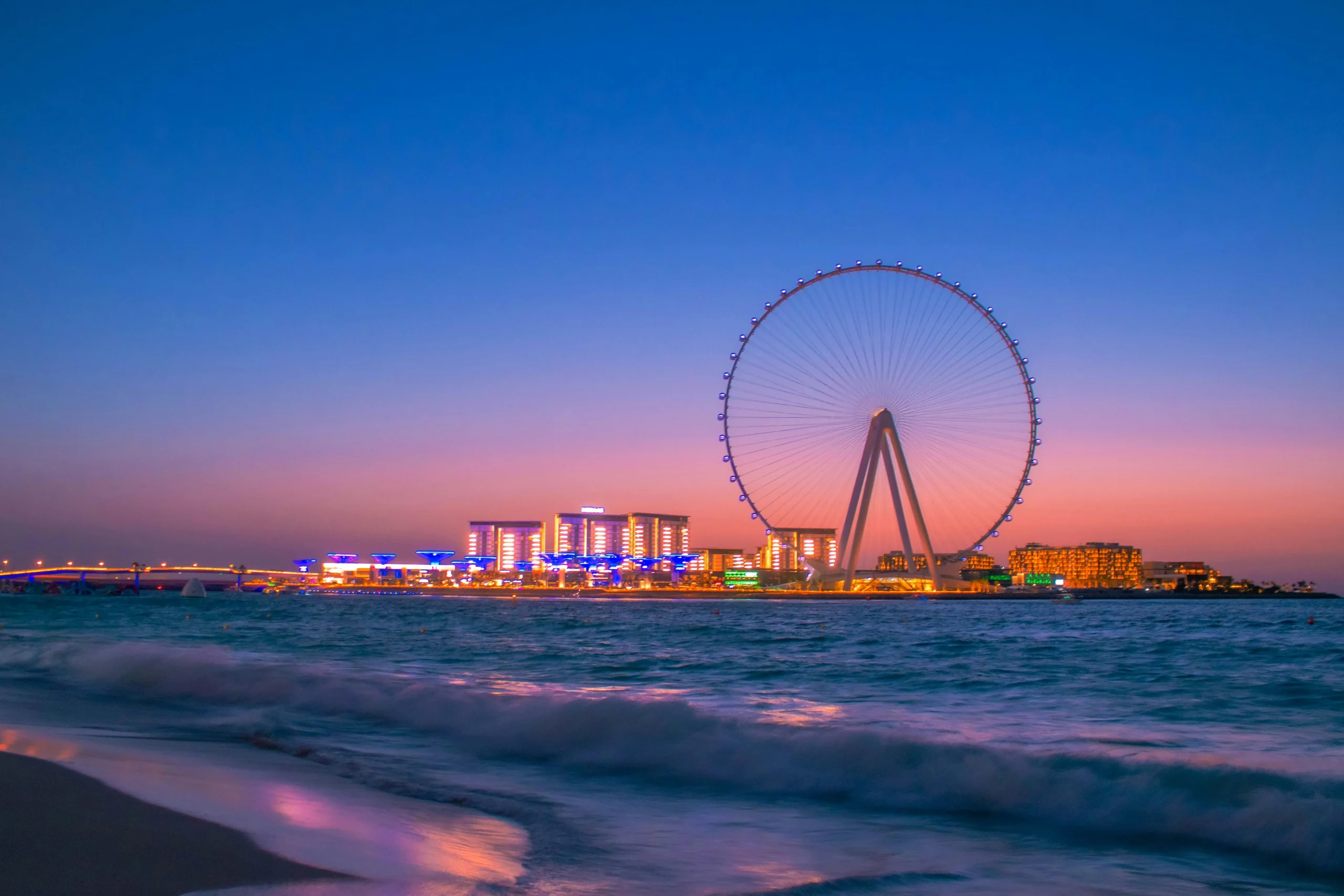
Standing 250 meters tall, Ain Dubai is the world’s tallest observation wheel, offering a breathtaking new perspective of Dubai’s dazzling skyline. The scale and complexity of the project, nearly twice the size of the London Eye, required extraordinary engineering and teamwork, and numerous construction records were broken along the way. Surrounded by 48 passenger cabins designed to carry a total of 1,750 passengers simultaneously in a rotation of approximately 38 minutes, the Ferris wheel is supported by four legs, each 126 meters long.
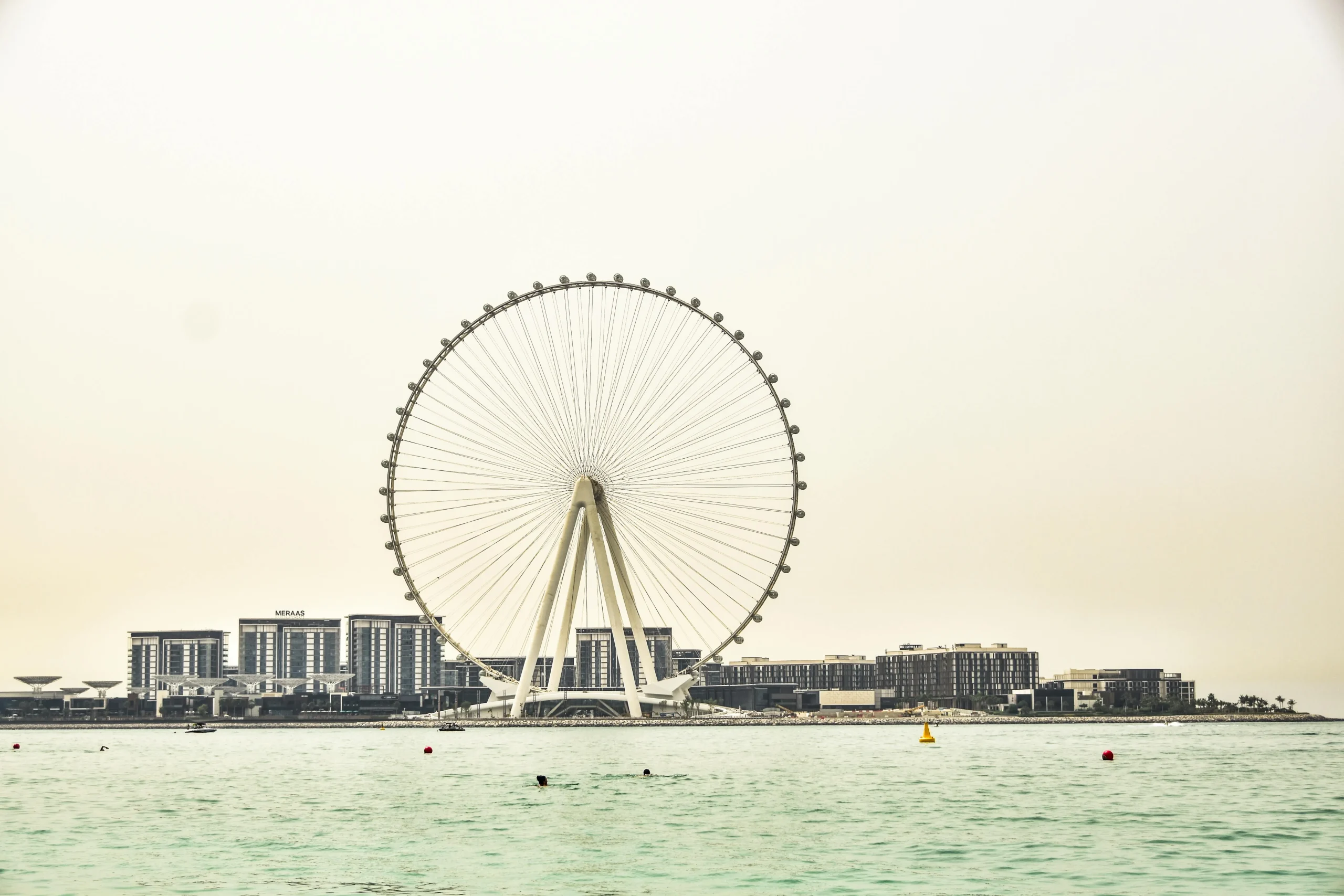
The hub and spindle assembly, weighing a total of 1,805 tons, was lifted into place at a height of 130 meters using two of the largest cranes in the world. The 11,200 tons of steel used in Ain Dubai’s construction is approximately 33% more than the amount of iron used in the Eiffel Tower in Paris.
7. Miracle Garden
Year: 2013
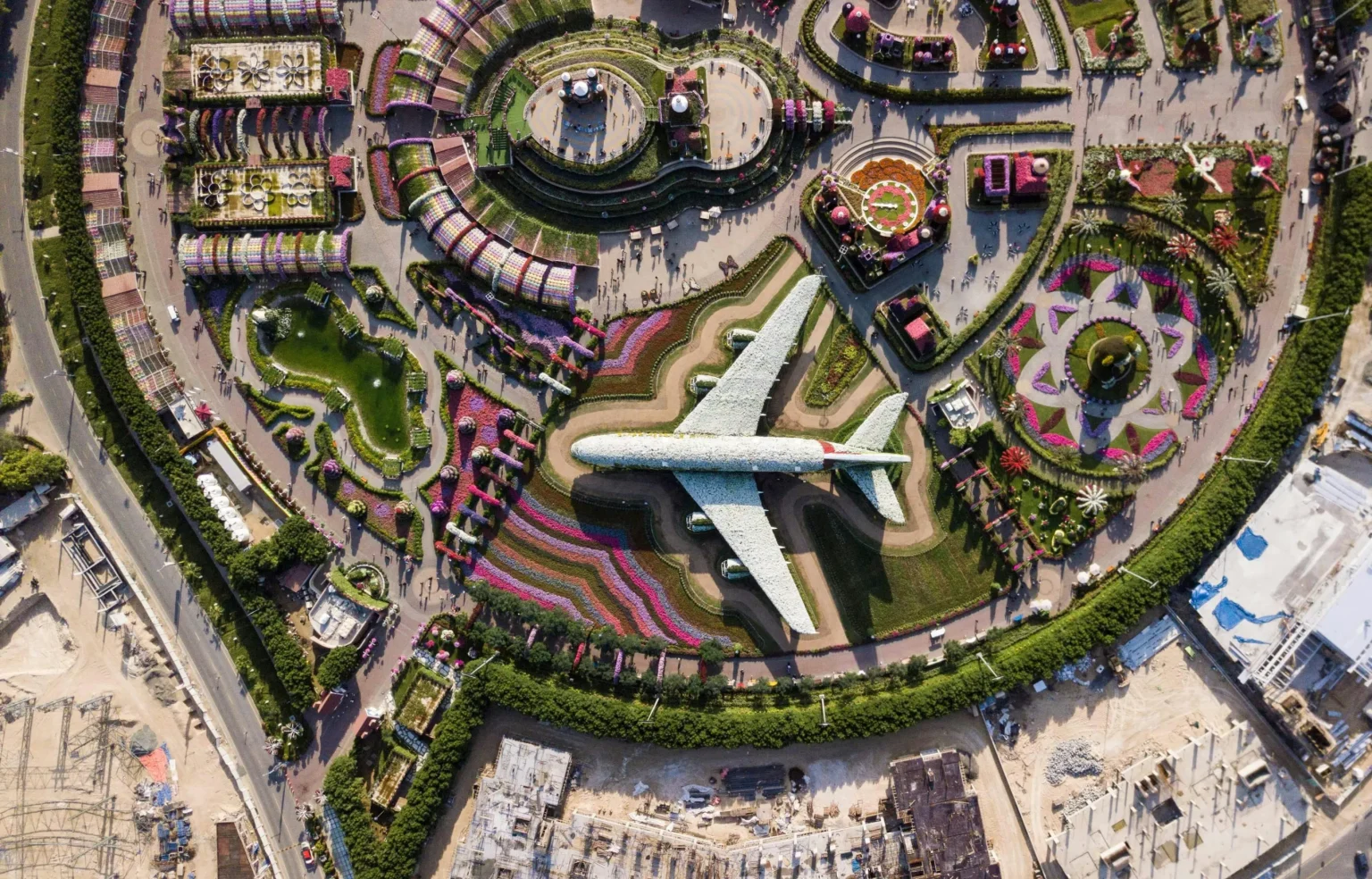
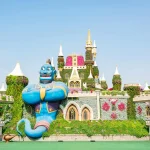
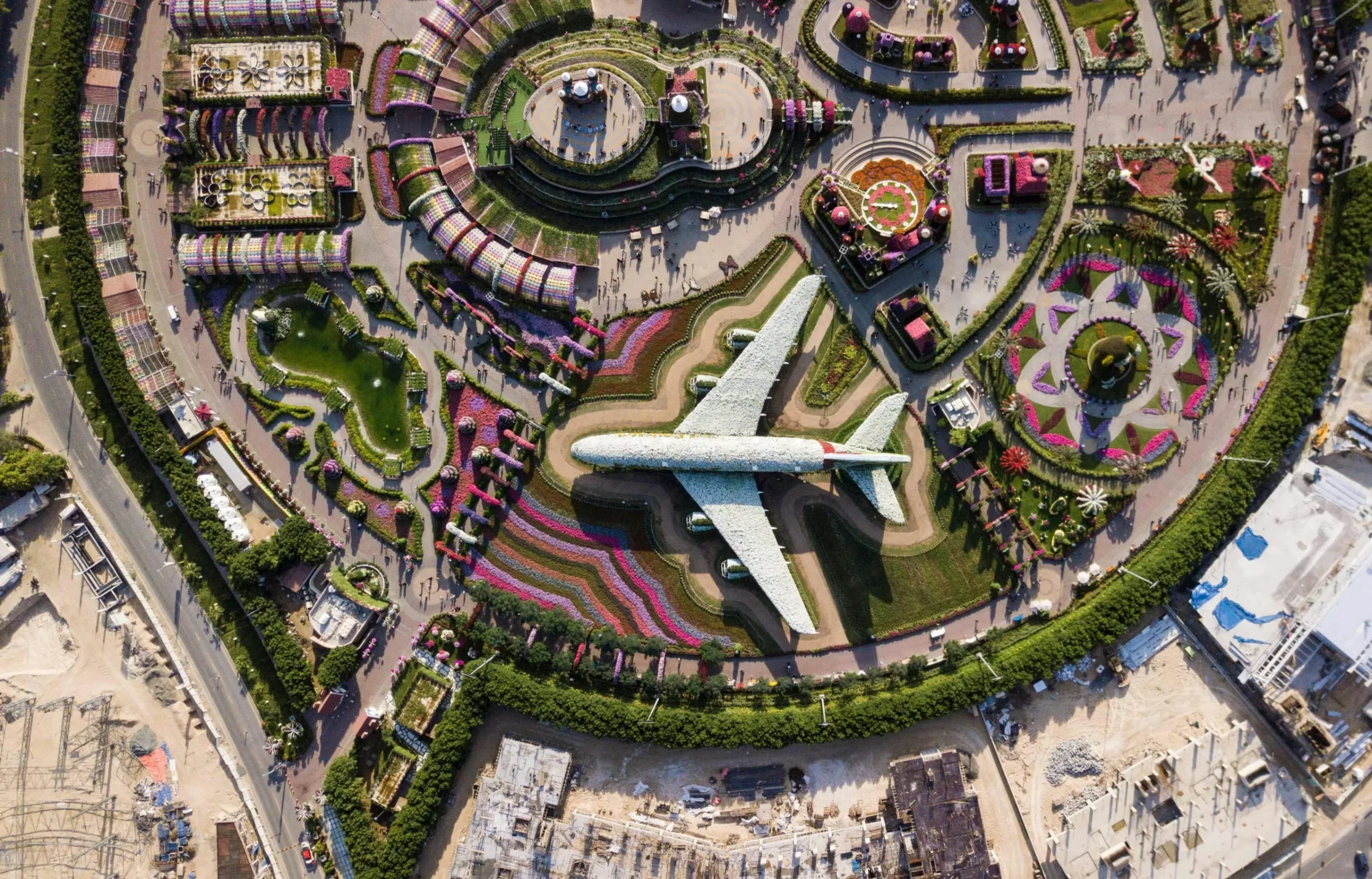
The Dubai Miracle Garden, the world’s largest natural flower park, is one of Dubai’s most popular tourist attractions. Spanning 72,000 square meters, the garden features over 150 million flowers arranged in eye-catching patterns, intricate designs, and vibrant color combinations.
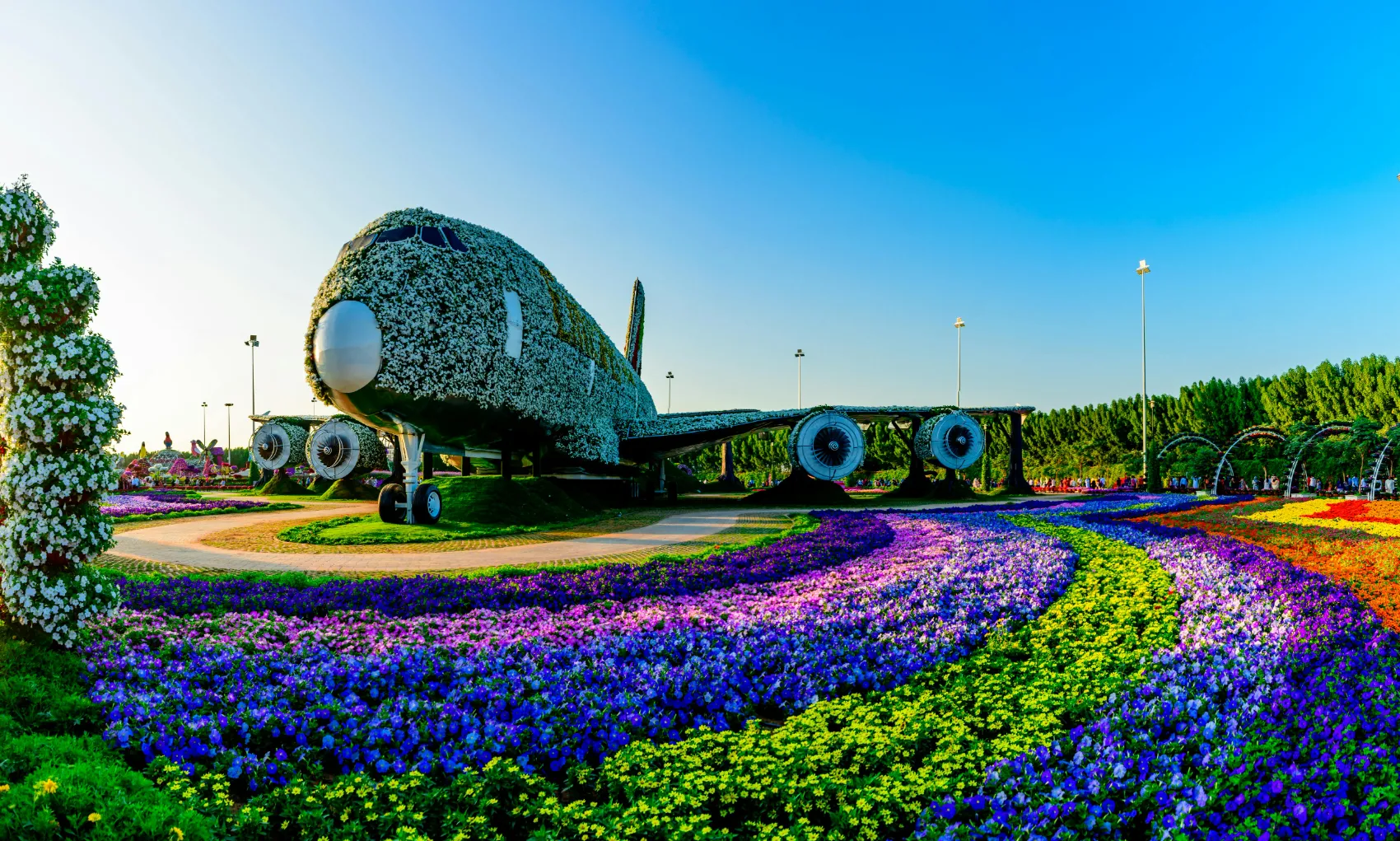
Considering Dubai’s arid desert climate, the Miracle Garden stands as a remarkable feat of horticultural art and innovation. It was designed and developed under the leadership of Abdul Nasser Rahhal, founder and chairman of Akar Landscaping Services and Agriculture. A testament to advanced agricultural techniques and sustainable practices, the Miracle Garden introduces new themes and exhibits each season, ensuring visitors have a fresh and exciting experience with every visit. Its continuous growth and expansion highlight a deep commitment to creativity and excellence in landscape design. One of its most notable achievements was breaking the Guinness World Record for the largest floral arrangement in 2016, featuring an Airbus A380 flower structure.
8. Cayan Tower
Architect: Skidmore, Owings & Merrill (SOM)
Year: 2013
Height: 307 meters
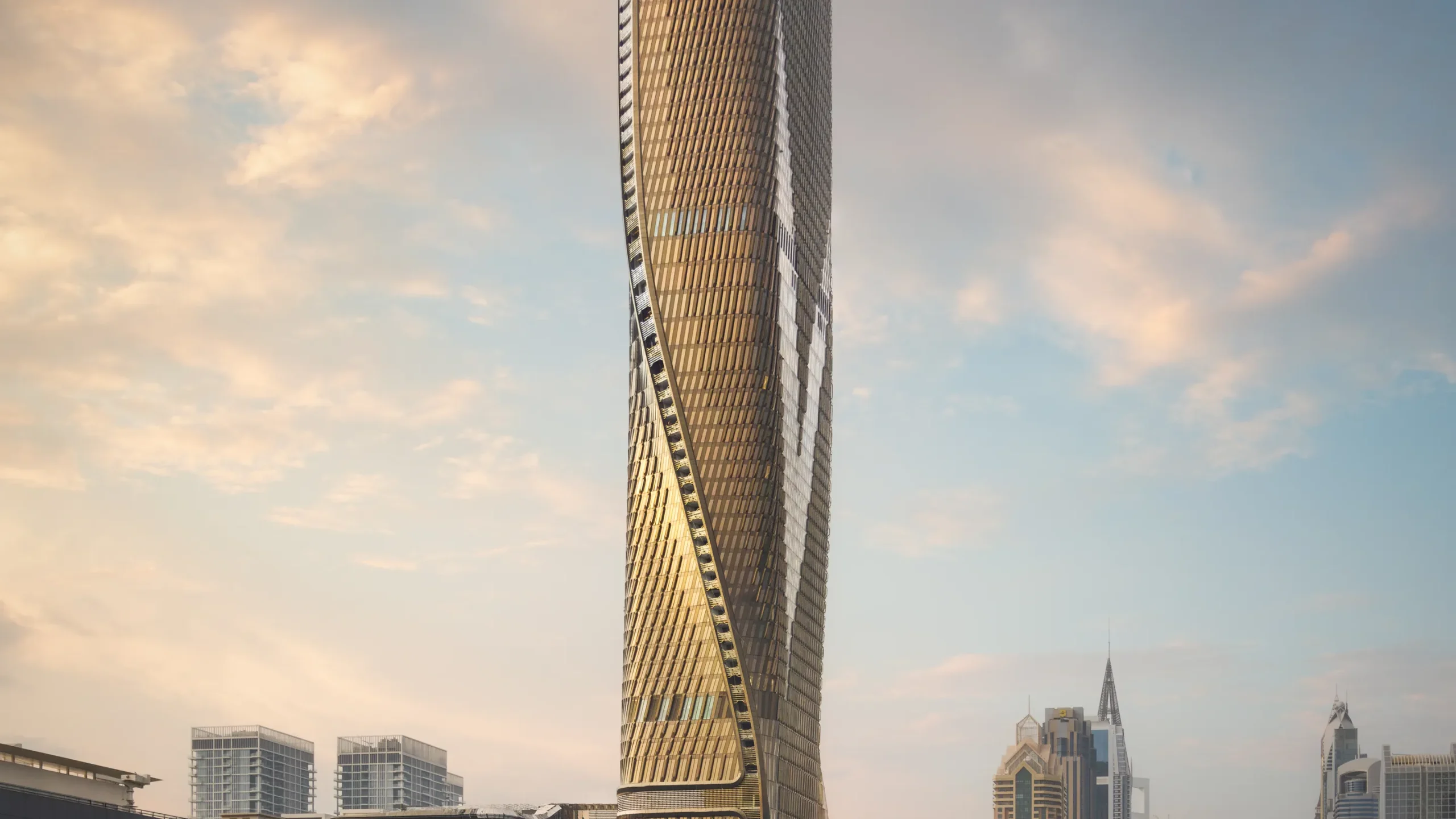
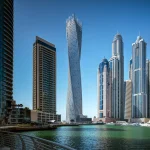
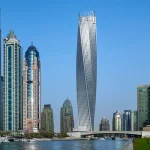
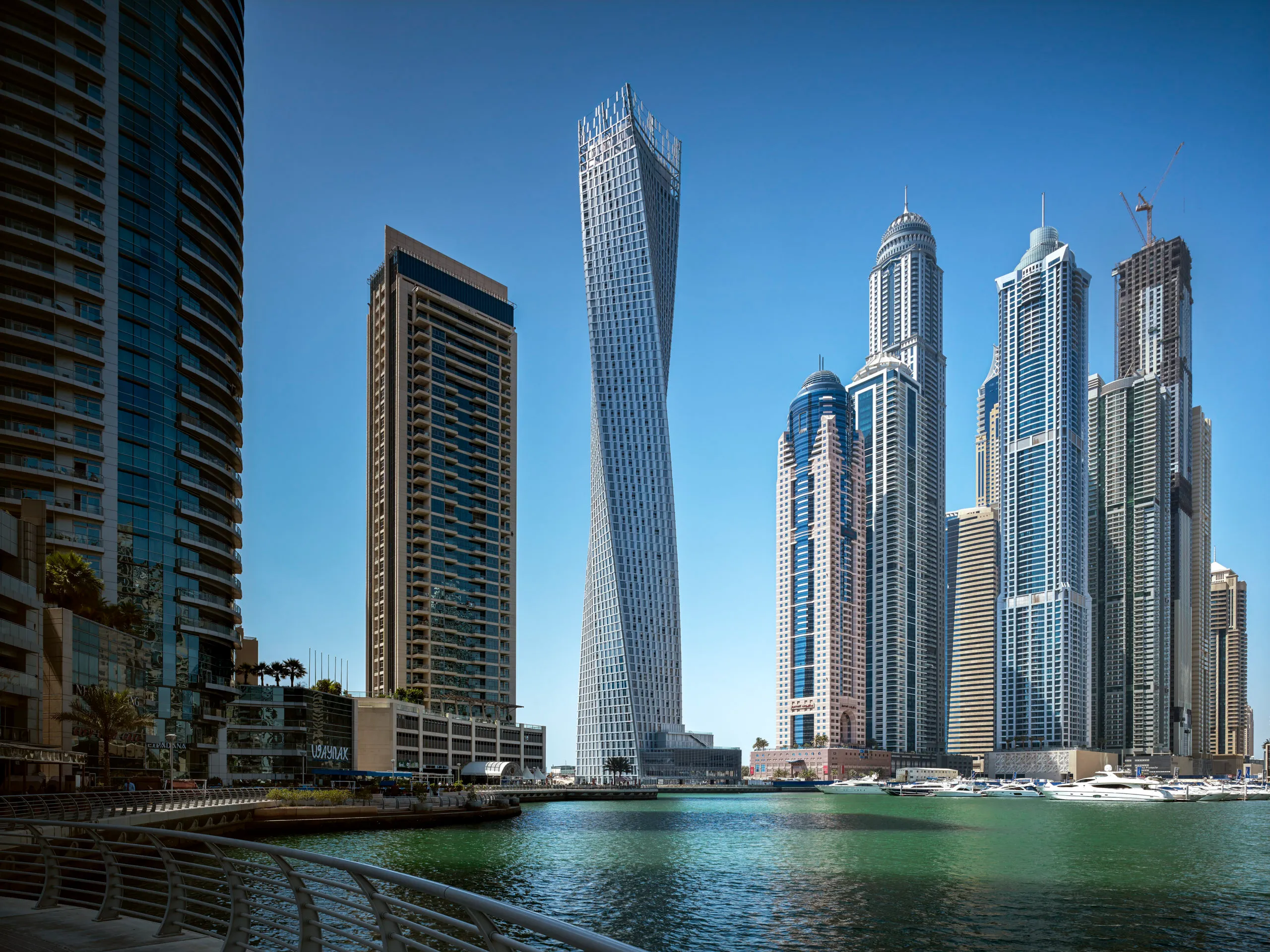
The Cayan Tower, the world’s tallest twisting tower, is a 75-story residential skyscraper and one of the most iconic landmarks of Dubai. With its striking and elegant design, the residential tower is a pure expression of the idea that a building’s form should directly follow its structural framework. Consistent floor plans are flexible enough to accommodate a wide variety of apartment types, from studios and three-bedroom apartments to six-story half-rise and full-rise penthouses. Residential amenities include an outdoor infinity pool and jacuzzi, as well as mixed-use social spaces such as a health spa with resident rooms, an exercise facility, conference centers, lounges, and a childcare center.
Positioned perpendicular to Dubai Marina, the tower consists of 75 identical floor plates. Each floor plate rotates 1.2 degrees clockwise toward the floor below, achieving a full 90-degree rotation. This helical design not only offers spectacular views for residents but also helps preserve the Arabian Gulf vistas for neighboring buildings. Structural wind loads are also reduced compared to a linear building of the same height.
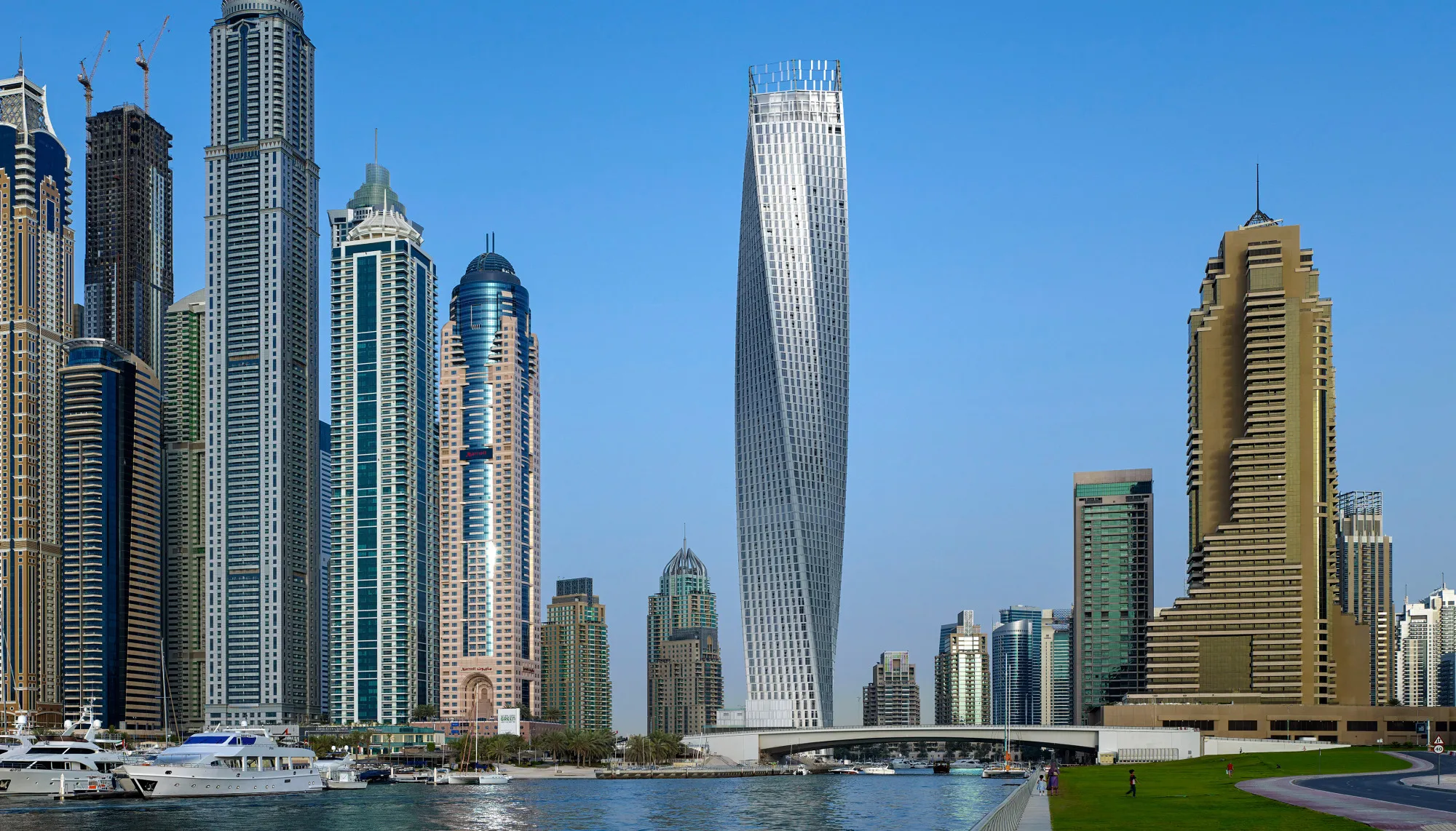
Designed with Dubai’s arid desert climate and urban heat island conditions in mind, the tower employs cast-in-place concrete perimeter columns combined with prefabricated metal panels and repetitive staggered curtain wall panels. These elements filter direct sunlight into the units, enhancing both energy efficiency and visual comfort while maintaining the tower’s distinctive sculptural elegance.