

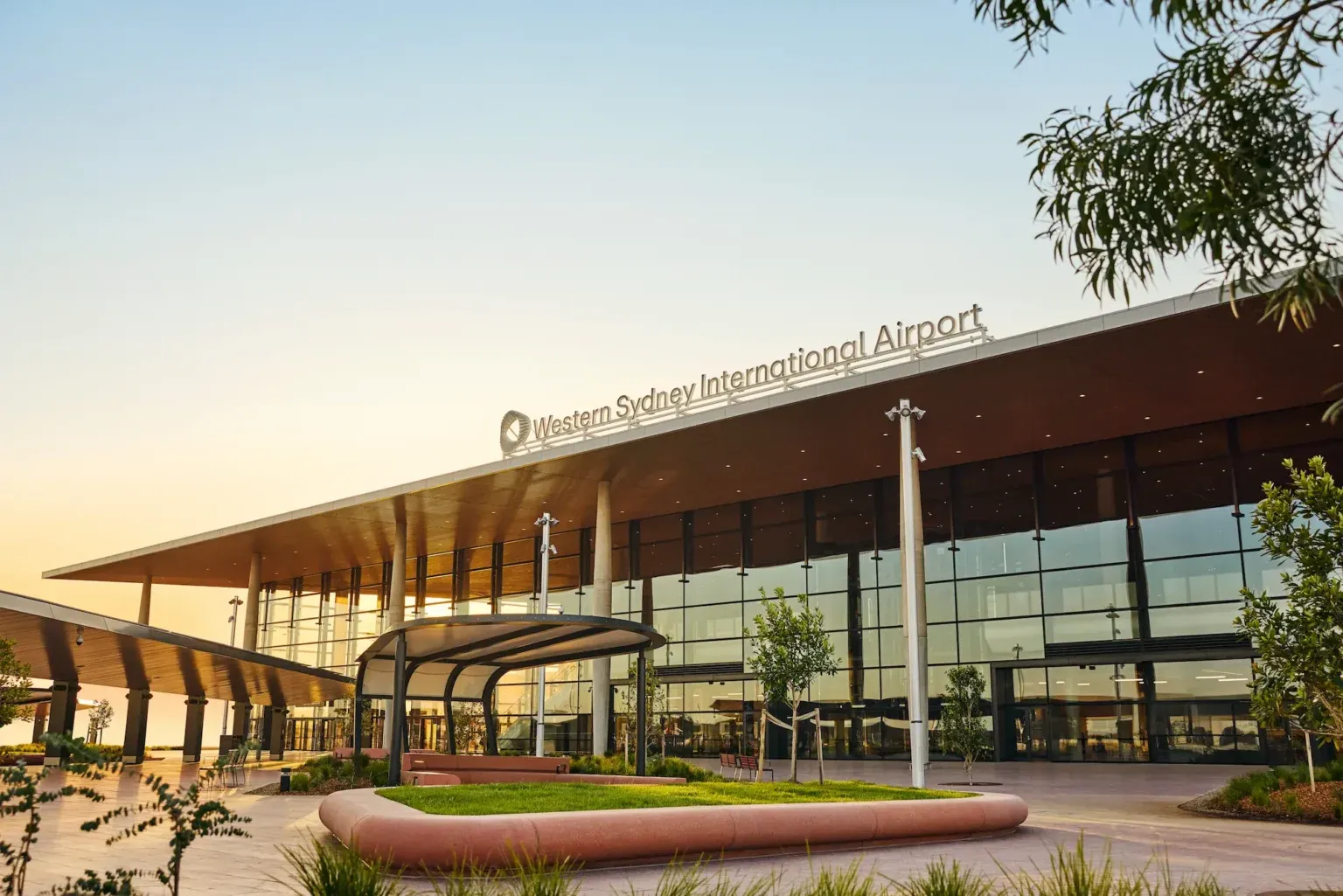
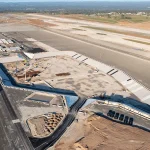
Australia’s aviation landscape has reached a historic milestone. Construction on the Western Sydney International (Nancy-Bird Walton) Airport (WSI), the nation’s first major new airport in more than 50 years, is officially complete.
Delivered by Bechtel nearly seven months ahead of schedule and within its AU$5.3 billion (US$3.5 billion) budget, the project marks the structural completion of Australia’s first greenfield international airport in half a century. With the terminal, airside, and landside packages now finished, attention turns to interior fit-outs, retail spaces, and airline lounges as the airport prepares to welcome its first passengers in late 2026.
Architectural Vision Grounded in Place and Light
The terminal’s design journey began in 2019, when COX Architecture and Zaha Hadid Architects won an international competition to craft a concept rooted in Western Sydney’s landscape, light, and natural identity. Woods Bagot then stepped in as the lead design and delivery architect, working with Multiplex through to completion.
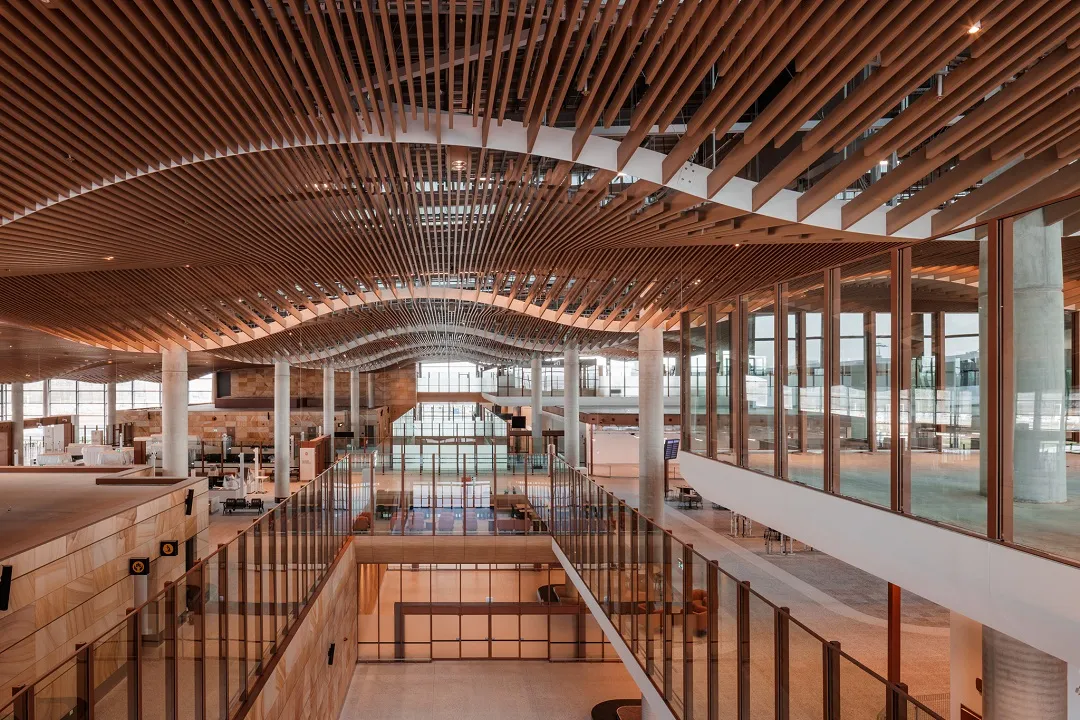
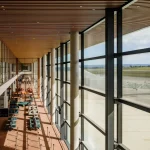
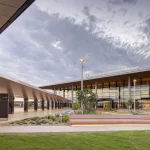
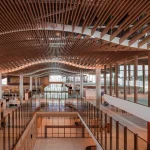
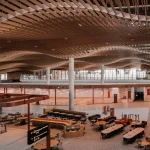
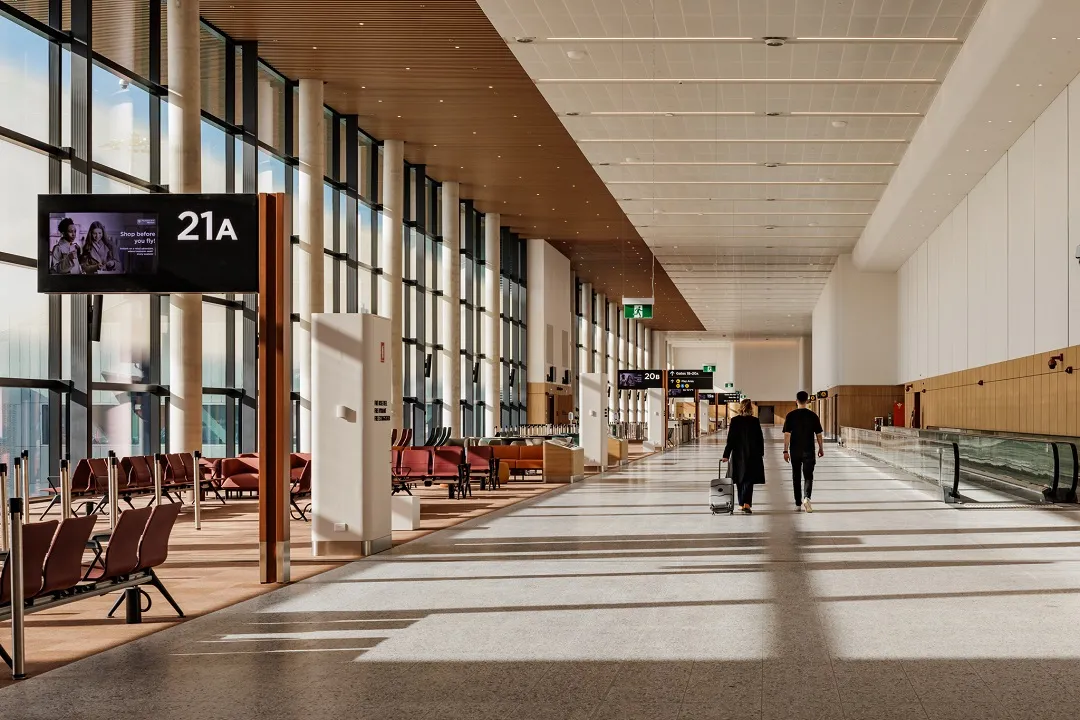
The architecture draws directly from the region; the terminal’s horizontal, low-lying form echoes the Cumberland Plain, while its sculptural ceiling, composed of aluminum box sections treated to mimic timber, undulates like sunlight filtering through eucalyptus bark (a reflection of the nearby Blue Mountains).
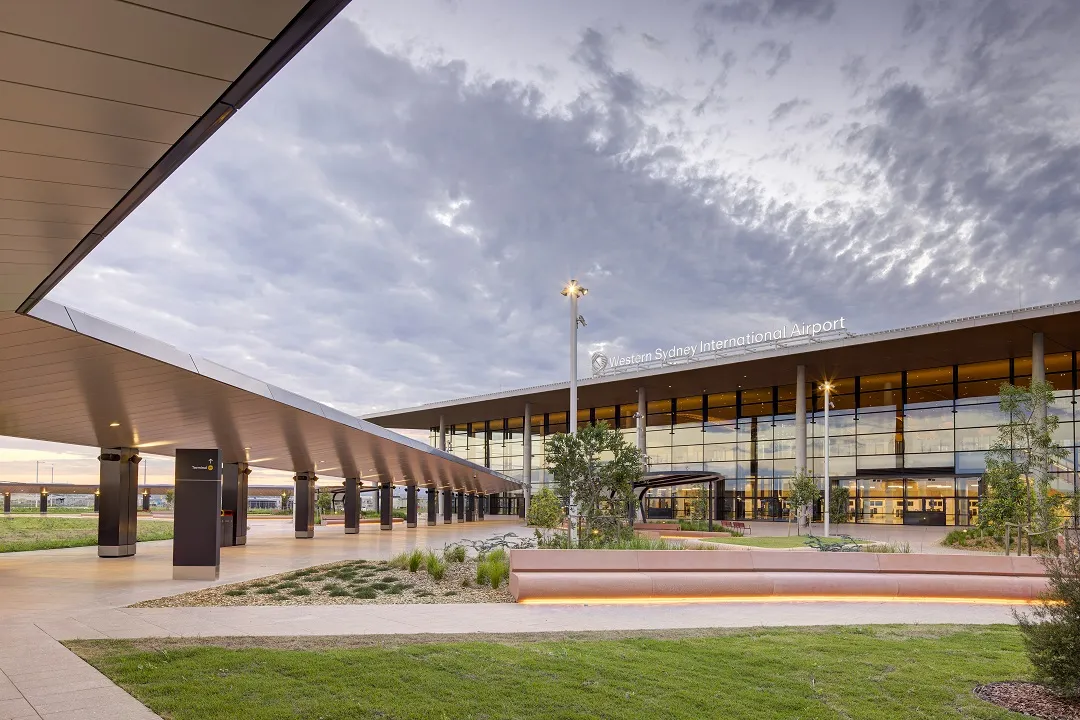
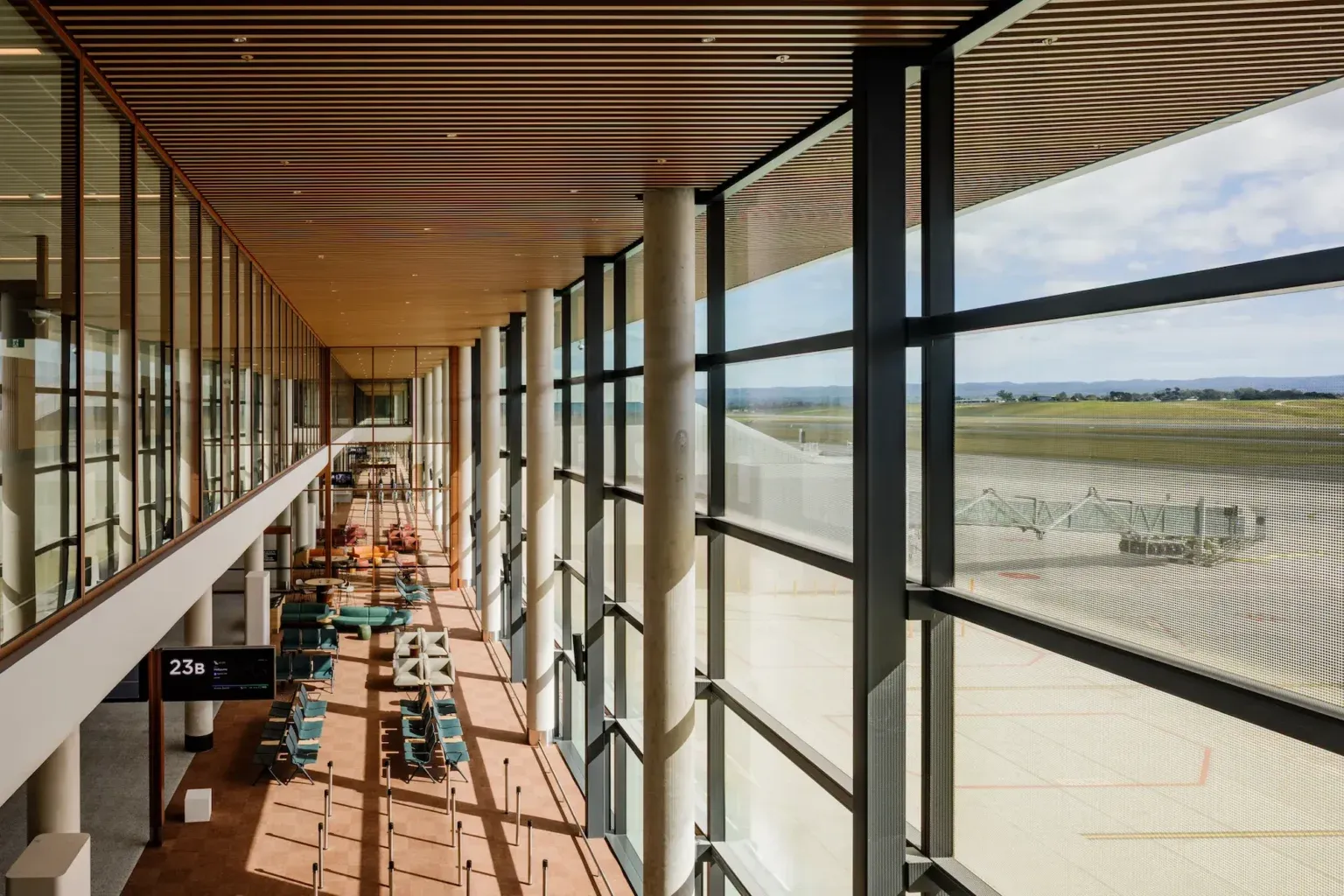
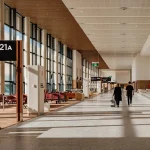
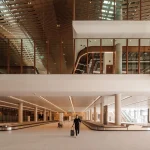
Conceived as a unified hub for both domestic and international travel, the terminal is designed to ensure effortless connections and a serene visual atmosphere. Neil Hill, Woods Bagot’s principal design lead, emphasizes that the terminal “offers a constantly evolving visual experience and sense of joy” with soaring triple-height spaces and panoramic views.
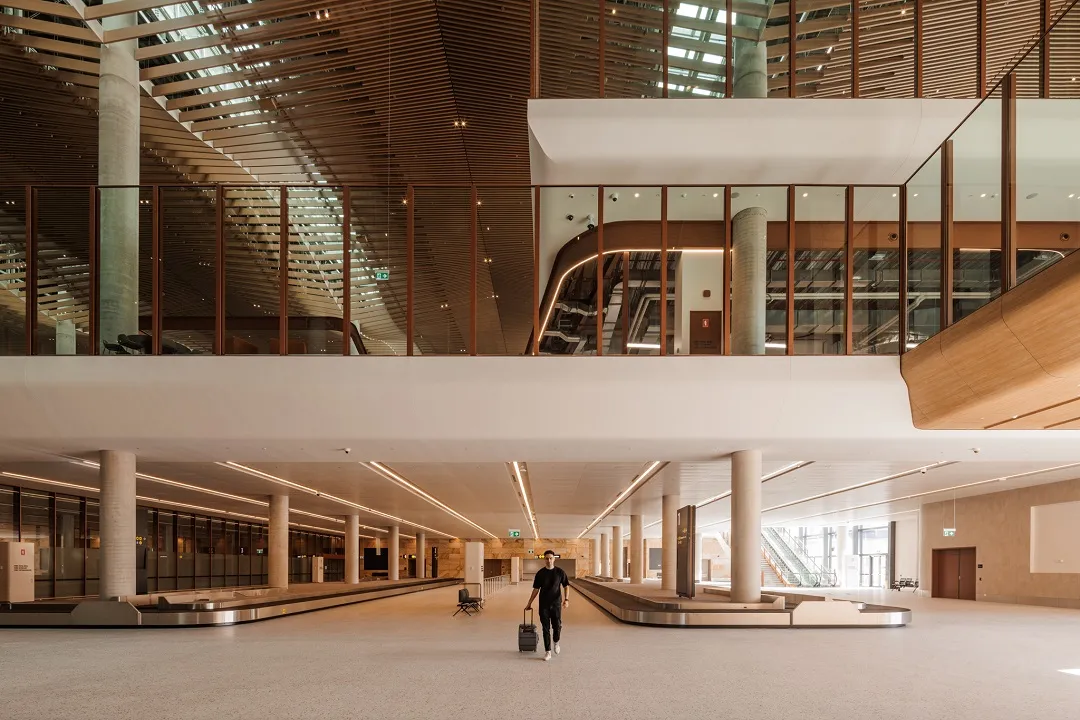
COX’s David Holm notes how “the ‘Great Australian Light’ shapes how people move, orient, and feel, creating a sense of calm, clarity, and connection,” ensuring a first touchpoint with Australia feels rooted and memorable.
Western Sydney Airport Design, Sustainability and Cultural Identity
The terminal has earned a 5-Star Green Star design rating and incorporates features such as rainwater recycling, natural ventilation, on-site energy generation, and a modular design to facilitate future growth. More than 6,000 solar panels on the roof will generate renewable energy, feeding into the terminal’s systems that support natural ventilation and water recycling.
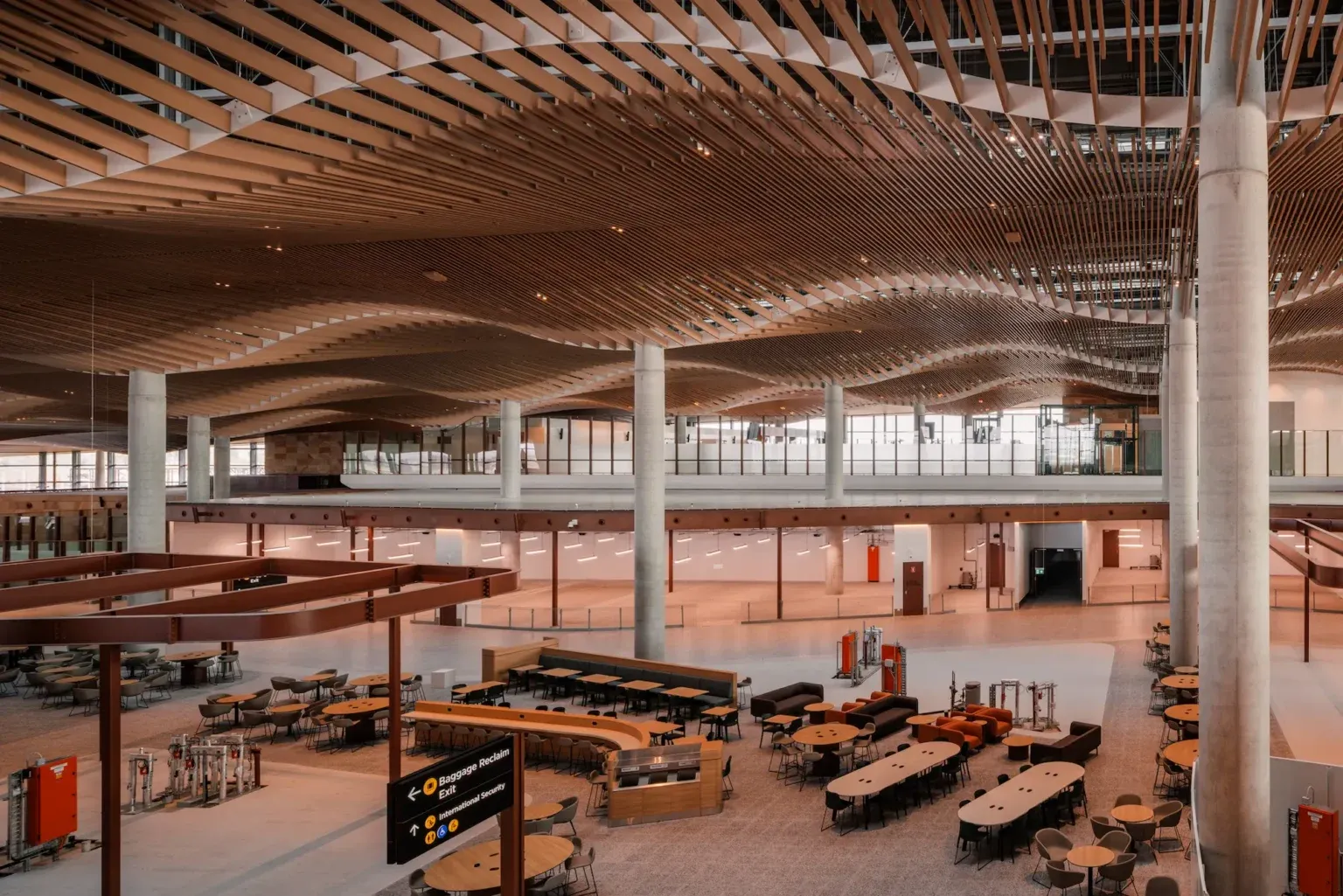
Western Sydney International Airport’s public areas showcase narratives from Dharug custodians and First Nations consultants, threading Indigenous culture into the building’s spirit. With the shell complete, attention turns to commercial fit-outs; retail outlets, airline lounges, and passenger amenities are being installed as agreements progress.
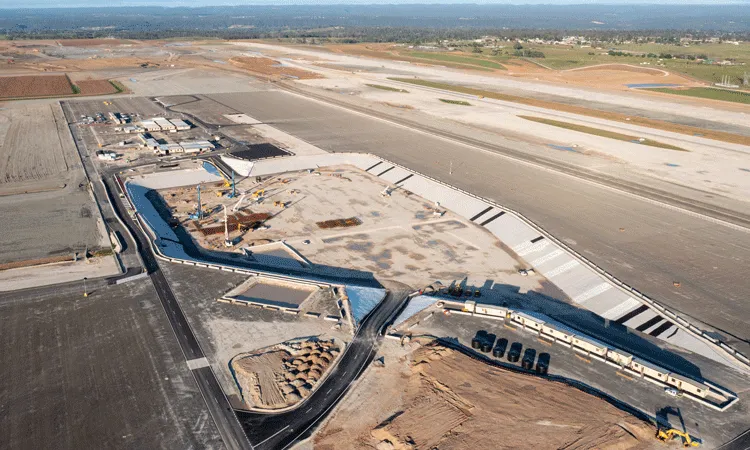
When operational in late 2026, WSI will be a modern, 24-hour airport capable of serving up to 10 million passengers annually at launch, with a scalable design to reach 82 million annual travelers by the 2060s. It’ll supplement Sydney’s existing airport, unbound by current curfews and flight caps.
Image credit: Trevor Mein