
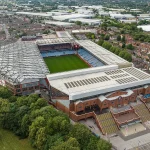
Premier League stadiums are among the most recognised in world football, combining scale, history, and design. These grounds are not only defined by their capacity but also by the way they have been shaped through different eras of construction and redevelopment.
Some, like Old Trafford and Villa Park, reflect more than a century of football heritage, designed in periods when steel structures and brickwork dominated. Others, such as the Tottenham Hotspur Stadium or the Emirates, represent a modern phase, where retractable pitches, sweeping roofs, and sustainability features set new standards.
This article looks at 10 of the largest Premier League stadiums, highlighting their location, capacity, and key architectural features. Together, they show how English football grounds have evolved while remaining central to the game’s identity.
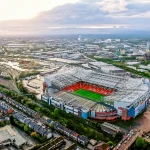
1. Old Trafford – Manchester United
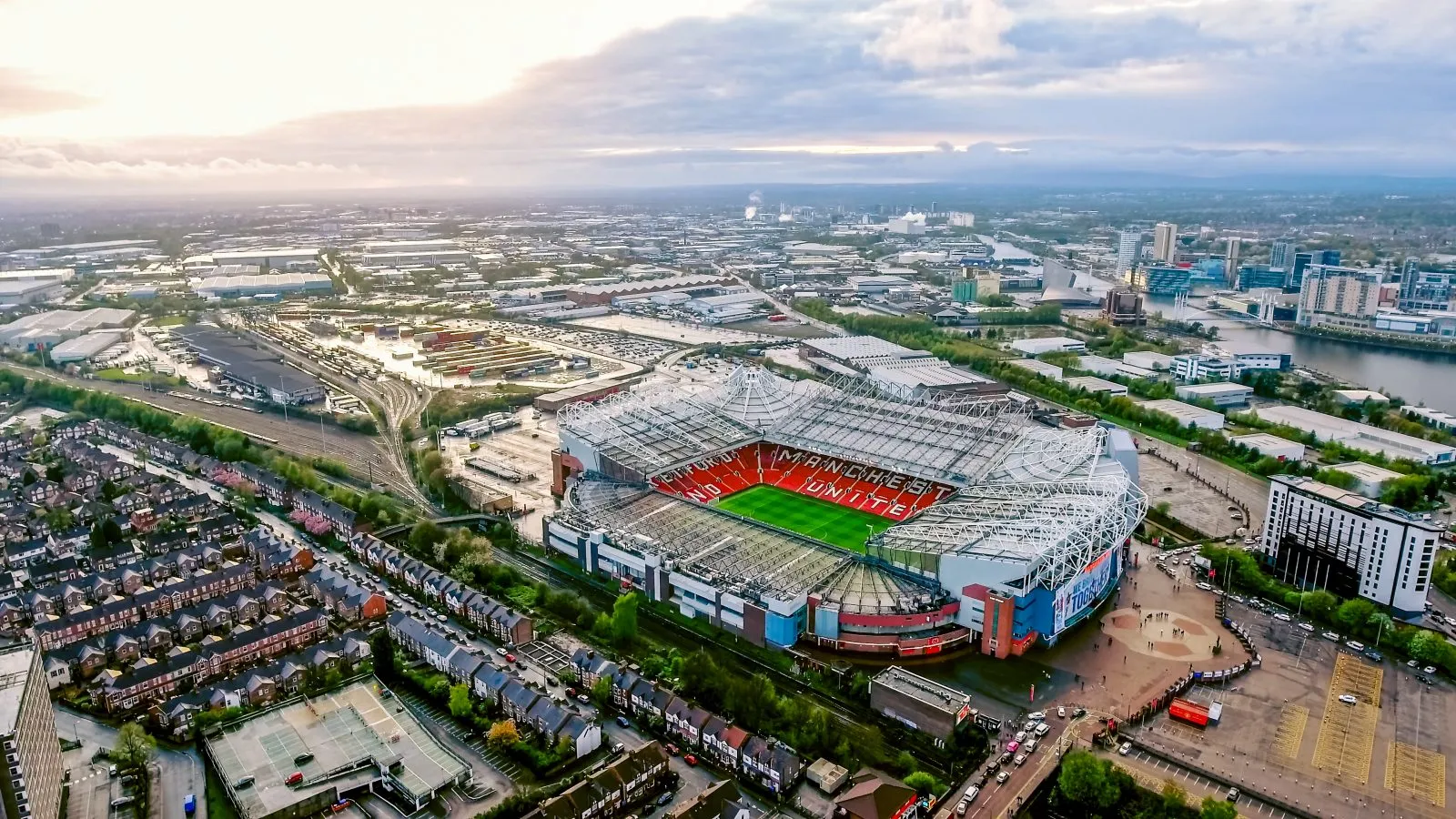
Location: Greater Manchester, England
Capacity: 74,197 seats
Known as the Theatre of Dreams, it’s a living chronicle of football’s architectural evolution. Opened in 1910 and designed by Archibald Leitch, whose functional yet striking style of steel-framed stands and pitched roofs marked early 20th-century stadium design, Old Trafford blends imposing structure with graceful lines, maintaining an elegant yet robust structure.
2. Tottenham Hotspur Stadium – Tottenham Hotspur
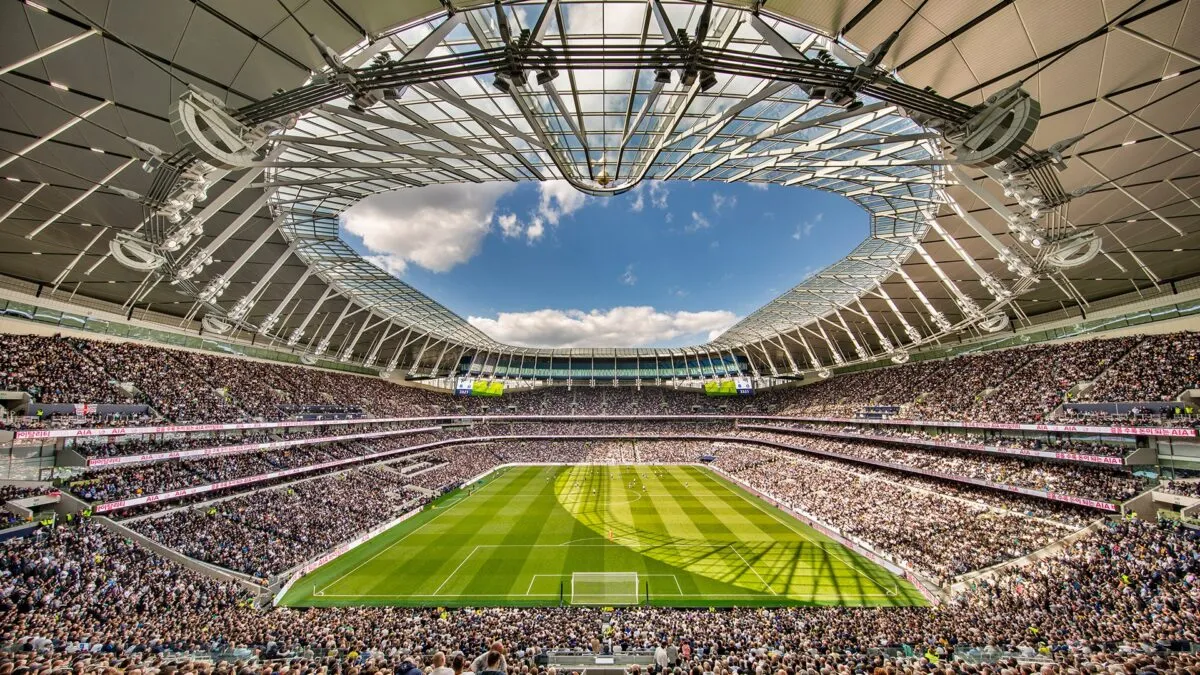
Location: Tottenham, London
Capacity: 62,850 seats.
Designed by Populous, it’s home to the world’s first dividing, retractable football pitch. This system slides the natural-grass surface away in sections to reveal a synthetic field underneath for NFL games and concerts.
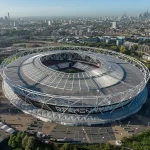
3. London Stadium – West Ham United
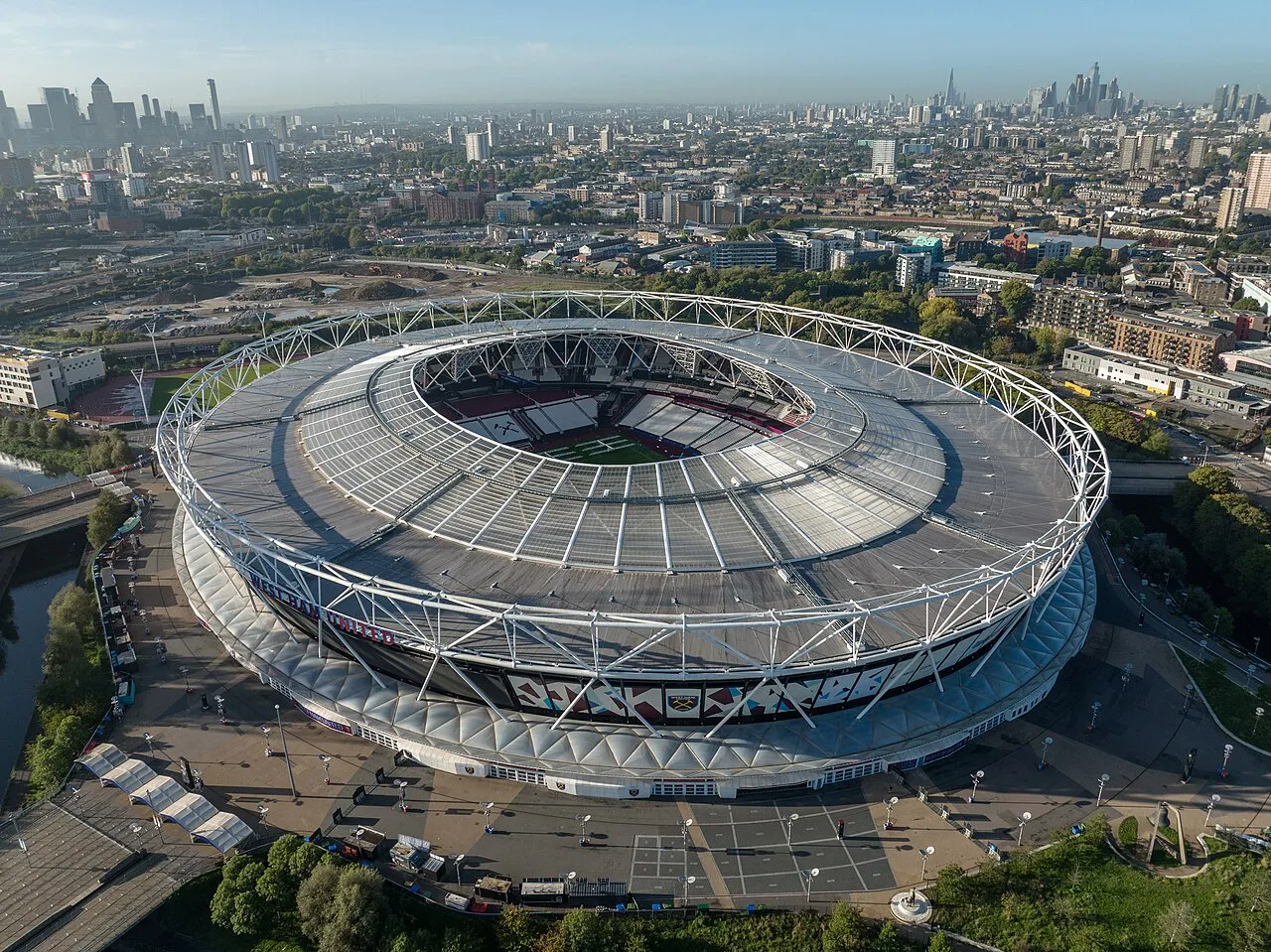
Location: Queen Elizabeth Olympic Park, Stratford, London
Capacity: 62,500 seats.
The stadium was constructed specifically for the 2012 London Olympics, breaking ground in 2008 and officially opening in 2011 for test events ahead of the Games. Its conversion to a football venue required creative reconfiguration of seating tiers and sightlines, including the addition of retractable seating to bring fans closer to the pitch.
4. Anfield – Liverpool
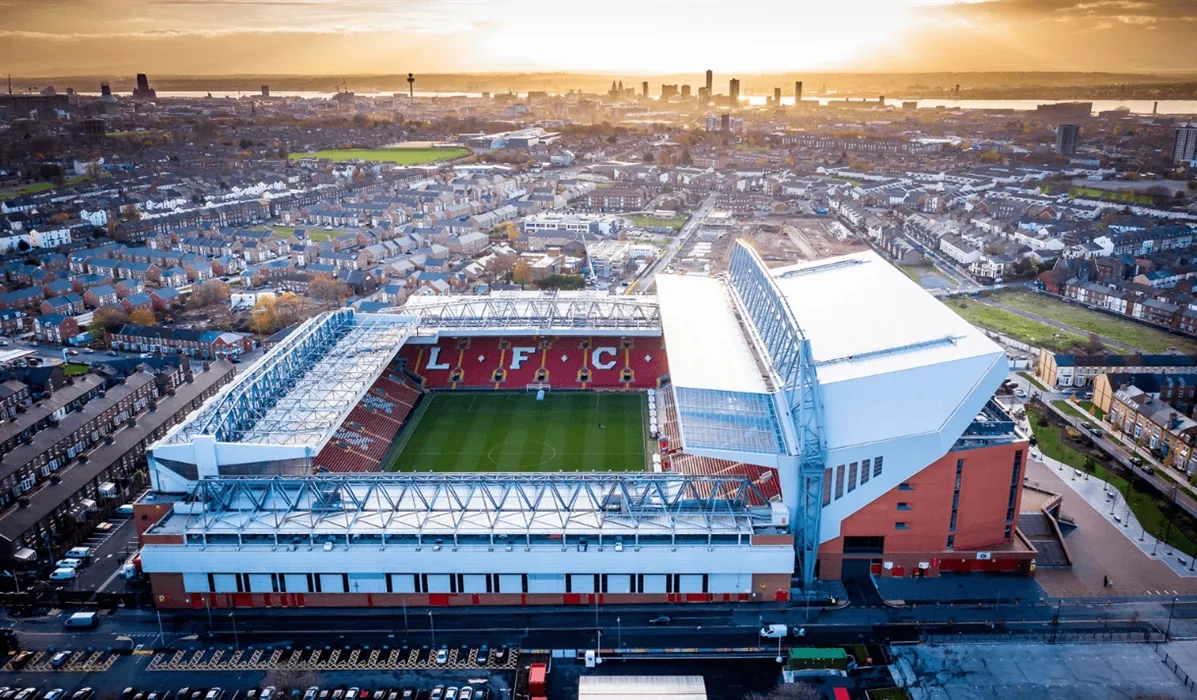
Location: Anfield Road, Anfield, Liverpool, Merseyside
Capacity: 61,276 seats as of the start of the 2024–25 season, following the completion of the Anfield Road Stand expansion.
The expanded Main Stand is one of the largest single-tier stands in Europe. Structural firm Jacobs engineered a striking 140-metre, 650-tonne roof truss for the Main Stand, lifted into place using two towering cranes in a single groundbreaking operation. Liverpool chose to expand Anfield in its historic neighborhood, blending modern scale with the intimacy of a traditional ground.
5. Emirates Stadium – Arsenal
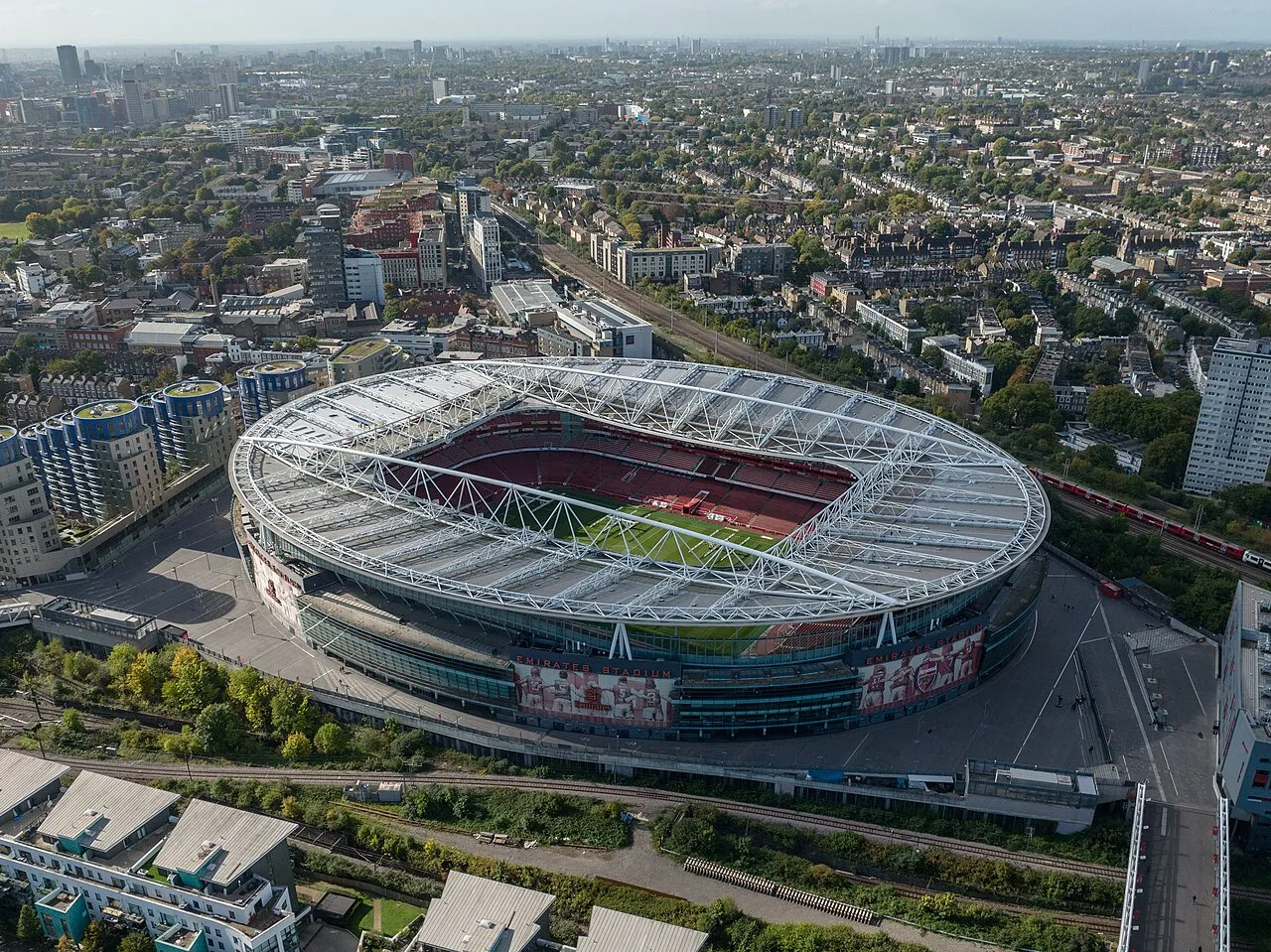
Location: Hornsey Road, Holloway, London
Capacity: 60,704 seats.
The stadium features an oval roof and a curved exterior, engineered to flood the space with natural light while reducing wind impact. Built on a former industrial site at Ashburton Grove, it required extensive soil cleanup and incorporated sustainability features like photovoltaic panels, rainwater harvesting, and high-efficiency lighting systems.
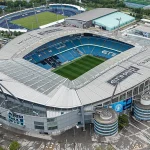
6. Etihad Stadium – Manchester City
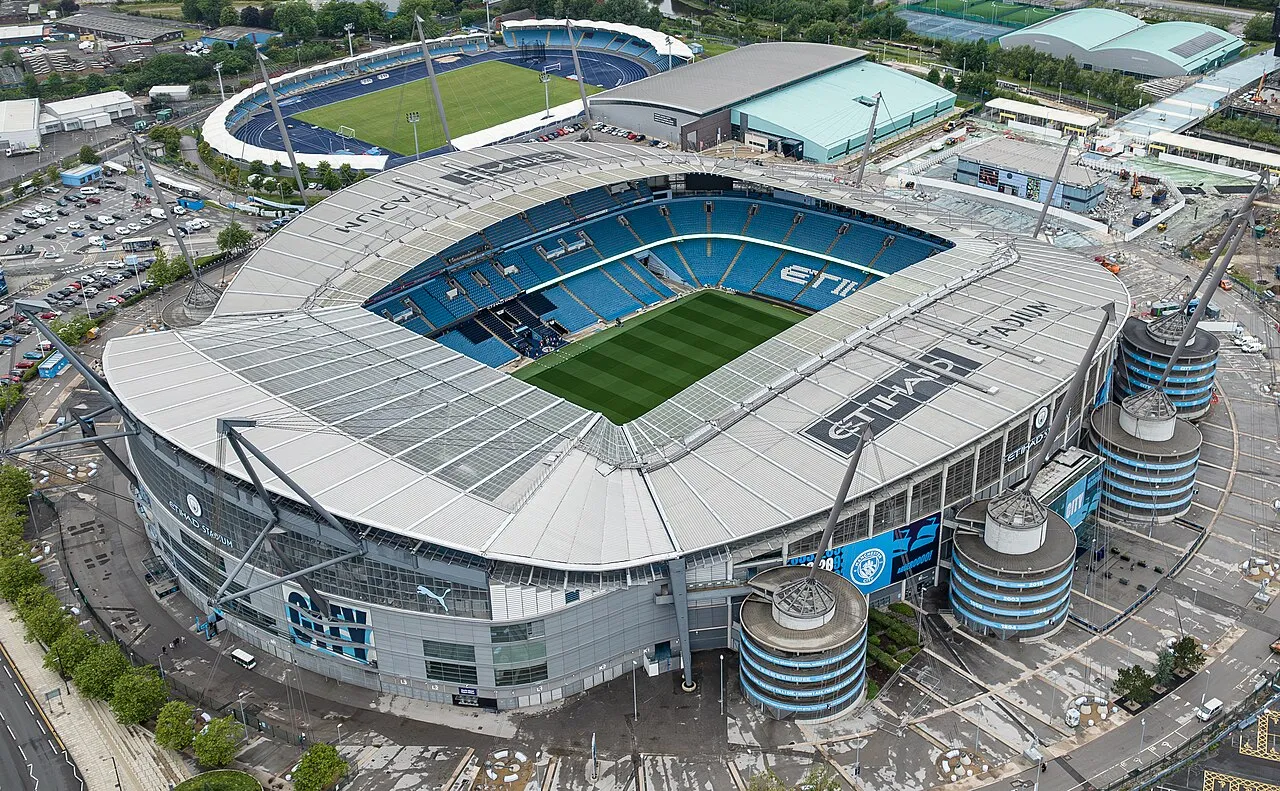
Location: Ashton New Road, Eastlands, Manchester
Capacity: 53,400 seats, with expansion plans aiming toward 60,000.
Originally built for the 2002 Commonwealth Games as the City of Manchester Stadium, it was later converted into a football ground for Manchester City by lowering the pitch by 6 meters and adding an entire lower tier of seating, an innovative way to expand capacity without altering the stadium’s outer bowl. Its asymmetrical roof silhouette, created because one stand was designed taller to allow more sunlight, makes it instantly recognizable in the Manchester skyline.
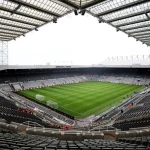
7. St James’ Park – Newcastle United
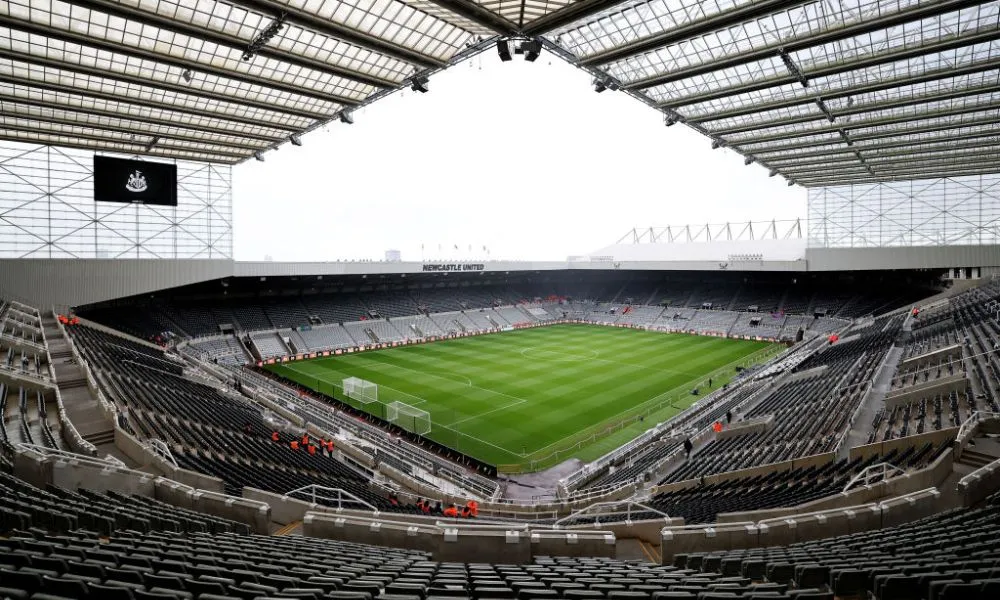
Location: Barrack Road, Newcastle upon Tyne, Tyne and Wear
Capacity: 52,305 seats.
Built on sloping land close to Newcastle’s city centre, its uneven, towering stands give the stadium a dramatic skyline. The Milburn and Leazes Stands dominate the structure, rising higher due to limited expansion space on one side, while the Gallowgate and East Stands remain lower. This asymmetry, shaped by both geography and urban constraints, makes St James’ Park instantly recognizable as a true architectural landmark woven into the city’s landscape.
8. Goodison Park – Everton
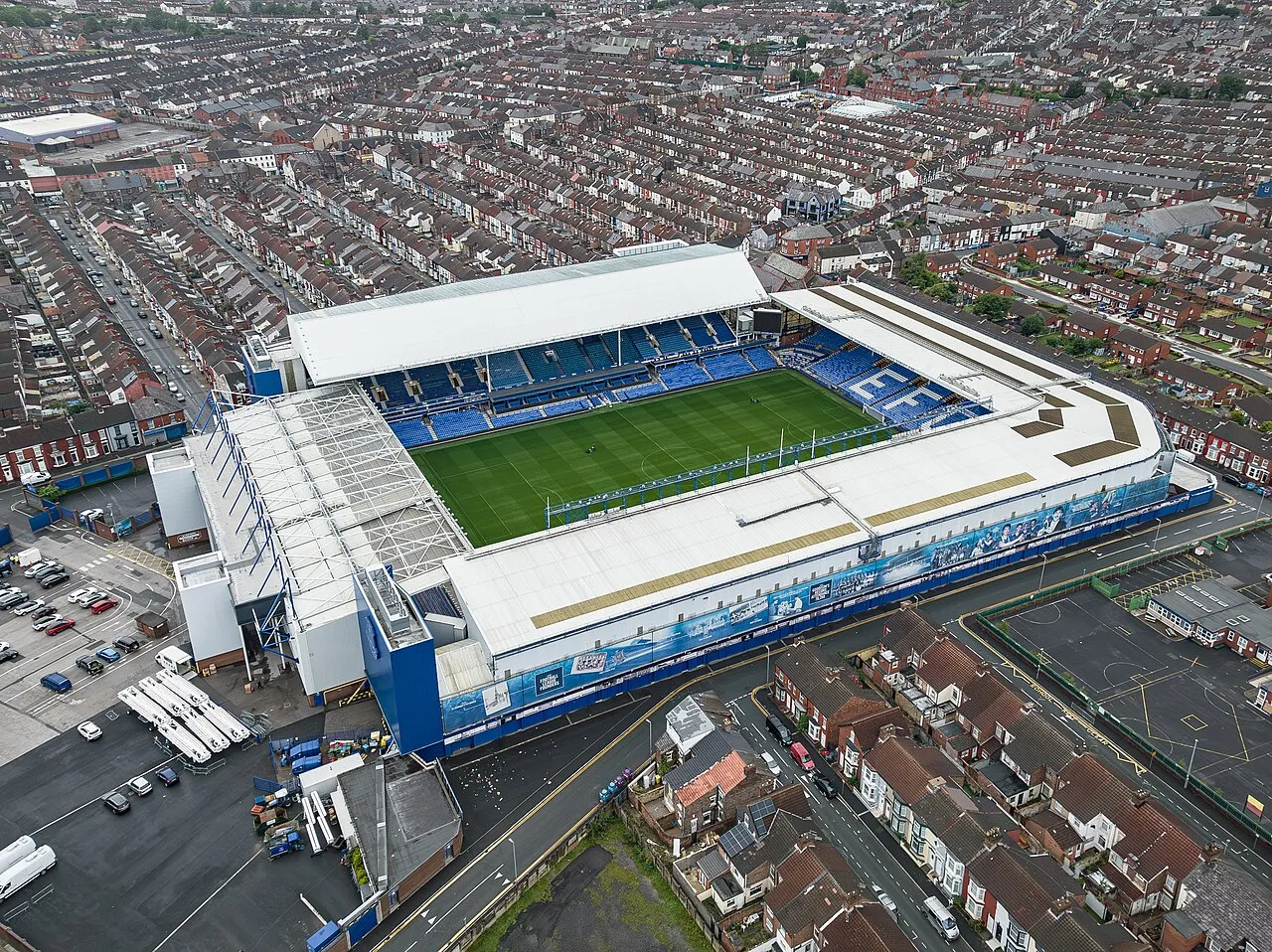
Location: Walton, Liverpool, Merseyside
Capacity: 39,572 seats.
Opened in 1892, Goodison was the first purpose-built football stadium in England (rather than just adapted open grounds). Its classic rectangular design, with stands close to the pitch, delivers excellent sightlines and a strong sense of intimacy. Though many parts show their age, its mix of historic Archibald Leitch ironwork and traditional brickwork still resonates with character and memories, qualities that will be missed when Everton moves to the new Bramley-Moore Dock stadium.
9. Villa Park – Aston Villa
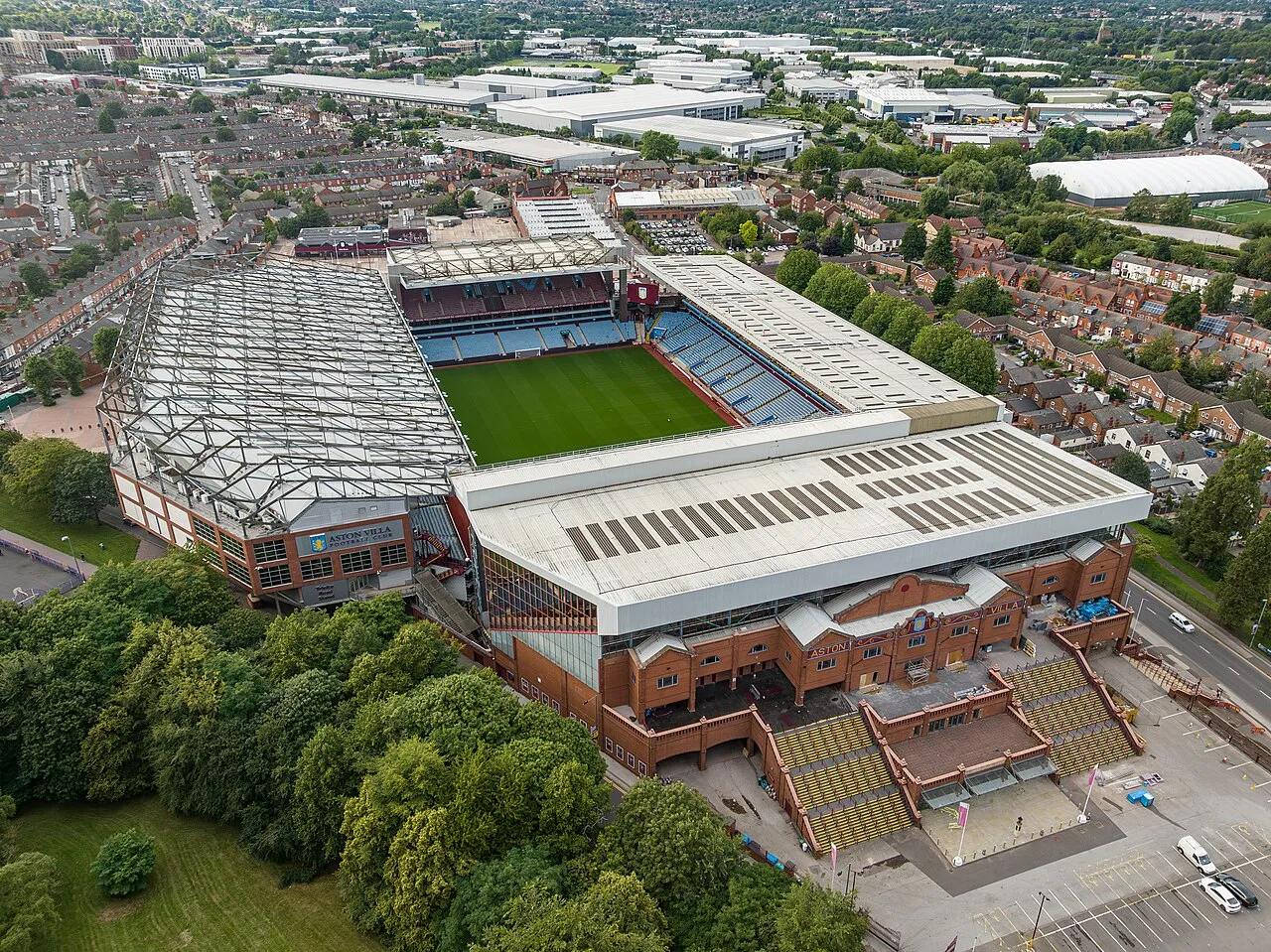
Location: Aston, Birmingham, West Midlands
Capacity: 42,657 seats (rounded often as ~42,900–43,000).
A true Victorian-era gem, opened in 1897, Villa Park has hosted more FA Cup semi-finals than any other ground. Its four distinct stands, the Holte End, Trinity Road Stand, North Stand, and Doug Ellis Stand, reflect different eras of construction. The Holte End, once Europe’s largest terrace, remains one of the most iconic ends in English football.
10. Stamford Bridge – Chelsea

Location: Fulham, London
Capacity: approx. 40,341 seats
Opened in 1877 and home to Chelsea since 1905, Stamford Bridge is one of the oldest active stadiums in the Premier League. Its compact footprint boxed in by railway lines and housing creates a claustrophobic intensity on match days, with stands tight against the pitch. Though renowned Swiss architects Herzog & de Meuron’s expansion plans to 60,000 were approved in 2017, they were later put on indefinite hold, leaving Stamford Bridge as an intimate, atmospheric ground that wears its history with pride.