


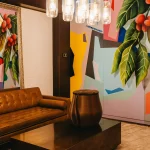

Barcelona’s D·Origen Coffee Roasters turned its own waste into architecture. Its new café, located inside Casa Calvet, one of Antoni Gaudí’s earliest buildings, transforms spent coffee grounds into sculptural furniture.
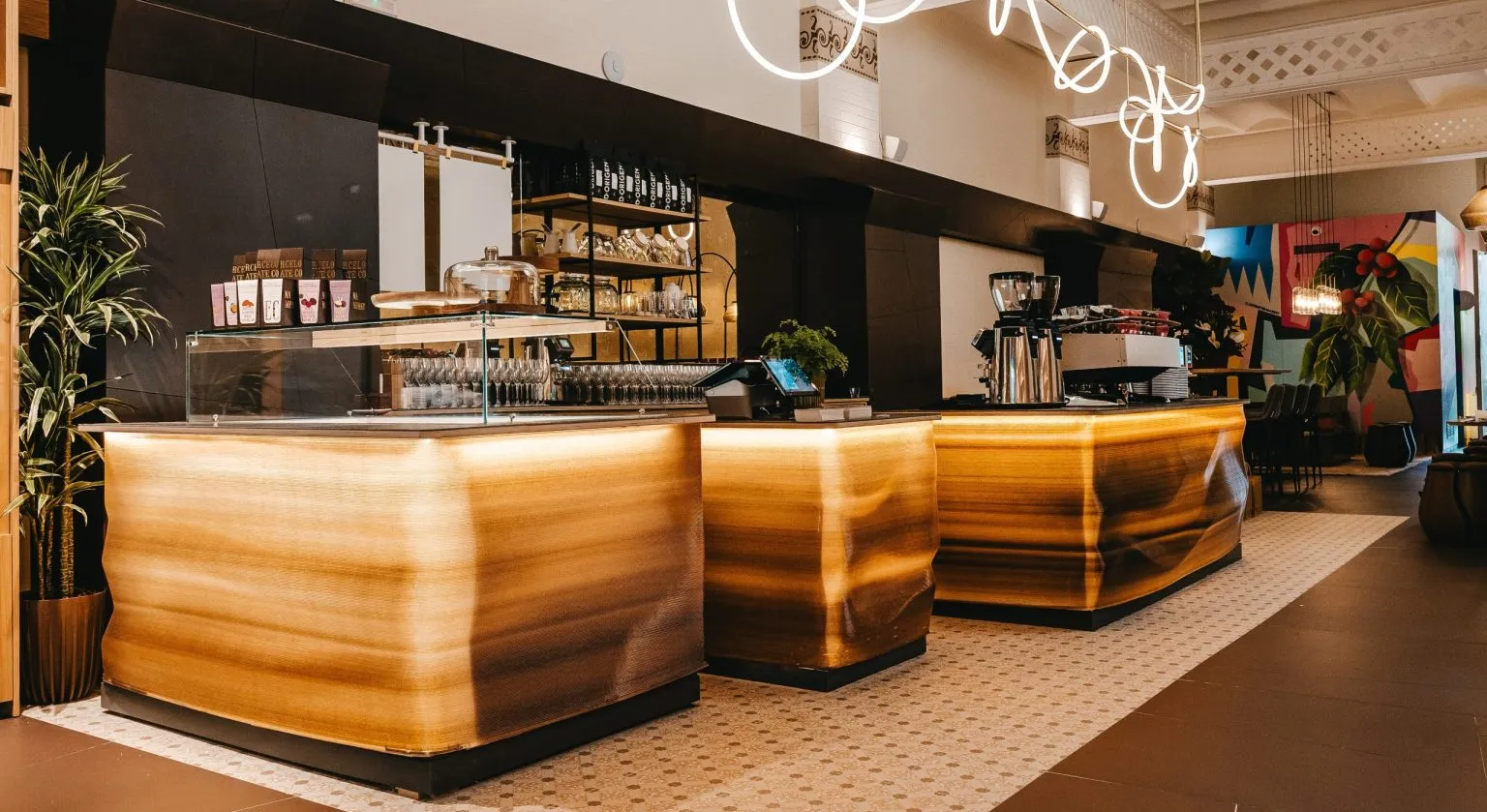
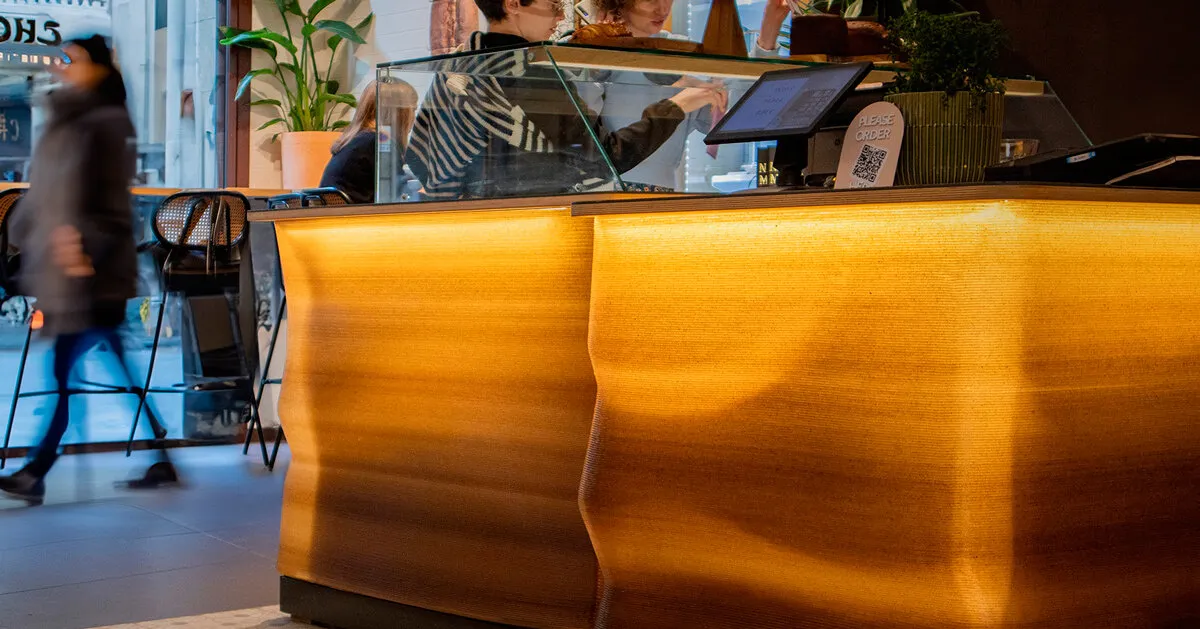
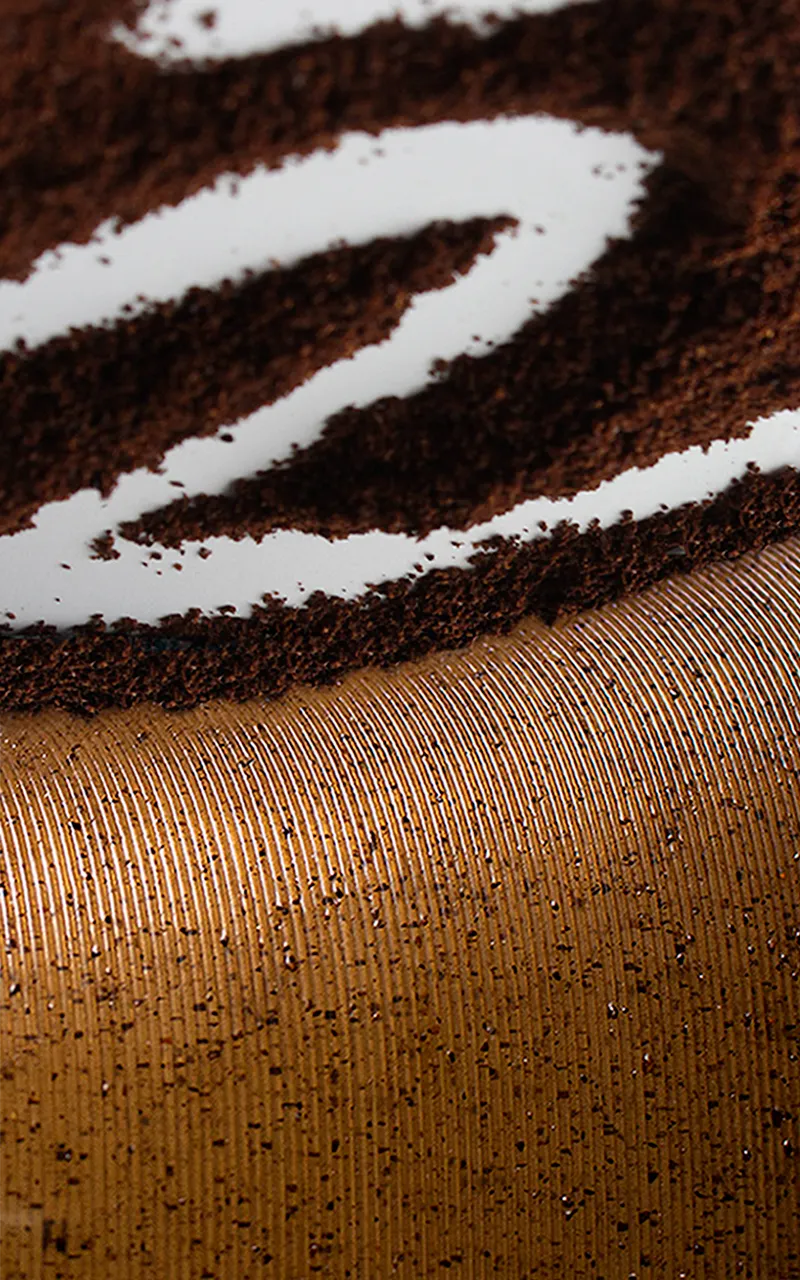
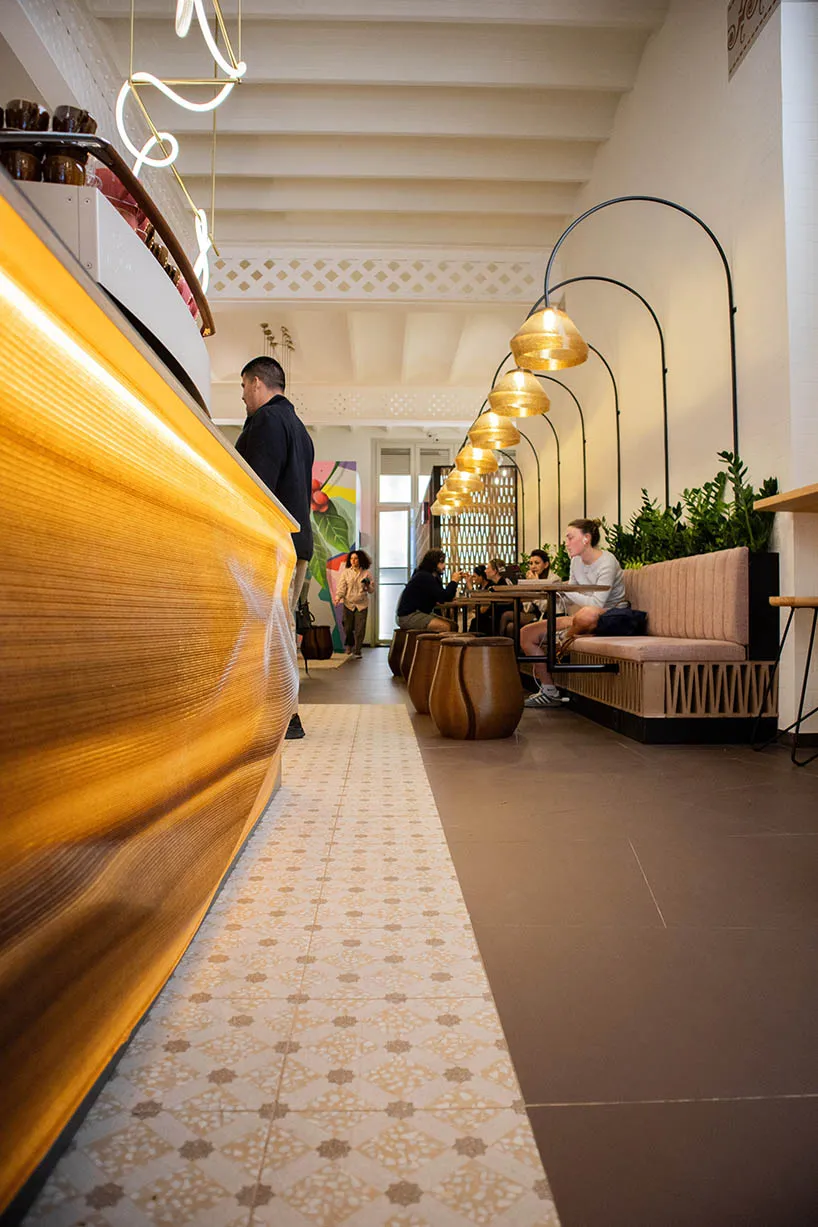
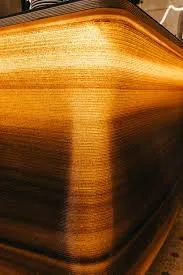
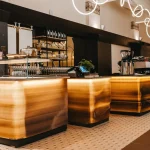
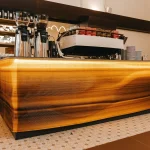
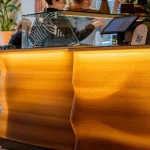
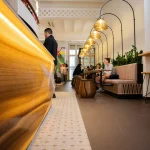
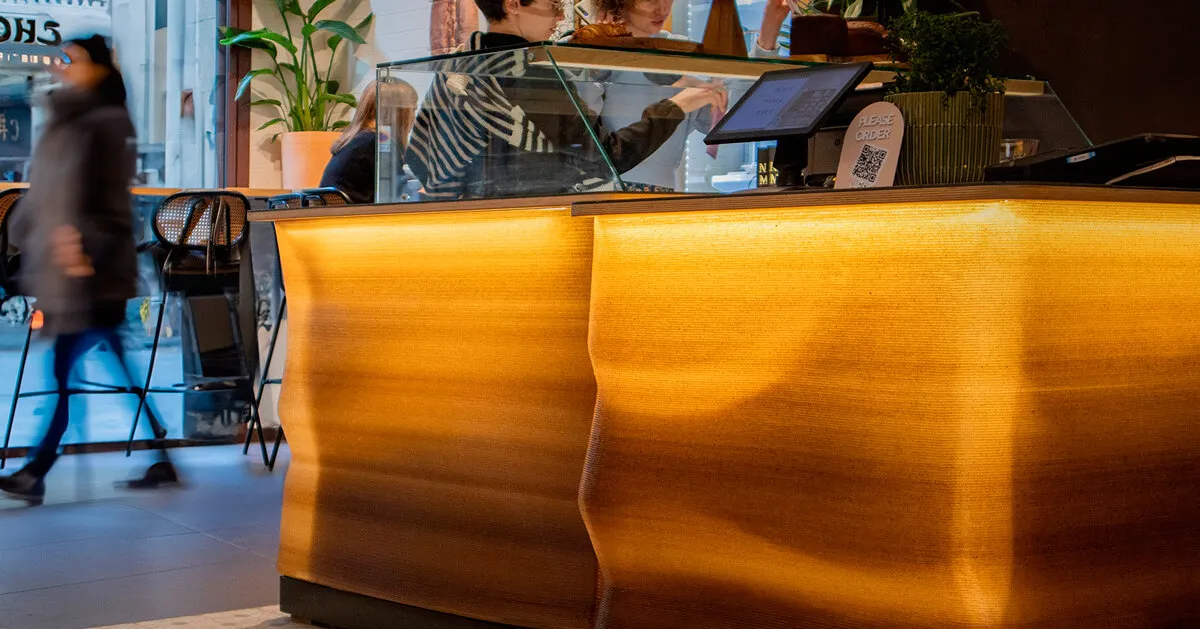
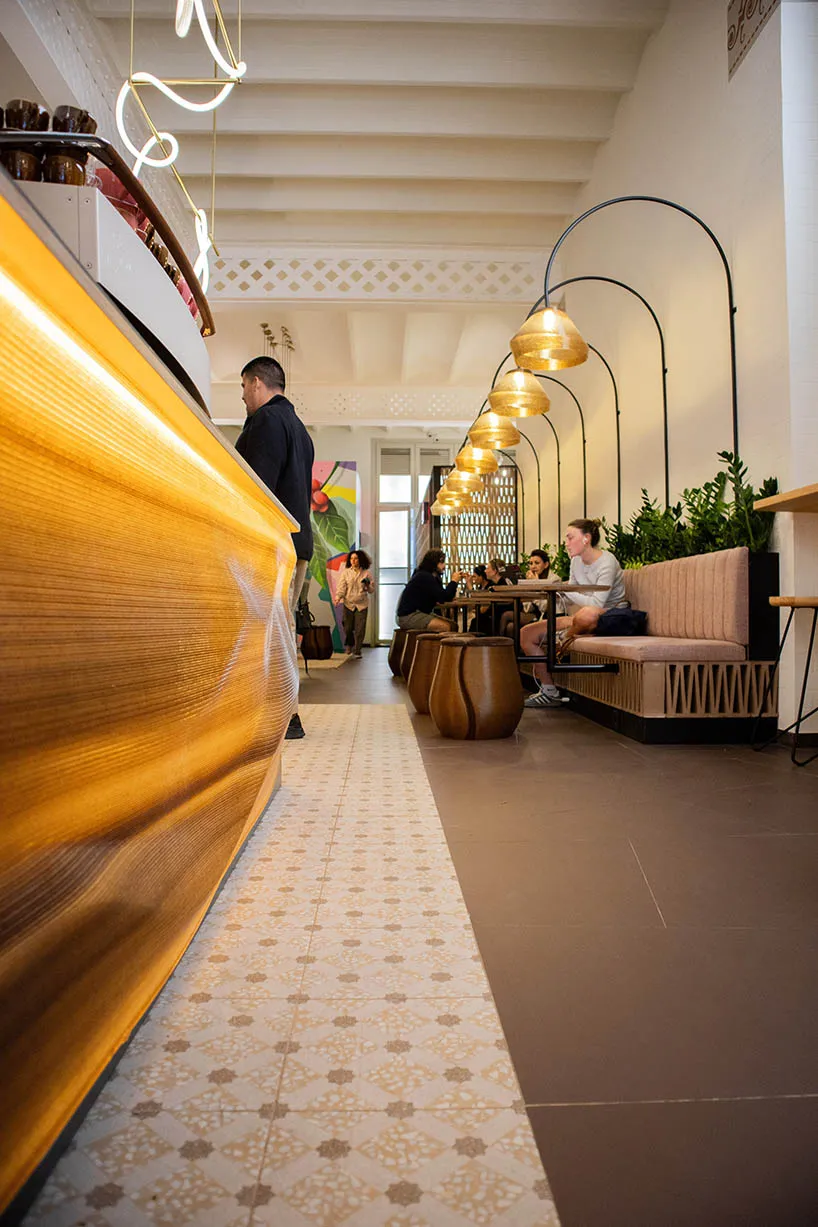
The scent hits first. Then the light spills across a curved counter that glows deep amber. But it isn’t resin. It’s coffee: brewed, served, discarded, and reimagined. Compressed and polished, the surface still carries its scent. Faint flecks and grain patterns remain visible, nodding to the grounds’ origin.
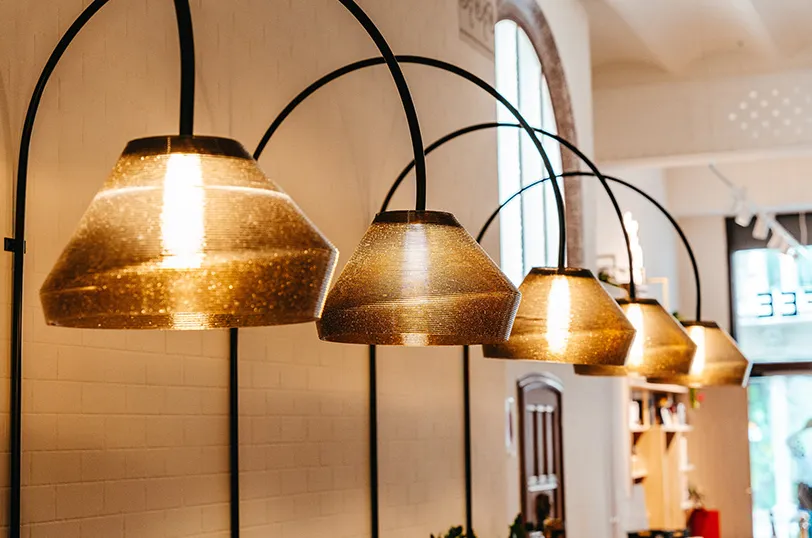
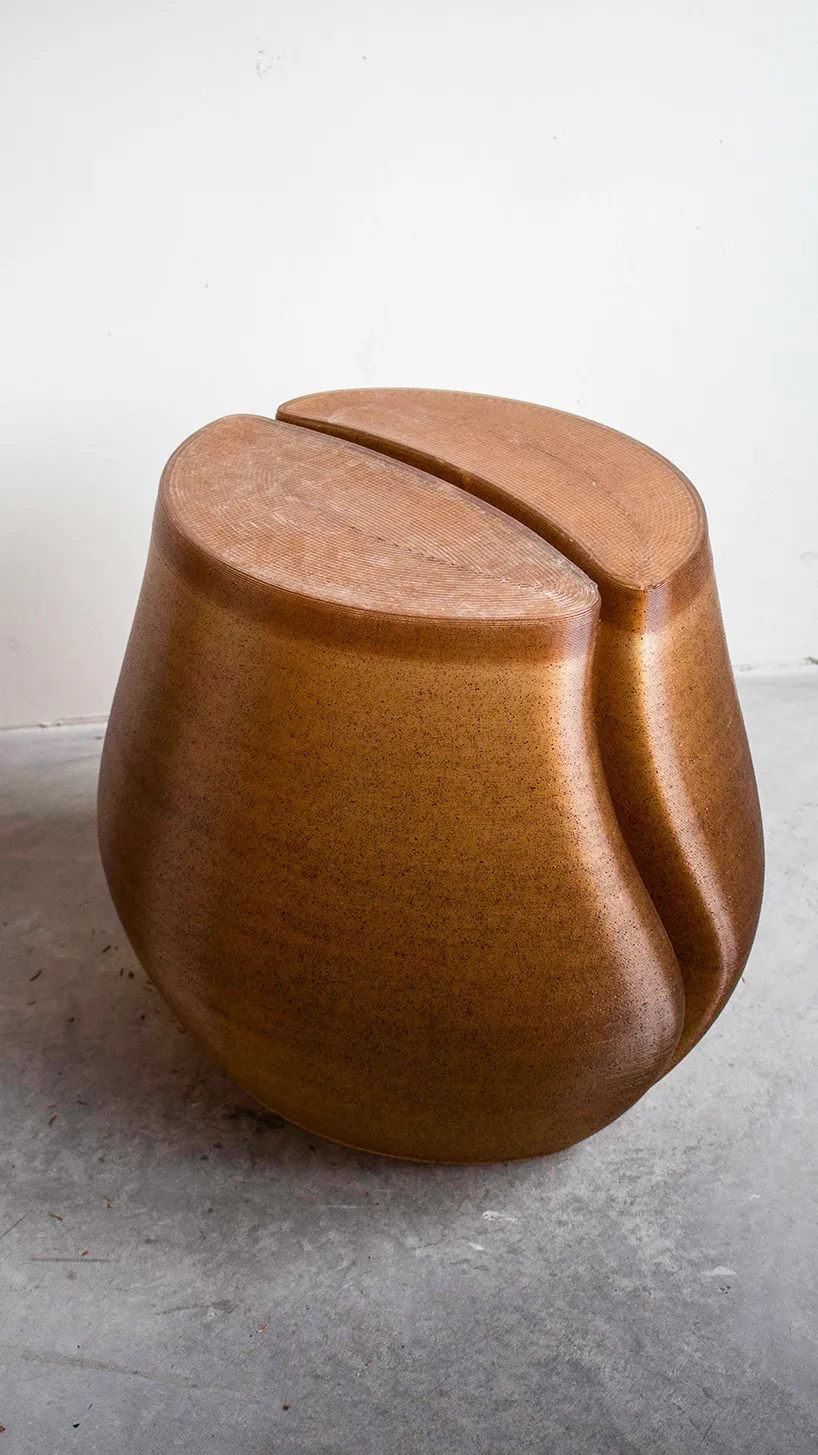
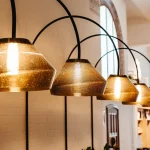
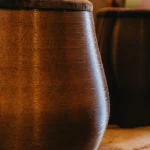
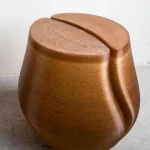
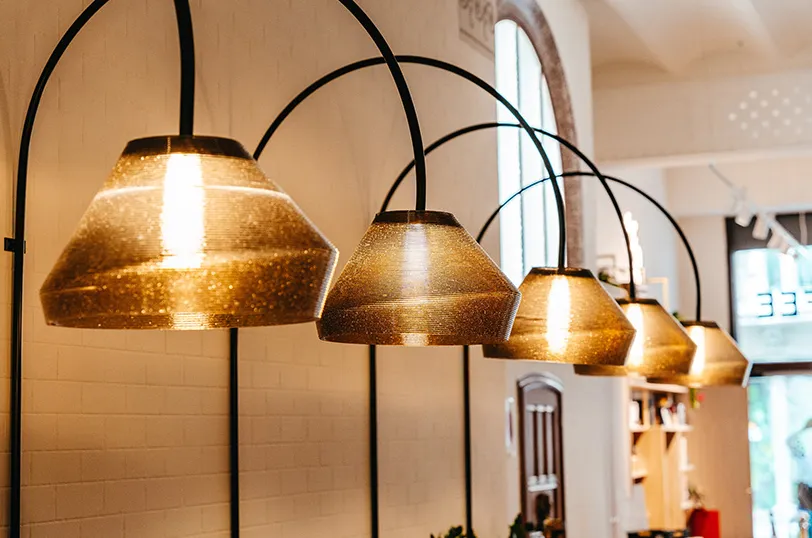
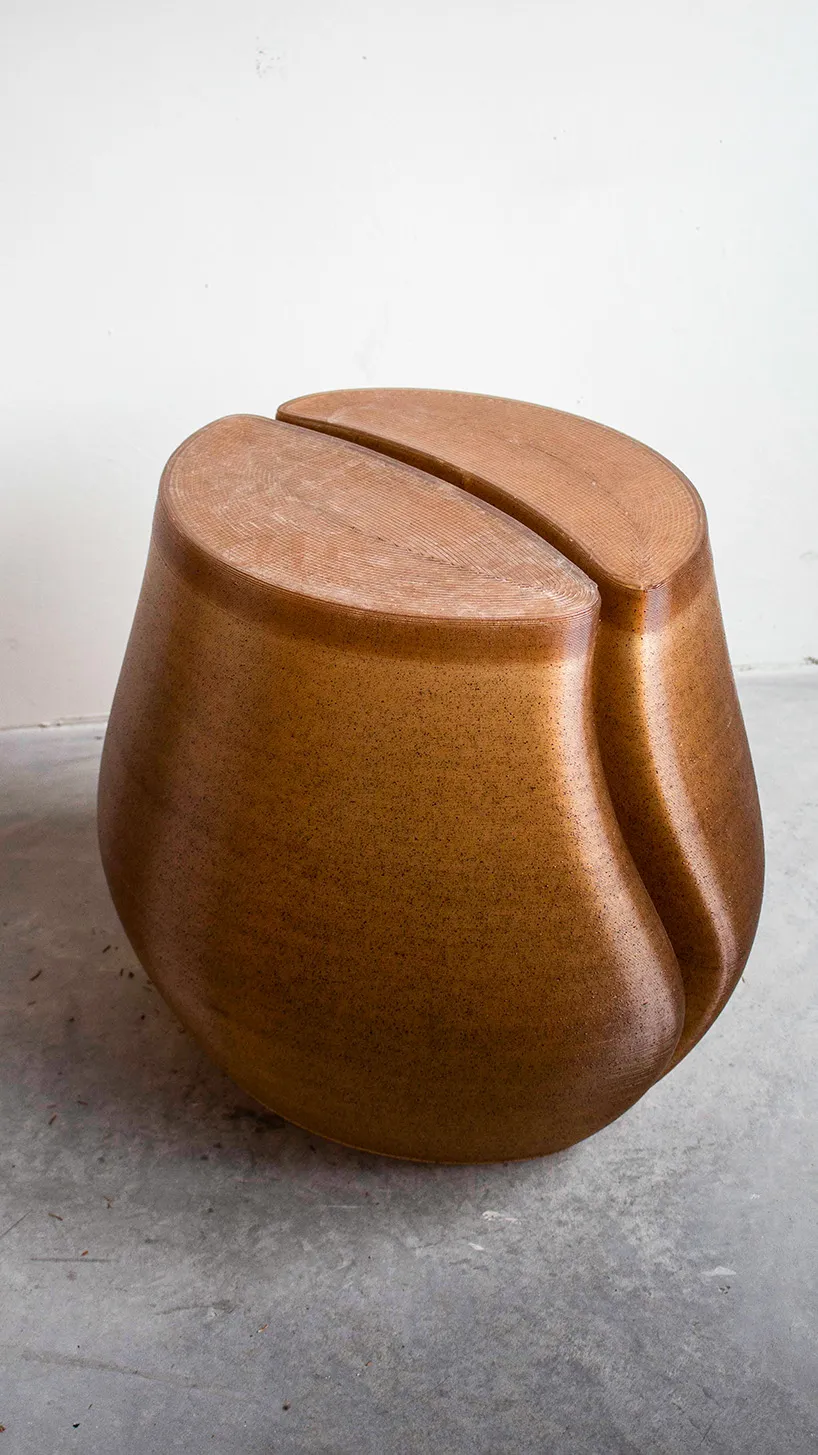
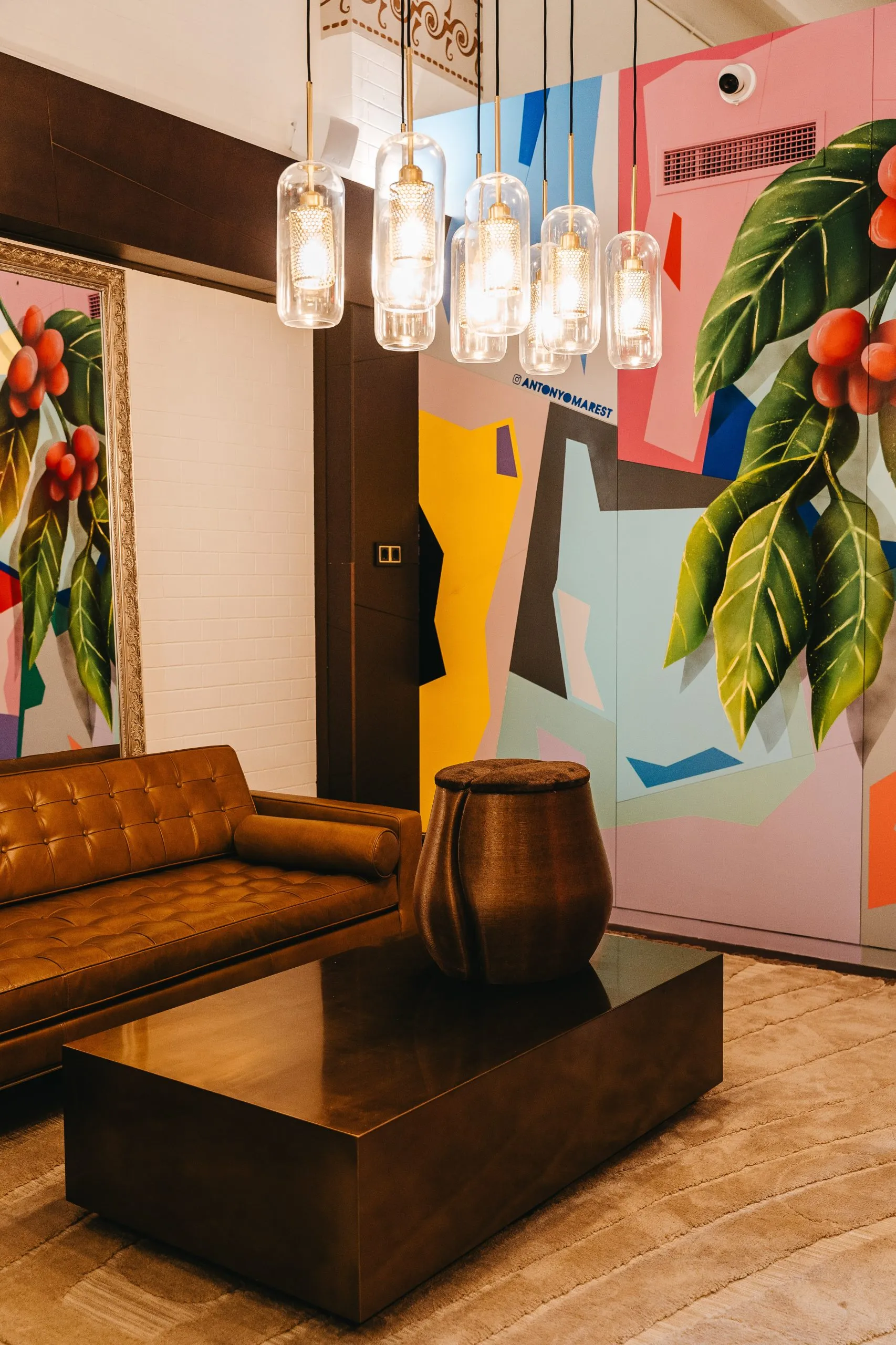
Stools, light fixtures, and counters were all printed using coffee grounds gathered just meters away. The project reframes waste as a building block. It began as an experiment in circular design, developed by Madrid-based digital fabrication studio LOWPOLY in collaboration with parametric designer Arturo Tedeschi and Humap design. Today, it stands as a fully realised space.
Digital Fabrication as Language
The furniture was developed with Italian designer Arturo Tedeschi, known for his work in parametric modelling and generative systems. Rather than referencing Gaudí, his approach followed the behaviour of the material itself. Computation informed the form, but it did so through constraint and process, not style or imitation.
The geometry is sinuous yet structural. Spirals and subtle curves recall natural forms without leaning into mimicry. There’s no attempt to compete with the building’s historic envelope. The pieces sit within it, attuned to their context, responsive in both function and scale.
The tools behind this kind of computational design are advancing fast. Platforms like PAACADEMY are helping push generative thinking into new territories, giving designers the ability to design with increasing precision and speed.
3D Printing with Coffee Grounds
The furniture was fabricated using LOWIMPACT®, a biocomposite developed by LOWPOLY that blends dried coffee grounds with recycled PLA, a thermoplastic made from renewable resources. The mix is 98 per cent organic, fully biodegradable, and contains no fossil fuels. Its finish is warm and tactile, with a texture that stays close to its origin.
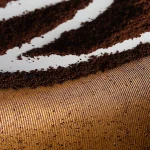
No two batches are identical. Pigment shifts slightly from print to print, and flecks of organic matter remain visible, suspended in a fine-grain surface that ranges in tone from deep brown to near white.
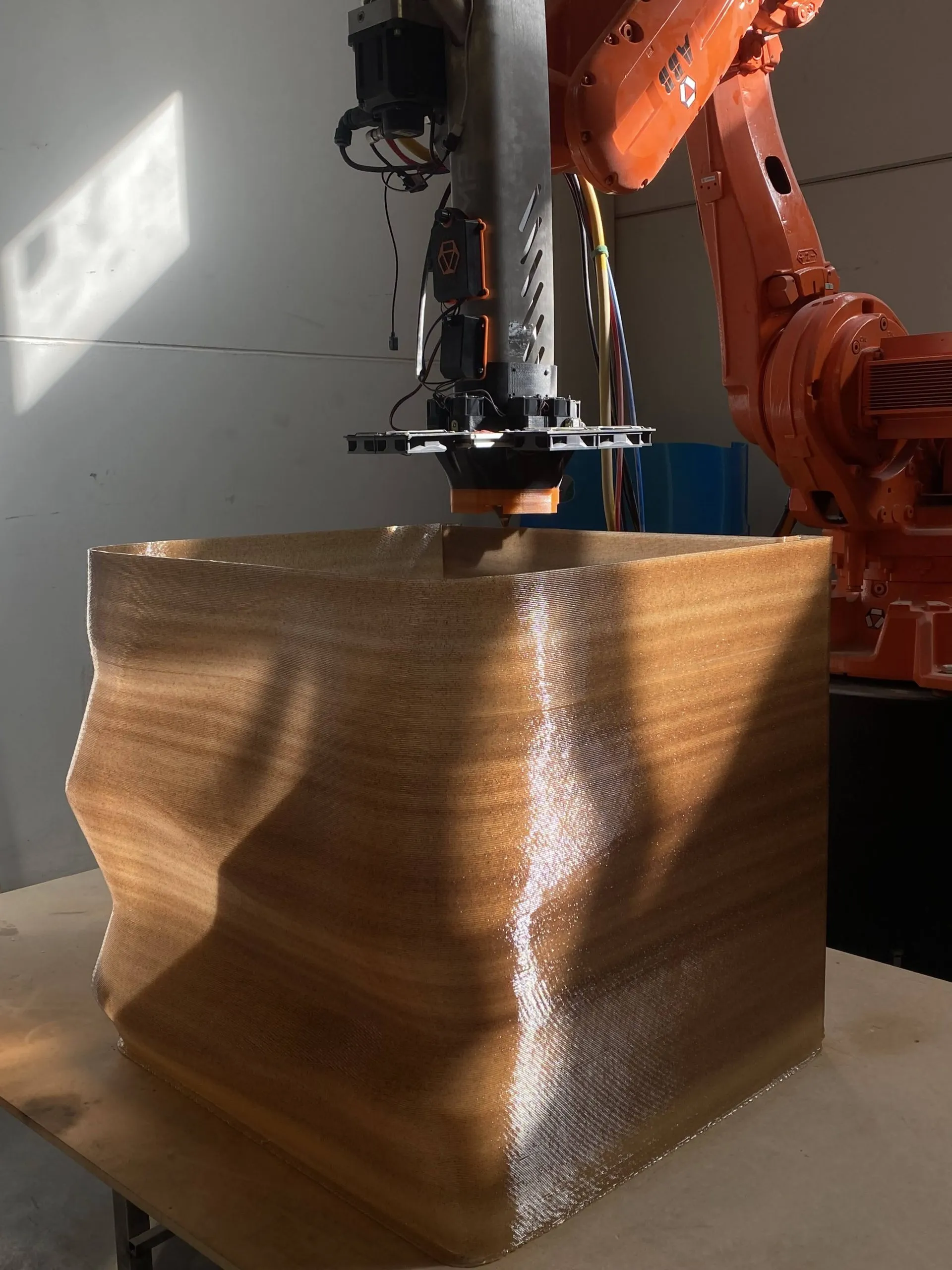
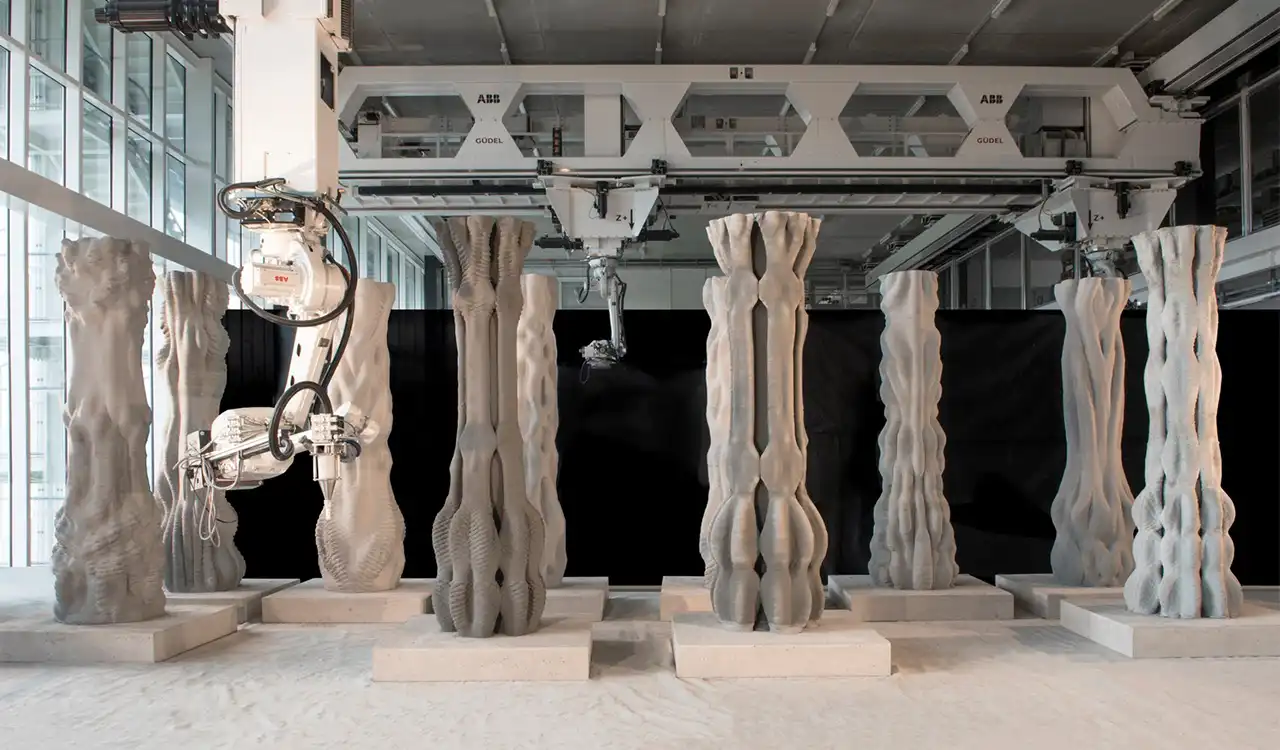
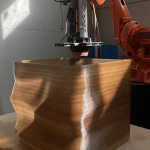
The furniture was printed using robotic arms equipped with custom extruders built to manage the composite’s unusual consistency. With low viscosity and high organic content, the material requires precise calibration. The forms are printed in layers without polishing or coating. Variations stay visible, integrated into the aesthetic rather than treated as flaws.
A Circular Model for Coffee Waste
More than material reuse, the project operates as a system. Grounds are collected, sent for off-site processing, and returned as print-ready material. Once furniture reaches the end of its life, LOWPOLY offers a take-back scheme, recycling it into new feedstock.
This approach addresses a major environmental gap. Globally, spent coffee grounds are one of the most common yet overlooked organic waste streams. In landfills, they emit methane, a greenhouse gas more than 20 times more potent than carbon dioxide. This café diverts part of that stream and gives it a second life. Sustainability is built into the workflow.
LOWPOLY Uses Food Waste to Rethink Local Architectural Materials
The team’s work extends beyond coffee. LOWPOLY tested similar composites made from citrus peel, grape skins, and olive waste, pointing toward a future where food byproducts are reimagined as material inputs for architecture.
The tools, large-format robotic printing, and parametric design are no longer experimental. They are proven and ready to scale, unlocking local supply chains for local fabrication.
With billions of cups of coffee consumed daily, even partial recovery creates massive potential. D·Origen’s café turns that recovery into a visible form. It is proof of an integrated system where food byproducts, computational design, and fabrication methods converge.
In a city shaped by its architectural past, the project gestures toward a sustainable future, one built through technology and imagination.