



The world is once again speaking the language of football. As the FIFA World Cup 2026 unfolds across North America, stadiums are packed, fan parks are overflowing, and millions of supporters are planning their days around kickoff times. Yet beyond the goals, rivalries, and finishes, another story is unfolding: the evolution of the football stadium itself. Around the world, clubs and cities are investing billions into venues that do far more than host matches. Here’s a look at 12 such football stadiums.
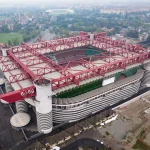
1. New San Siro Stadium, Milan, Italy
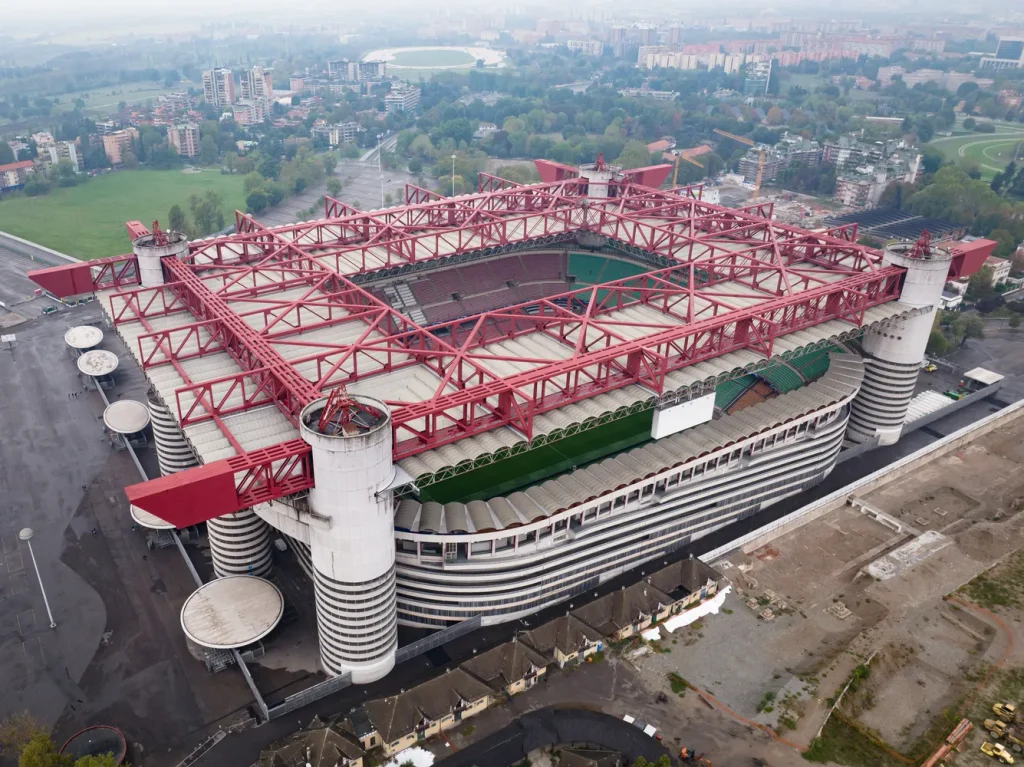
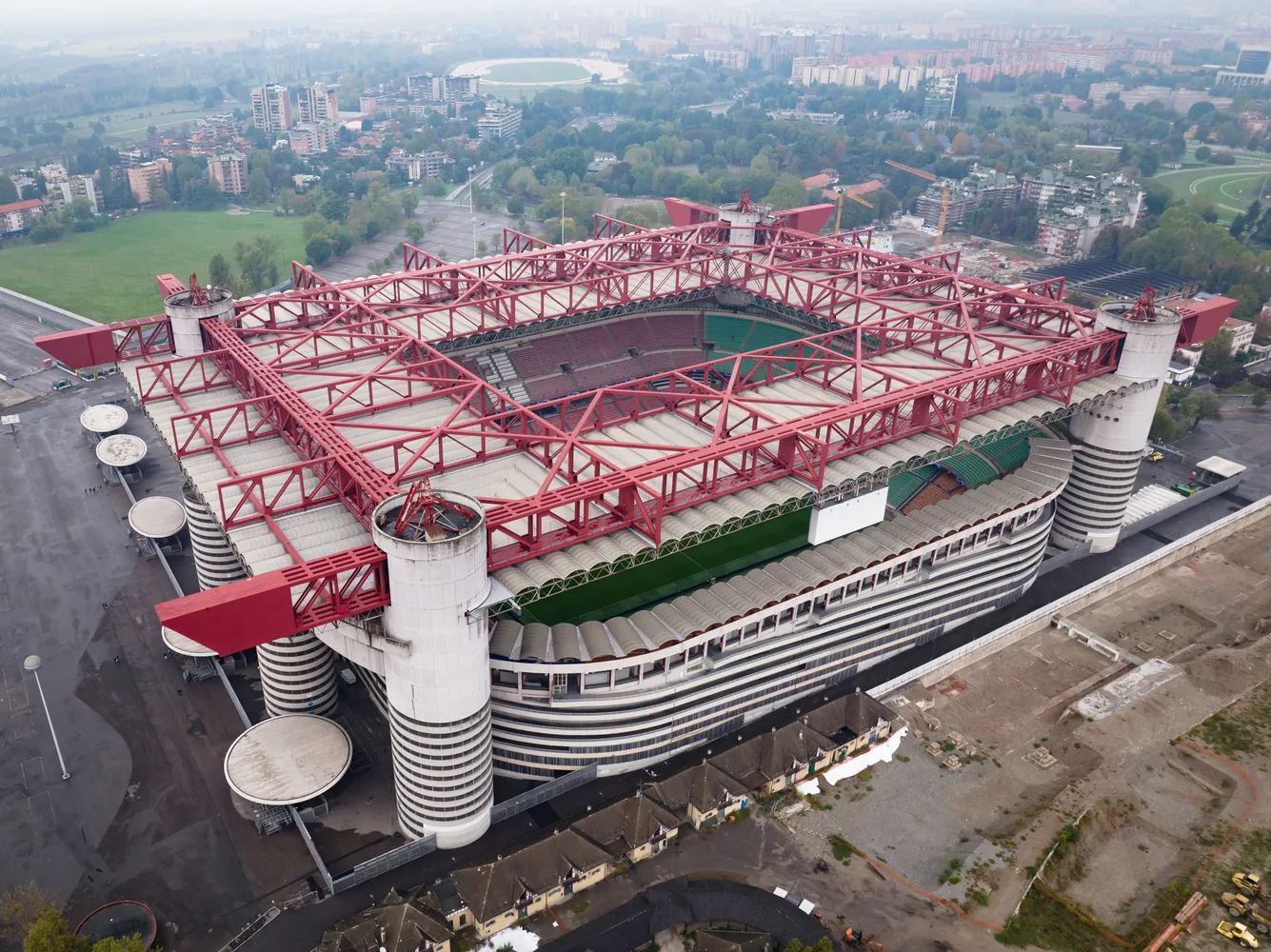
The New San Siro is a joint stadium project by Inter Milan and AC Milan to demolish the historic 99-year-old Stadio Giuseppe Meazza (commonly called San Siro) and construct a 71,500-seat venue on the current Meazza parking area. In November 2025, the clubs finalized their acquisition of the stadium and surrounding land from Milan’s municipal authorities.
Designed by architect Norman Foster (Foster + Partners) alongside MANICA Architecture, the stadium will feature 13,000 seats dedicated to hospitality and corporate spaces, replacing traditional gates with a covered podium entry system. Construction is scheduled to begin in early 2027, with completion projected for 2030–2031, positioning the venue as a host stadium for UEFA Euro 2032, which Italy will co-host with Turkey.
The clubs aim to move into the new San Siro by the 2030–31 season. The 281,000-square-meter complex will preserve a section of the Curva Sud and adjacent stands as a museum memorial, honoring the historic venue. Surrounding the stadium will be 55,000 square meters of green space, 72,000 square meters of underground parking, both clubs’ headquarters, a hotel, and commercial areas.
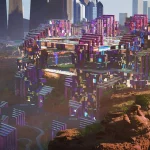
2. Prince Mohammed bin Salman Stadium, Riyadh, KSA
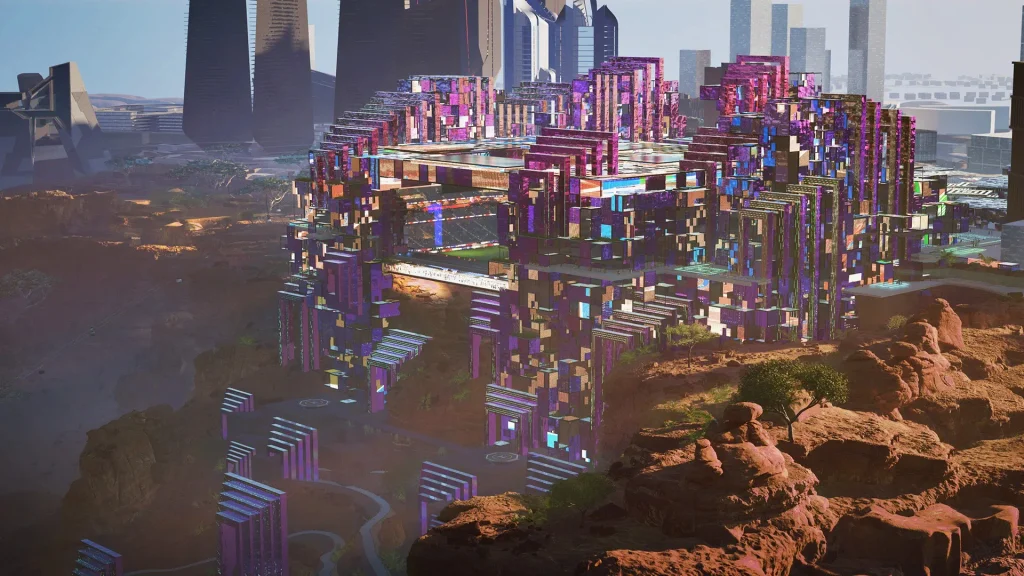
The Prince Mohammed Bin Salman Stadium is a 45,000-seat multi-purpose venue under construction in Qiddiya City, Saudi Arabia, perched atop the 200-meter-high Tuwaiq cliff. Designed by Populous, the stadium is set to become Al Qiddiya FC’s home ground upon completion (expected in 2029) and will serve as one of the official venues for the 2034 FIFA World Cup. It is also set to host Saudi King Cup matches, the AFC Asian Cup, and the 2034 Asian Games.
This stadium represents an unprecedented architectural innovation: the world’s first fully integrated venue with a combined retractable roof, retractable pitch, and retractable LED wall. The three-sided seating bowl overlooks the dramatic cliff edge, with one entire side featuring a massive LED wall that displays live broadcasts, HD films, and laser shows. When retracted, it opens to reveal breathtaking views of Qiddiya City. The stadium’s exterior consists of modular cubes that spill down the cliff, serving as an extension of the Tuwaiq landscape. The design also incorporates advanced climate control with LEED Gold sustainability standards, featuring an environmentally friendly cooling lake adjacent to the stadium that uses collected rainwater to cool incoming air.
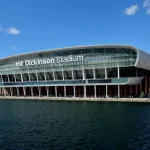
3. Hill Dickinson Stadium, Liverpool, England
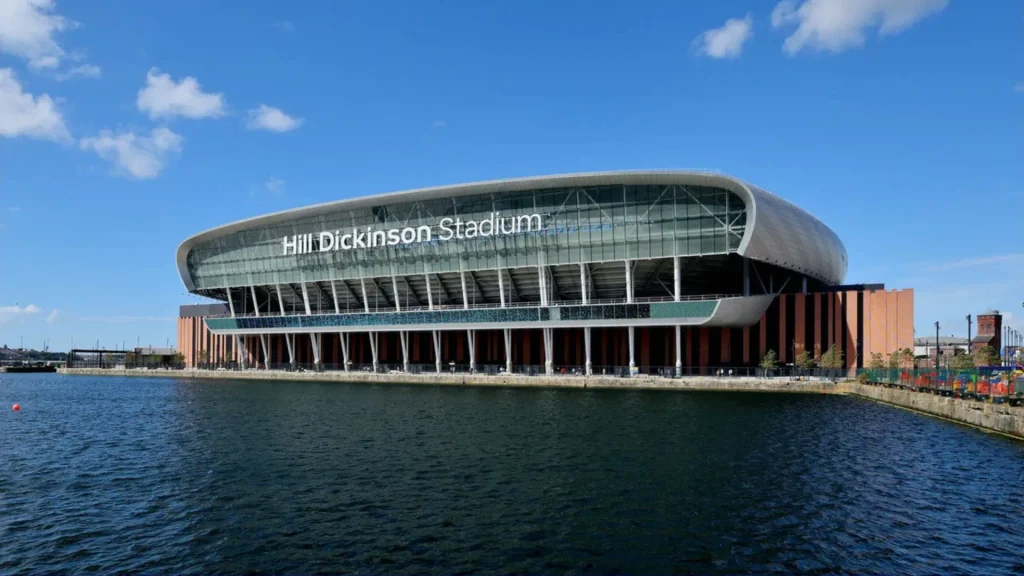
Hill Dickinson Stadium marks Everton FC’s historic relocation after 133 years at Goodison Park, becoming the club’s first new ground since 1892. Located at Bramley-Moore Dock on Liverpool’s waterfront, this 52,000-seat venue opened in February 2025. The stadium replaces Goodison Park, England’s oldest remaining purpose-built football stadium.
The stadium embodies a “Football First” design philosophy with uninterrupted pitch views from all seats. The exterior features brick, steel, and glass cladding inspired by Liverpool’s historic maritime warehouses, integrating the structure into the city’s waterfront regeneration. Designed to potentially expand to 62,000 seats with future planning permission, the elliptical bowl offers full accessibility and modern amenities. The development represents Liverpool‘s largest single-phase construction project, transforming a former industrial dock into a year-round destination for sport, music, and cultural events.
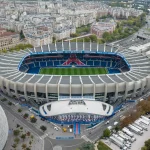
4. Parc des Princes, Paris, France
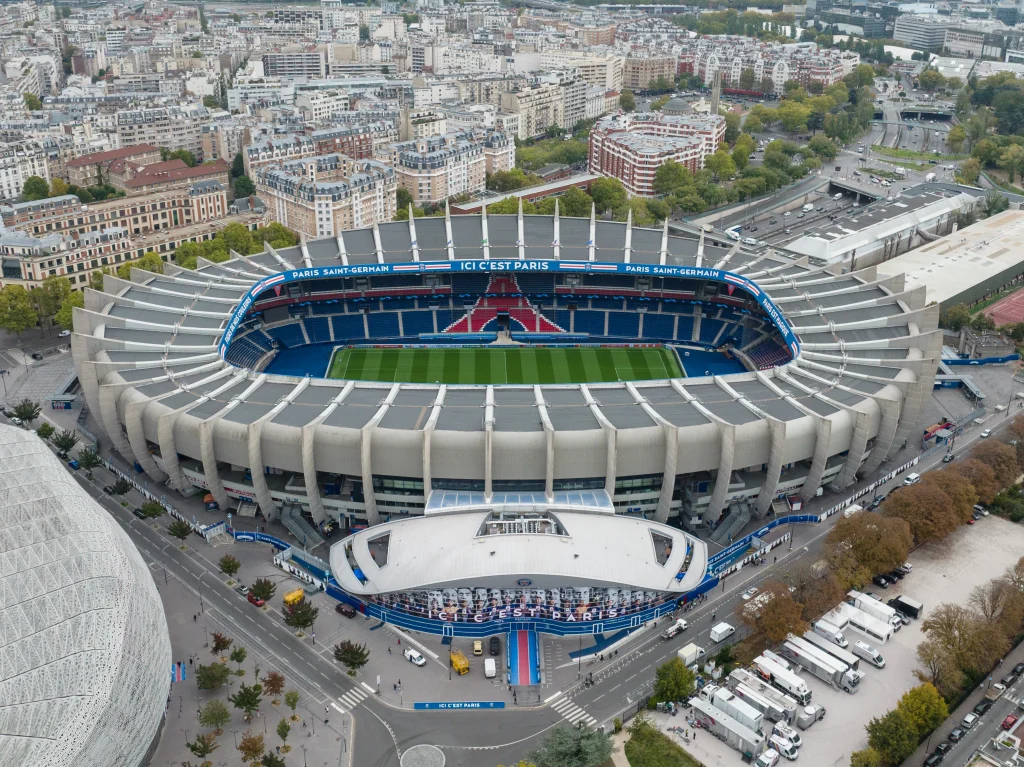
Paris Saint-Germain is exploring plans for a new purpose-built stadium as the club seeks a long-term home capable of supporting its sporting ambitions and growing global profile. Following efforts to acquire the Parc des Princes from the City of Paris, PSG has initiated feasibility studies for potential sites beyond the city limits.
Concept proposals developed by Populous envision a venue accommodating approximately 70,000 to 75,000 spectators while functioning as a year-round destination for sport, entertainment, and cultural events. Sustainability and long-term adaptability are expected to play a central role in the project’s development, with plans emphasizing energy efficiency, enhanced public transport connectivity, and a reduced environmental footprint. Beyond the stadium itself, the wider development could incorporate public spaces, retail, hospitality, and leisure facilities, creating a mixed-use destination that extends activity beyond match days.
5. Guangzhou Football Park, Guangzhou, China
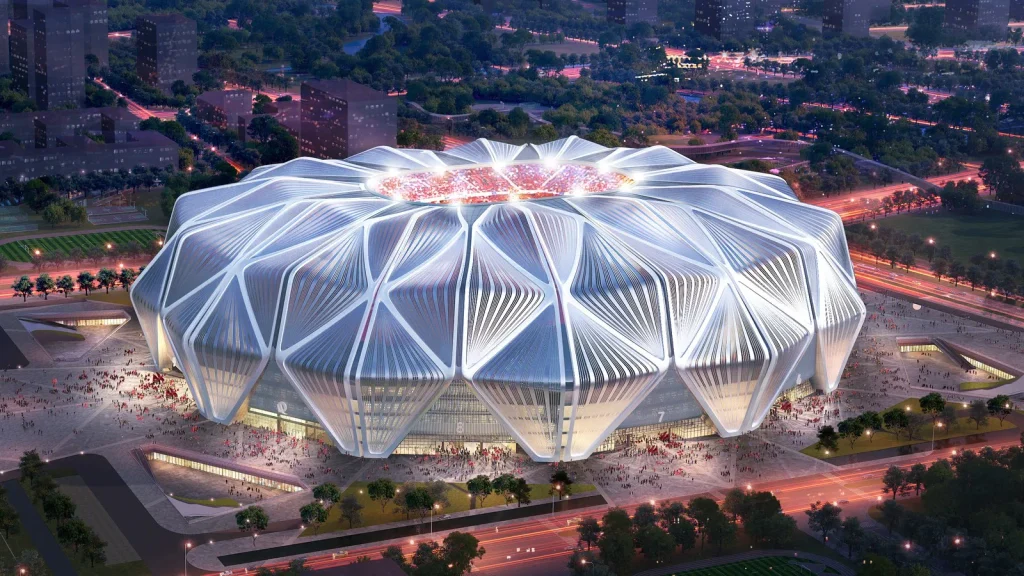
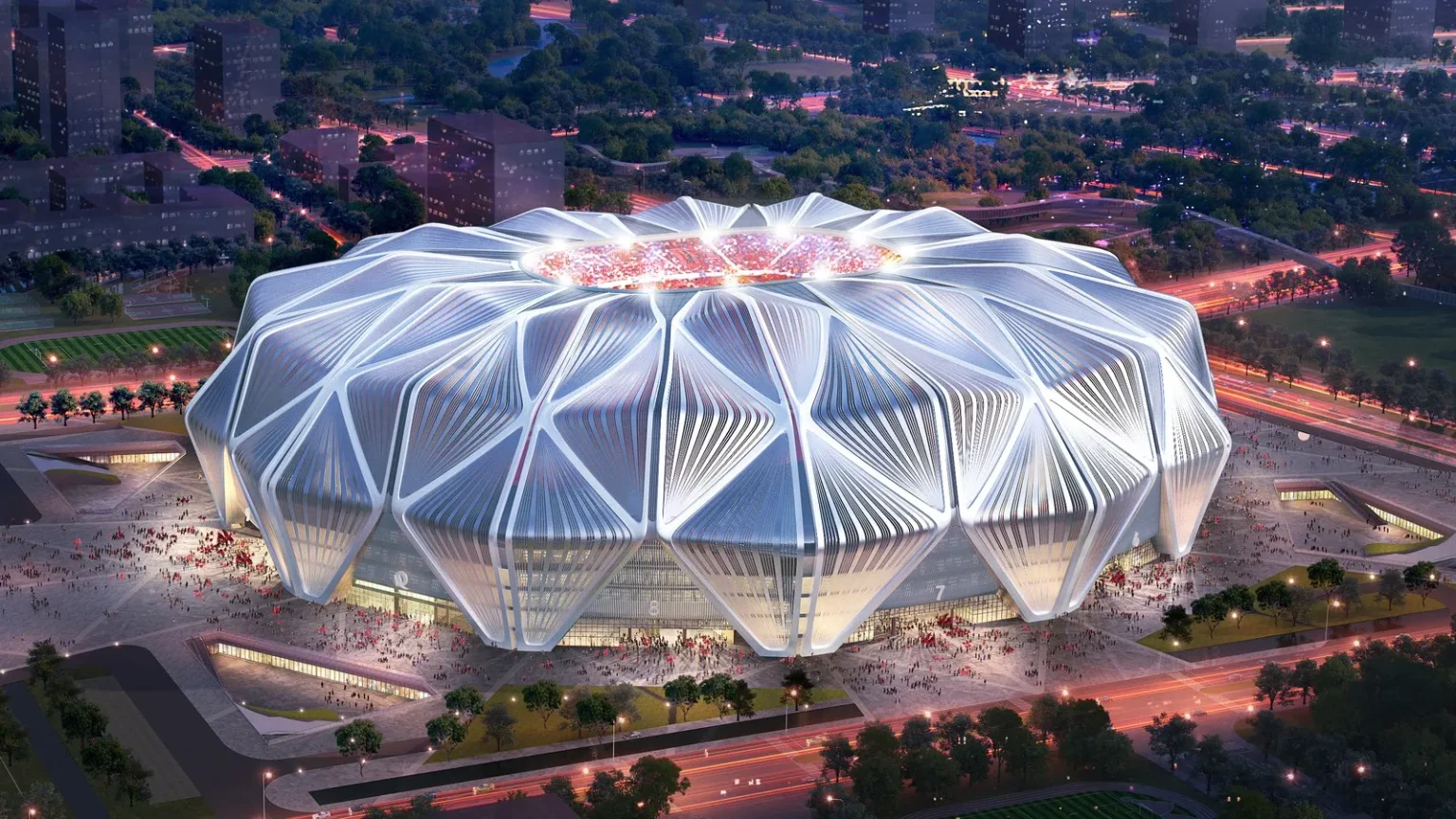
Designed by Gensler, Guangzhou Football Park was conceived as an 80,000-seat football stadium and the centerpiece of a larger sports and entertainment district in Guangzhou’s Panyu District. The project sought to establish a new landmark for Chinese football while creating an integrated destination for sport, leisure, and public life.
The stadium’s architecture is inspired by the lotus flower, a symbol of purity, resilience, and prosperity in Chinese culture. Its sculptural form is defined by a series of sweeping petal-like elements that wrap around the seating bowl, creating a silhouette visible from across the city. Inside, the stadium is organized around a steeply raked bowl, and the roof structure partially covers the seating areas while maintaining an open-air football atmosphere. Large concourses, hospitality spaces, premium suites, and fan amenities are integrated throughout the venue to support international-standard sporting events and large-scale entertainment programs. The development aimed to transform the stadium from a match-day venue into a year-round civic hub.
6. Nu Stadium, Miami Freedom Park, Miami
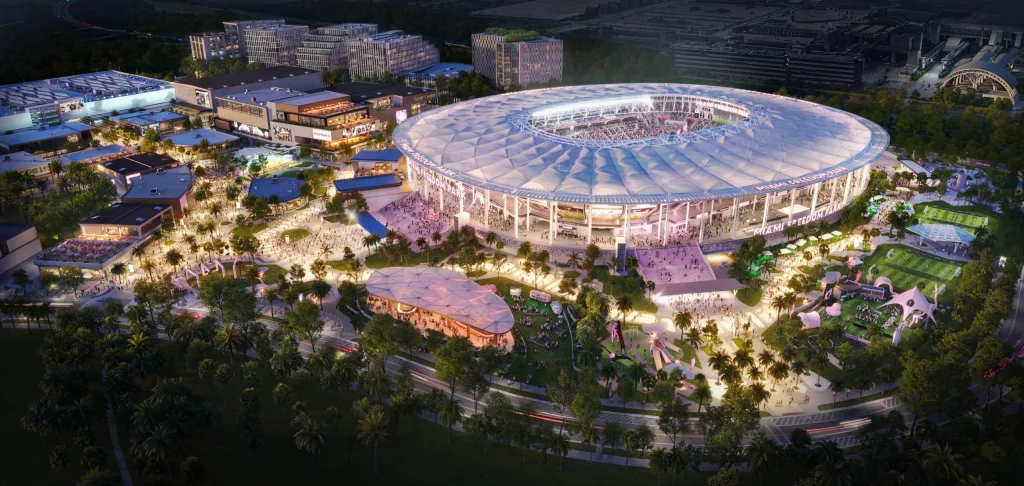
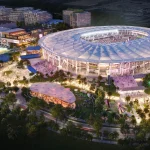
Designed by MANICA in collaboration with Miami-based Arquitectonica, which also master-planned the 131-acre Miami Freedom Park development, Nu Stadium opened in 2026 as the permanent home of Inter Miami CF. The 26,700-seat venue is defined by its expansive tensile canopy roof, engineered by Schlaich Bergermann Partner (sbp).
The lightweight PTFE-membrane structure employs a spoked-wheel cable system comprising an outer compression ring, inner tension rings, radial cables, and cantilevered beams. Covering approximately 325,000 square feet, the canopy protects spectators from Miami’s intense sun and frequent rain while helping retain crowd atmosphere within the continuous two-tier bowl. Beyond the stadium, the broader development integrates a 58-acre public park, athletic facilities, hospitality venues, offices, and retail spaces, creating a new mixed-use destination for the city.
7. Allianz Arena, Munich, Germany
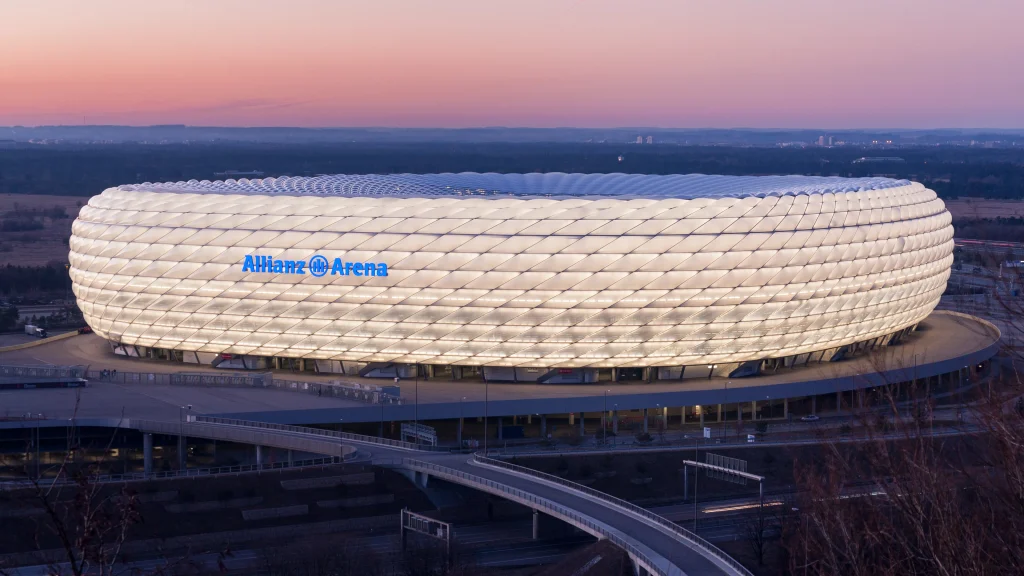
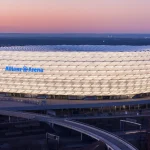
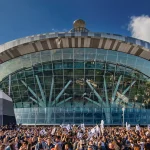
The Allianz Arena is renowned for its revolutionary ETFE facade that transforms the stadium into a glowing beacon at night. Designed by Swiss architectural firm Herzog & de Meuron, the oval structure opened in 2005, after construction began in 2002. The stadium has remained Bayern Munich’s home since replacing their previous venue, Olympiastadion.
The facade consists of inflated diamond-shaped ETFE cushions: a material that is flame-retardant, self-cleaning through rain, non-aging, and weather-resistant. LED lighting beneath the cushions can display multiple colors: red for Bayern Munich home games, white for Germany national matches, blue for TSV 1860 Munich (when they co-hosted 2005–2017), and even green for occasions like St. Patrick’s Day. This color-changing capability made it the first football stadium in the world whose entire exterior envelope could be illuminated. The venue holds 75,024 seats for domestic matches and features Europe’s largest underground car park. The Allianz Arena hosted the 2006 FIFA World Cup, the 2012 and 2025 UEFA Champions League Finals, and UEFA Euro 2020 and Euro 2024.
8. New Trafford Stadium, Manchester, England
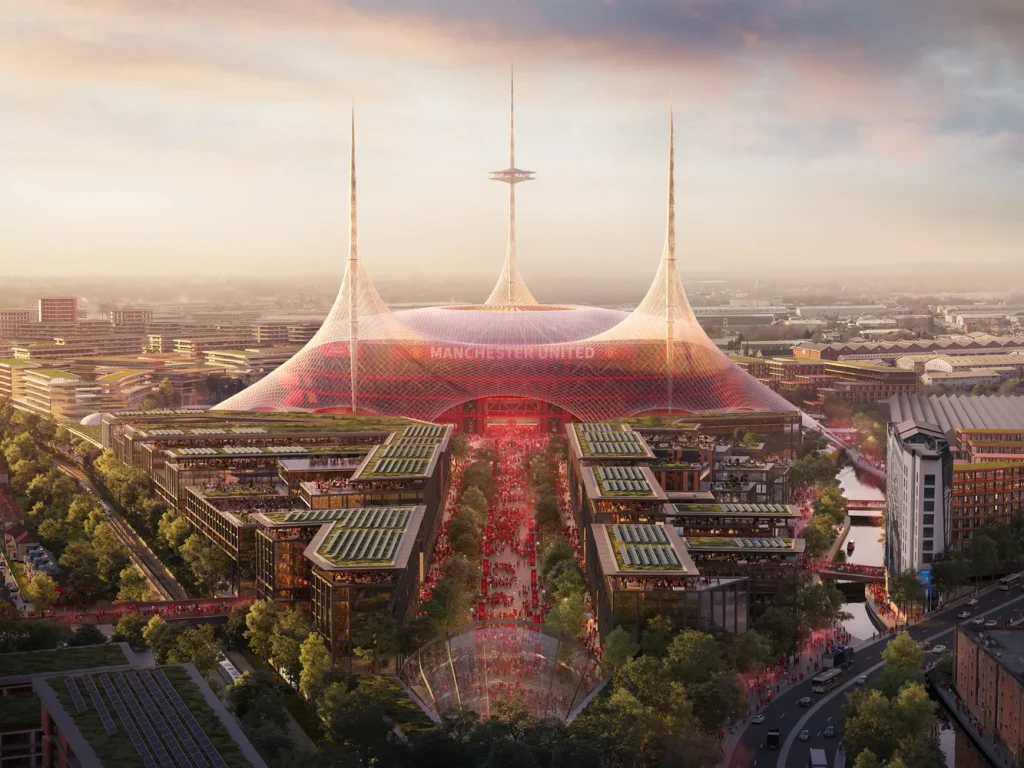
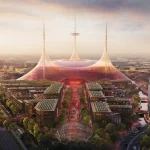
Manchester United has unveiled plans to replace its historic Old Trafford stadium with a 100,000-seat new venue. Designed by Norman Foster’s Foster + Partners, the project will be constructed “footsteps” from the current Old Trafford site (on the stadium’s existing parking area) rather than demolishing the historic ground immediately. The construction is expected later this decade, subject to planning approvals.
The design’s crown feature is “the trident”: three high masts visible from 25 miles away, dubbed the “Eiffel Tower of the north.” These masts will support the roof structure using prefabricated modular components transported via the Manchester Ship Canal, enabling completion within five years. The oval stadium will include 13,000 hospitality seats, premium club facilities, and advanced fan amenities. Old Trafford has been Manchester United’s home since 1910, hosting 74,000 spectators. The football club plans to continue playing at Old Trafford during construction, then move to the new stadium once completed.
9. Spotify Camp Nou, Barcelona, Spain
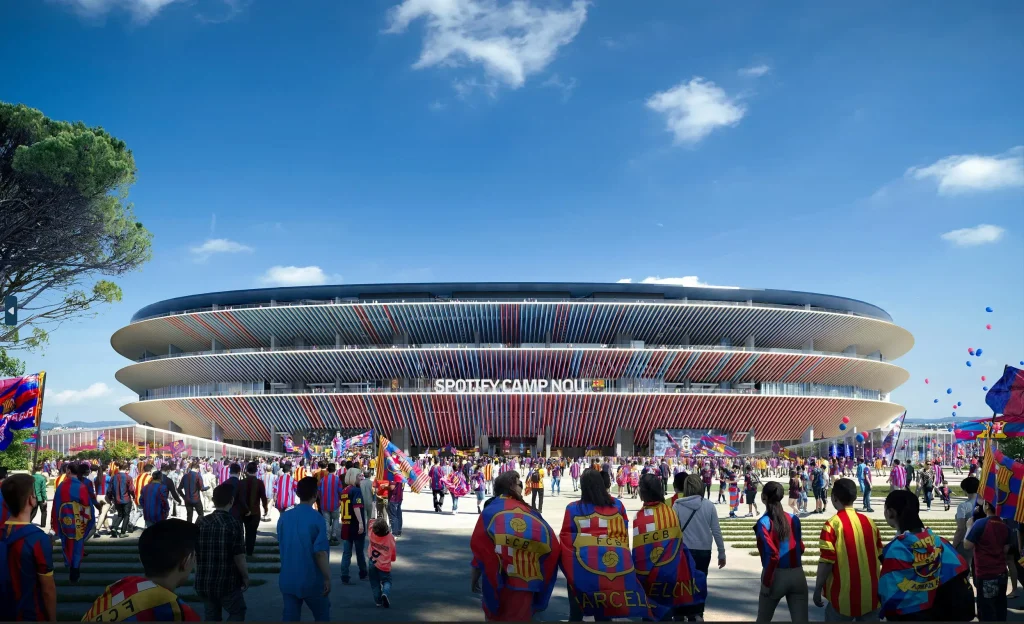
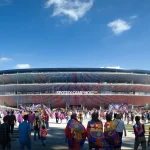
The transformation of Spotify Camp Nou forms the centrepiece of FC Barcelona’s wider Espai Barça redevelopment. Designed by Nikken Sekkei, the project increases capacity to approximately 105,000 spectators, reinforcing Camp Nou’s status as the largest football stadium in Europe while preserving the historic character of the original 1957 structure.
The most significant architectural intervention is the introduction of a vast cable-net roof clad with lightweight ETFE membranes. Suspended above the seating bowl, the new roof provides complete weather protection for spectators while maintaining the stadium’s open-air atmosphere. The lightweight structural system minimizes additional loads on the existing stadium while creating a unified architectural expression across the venue. The redevelopment also introduces a new third tier, expanded hospitality facilities, upgraded concourses, and improved accessibility throughout the stadium. The project retains the monumental concrete character of the original Camp Nou while integrating advanced structural engineering.
10. Tottenham Hotspur Stadium, London, England
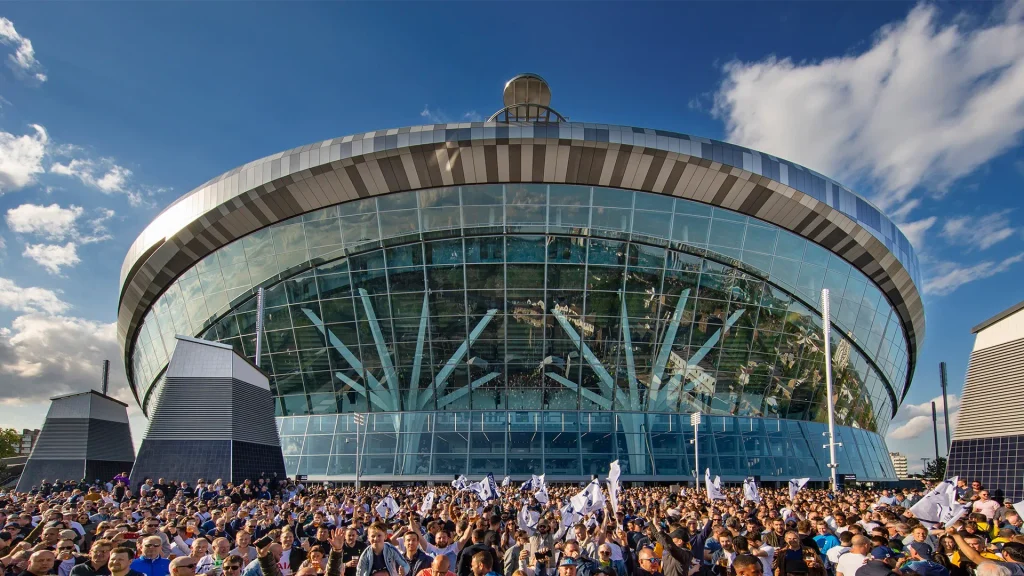
The Tottenham Hotspur Stadium is an expensive stadium, with a capacity of 62,000. Designed by global sports venue specialist Populous and constructed by Mace, the stadium opened in April 2019 on the site of the club’s historic White Hart Lane, which had hosted 120 years of Spurs football.
The stadium’s design features a purpose-built venue for both football and NFL games, incorporating a fully retractable grass pitch with synthetic turf underneath. The grass surface divides horizontally and slides into three underground compartments in 25 minutes, exposing the NFL field beneath. The 17,500-seat South Stand is the UK’s largest single-tier stand, standing 34 meters high with the club’s famous golden cockerel statue atop. Stands are angled, creating an atmospheric bowl focusing toward the South End “wall of sound.” The facade combines textured grey-white panels with large glass sections. Additional amenities include a 40-meter climbing wall, hotel, stadium tours, the Dare Skywalk, and 16 annual non-football events, including one Saracens rugby match.
11. Santiago Bernabéu Stadium, Madrid, Spain
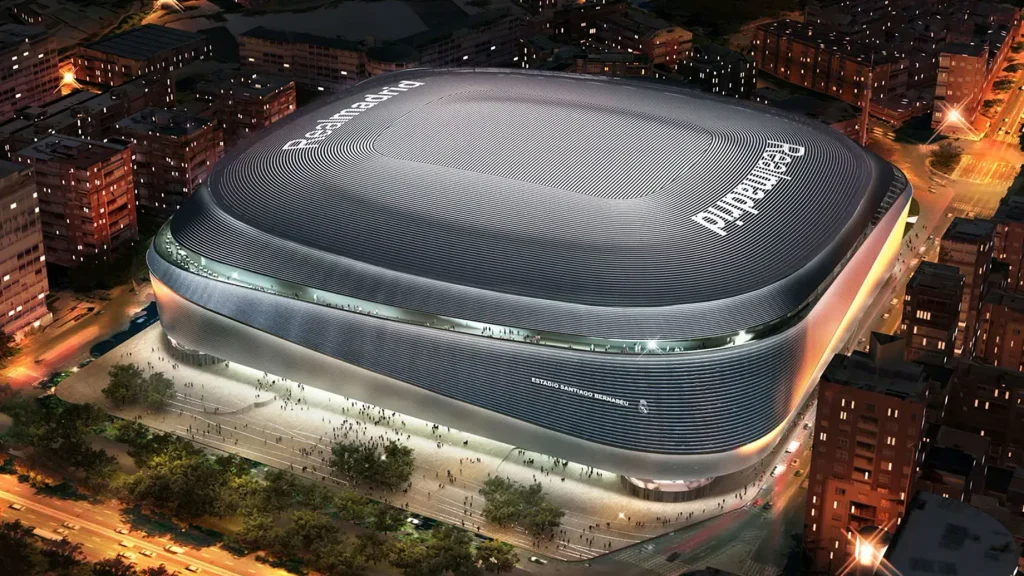
Originally built between 1944 and 1947 by architects Manuel Muñoz Monasterio and Luis Alemany Soler, the stadium was inaugurated in 1947 as the “Nuevo Estadio Chamartín” and renamed in 1955 to honor Santiago Bernabéu de Yeste, Real Madrid’s legendary president for 35 years. The venue holds 81,044 spectators and has hosted four European Cup finals, the 1982 FIFA World Cup final, and UEFA Euro 2020 matches.
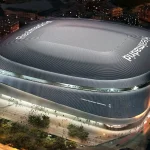
Completed in late 2023 after a comprehensive redesign by GMP Architekten and Rafael de La-Hoz, the stadium’s facade features steel panels forming a 360-degree metallic skin that wraps the entire structure, creating a shimmering, modernist envelope. The crown achievement is a retractable roof with an ETFE membrane supported by tons of steel, spanning across the pitch without central columns. The stadium also features a 360-degree LED video ring, a retractable pitch for non-football events, and underground parking for 1,500 vehicles.
12. Kai Tak Sports Park, Kowloon, Hong Kong
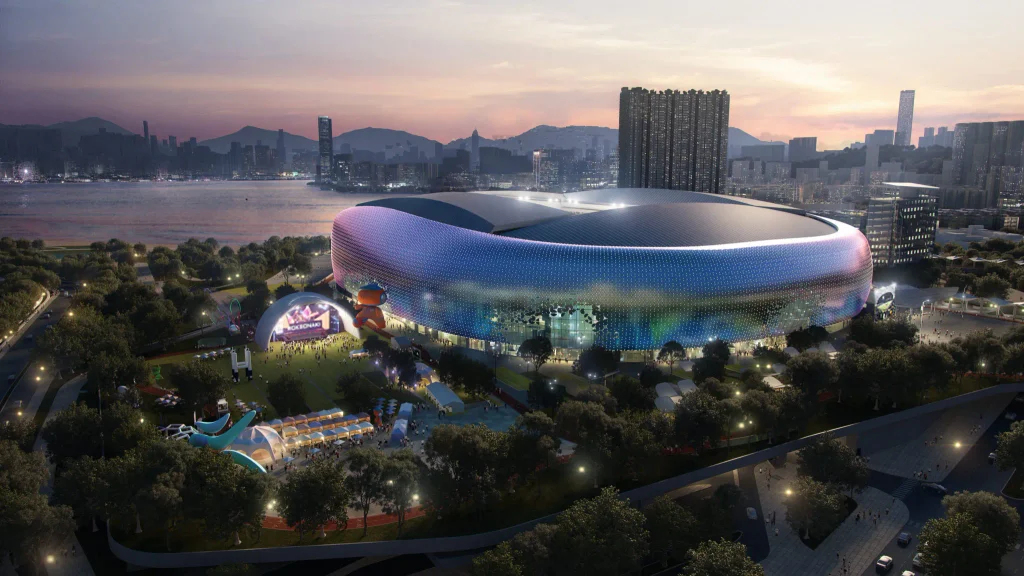
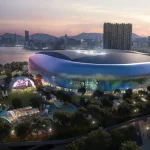
Officially opened in 2025, Kai Tak Sports Park is Hong Kong’s largest integrated sports and entertainment development, occupying 28 hectares on the site of the former Kai Tak Airport. The centerpiece of the complex is the 50,000-seat Kai Tak Stadium, designed by Populous as a landmark venue capable of hosting international football, rugby, concerts, and major cultural events.
The stadium is distinguished by its sculptural facade, inspired by the iridescent form of a pearl. Clad in shimmering metallic panels that change appearance throughout the day, the envelope responds to Hong Kong‘s subtropical climate. A retractable roof allows the venue to operate in a variety of weather conditions, enabling year-round use. Beyond the main stadium, the development includes the 10,000-seat Kai Tak Arena, a public sports ground, training facilities, retail and dining areas, landscaped open spaces, and extensive transport connections.
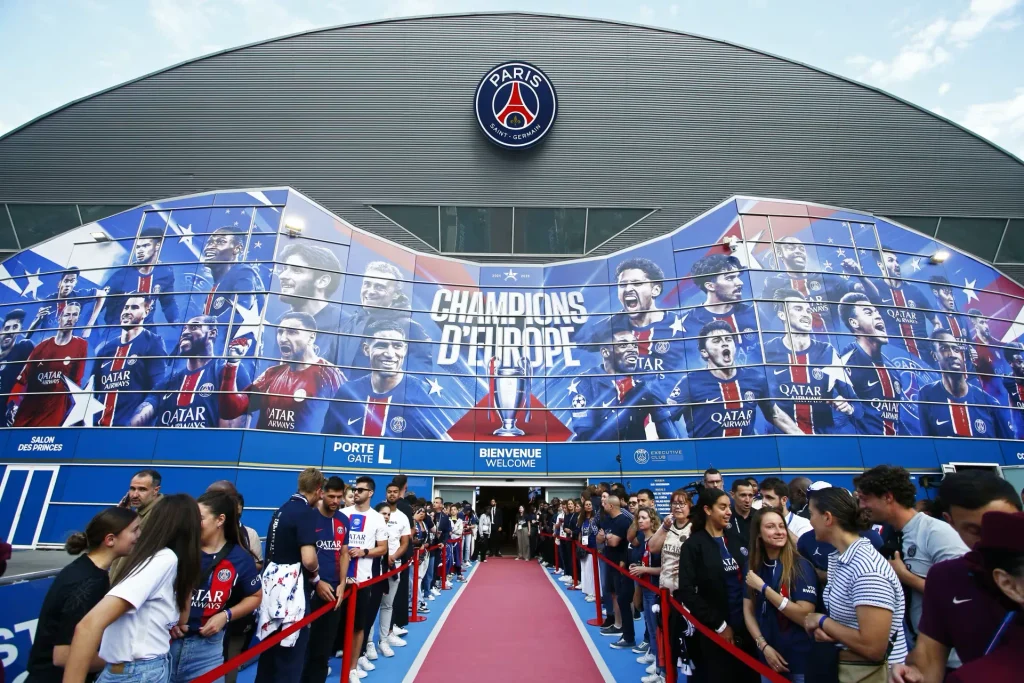
Today’s football stadiums are architectural icons, urban landmarks, and year-round destinations. Retractable pitches, soaring canopies, digital experiences, and mixed-use developments are transforming the traditional stadium into a place where fans gather long before kickoff and linger long after the final whistle.