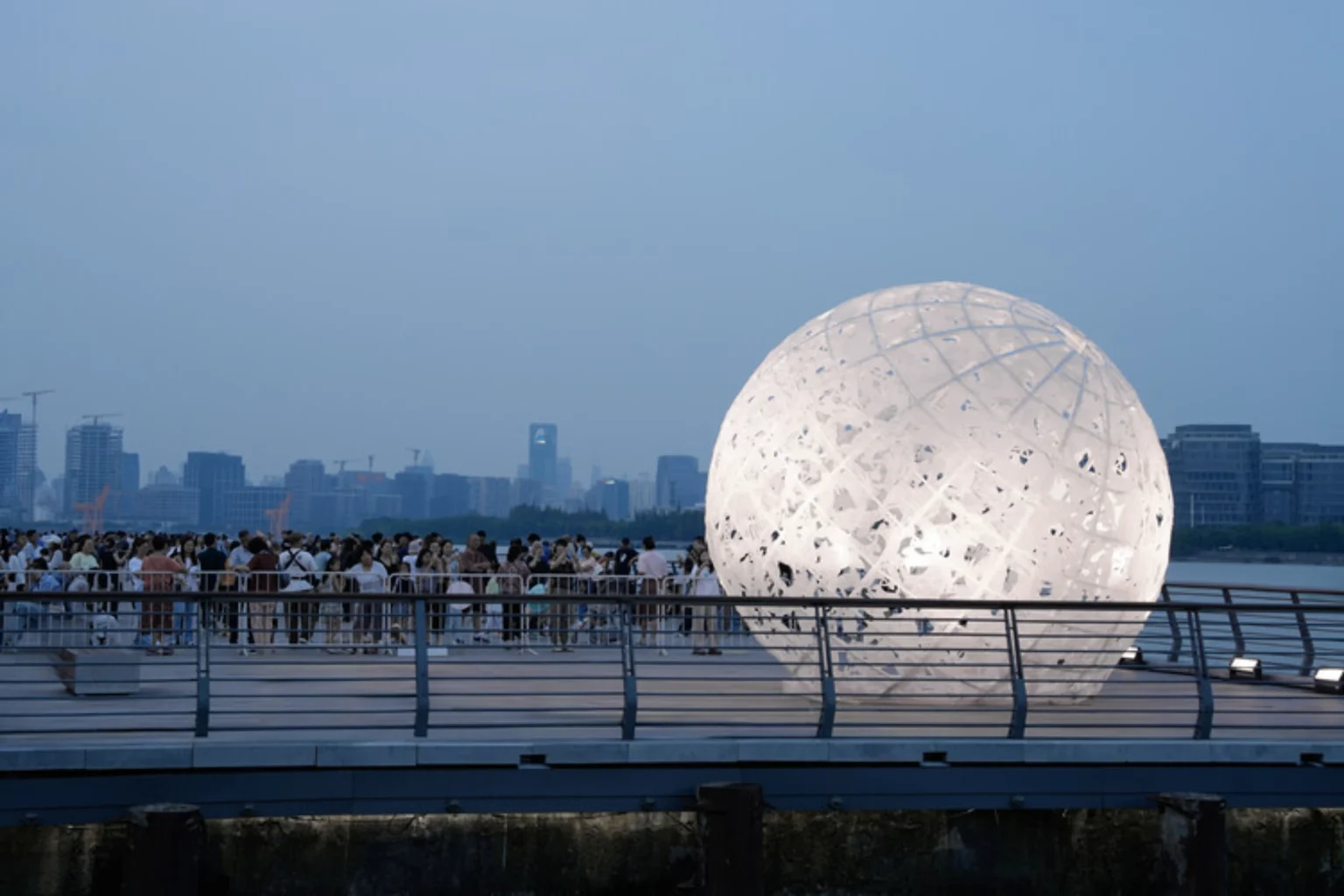


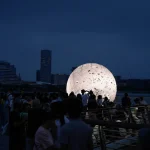
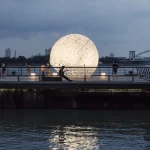
The Full Moon Pavilion: On the industrial edge of the Huangpu River, a glowing sphere appeared for the Mid-Autumn Festival. It was not a distant symbol in the sky but a place people could enter. Inside, overlapping rabbits cut from light and acrylic turned an ancient story into something you could walk through.
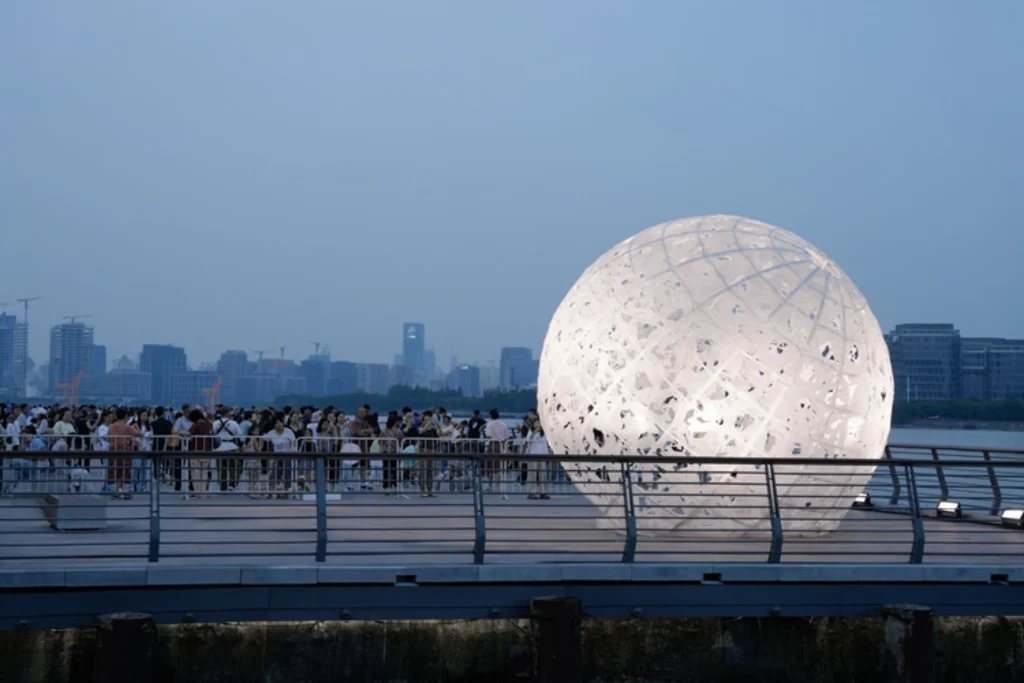
The moon has always been more than a celestial body in Chinese culture. It marks the turning of seasons, the gathering of families, and the quiet acceptance that everything waxes and wanes. Beside it, in folklore, runs the rabbit: lively, enduring, a companion that suggests growth even when the night is long. For the 2025 Mid-Autumn Festival, SHISUO Design Office was invited by the Power Station of Art to give that pairing a physical form on Shanghai’s West Bund Shipyard Pier.
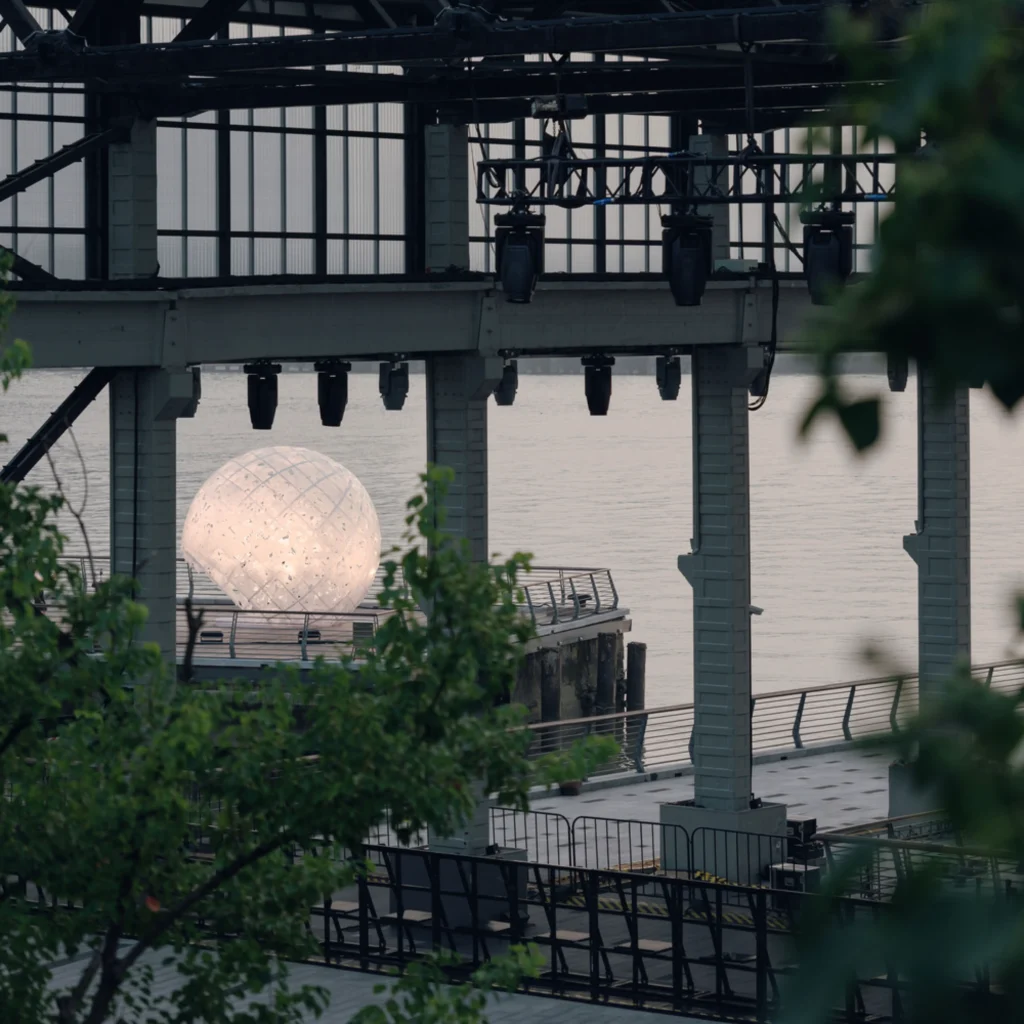
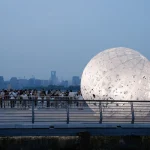
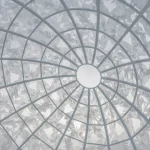
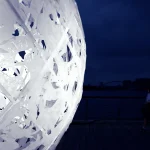
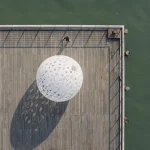
The result is The Full Moon, a temporary public installation of only twenty square meters that feels larger than its footprint. Visitors step into a segmented spherical structure whose surface is an openwork of rabbit silhouettes. The rabbits appear in many poses, running, leaping, looking back, standing still, arranged so that their forms interlock and circulate around the visitor. At the top the sphere remains open, letting the real sky and the real moon, when it is visible, complete the composition.
Craft meeting structure
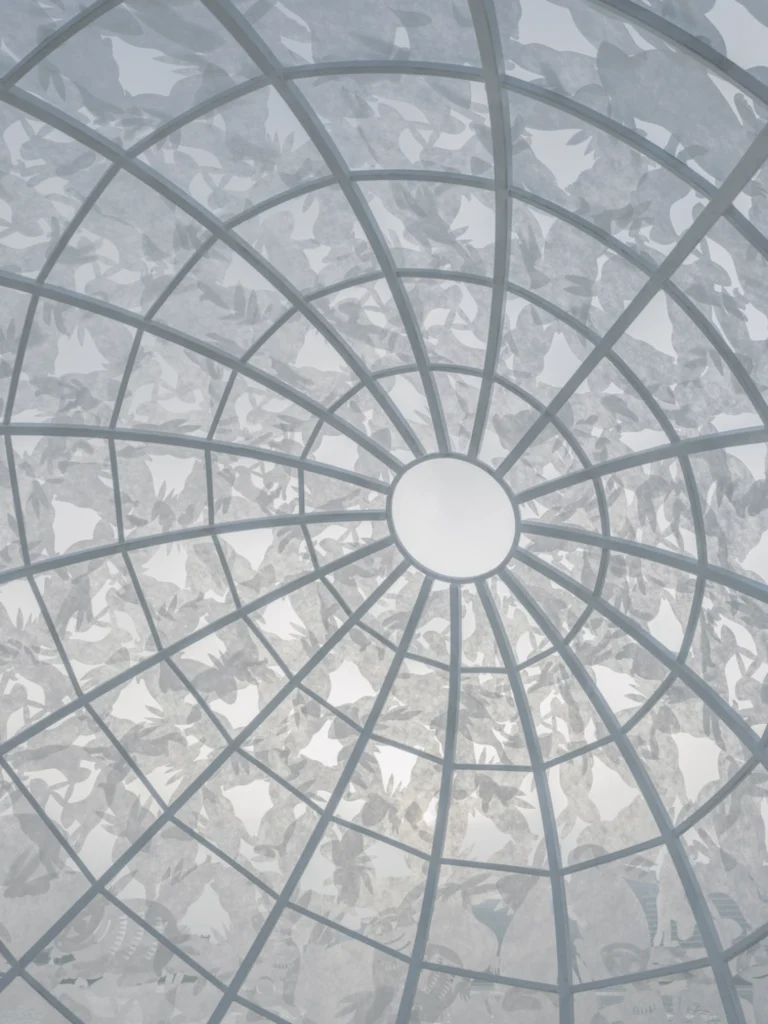
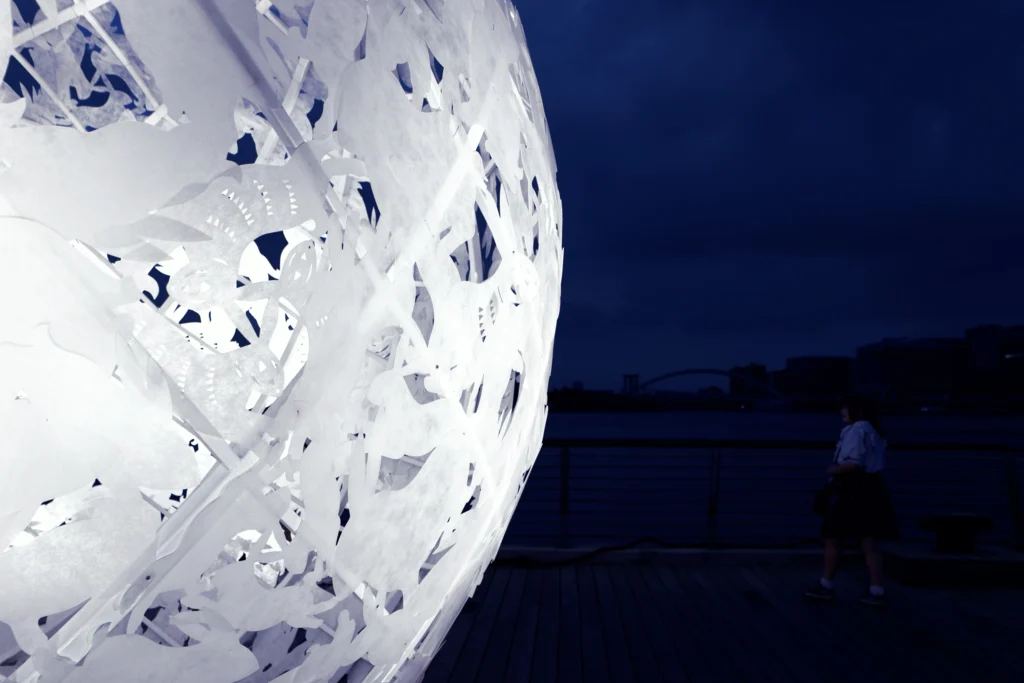
The project was developed with Shi Qinling, an inheritor of Shanghai-style paper-cutting. Traditional paper-cut rabbits, with their lively outlines and folkloric energy, became the starting point. SHISUO translated those two-dimensional cuts into three-dimensional panels of crackle-textured acrylic. The material catches and fractures light, giving the silhouettes a shifting, almost crystalline quality as the sun moves or as artificial lighting takes over after dark.
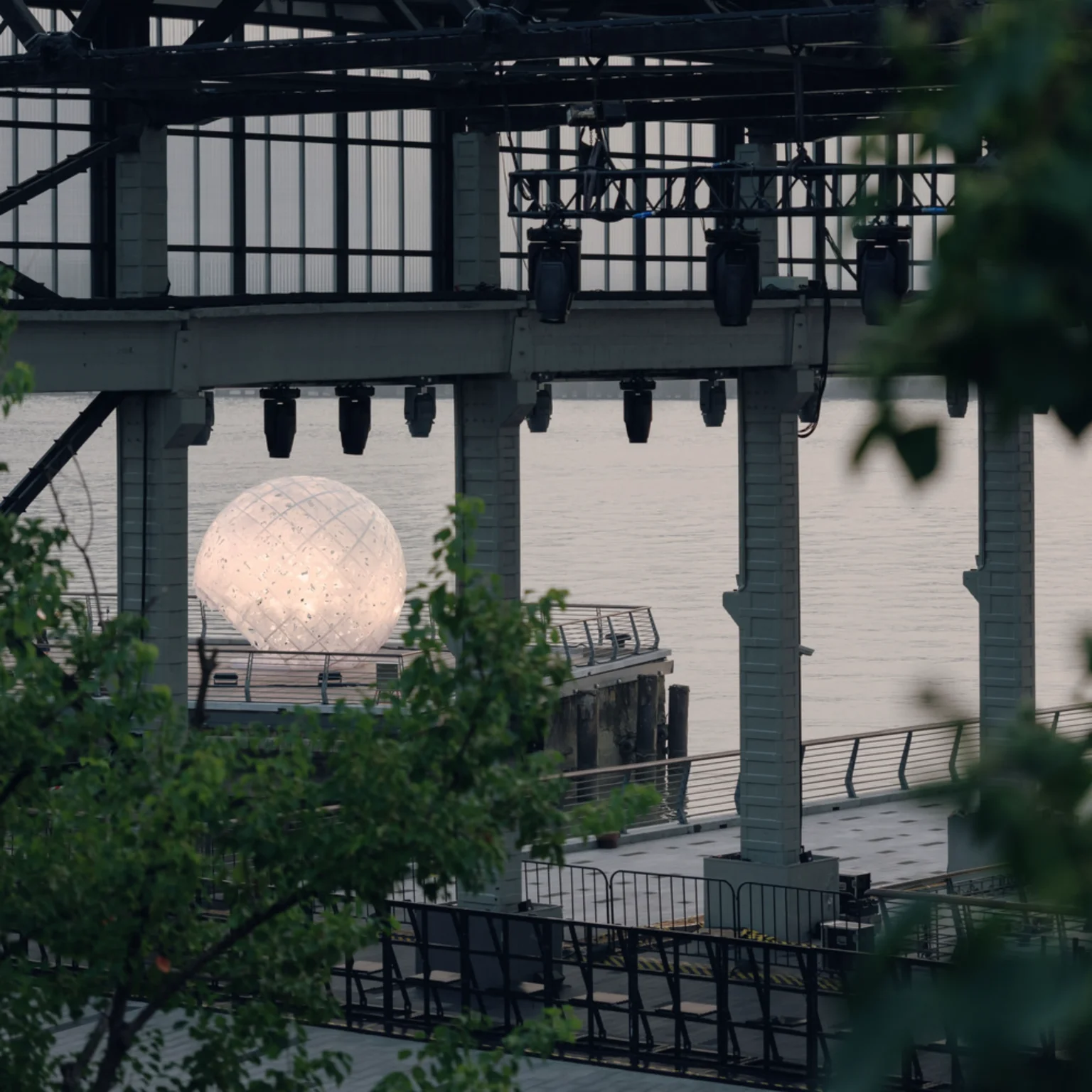
Square steel tubes form the underlying frame. The structure had to withstand the typhoon season that often arrives in Shanghai between August and October, so safety and resilience were primary concerns. The finished sphere is porous enough for wind to pass through yet solid enough to invite people inside. From a distance, it reads as a luminous moon resting on the pier. Up close it becomes a walkable room whose walls are made of overlapping stories.
Inhabiting the symbol
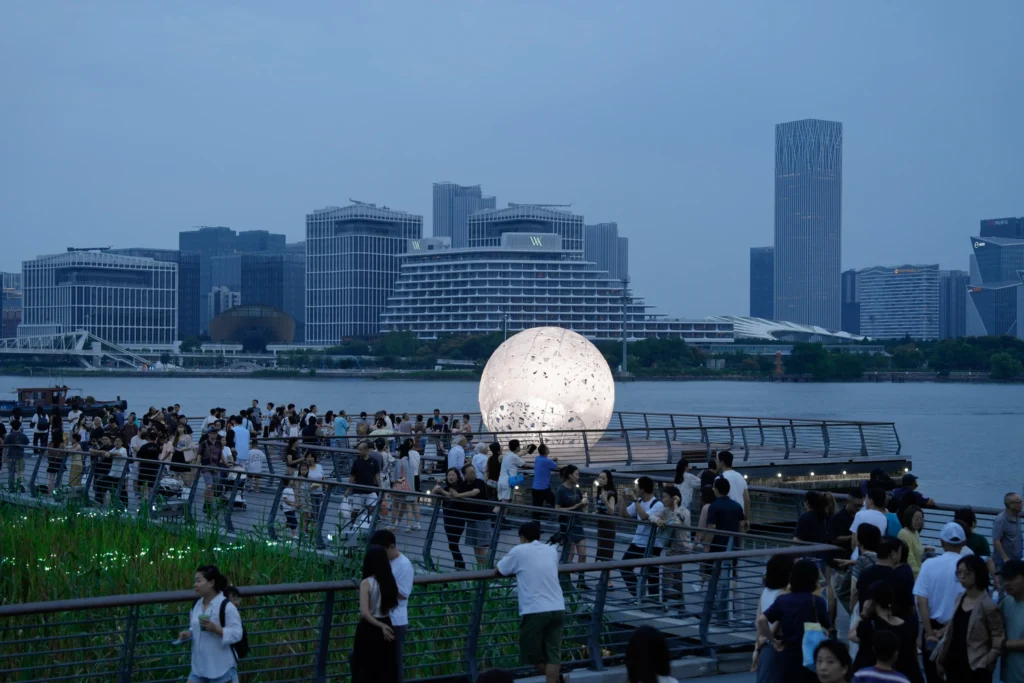
Image courtesy: Jianyuan Ye
Most public art about the moon keeps the viewer outside, looking up. The Full Moon reverses that relationship. Once you enter, the rabbits surround you. Their poses were inspired in part by the classic “Three Hares with Conjoined Ears” motif found in the caisson ceilings of the Dunhuang murals, yet here the arrangement feels freer and more contemporary. The silhouettes do not form a single narrative scene; they create a continuous field of movement that changes as you turn.
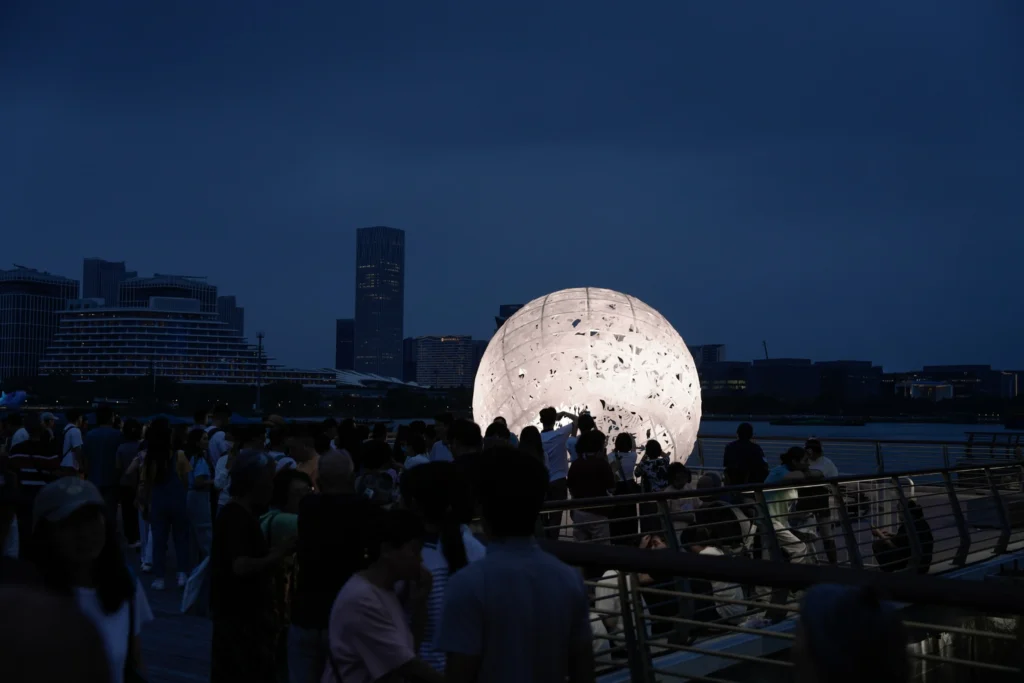
Image courtesy: Jianyuan Ye
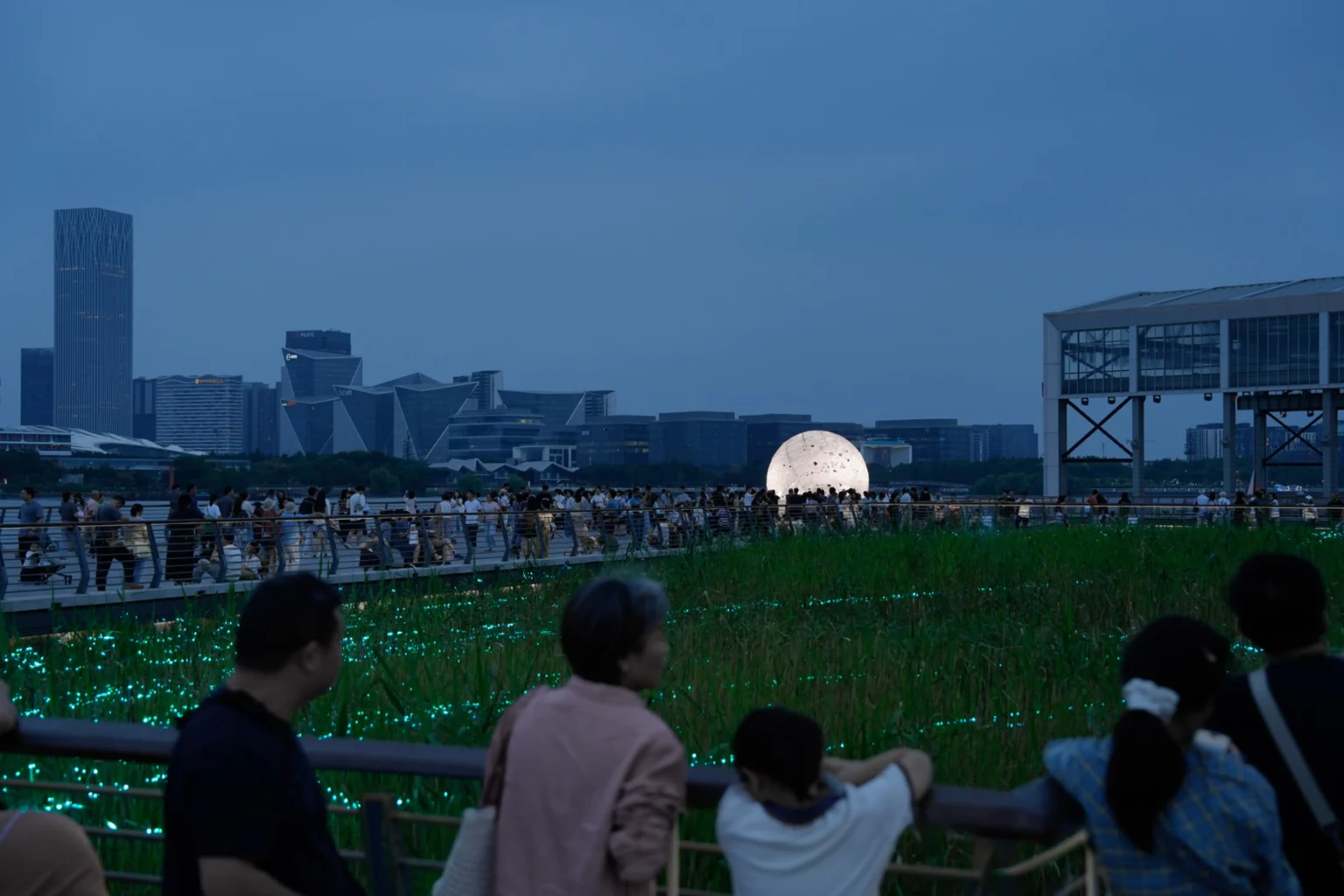
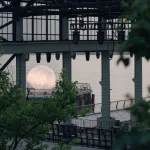
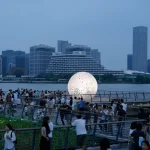
Light does much of the work. During the day, the acrylic panels filter sunlight into soft patterns on the floor and on the people inside. At night, the sphere glows from within, becoming a lantern visible along the waterfront. The industrial setting of the old shipyard pier sharpens the contrast: heavy concrete and steel on one side, a delicate, almost weightless moon on the other.
A brief presence
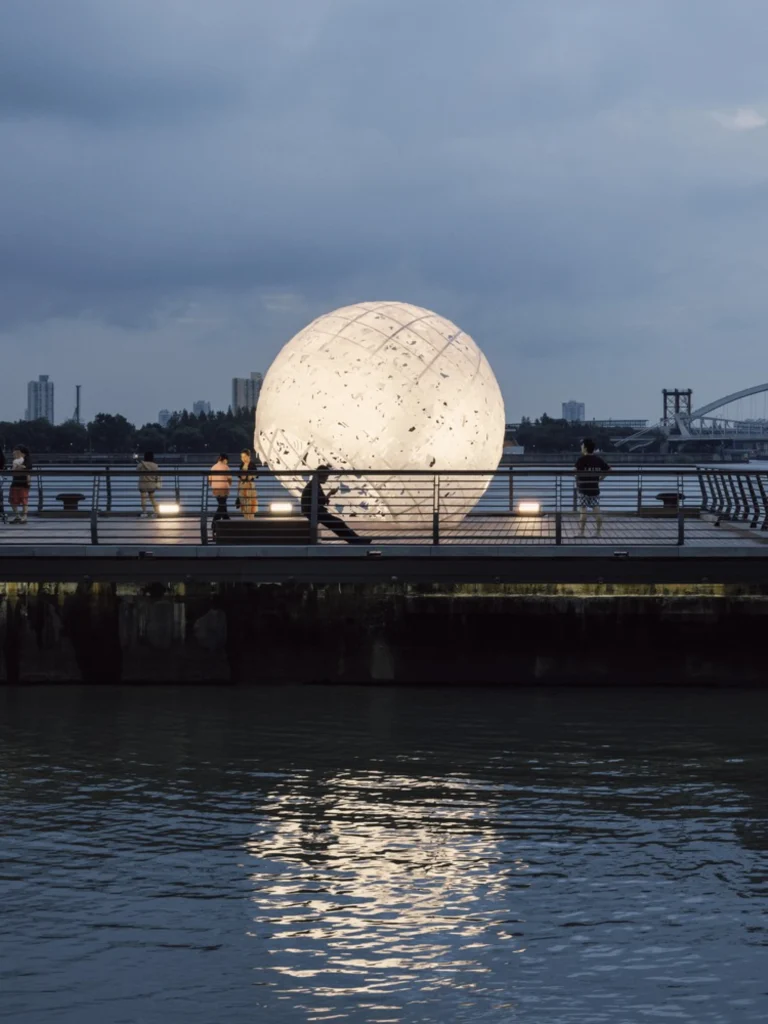
Image courtesy: Jianyuan Ye
The Full Moon was never meant to stay. It was installed for the festival period and then dismantled, its components returning to storage or to other uses. That brevity is part of its meaning. Like the real moon, it appears, reaches fullness, and withdraws. In a city that constantly replaces its surfaces, the installation offered a temporary pause—an invitation to step out of the ordinary flow of the West Bund and into a small, self-contained world of folklore and light.
Lead architects Sanif and Changshan, working with Lin Zihan and Zhang Yichi, kept the architectural language restrained. There is no additional ornament, no explanatory text panels dominating the experience. The structure itself carries the story. Visitors understand it through movement and light rather than through written description.
Continuity in a changing city
Shanghai’s waterfront has been transformed many times. The West Bund, once a working shipyard zone, is now a cultural corridor lined with museums and public spaces. The Full Moon sits lightly within that transformation. It does not compete with the large institutions nearby; it offers a different scale of encounter: intimate, seasonal, and rooted in a shared cultural memory that still resonates.
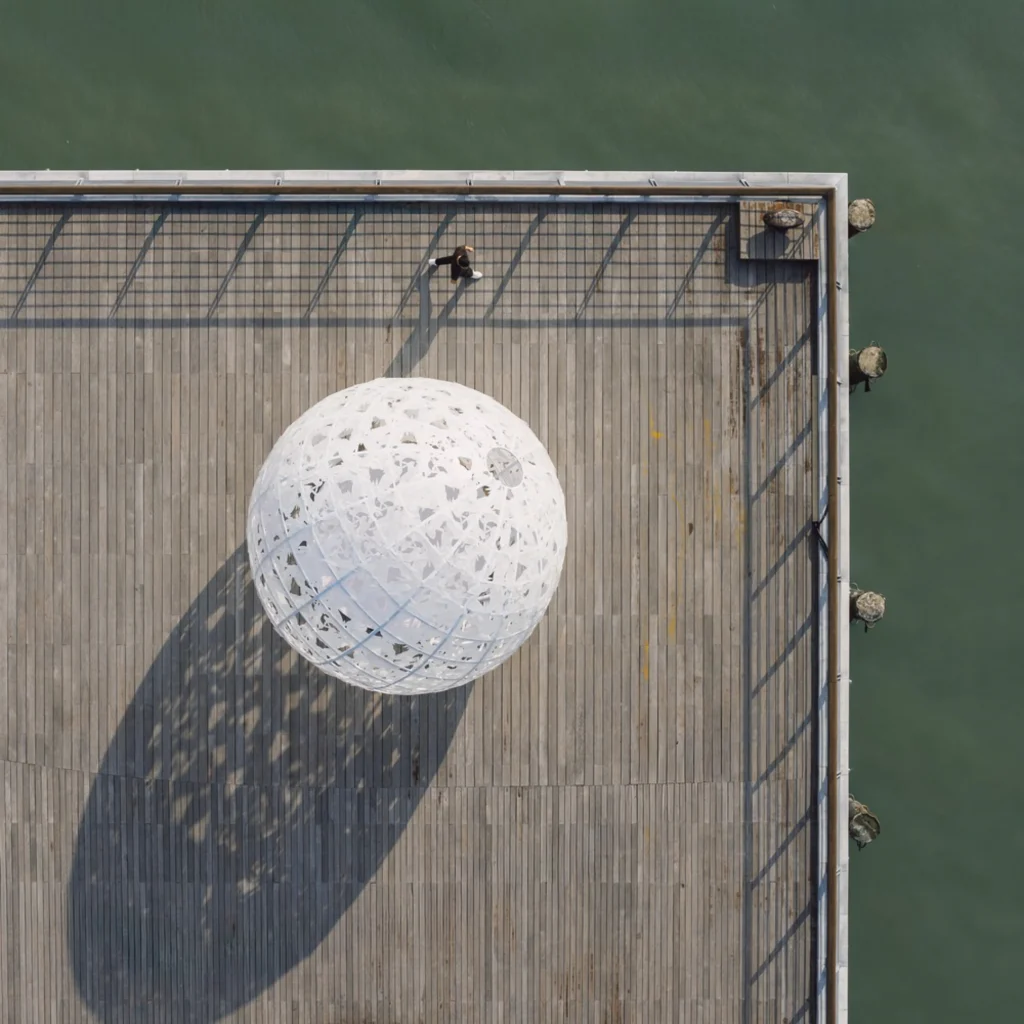
Image courtesy: Jianyuan Ye
By bringing a traditional craft into a contemporary structural system, the project also suggests one way heritage can remain alive. Paper-cutting is not treated as a nostalgic reference. It becomes the actual surface of the architecture. The rabbits are not illustrations of an old story; they are the walls of a room people can inhabit for a few minutes or a few hours.
After the festival
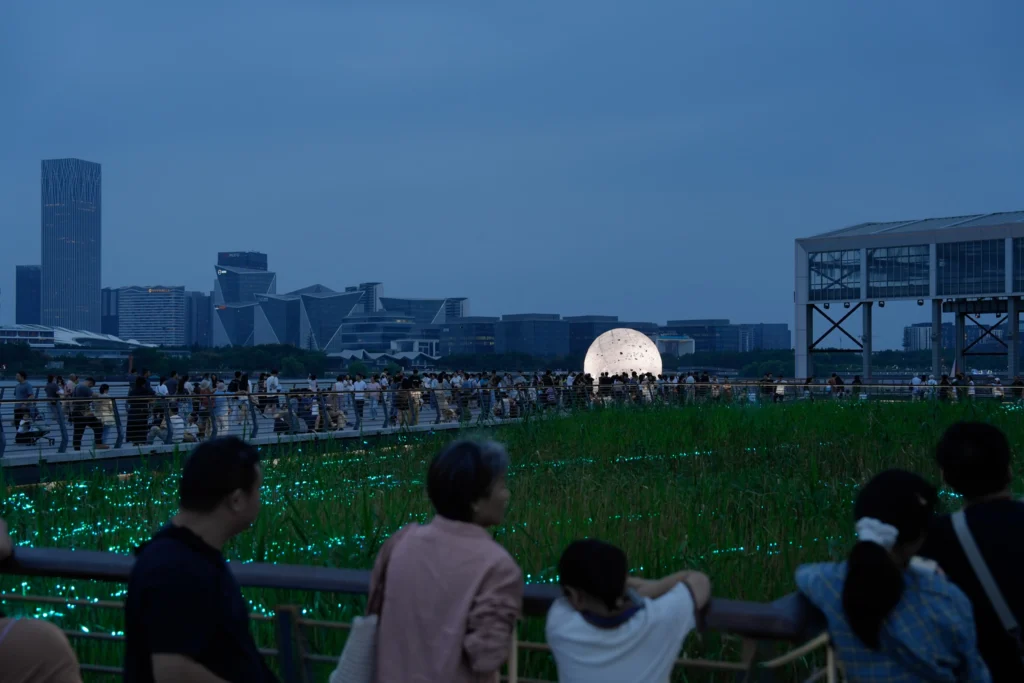
Image courtesy: Jianyuan Ye
When the installation came down, the pier returned to its usual rhythms. Yet for those who walked inside the glowing sphere, the memory of standing among the rabbits remains. The Full Moon did not try to explain the Mid-Autumn Festival. It simply gave its central symbols, moon and rabbit, a temporary body that people could enter, circle, and leave again.
In that sense, the project succeeds as both public art and quiet architecture. It occupies little ground, demands little permanence, and still manages to create a complete world. On the edge of a great river, under a real moon that continues its own cycle, a second moon made of acrylic and steel offered a place to pause and look both outward and inward at once