

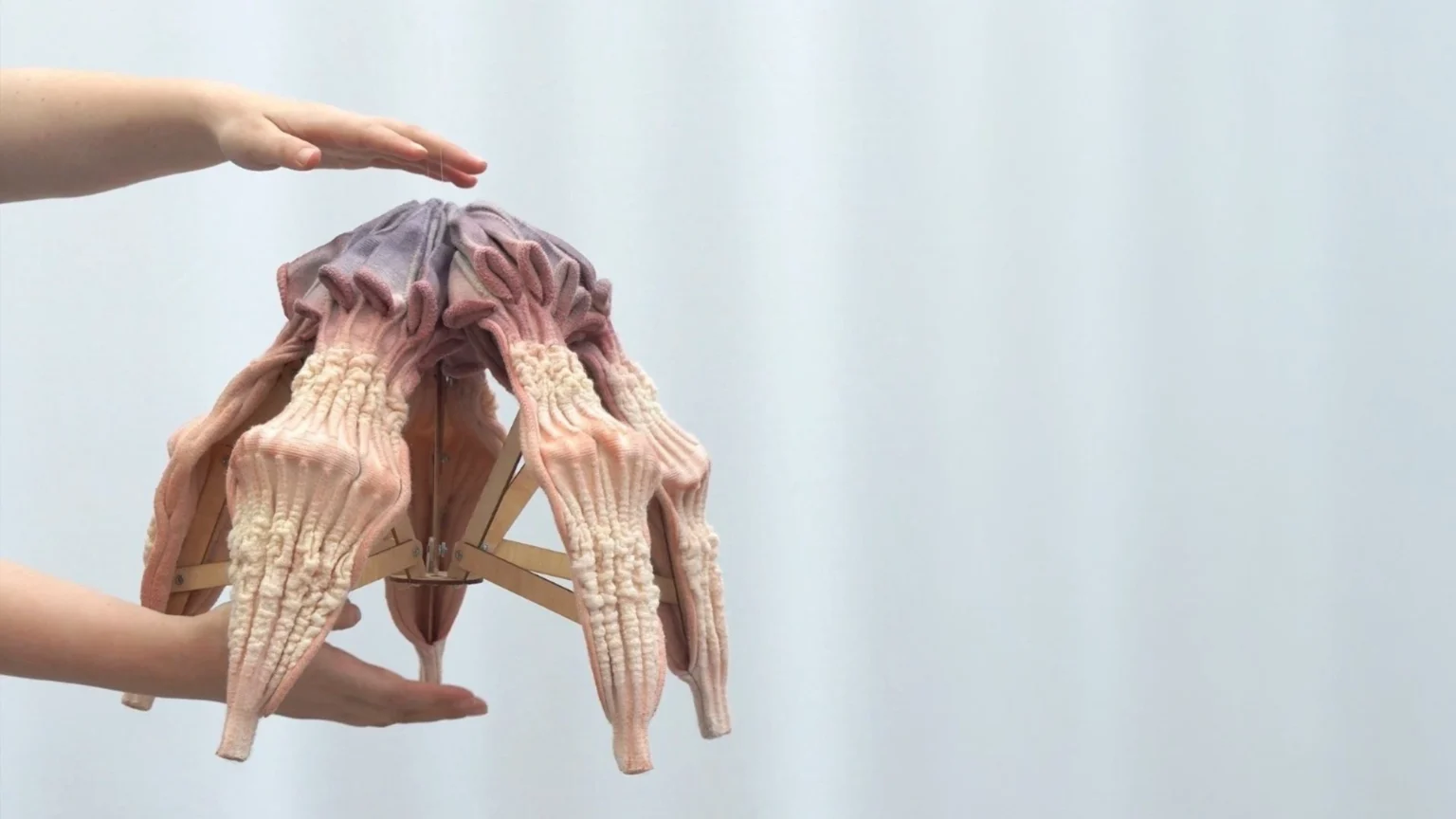


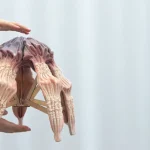

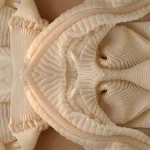
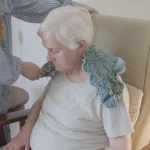

Some forms of loneliness cannot be solved by conversation. They settle in the body as a quiet absence of touch, rhythm, and mutual presence. In response, designer Katrijn Westland has created Soft Companions: an ecology of dynamic, creature-like textile artifacts that do not serve us so much as live alongside us. Presented at Dutch Design Week, the project explores how sensory interaction with non-human matter can generate reciprocal care. These are not tools. They are companions that breathe, move, emit warmth and light, purr when content, and gently seek sunlight.
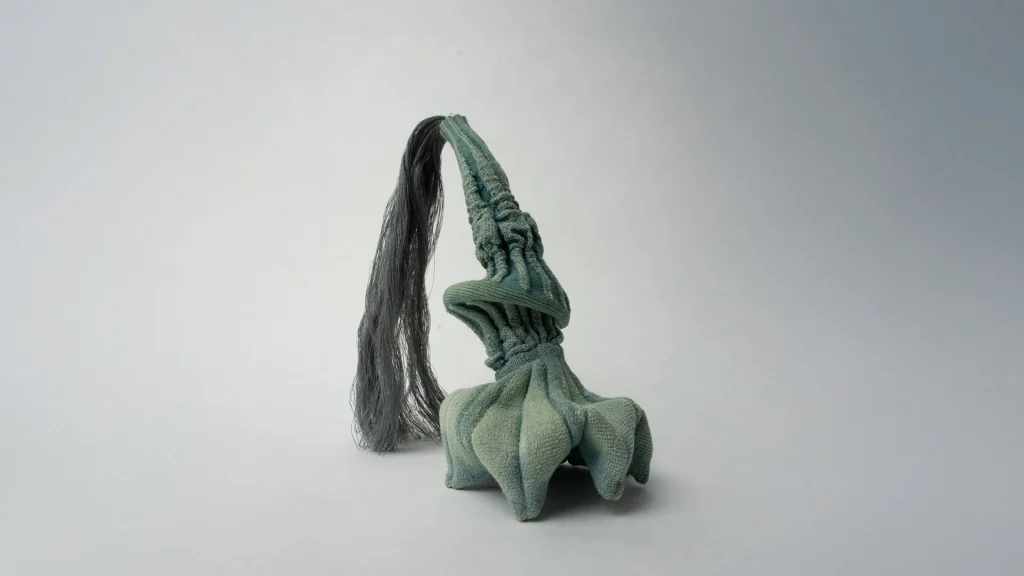
The work sits at the intersection of textile design, soft robotics, and spatial experience. It asks what happens when architecture’s softest materials begin to answer back.
From Passive Object to Active Presence
Most textiles in our environments remain passive: curtains, upholstery, blankets. Soft Companions reverse that expectation. Using naturally dyed knitted structures combined with e-textiles, sensors, pneumatic systems, and soft mechanics, Westland gives the fabric a degree of animacy. The creatures inflate and deflate in slow rhythms that can synchronize with human breathing. They respond to grooming and touch with vibration or subtle movement. Some generate gentle heat. Others orient themselves toward light.
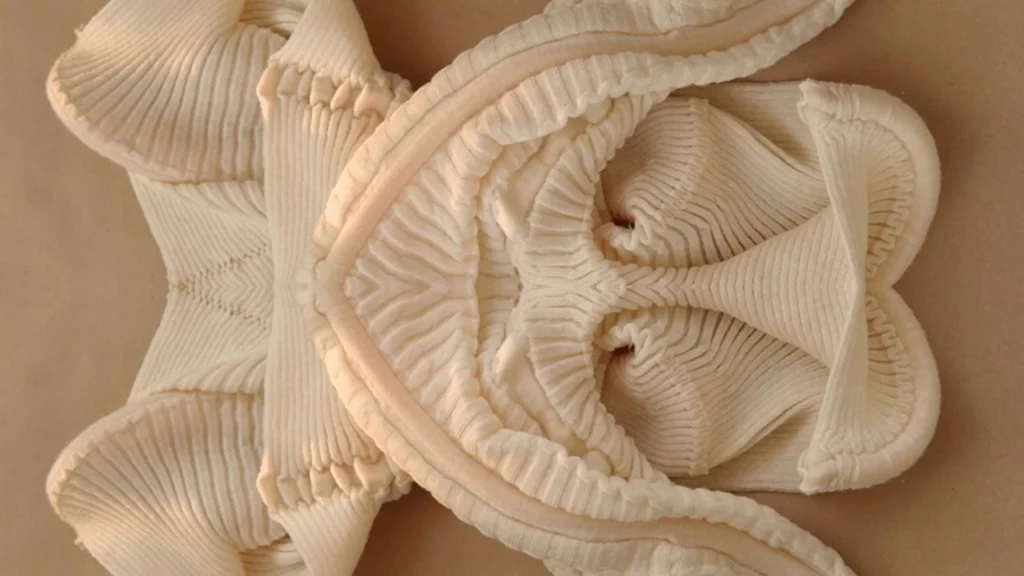
This is not anthropomorphism for its own sake. The design deliberately avoids cartoonish faces or exaggerated features. Instead, the forms remain abstract enough to feel like independent beings while remaining unmistakably textile; soft, imperfect, slightly unruly. The result is an invitation rather than a command: you may care for this, and in doing so, something is returned.
Westland’s background as a nurse informs the work. Care, she suggests, is often undervalued when it is purely functional. The project recovers the quieter rituals (grooming, soothing, simply being present with another body) and relocates them in the relationship between human and material.
User Experience as Mutual Regulation
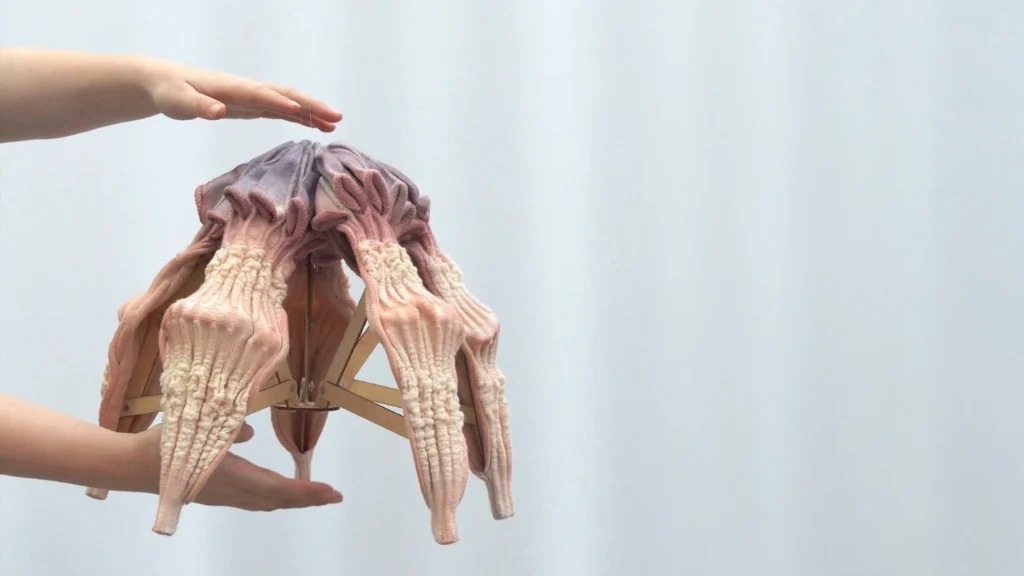
The user experience of Soft Companions is deliberately slow. Interaction is not a sequence of discrete commands but a continuous sensory exchange. Touching the surface may produce a purring vibration. Holding a breathing form can gradually align one’s own respiration with its cycle. The creatures do not demand attention; they reward sustained, gentle presence.
In an age of screen-based interfaces that extract attention, these objects operate on a different register. They offer what might be called reciprocal regulation: the human calms the creature through care, and the creature’s response helps regulate the human’s nervous system. Moments of mutual presence emerge that are neither utilitarian nor purely aesthetic.
This has implications beyond individual wellbeing. In domestic interiors, healthcare settings, or shared public spaces, such companions could introduce a new layer of soft infrastructure; objects that support emotional climate without requiring language or performance.
Material Intelligence and Spatial Presence
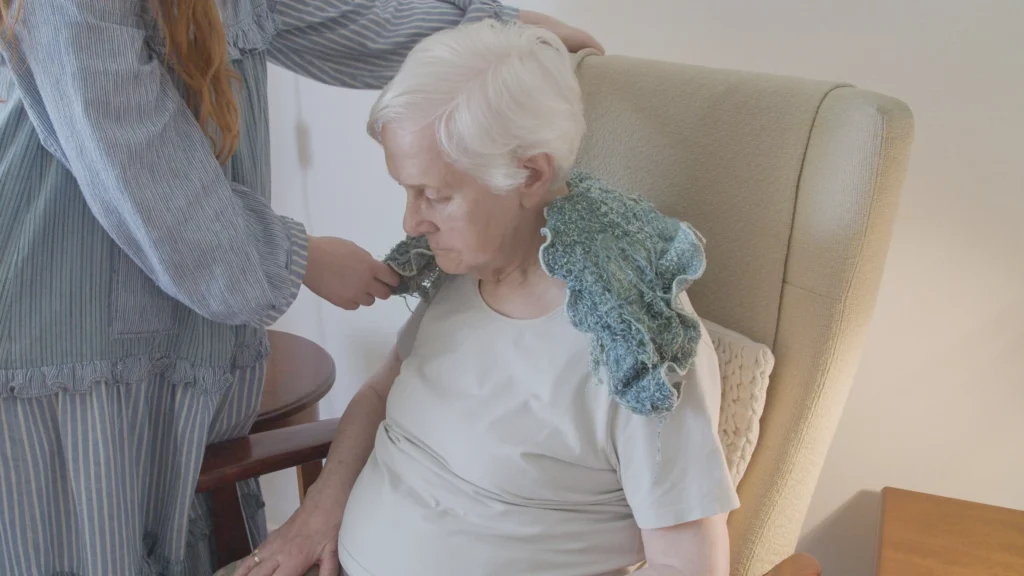
Architecturally, Soft Companions challenge the traditional hierarchy between structure and soft finish. Knitted textiles are no longer mere cladding or comfort layer; they become active agents that shape behavior and atmosphere. The use of natural dyes and responsive soft systems suggests a material culture that is both technological and ecological.
In spatial terms, the creatures occupy an intermediate scale. They are larger than personal accessories yet smaller than furniture. They can rest on a lap, drape across a shoulder, or settle in a corner of a room. Their tendency to seek light or respond to proximity subtly animates the interior, creating micro-climates of attention and care.
Imagine a residential interior or a care facility where such companions are distributed not as gadgets but as part of the environmental system. The architecture would no longer be a neutral container. It would host a living ecology of responsive matter that encourages slower rhythms and more attentive occupation.
Design Ideology: Care as Ecological Exchange
At its core, Soft Companions proposes a shift in how we understand care. Care is reframed as a relational, sensory, and ecological exchange rather than a one-directional service. Textiles, usually treated as passive resources, become partners in that exchange.
This has philosophical as well as practical weight. In a period marked by isolation and digital mediation, the project insists that meaningful connection can also occur through touch, temperature, rhythm, and shared presence with non-human entities. It does not replace human relationships; it expands the field of possible companionship.
The work also resists the polished perfection often associated with smart objects. The knitted surfaces are irregular. The movements are organic rather than mechanical. The natural dyes carry subtle variations. These qualities prevent the creatures from becoming sterile devices and keep them closer to living systems.
Toward a Softer Architecture
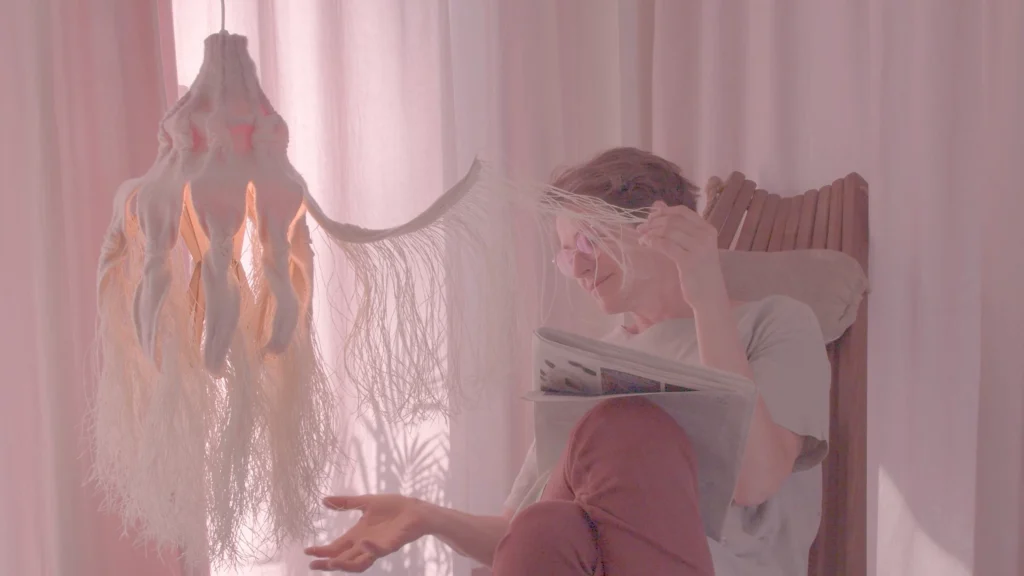
Soft Companions arrives at a moment when architecture and design are increasingly interested in responsive environments, biophilic systems, and post-anthropocentric thinking. Westland’s contribution is distinctive because it begins not with sensors embedded in walls or ceilings, but with the most intimate of materials—fabric that has always lived close to the body.
By giving that fabric the capacity to respond, the project suggests that the future of caring environments may depend less on adding more technology and more on making existing materials more relational. The result is an ecology of soft, sensory companions that do not solve loneliness by distraction, but by inviting a different quality of attention.
In the end, Soft Companions asks a quiet but radical question: what if the things we live with could also need us a little? And what if, in answering that need, we discovered a form of care that moves in both directions?