

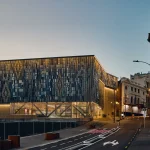
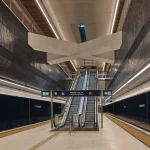
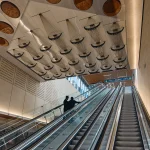
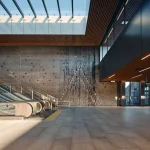
Auckland’s City Rail Link is the largest transport project New Zealand has ever undertaken. When complete, it will double the capacity of the city’s rail network through a 3.4-kilometer twin-tunnel route running up to 42 meters beneath the center. Three of its stations, Te Waihorotiu, Karanga-a-Hape and Maungawhau, have been designed by Grimshaw in collaboration with WSP as part of the Link Alliance. What sets them apart is the depth of their engagement with Māori cultural narratives.
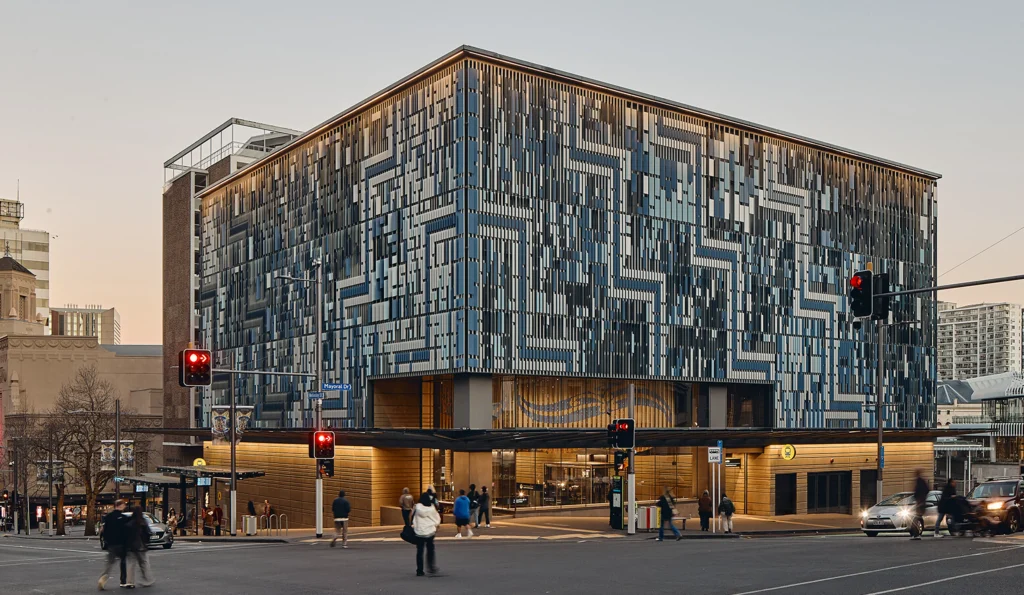
The designs were developed in partnership with Mana Whenua, the groups holding customary authority over the land, and guided by the Te Aranga Māori Design Principles. Rather than applying surface decoration, the architecture attempts to express Te Ao Mārama, the Māori creation story, through spatial sequence, material layers and site-specific storytelling.
Naming as foundation
The stations carry te reo Māori names gifted by the Mana Whenua Forum. Maungawhau refers to the volcanic cone at Mount Eden. Karanga-a-Hape recalls the story of Hape and the great migration, correcting an earlier colonial rendering of the name. Te Waihorotiu references the stream that once ran through the area now known as Aotea. These names are not labels added after the fact. They shaped the pattern language, artworks, and spatial organization of each building.
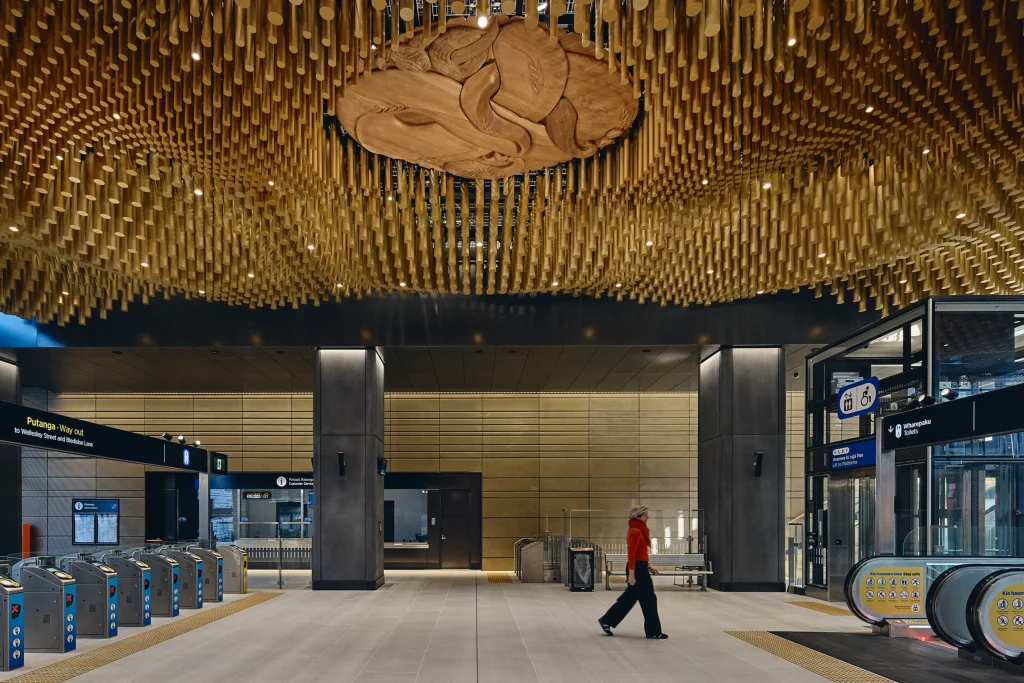
Working with eight local iwi, the design team treated the stations as opportunities to reinstate traditional place knowledge in a contemporary infrastructure setting. The result is a set of public buildings that carry cultural identity into daily commuting life.
A shared design language of light and earth
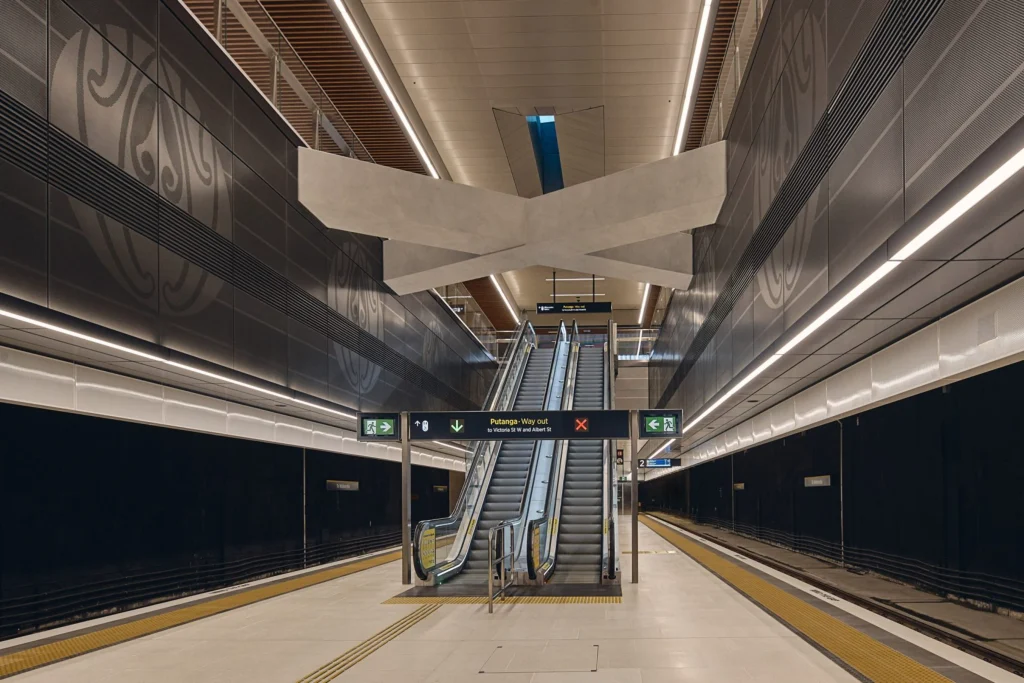
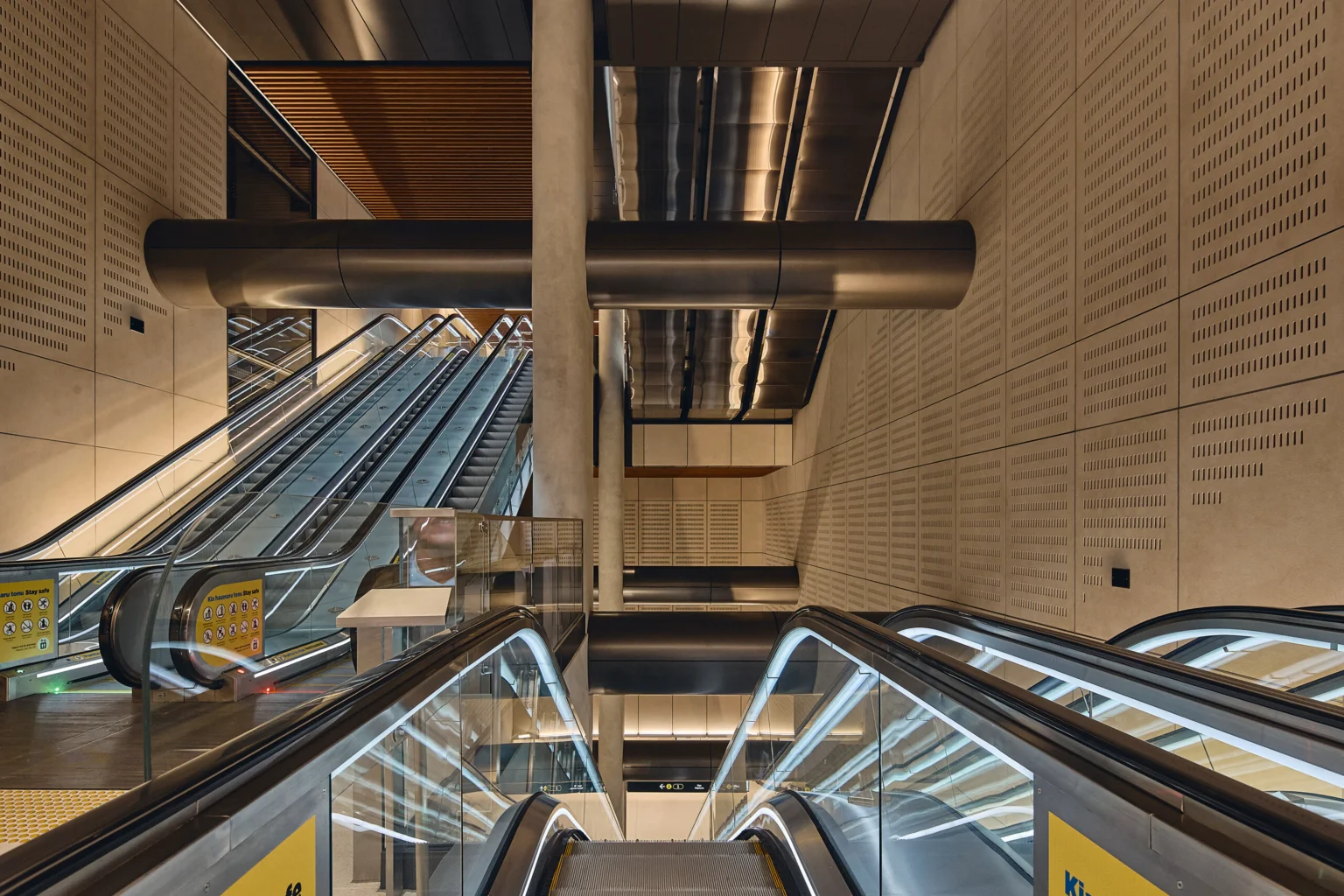
Across all three stations, Grimshaw developed a consistent set of architectural elements interpreting Te Whaiao, the first glimmer of dawn in the creation narrative. Layers of dark, light, and translucent materials create a progression from the underground platforms toward the surface. Four conceptual elements, Sky, Earth, Threshold, and a fourth relational layer, organize the experience of moving through the stations.
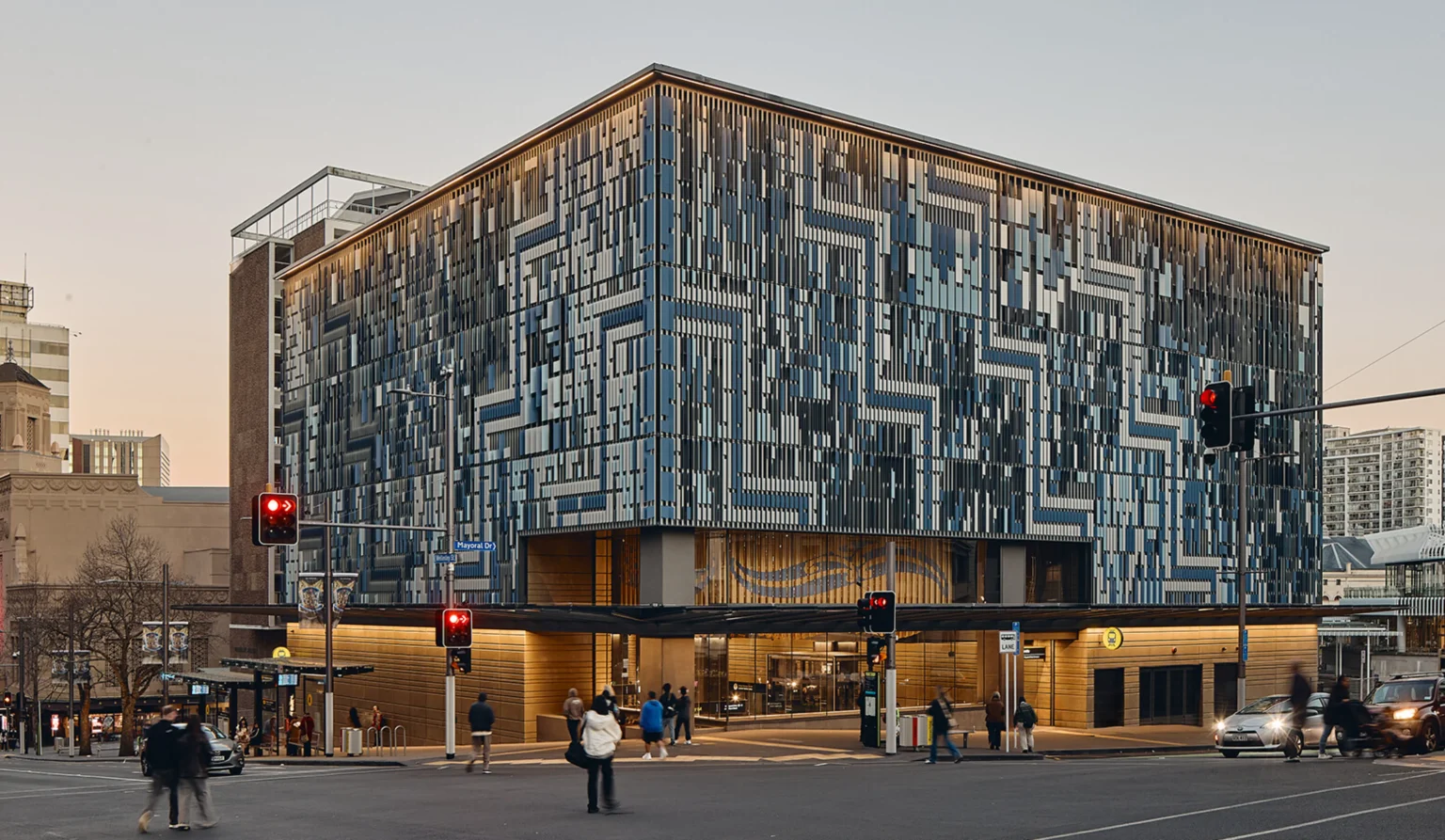
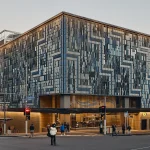
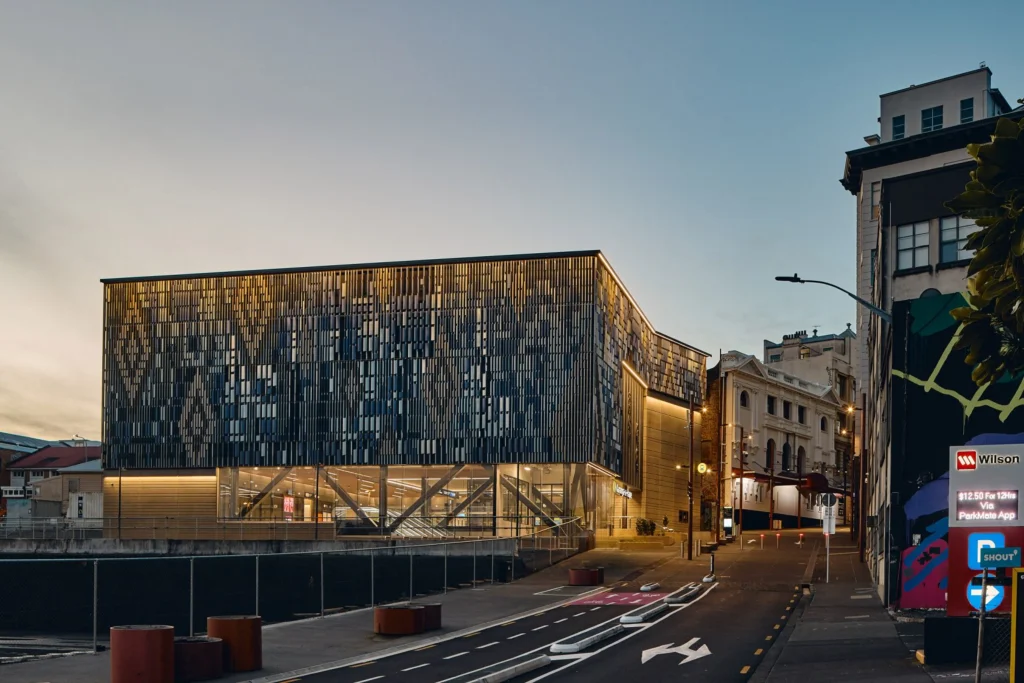
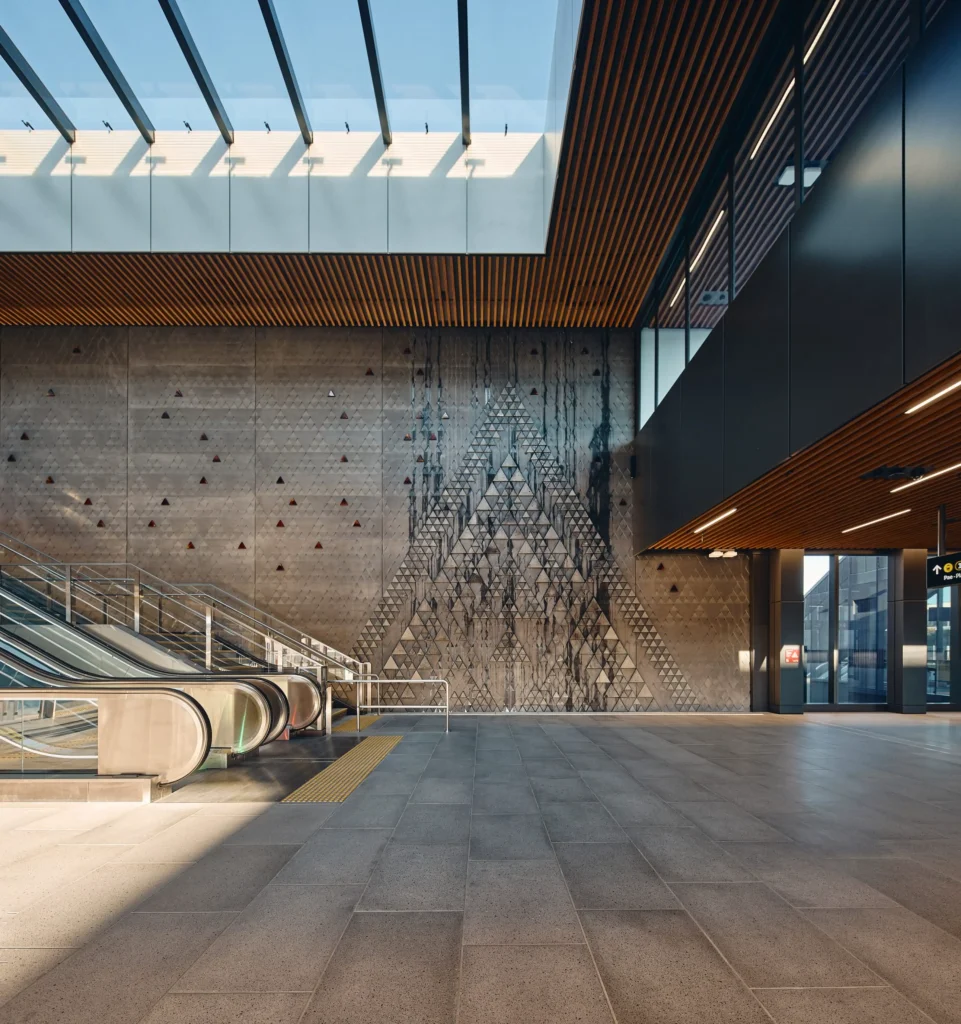
Aluminum screens clad the façades of the plant rooms, giving each station a distinctive outer expression while serving practical ventilation needs. Inside, the play of light and material is intended to evoke the separation of Ranginui, the sky father, and Papatūānuku, the earth mother, that brings the world into being.
Station by station
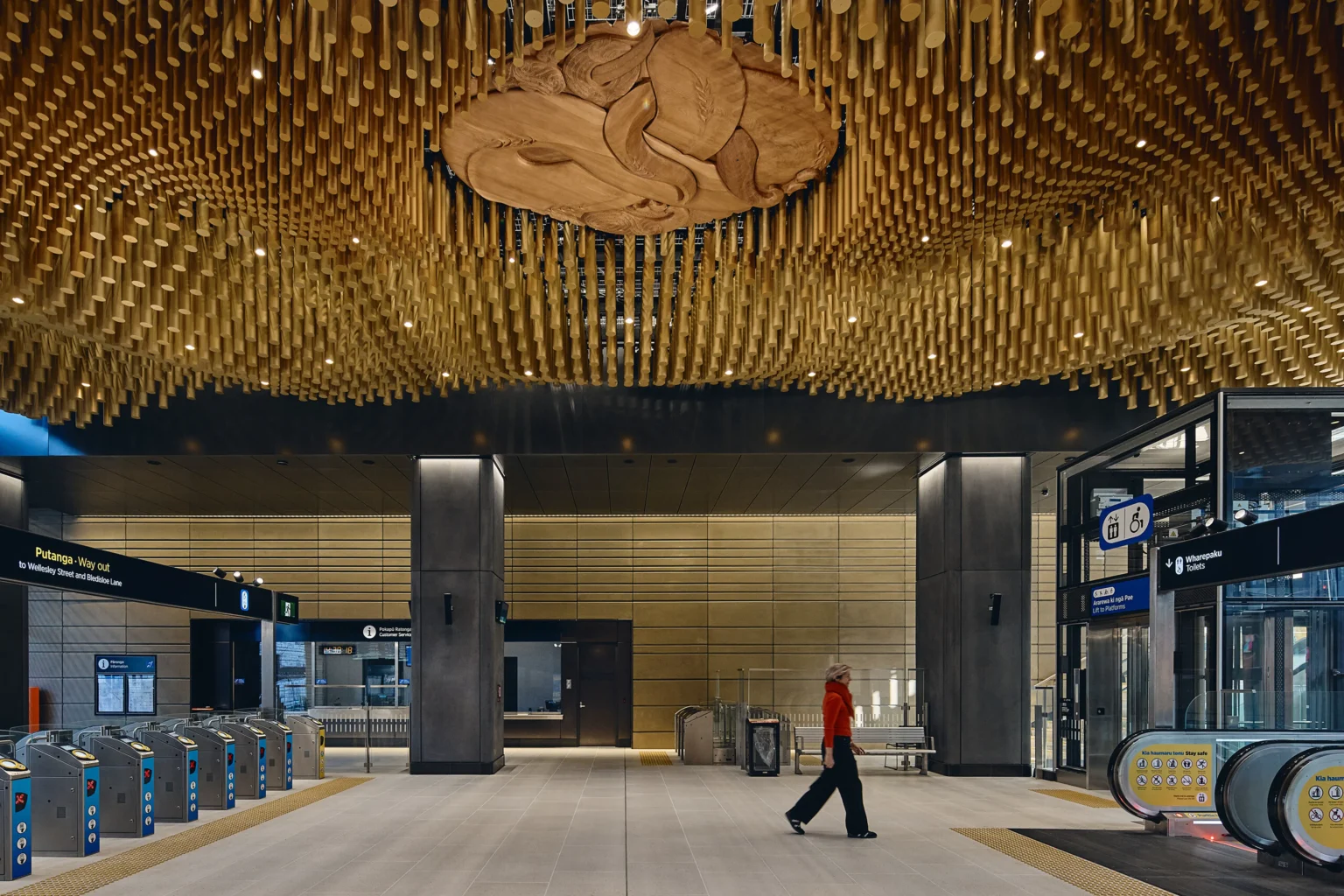
At Te Waihorotiu, a ceiling installation of more than 4,000 golden anodized aluminum rods creates a luminous field overhead. The gesture reads as both technical and symbolic, introducing a sense of dawn light deep within the underground volume. Site-specific artworks nominated by Mana Whenua further anchor the station in local narrative.
Karanga-a-Hape draws additional reference to Tāne Mahuta, the god of the forest who separated his parents and created the space of the living world. Three snail-shell sculptures by Reuben Kirkwood occupy the entrance hall, adding a tangible cultural layer to the architecture. The station’s dual entrances at Mercury Lane and Beresford Square knit it into the surrounding urban fabric of Karangahape Road.
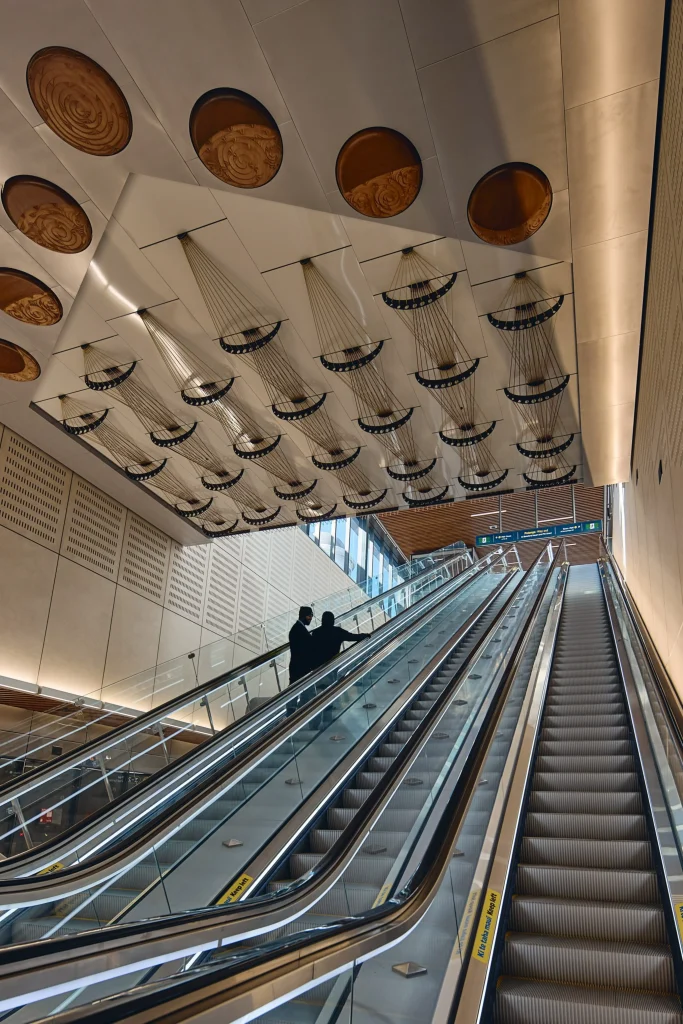
Maungawhau, the redeveloped station at Eden Terrace where the new link meets the existing western line, channels the volcanic character of the landscape and the atua associated with the basalt fields of Tāmaki Makaurau. Its design responds to the physical presence of the maunga while serving as a major interchange.
Infrastructure as cultural expression
Large transport projects often prioritize efficiency and standardization. The City Rail Link stations attempt something rarer: to make cultural narrative structural rather than applied. The collaboration with Mana Whenua began early and continued through design development. Pattern motifs derived from traditional place knowledge appear in architectural elements. Artworks selected by iwi occupy prominent public spaces. The stations become civic places that carry memory as well as passengers.
This approach has already received international recognition. The project was the first from New Zealand to receive the WAFX Cultural Identity Prize at the World Architecture Festival. The award acknowledged the ambition to embed Indigenous knowledge into major infrastructure rather than treat it as an optional extra.
Practical realities and long-term impact
The stations form part of a system expected to carry tens of millions of passengers each year once the full network is operating. Journey times across the city center will drop significantly. The new underground route will relieve pressure on the existing surface network and support Auckland’s projected population growth.
Yet the architectural ambition extends beyond capacity. By giving the stations distinctive identities rooted in place, the project aims to make the experience of moving through the city more legible and more connected to its deeper history. Commuters will pass daily through spaces that reference creation narratives, volcanic landscapes and ancestral journeys.
A model for elsewhere
The City Rail Link stations demonstrate one way major infrastructure can engage with Indigenous knowledge systems without reducing them to motif. The process required sustained partnership, willingness to let cultural narrative shape form, and acceptance that each station should feel different because each site carries different stories.
Whether the finished buildings fully realize that ambition will be judged by the people who use them. For now the revealed designs show a clear intention: to treat railway stations as more than efficient nodes. They are presented as places where the city’s contemporary life and its older narratives can occupy the same space, carried in material, light and name.